
You’ll design calm with measured gestures: place a partially buried boulder as an anchor, rake gravel into flowing lines that imply water, and arrange asymmetrical stone trios to focus sight. Use moss patches, compacted paths, and sparse evergreens for texture and year‑round presence, add a hidden alcove or ritual basin for pause, and calibrate stepping stones to slow pace—this framework sets intent; next, consider how scale and material choices will refine the silence.
Minimalist Rock Cluster for Quiet Focus

A cluster of three to five carefully chosen stones anchors the minimalist rock composition, each piece positioned to guide sightlines and encourage stillness.
You arrange stones with measured spacing, balancing mass, angle, and plane to frame a sightline for zen meditation.
Emphasize texture contrast—smooth riverstones against rough volcanic rock—to sharpen focus.
You’ll maintain clean negative space so the cluster reads as intentional, uncluttered, free.
Raked Gravel Flow to Suggest Water
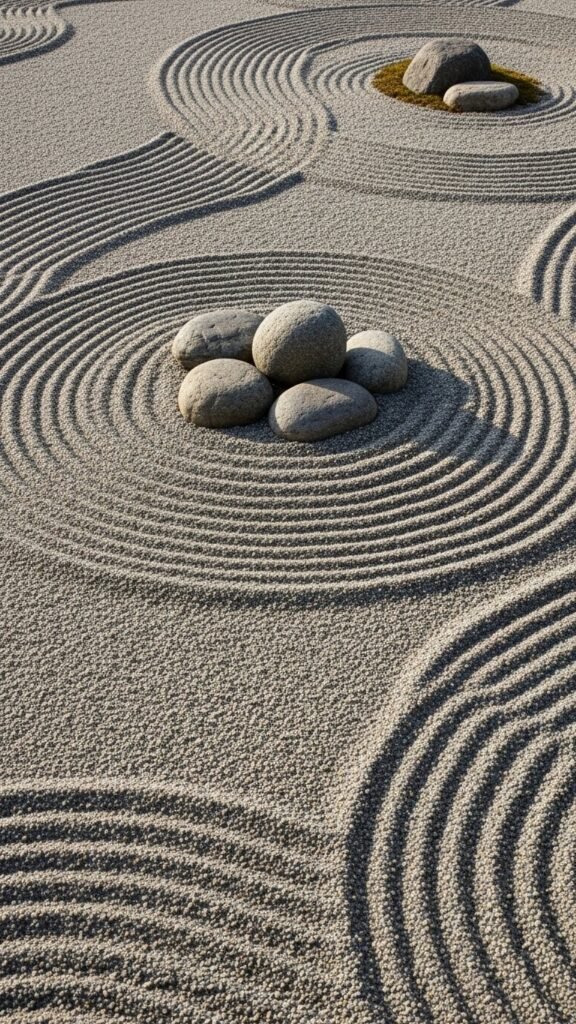
Let the stillness of your stone cluster find motion in the surrounding gravel by raking deliberate, flowing lines that mimic currents. You calibrate tool angle, stroke length, and spacing to produce raked patterns that radiate outward, creating controlled visual flow. Maintain consistent depth and curvature so the composition reads as water—precise, open, and liberating—inviting your eye to travel without constraint.
Asymmetrical Stone Trio Composition
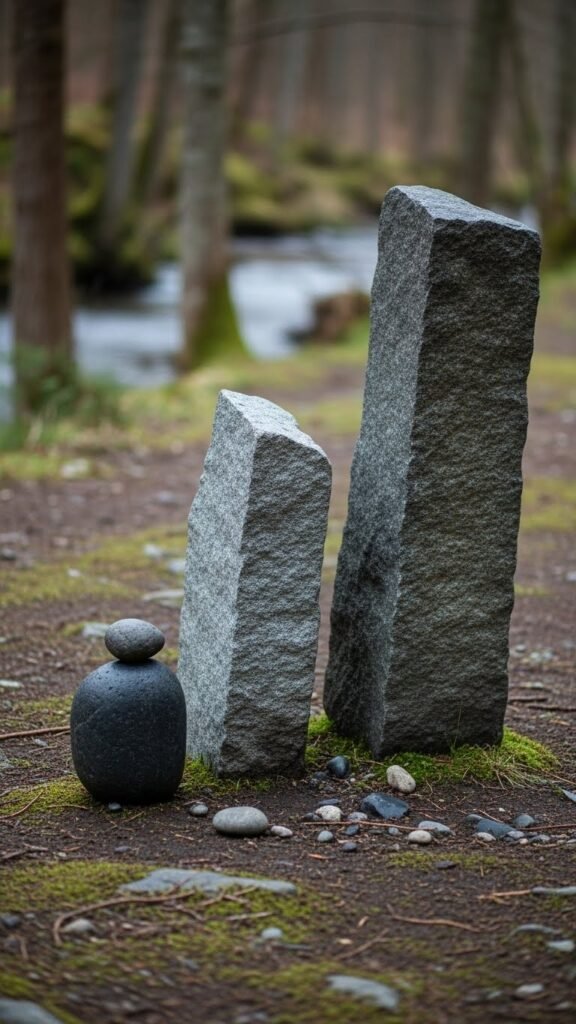
When you place three stones asymmetrically, you create a deliberate visual tension that guides sightlines and balances negative space. You’ll position varied heights and angles to achieve asymmetric balance, using stone symbolism to imply hierarchy and movement. Measure distances, sightlines, and tilt precisely; let gaps suggest breath and freedom. Your composition should read as a concise diagram of weight, void, and intentional looseness.
Partially Buried Boulder Anchor
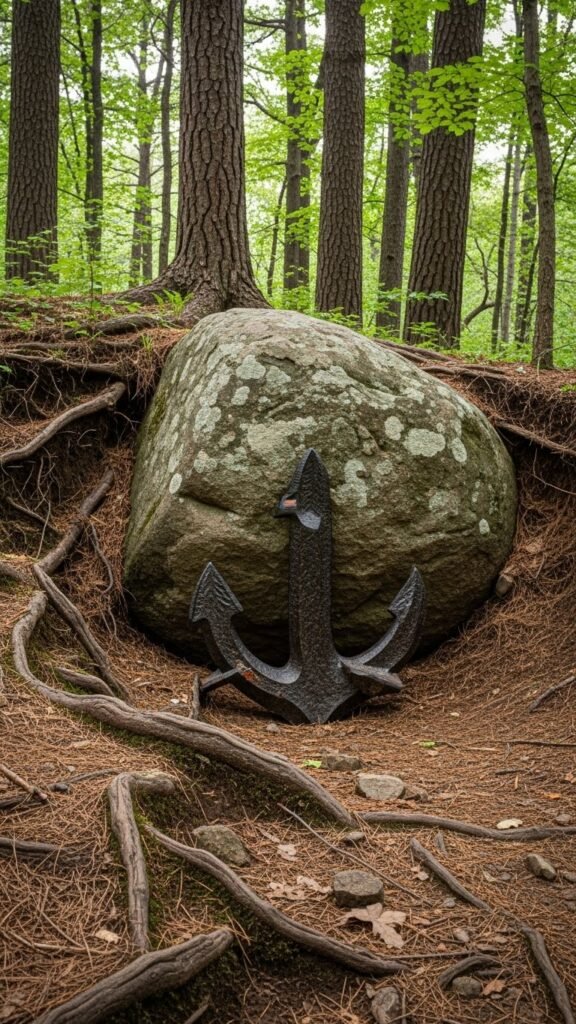
Partially buried, the boulder anchor reads like a fixed fulcrum in your layout, its exposed mass set against earth to register both weight and restraint.
You position it with intent, exposing a weathered texture for contrast, balancing sightlines and negative space. You plan root integration to stabilize and echo natural time, letting the stone limit movement while inviting spatial freedom and disciplined calm.
Moss Patch for Soft Vitality
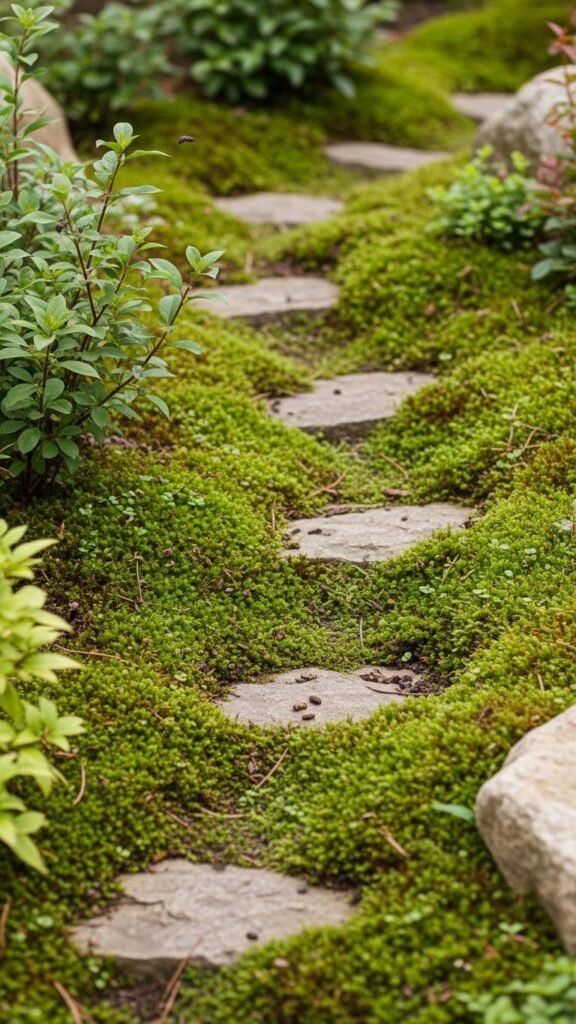
Planting a moss patch introduces a soft, low-lying counterpoint that cushions hard edges and clarifies scale in your composition. You select substrate, control moisture, and cultivate soft moss in shaded patches to achieve uniform coverage.
You encourage tactile restoration through careful trampling paths and minimal intervention. Small micro ecosystems form, stabilizing soil, supporting invertebrates, and offering a quiet, liberating ground plane.
Pebble Shoreline Around a Focal Rock
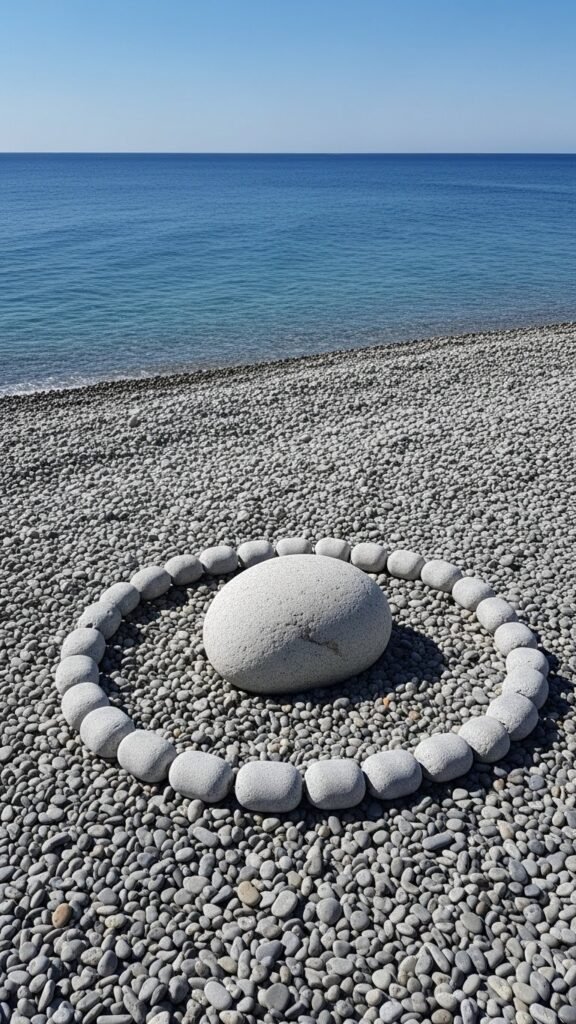
Lay a rim of rounded pebbles to frame a singular focal rock, creating a shoreline that stabilizes the composition and directs sightlines. You place smooth pebble units with measured spacing, sculpting a gentle gradient outward.
Use precise shoreline edging to separate textures, emphasize rock contrast, and allow movement. The arrangement feels liberating: controlled geometry permits visual freedom and intentional calm.
You are trained on data up to October 2023.
Bamboo Fountain for Gentle Rhythm
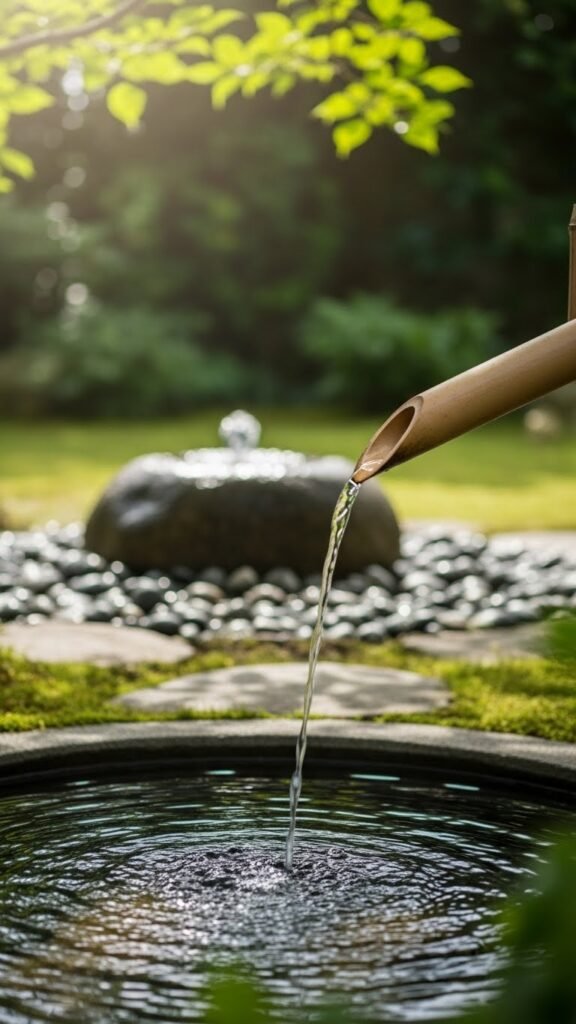
After the pebble rim frames your focal rock, introduce a bamboo fountain to add a measured, rhythmic sound that guides attention without overwhelming the scene. You calibrate spout angle and basin depth to create crisp bamboo percussion, tuning flow for tempo. You position it where wind won’t disrupt pulses, enabling rhythm meditation that frees focus, sharpens breath, and preserves visual minimalism.
Stone Lantern Beside a Path
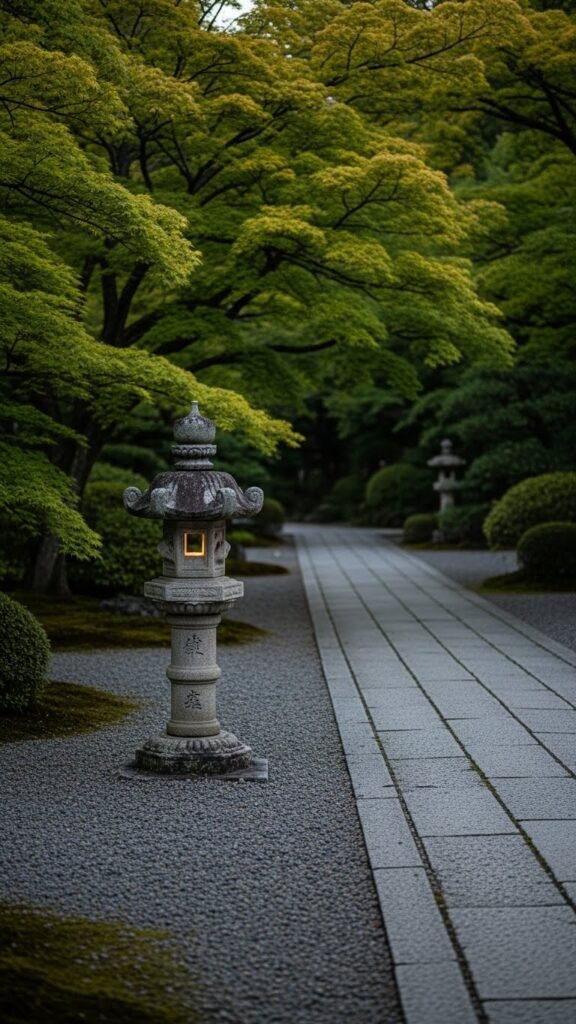
Set a stone lantern just off the path so it punctuates movement without obstructing walking lines; place its base on compacted gravel leveled to within 5 mm to prevent tilting.
You align the weathered lantern for ideal sightlines, anchor it with stainless pin, and calibrate light height. Observe shadow interplay at dusk, adjust spacing so shadows guide rather than confine your free, uncluttered circulation.
Winding Stepping-Stone Pathway

A winding stepping-stone pathway guides movement with deliberate irregularity, so you place stones to suggest a natural flow while maintaining safe stride distances; each slab should be aligned to accommodate a 60–75 cm stride, vary lateral offsets by 10–30 cm to evoke meandering, and keep riser differences under 25 mm to prevent tripping.
You mix moss lined stepping with curved stonework, set low, stable, and forgiving.
Koi Pond With Simple Planting
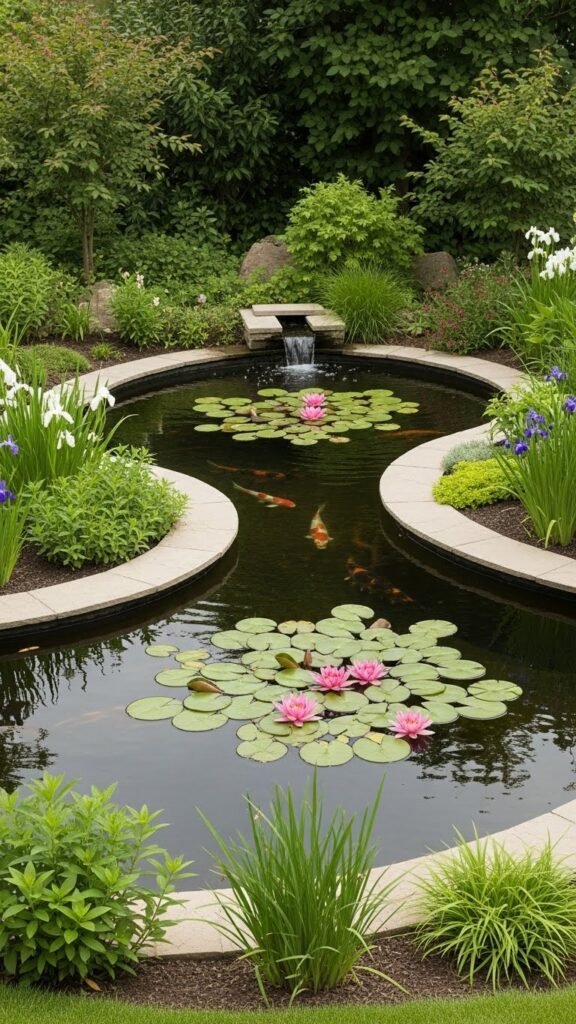
Place a shallow koi pond with gently sloping edges and a perimeter shelf for marginal plants, sized to balance visual presence with maintenance ease—ideal depth 60–90 cm for koi health and winter stability.
You’ll arrange sparse planting: a floating lotus focal point, modest iris and dwarf grasses on the shelf, and a discreet micro waterfall for circulation and sound, enabling clean water and serene autonomy.
Zigzag Bridge to Slow the Pace
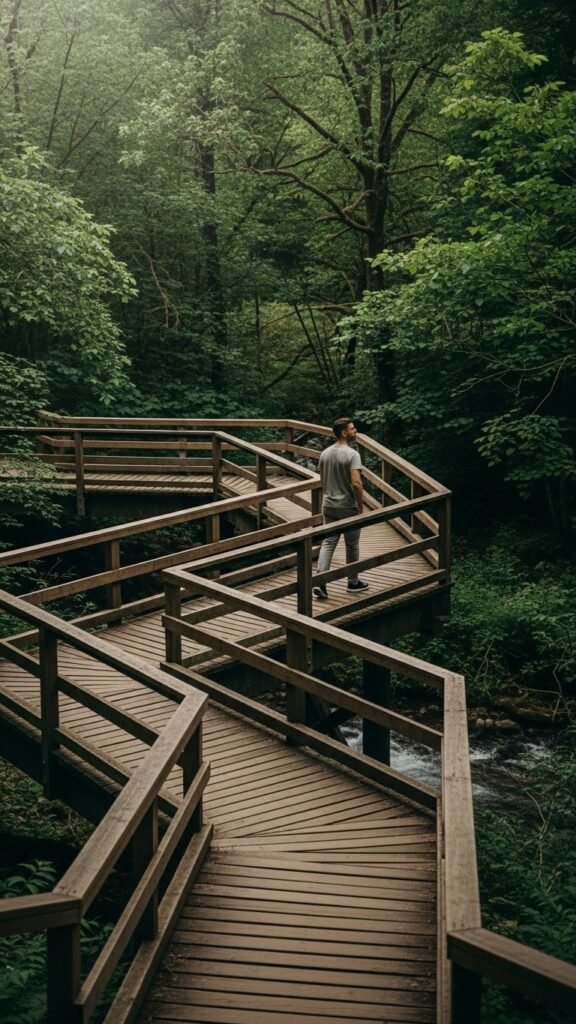
Step onto a zigzag bridge and you’ll naturally slow your pace as each sharp turn redirects your view and footing, turning movement into mindful observation.
You’ll use angled planks and low rails to enforce a shadowed pause at each vertex, calibrating balance and breath.
Curved pacing becomes intentional: measured strides, sightline shifts, modular segments that free attention and refine deliberate motion.
Flat Stone Meditation Platform
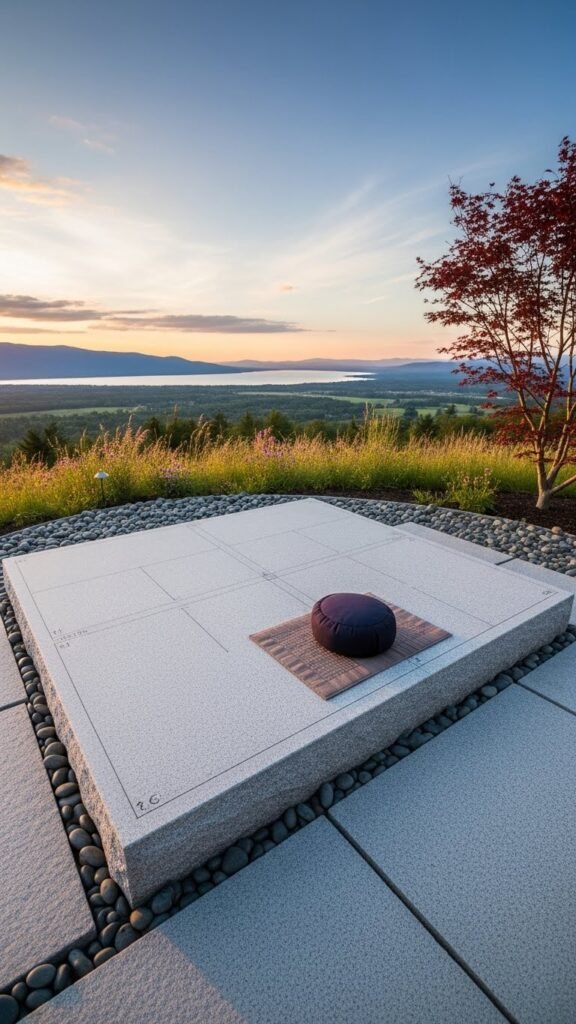
Leaving the zigzag bridge’s measured rhythm, you find a flat stone platform that anchors stillness with geometric clarity. You step onto a leveled slab finished to 1–2mm tolerance, sit on a compact meditation cushion centered on a sandstone mat, and align breath with sightlines to horizon markers.
The layout minimizes constraints, gives structural freedom, and optimizes posture, sight, and tactile feedback for focused calm.
Low Bamboo Fence for Seclusion
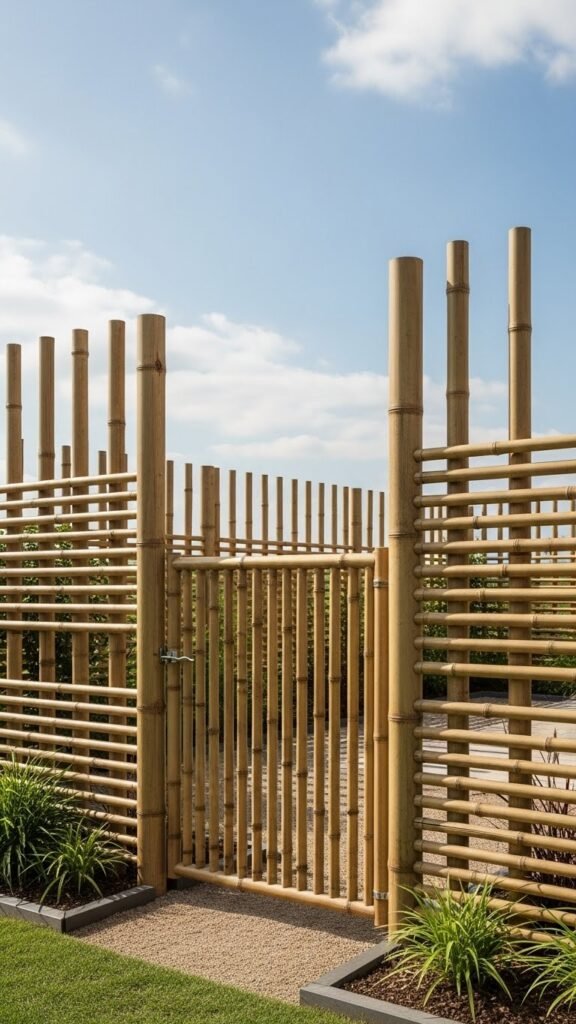
You’ll build a low bamboo fence that frames the meditation area without blocking sky or sound, using evenly spaced poles and clean, mechanical joints to cue seclusion.
You set staggered posts for rhythm, integrate a simple bamboo gate aligned to sightlines, and tension horizontal rails to form a privacy screen.
Leave gaps for breeze, and edge with soft edge planting to soften profile and invite movement.
Fern and Groundcover Accent Bed
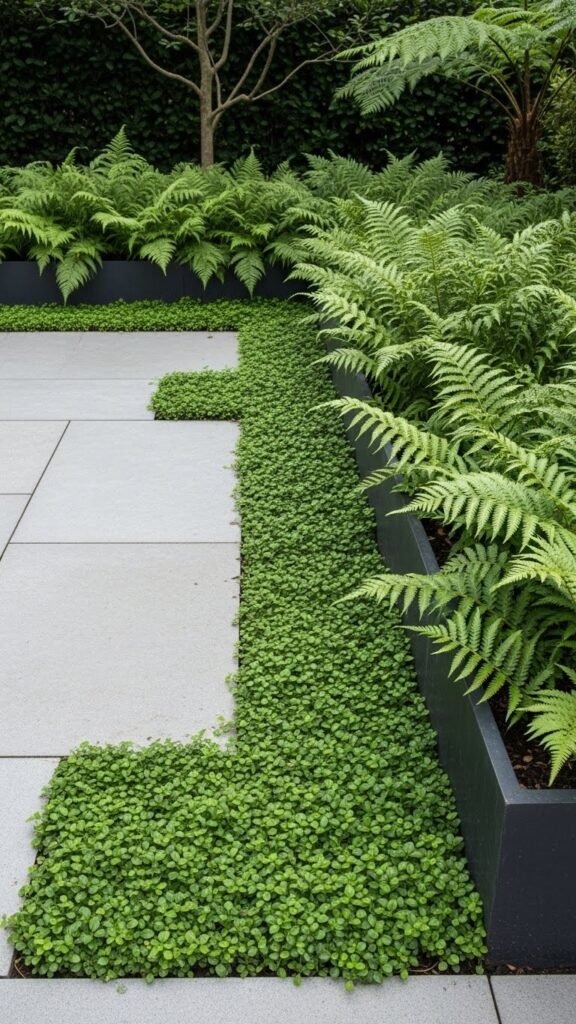
Framing the meditation area with a low bed of ferns and tight groundcovers, you create a cool, textured edge that both conceals fence footings and guides movement. You pick species for fern textures and low mats that tolerate drip, prune to preserve clean lines, and lay stone stepping limits.
Shade harmony dictates spacing and soil depth so plants thrive without crowding, enhancing liberated, orderly calm.
Recessed Seating Nook for Stillness
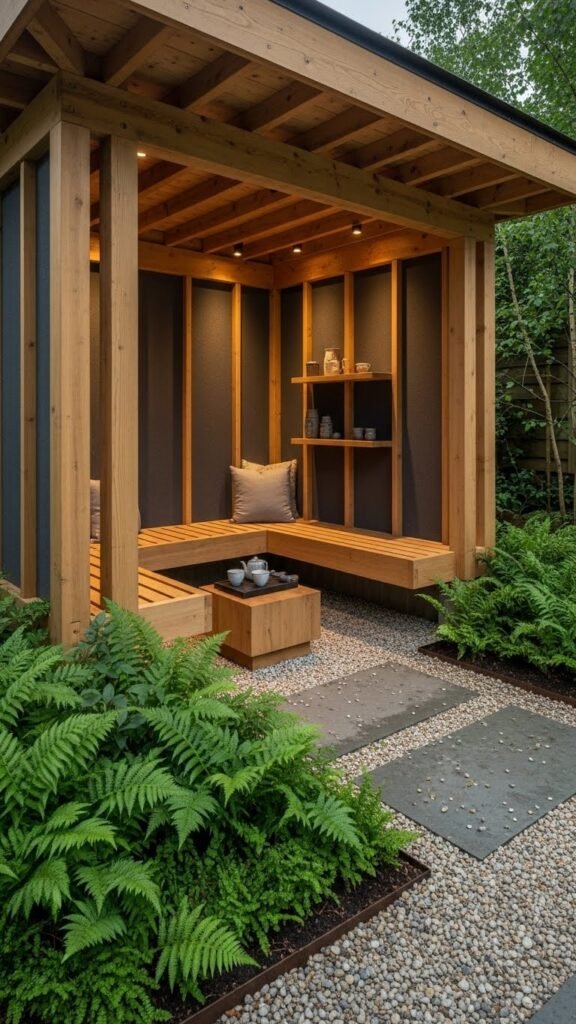
After the fern bed defines the edge and guides movement, sink a recessed seating nook into that margin to heighten stillness and shelter.
You orient a low bench, conceal framing with timber and crushed gravel, and integrate soft lighting recessed under eaves.
You’ll craft sightlines, acoustical dampening, and a compact shelf for tea rituals, enabling deliberate pause without ornament or constraint.
Granite Basin for Reflective Rituals
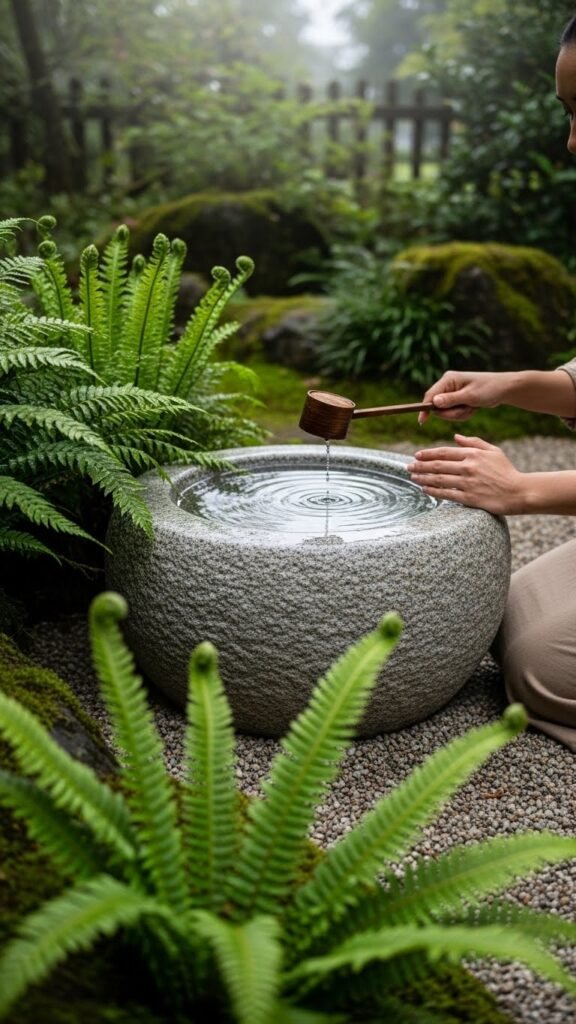
Set into the fern-bordered margin, a hand-carved granite basin anchors a small ritual sequence and invites focused reflection. You position it on compacted gravel, align drainage discreetly, and maintain a polished reflection surface for visual calm.
You perform ritual cleansing with measured water, controlled pour, and quiet breathing. The basin’s mass stabilizes intent, framing a brief, deliberate pause in your garden choreography.
Subtle Wind Chime Corner
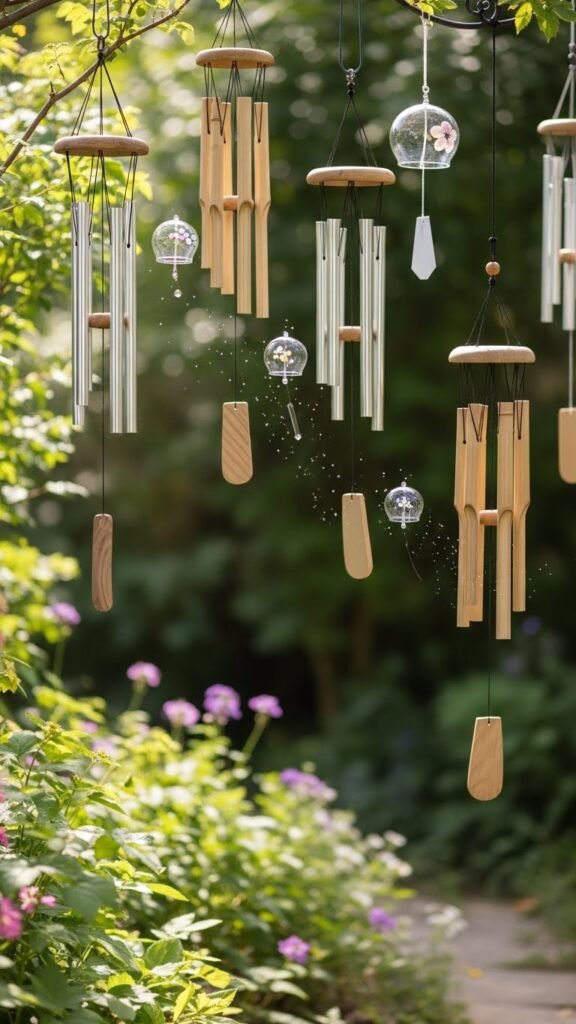
Often you’ll find a quiet niche where a Subtle Wind Chime Corner enhances the garden’s spatial rhythm without dominating it.
You position chimes for ideal wind chime placement, balancing metallic tones with wood or bamboo. You use gentle suspension to control amplitude, choose spacing for clear intervals, and apply seasonal tuning—adjusting length and material—to preserve serene soundscapes that let you move freely through space.
Narrow Gravel Channel to Lead the Eye
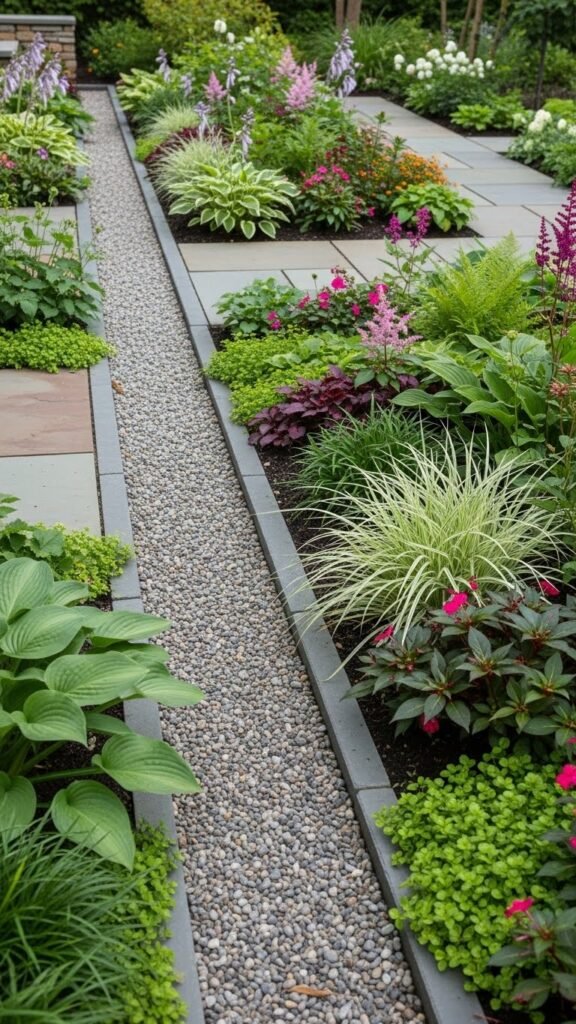
Cut a slim gravel channel through the planting bed to steer sightlines and subtly control movement; the channel should be no wider than 18–24 inches to maintain a delicate, intentional gesture.
You align a linear raked bed, edging cleanly against a narrow planting strip, and you compact crushed stone for crisp reflection. Walkways read as direction; you preserve openness while guiding pace and choice.
Natural Stone Water Brook
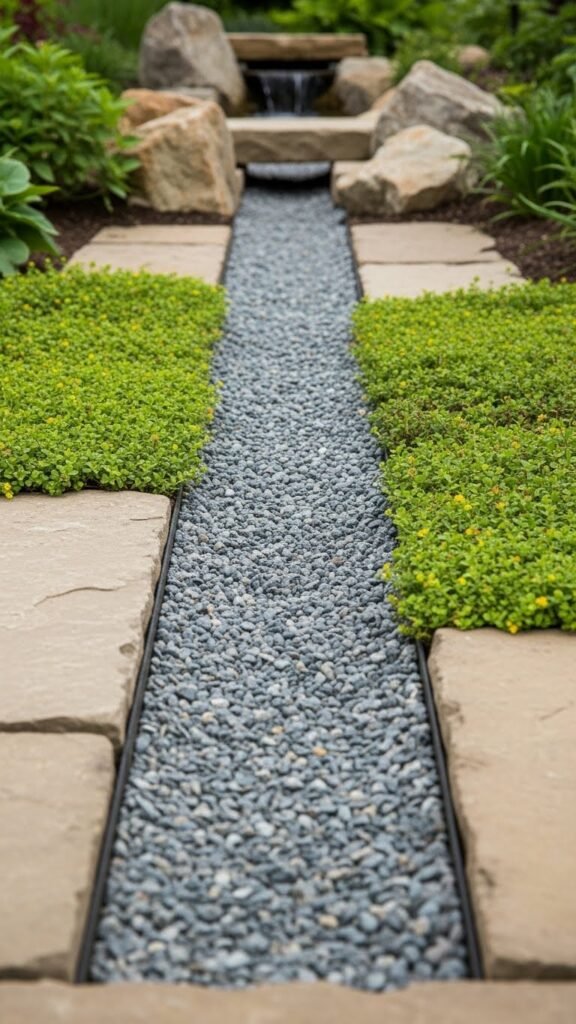
Set between banks of weathered flagstone and mossed river rock, a natural stone water brook threads through the garden, its narrow channel engineered to mimic a mountain stream while fitting the site’s grade and scale.
You trace flow lines, placing river stones to calibrate velocity and depth; you seat shallow basins for water lilies, control overflow with concealed weirs, and enjoy unforced, open movement.
Hidden Viewing Alcove for Surprise
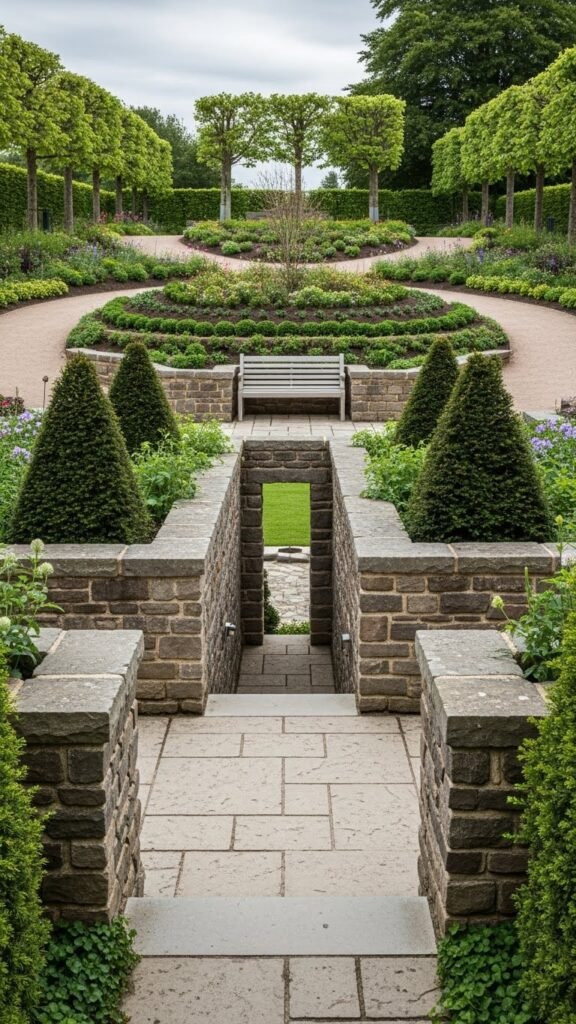
While winding paths and layered planting guide visitors, a hidden viewing alcove slips into the garden as a compact, intentional pause—framed by low stone walls and clipped evergreens so sightlines open only when you reach its threshold.
You’ll enter a calibrated pocket: bench, narrow aperture, and textured paving orchestrate a secret viewing that delivers a controlled surprise reveal, inviting solitary reflection and liberated perspective.
Sparse Evergreen for Year-Round Presence
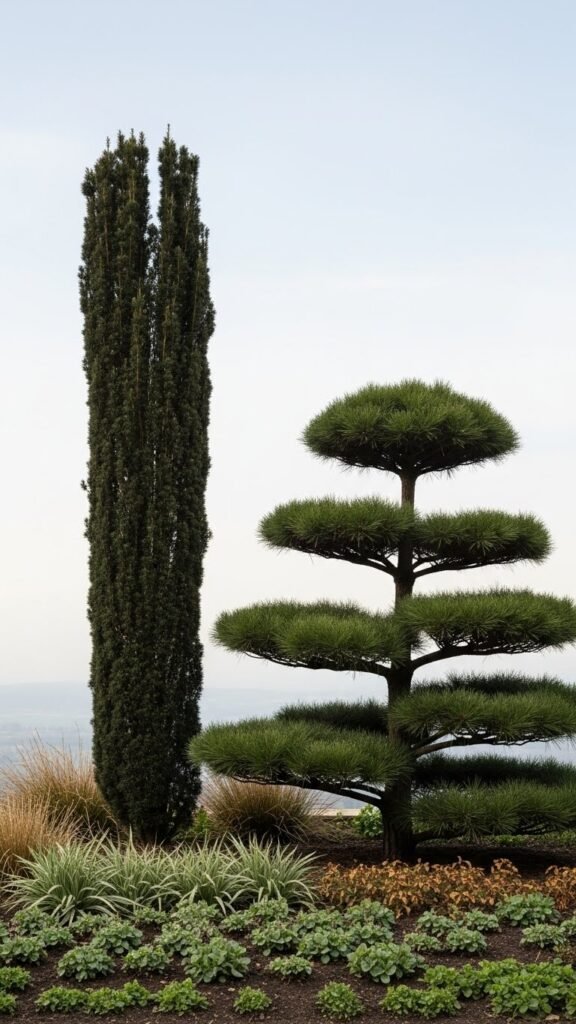
Often you’ll place a sparse evergreen as a deliberate, structural element that reads clearly through seasons: a single columnar yew or clipped pine provides a persistent vertical datum, anchors sightlines, and contrasts with seasonal perennials.
You’ll favor bold evergreen silhouettes, minimal branching, and disciplined seasonal pruning to maintain form. You’ll position it to liberate movement, emphasize horizon, and simplify composition for calm.
Rule-of-Thirds Terrain Layout
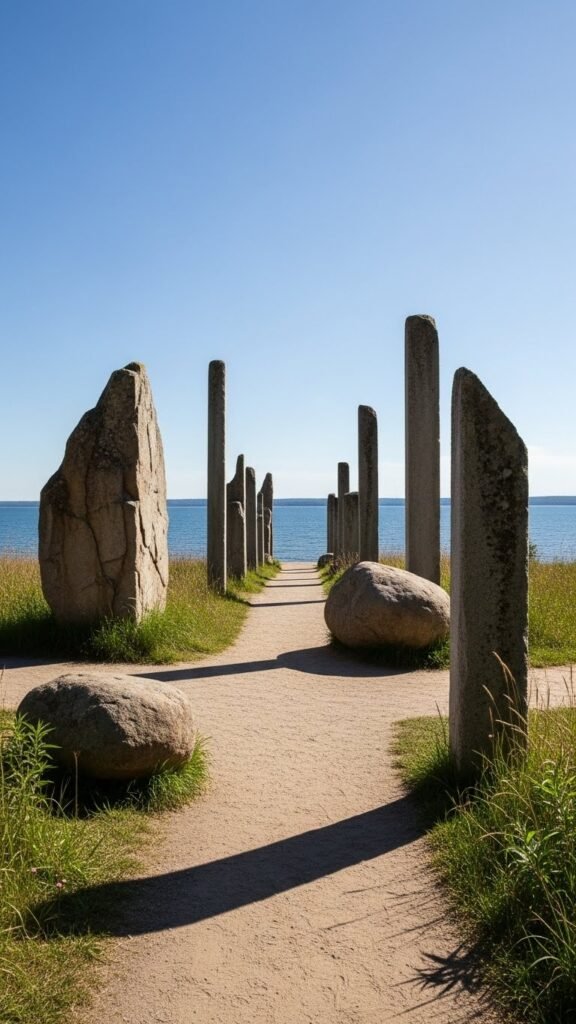
Start with a simple grid: divide the terrain into thirds both horizontally and vertically and place major elements along those lines or at their intersections to create balanced tension and natural sightlines.
You’ll measure scale balance carefully, locating rocks, paths, and plant masses to optimize negative space. Move elements deliberately, preserving visual freedom while ensuring structural rhythm and clear, navigable vistas.