
You’ll reimagine that narrow sill as a layered, tactile micro-garden, placing terra-cotta herb stations, deep narrow pots for carrots and parsnips, and shallow dishes for beets and succulents to catch light and air. Think reclaimed wood trays, jute hangers and glass accents to boost soil warmth and drainage. I’ll show practical layouts, container mixes and plant pairings so you can fit food, scent and texture into every inch—and then some.
Grow Parsnips on a Sunny Windowsill
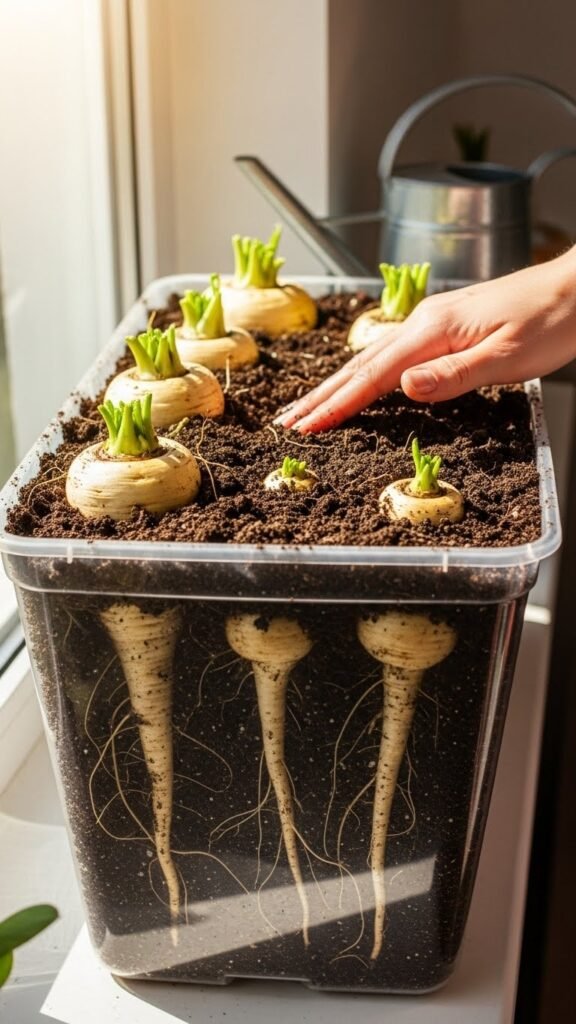
Think about tucking a long, tapered root into a deep, narrow container where light hits the top and cool soil hugs the rest. You’ll respect root depth, choose a loose soil mix, and orient the vessel toward sun.
You’ll feel freedom watching pale crowns unfurl, fingers testing texture, and adjusting water. Space, material, and light guide each deliberate, quiet decision.
Container Beets for Small Spaces
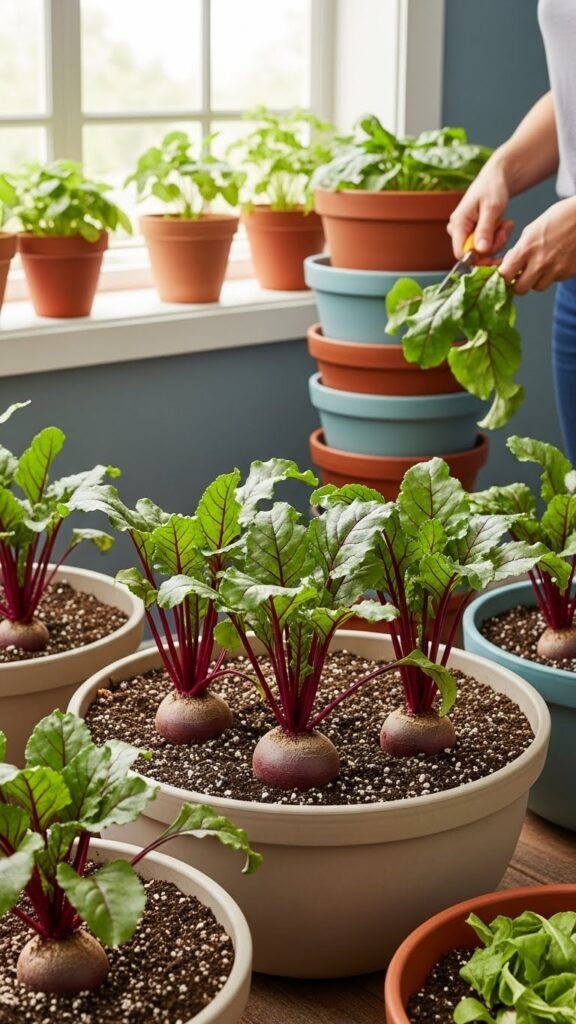
If you loved tucking deep roots into a narrow pot for parsnips, you’ll find beets equally satisfying but friendlier to tighter spaces: they like broad, shallow containers where the crown can spread and the bulb can swell just under loose, gritty soil.
You’ll plant in layers, practice succession sowing, snip greens for salads, and arrange pots for a vertical harvest that frees your windowsill.
Indoor Potato Planters
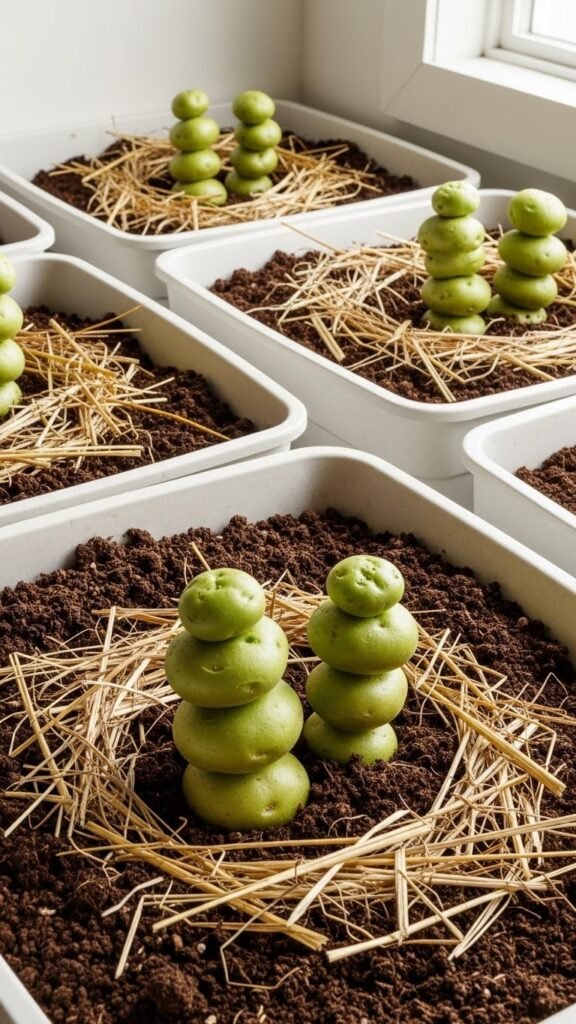
When you give potatoes roomy, light-filled containers and loose, stone-free mix, they’ll reward you with stacks of tubers that push up through the soil like hidden treasure.
You’ll arrange chip potato seed pieces in deep, breathable pots, layer straw and compost, and watch stacked tubers emerge.
The compact, tactile setup lets you harvest freedom in small, sunlit slices of home.
Sweet Potato Vine Herb Bar
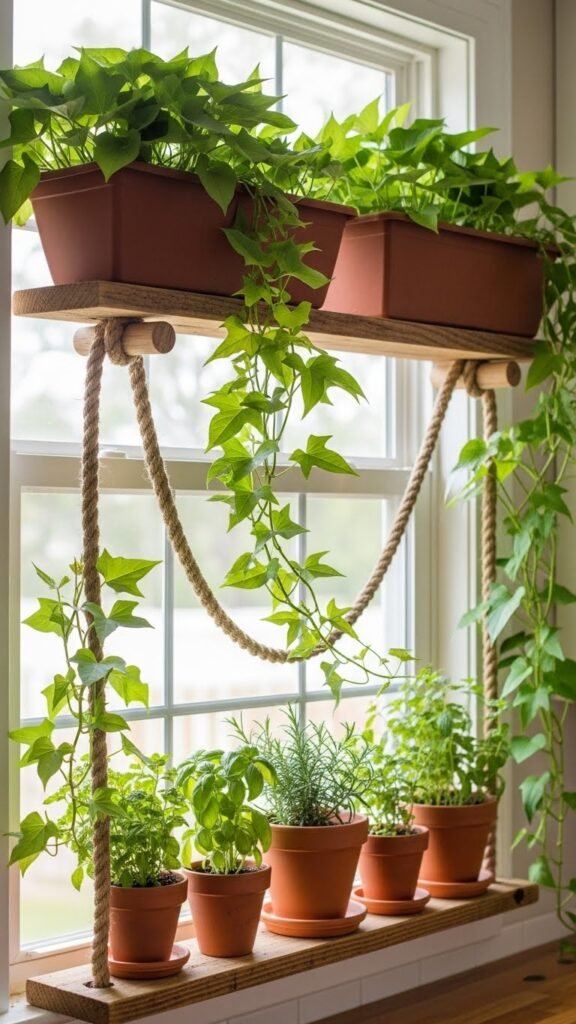
A sweet-potato-vine herb bar lets you weave glossy, trailing foliage into a low, horizontal tableau of scent and flavor, so you can reach and snip as you cook.
You arrange terracotta troughs, rope, and reclaimed wood to guide vines. Monitor fading foliage and adjust nutrient balance; prune to keep movement airy, materials rustic, and access effortless so your windowsill feels unconfined.
Compact Carrot Patch
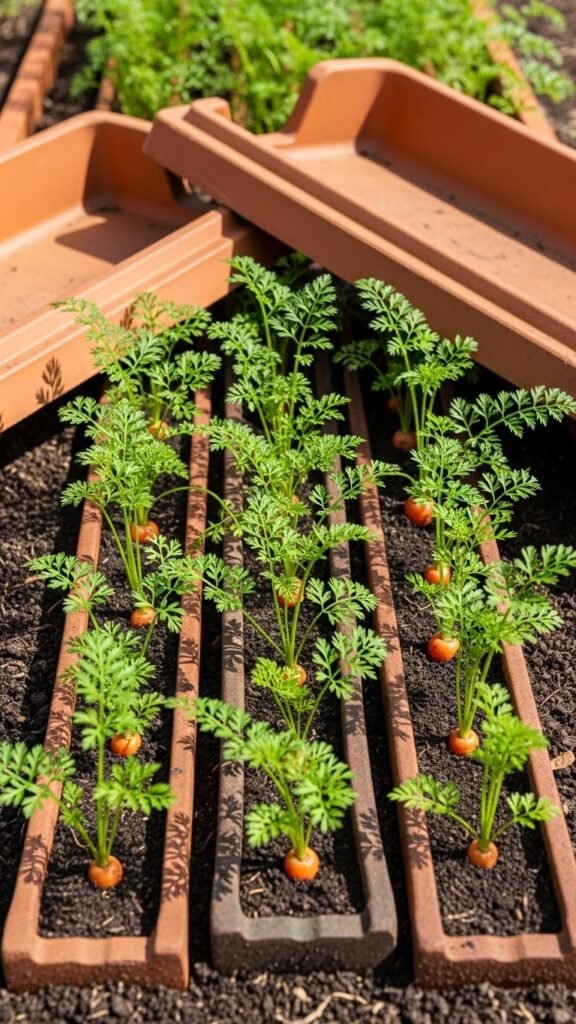
Move a few terracotta troughs aside and you’ll find space for a compact carrot patch that layers slim, vertical roots into the same sunny strip. You’ll plant with vertical sowing in narrow, deep recycled clay, feeling soil texture and light.
Keep rows tidy, thin crowns for easy harvest. This material-minded, free-spirited setup maximizes yield without stealing your room.
Bush Beans in Deep Pots
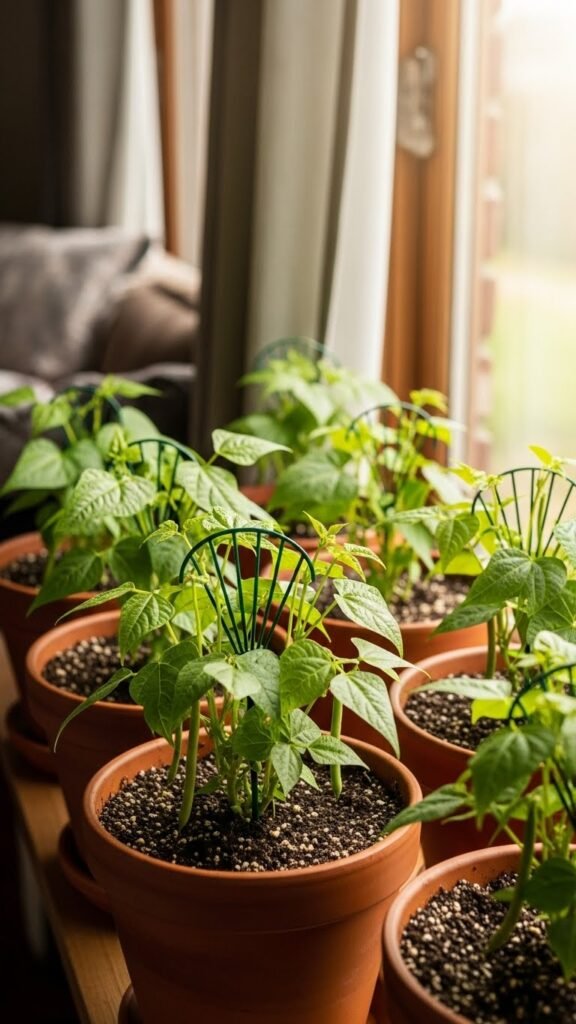
Tuck deep pots along the sunny sill and plant bush beans where sturdy soil meets compact space; you’ll appreciate how their squat, leafy forms fit into narrow profiles without staking.
Choose deep rooting varieties for resilience in confined soil, feel coarse compost anchor roots, and arrange compact trellises discreetly for light guidance.
You’ll harvest fresh pods while keeping movement and air in your small room.
Pole Beans With Indoor Trellis

If you liked how bush beans hug a sunny sill, try switching to pole beans when you want vertical drama and bigger yields in the same footprint. You’ll train indoor polebeans up a slim vertical tepee of bamboo or metal, feeling liberated by height.
Anchor in dense potting mix, tuck tendrils, prune sparingly, and enjoy airy green architecture that saves floor space and invites sunlight.
Baby Leaf Lettuce Mix

Often you’ll layer shallow trays of baby leaf lettuce across a sunny sill, arranging mixes of crimson, oak, and butterhead so their colors and textures knit together like a living mosaic.
You’ll favor lightweight soil, precise container spacing, and a microgreens mix at edges for fast contrast.
Touch leaves, rotate trays, and harvest young—freedom in each crisp, portable, sunlit bite.
Salad Greens for Low Light
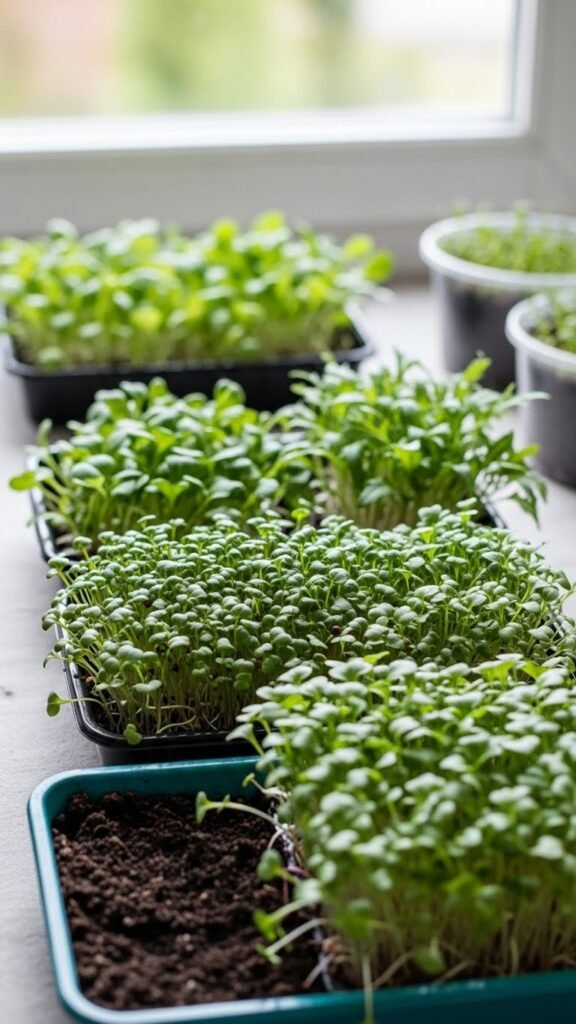
When light is limited, choose salad greens that thrive in shade and make the most of the sash of east- or north-facing windows you have; baby spinach, arugula, mizuna, and crisphead varieties with slimmer leaves will give you steady harvests without sun-drenched demands.
You’ll arrange shallow trays, tactile soil, and a microgreens mix for quick cuts, or plan winter sowing in containers to keep fresh, free greens.
Kitchen Basil Station
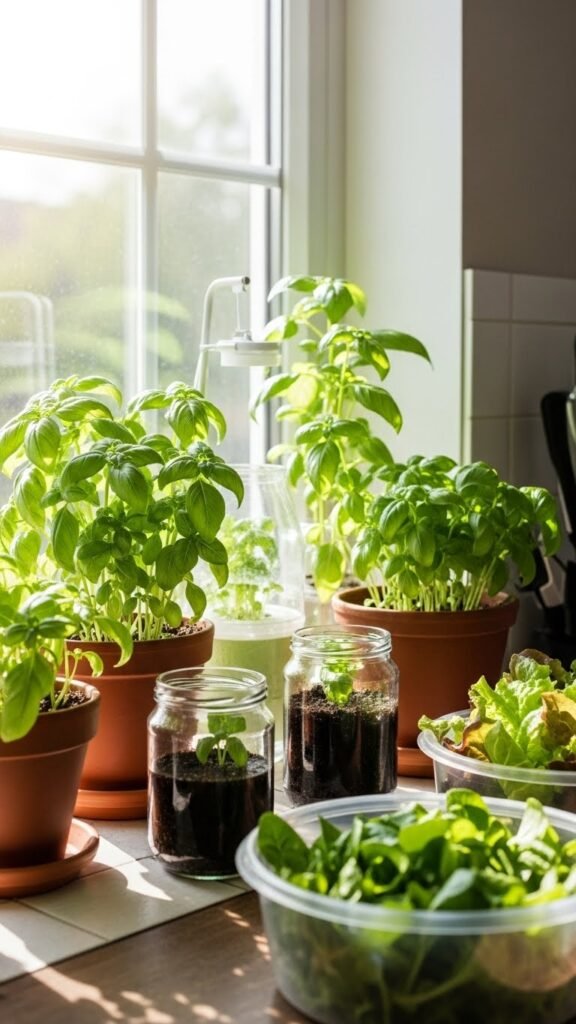
You’ve stocked your windowsill with tender salad greens; now carve out a sunny nook for a kitchen basil station that keeps fragrant leaves within arm’s reach.
You arrange terra-cotta pots and glass jars, favoring basil propagation from cuttings, or sleek countertop hydroponics for cleaner roots.
Position plants by the pane, rotate containers, harvest freely—aromatic freedom in tactile clay, glass, and light.
Thyme on the Windowsill
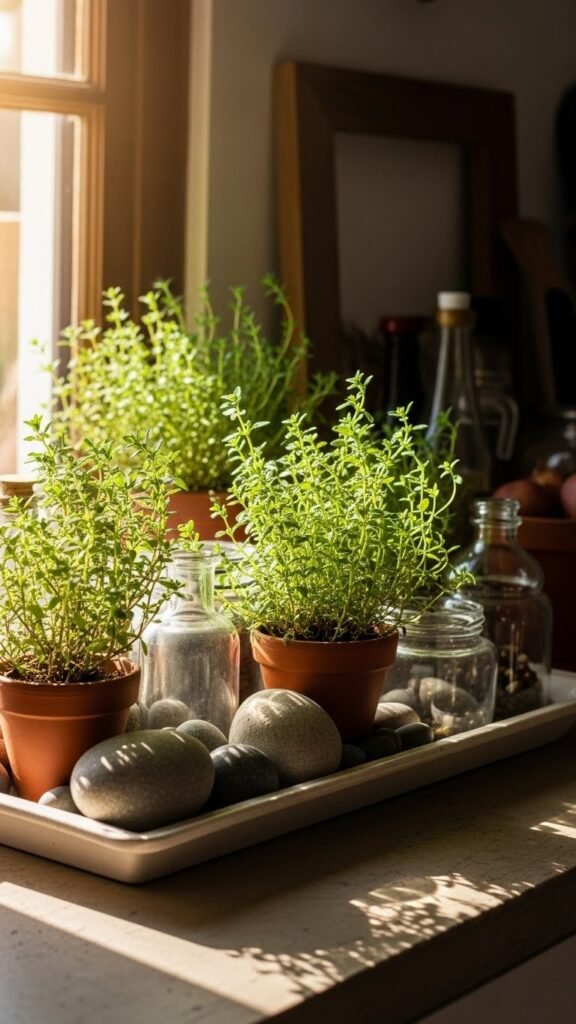
Tuck a low, sun-warmed tray of thyme along the sill where stone, clay, and glass meet sunlight, and you’ll have a hardy, fragrant herb that practically begs to be brushed as you pass.
You’ll plant a fragrant groundcover that hugs edges, its tiny leaves nodding against terracotta. As a fearless culinary companion, it frees your cooking and your space with textured, aromatic presence.
Indoor Rosemary Corner
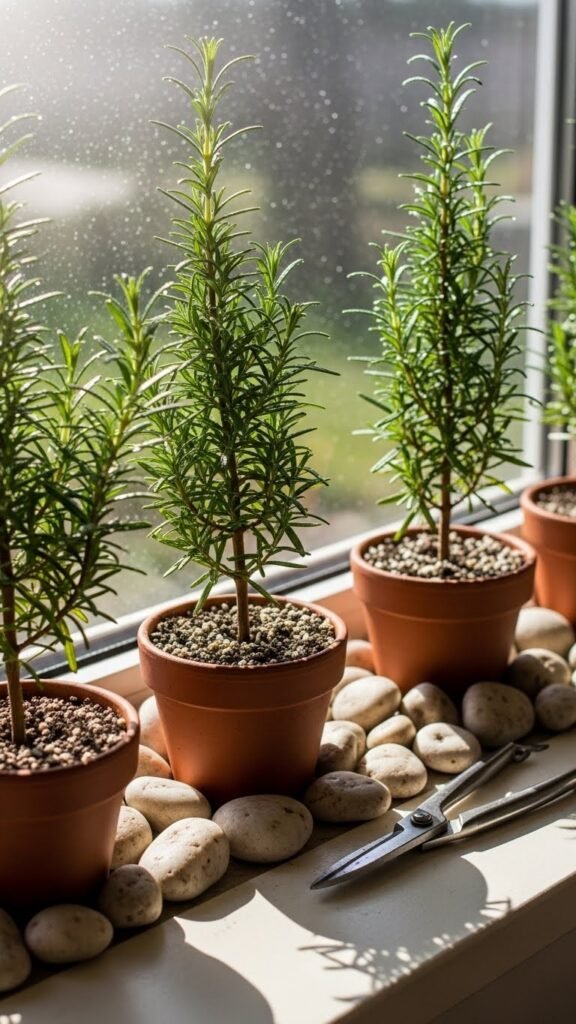
Because rosemary loves bright, dry spots, carve a small corner of your windowsill into an indoor herb nook where upright, woody stems rise from a mix of gritty soil and terracotta shards.
You’ll relish drought tolerance, lean pots, and sunlit angles. Arrange stones, lift roots for airflow, and follow sharp pruning tips to keep shape — a compact, liberated green sentinel.
Lemon Balm Tea Garden
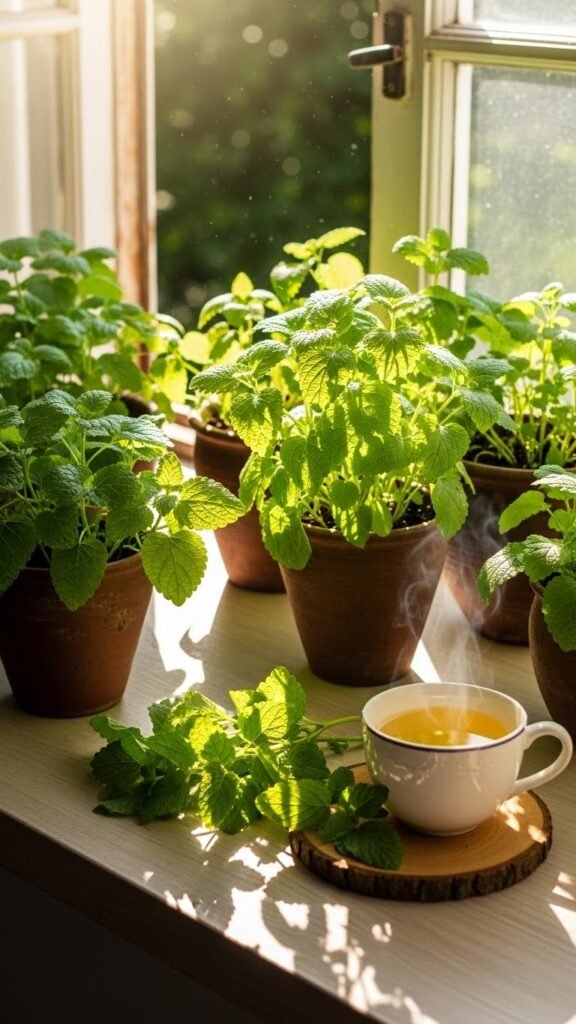
Often you’ll find lemon balm happiest in a bright, sheltered windowsill corner where its crinkled, lemon-scented leaves spill over clay pots and sifted potting mix.
You’ll snip sprigs for a calming infusion, whose citrus perfume lifts you.
In a small container brew, you control strength and freedom; steep leaves into an invigorating tisane, enjoy warmth, and let simplicity reclaim your space.
Chamomile From Seed
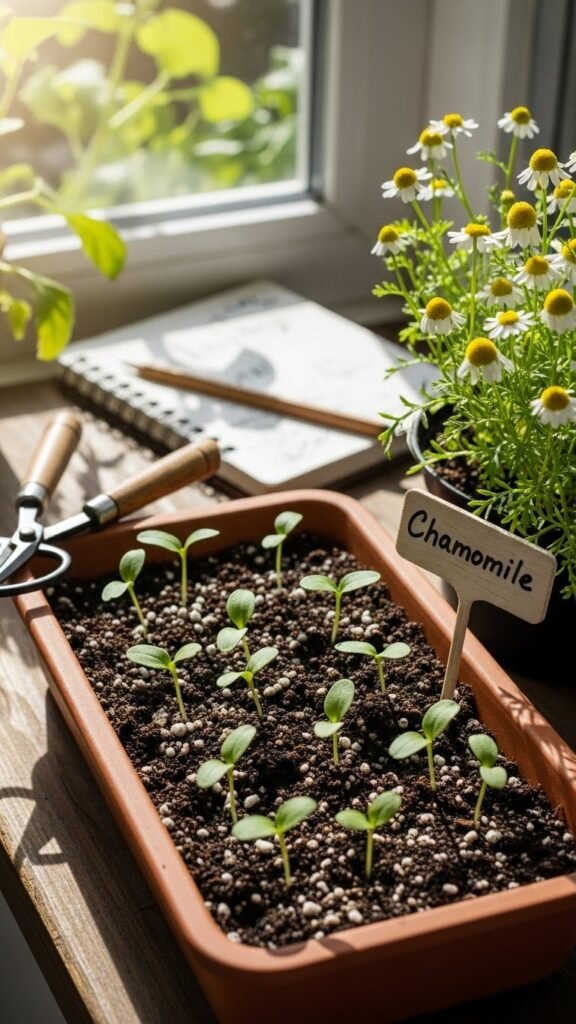
When you sow chamomile seeds on a sunny windowsill, aim for a shallow tray filled with gritty, well-draining potting mix so the tiny seeds sit just under a dusting of soil and get steady warmth and light. You’ll tend an organic seed bed, space seedlings for airy growth, feel the coarse mix, and note harvest timing as blooms mature—pluck freely, sip, and roam.
Neon Pothos Trail Display

Neon Pothos adds a punch of chartreuse that travels beautifully along a windowsill or down a wall, so set up a shallow shelf or hanging rail to let its vines trail freely.
You’ll favor airy placement, lightweight terracotta pots, and glass jars for neon propagation. Arrange heights to create a layered trailing display that feels unfettered, tactile, and ready to roam.
Pilea Peperomioides Accent
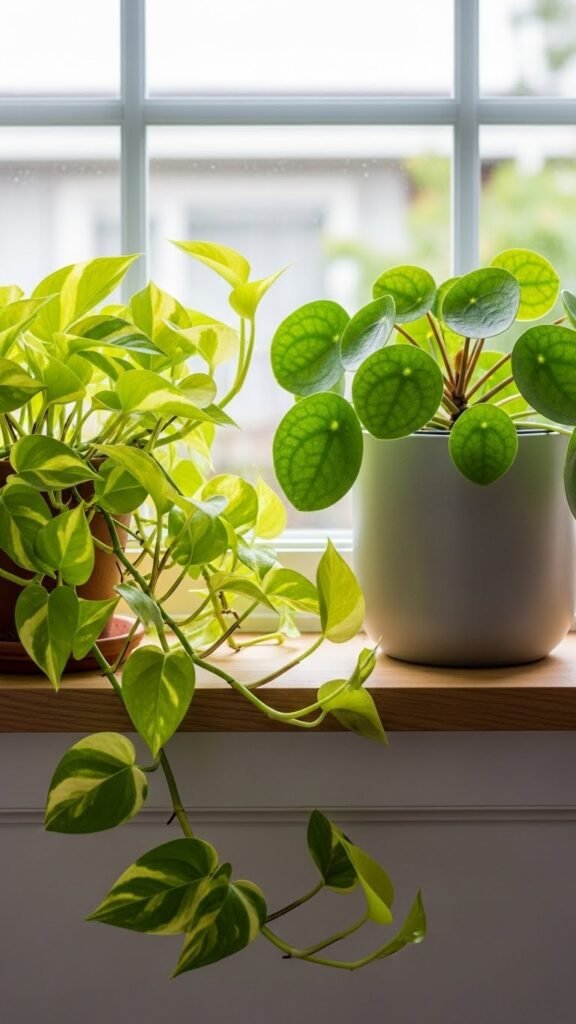
After the loose, trailing energy of the Neon Pothos, bring in Pilea Peperomioides to punctuate the sill with sculptural, coin-shaped leaves that float like green saucers. You’ll place the pancake plant in a matte ceramic pot, letting light graze its glossy coins. This coin plant anchors your composition, offers clean geometry, and frees your windowsill to breathe and arrange.
Mini Monstera With Support
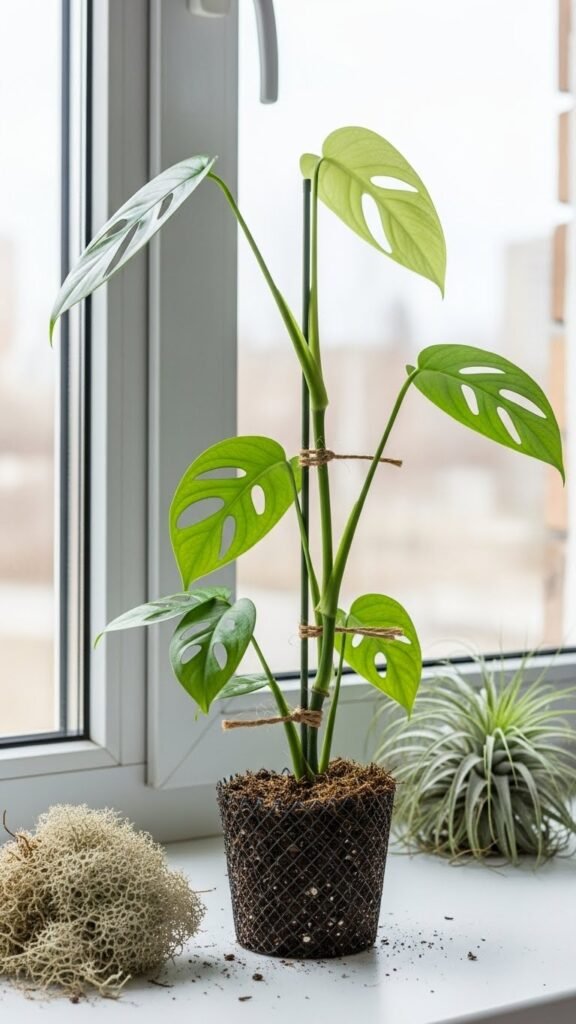
Tuck a Mini Monstera beside the Pilea and give it a slim stake or trellis to climb so its fenestrated leaves unfold upward rather than splay across the sill. You’ll favor airy soil, soft moss for an air layering technique, and jute ties that respect stems. With trained climbing, the plant claims vertical space, freeing your windowsill while feeling tactile, minimal, and liberated.
Lavender in an Edible Flower Mix
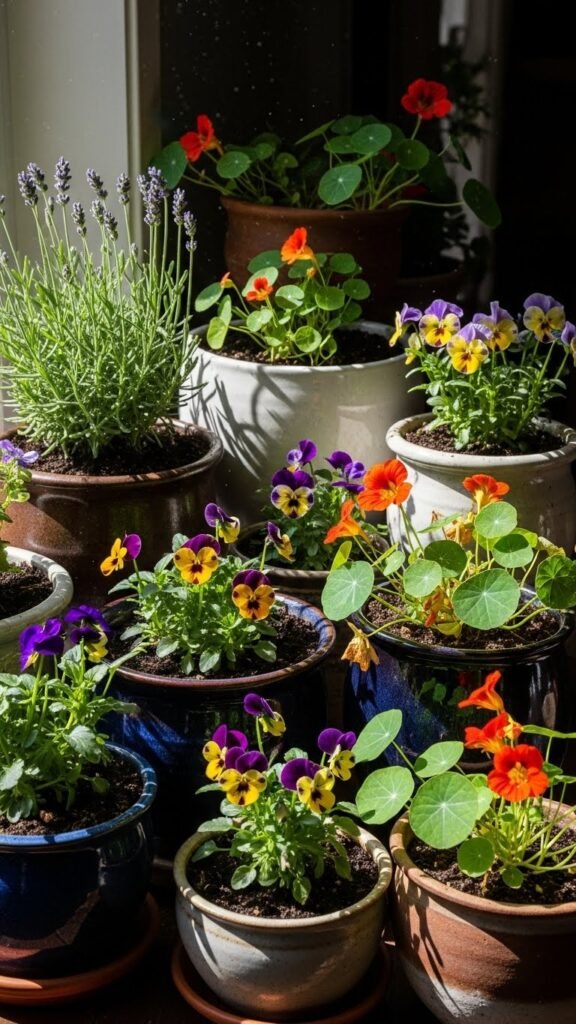
Bring lavender into an edible flower mix to anchor the sill with fragrant height and silvery foliage that plays off softer blooms. You’ll place compact spikes beside pansies and nasturtiums, mindful of sun, soil texture and ceramic pots.
Its culinary pairing potential invites playful recipes, while drought tolerance frees you from fuss. Touch, scent and light shape a small, liberated windowsill tableau.
Southwestern Window Vegetable Rack

If you enjoyed the fragrant, silvery pause of lavender among pansies, shift your attention to a sun-baked aesthetic that celebrates hardy edibles and raw materials: a Southwestern window vegetable rack stacks shallow troughs of gritty, fast-draining mix against warm plaster or exposed brick, so each tier catches full southern light.
You’ll arrange sun baked microgreens on adobe inspired shelving, embracing raw texture and open airflow.
West-Facing Veggie Shelf
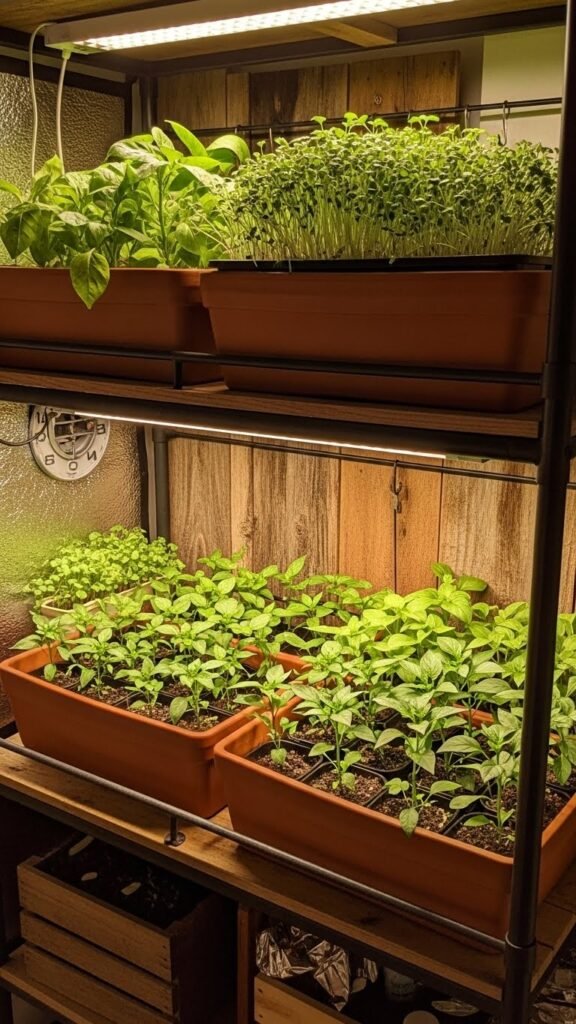
Because late-afternoon sun casts warm, angled light across a narrow sill, a west-facing veggie shelf becomes a prime spot for heat-tolerant greens and fruiting herbs.
You arrange terracotta trays, metal rails, and reclaimed wood to channel warmth, favor drought tolerant microgreens and compact peppers, and hang heat reflective curtains to temper glare.
You’ll relish the freedom of sculpting a productive, sunlit niche.
Bay Window Herb Terrace

A bay-window herb terrace transforms the inward curve of glass into a layered living ledge where you can arrange pots by depth and light exposure; use wide-sill rosemary and sage toward the outermost panes, keep basil and tarragon nearer the warmer center, and tuck smaller chives and parsley into shallow trays.
You’ll craft a compact culinary terrace with tiered planters, microclimate herbs, stone troughs, and reclaimed wood shelves that honor space and freedom.
Upcycled Container Planters

Move from the bay window’s curated herb terrace to the playful possibilities of upcycled container planters, where reclaimed objects become vessels that shape both plant growth and room character. You’ll choose rustic tinpots for metallic edge and drainage, or woven basketplanters for airy roots and texture.
Arrange them by light, layer heights, and let materials steer form, freeing your layout to breathe and evolve.
Sealed Terracotta Pot Ideas
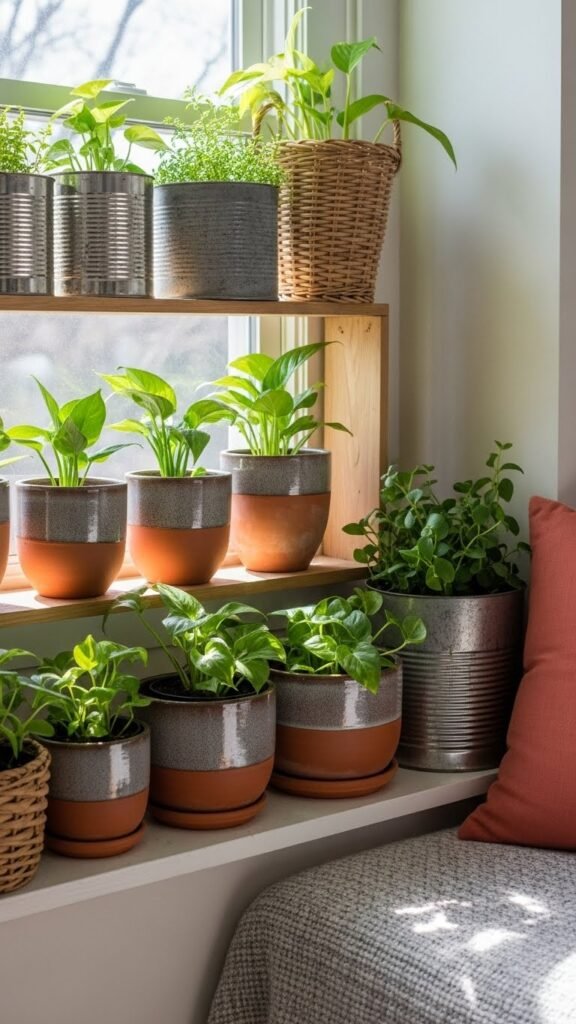
Brushed with sealant and warmed by sunlight, sealed terracotta pots hold form and moisture in ways that change how your windowsill breathes. You place earthen cylinders to define nooks, their matte skins softened by sealant and hinted glaze.
Inside, glazed interiors reflect light and guard roots, letting you arrange compact jungles that feel liberated, tidy, and tactile.
Drainage-Optimized Planting

Get drainage right and your windowsill plants will thrive instead of just surviving. You’ll arrange a shallow gravel layer beneath soil, shaping space so water moves away from roots.
Add capillary matting for controlled wicking, pairing breathable pots and coarse substrate. You’ll enjoy freedom to water boldly, knowing runoff clears fast, roots breathe, and compact windowsill gardens stay clean, light, and alive.
Seedling Starter Strip
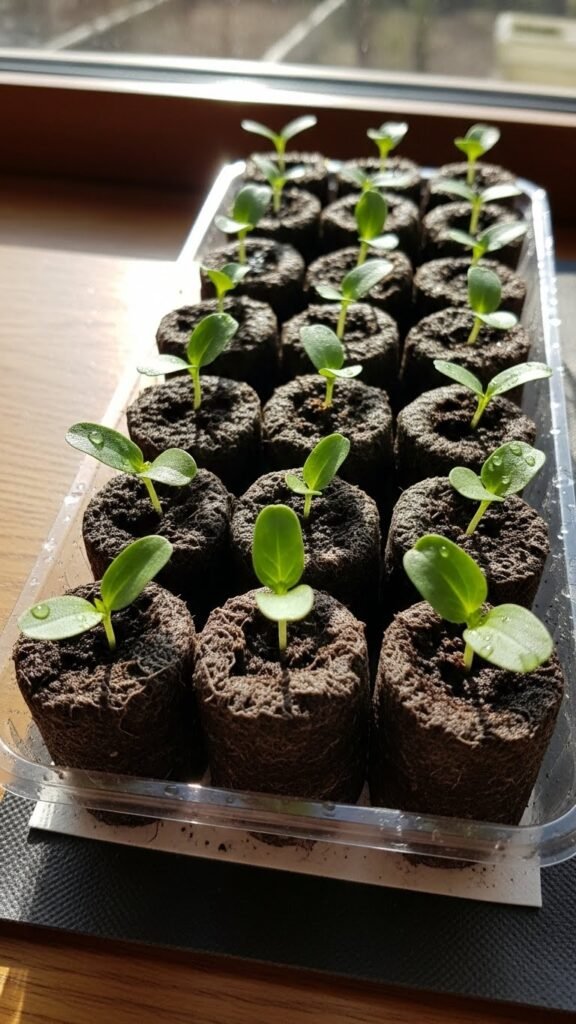
Good drainage sets the stage for healthy seedlings, but to actually kick seedlings off you’ll want a dedicated starter strip that manages soil, moisture and light in a narrow, organized band.
You arrange peat pellets in a shallow tray, align a slim germination mat beneath, and place the strip on a sunny sill.
You control spacing, touch soil textures, and free seedlings to expand.