
You’ll shape a lush summer retreat by pairing big-leaf specimens, layered understory plants, and smart hardscaping so each sightline feels intentional. Think compact palm clusters in recycled containers, mossy stepping-stone paths, and bog-edge planting that tames water edges. I’ll outline practical combos, material tips, and space-saving layouts that keep maintenance manageable — and a few bold ideas that might change how you use your outdoor rooms.
Bold Foliage Showstoppers
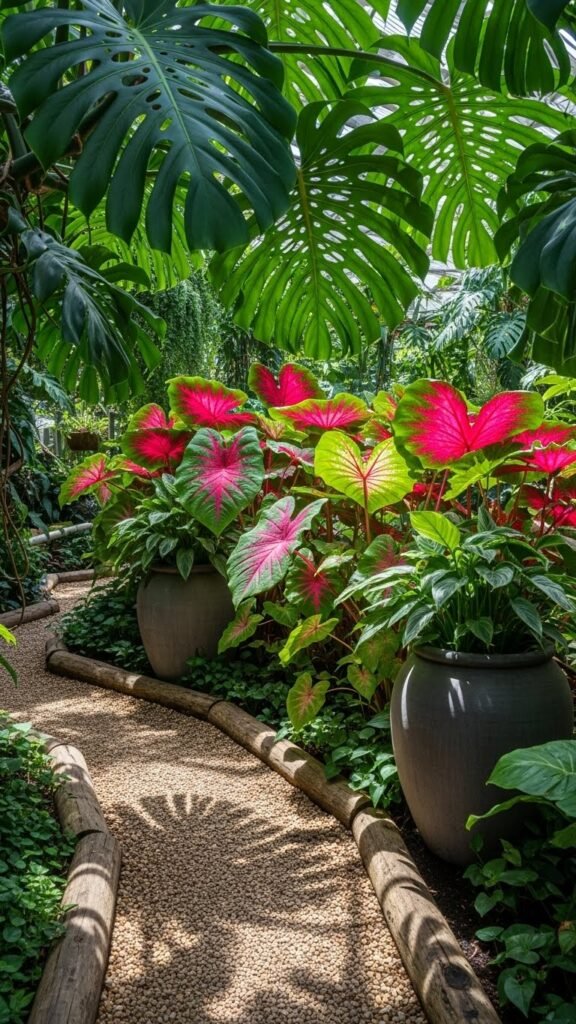
Often you’ll let bold foliage take center stage, arranging oversized leaves and striking textures to define paths, seating nooks, and focal corners.
You’ll plant giant caladiums for flamboyant color, pair glossy monstera to carve shade, and choose gravel, timber, and matte pots to anchor compositions.
You’ll value movement, clear sightlines, and tactile materials that let the garden feel free and purposeful.
Mini Tropical Container Gardens
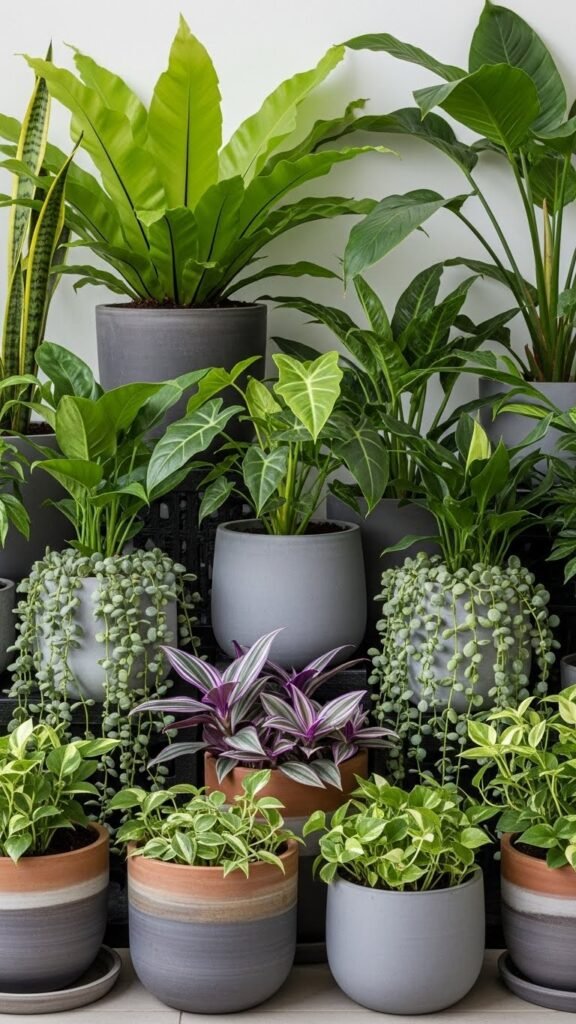
A few compact pots can turn a balcony or corner into a lush, tropical pocket—place tall, architectural foliage like bird’s nest ferns and dwarf philodendrons at the back, tuck trailing tradescantias and baby pothos near the rim, and use chunky clay or matte-finish fiberglass containers to anchor the group.
You’ll layer soil mixes, balance drainage, avoid a succulent succulent or desert terrarium aesthetic, and relish movable green freedom.
Lush Poolside Plantings
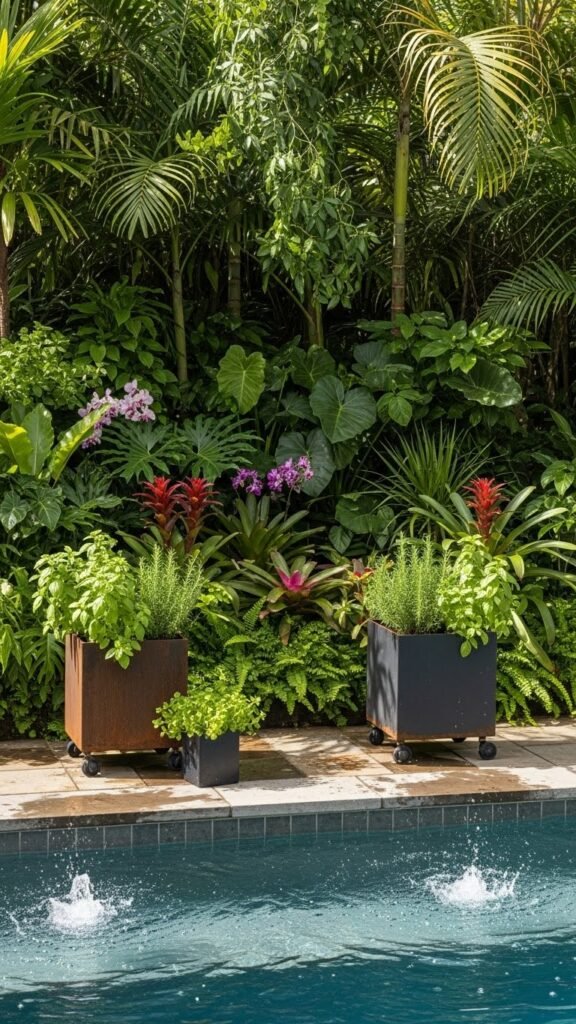
If your balcony pots sparked a love for portable jungle corners, bring that same layered thinking to pool edges where scale and moisture change the rules. You’ll balance rainforest understory textures with sun-tolerant palms, tuck medicinal herbs into porous planters, and choose rustproof containers and gravel drains. Orient massing for breeze, splash tolerance, and effortless maintenance so the poolside feels wild but utterly free.
Waterfall Pond Retreat

With a tiered cascade as your organizing spine, design the waterfall pond to read like a vertical plant community—mosses and ferns anchoring the wet ledges, sedges and bog plants softening the plunge pool, and sculptural marginal palms or alocasias framing sightlines.
You’ll sit free among textured stone, calibrate waterfall acoustics, place filtration for a koi sanctuary, and layer planting to blur edges.
Bromeliad and Orchid Corners
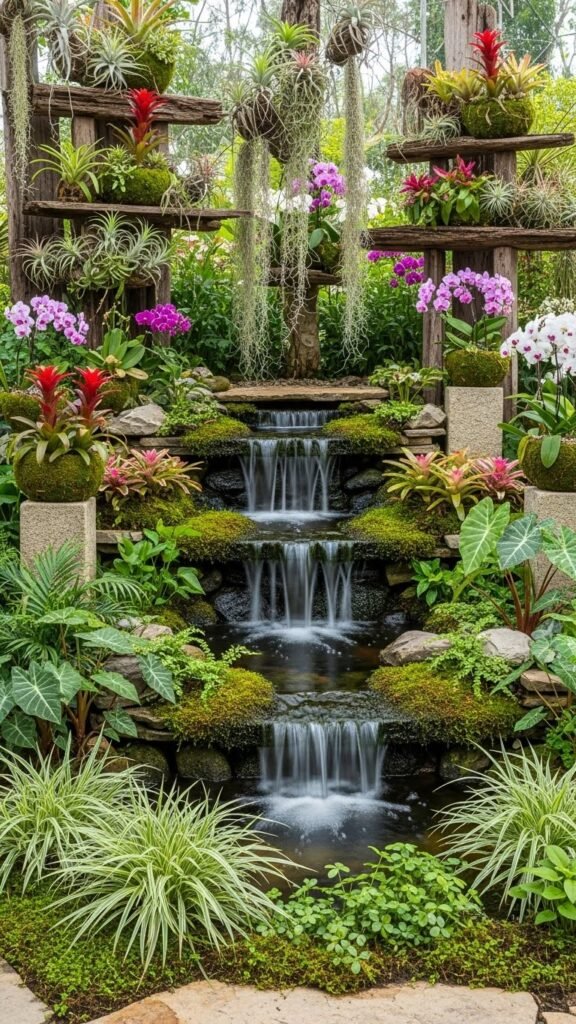
Leave the sound of the cascade behind and let pockets of humidity and filtered light claim the corners of your garden: bromeliads and orchids will take those niches and make them sing.
You’ll arrange epiphytes on reclaimed wood, craft airplant displays into hanging tiers, and set moss bowls on stone plinths. These plant-rich refuges invite movement, low-maintenance joy, and wild, liberated growth.
Banana Tree Focal Points

Plant a banana tree as a bold vertical anchor that instantly defines sightlines and shade in a tropical garden. You’ll place a compact musa near seating to cue scale, texture, and breeze movement.
Use gravel, reclaimed timber edging, and porous soil for drainage. Combine edible ornamentals—herbaceous ginger, lemongrass—for utility and sculptural form, keeping paths clear for easy, free movement.
Shade-Garden Canopy With Ferns
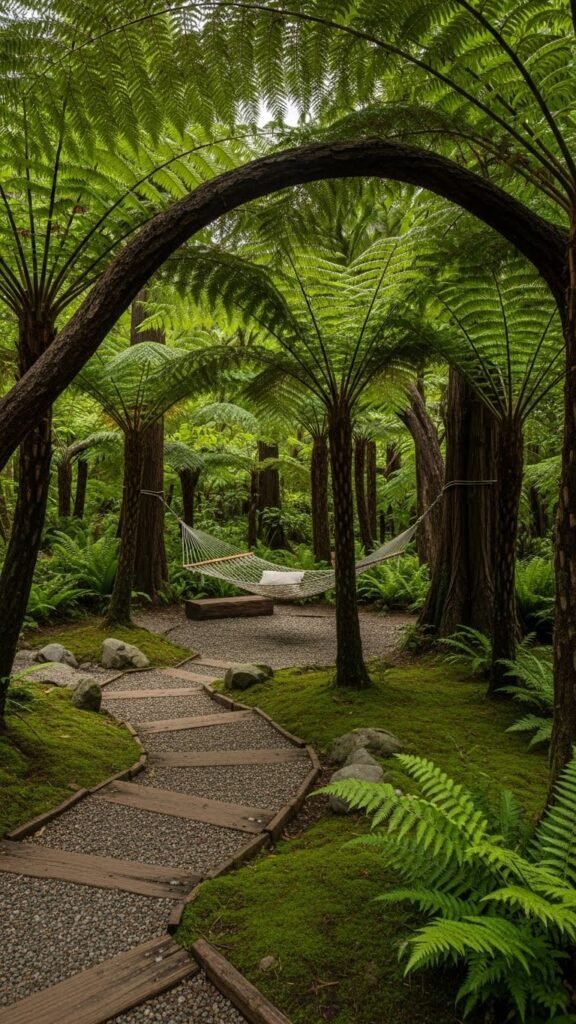
When you step beneath a layered canopy of tree ferns and arching fronds, the garden’s microclimate shifts—cooler air, dappled light, and a hush that encourages slower movement and close inspection.
You shape paths and a hammock clearing, select fern companions and textured trunks, and lay gravel, wood, and stone for drainage and contrast. A mossy understory cushions feet and softens edges, inviting lingering.
Tropical Rock Garden Accents
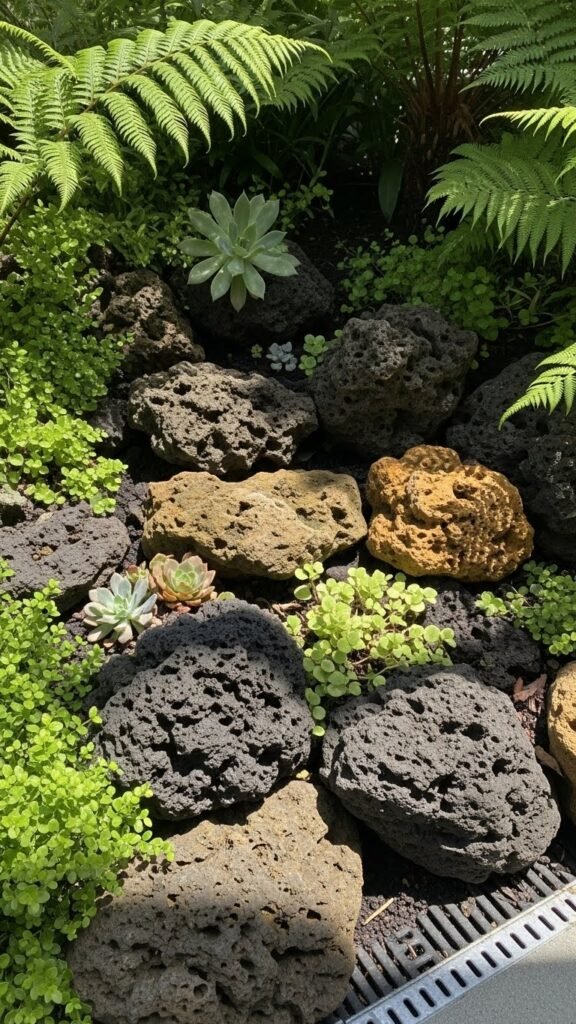
Stepping out from the hush under fern fronds, you can introduce sculptural stones and heated sun pockets to bring contrast and structure to a tropical plot.
You place lava accents for texture, carve drainage into crevices, and pocket succulents into protected nooks.
You balance shade-loving clumps with bright rock faces, creating a liberated, tactile layout that reads like intentional wilderness.
Colorful Croton Borders
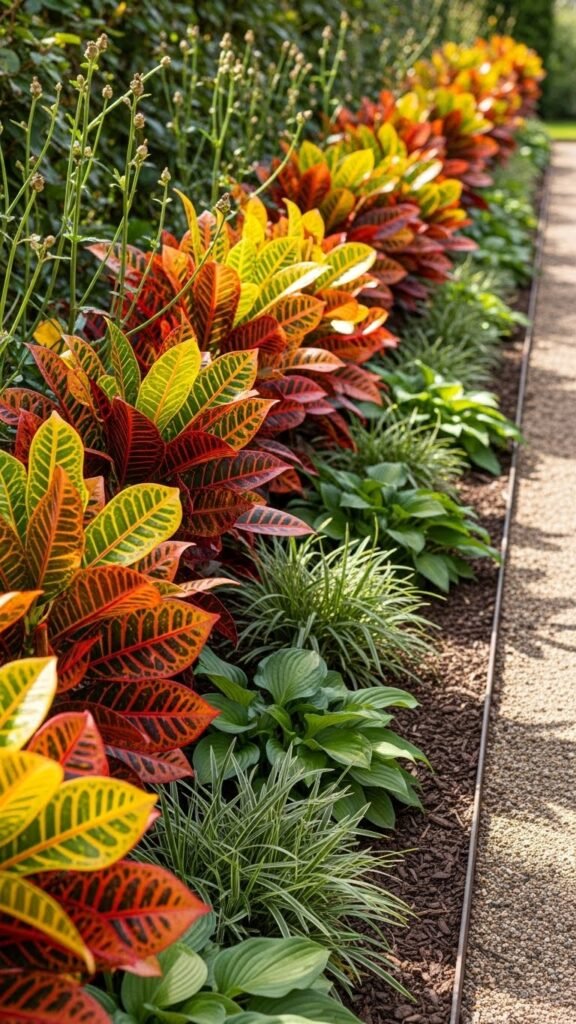
Often you’ll rely on crotons to define edges with bold, architectural color; their variegated leaves act like living tiles that frame paths, patios, or mixed beds.
You’ll plant staggered variegated plantings for rhythm, pairing leaf shapes and mulch or gravel for contrast.
Maintain clean lines with seasonal pruning, choose durable edging materials, and let the border breathe so movement and light feel unrestricted.
Stepping-Stone Rainforest Path
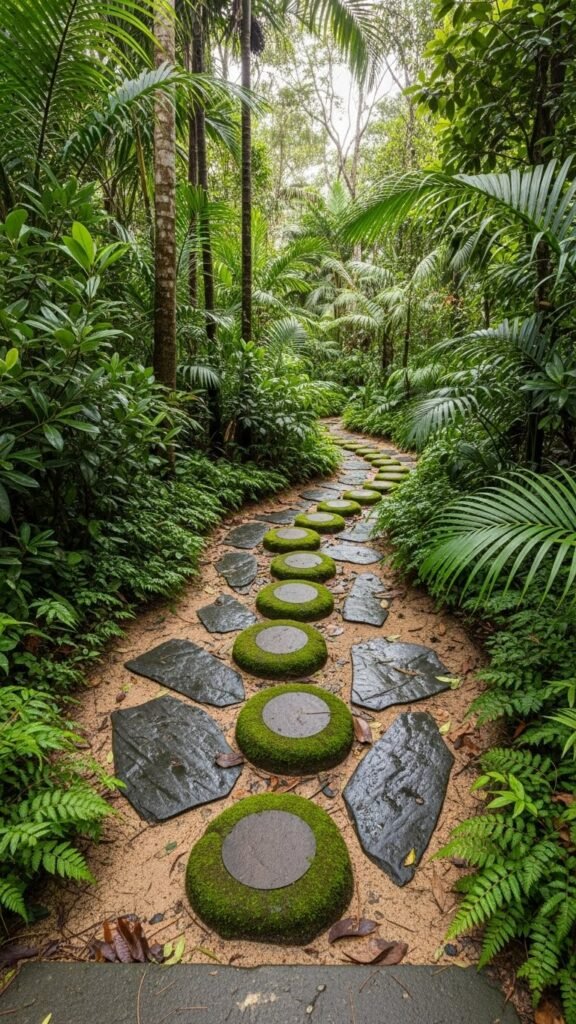
Framed by layered ferns, palms, and glossy-leaved understory plants, your stepping-stone rainforest path guides movement while cultivating pockets of shade and moisture that support lush growth. You’ll craft a fern walkway using irregular slate or recycled concrete, set on sand and rich loam. Moss steppingstones anchor each pause, encouraging spore-rich microhabitats and free-flow circulation through the garden.
Elephant Ear Drama Beds

Make a bold statement with elephant ear drama beds that anchor tropical compositions and shape sightlines with oversized foliage. You’ll choose elephant ear varieties for scale, texture, and leaf color, grouping dramatic basal clumps to create focal planes. Position beds along paths and edges, pair them with gravel or corten for contrast, and prune selectively so mobility and wild, liberated forms coexist.
Burbling Tabletop Fountain Nooks
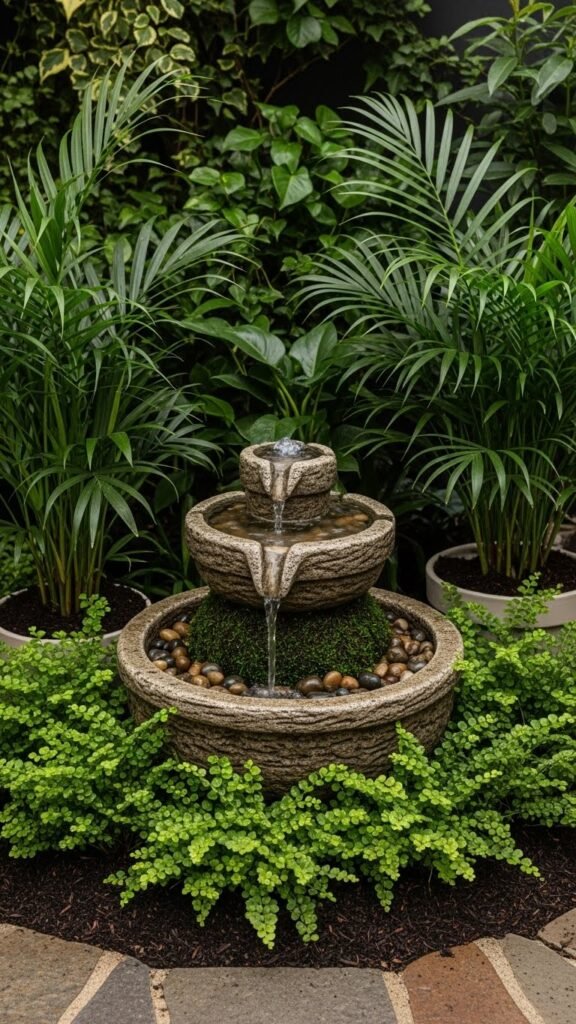
Often you’ll tuck a burbling tabletop fountain into a snug garden nook to add movement, sound, and humidity that benefits nearby foliage. You’ll site it where leaves drape, choose porous stone and a mossy pebble base, and craft a mini grotto feel with compact palms and ferns.
Keep scale intimate, plumbing simple, and materials weatherproof so you can roam freely and change plant groupings.
Layered Container Collections
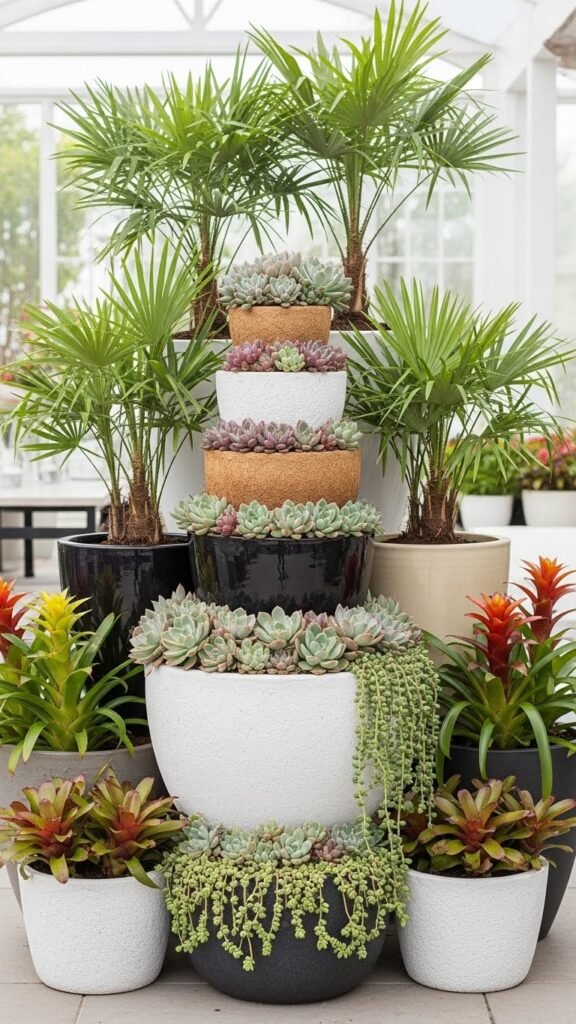
Layered container collections let you stack scale, texture, and seasonality in a compact footprint so each pot reads as part of a cohesive composition. You’ll mix tiered potting with heavy ceramics and lightweight fiber, placing miniature palmings as vertical anchors, succulent understory for low-water fill, and cascading bromeliads to spill movement.
You’ll edit boldly, arrange for sightlines, and move containers for freedom.
Hibiscus and Canna Flower Alley
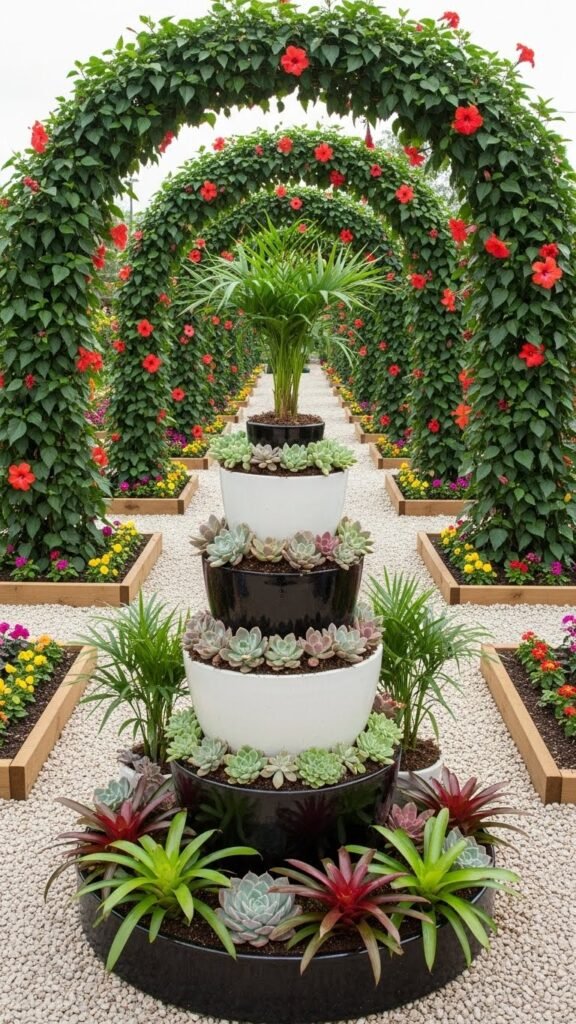
After arranging your layered containers, carry that eye for scale and sightlines into a Hibiscus and Canna Flower Alley where bold foliage and oversized blooms form a living corridor.
You’ll prune for openings, stake Hibiscus archways for durable frames, and plant a Canna lined boulevard on raised beds. Use gravel paths and breathable soil mixes to keep movement easy and maintenance minimal.
Tropical Nightlight With Torches and Fire Pit

Bring your tropical garden to life after dusk by arranging torches and a central fire pit that both illuminate and highlight structural plants; position torch lines to cast warm washes on palms, bird-of-paradise, and large-leaf philodendrons while the fire pit anchors a social clearing framed by heat-tolerant shrubs.
You’ll plan fire pit zoning, practice torch maintenance and ember safety, and use smoke mitigation to protect foliage.
Vertical Tropics With Climbing Vines
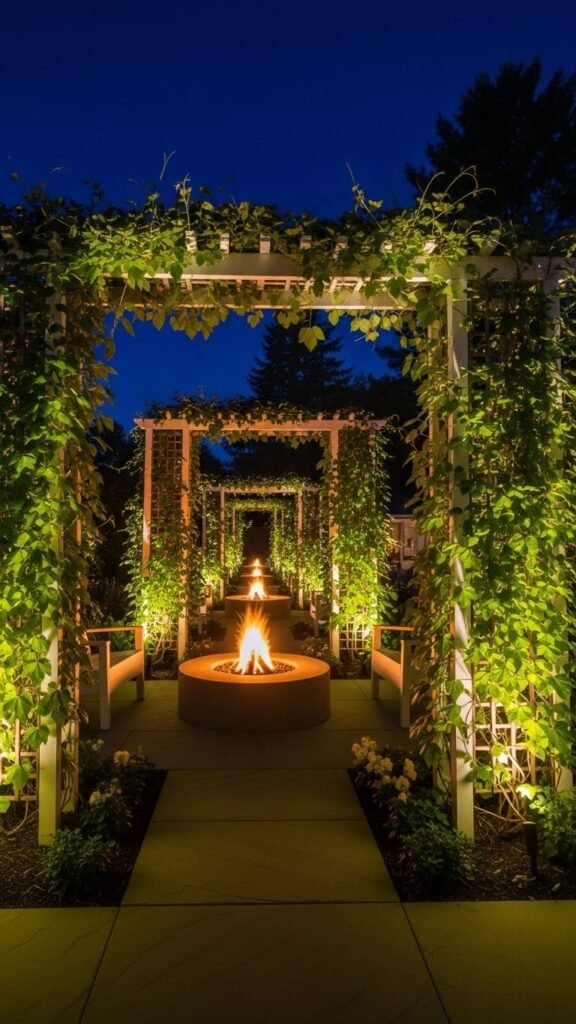
Lighting a night garden around a fire pit highlights vertical surfaces as well as horizontal beds, so you can extend that drama upward by training climbing vines onto trellises, arbors, and living walls.
You’ll use air layering techniques to bulk stems, choose rot-resistant materials, plan clear sightlines, and schedule trellis maintenance. Let resilient foliage cloak structures so you feel free to wander and rearrange.
Bird-Attracting Tropical Flowers
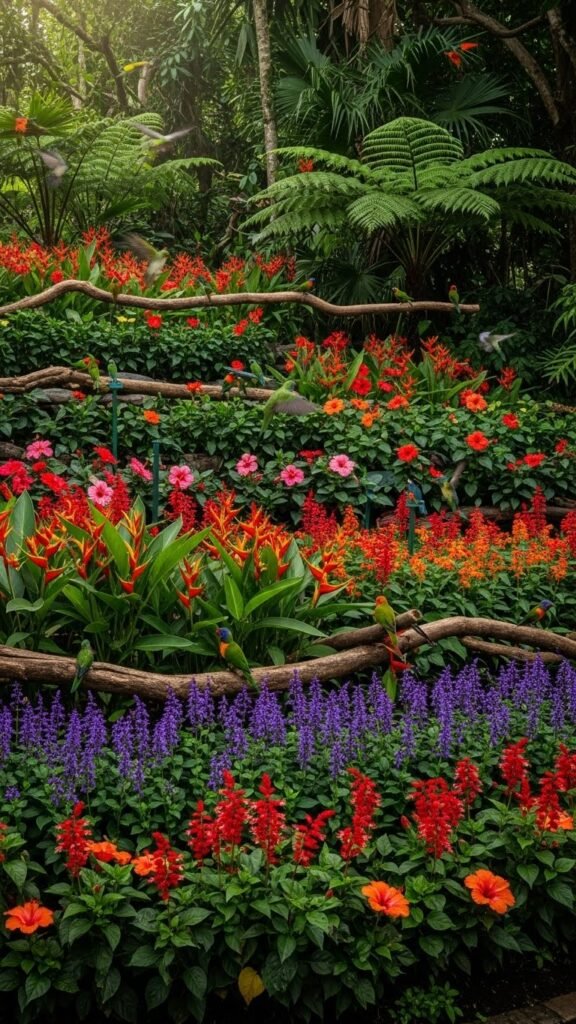
Many tropical flowers will turn your garden into a bird magnet when you place them with purpose—think staggered heights, sunlit edges, and sheltering foliage that guides flight paths.
You’ll choose nectar rich blooms—heliconias, hibiscus, and tubular salvias—pairing them with nesting friendly shrubs for cover.
Plan soil mixes, mulch, and natural perches so birds forage freely and move through layered, tactile planting.
Tropical Balcony Makeover

If you want to turn a small balcony into a lush tropical nook, start by thinking vertically: stack planters, hanging baskets, and a slim trellis to squeeze maximum leaf and flower volume into limited floor space.
You’ll choose hardy palms, philodendrons and bromeliads in lightweight resin pots, add a Hammock Hideaway for lazy afternoons and a compact Bistro Nook for meals and freedom outdoors.
Mixed-Texture Border Plantings
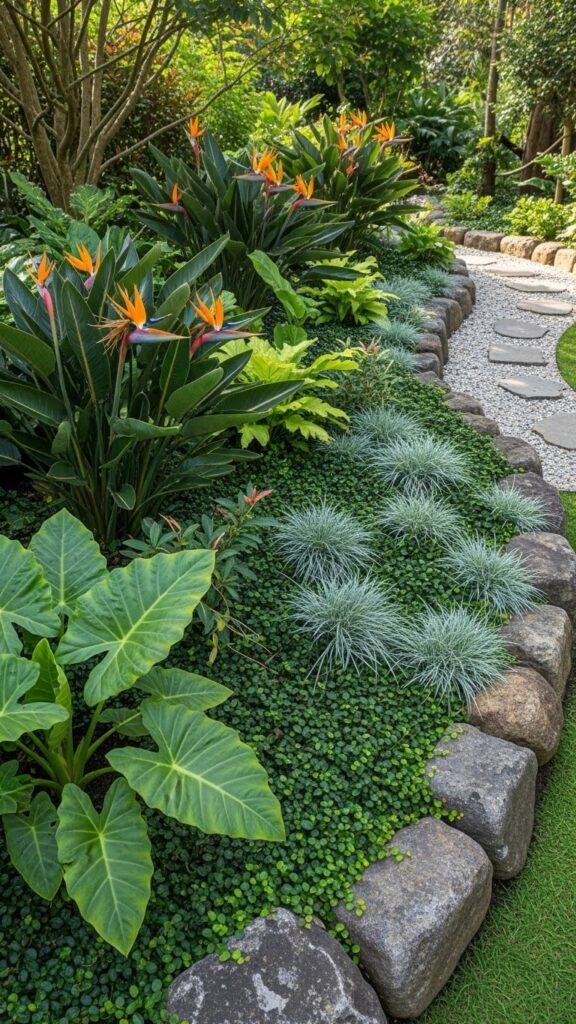
By layering foliage with intent, you can craft a mixed-texture border that guides the eye and tames the edge of any bed or pathway. You’ll combine bold-leaved focal plants with a textured understory and low, sculptural grasses.
Use stone or reclaimed timber edging to anchor layered foliage, keep sightlines open, and let circulation feel free—functional, plant-forward, and unmistakably tropical.
Recycled Vessel Planters
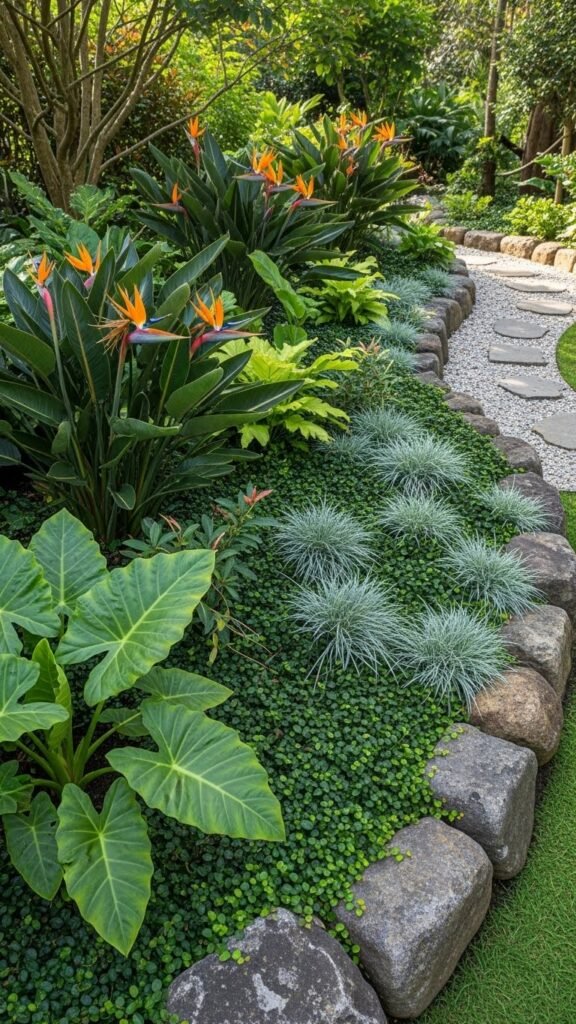
Think of recycled vessel planters as creative containers that rescue materials and give your tropical palette a fresh, elevated stage.
You’ll plant bold philodendrons and bromeliads in upcycled tireplanters and weathered driftwood troughs, arranging heights for flow and sightlines.
Choose fast-draining mixes, seal rustic wood, and position pieces to define corners, pathways, and oasis-like pockets that let you roam and experiment.
Poolside Shade Pergola With Vines

Against the blaze of midday sun, a poolside pergola wrapped in climbing vines gives your tropical garden a cool, layered canopy that feels lived-in and deliberate.
You choose sturdy hardwood or powder-coated steel, place seating to catch dappled light, and train vigorous vines for privacy.
Plan straightforward vine maintenance—pruning, tie-ins, seasonal checks—so the structure stays free, green, and resilient.
Pond Edge Planting for a Rainforest Feel
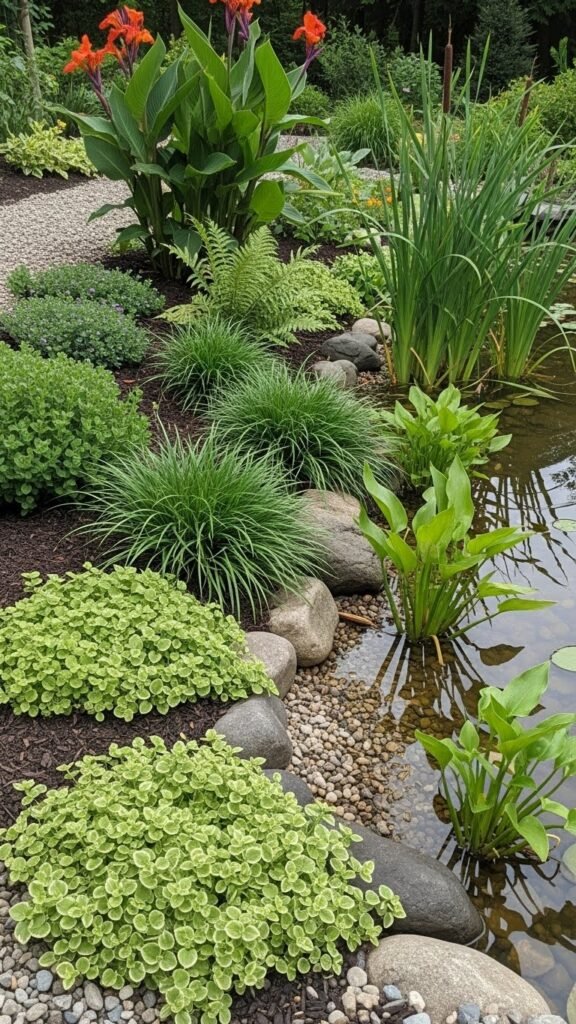
Along the water’s edge, layer plants to recreate a wet rainforest margin that looks wild but behaves well: position low, moisture-loving groundcovers like creeping Jenny and dwarf variegated sweet flag at the immediate shoreline, tuck clumping sedges and ferns slightly upslope for textural shift, and place larger marginal reeds or bog plants—Canna, Typha, or hardy elephant ear—where they can root in shallow water.
You’ll favor native marginals and amphibious groundcovers, arrange rocks and gravel for drainage, and leave informal access paths so you can tend, experiment, and enjoy a liberated, resilient pond fringe.
Warm-Palette Flower Beds
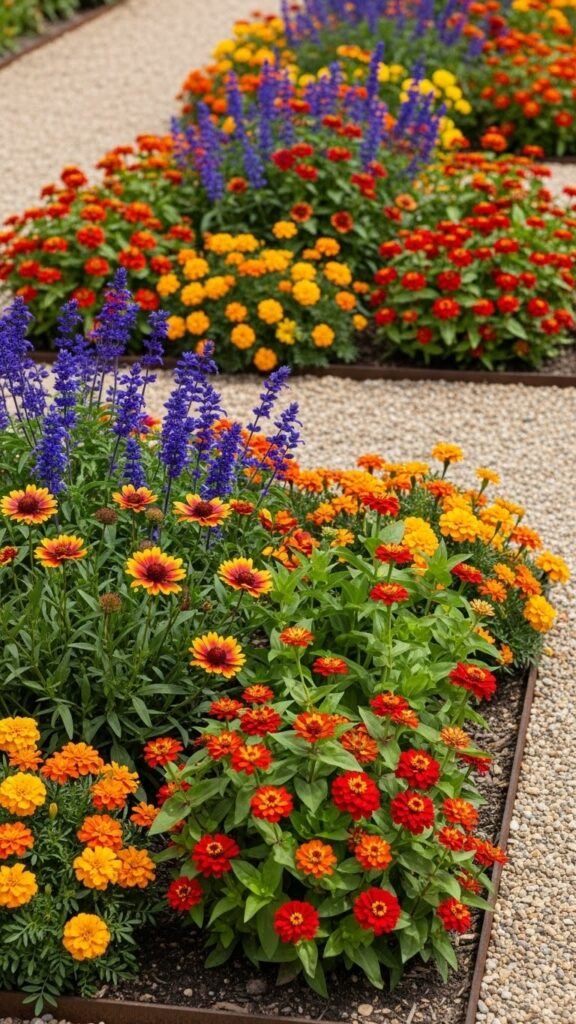
Paint warm-palette flower beds with blocks of sun-loving, heat-tolerant plants—salvias, blanket flowers, lantana, and vermilion zinnias—to create a sequence of fiery tones that read well from a path or porch. You’ll plant sunset marigolds and copper zinnia for contrast, stagger heights to frame sightlines, and use gravel or rusted steel edging so beds feel intentional yet freeform, drought-wise and tactile underfoot.
Small-Space Tropical Corners
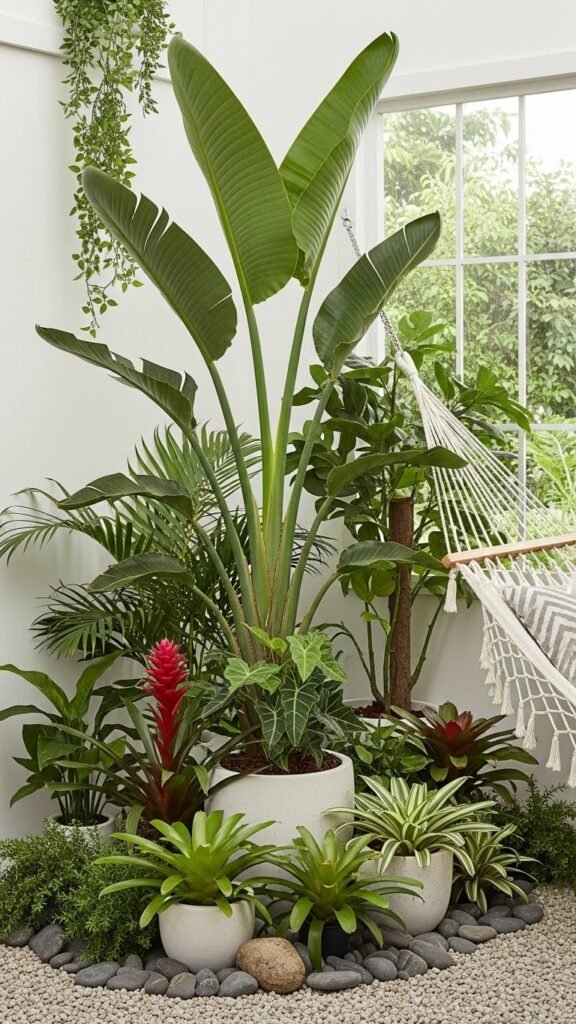
For a compact, tropical corner that feels lush rather than cluttered, pick a dominant architectural plant—like a bird of paradise, dwarf banana, or large-leaf colocasia—and arrange smaller textural companions (cordylines, bromeliads, dwarf gingers) around it to build vertical layers. You’ll define a compact hammock nook, use porous pots and gravel for drainage, and plant herbaceous scentings to free movement and encourage lazy, fragrant lounging.
Whimsical Tropical Accents and Ornaments

Often a single playful accent will lift a compact tropical corner from charming to memorable; choose pieces that converse with your plants’ forms and textures.
You’ll mix seashell mobiles and macrame plant hangers to echo leaf rhythm, hang lightweight ceramics near palms, and place stone orbs for grounding. Keep scale and material in mind so each ornament enhances movement, shadow, and breathable space.