
You’ll learn practical ways to squeeze high yields and seasonal interest from very small outdoor spaces, using vertical supports, tiered troughs, lightweight substrates and load‑rated fixtures to keep plants healthy and structures safe. Think modular irrigation, sun‑angle planning and root‑volume limits as design drivers rather than afterthoughts. These concepts make balconies, courtyards and narrow patios productive and elegant—and there’s a simple layout trick that ties them all together.
Vertical Herb Wall for a Sunny Balcony
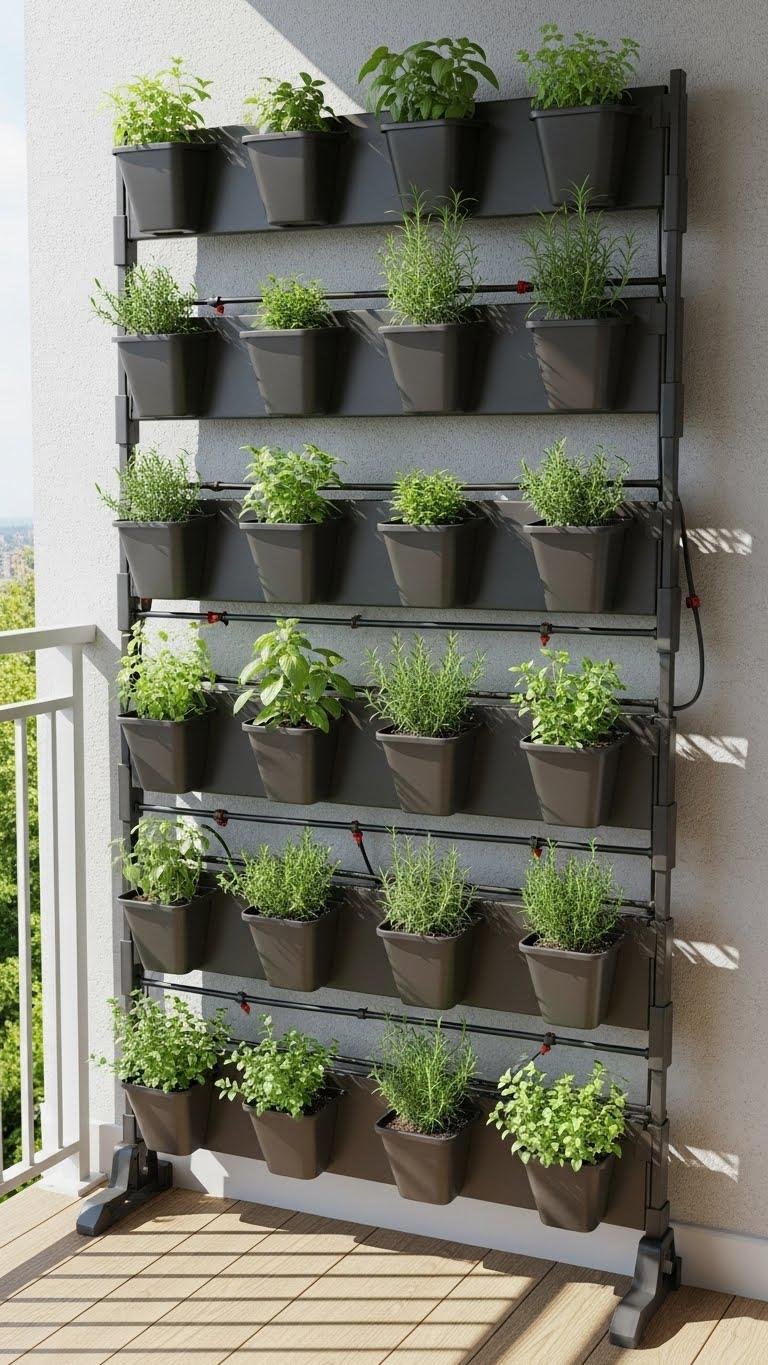
For a sunny balcony, mount a modular vertical herb system that maximizes root volume per square foot while keeping overall weight and wind load within safe limits. You’ll orient panels for full sun, choose sun loving herbs, and configure modular irrigation with drip emitters fed by a timer.
You’ll balance substrate depth, pot spacing, and anchoring so plants thrive and you stay free to rearrange.
Tiered Planter Staircase for Compact Patios
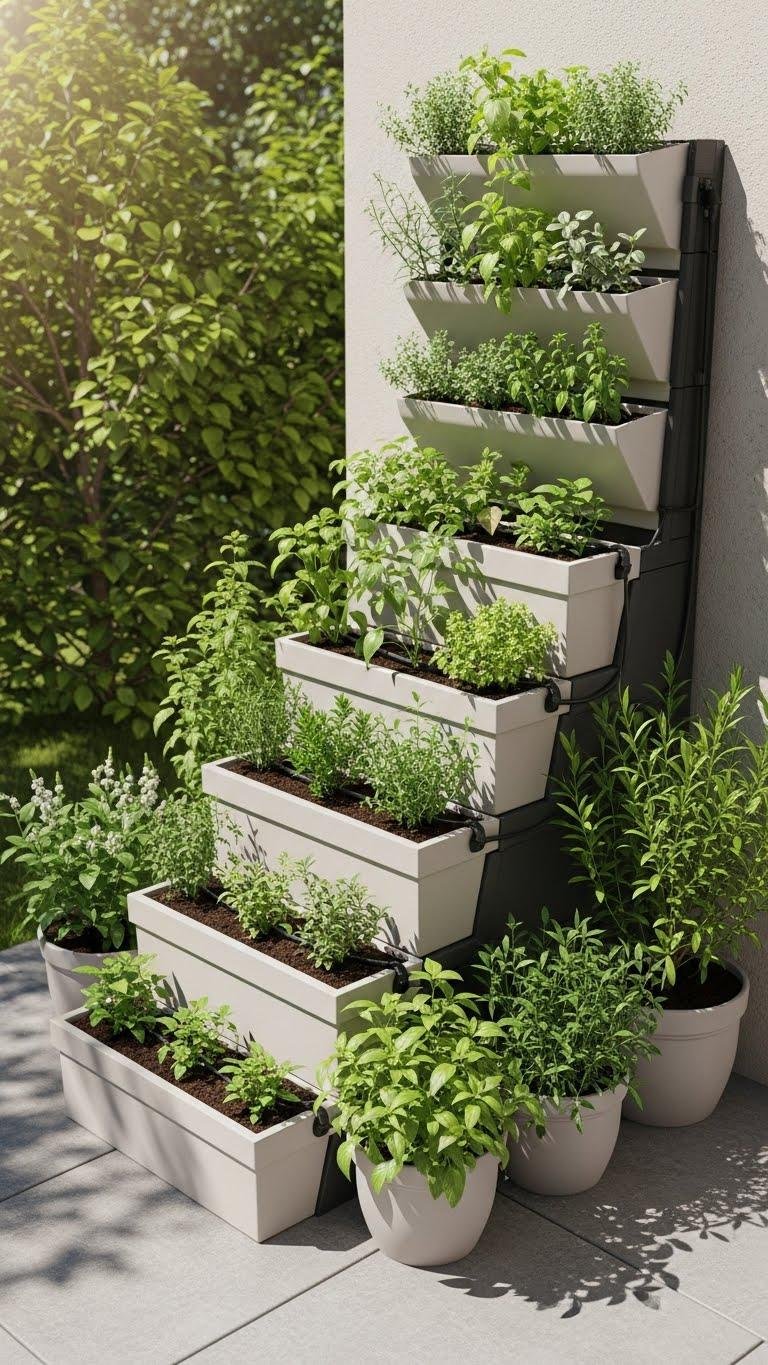
If you liked the sun‑facing vertical herb wall, you can reuse the same principles when building a tiered planter staircase for a compact patio: orient each riser to maximize sun exposure, size each trough for sufficient root volume, and integrate modular drip lines with staggered emitters.
You’ll design compact terracing with measured volumes, choose lightweight materials, plan stairway irrigation zones, and retain mobility for future reconfiguration.
Hanging Pocket Garden on a Fence
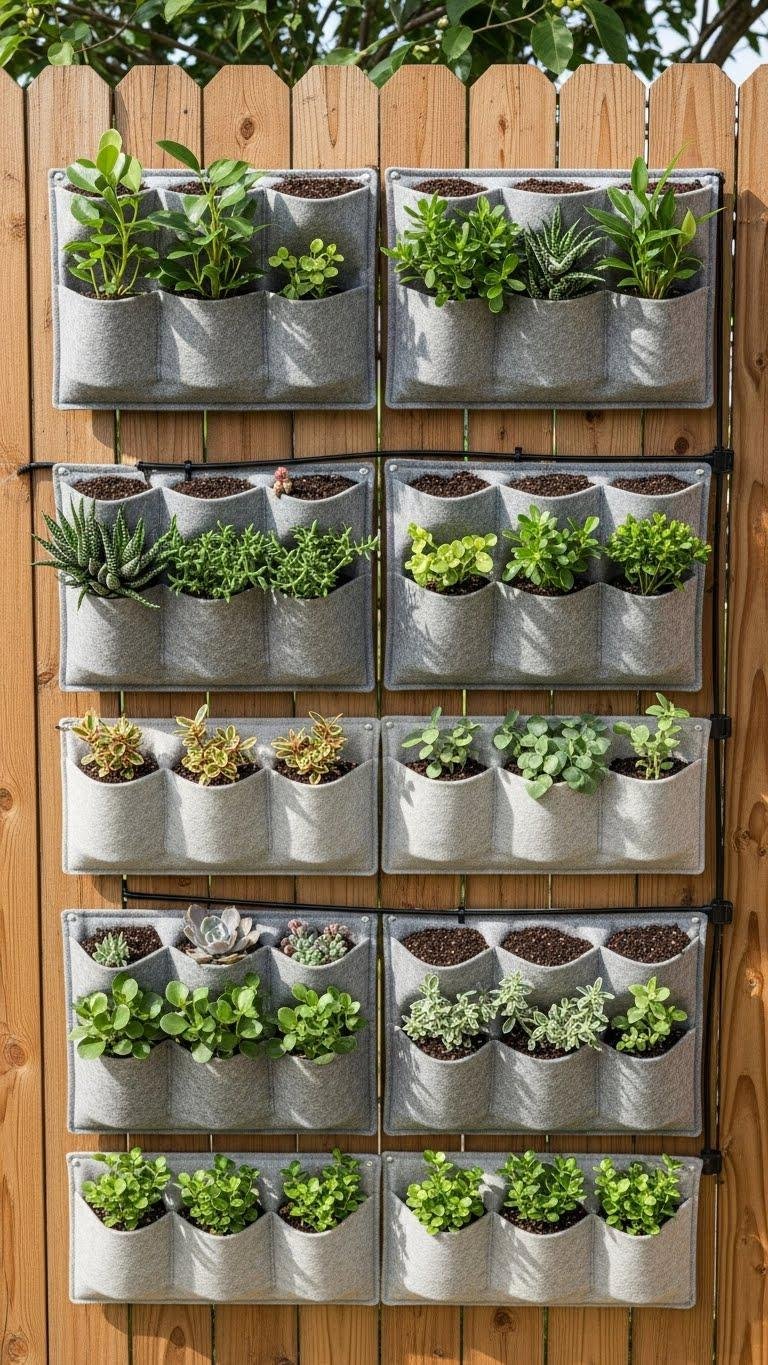
A hanging-pocket fence system gives you vertical planting without sacrificing ground space, letting you map plant placement by sun, root volume and irrigation access. You’ll mount DIY felt pockets or modular trays, orient succulent pockets for drainage, and zone by microclimate.
Anchor spacing, substrate depth and drip lines control weight and moisture. This scalable approach lets you customize density while maintaining easy maintenance and plant health.
Window-Box Vegetable Bar
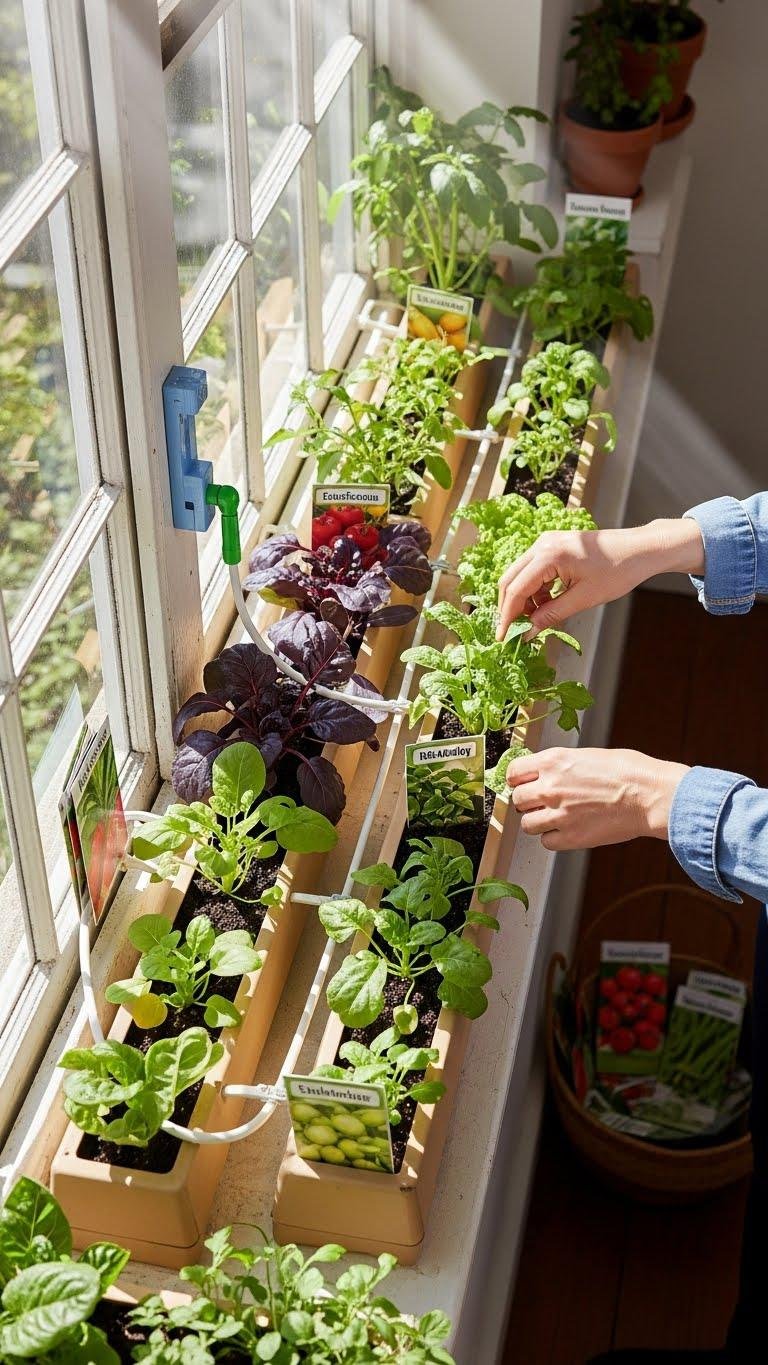
Moving your attention from vertical fencing to the sill, a window-box vegetable bar lets you pack productive, scale-aware growing into narrow horizontal space while keeping irrigation and microclimate control simple. You design narrow troughs with targeted soil depth, integrate micro irrigation lines, and plan seed succession for continuous harvests. You’ll optimize light exposure, root zones, and access for effortless, liberating productivity.
Trellis-Clad Corner for Climbing Vines

When you tuck a trellis-clad corner into an otherwise tight patio or balcony, vertical square footage becomes a high-yield bed for climbing vines without stealing floor space. You map load-bearing points, select shade tolerant vines, and set soil depth for root volume.
Clip growth to maintain sightlines, integrate climbing lighting accents for evening use, and keep modular anchors so the structure adapts as you roam.
Slim Raised Bed Along Walkways
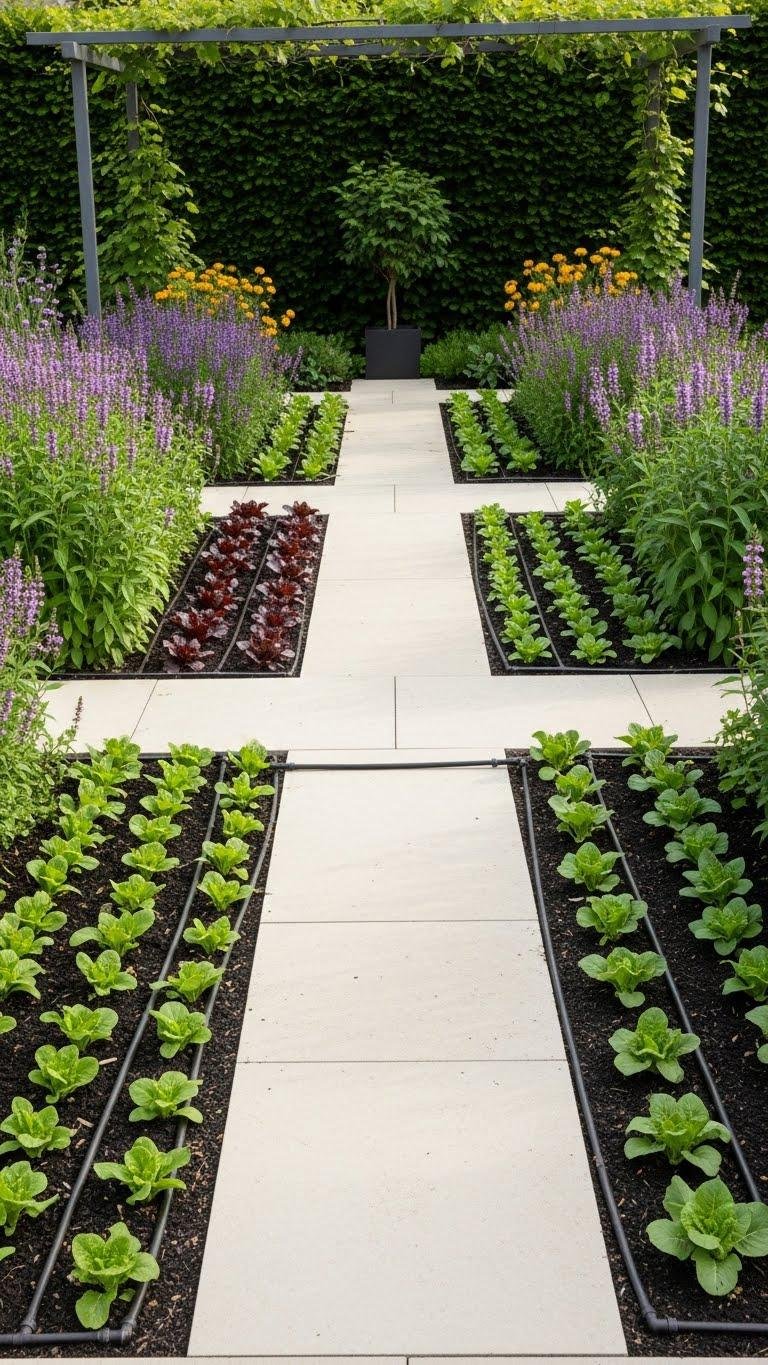
Paragraphs
Multi-Level Shelf Garden for Small Courtyards
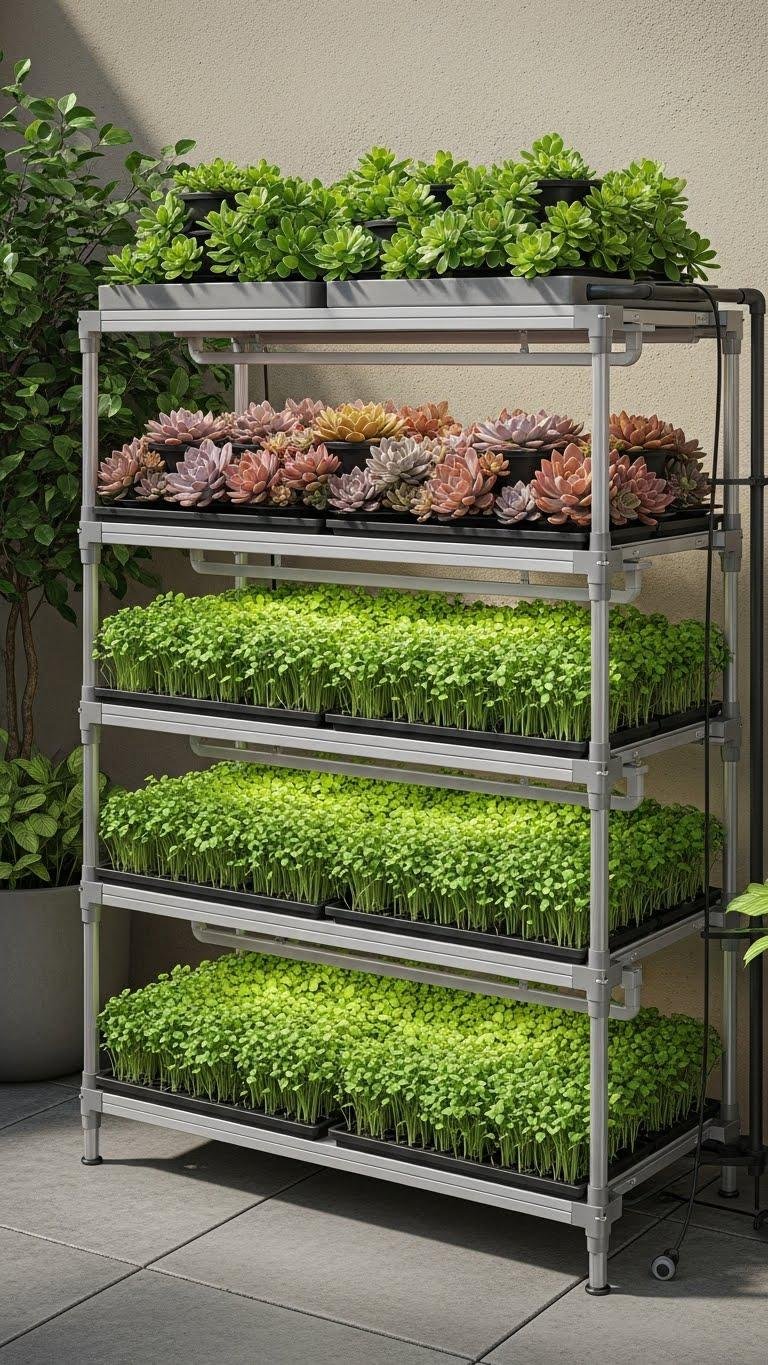
A tiered-shelf system lets you stack planting zones vertically to multiply growing area without enlarging your footprint.
You’ll configure modular shelves to optimize light, drainage, and root depth per level, supporting stacked succulents on upper tiers and stairway microgreens on lower shaded runs.
Use breathable trays, calibrated irrigation, and load-rated brackets so you retain mobility, scale control, and a liberated courtyard layout.
Folding Table With Integrated Planters
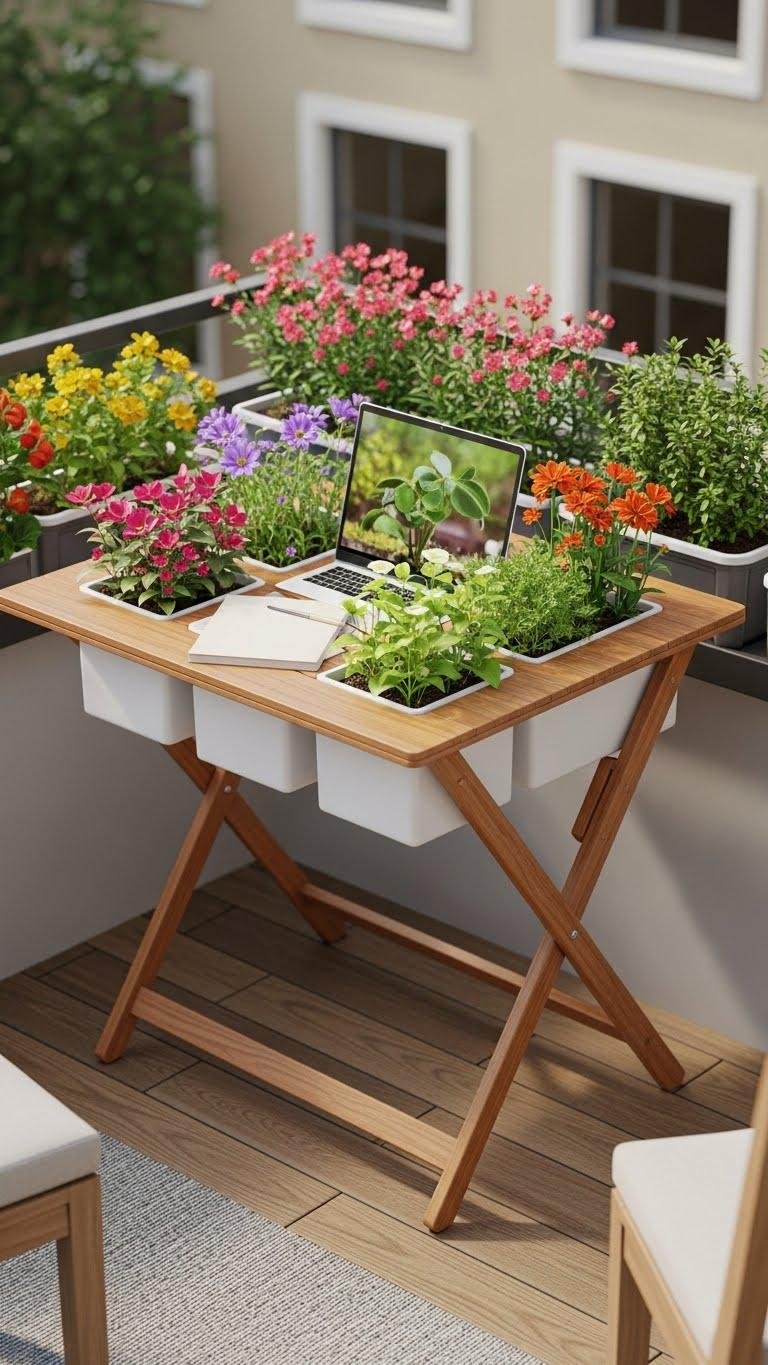
Fold down the tabletop to reveal integrated planters that turn a compact work surface into a productive growing station designed for tight courtyards and balconies. You’ll configure a folding workstation with modular tray sizes, choose lightweight materials, and guarantee planter drainage via recessed channels and removable drip trays. Scale-aware mounting preserves clearance and movement, giving you portable cultivation freedom without sacrificing structural rigidity or root-zone health.
Rail-Mounted Pots for Small Balconies
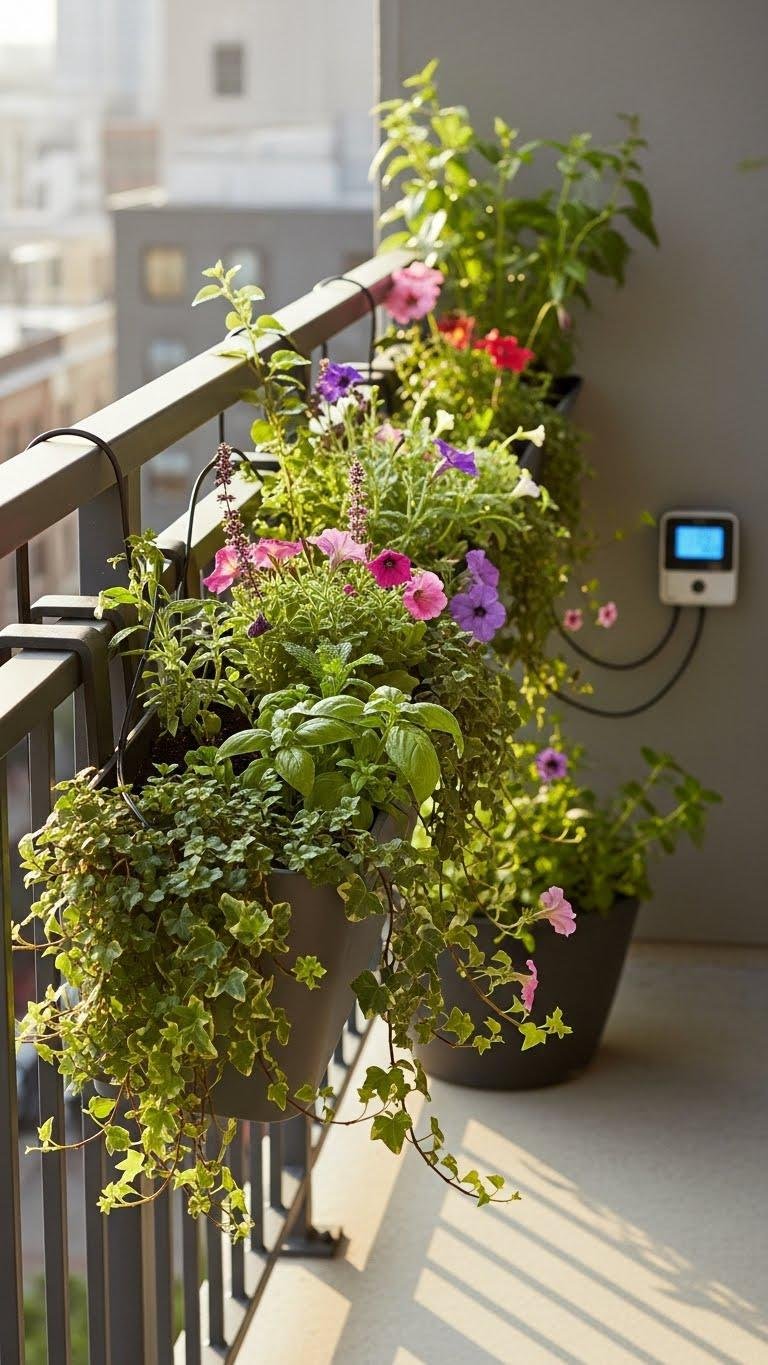
Rail-mounted pots let you turn narrow balcony rails into productive planting zones without sacrificing circulation or safety.
You’ll choose low-profile rail planters sized to rail load limits, orient plants by sun exposure, and install compact balcony irrigation with drip lines and a timer.
Secure brackets, breathable media, and regular maintenance let you maximize yield and mobility while keeping structure and neighbors safe.
Dwarf Fruit Tree in a Large Container
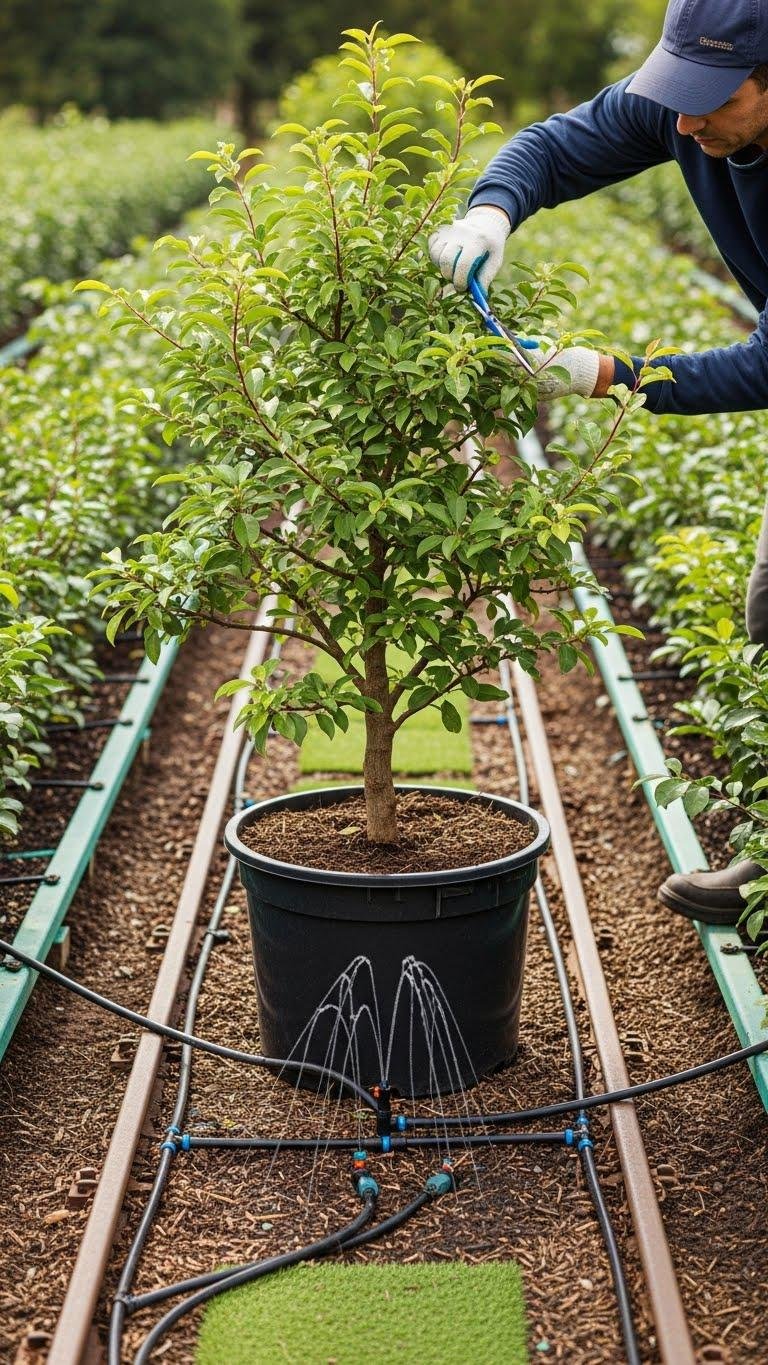
Moving from narrow rail planters to a larger container setup lets you grow a dwarf fruit tree where ground space is limited while keeping load and circulation considerations in mind.
You’ll choose rootstock, pot volume, and soil mix for stability and aeration.
Train a dwarf espalier to save footprint, install container irrigation with emitters, and prune precisely so fruit, structure, and mobility match your tiny garden freedom.
Compact Zen Garden With Low-Maintenance Plants

While you’ll prioritize minimal upkeep, a compact Zen garden demands precise planning of scale, substrate, and plant selection so each element performs visually and ecologically in a tight footprint.
You’ll choose a shallow moss tray, compact sedge, and dwarf ferns for texture, set on well-draining sand, and define edges with a slim bamboo border.
Plant spacing and maintenance intervals conserve freedom.
L-Shaped Bench With Built-In Planters
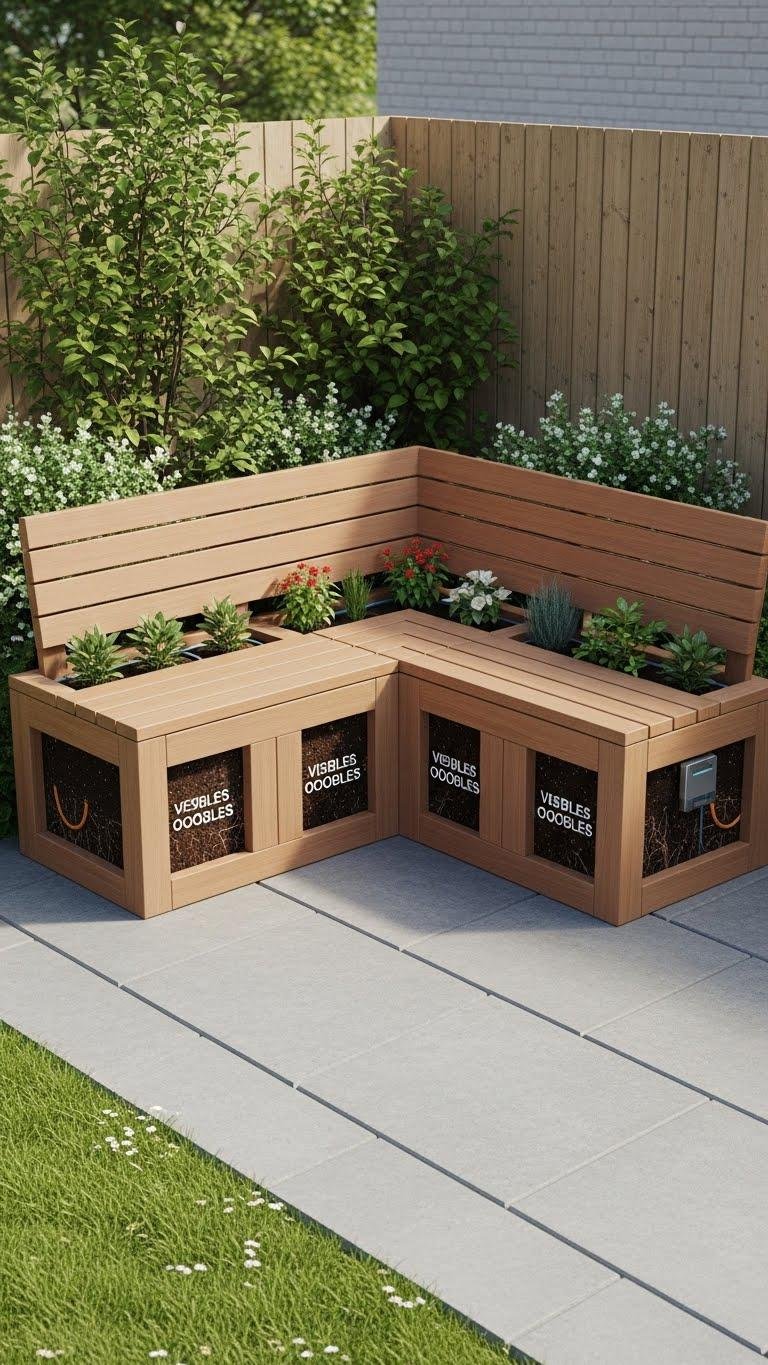
Anchor an L-shaped bench with integrated planters against a corner to maximize usable seating and planting area in tight yards; you’ll want to calculate seat height, planter depth, and armrest clearance together so the bench and plant modules read as one structural system.
You’ll design compact seating to free circulation, specify soil volumes for root health, and integrate built in irrigation for autonomous watering.
Mobile Cart Garden for Flexible Sunlight

Roll your cart to follow the sun and you’ll extend productive light hours for shallow-rooted herbs, salad greens, and container-sized vegetables without overbuilding a permanent bed.
You’ll configure a movable planter with drainage trays, casters rated for load, modular pots and soil depth optimized for root zone.
Add an adjustable canopy for shade control and microclimate tuning, maintaining mobility and rapid seasonal repositioning.
Micro-Orchard of Berry Shrubs in Rows
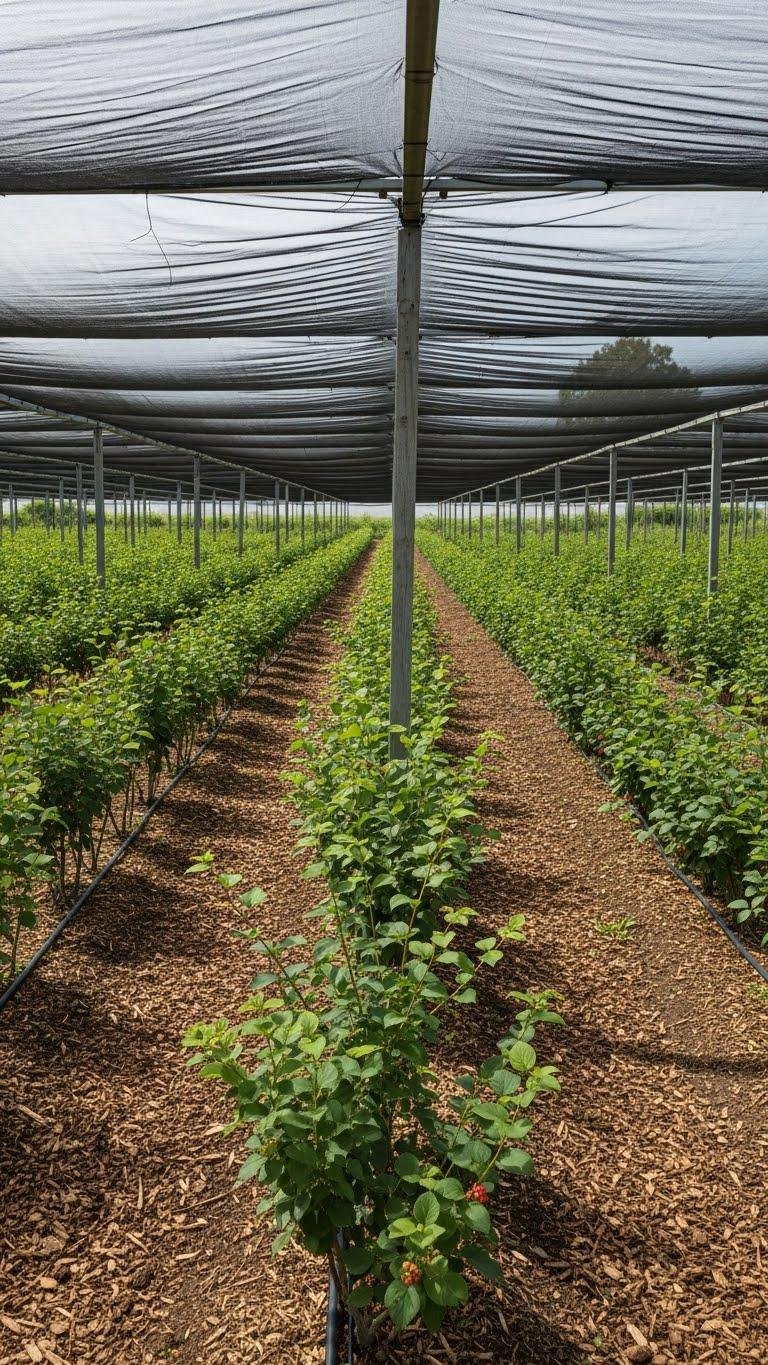
If you need more perennial yield and larger edible mass than movable carts provide, arrange a micro-orchard of berry shrubs in orderly rows to maximize space, light penetration, and ease of harvest. You’ll select shade tolerant berries on calculated spacing, implement soil amendment rotation for nutrient balance, prune for canopy control, and map rows to permit mechanical or freedom-focused manual harvesting without crowding or wasted square footage.
Gravel Patio With Potted Plant Groupings

Set out potted groupings on a well-compacted gravel patio to create a low-maintenance, heat-moderating platform that supports precise plant placement and irrigation planning. You’ll arrange window grouping rigs and mobile palettes to exploit sunlight angles, measure pot scales for root volume, and plan seasonal rotation schedules.
This system gives you compositional freedom, efficient water delivery, and modular adaptability for tiny garden footprints.
Curved Pathway With Narrow Planting Beds
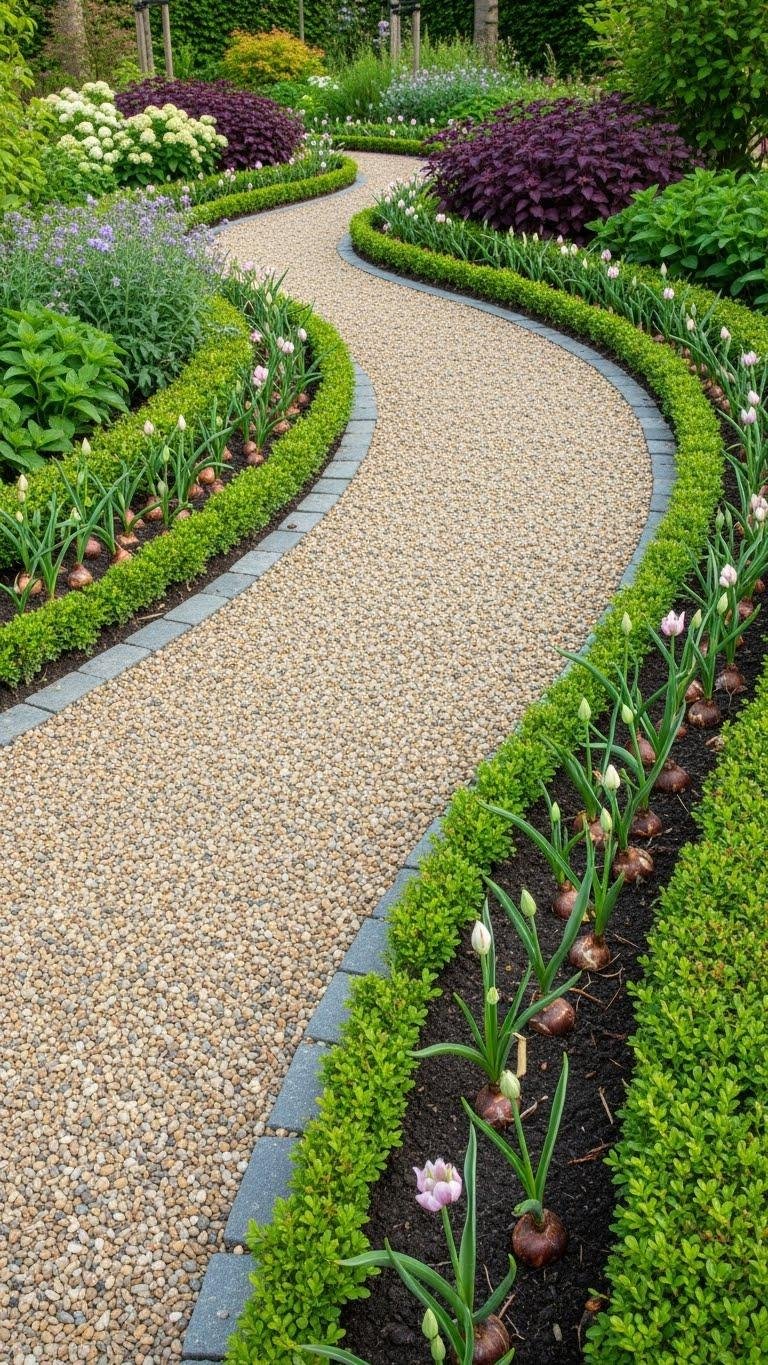
When you lay out a curved pathway flanked by narrow planting beds, prioritize sightlines, soil depth, and root volume so each planting pocket supports the intended species without crowding the path. You’ll shape a meandering pebblebed path with planted ribbons: choose compact perennials, shallow-rooted bulbs, and a microclipped hedge to define edge, maintain scale, and keep maintenance minimal while preserving movement freedom.
Wall-Mounted Succulent Mosaic
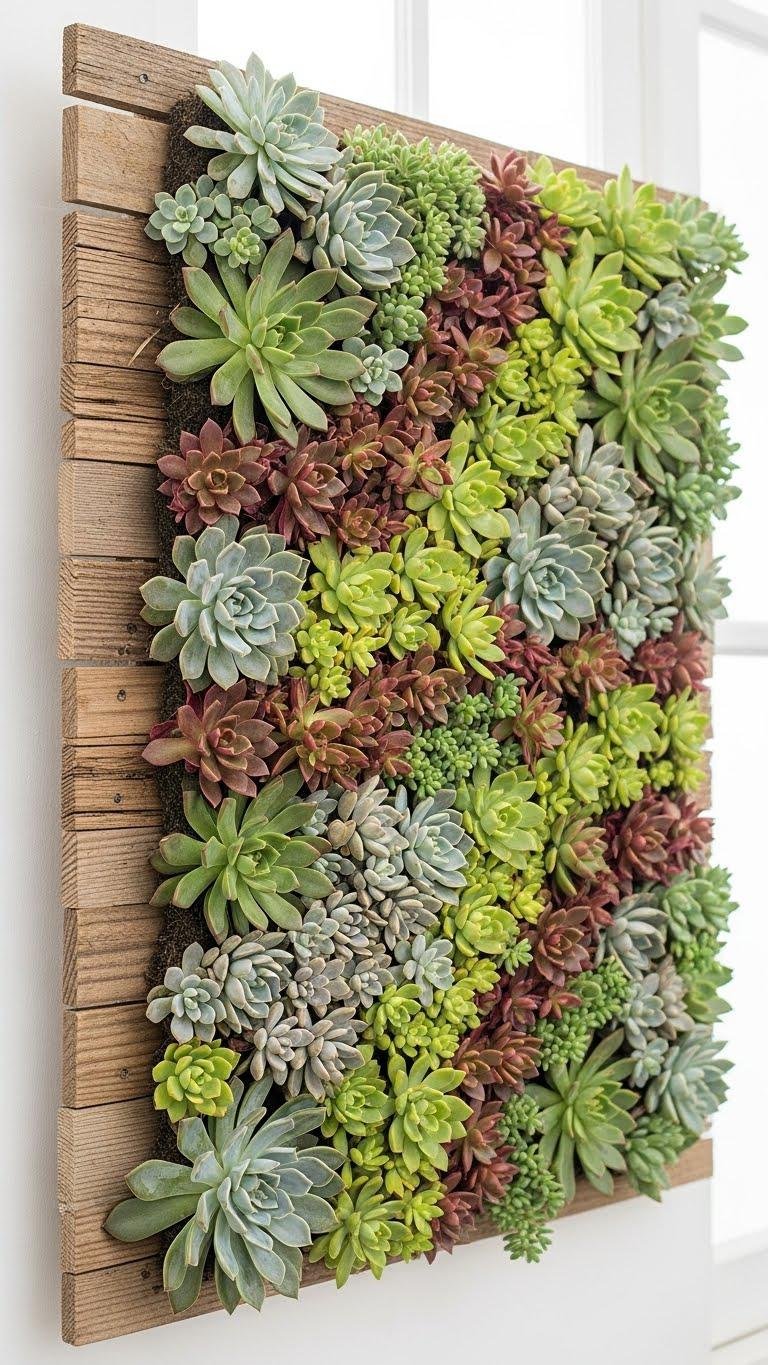
Think of a vertical tapestry you can plant: a wall-mounted succulent mosaic lets you maximize small-scale green surfaces by matching species’ growth habit, root depth, and light exposure to modular planting units.
You design panels that balance shallow-root rosettes with deeper sedums, arrange colors for visual rhythm, and integrate succulent mosaics with reclaimed wood or driftwood displays for freedom of placement and easy irrigation access.
Compact Greenhouse for Year-Round Growing
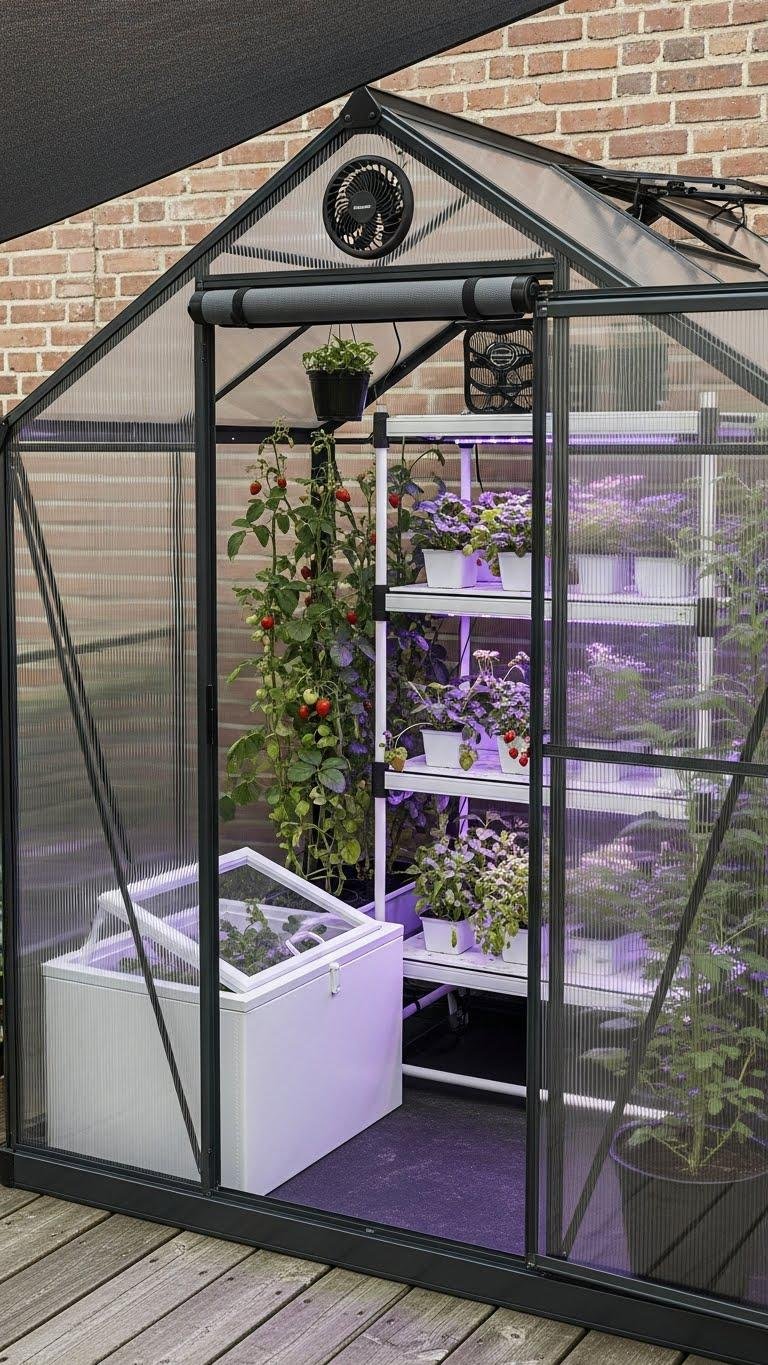
Framed around a compact footprint and engineered for year-round microclimate control, a small greenhouse lets you extend growing seasons and push plant selections beyond typical outdoor limits.
You’ll optimize light, ventilation, and thermal mass; pair an insulated coldframe with a modular hydroponic shelf to maximize yield per square foot.
Scale systems to fit balconies or tiny yards for autonomous, continuous harvests.
Narrow Raised Beds Along a Perimeter Fence
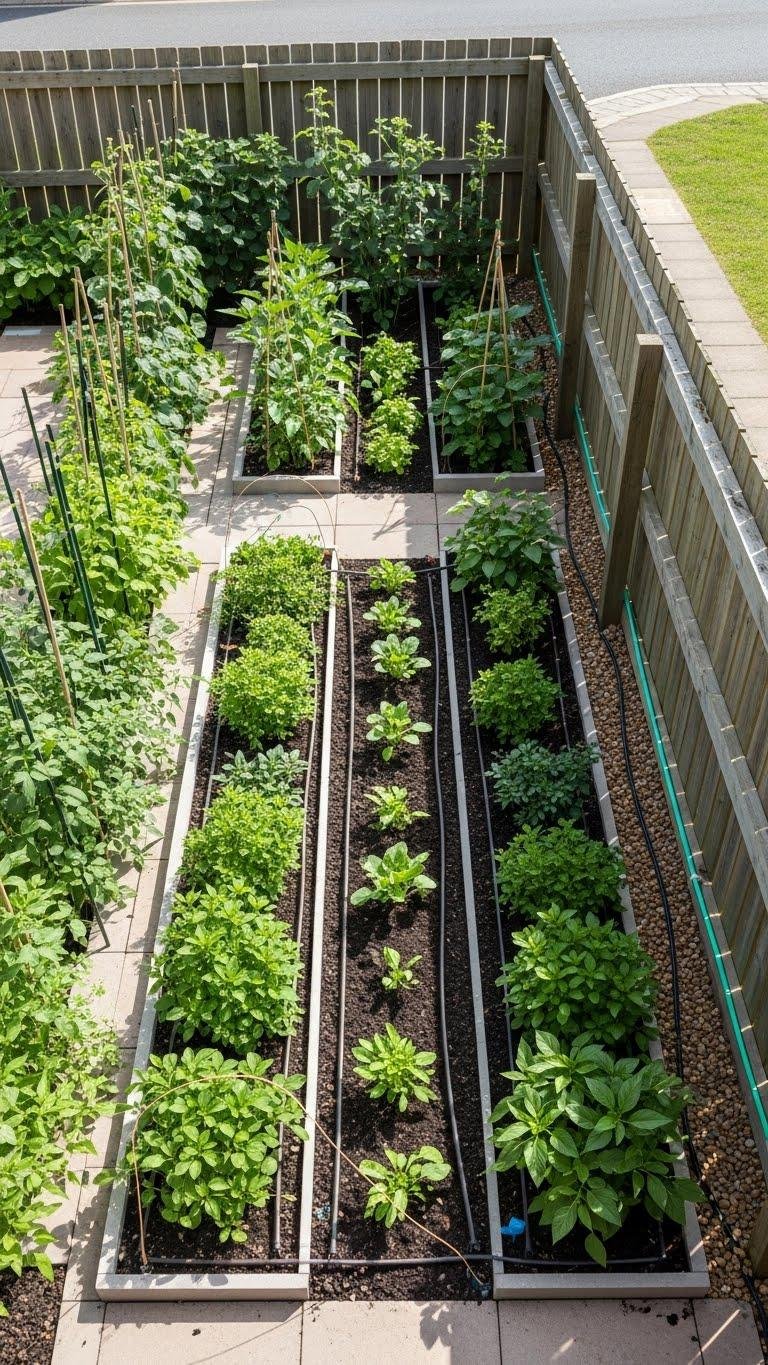
Along the perimeter fence, narrow raised beds let you turn marginal walkways into productive growing zones without sacrificing circulation or sightlines. You’ll build slim profiles (30–45 cm wide) to access both sides, integrate perimeter irrigation and drip lines, and select shade tolerant varieties for low-light stretches.
Use modular panels, dense plant spacing, and lean soil depths to maximize yield while keeping movement free.
Multi-Purpose Seating Steps With Plant Insets
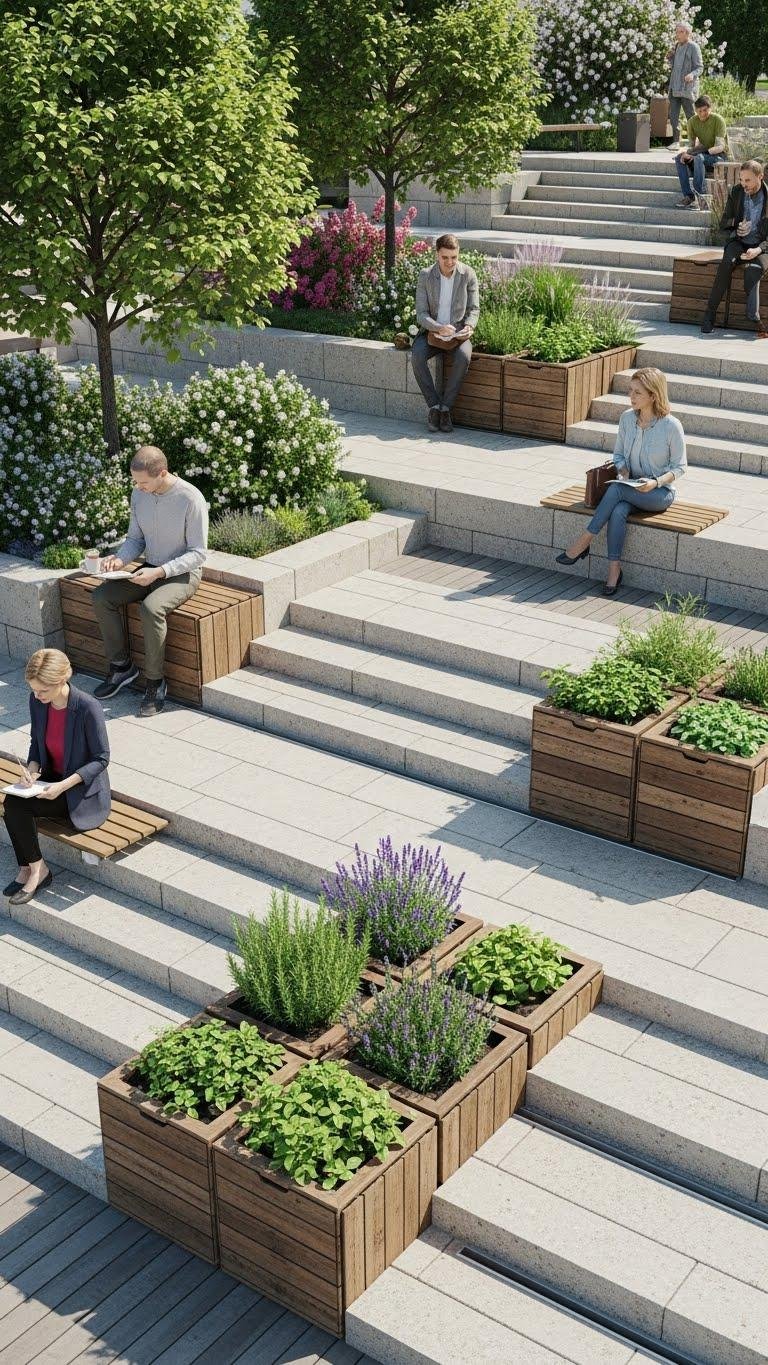
After the slim perimeter beds, you can reclaim grade changes by integrating seating steps that double as shallow planters, combining circulation, seating, and planting in one calibrated element.
You’ll specify low-rise storage steps with modular planter insets, drainable soils, discreet irrigation channels, and structural risers rated for seating load.
This lets you crop herbs, sit, and stow tools while preserving compact proportions and design freedom.
Sunken Patio With Vertical Green Screens
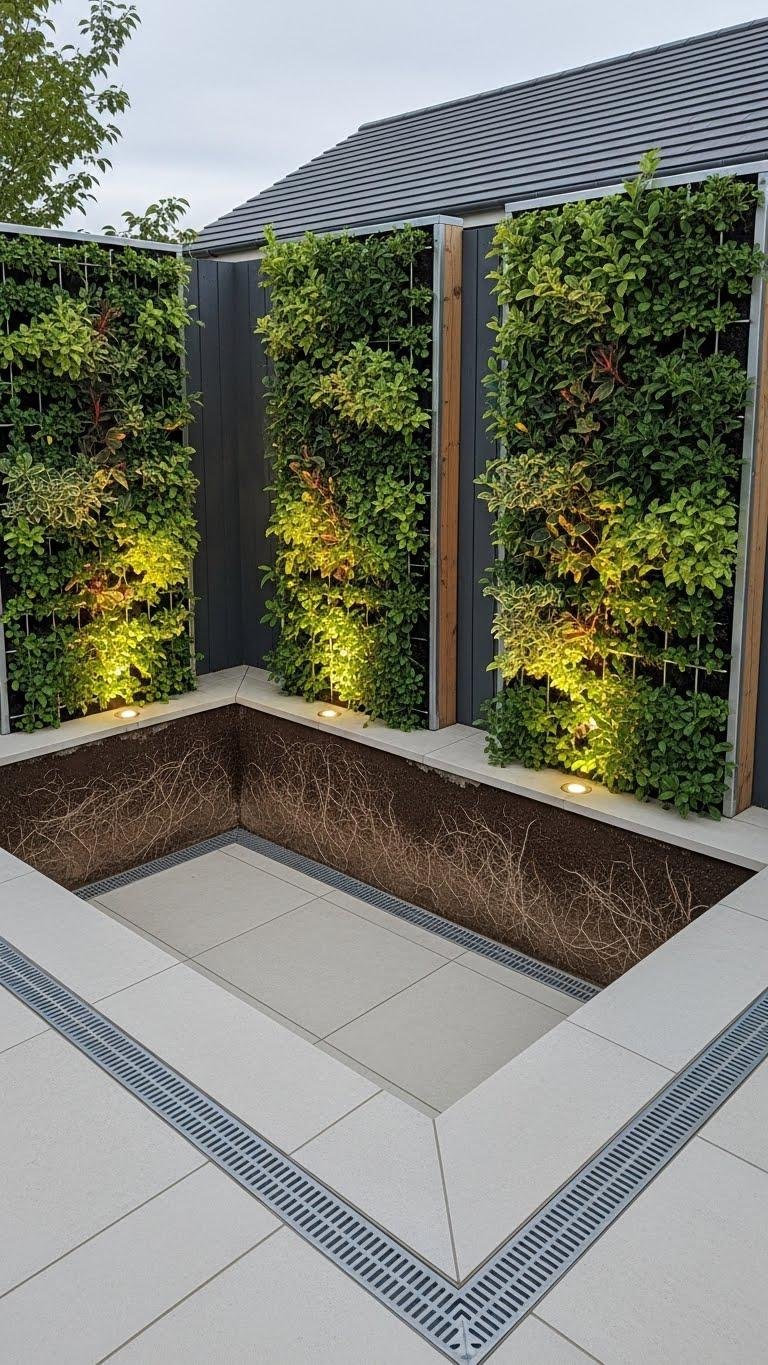
Set into a slight grade, a sunken patio paired with vertical green screens creates a microclimate you can control: the lowered plane reduces wind and noise while the screens increase planting area without expanding the footprint.
You’ll design with root-friendly substrates, modular trellis spacing, targeted sunken lighting, and a clear drainage strategy so plants thrive and you keep maintenance minimal while maximizing spatial freedom.
Balcony Privacy Screen With Integrated Planters

Framed against the railing or cantilevered off the floor, a balcony privacy screen with integrated planters lets you layer vegetation without sacrificing structural clearance or usable deck space.
You’ll specify lightweight soil mixes, modular bamboo partition panels for screening, and a hanging trellis for climbers. Scale plants to load limits, plan irrigation access, and retain removable units so you keep mobility and open sightlines.
Compact Pollinator Patch for Tiny Yards
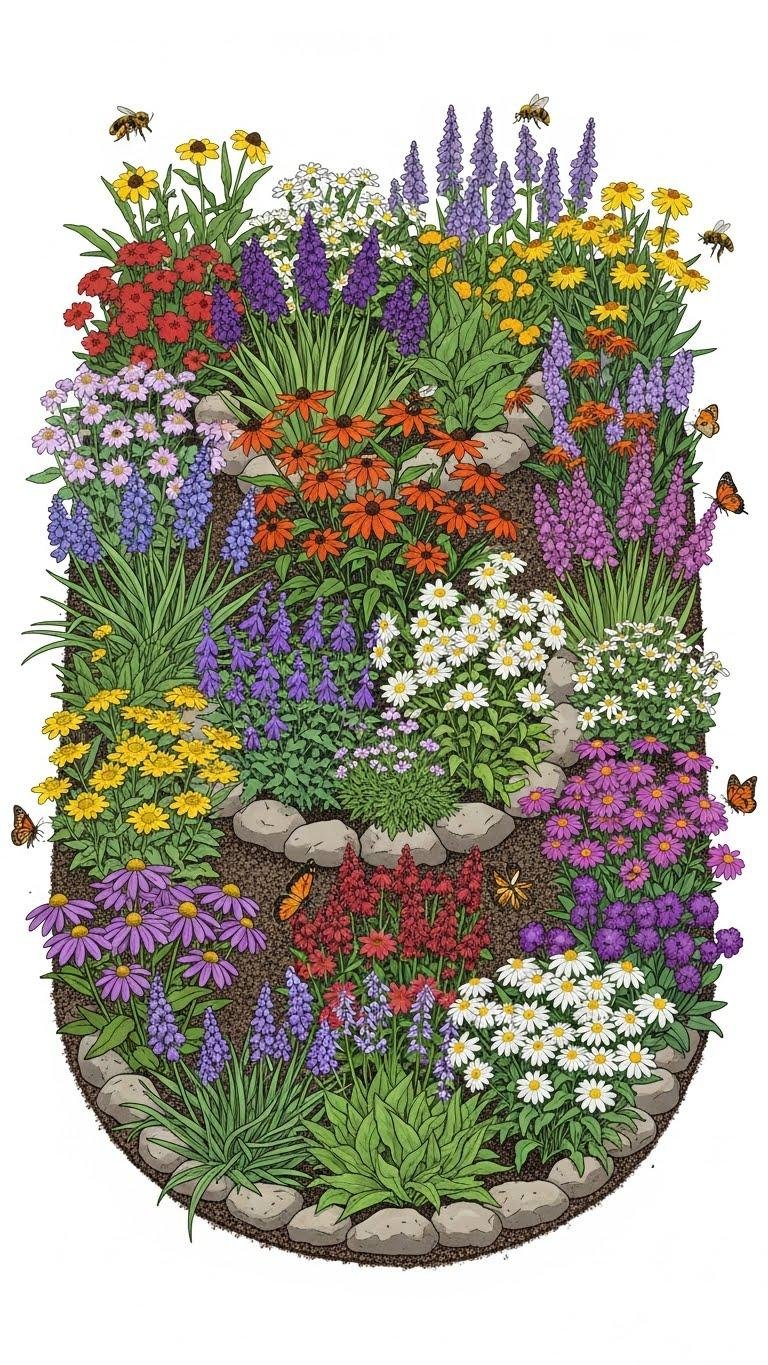
Often you’ll get the biggest pollinator impact from just a few carefully chosen patches: in a tiny yard, design a compact pollinator island that prioritizes native perennials, staggered bloom times, and layered heights to maximize forage while staying within soil-volume and load constraints.
You’ll select native plants for drought tolerance, plan seasonal blooms for continuous nectar, cluster by microhabitat, and minimize maintenance footprint.
Minimalist Gravel Garden With Statement Planters
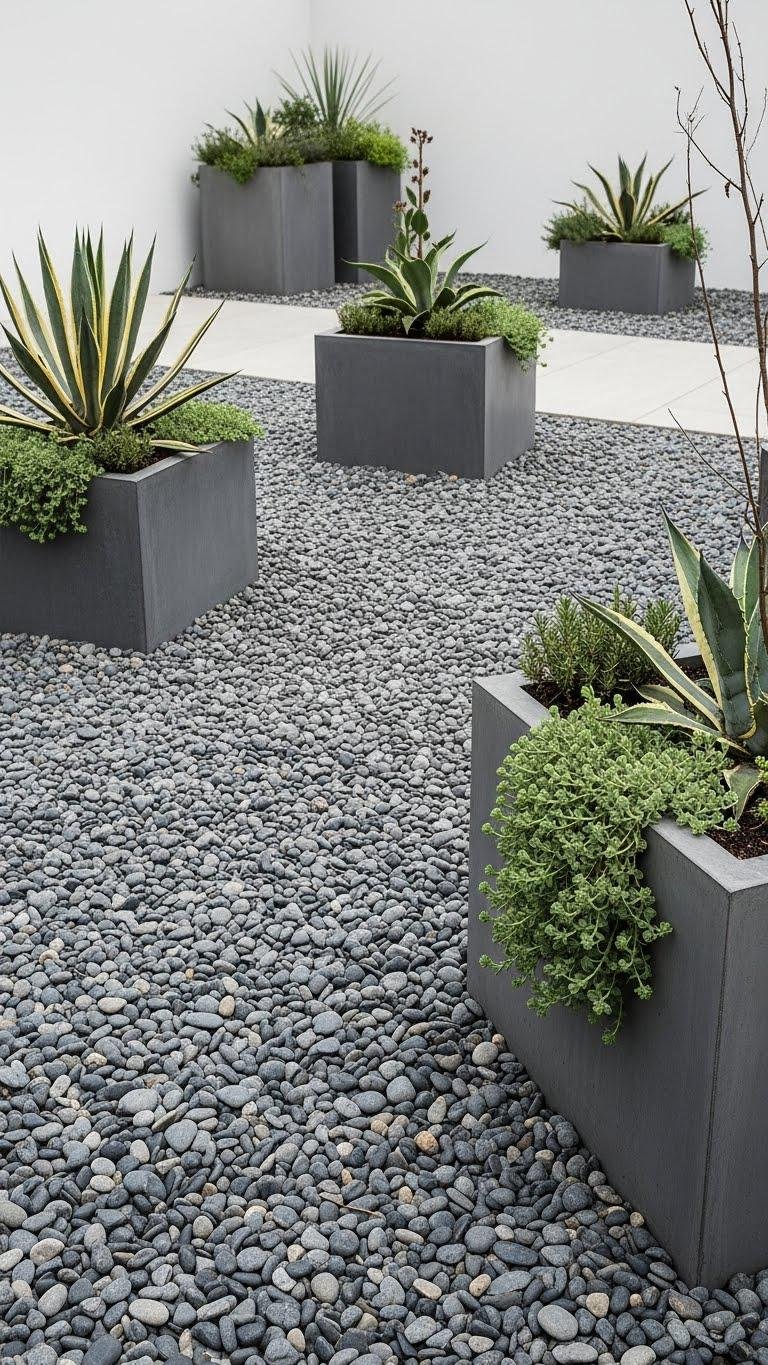
Think with respect to footprint and function: a minimalist gravel garden with a few statement planters concentrates planting volume where roots can thrive while reducing overall maintenance and surface load.
You’ll specify a monochrome pebblebed for drainage and heat control, position sculptural urns to define sightlines, select drought-tolerant specimens, and size containers for root volume.
This yields low-effort, liberating, scale-aware planting.
Corner Kitchen Garden With Herb Towers
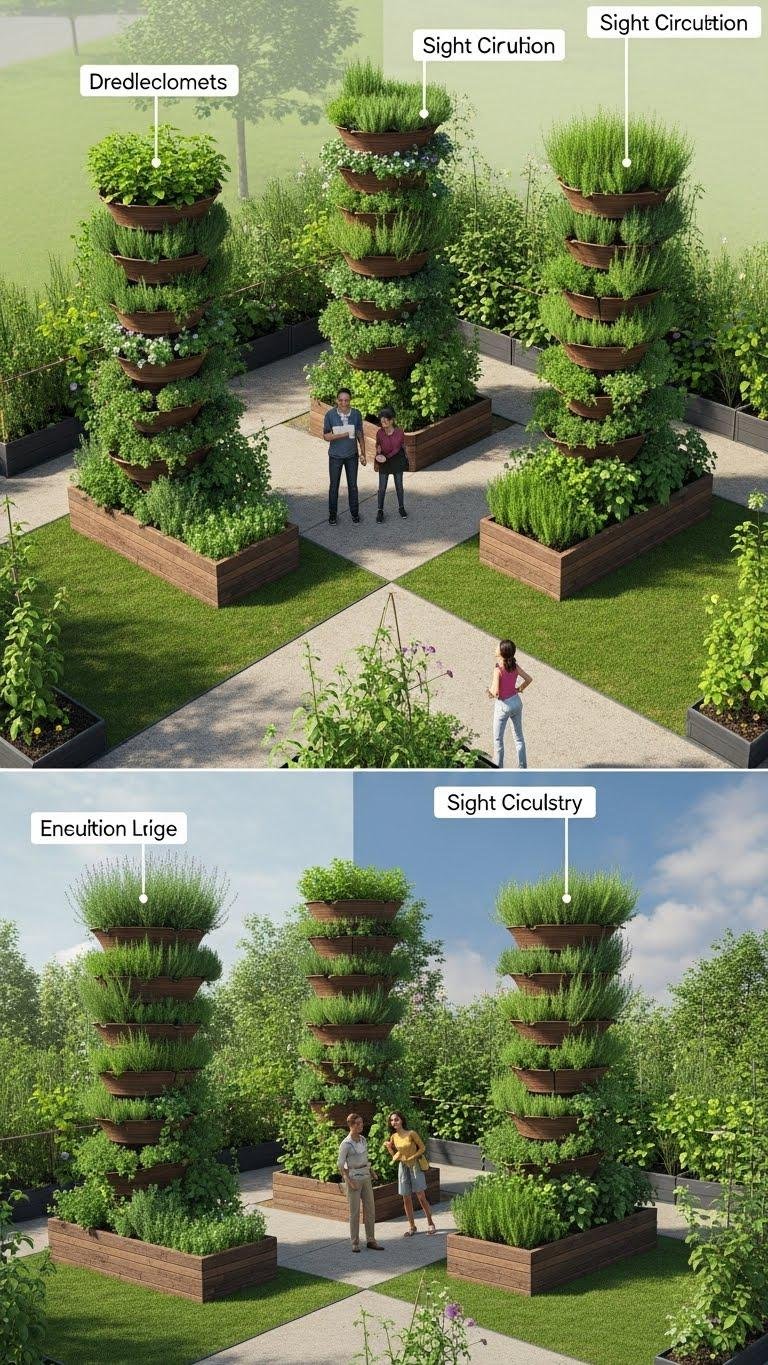
Moving from a sparse gravel layout to a compact edible corner lets you concentrate productivity without expanding footprint: a corner kitchen garden with stacked herb towers maximizes root volume vertically while keeping circulation and sightlines clear.
You’ll arrange stacked spirals for layered drainage, match species to light gradients, and cultivate aromatic microclimates.
Scale-aware layouts free movement, simplify harvests, and optimize water and nutrient delivery.