
You’ll find easy, stylish ways to group hardy rosettes, trailing pearls, and sculptural columns into arrangements that suit any space and skill level. I’ll show practical container choices, soil mixes, and simple hardscaping hacks so your setups look intentional and last. Start with a few basic tools and a bit of grit, and you’ll be ready to recreate favorites from ombré pots to hanging glass bulbs—pick one and keep going.
Ombre Spray-Painted Pot Trio

Start by choosing three terracotta pots in graduated sizes and sanding them lightly so the paint adheres; you’ll spray each with a single-color ombre from darkest at the base to lightest at the rim. You’ll master ombre techniques and color blending by masking, controlled sprays, and drying intervals. Plant drought-tolerant succulents, balance heights, and arrange freely for a clean, portable display.
Layered Succulent Cupcake Stand
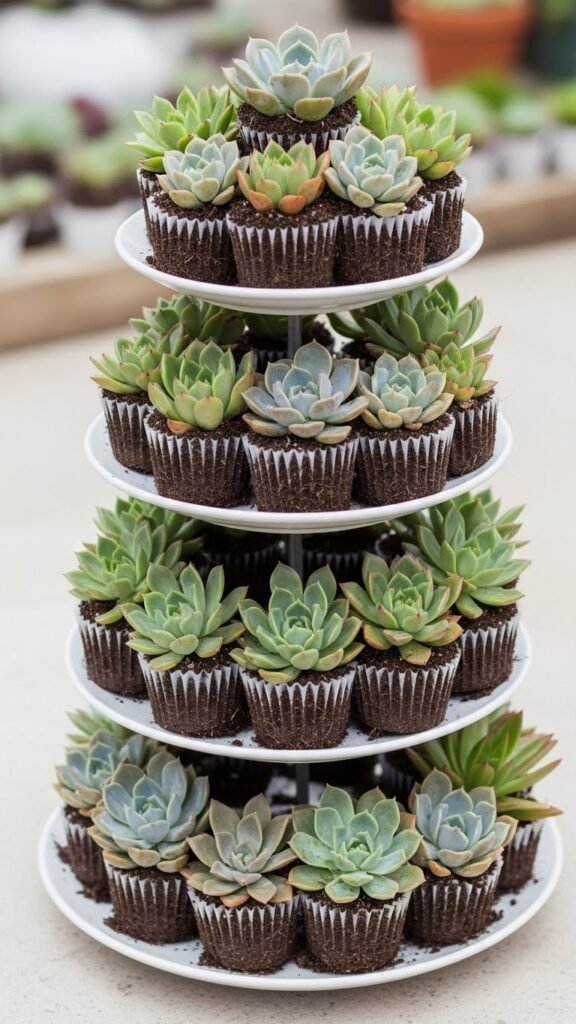
When you build a layered succulent cupcake stand, you’ll create a compact, tiered display that maximizes visual impact while keeping maintenance simple; plan for sturdy plates or saucers, a central support, and well-draining soil so each tier drains properly. You’ll assemble cupcake inspired layers with vertical tiers, choose low-water succulents, space plants for airflow, and secure drainage holes to keep care effortless and freeing.
Faux-Shabby Chic Wooden Toy Box Planter

Give a weathered wooden toy box a second life as a faux-shabby chic planter by stripping hardware, distressing edges, and sealing the interior for soil—this approach blends vintage charm with practical planting. You’ll sand to reveal a weathered finish, line with pond liner, add drainage, and choose compact succulents. Prioritize toy safety by removing hazards and using non-toxic sealants so your piece’s freedom feels responsible.
Miniature Fairy Garden With Rosettes
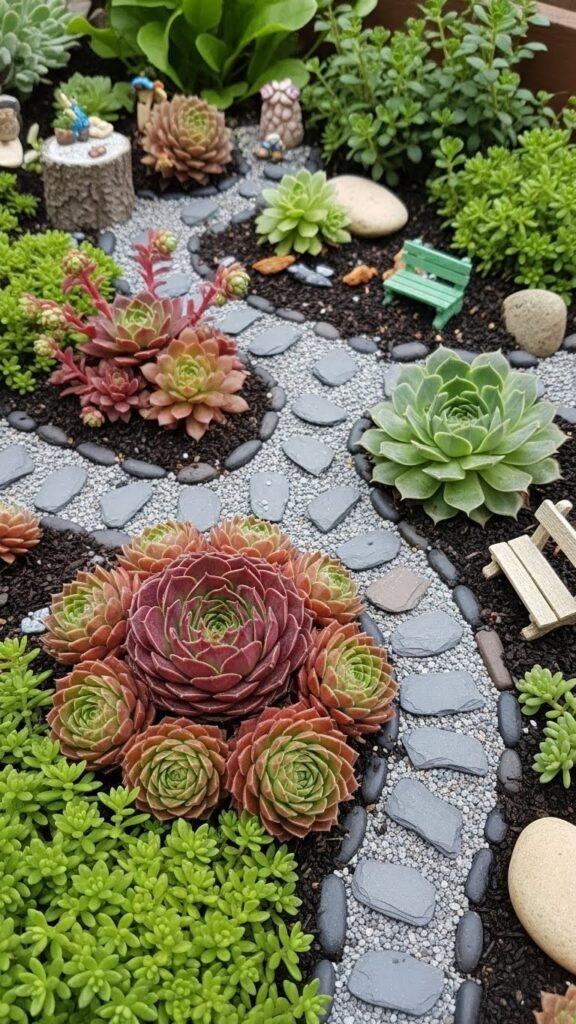
In a miniature fairy garden with rosettes, you’ll build a scaled-down world where compact succulents form the floral focal points and hardscape defines paths and nooks.
You’ll arrange rosette companions centrally, craft miniature pathways with gravel or slate, and position tiny benches or stones for balance.
Water sparingly, choose well-draining soil, and prune to keep proportions tidy and free.
Geometric Grid of Mixed Succulents
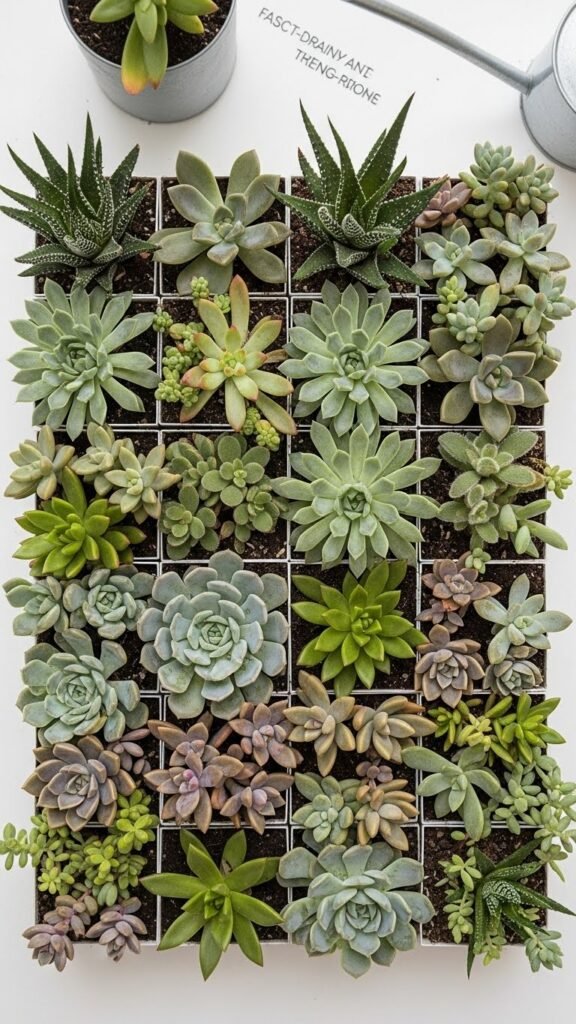
Lay out a clean grid and you’ll create a striking, low-maintenance display where mixed succulents read like living pixels.
You’ll position varied shapes to emphasize succulent symmetry, choosing repeating colors and heights for rhythm.
Use shallow cells, fast-draining mix, and precise spacing.
Water sparingly, inspect roots during grid maintenance, and rotate the piece for even light so each unit thrives independently.
Pumpkin Moss and Cutting Centerpiece
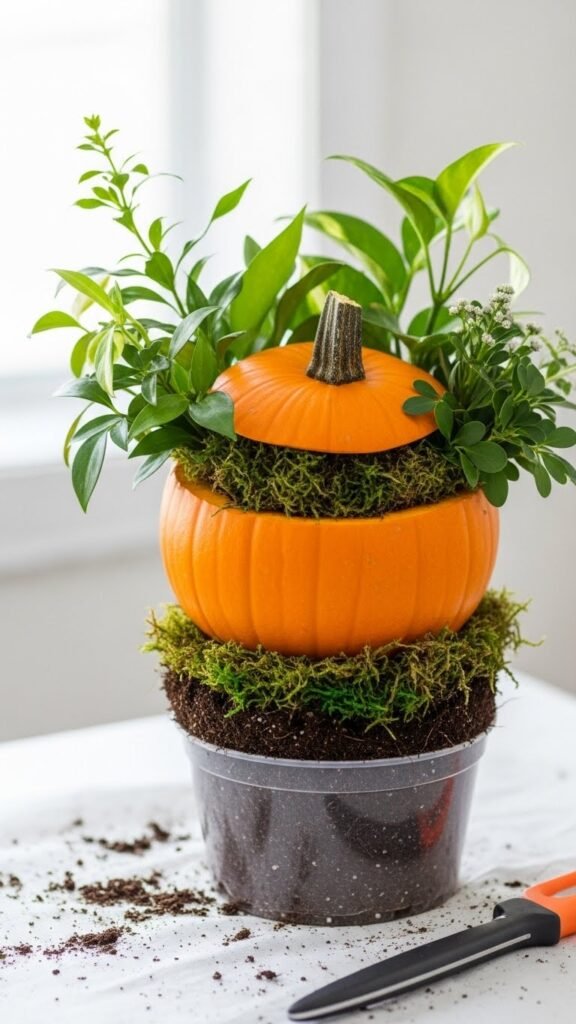
With a hollowed mini pumpkin as your base, you’ll craft a living centerpiece that pairs velvety sheet moss with fresh cuttings for a compact, seasonal display that’s easy to maintain.
You’ll treat it like a pumpkin terrarium: layer drainage, add soil, perform a careful moss transplant, insert cuttings, mist lightly, and place where bright, indirect light encourages rooting without drying freedom-seeking plants.
Coastal Blues White-Glazed Dish Garden

A low, white-glazed dish provides the perfect coastal canvas for a compact arrangement of blue-hued succulents and soft sand-toned accents, and you’ll assemble it to evoke seaside calm while ensuring healthy roots and good drainage.
Choose salt tolerant varieties, arrange varied heights for interest, use gritty mix and beachy textures like crushed shells, and water sparingly to keep plants vigorous and free.
Tall-Back, Short-Front Mounded Display
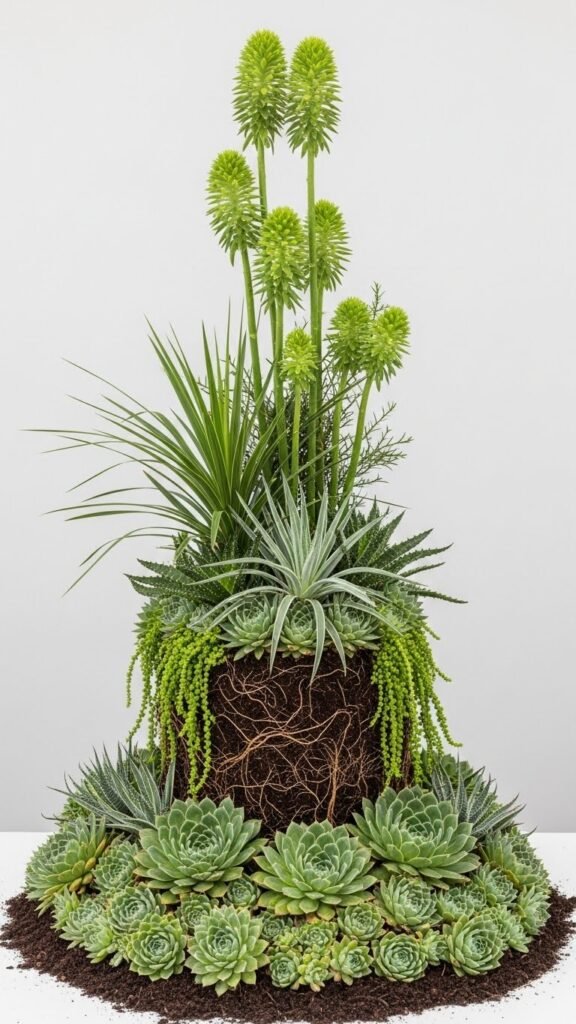
When you design a tall-back, short-front mounded display, place taller specimens toward the rear and mound soil toward the center to create a natural slope that shows every plant to its best advantage.
You’ll arrange compact rosettes up front and spiky or trailing varieties behind, leveraging vertical contrast and layered height. Water sparingly, let roots settle, and rotate for even light exposure.
Spiral Patterned Succulent Arrangement
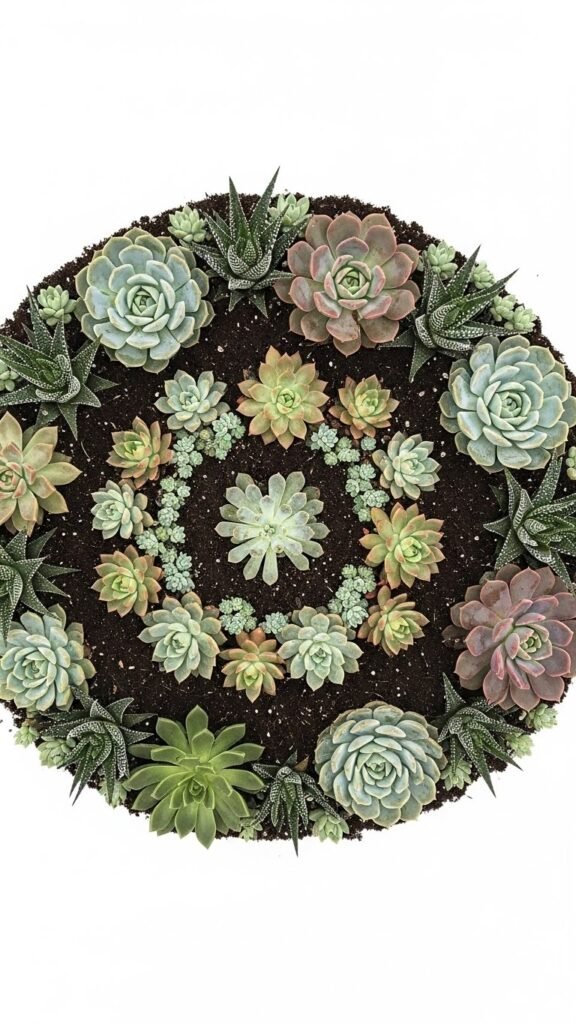
Start by sketching a spiral path in the soil so you can place plants with intentional spacing and consistent curvature; this lets you balance size, texture, and color as you work inward.
You’ll use spiral propagation for offsets and cuttings, positioning larger rosettes outward and smaller pups inward.
Maintain pattern symmetry, alternate textures, and leave breathing room so each succulent can grow freely.
Upcycled Vegan Food Container Trio
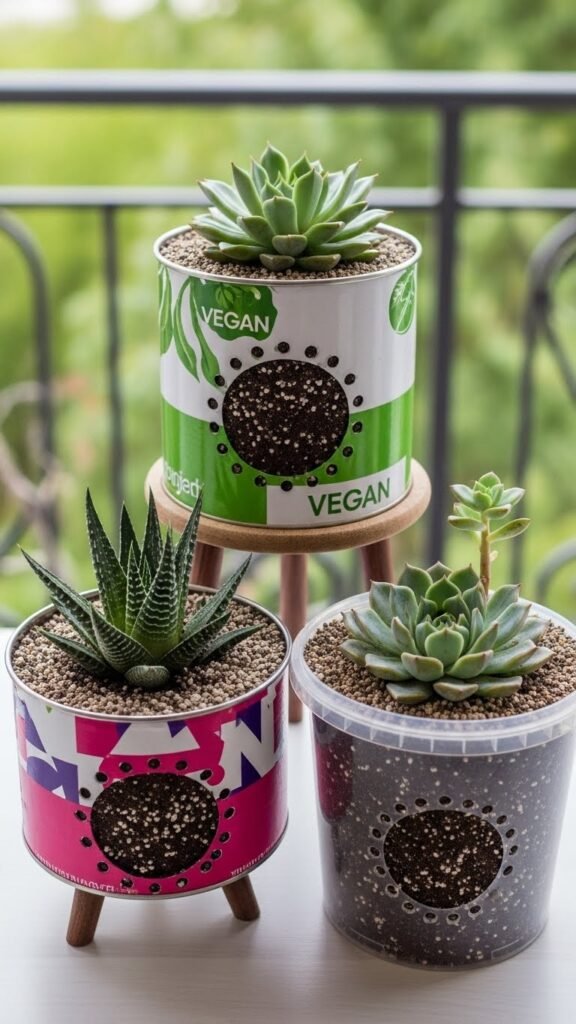
Give old vegan food containers new life by turning them into a coordinated trio of succulent planters you can display indoors or on a sunny balcony. You’ll choose recycled tin or vegan friendly plastic, punch precise drainage holes, add charcoal and gritty mix for drainage solutions, and use shallow soil for seed starting or propagation.
Arrange varying heights for visual freedom and easy care.
Driftwood and Echeveria Landscape
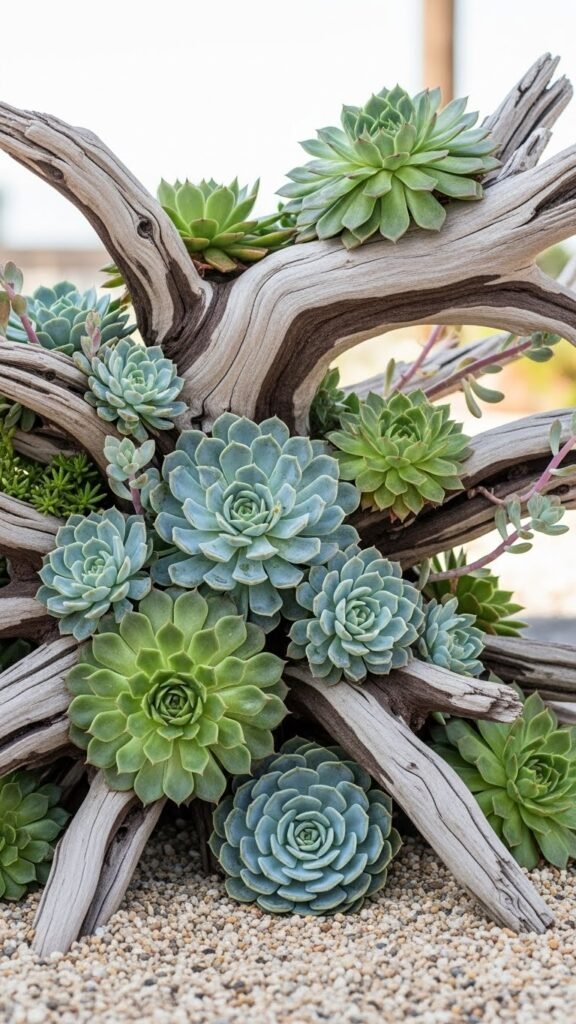
If you want a striking focal piece, pair weathered driftwood with rosettes of Echeveria to create a low-maintenance landscape that balances texture and form. You’ll place plants intentionally: use echeveria rosette placement to emphasize contours, anchor driftwood terrarium seams with gravel, and arrange sizes for airflow and visual freedom.
Water sparingly, guarantee drainage, and rotate for even light.
Cordyline Companion Mounded Planter
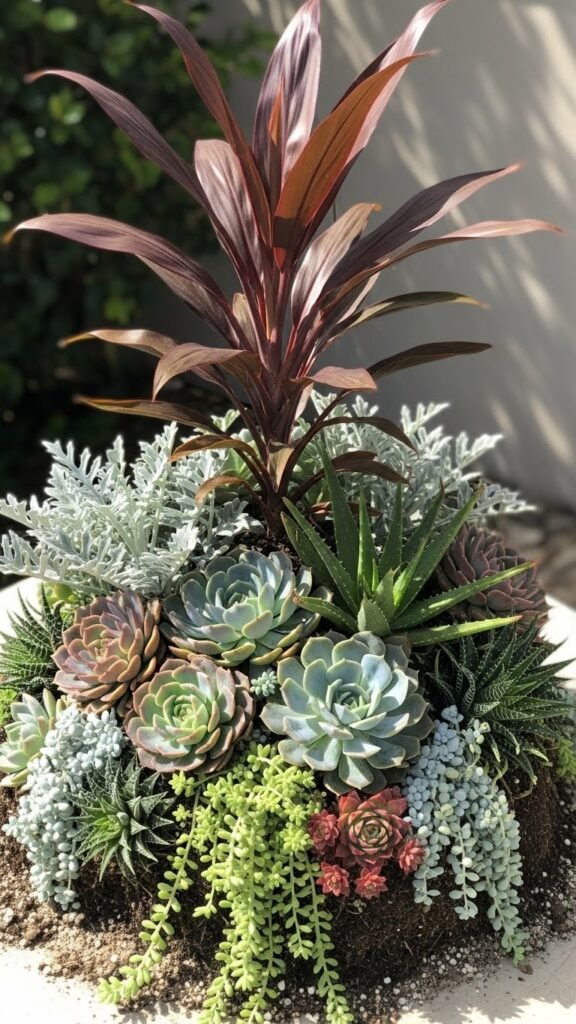
Combining the upright drama of cordyline with lower-growing companions creates a sculptural mounded planter that’s both bold and easy to maintain. You’ll position cordyline centrally for variegated height, then surround it with drought-tolerant succulents and coarse-leaved fillers to add tropical texture.
Water sparingly, use fast-draining mix, and prune selectively so the composition stays airy and free, not crowded.
Playful Painted Kid-Friendly Pots
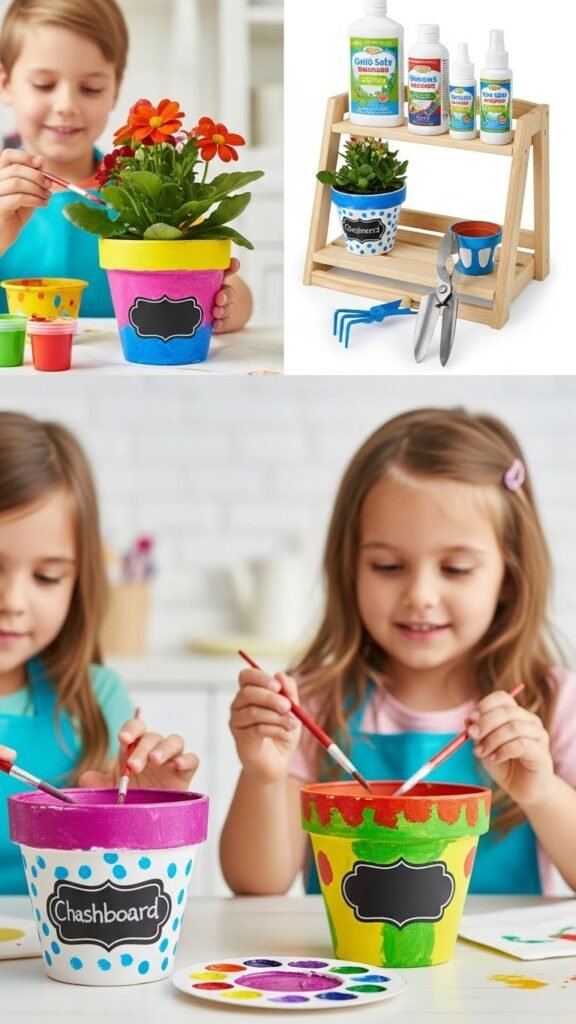
Often you’ll find that painting pots turns routine gardening into a hands-on craft kids actually want to do, and you can make containers that are durable, safe, and easy to care for. You’ll choose child safe sealants, washable paints for quick cleanups, and erasable chalkboard pots to change labels.
Teach simple prep, ventilation, and waterproofing so kids stay creative and plants thrive.
Birdbath Basin Echeveria Collection
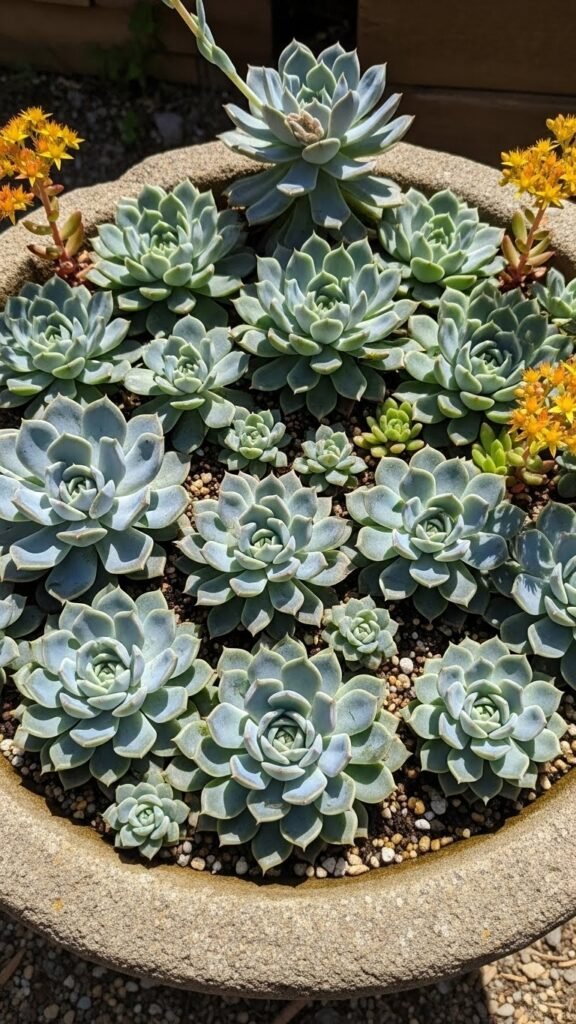
Arrange a shallow birdbath with a tight cluster of Echeveria rosettes to create a living centerpiece that’s both elegant and low-maintenance. You’ll position rosettes by size for balance, choose drought tolerant pairs like blue and silver varieties, add gritty mix for drainage, and allow bright sun.
Expect occasional pollinator friendly blooms; deadhead sparingly and enjoy freedom to move this portable, sculptural garden.
Shamrock Wooden Box Succulent Display

If you liked the sculptural, portable feel of the birdbath echeverias, you’ll appreciate how a shallow wooden box lets you create a low-profile Shamrock display with equally striking geometry.
You’ll arrange three rosettes around a central clump, honoring shamrock symbolism without kitsch. Use fast-draining mix, position for bright indirect light, and follow basic wooden box care: seal, elevate, and water sparingly for freedom to travel.
Terraced Layered Wooden Slice Arrangement
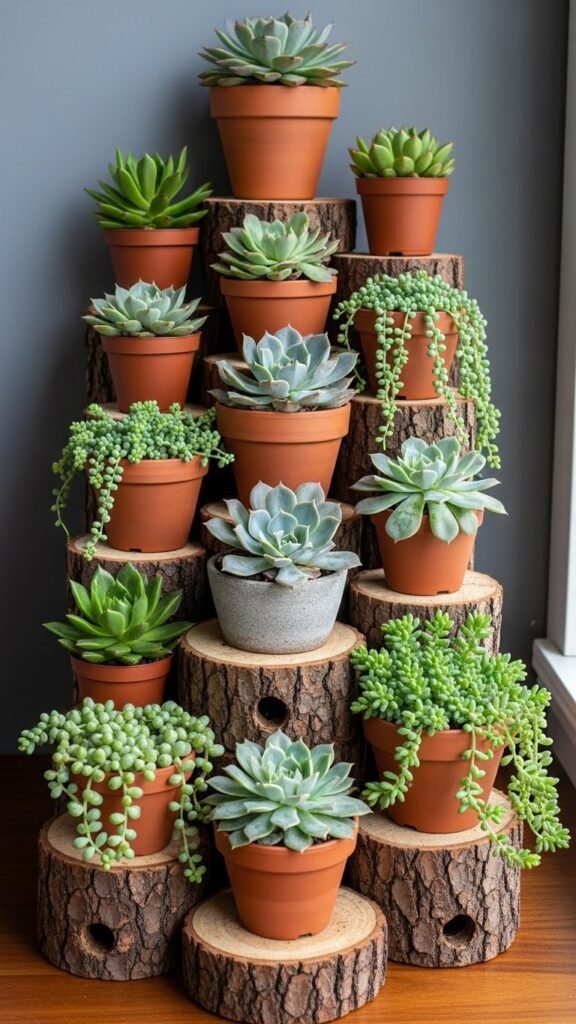
Built on stacked wooden slices, the terraced layered arrangement gives you a compact, multi-level display that maximizes visual depth while keeping care simple.
You place succulents on each wood slice to create micro climates, use terraced drainage to prevent soggy roots, and exploit scale play with varied pot sizes.
It’s efficient, portable, and lets you arrange freely without fuss.
Minimalist Sparse Negative-Space Design
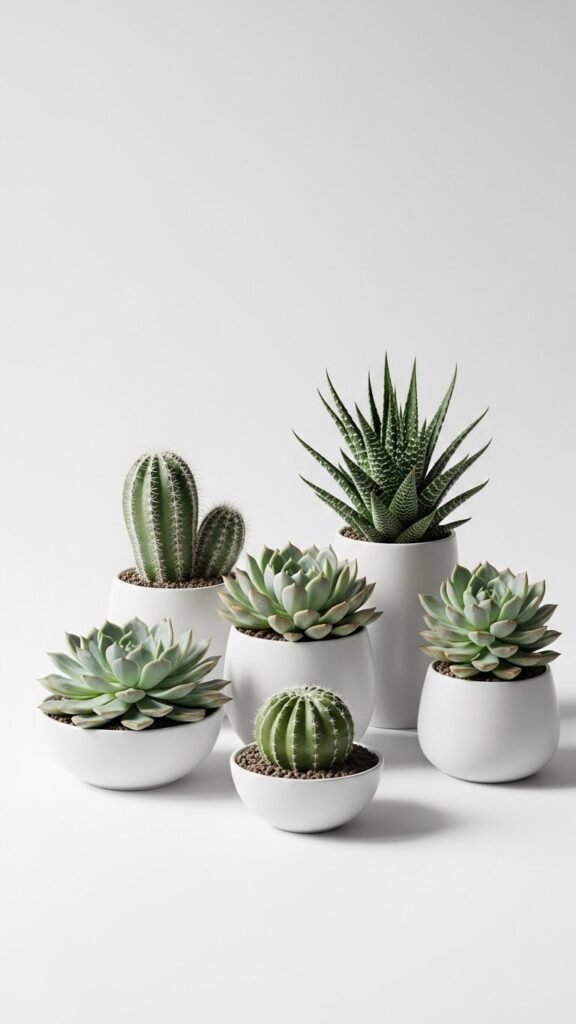
While you keep the footprint small, the minimalist sparse negative-space design highlights each succulent by giving it room to breathe, emphasizing shape, texture, and form over abundance.
You’ll arrange few specimens with negative space balance, choosing containers and soil lines that frame each plant. This approach favors zen simplicity, precise placement, easy care, and the liberating calm of uncluttered living.
Clustered Abstract Color-Repeat Arrangement

Moving from sparse compositions to a denser, more playful aesthetic, the clustered abstract color-repeat arrangement asks you to think in patterns and rhythm rather than solitary form.
You’ll group succulents by hue, using color blocking to create visual beats, then mix leaf shapes for textured contrast. Arrange repeats to guide the eye, trim for balance, and let improvisation keep the composition lively and freeing.
Hanging Glass Bulb Mini Succulent Garden
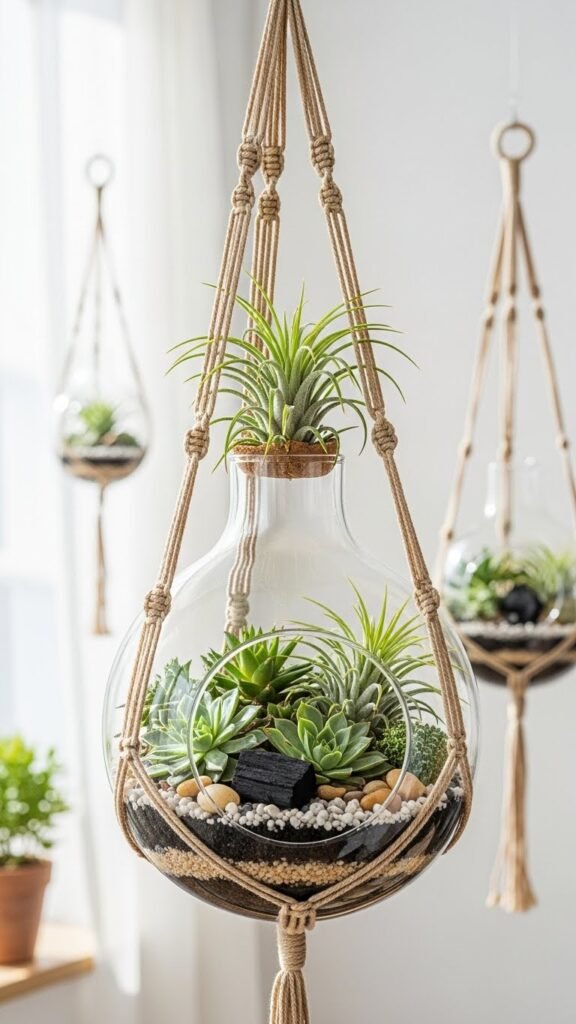
Hang a tiny, living landscape in a glass bulb to bring sculptural greenery into tight spaces and vertical displays. You’ll choose compact succulents or air plants, secure substrate with minimal soil, and mount bulbs in macramé hangers for movement-friendly suspension.
Learn simple glass terrarium care: bright indirect light, misting, and creative drainage solutions like pebbles or activated charcoal to prevent rot.
Monochromatic Green Rosette Bouquet

Often you’ll find that a monochromatic green rosette bouquet feels both modern and timeless, because it relies on texture and form instead of color contrast.
You’ll arrange varying rosette succulents to highlight textured foliage and subtle shape shifts, tying pieces with natural twine. Embrace succulent symbolism—resilience and calm—while pruning for balance, ensuring airflow and a relaxed, liberated display you can maintain easily.
Trailing-Front, Columnar-Back Centerpiece
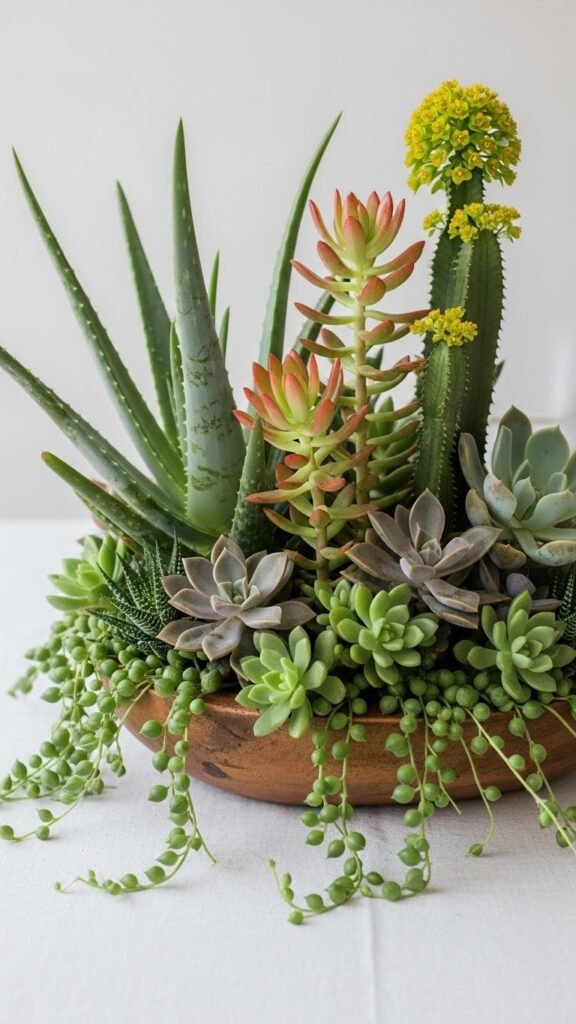
When you design a trailing-front, columnar-back centerpiece, place low, flowing succulents like string of pearls or sedum at the front to soften the vignette and reserve taller, columnar varieties—aloe, crassula capitella, or euphorbia—for the rear to create height and structure.
You’ll balance trailing greenery with upright stems to achieve clear columnar contrast, control sightlines, and keep maintenance simple for a liberated aesthetic.
Top-Dressed Rock and Floral Wire Scene
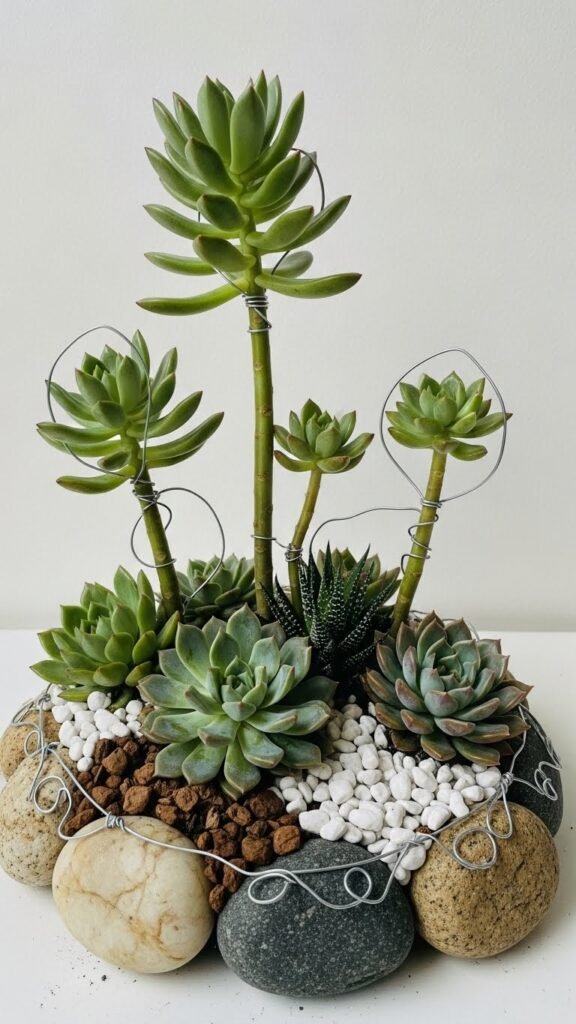
For a polished, low-maintenance centerpiece, top-dress your succulent arrangement with decorative rocks and a subtle floral wire framework to both finish the surface and provide gentle support for stems.
You’ll use rock mulch to retain moisture and cleanly define planting zones while sculpted wire silhouettes offer unobtrusive support and seasonal shape.
Place wires to avoid crowding roots and preserve easy removal for repotting.