
You can make a tiny yard feel purposeful and productive with designs that focus on vertical layers, multiuse elements, and plants chosen for year-round structure. Think ladders of pots, trellised fruit, compact shrubs, and seating that doubles as storage or a retaining wall. Practical choices save both space and time, and a few smart moves give you more harvest, color, and calm than you expect — here’s how to start transforming your nook.
Structural Planting for Year-Round Backbone
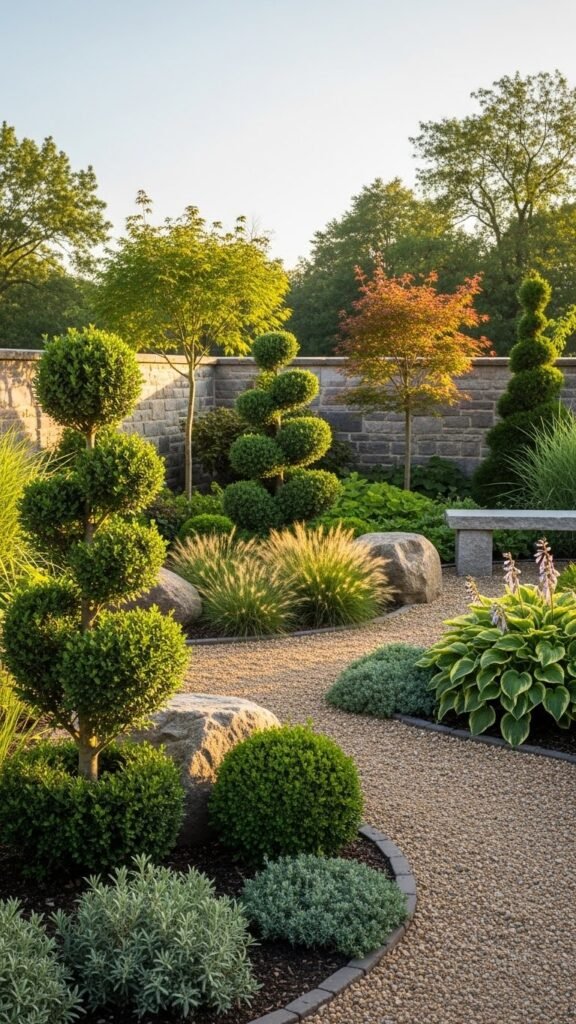
When you plan a small garden, think of structural plants as the skeleton that keeps everything readable and attractive through every season: evergreen shrubs, small trees, and clumping perennials give year-round form, define sightlines, and reduce the need for constant reworking.
You’ll choose evergreen structure and seasonal anchors to lock composition, save space, and let you roam choices without daily upkeep.
Ladder-Style Staging for Vertical Pots
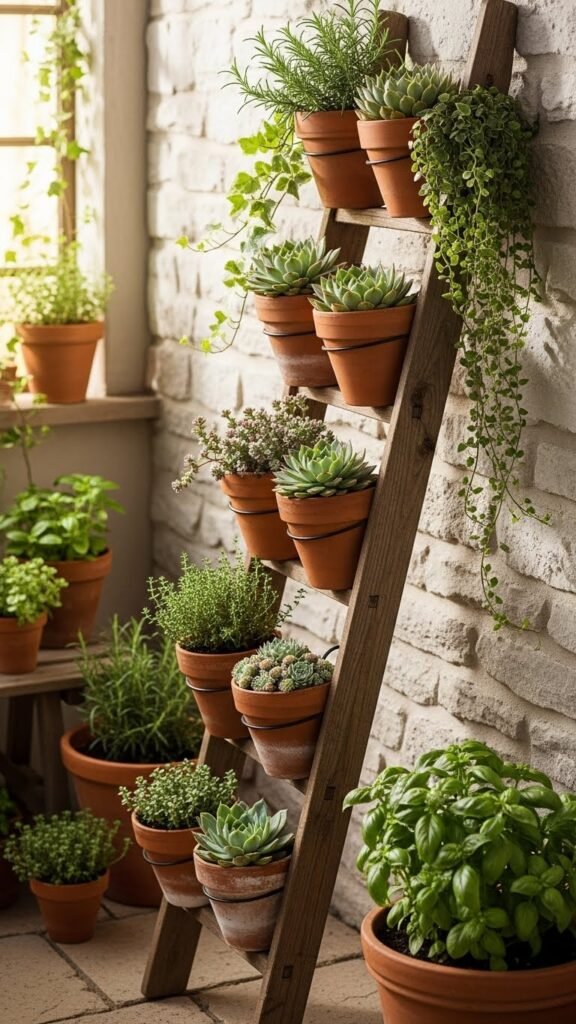
Leaning a simple ladder or installing tiered shelving against a wall lets you turn vertical space into a productive, tidy planting zone that’s perfect for small gardens.
You can repurpose a rustic ladder for staggered pots, secure shelves for stability, and choose hardy, low-maintenance plants.
Tiered succulents, herbs and trailing vines save floor area and give you freedom to rearrange light and composition.
Hanging Basket Color Without Floor Space

Often overlooked, hanging baskets let you inject bold color and texture without eating up limited floor space. You’ll choose seasonal palettes to rotate blooms, mixing trailing petunias, lobelia and compact geraniums for impact.
Add air purifying varieties like spider plant or ivy in mixed containers to boost health. Hang at varied heights for drama, water efficiently, and enjoy a freer, layered oasis.
Compact Shrubs and Miniature Trees

Pick compact shrubs and miniature trees that give scale and year-round structure without overwhelming your small space.
You’ll choose slow-growing dwarf hollies and sculptural bonsai pines to define corners, screens, and focal points.
Prune for shape, plant in narrow beds or single pots, and mix evergreen and seasonal accents so you stay free to move elements and keep maintenance efficient and intentional.
Multi-Tiered Container Groupings
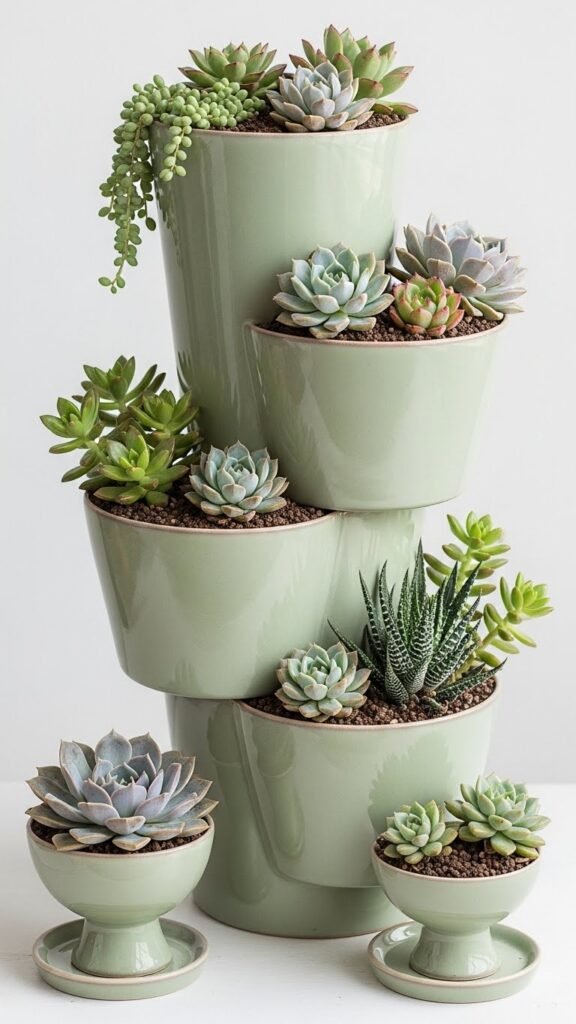
Layer pots up and out to make the most of limited ground space: stack a tall container as a backdrop, group medium pots at mid-height, and place small saucers or pedestal bowls in front to create a vertical sequence that reads as a single composition.
You’ll use stacked succulents and tiered troughs to maximize yield, mix textures, guarantee drainage, and keep arrangements movable for freedom.
Retaining Wall Raised Beds With Seating

By building raised beds into a low retaining wall, you’ll get twice the function from the same linear run—firm planting depth and instant seating—while keeping soil, moisture, and roots managed on a slope or tight lot.
Use a stone planter base for durability, add curved seating to soften edges, and choose drought-tolerant perennials and edibles so you can sit, harvest, and roam freely.
Vertical Gardens on Narrow Walls
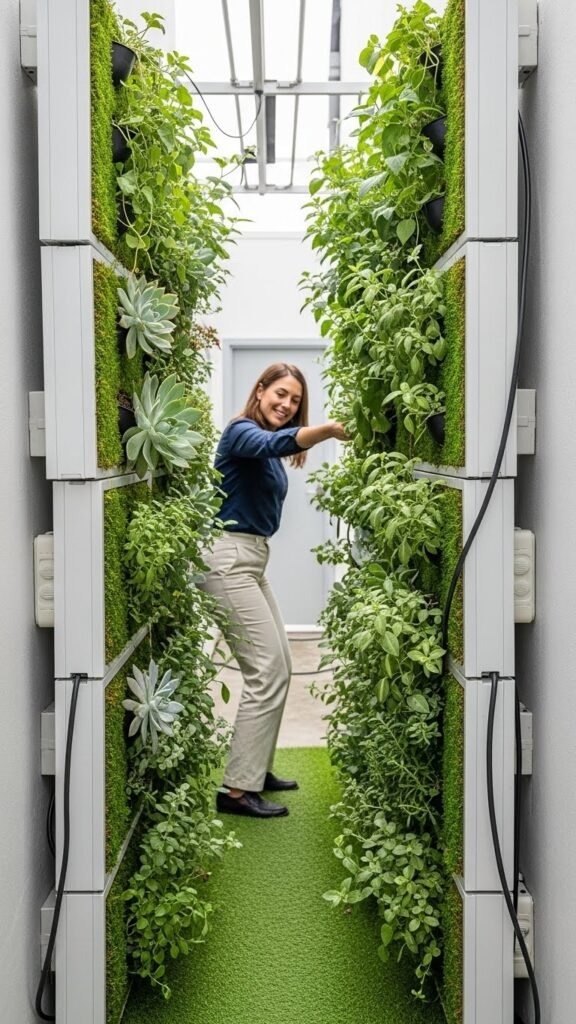
Vertical-planter systems turn narrow walls into productive, living surfaces, giving you planting depth without stealing floor space. You’ll choose modular frames, succulent walls for drought-tolerant flair, or moss panels for low-maintenance greenery. Mount securely, plan irrigation, and match plants to light. This frees you from sprawling beds, lets you harvest vertical herbs or beauty, and keeps pathways open for movement.
Potager Bed on a Sunny Terrace
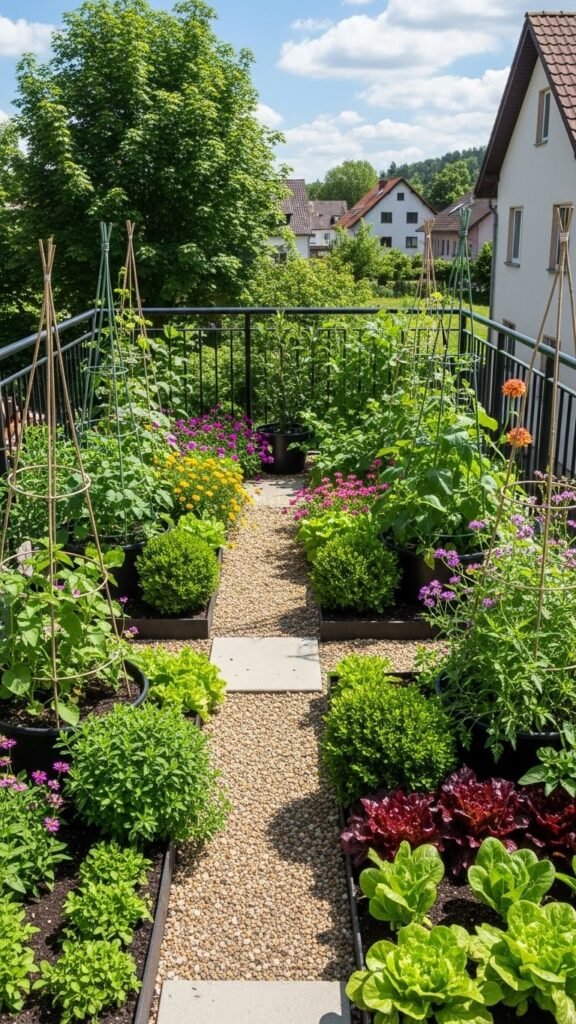
On a sunny terrace you can build a compact potager bed that blends edibles and flowers for both meals and curb appeal. You’ll maximize space with layered planting, dwarf shrubs, and narrow paths.
Choose sun loving herbs, compact lettuces, and pollinator-friendly blooms. Use deep containers, well-draining soil, and trellises for vining crops so you keep mobility and freedom to rearrange.
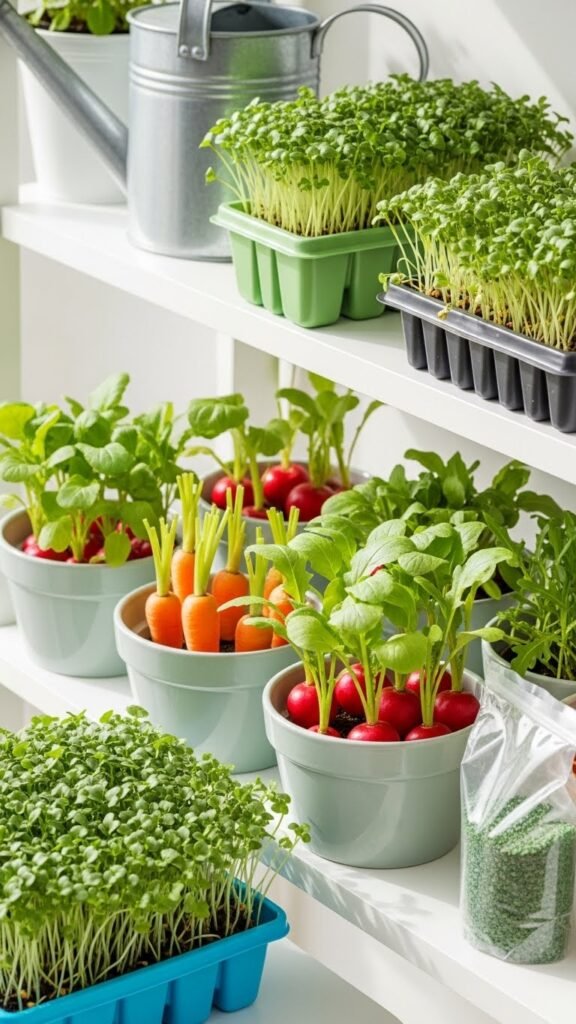
Fast-Cropping Veggies in Containers
Japi-Inspired Timber Details
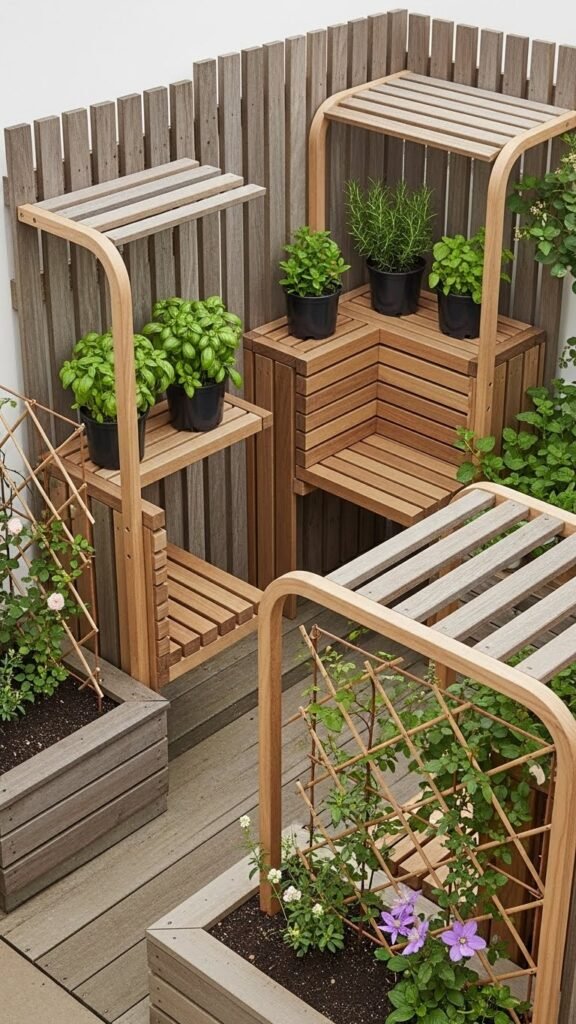
Drawing on the Japi’s simple, curved silhouette, you can add timber details that are both decorative and functional in a small garden: thin, weathered slats or bent-wood accents make great mini-shelters for potted herbs, define compact seating nooks, or act as low trellises for climbers without eating much floor space.
Use clean timber joinery, oil-treated weathered finishes, and removable panels so you can adapt layouts freely.
Gravel and Rock Gardens to Maximize Planting
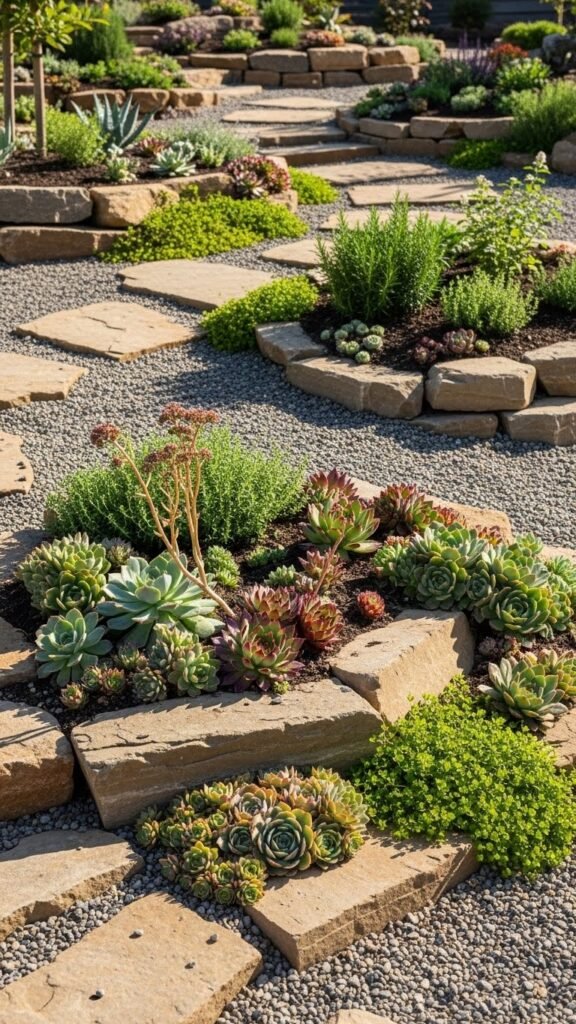
Layering gravel and rock lets you squeeze more planting into tight spots while keeping maintenance low and drainage high.
You’ll place pockets of soil amid native stonework, group drought tolerant succulents by water need, and use crevices for herbs or groundcover.
This lets you maximize planting without clutter, move freely through the plot, and enjoy resilient, low-care compositions that feel open and deliberate.
Rectilinear Paths That Define Zones
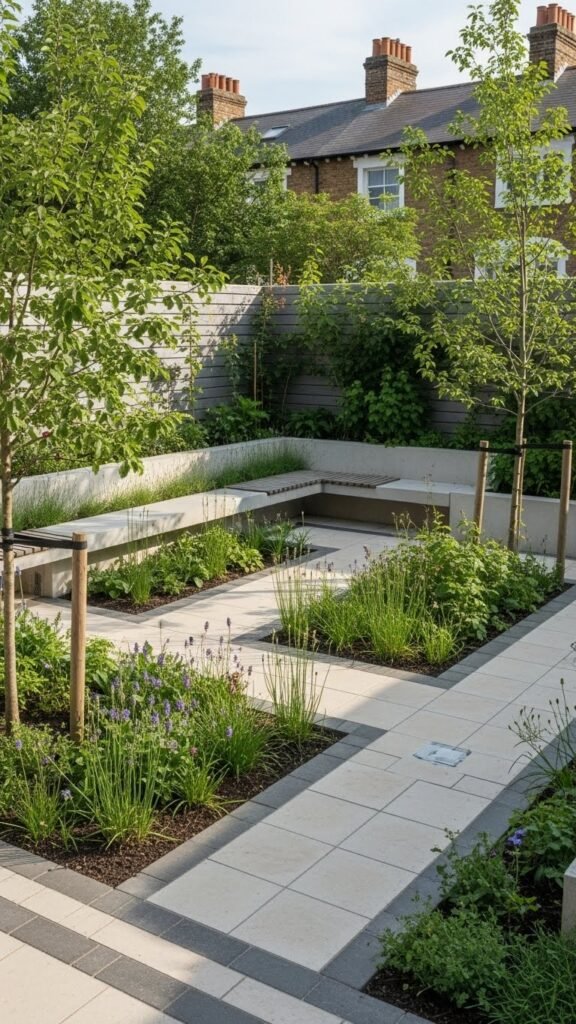
Use straight, clean paths to carve a small garden into purposeful zones—walkways aligned to edges and beds make circulation obvious and let you fit seating, planting, and service areas into a compact footprint.
You’ll favor geometric paving for clear lines, pair paths with low linear seating to define edges, and choose narrow beds and upright plants so movement stays fluid and the space feels liberating.
Recirculating Wall Fountain for Small Yards
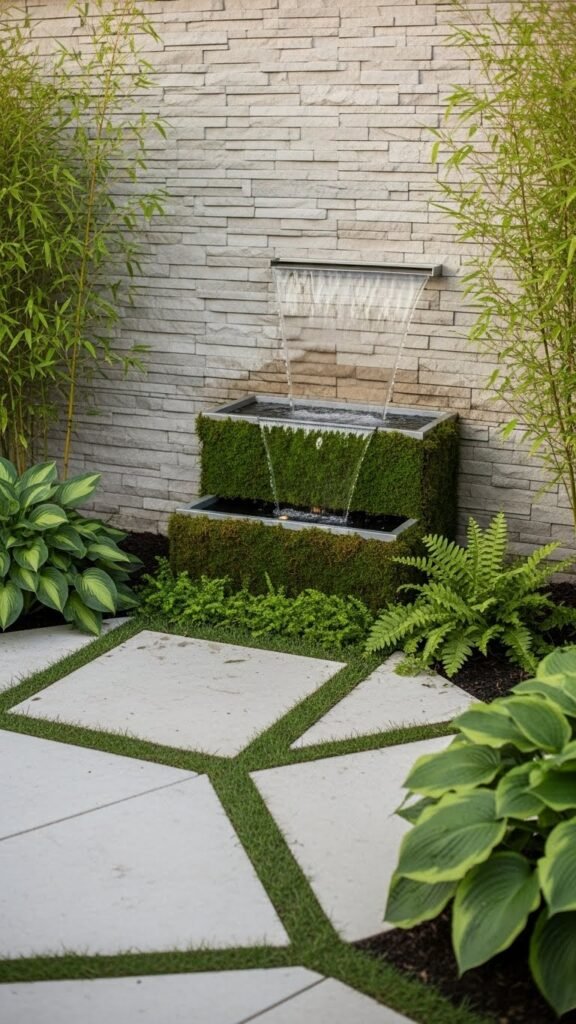
Straight, geometric paths set the stage for adding a recirculating wall fountain that brings sound and reflection without eating into your usable square footage.
You’ll mount a slim basin and hide a solar pump behind a moss panel for low maintenance.
Position plants to frame the water, route tubing discreetly, and enjoy a private, liberating focal point that conserves space and resources.
Tabletop Water Features for Patios
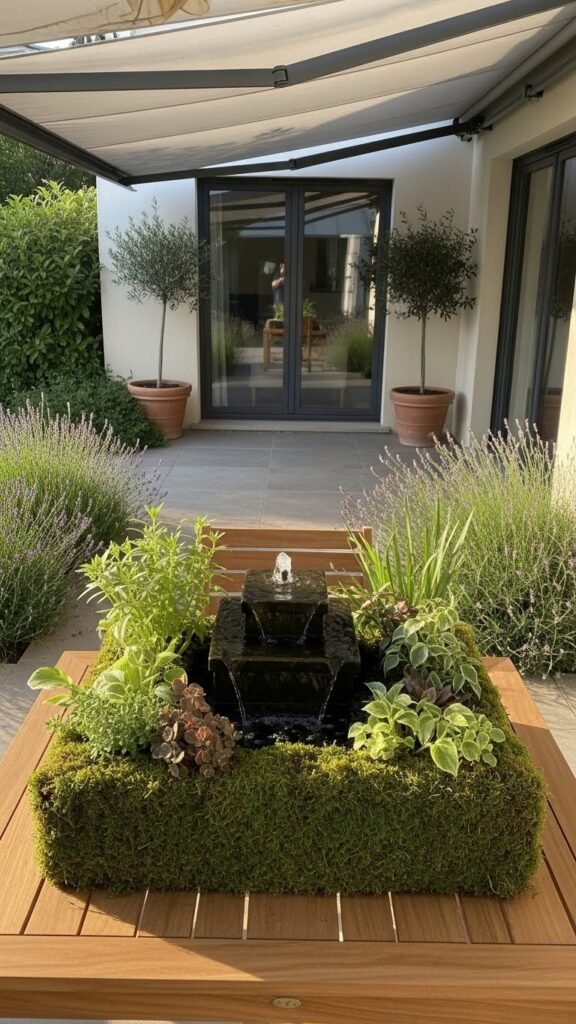
Often overlooked, tabletop water features pack atmospheric sound and reflective light into patios where floor space is limited.
You can pick a compact mini fountain or craft a low moss trough that doubles as a planter. Place on a sturdy table, hide a tiny pump, and choose resilient plants.
You’ll gain calm, mobility, and effortless maintenance without sacrificing your sense of open, flexible living.
Layered Foliage Palettes for Calm Impact
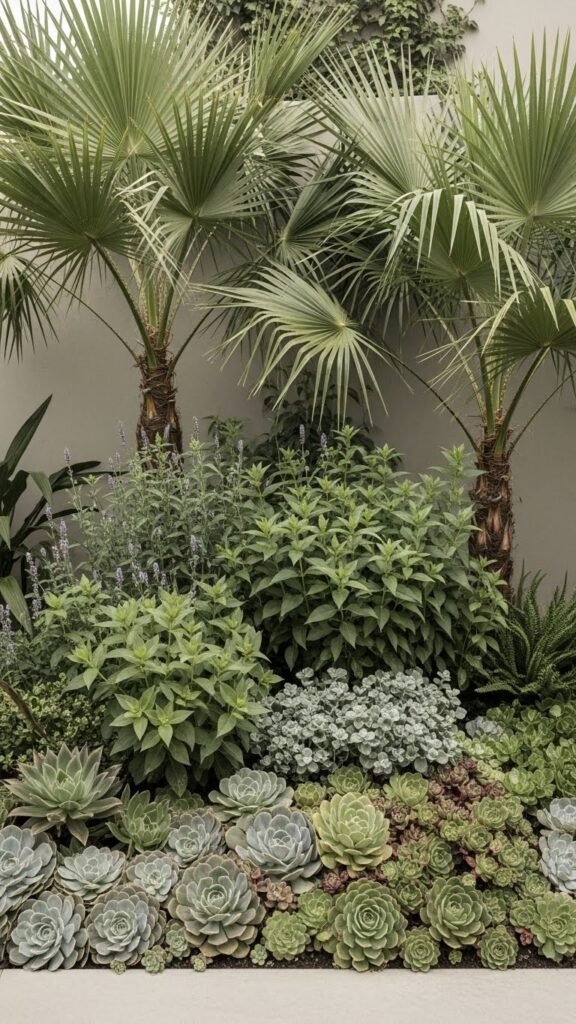
Harmony in foliage comes from thoughtful layering—combine textures, heights, and leaf tones so your small garden feels calm and spacious rather than crowded.
You’ll use muted palms as vertical anchors, add mid-height perennials for contrast, and place layered succulents at the front for low-maintenance rhythm. Choose restrained palettes, repeat forms, and leave breathing room so your compact plot feels freeing and intentional.
Tucked Discovery Objects and Miniatures
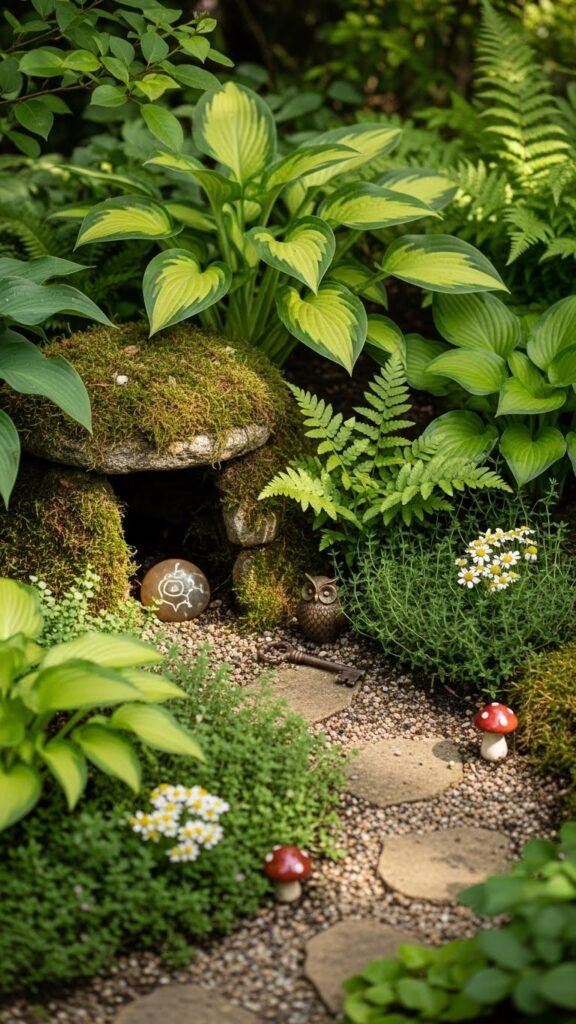
After you’ve laid out layered foliage to create calm sightlines, add small discovery objects to give the garden moments of surprise and personality.
Tuck a miniature grotto among shade-loving ferns, hide secret trinkets beneath low herbs, and place tiny sculptures where paths narrow.
You’ll create curious pockets without clutter, encourage slow exploration, and keep the space feeling open and liberating.
Outdoor Lighting to Extend Evenings
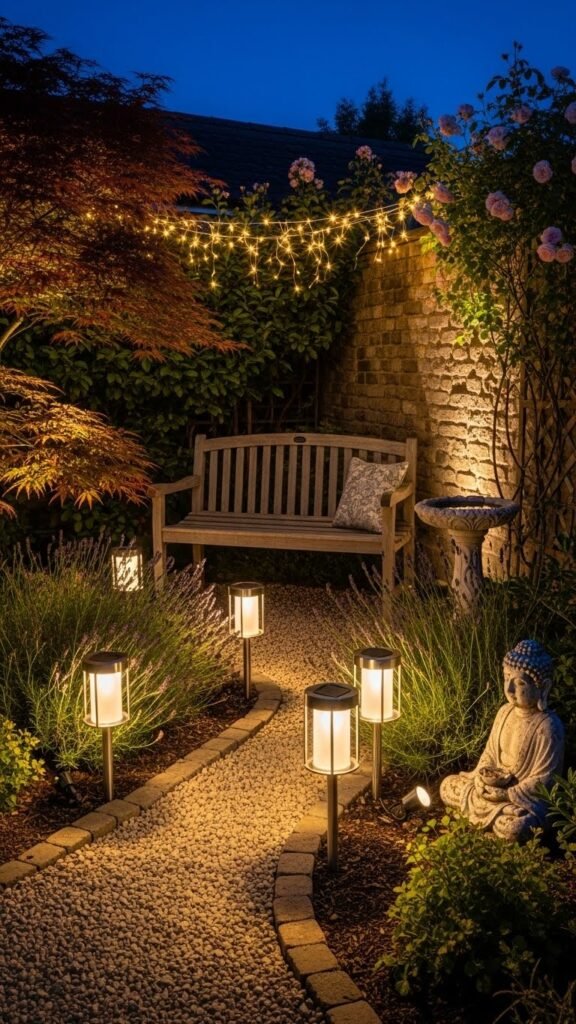
With a few well-placed lights you can double the usable hours of your small garden while keeping sightlines calm and plants healthy.
Choose solar lanterns for low-impact, cordless warmth, and add subtle string illumination for pathways and seating. Aim directional fixtures at hardscapes, not foliage, to prevent heat stress. Layer light levels so you control mood, preserve plants, and enjoy open, freeing evenings.
Narrow Water Channels for Depth Illusion
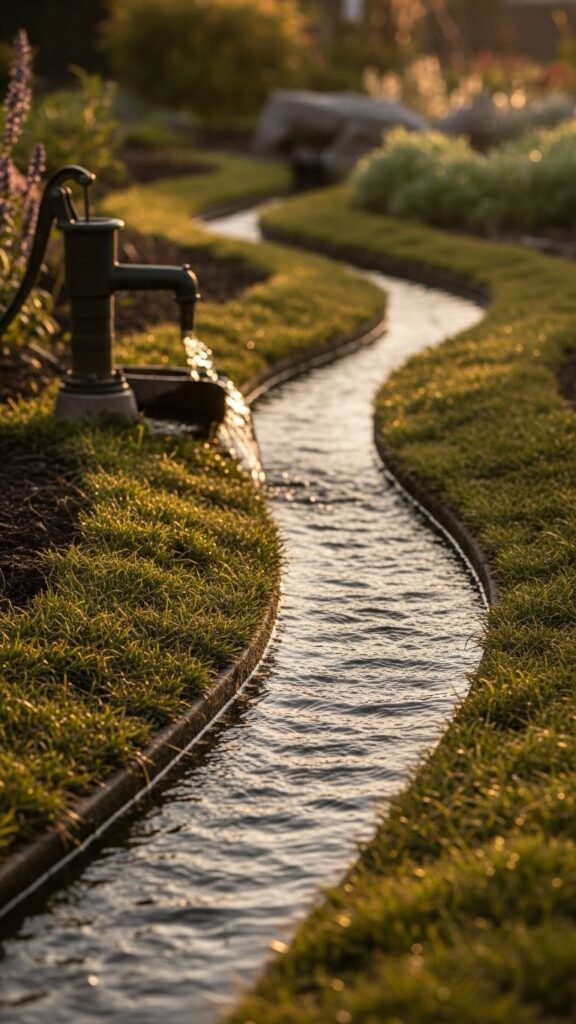
Lighting sets the mood, but adding a narrow water channel can give your small garden a sense of depth and movement without taking up precious square footage.
You can trim edges, plant low grasses and sedges, and direct light to create linear reflections that elongate sightlines. Simple pumps keep water flowing, producing subtle stream illusions that make the space feel larger and free to roam.
Borrowed Views and Framed Vistas

Dual-Purpose Retaining Walls as Benches
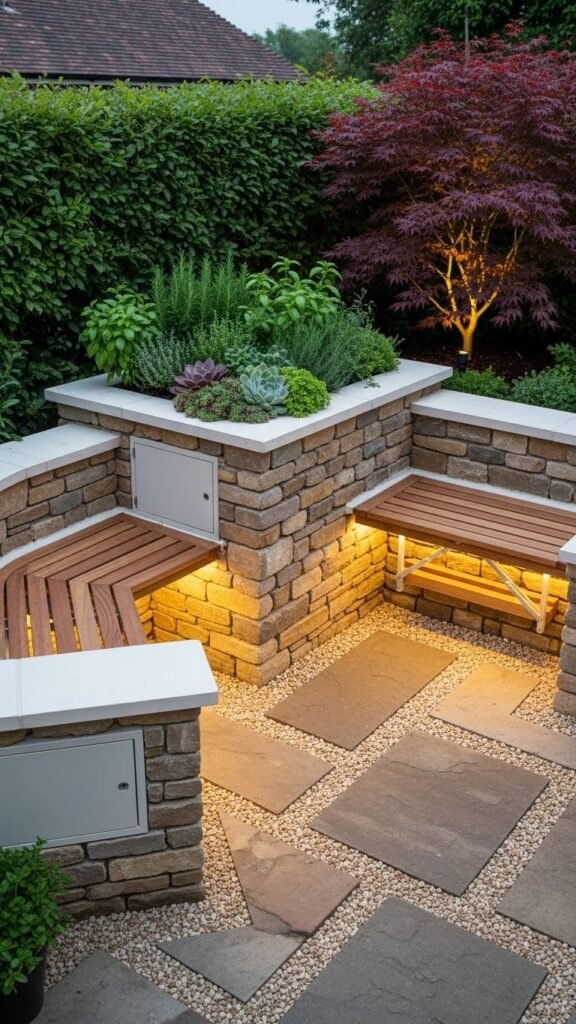
After you’ve framed distant views and guided the eye outward, make the most of every inch between sightlines by using retaining walls that also serve as seating.
You’ll design storage integrated bases, curved seating to soften corners, and a planter top for herbs or succulents.
Add a fold down bench where space tightens so you can sit, store, and reclaim freedom in a compact garden.
Hanging Herb Gardens by the Kitchen
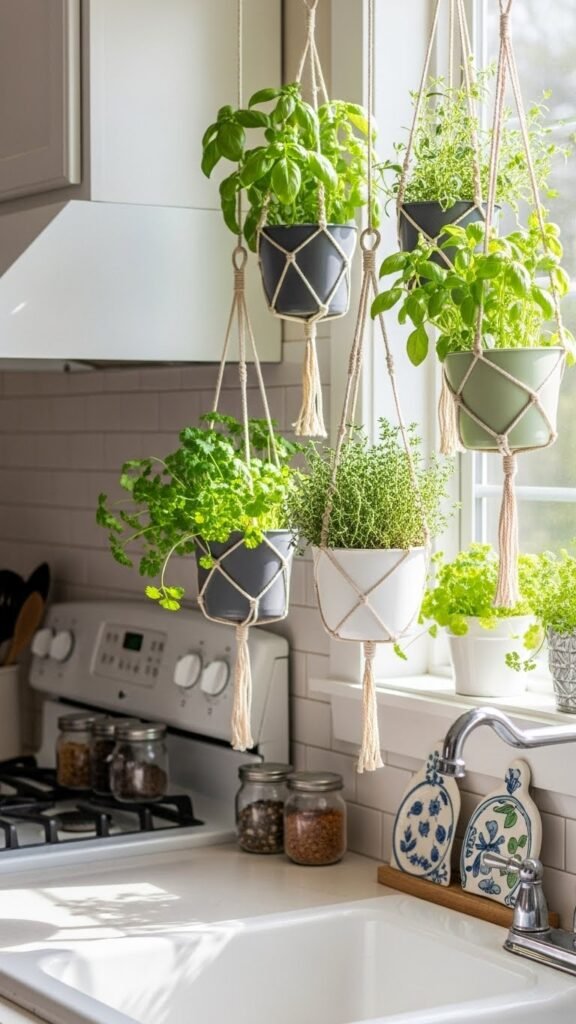
Often overlooked, hanging herb gardens let you grow fresh flavors within arm’s reach of your stove without sacrificing counter or window space.
You’ll hang planters near a kitchen windowsill or above over sink racks, freeing room for spice jars while keeping herbs accessible.
Choose light-loving varieties, use compact soil or hydroponic systems, prune for productivity, and move pots for sun or cooking freedom.
Long-Season Bedding in Window Boxes
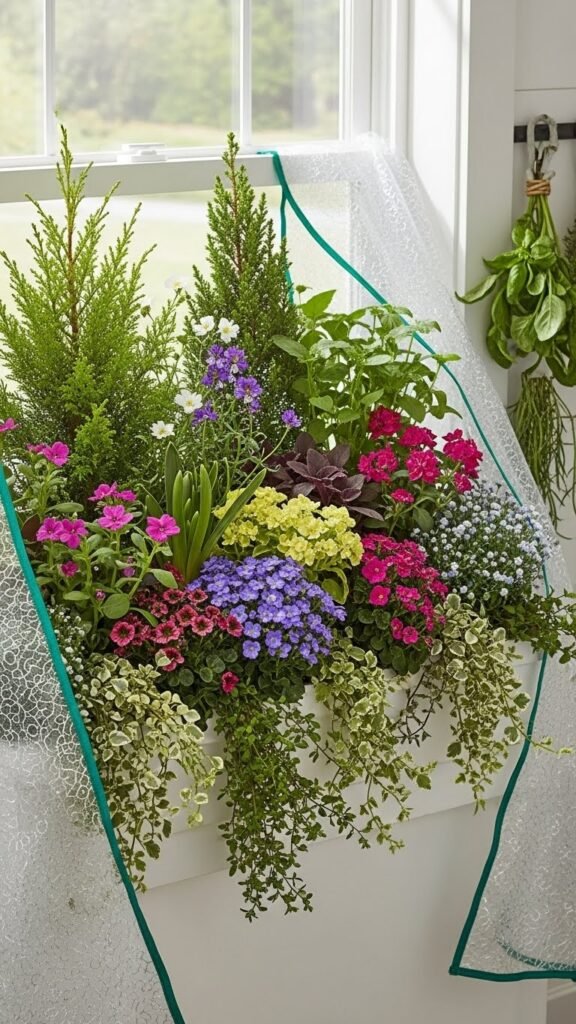
Compact Fruit Varieties for Containers
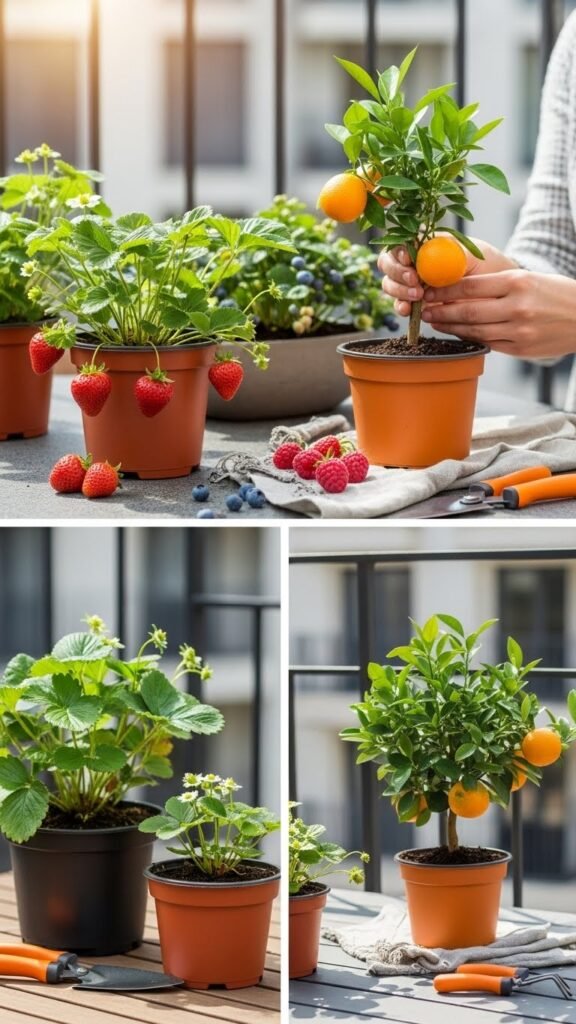
Think small to get big rewards: compact fruit varieties let you grow strawberries, dwarf raspberries, patio blueberries, and miniature citrus in pots on a balcony or tiny patio.
Choose dwarf citrus and a patio fig for reliable yields; use well-draining mix, feed regularly, and prune for size.
You’ll harvest fresh fruit, free to move plants for sun or shelter as seasons shift.
Cozy Vertical Dining Nooks
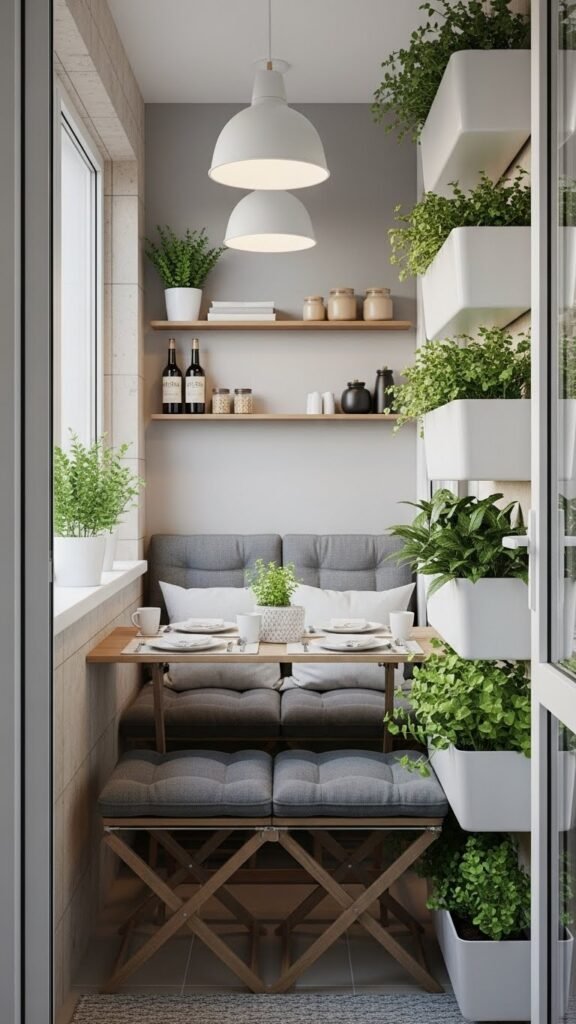
Carving out a cozy vertical dining nook turns narrow balconies or tight patios into intimate, functional dining spaces that put plants and people on equal footing. You’ll fit a bistro alcove with foldaway seating, slim shelving, and wall-mounted planters.
Hang pendant greenery to soften sightlines, choose compact tableware, and keep circulation clear so you can dine freely amid layered vertical planting.
Texture-Driven Pot Groupings
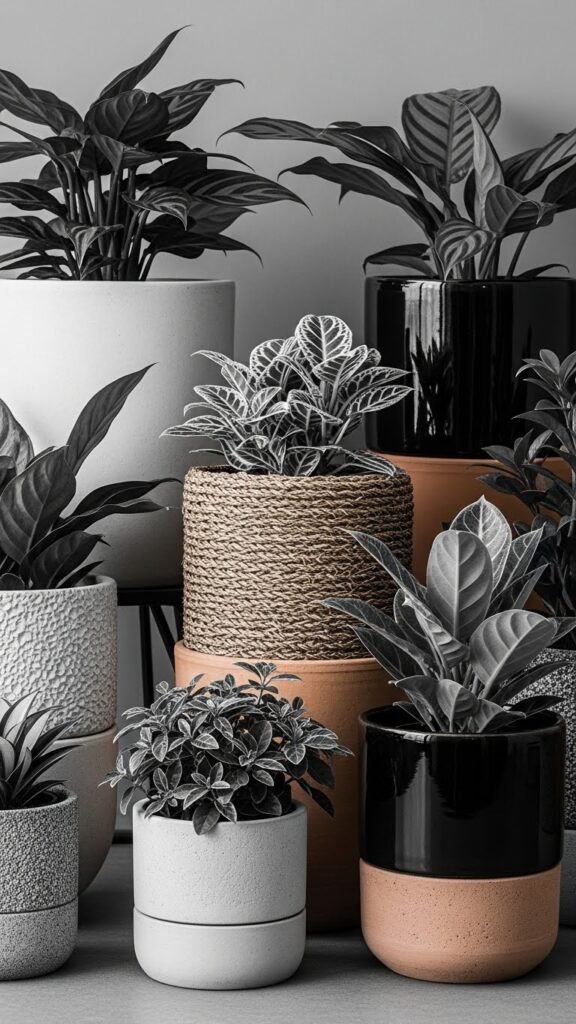
Often you’ll mix pots with contrasting textures—matte ceramic, rough terracotta, woven fiber, and glossy glaze—to give a small grouping depth without taking up more floor space.
You’ll arrange varied heights and tactile contrasts to highlight form, use monochrome foliage for calm cohesion, and select lightweight containers for easy movement.
This keeps your terrace flexible, plant-savvy, and free to evolve.
Strategic Planting for Winter Interest
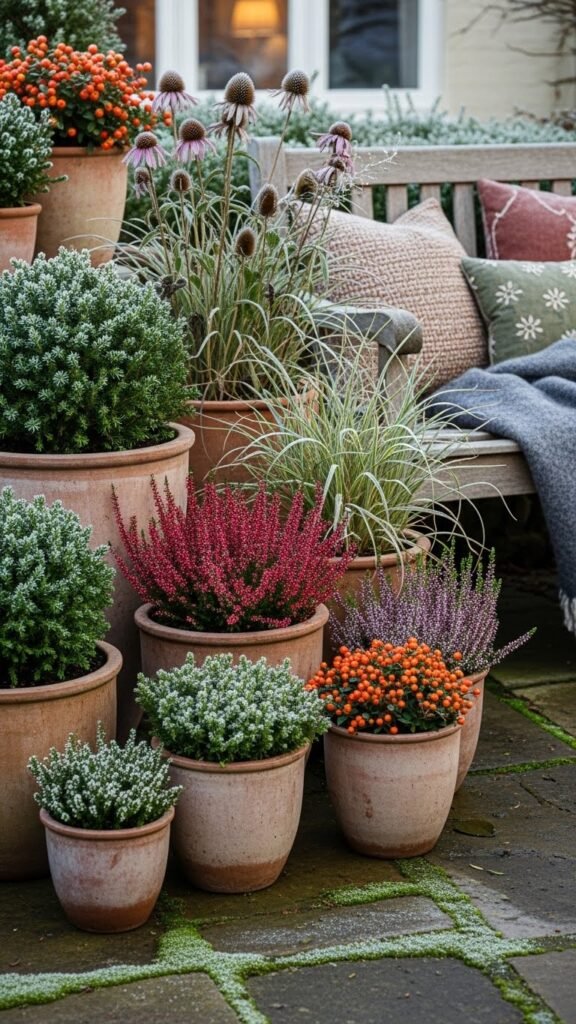
While textured pots and movable groupings keep your terrace flexible through the seasons, you’ll want to plan now for winter so the space stays alive and attractive.
Choose compact evergreens for structure, tuck low-maintenance winter berries into corners for color, and layer seedheads and grasses for silhouette.
You’ll maximize impact in limited space while keeping maintenance light and mobility high.