
If you’re facing a dim corner, you don’t have to accept bare soil or drab pots. I’ll show practical, low‑maintenance plants that thrive in shade—from architectural hostas and evergreen anchors to colorful heucheras and late‑season bloomers—so you can choose by texture, season, and soil. Learn which pairings prevent crowding and which evergreens keep winter interest, and you’ll be ready to transform that space into a reliable, year‑round refuge.
Hosta (Shade-Tolerant Foliage Star)
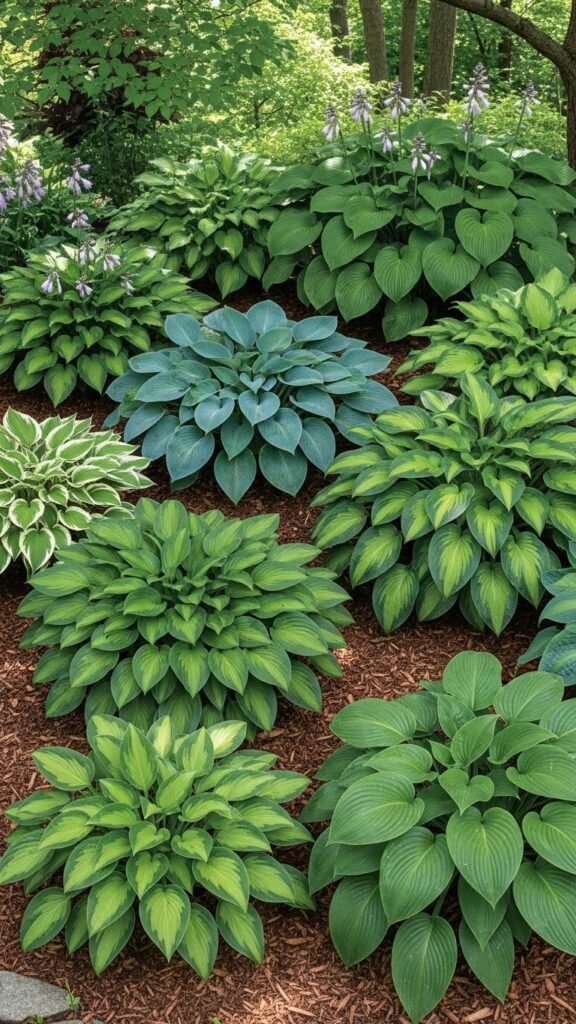
Hostas are your go-to shade-tolerant perennials when you want big, dependable foliage without fuss; they thrive in morning sun or deep shade and reward you with foliage that ranges from compact mounds to large, architectural leaves.
You’ll choose cultivars by size and texture, match soil preferences for moisture and drainage, mulch lightly, and use dividing techniques every few years to maintain vigor and freedom in design.
Ferns (Athyrium, Dryopteris, Nephrolepis)

Often overlooked, ferns bring graceful texture and effortless shade performance to your garden; Athyrium, Dryopteris, and Nephrolepis each offer distinct habits—from airy, lacy fronds to bold, upright crowns and arching, basket-ready foliage—so pick species by form and site moisture.
You’ll choose peat alternatives for sustainable potting mixes, prune dead fronds, and enjoy fiddlehead harvesting sparingly while letting colonies spread.
Heuchera (Coral Bells)
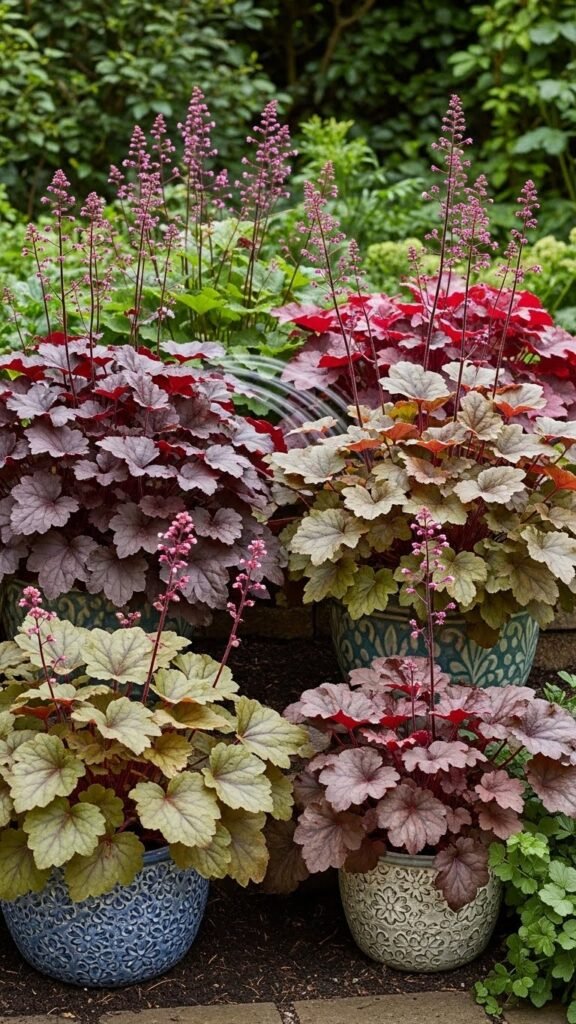
Featuring vibrant foliage that holds color in shade, Heuchera (coral bells) is a go-to for adding year-round contrast to shady beds and containers.
You’ll choose shade tolerant cultivars for leaf tone and texture, place them where air circulates, and use peat free potting mixes to improve drainage and sustainability.
Trim spent flower stalks and divide clumps every few years for vigor.
Pulmonaria (Lungwort)
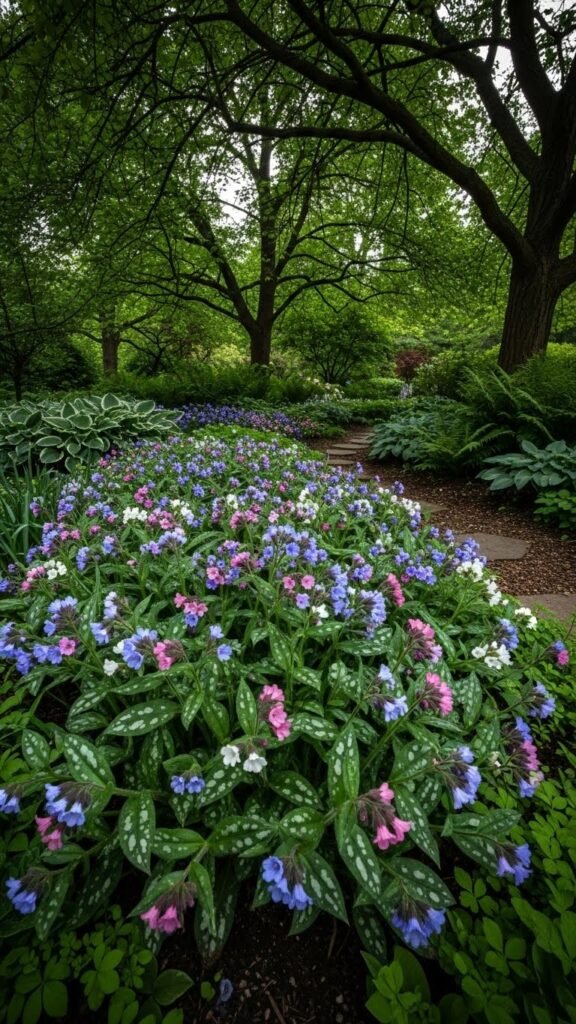
Where Heuchera provides colorful, textural interest, Pulmonaria brings early spring flowers and boldly patterned foliage that brighten deep shade. You’ll appreciate low-maintenance clumps, deer resistance, and adaptable soil tolerance. Use Pulmonaria for groundcover, edging, or under trees; its medicinal folklore is historical, not prescriptive. Expect winter foliage contrasts with evergreen tones and durable habit, giving freedom to design sheltered, low-light spaces with confidence.
Lamium (Variegated Dead-Nettle)
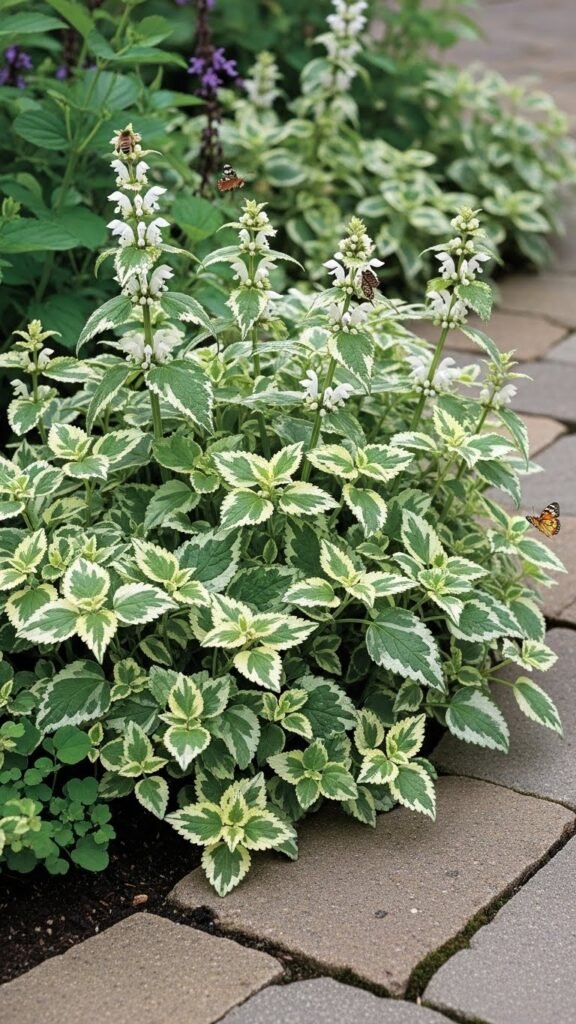
Tucked into shady borders and slipping between pavers, Lamium (variegated dead-nettle) offers fast, low-growing coverage with striking silver-and-green or cream-margined leaves and delicate, hooded blooms that attract pollinators without demanding fuss.
You’ll use it for reliable groundcover uses, edging, and containers; it tolerates neglect, resists invasiveness when managed, and carries charming medicinal folklore but is grown mainly for its freedom-friendly, low-maintenance appeal.
Astilbe (Plume Flowers)
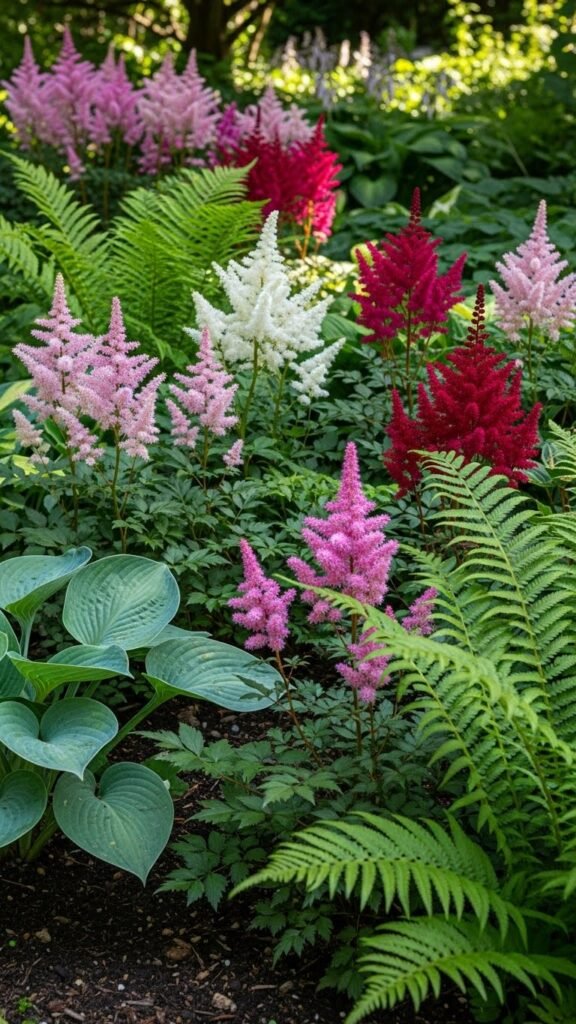
If you want reliable color in shady beds, plant astilbe for its plume-like flower panicles and ferny foliage that brighten dull corners from late spring into summer.
You’ll choose sites with consistent moisture—astilbe soil requirements mean rich, humusy, well-draining but damp soil. Pair with ferns and hostas for airy contrast; astilbe companioning favors repeating color and freedom to shape flowing, low-maintenance shade borders.
Hellebore (Lenten Rose)
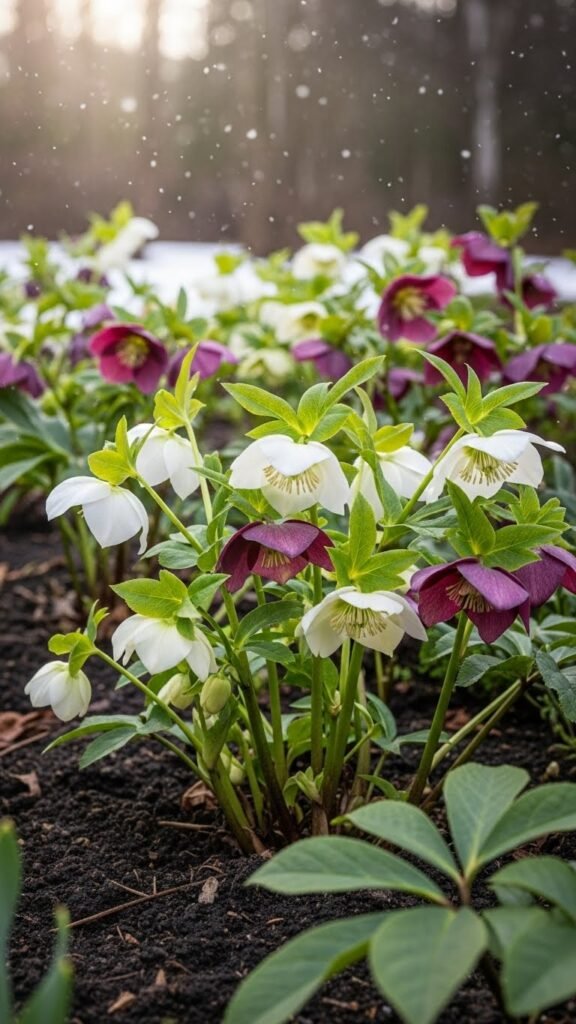
Plant hellebores for early-season interest when winter lingers and other perennials are still dormant: these hardy, long-lived clumps produce nodding, cup-shaped flowers in late winter to early spring and glossy, evergreen foliage that steadies shade beds year-round.
You’ll seed propagation selectively to maintain traits, divide cautiously, site them in rich, well-drained soil, and enjoy pollinator benefits without fuss.
Dicentra (Bleeding Heart)
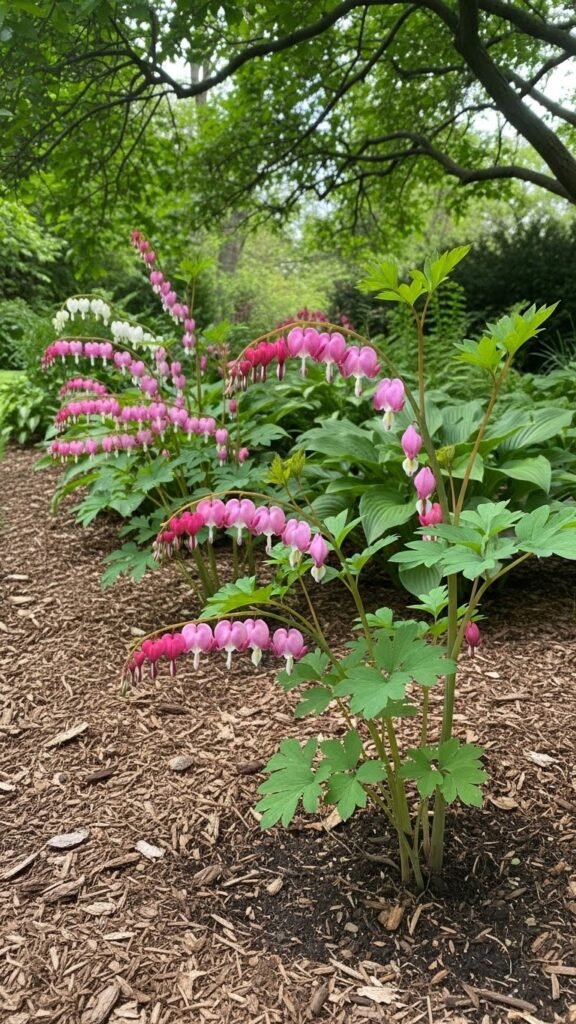
Often overlooked in modern gardens, Dicentra (bleeding heart) rewards you with arching stems of pendulous, heart-shaped flowers that brighten shady borders in spring.
You’ll plant it where soil drains well, avoid summer heat, and use light mulch to retain moisture. Division is the preferred shade propagation method; watch for soil fungi and maintain good airflow to prevent rot while preserving a natural, free-flowing look.
Tricyrtis (Toad Lily)
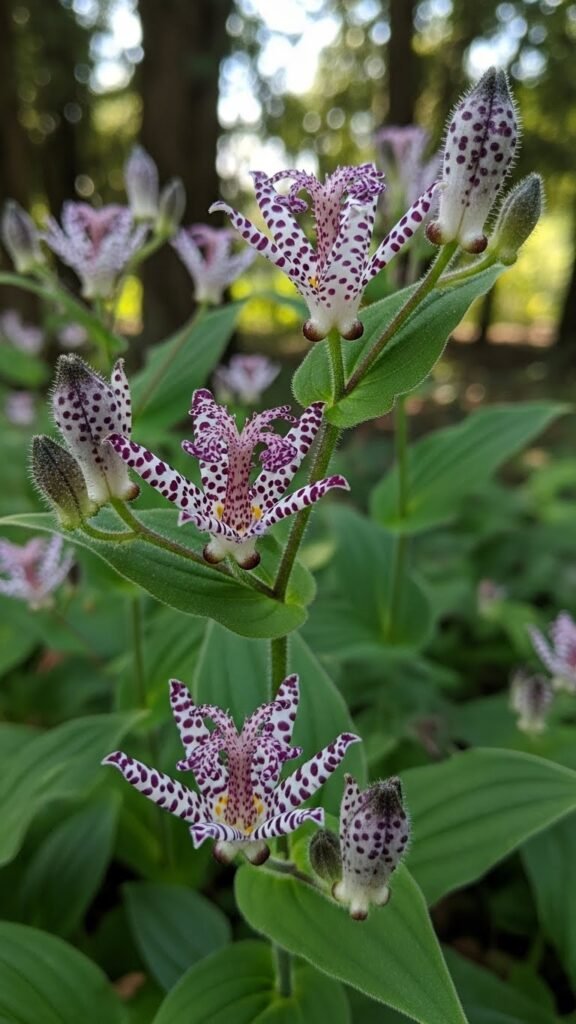
Moving from the delicate arches of Dicentra, you’ll find Tricyrtis (toad lily) brings late-summer and autumn interest to shaded beds with its orchid-like, speckled blooms and elegant, nodding habit.
You’ll plant shade loving Tricyrtis in rich, moist soil, give dappled light, and expect low maintenance.
These wildlife friendly toadlilies attract pollinators, tolerate cool summers, and reward you with dependable, exotic-looking foliage.
Tiarella (Foamflower)

Settle Tiarella (foamflower) into a cool, consistently moist spot and you’ll get delicate, frothy flower spikes and attractive, scalloped foliage that brighten shady borders from spring into early summer.
You’ll enjoy low-maintenance colony propagation via creeping crowns; divide every few years to control spread.
It supports pollinator attraction, tolerates deep shade, and rewards you with dependable texture and subtle blooms.
Skimmia (Evergreen Shrub)
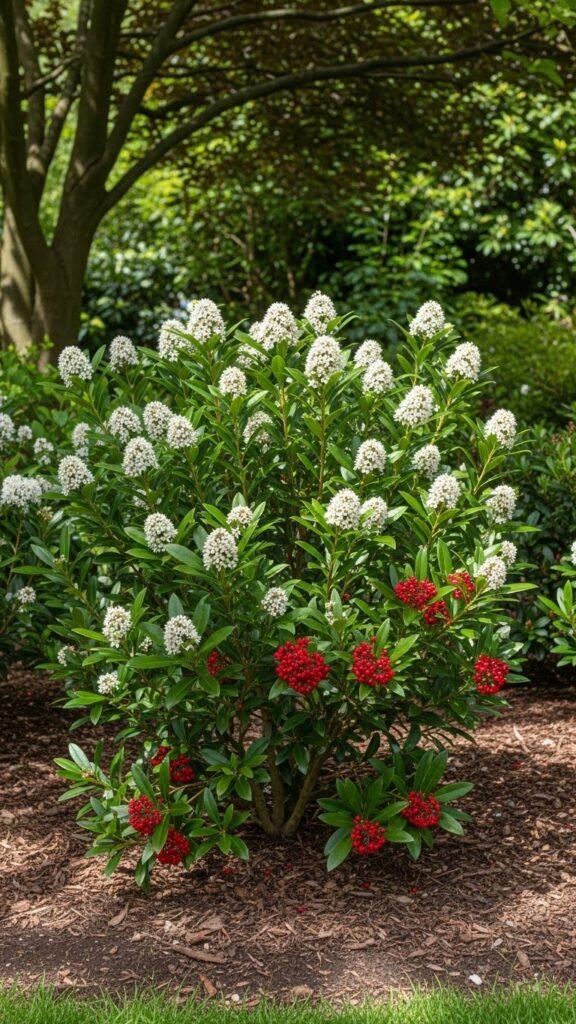
Skimmia is a compact, evergreen shrub that delivers year-round interest with glossy foliage, fragrant spring blossoms, and bright berries that many varieties hold through winter.
You’ll enjoy low-maintenance structure and reliable winter berries if you plant in dappled shade, rich soil, and consistent soil moisture.
Prune lightly after flowering, mulch to conserve water, and choose male/female mixes for berry production.
Rhododendron and Azalea
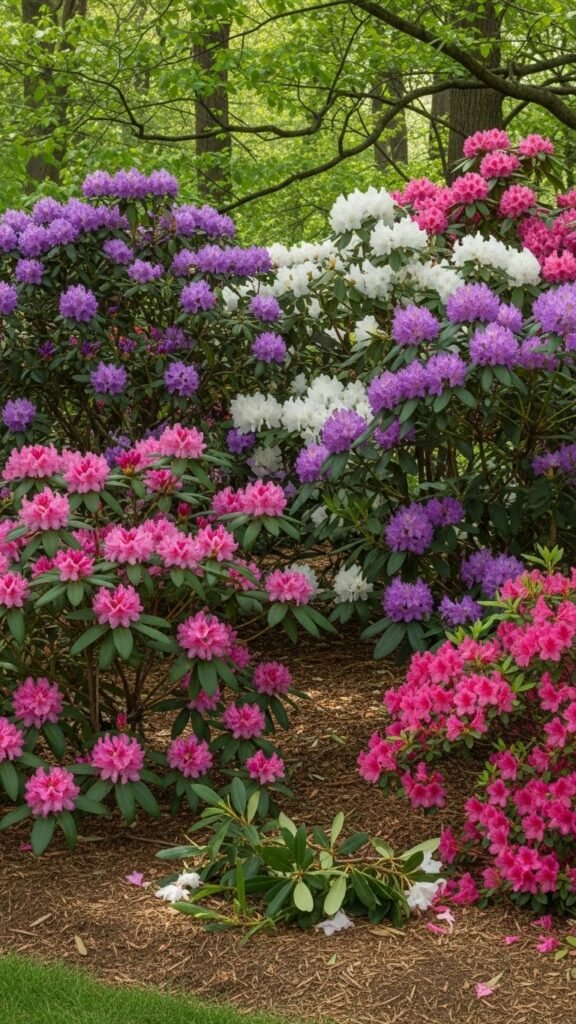
If you like the evergreen structure and seasonal interest Skimmia provides, rhododendrons and azaleas will expand that palette with larger, showier blooms and similar shade tolerance.
You’ll choose sites with acidic soil, good drainage and dappled light. Plant so roots stay cool, mulch lightly, and perform spring pruning to shape and remove spent trusses. They reward you with bold, dependable color.
Daphne (Fragrant Shrub)
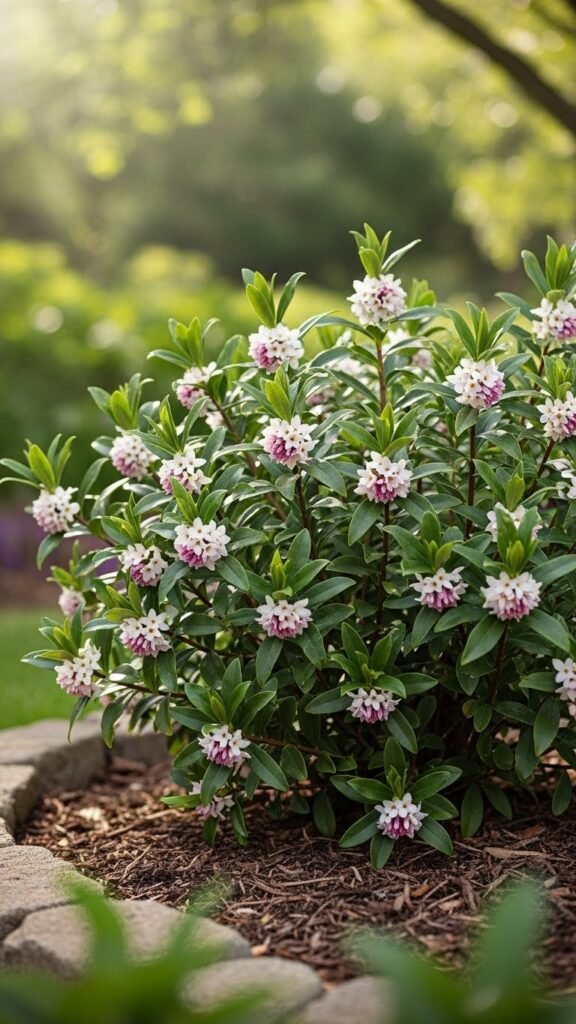
Daphne offers compact, evergreen structure and intensely fragrant blooms that make it a standout in shady borders and containers. You’ll appreciate its perfume; plant where you’ll catch the fragrance.
For successful cultivation, give well‑drained soil, light dappled shade, and minimal disturbance. Mulch and site choice offer winter protection. Prune sparingly after flowering, and don’t overwater — freedom for scent, not fuss.
Hydrangea Macrophylla (Shade-Tolerant Hydrangea)

Hydrangea macrophylla brings big, mop‑head blooms and reliable shade tolerance to garden borders and containers, making it a go‑to for colorful, low‑maintenance impact.
You’ll enjoy bold summer color; adjust soil pH to shift blues and pinks, feed modestly, and mulch for moisture. Watch pruning timing — trim after flowering to protect next year’s buds — and give partial shade and steady care.
Acer Palmatum (Japanese Maple)
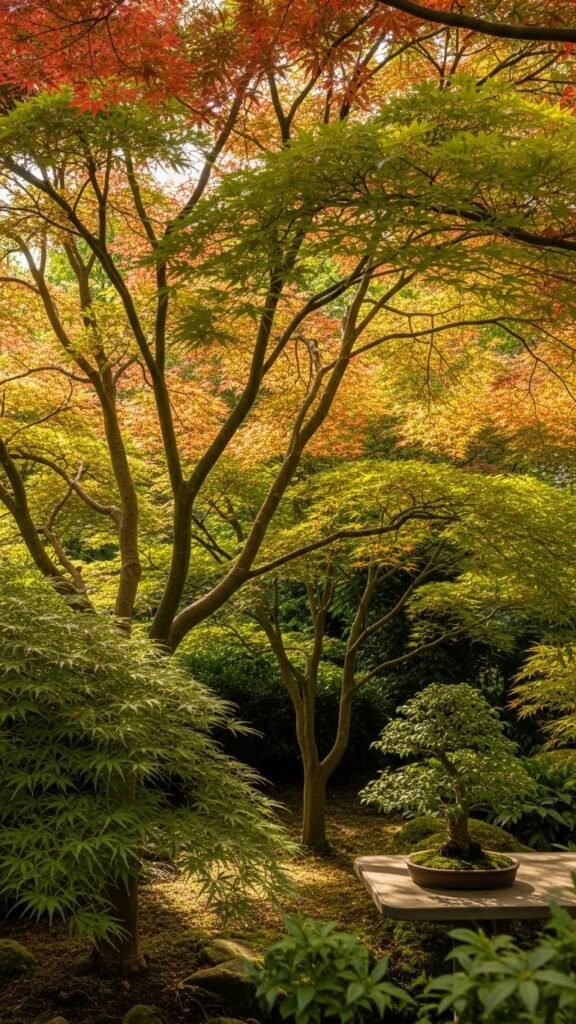
Moving from bold summer blooms to refined structure, Acer palmatum (Japanese maple) offers sculptural form and delicate foliage that bring year‑round interest to partly shaded spots.
You’ll choose cultivars for scale and siting, favoring dappled light and well‑drained soil. Expect vivid autumn color and versatile pruning; you can train smaller types for bonsai cultivation, giving freedom to shape mature, elegant specimens.
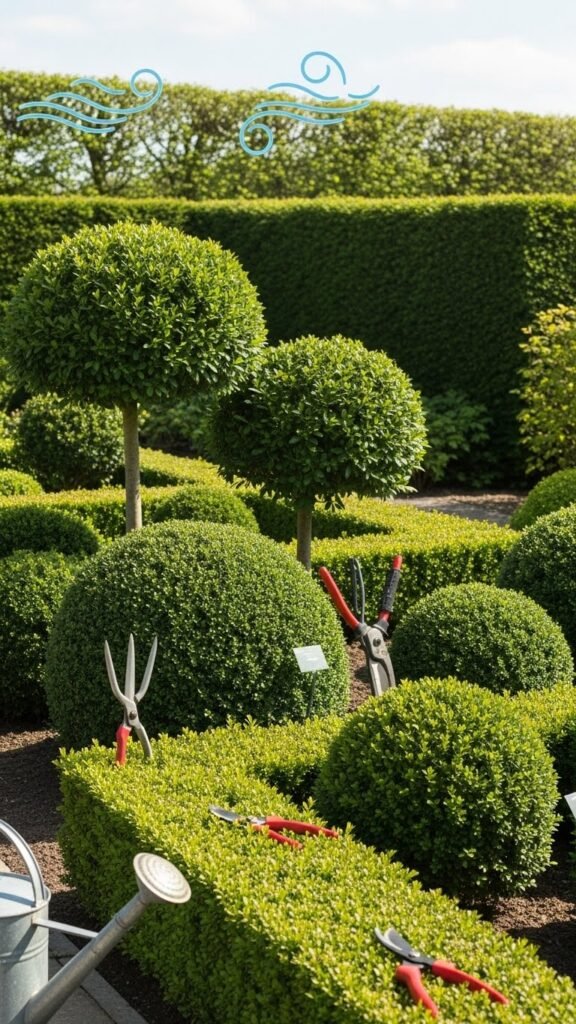
Buxus (Boxwood)
Sarcococca (Sweet Box)
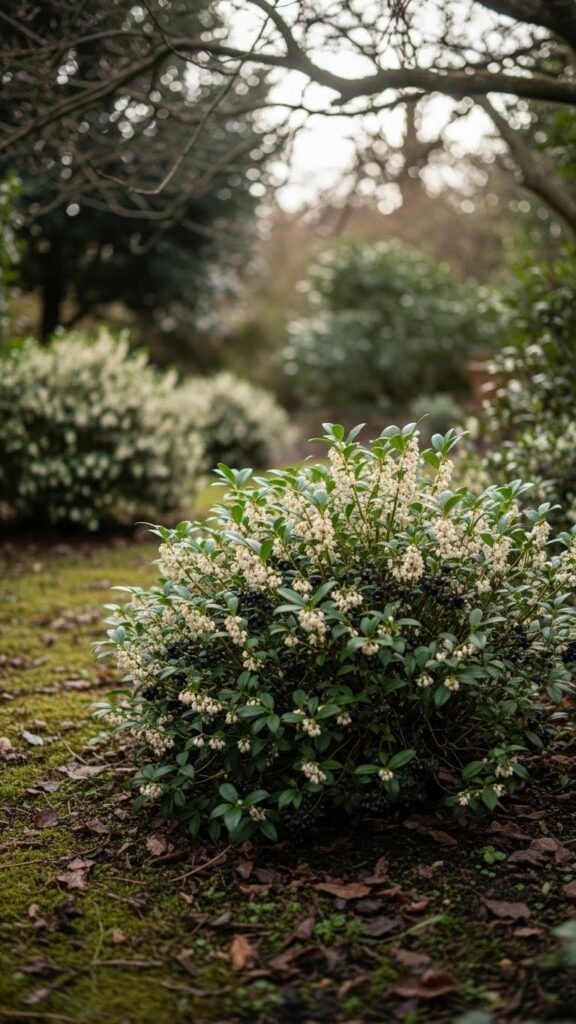
Sarcococca, commonly called sweet box, offers a reliable, low-maintenance option for shady spots where you want year-round structure and late-winter fragrance.
You’ll plant it to form a fragrant understory, enjoy glossy evergreen leaves, and trust tiny blooms that lead to a dark winter berry.
Prune lightly for shape, choose well-drained soil, and let it quietly define hidden corners.
Euonymus Fortunei (Variegated Wintercreeper)

Use Euonymus fortunei (variegated wintercreeper) when you need a versatile, low-maintenance groundcover or climber that brightens shady corners with evergreen, cream-edged foliage.
You’ll appreciate straightforward wintercreeper care: moderate watering, well-drained soil, and light pruning.
Monitor variegation stability by avoiding deep shade; select cultivars suited to your climate.
It tolerates trimming and anchors slopes, paths, and walls reliably.
Ilex (Shade-Tolerant Holly)
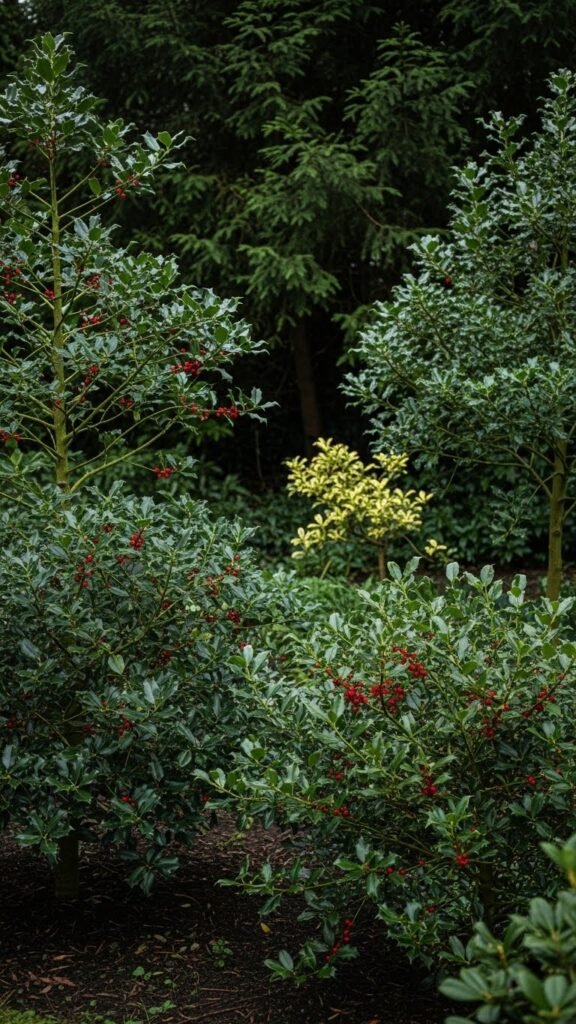
If you liked how wintercreeper brightens dark corners, you’ll find shade-tolerant hollies (Ilex spp.) offer similar year-round structure with added wildlife value and architectural form.
You can plant them in deep shade, select native species for berries, and shape sparingly.
Observe pruning timing—late winter or early spring—so you don’t cut next season’s flowers.
They reward low-maintenance, freedom-minded gardeners.
Sansevieria (Snake Plant)
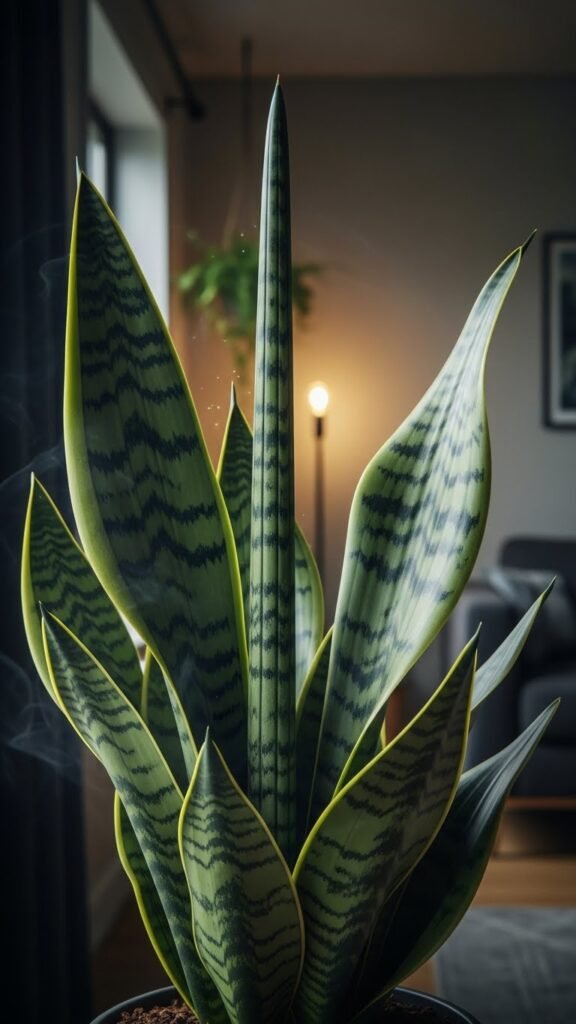
Think of Sansevieria (snake plant) as the go-to survivor for low-light corners: it tolerates deep shade, irregular watering, and neglect while giving you strong vertical form and evergreen structure year-round.
You’ll appreciate its air purifying qualities, minimal fuss, and resilient leaves. Use vertical propagation techniques—divide rhizomes or tip cuttings—to multiply plants quickly, keeping care simple and freeing up your space.
Epipremnum Aureum (Pothos)
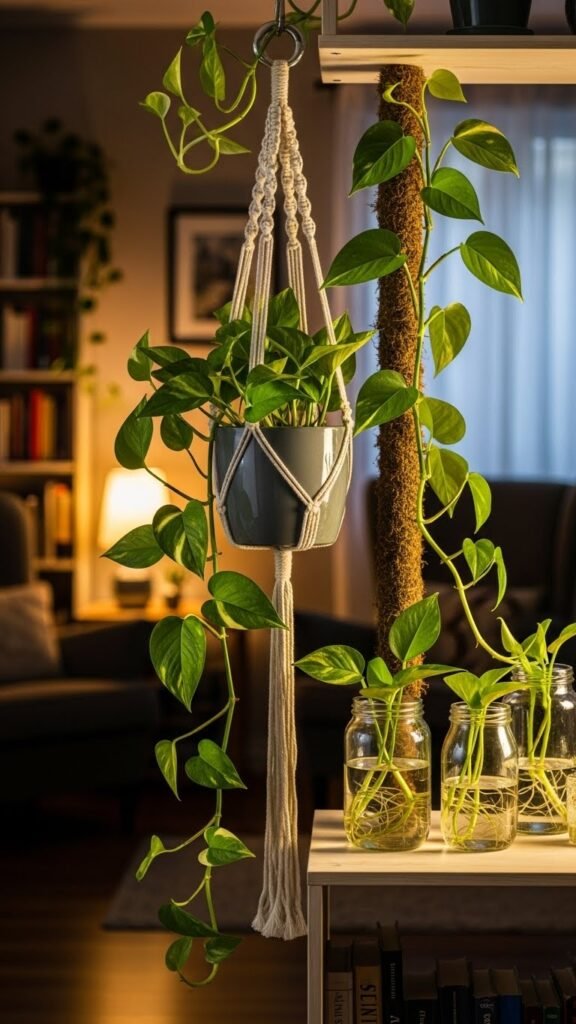
Epipremnum aureum, commonly called pothos, is a forgiving, fast-growing vine that’s ideal for low-light spots and busy households; you can drape it from shelves, train it up a moss pole, or let it trail from a hanging planter.
You’ll propagate quickly with simple cutting techniques—some growers call it lightning propagation—and choose cultivars by variegation genetics to match your aesthetic and low-effort lifestyle.
Aglaonema (Chinese Evergreen)
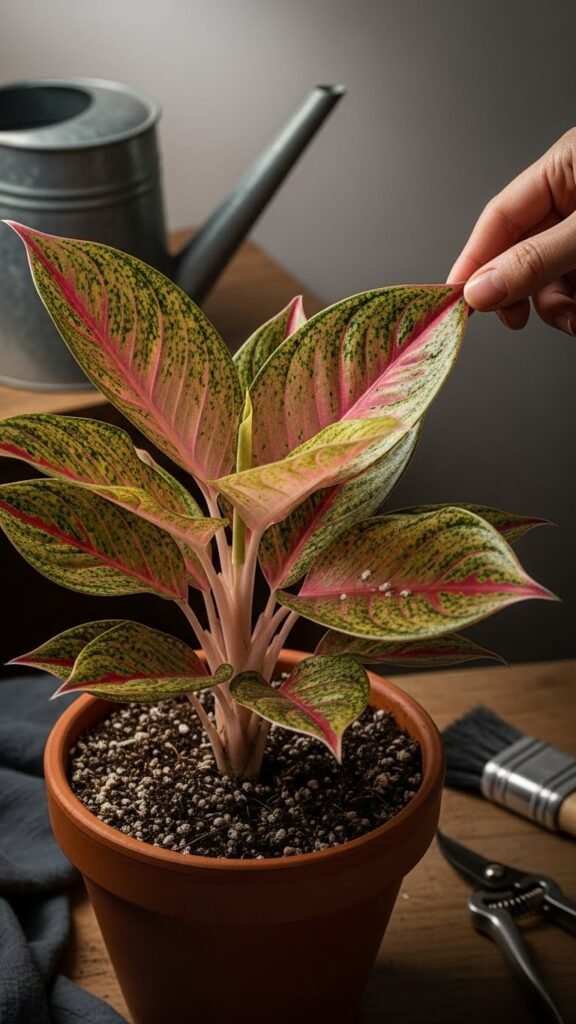
After enjoying the easygoing pothos, you’ll find Aglaonema (Chinese evergreen) matches that low-light friendliness while offering a more compact, upright habit and a wider range of leaf patterns.
You’ll water sparingly, favor well-draining mix and monitor soil pH for health. Rotate occasionally, prune spent foliage, and inspect for scale or mealybugs—simple pest management keeps these resilient plants thriving in your darker spaces.
Chamaedorea Elegans (Parlor Palm)

Often overlooked, the Chamaedorea elegans (parlor palm) proves to be one of the most forgiving shade-loving houseplants you can keep.
You’ll appreciate its slow, graceful growth, low light tolerance, and compact habit. Water sparingly, allow soil to dry slightly, and try simple indoor propagation by dividing pups. It’s non-toxic to pets, so you can enjoy greenery without sacrificing freedom or safety.