
You’re planning a cool, shady garden that feels restful and layered, and there are clear ways to make it work for your space. Think textured drifts of hostas and ferns, mossy boulders, winding gravel paths, and small trees that frame quiet seating. I’ll show you practical layouts—from deep-forest plantings to compact courtyard designs—that balance structure, seasonal interest, and easy care, so you can pick the approach that fits your yard.
Woodland Walk With Layered Ferns and Hellebores

Along a shaded path, layer ferns and hellebores to create a cool, textured woodland walk that feels both natural and intentionally planted.
You’ll enjoy varied shade textures under dappled light, guiding movement with stepping stones and low drifts of color.
Keep woodland maintenance simple: mulch, occasional thinning, and gentle pruning so the space stays free, airy, and effortlessly wild.
Shady Patio Surrounded by Hostas and Hydrangeas
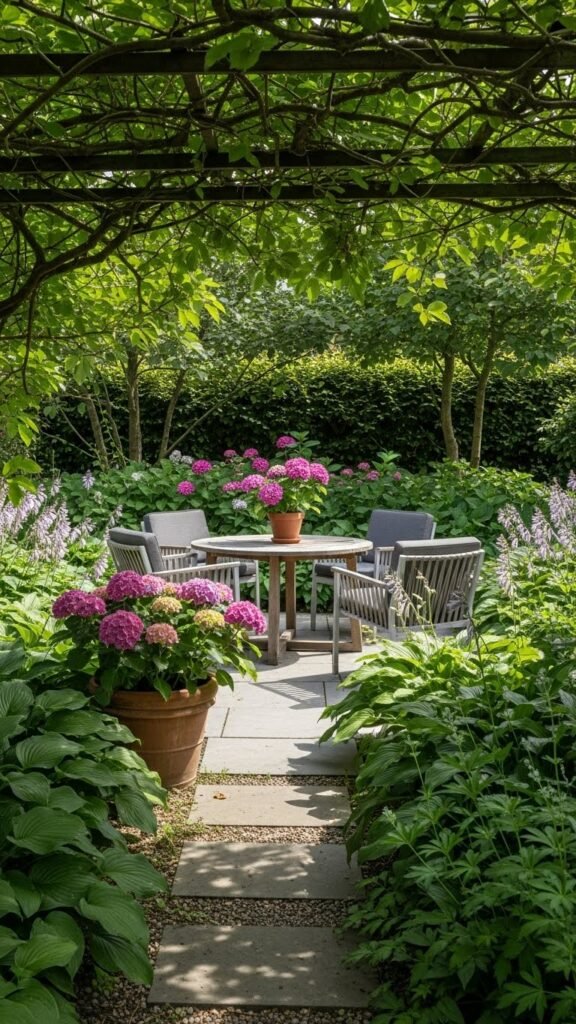
Create a cool, inviting patio tucked beneath a canopy of trees where hostas and hydrangeas frame your seating with lush foliage and seasonal blooms.
You’ll pick durable shade furniture that complements leaf textures, arrange potted hydrangeas for easy color shifts, and add fragrant underplanting like sweet woodruff.
Keep paths simple, sightlines open, and let relaxed, breathable materials reinforce your sense of freedom.
Dappled Shade Pathway With Japanese Forest Grass
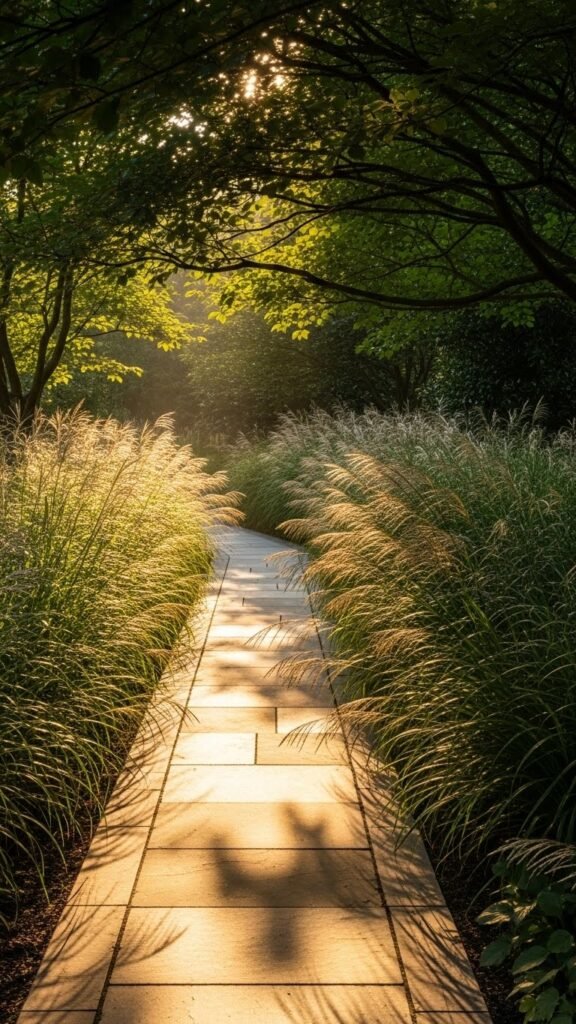
When dappled light filters through the canopy, a pathway edged in swaying Japanese forest grass (Hakonechloa macra) turns a simple stroll into a sensory experience; you’ll plant drifts of soft, golden blades beside clean stone edging, creating movement and rhythm.
Keep beds low, allow wander and pause, and add subtle seasonal lighting to guide steps at dusk while preserving a free, tranquil flow.
Deep Shade Fern Garden With Mossy Boulders
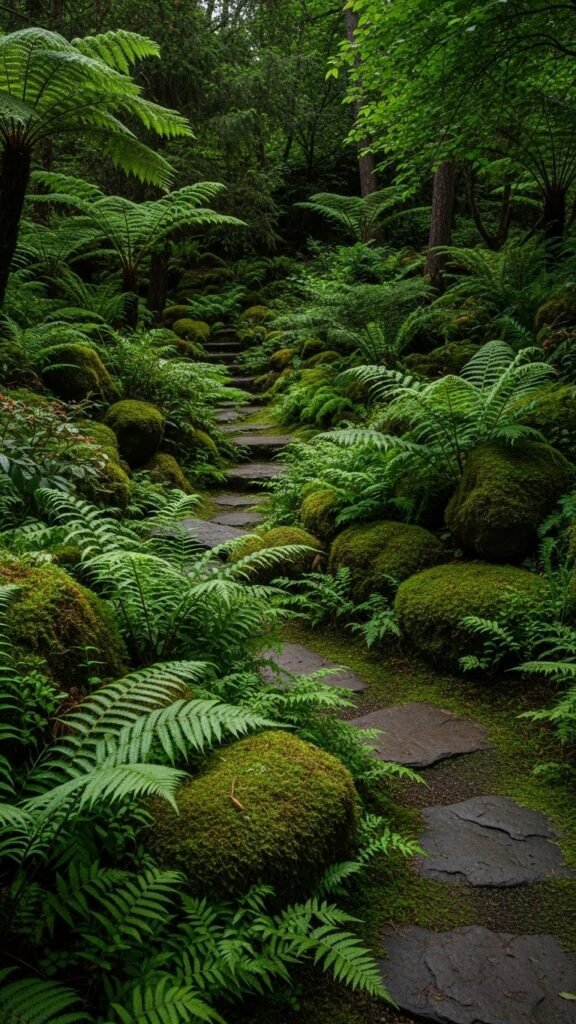
Although sunlight rarely reaches the forest floor, you’ll find that a deep shade fern garden with mossy boulders can turn dim corners into a lush, tactile refuge.
You’ll place boulders to create a rocky microclimate, sheltering native fernlets and encouraging moss carpets. Choose layered textures, winding sightlines, and low-maintenance soil to craft a freeing, secluded retreat that feels effortless and alive.
Partial Shade Border With Bleeding Hearts and Columbine
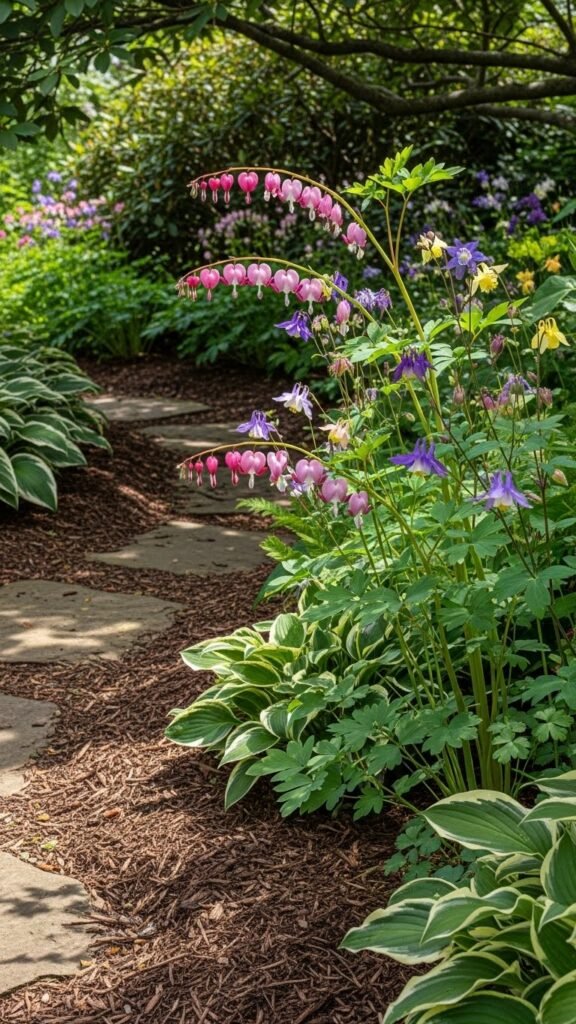
Shifting from the cool, secluded feel of a fern-and-boulder pocket, you can open the mood with a partial-shade border that pairs arching bleeding hearts and airy columbine for a softer, cottage-like edge.
Space shade loving shrubs behind perennials, mulch to retain soil moisture, and use drip irrigation or wicking cans for soil moisture management.
Let paths and gaps invite relaxed wandering.
Tropical-Style Shade Bed With Elephant Ears and Cannas
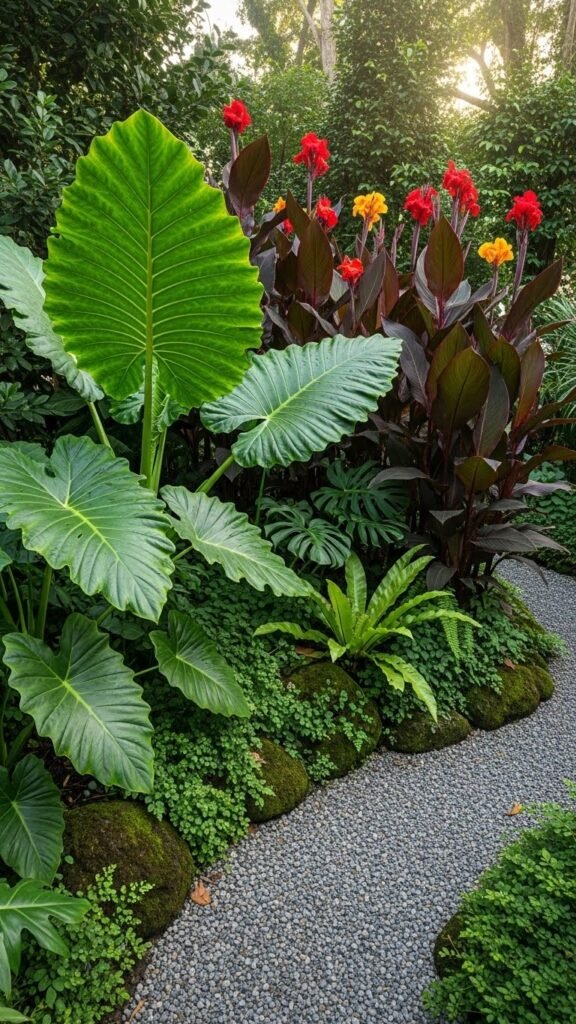
If you want a bold, lush corner that feels like a mini tropical retreat, plant dramatic elephant ears and upright cannas as your keystone pieces and build around them with glossy, textured foliage.
You’ll plan elephant ear spacing for mature leaves, stagger heights, and pick canna variety selection that matches color and growth habit. Add airy ferns and gravel paths for freedom of movement.
Cool Courtyard With Container Coleus and Impatiens
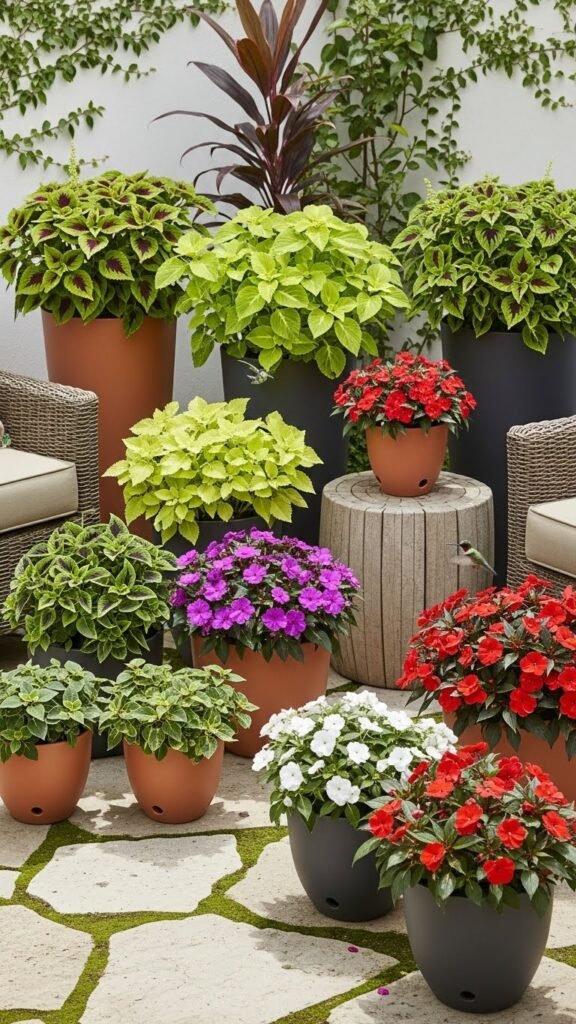
After a lush, tropical corner, you might prefer a cooler, more contained courtyard where color comes in tidy pots instead of sprawling foliage.
You’ll arrange coleus and impatiens for bold color contrast, pairing cool greens with bright reds and lavenders.
Choose lightweight containers with reliable container drainage, tuck seating among the pots, and enjoy a low-maintenance, liberating retreat that’s easy to rearrange.
Serpentine Path Lined With Lungwort and Pulmonaria
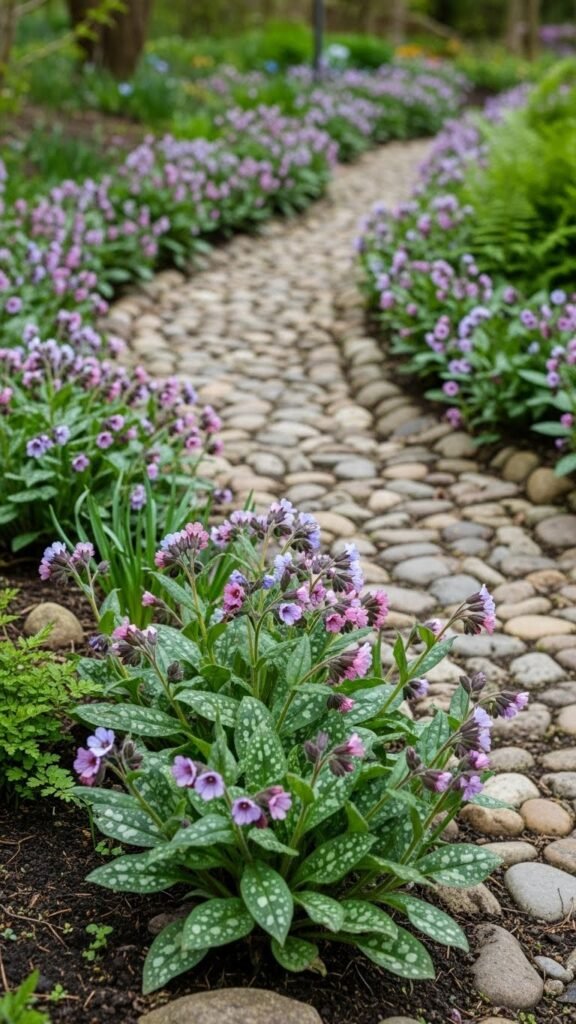
Wind your way down a gentle, curving path edged with lungwort (Pulmonaria) and you’ll find a shade garden that feels both natural and carefully composed.
You’ll enjoy ground level texture from speckled leaves and low mounds, while early spring blooms announce the season. Place stones and soft ferns nearby, keep edges loose, and let the path invite slow, unhurried wandering.
Shade Meadow With Native Perennials and Grasses
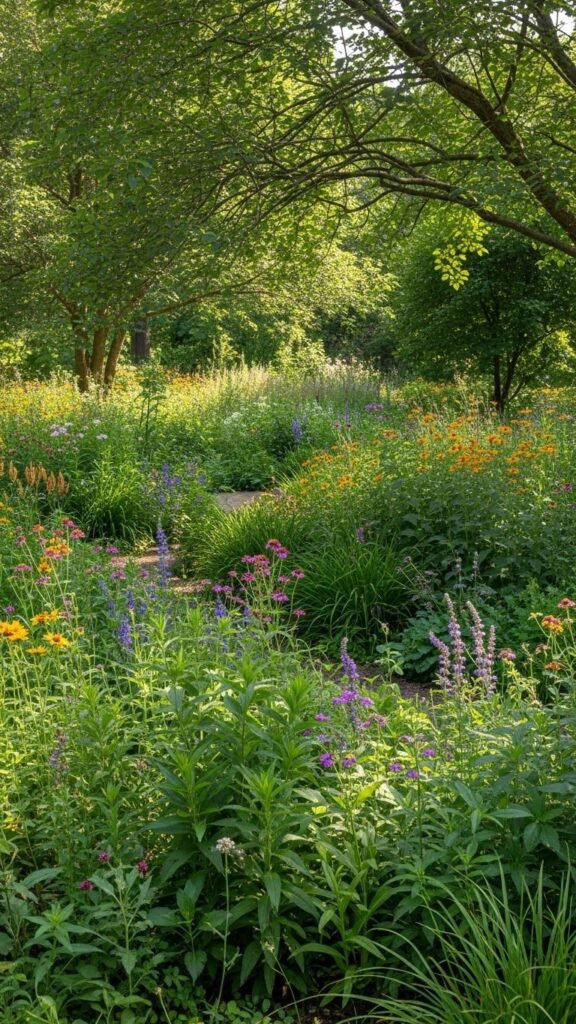
Creating a shade meadow brings together native perennials and grasses to produce a dappled, living carpet that changes through the seasons. You’ll design pollinator pockets and swaths of foliage, letting seasonal succession govern blooms and texture.
Choose resilient natives, thin gently to avoid overcrowding, and allow paths or clearings for movement. The result feels wild, free, low-maintenance, and richly alive.
Pergola-Shaded Seating Nook With Hanging Plants
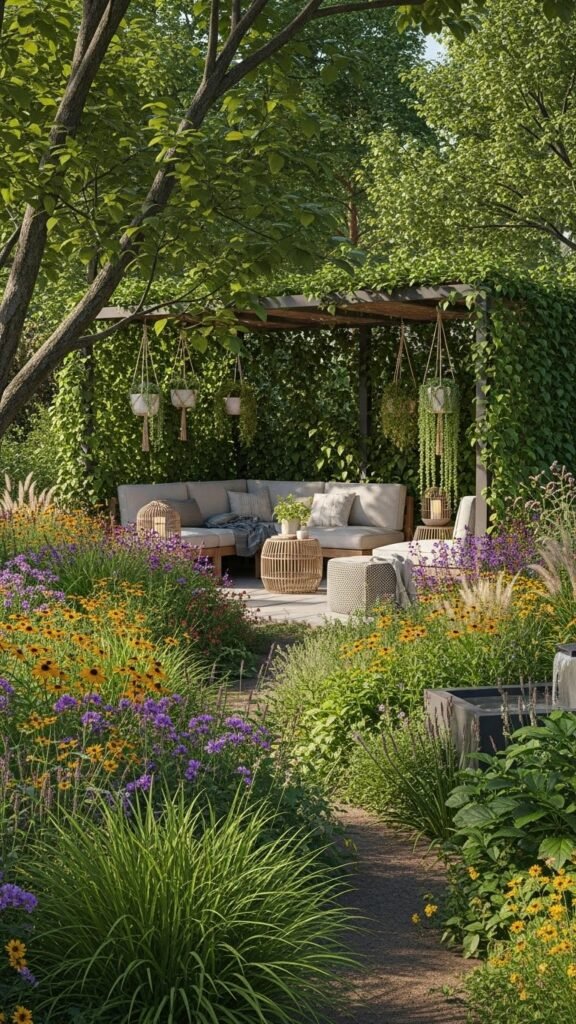
Step into a cool, dappled refuge beneath a pergola and you’ll find a compact seating nook that feels both intentional and lived-in. You’ll hang a hanging succulent to soften beams, drape climbers for privacy screening, and choose modular seating for easy rearrangement.
Add woven textiles, low lighting, and a small water feature to keep the space airy, personal, and effortlessly free.
Moist Shade Bog Garden With Ferns and Astilbe
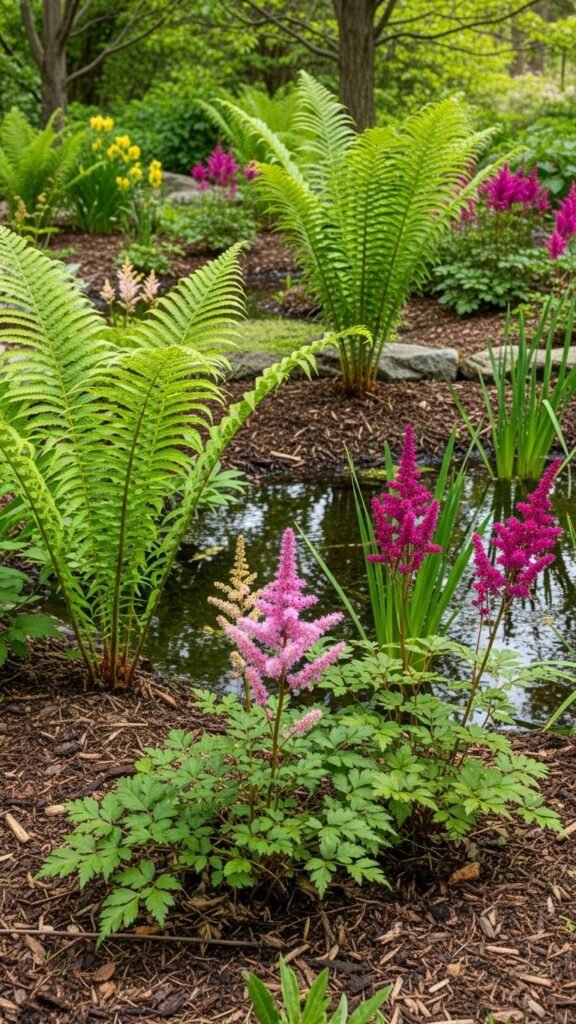
Tending a moist shade bog garden brings a cool, textural corner to your yard where ferns unfurl and astilbe sends plumes of color through filtered light.
You’ll design bog microclimates with shallow basins, mulch, and steady moisture, choosing astilbe for seasonal bloom and ferns for constant leaf movement. Monitor fern hydration, let plants spread freely, and enjoy a low‑fuss, peaceful wetland pocket.
Mixed Shrub Shade Garden Featuring Summersweet and Hydrangea
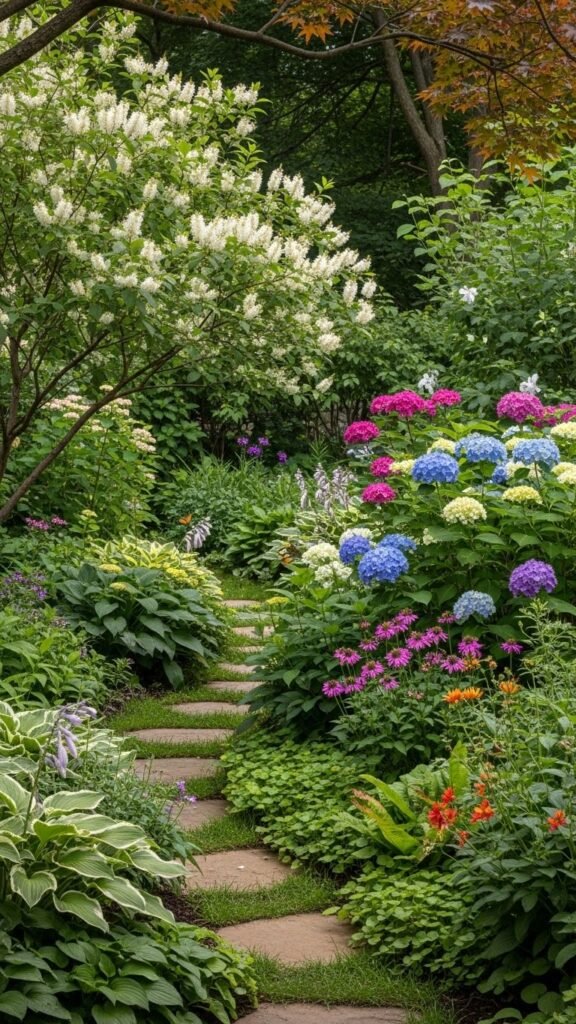
Layer shrubs of different heights and textures to build a mixed-shade garden where summersweet (Clethra) and hydrangea play leading roles, giving you fragrant summer blooms and lush mophead or lacecap flowers through the season.
You’ll combine scent layering with varied foliage to create movement, encourage pollinator attraction, and enjoy low-fuss maintenance while keeping paths open and sightlines free for relaxed wandering.
Quiet Reading Corner Under a Redbud With Groundcovers
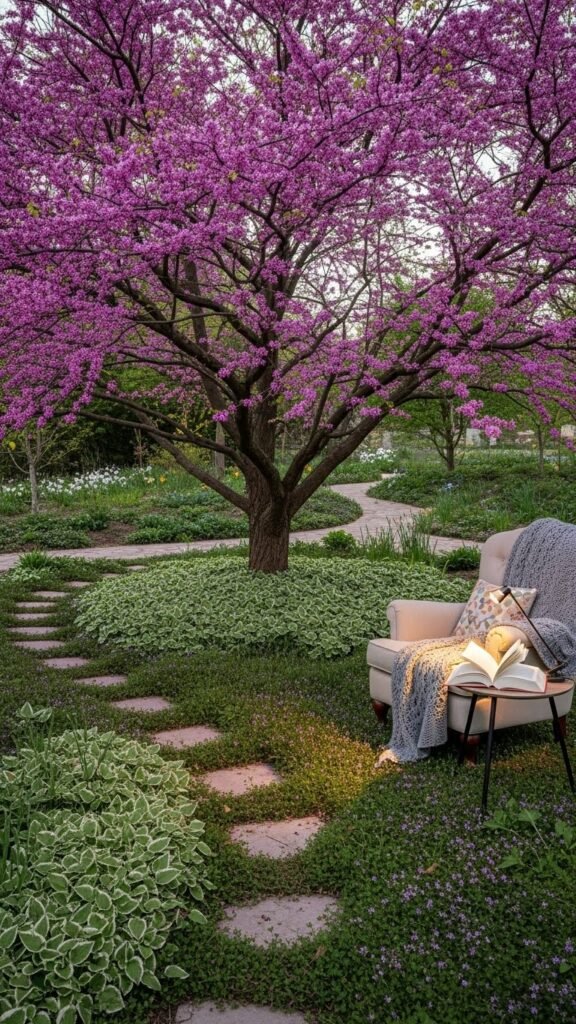
After enjoying the scented blooms and meandering paths of your mixed-shrub shade garden, you can carve out a quieter nook beneath an Eastern redbud to read and recharge.
Choose low groundcovers like ajuga or creeping thyme, add a comfortable chair, mind booklight placement for dusk, and let the seasonal leaf soundscape calm you.
Keep paths simple for easy access and solitude.
Formal Shade Parterre With Repeated Foliage Patterns
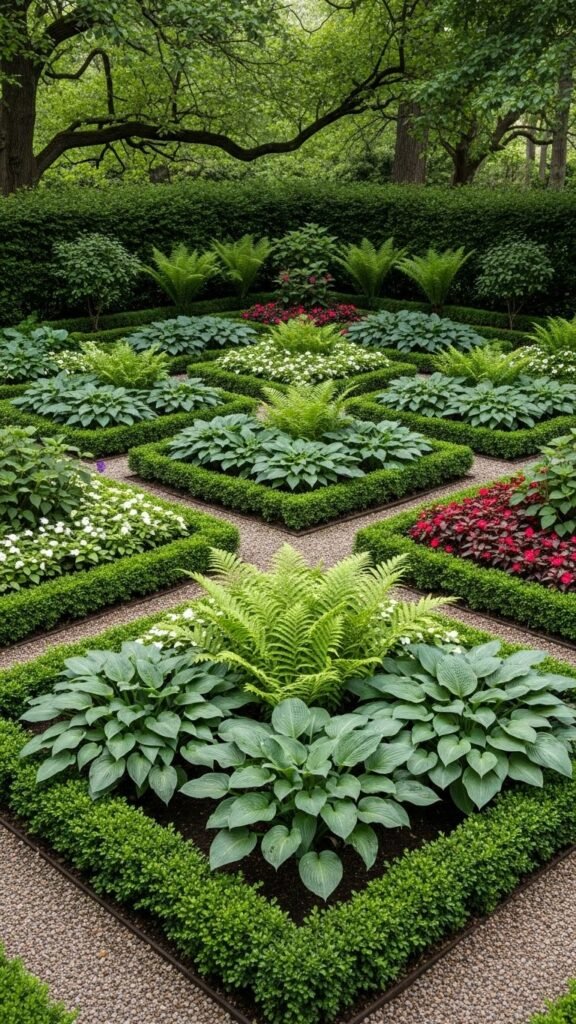
When you want a structured, elegant corner in a shady garden, a formal shade parterre uses repeated foliage shapes and textures to create rhythm and restraint.
You’ll lay symmetrical beds, repeat hostas and ferns for clear pattern, and use low hedging for edge detailing. Plant choices emphasize seasonal contrast, with cool greens and surprising seasonal color so the design feels orderly yet liberating.
Rustic Log-Step Trail With Tucked Hostas and Heuchera
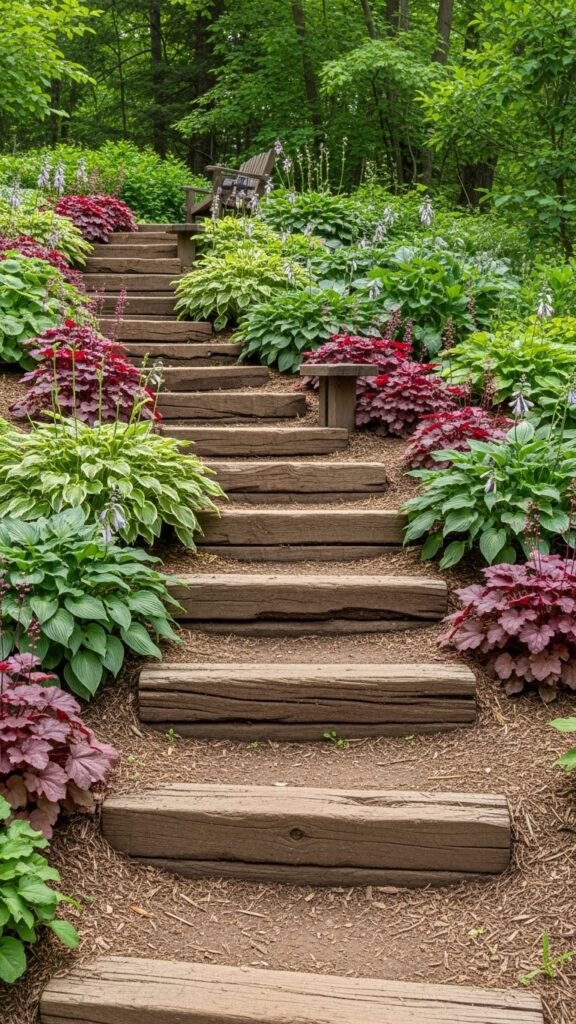
Wander a shady slope lined with staggered log steps that sink into the earth and guide you past pockets of tucked hostas and splashes of Heuchera; the rough-hewn texture of the wood contrasts with the soft, scalloped leaves and vibrant foliage accents.
You’ll add weatherproof seating on small landings, choose mulch for drainage, and schedule routine log step maintenance to keep the trail safe and relaxed.
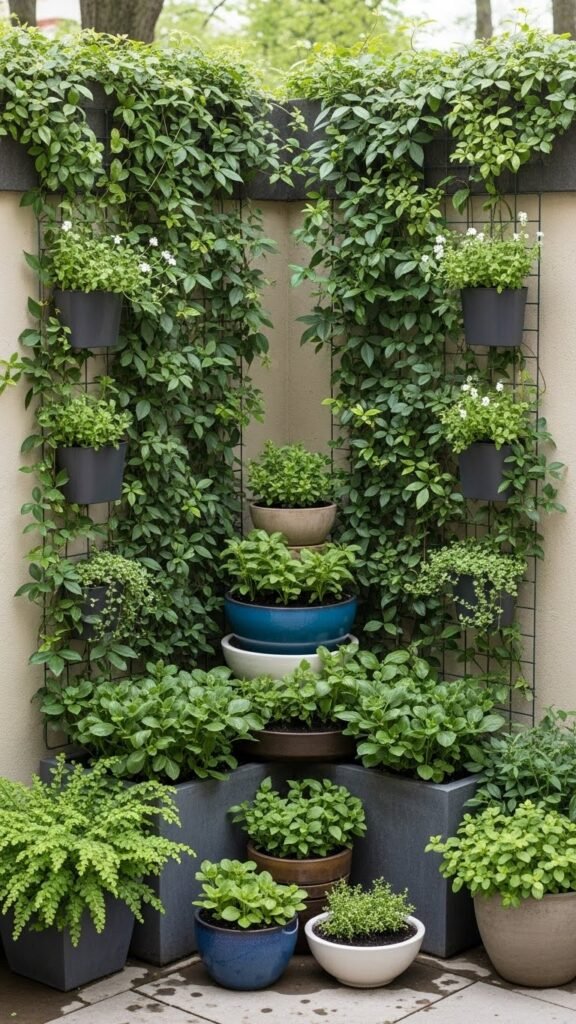
Small Urban Shade Plot With Vertical Vines and Pots

Moving from a sloped, rustic trail to a compact city corner, you can create a tranquil shade plot that makes the most of vertical space and containers.
Use a vertical trellis for vigorous vines, mixing trailing and climbers to screen neighbors. Combine container layering—tall pots, mid bowls, low saucers—with fragrant foliage and mismatched textures so you’ll feel liberated in a small, shady oasis.
Woodland Edge Transition Planting to Sun With Layered Masses
As sunlight gradually widens from the cool understory, you can design a woodland-edge change that eases plants from shade into sun with layered masses that read like soft terraces. Use edge thinning to create gentle canopy gaps, then plant successive bands: low ferns and groundcover, mid-height perennials, taller sun-tolerant shrubs. You’ll craft a flowing, liberated margin that shifts naturally and invites movement.
Modern Minimalist Shade Garden With Monochrome Foliage

When you pare a shady garden back to essentials, a modern minimalist scheme with monochrome foliage lets texture and form do the talking; focus on a restrained palette of greens, silvers, and deep charcoals so each plant’s shape reads clearly in low light.
You’ll choose bold plants for sculptural silhouettes, arrange repeating masses for calm, and play subtle textural contrasts to keep the space free and intentional.
Slope Shade Stabilized With Ferns and Oregon Grape
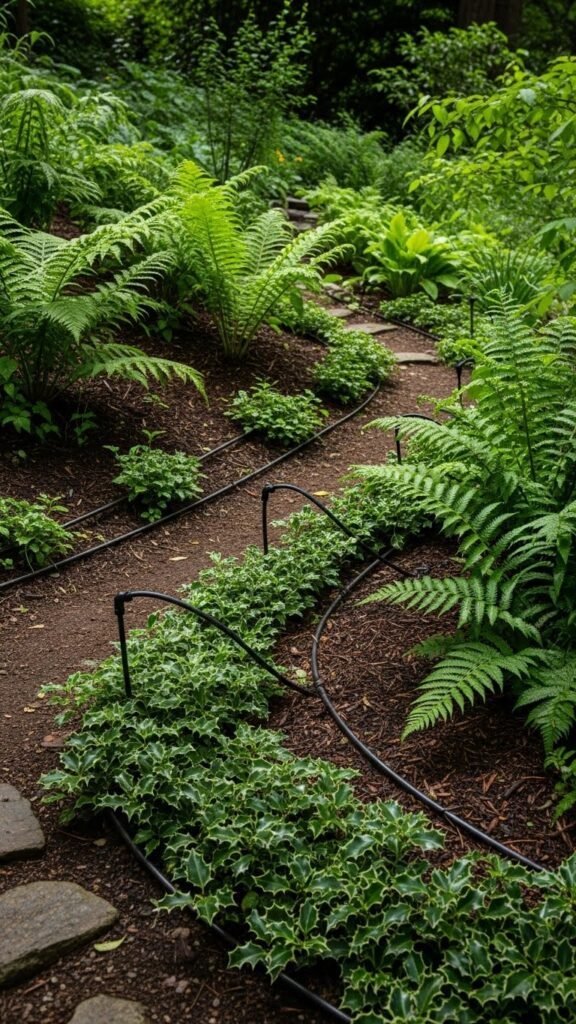
If your site slopes and sits in shade, you can shift from a pared-back monochrome scheme to a more layered, stabilizing planting that still reads cleanly.
You’ll use fern anchors to hold soil, staggering heights for texture, and low Oregon grape mulch to suppress weeds while adding evergreen structure.
Plant paths and drip irrigation, and let the slope feel both wild and intentional.
Playful Shade Nook With Vintage Seating and Glass Totems
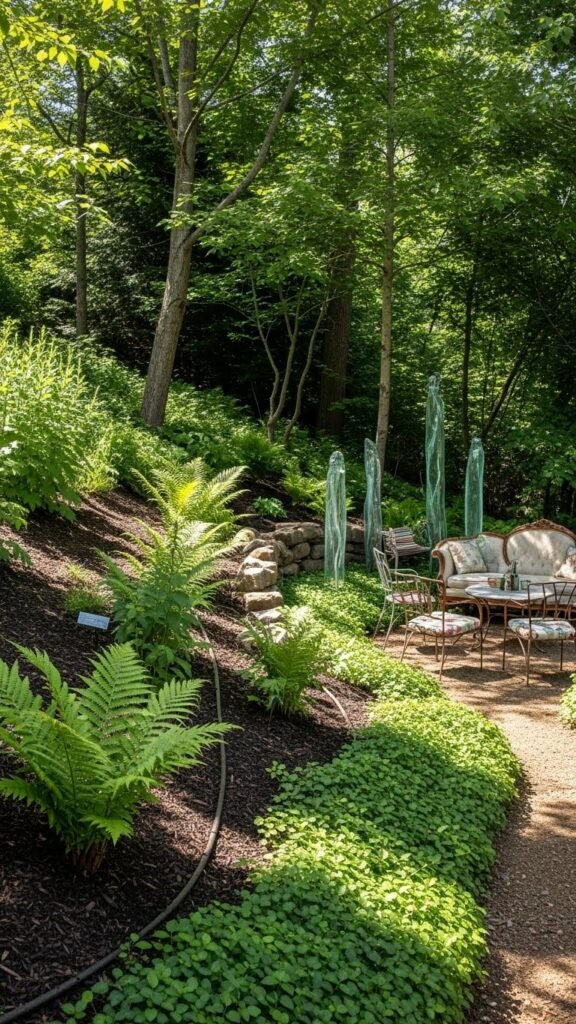
With a dash of vintage charm and a hint of whimsy, you can turn a shady corner into a playful nook that invites lingering conversations and quiet reading.
Arrange vintage vignettes—a worn settee, mismatched chairs—and anchor them with low native plantings. Add glass reflections via tall totems to catch dappled light. You’ll create a liberated, intimate retreat that feels personal and airy.
Courtyard Water Feature Surrounded by Shade-Tolerant Perennials
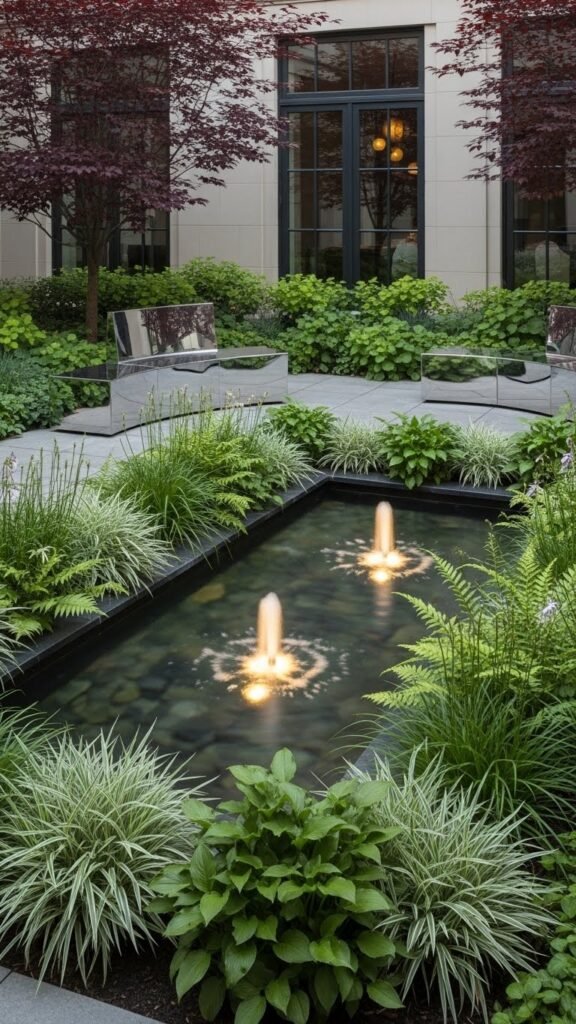
Nestled into a shady courtyard, a small water feature becomes the room’s centerpiece, and you’ll want to choose one that complements the scale and mood of the space.
Position reflective seating nearby so you can linger, hear water and watch light.
Surround the basin with shade-tolerant perennials and koi safe planting—ferns, hostas and airy grasses—to create a relaxed, free-flowing retreat.
Pocket Garden of Dry Shade Plants With Hellebores and Sedges
Drawing on plants that thrive where soil stays dry and shade is constant, a pocket garden of hellebores and sedges offers year-round texture and subtle bloom without demanding much water.
You’ll learn hellebore care basics—mulch lightly, avoid overwatering—and explore sedge pairing to add movement. Arrange clumps with gravelly soil, let edges wander, and enjoy a low-maintenance, liberating shady nook.
Repeating Drift Planting Across Yard for Unified Shade Color
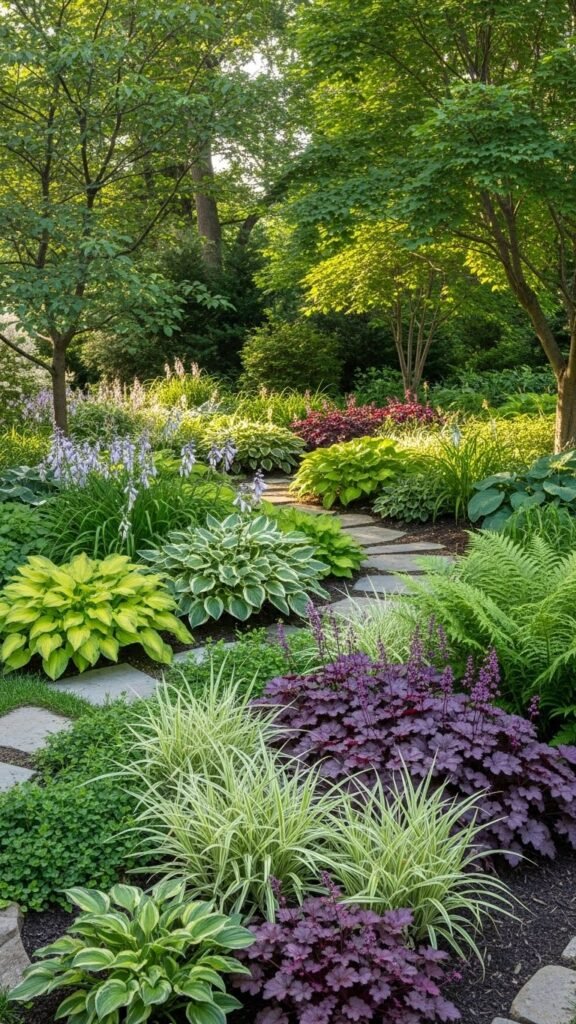
Think of repeating drifts as a simple way to stitch your shady spaces together: by planting the same clump-forming species in rhythmic pockets throughout the yard, you create a unified wash of color and texture that reads as intentional rather than scattered.
You’ll use mass planting and tonal repetition to guide movement, simplify maintenance, and let the garden breathe while still feeling cohesive and free.
Back-Of-Garden Canopy With Underplanted Spring Bulbs and Perennials
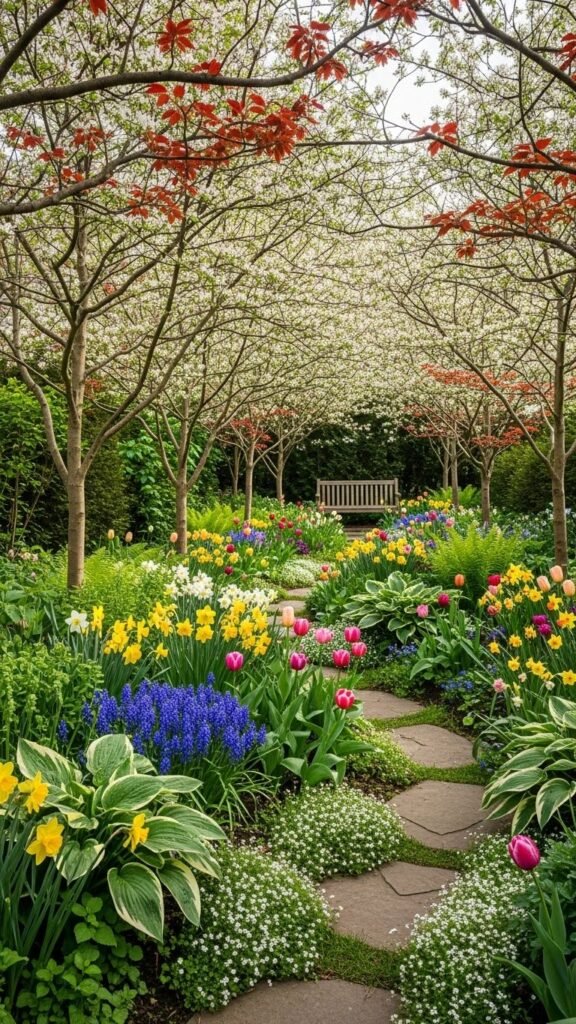
At the back of your garden, let a light canopy—formed by small maples, serviceberries, or multi-stemmed hornbeams—set the stage for an underplanting of spring bulbs and shade-tolerant perennials that kick off the season with immediate impact.
You’ll enjoy bulb layering for staggered blooms, simple canopy pruning to improve light, and a relaxed, free-flowing composition that’s easy to maintain and endlessly inviting.