
You’ll design a garden that looks good and works hard in every season, with plants chosen for staggered blooms, winter form, and wildlife value. Think layered bulbs and perennials for continuous color, evergreens and bark-interest trees for winter structure, and berry shrubs for hungry birds. Mix low-maintenance gravel zones, raised beds, and containers to suit all weather, and you’ll find simple tweaks that keep the space alive year-round—here’s how to start.
Sculptural Succulent Beds for Year-Round Form
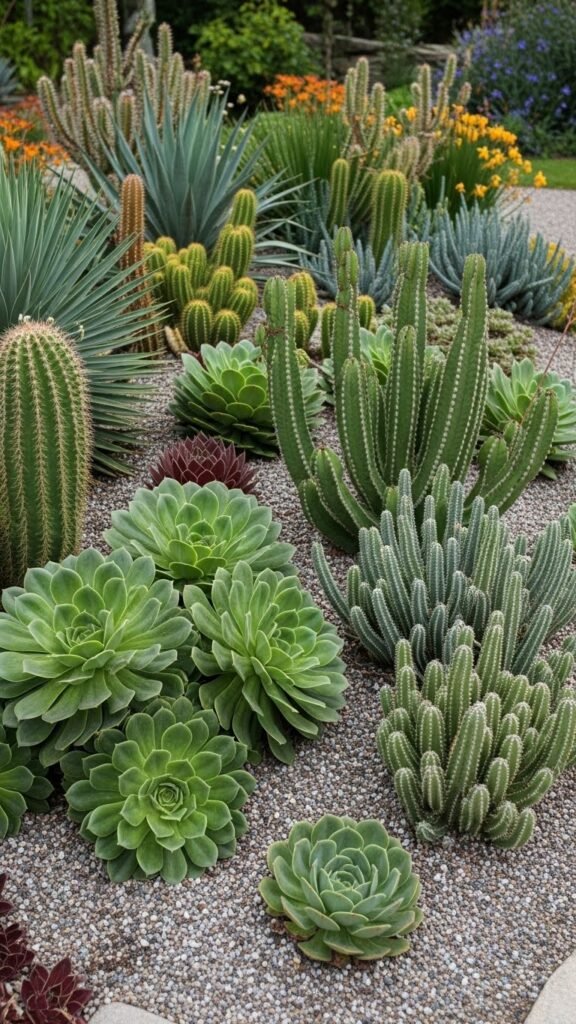
When you arrange sculptural succulents, think of each plant as a living form that anchors the bed through winter and summer; bold rosettes, upright columns and spiky offsets provide year‑round structure with almost no fuss.
You’ll place architectural rosettes as focal points, add drought tolerant silhouettes for contrast, and use gravel, spacing, and tilt to let each shape breathe while keeping maintenance minimal and liberating.
Evergreen Backbones for Seasonal Structure

Several evergreen shrubs and small trees will give your garden a reliable spine that holds form and color through every season. You’ll use structural hedging for definition, screening evergreens for privacy, and container topiary as movable focal points.
Choose low-maintenance species that fit your climate, prune for clean lines, and place patio anchors to create freedom of flow and enduring seasonal structure.
Plants With Striking Bark and Branch Color

To complement your evergreen framework, choose plants with striking bark and branch color to add structure and winter interest when leaves are down. Plant copper barked eucalyptus for warm, peeling tones and sculptural trunks.
Pair it with a blue stemmed maple to introduce cool, architectural contrast. You’ll create a liberated, low-maintenance composition that reads beautifully in bare-season light.
Berry-Producing Shrubs to Feed Wildlife

Look for berry-producing shrubs that keep your garden feeding birds and small mammals through fall and winter, and choose species that balance reliable fruiting with attractive form.
You’ll plant native brambles for abundant summer fruit, add holly and viburnum for late-season berries, and shape pollinator hedges to offer nectar and shelter.
Maintain light pruning and varied bloom times for freedom-filled, wildlife-friendly structure.
Red Twig Dogwood and Other Winter Stem Accents
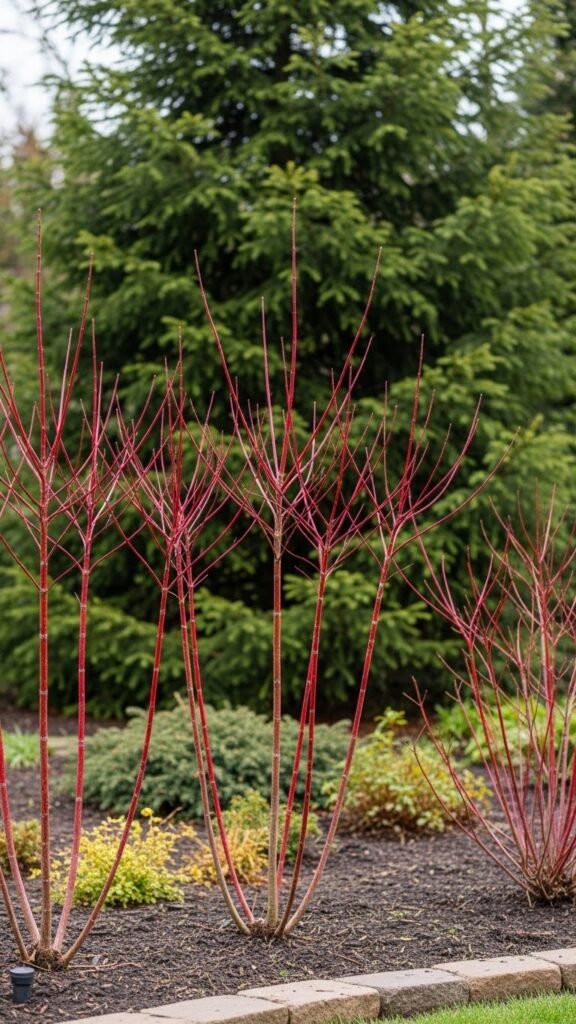
Often overlooked, winter stems like red twig dogwood give your garden striking color and structure when leaves are gone. You’ll appreciate their sculptural lines and low-maintenance presence.
Prune with clear pruning timing—late winter to promote vivid new growth—and try stem propagation to expand varieties. Position stems for contrast against evergreens, clip selectively for form, and enjoy bold winter geometry that lets you roam freely in design.
Spring Bulb Layers for Staged Surprises

Layer spring bulbs in tiers so your beds reveal new surprises week after week; you’ll mix early crocus and snowdrops at the front, mid-season tulips and daffodils in the middle, and later alliums or lilies toward the back.
Embrace bulb choreography: plan color, height, bloom sequence and respect soil stratification for drainage and warmth. You’ll plant boldly, edit freely, and enjoy unfolding spring theater.
Early Bloomers: Tulips, Daffodils and Magnolias
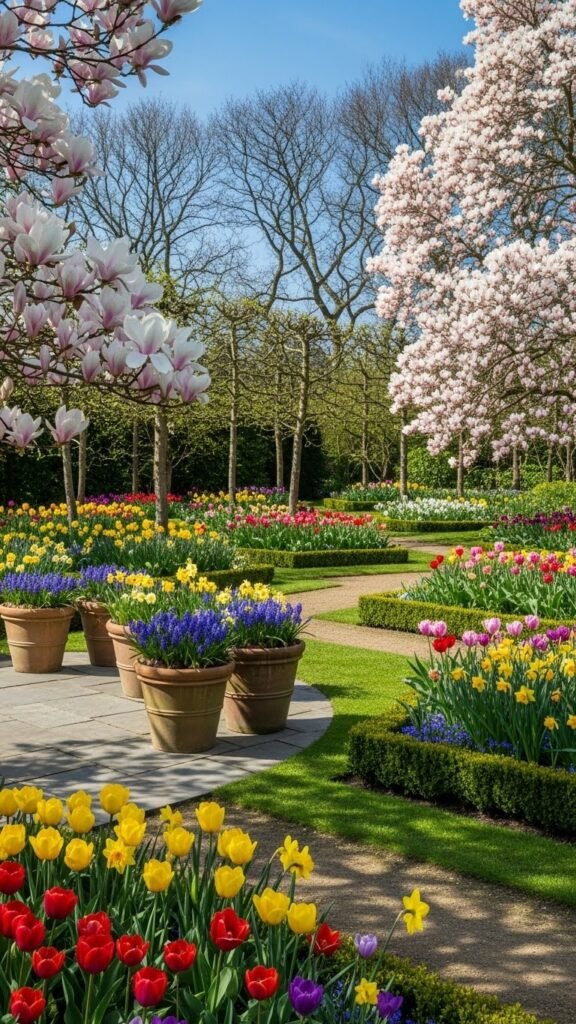
Kick off spring’s show with early bloomers that set the season’s tone: tulips and daffodils provide structured color and repeatable form across beds, while magnolias bring architectural drama with large, fragrant blossoms.
You’ll mix container bulbs for patio pops, tuck bulbs into woodland underplanting for naturalized sweeps, and prune selectively so blooms headline without crowding your garden’s free, open flow.
Lilacs and Perennials for Long-Lasting Spring Color
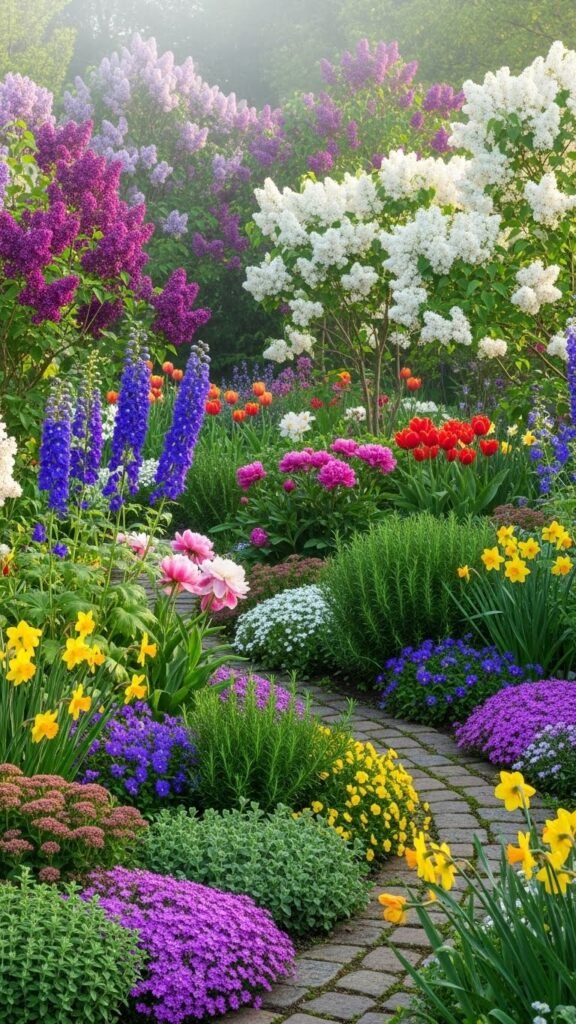
When lilacs burst into bloom they’ll anchor your spring with heady fragrance and clusters of color, while a careful selection of perennials fills the gaps before and after their peak so your beds stay lively for weeks. Choose compact cultivars for small spaces, mix textures and heights, and plan fragrance pairing with herbs or violets.
You’ll enjoy effortless, free-flowing seasonal drama.
Summer Layering for Continuous Bloom
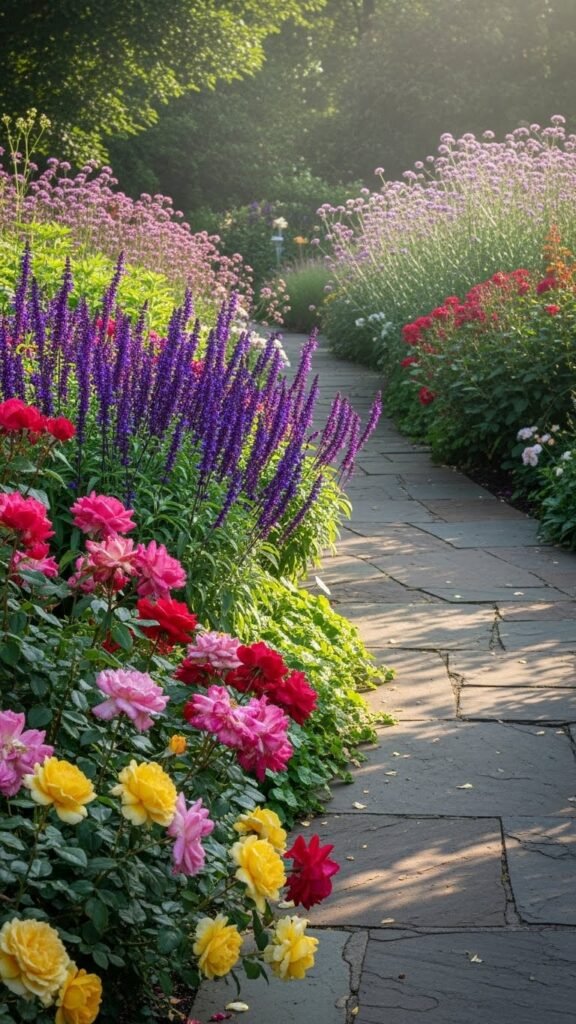
After lilacs finish their show, you’ll want to keep that momentum by stacking summer blooms so something’s always in flower. Create a staggered bloomscape with layered heights and textures, pairing early roses, mid-season salvias, and late-flowering verbena.
You’ll design fragrance corridors along paths, deadhead promptly, and tweak soil and sun exposures so your garden feels free, lush, and continuously perfumed.
Heat-Tolerant Annuals and Succession Planting
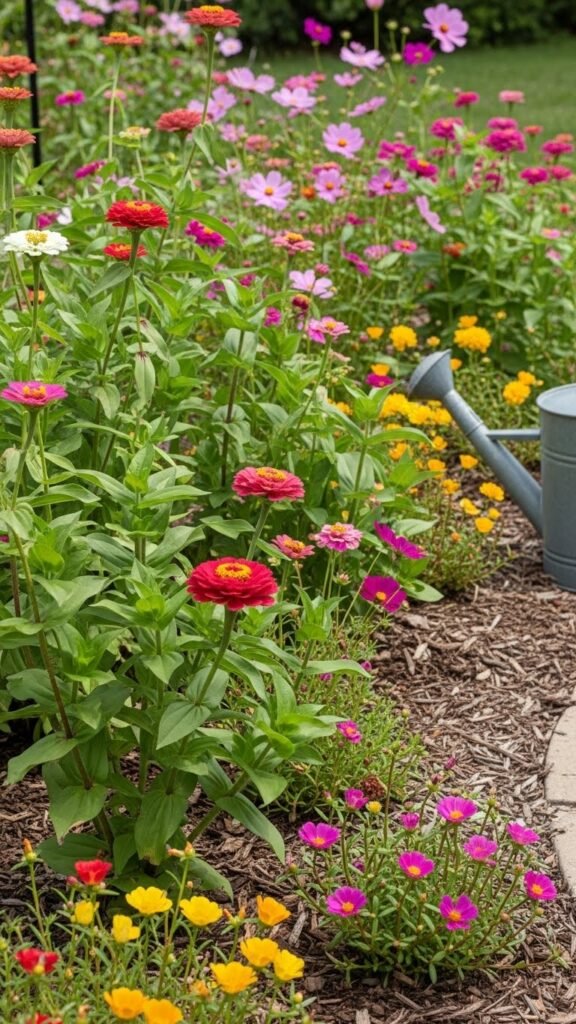
Though summer’s heat can wilt the unwary, you can keep beds bright by choosing heat-tolerant annuals and planting them in succession so color never fades. Pick drought tolerant zinnias, cosmos, and portulaca for long, vivid shows.
Use staggered sowing and replace spent plants promptly. Water wisely, mulch deeply, and arrange layers for texture so your garden feels free, resilient, intentional.
Edible Summer Gardens: Heat-Loving Veggies
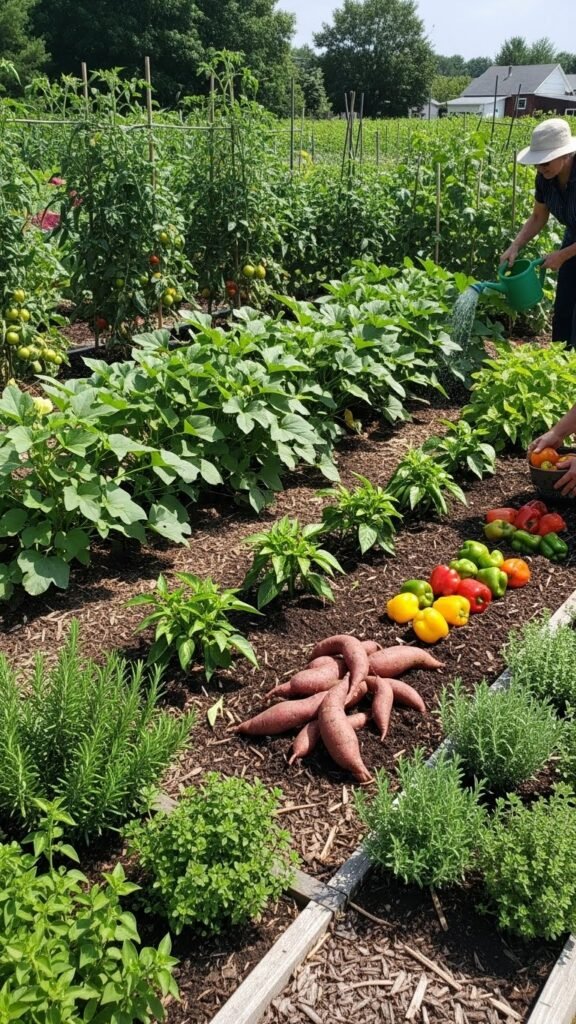
You can carry that same heat-smart mindset into edible beds by choosing vegetables that thrive under high sun and dry spells.
Plant heat tolerant herbs like rosemary, thyme and oregano for fragrant, low-water edges. Grow okra, sweet potatoes and peppers where sun is strongest, and tuck shaded tomatoes under taller plants. Mulch deeply, water at roots, and harvest frequently to keep plants vigorous.
Roses, Coneflowers and Hydrangeas for Peak Summer
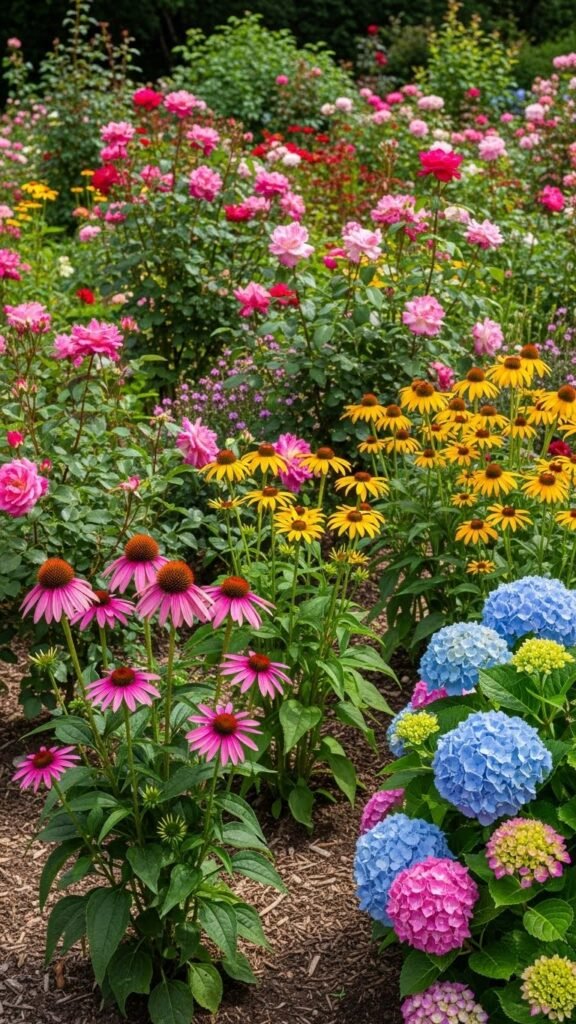
Bring beds to full summer bloom by pairing roses, coneflowers and hydrangeas for contrast, texture and season-long interest.
You’ll choose disease resistant roses for low-maintenance fragrance, drought tolerant coneflowers for sunlit stamina, and mophead or lacecap hydrangeas for cool, sculptural blooms.
Plant with airy spacing, rich soil, and restrained mulching so each specimen breathes, thrives, and lets you roam freely through summer.
Zinnias and Quick-Color Annuals for Instant Impact
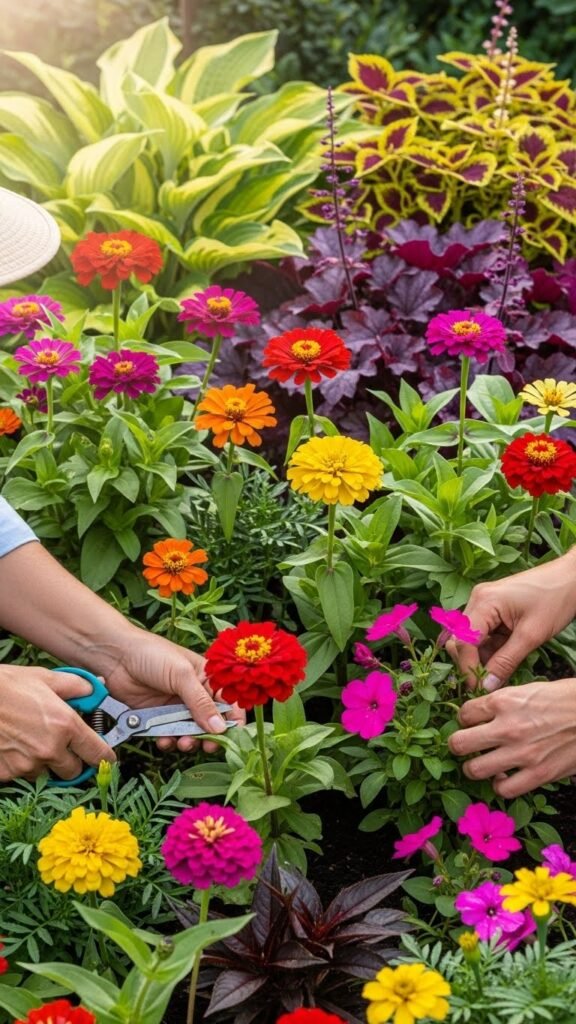
Kick-start summer beds with zinnias and other quick-color annuals that deliver big, reliable blooms in weeks instead of months. You’ll plant zinnia colorburst mixes and other instant annuals in sunny, well-drained soil, spacing for airflow.
Deadhead spent blooms to prolong flowering, pinch for bushier habit, and combine bold hues with foliage textures to create a free, joyful, low-fuss display.
Fall Perennials That Extend the Season
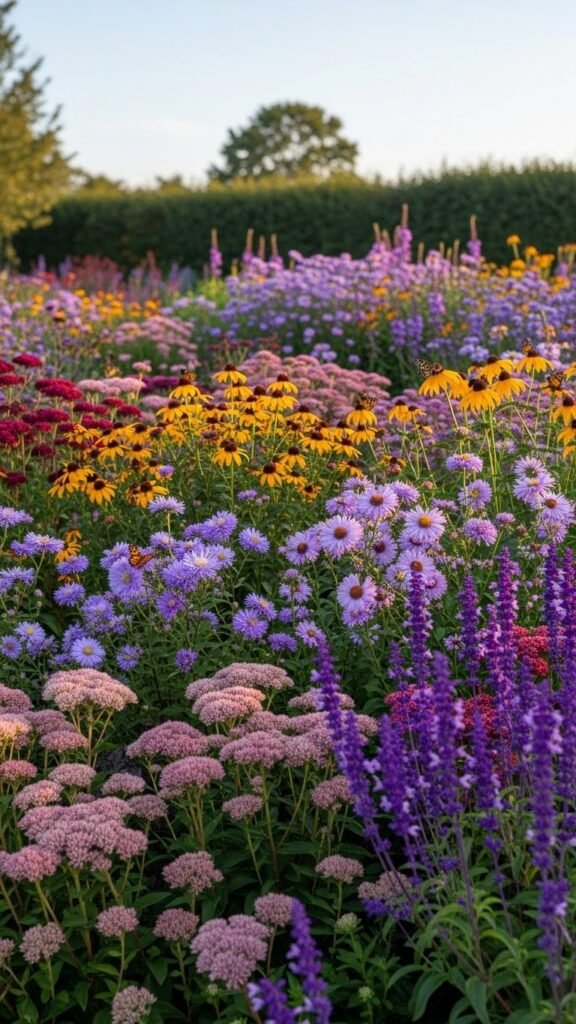
Ornamental Grasses for Movement and Late Interest

When cool breezes touch the garden, ornamental grasses put on a subtle show of movement and texture that carries interest well into late season; you’ll get swaying plumes, seedheads that catch the light, and structural form when many perennials are winding down.
Plant dwarf fountaingrass for compact movement highlights, combine varieties for late season plumes, and sculpt beds to reveal autumn silhouettes that free your design.
Sedums, Asters and Chrysanthemums for Autumn Color
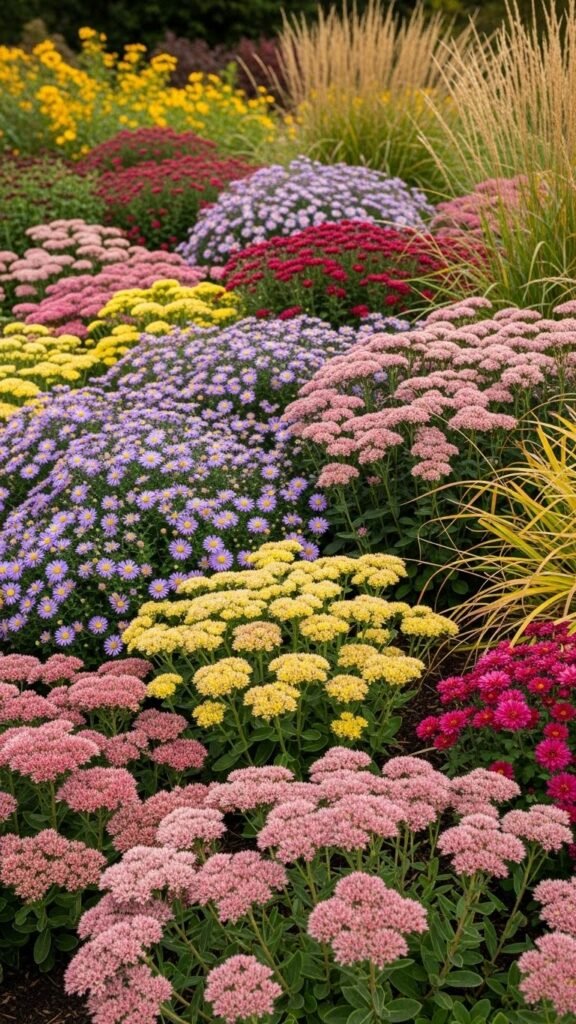
Although summer’s show is fading, sedums, asters and chrysanthemums step in to keep your borders bright, offering compact blooms, late-season nectar and durable form.
You’ll enjoy simple sedum maintenance—deadhead lightly, divide when crowded—and bold aster pairing with grasses or golden foliage.
Choose chrysanthemums for structure; stagger heights and colors so your autumn beds feel free, resilient and undeniably beautiful.
Seedheads and Berries as Winter Transition Elements
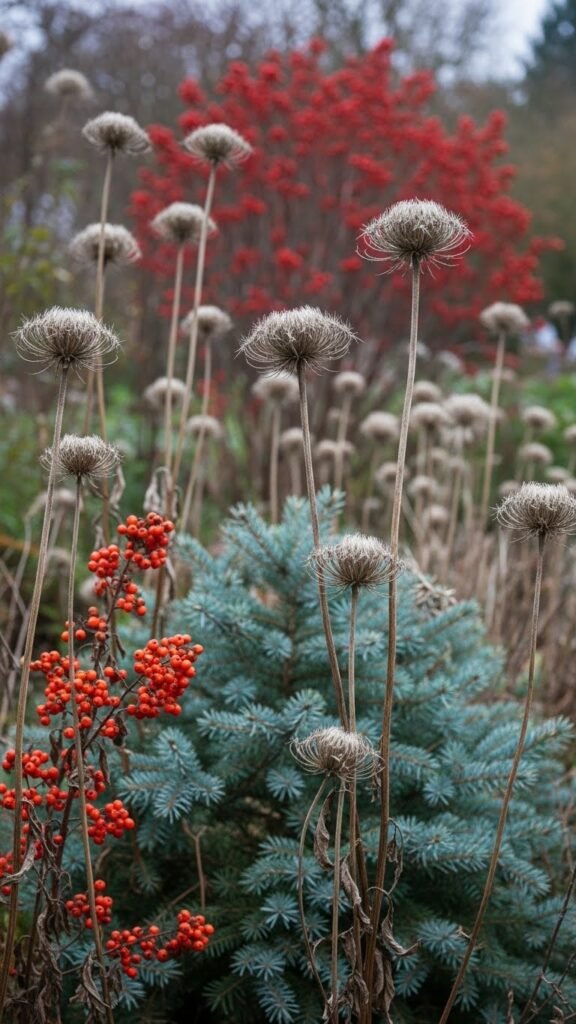
Seedheads and berries give your garden a graceful winter backbone, holding form, texture and food for birds long after blooms have faded.
You’ll leave dried seedheads standing for sculptural interest and habitat, and plant clusters of winter berries for color and sustenance. Prune selectively, tuck evergreens nearby for contrast, and let these elements guide a low-maintenance, free-spirited winter palette.
Trees With Decorative Bark for Year-Round Appeal

Look for trees that show off their bark as a season‑long focal point, because their trunks and branches keep your garden visually active even when leaves are gone. You’ll choose species with striking peeling bark or rich textures to add architectural drama and seasonal interest.
Plant them where trunks are visible; prune selectively, let natural form breathe, and enjoy low‑maintenance, year‑round charisma.
Colorful-Stemmed Shrubs and Willows for Winter Pop
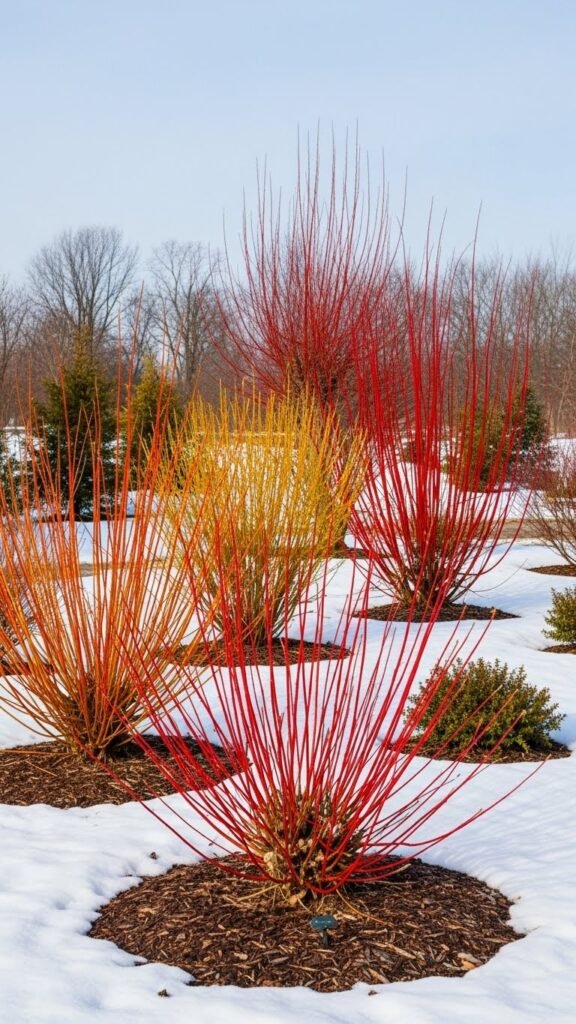
Bright stems can transform a dormant border into a living sculpture garden, so plant colorful-stemmed shrubs and willows where their canes stay visible against snow or mulch. You’ll choose colorful willows and dogwoods for bold reds, oranges, and yellows.
Use annual stem pruning to renew vivid growth, leave a mix of heights for movement, and space freely for sculptural winter impact.
Winter-Flowering Shrubs: Witch Hazel and Hellebores
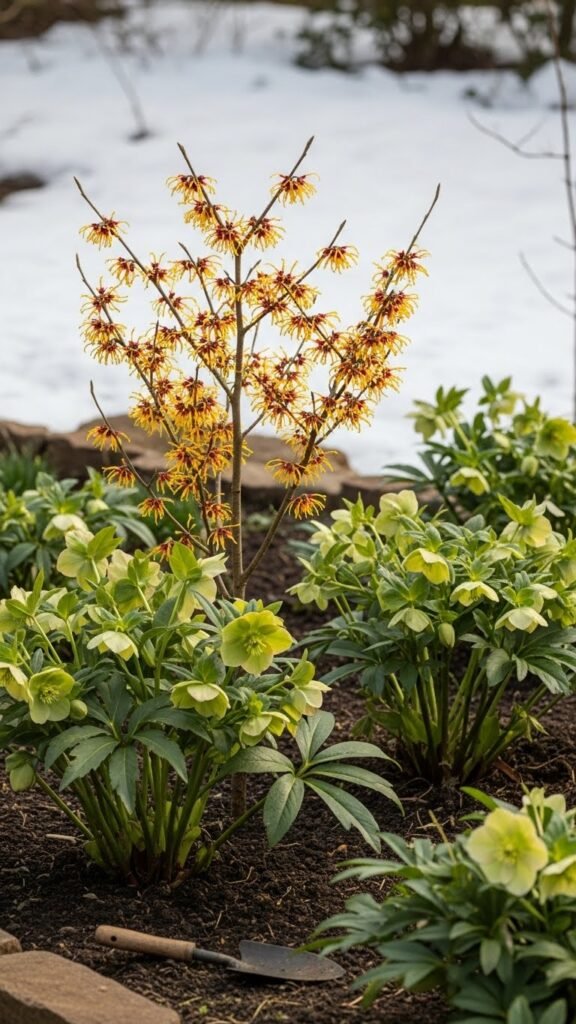
Beyond stems and bark, winter-blooming shrubs bring living color and fragrance when most gardens are quiet. You can plant fragrant witchhazel to perfume cold air and attract early pollinators; prune lightly to keep natural form.
Pair with shade tolerant hellebores for basal foliage and long-lasting blooms. Both demand good drainage, minimal fuss, and reward your garden with unexpected winter grace.
Evergreens With Berries: Holly and Winterberry Selections

Plant evergreen hollies and winterberries to add structure and seasonal color to your garden when most plants are dormant. You’ll choose holly cultivars for glossy foliage and varied sizes, pairing bold berry clusters with evergreen form.
For contrast, combine winterberry pairings that balance male and female plants, guarantee pollination, and position them for wind-exposed sites to enjoy color, texture, and low-fuss resilience.
Year-Round Planting Strategies and Layering
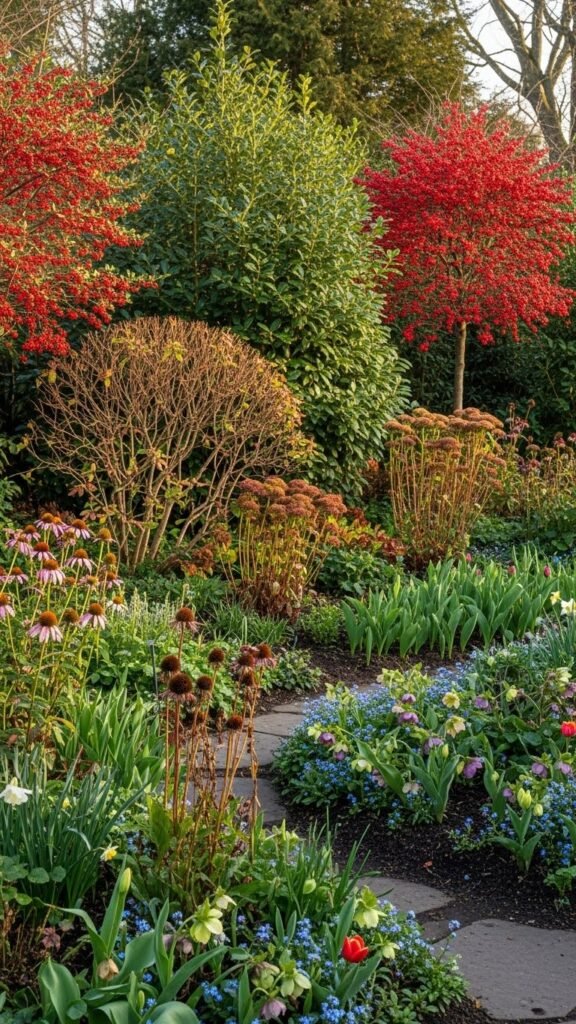
Those evergreen hollies and winterberries give your garden winter backbone, but you’ll want a year-round plan that keeps structure, texture, and color through every season.
You’ll layer shrubs, perennials, and bulbs for vertical interest, enrich layered soil for resilience, and use staggered sowing to extend blooms.
Choose hardy silhouettes, tidy seedheads, and self-seeding spots so your garden feels free and deliberately alive.
Hardscaping and Lighting to Enhance Every Season
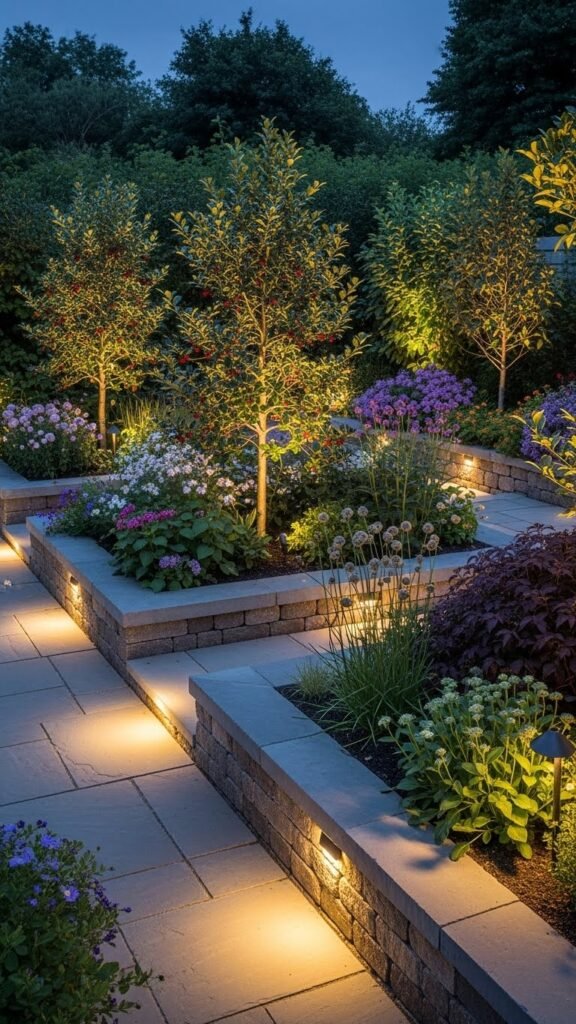
Lay out hardscaping that anchors your beds and paths so the garden reads clearly through every season, and use lighting to spotlight structure, texture, and movement after dark. Choose stone pathways for durable, tactile routes, raised beds for sculptural form, and low walls to frame vistas. Add subtle, festive uplighting and warm path lights so nights feel open, safe, and inviting.
Winter Vegetable Beds and Cold-Hardy Crops
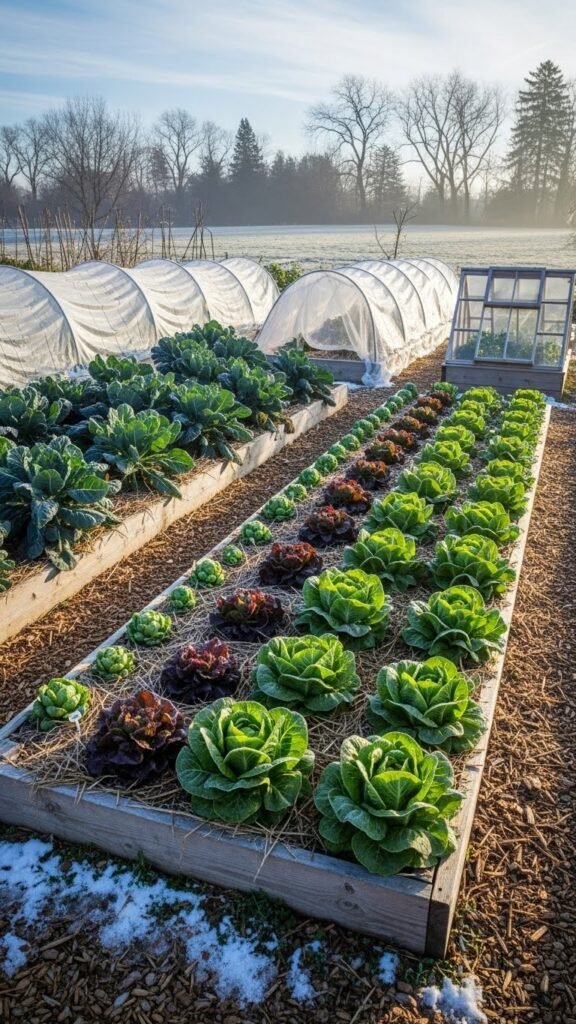
When frost starts to bite, you can still harvest vibrant, cold-hardy crops by designing beds that prioritize soil warmth, drainage, and easy protection.
Plant brassica mixes and winter lettuces in raised, well-drained rows, tuck in mulch and low tunnels, and place cold frames to extend seasons.
You’ll enjoy sculptural greens, steady yields, and the freedom to garden through crisp days.
Wildlife-Friendly Features That Work All Year
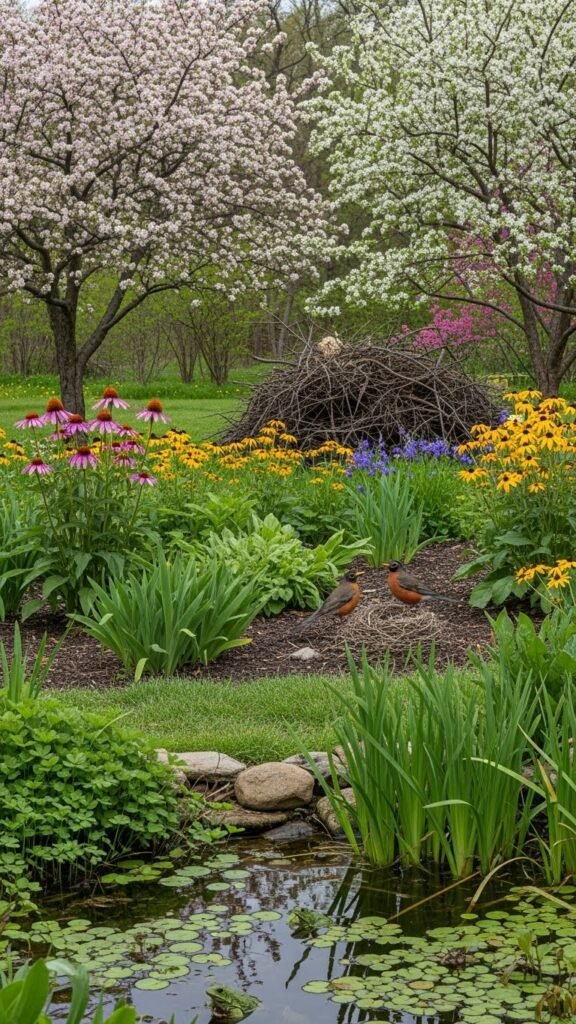
If you want wildlife to visit year-round, design beds and borders that offer food, shelter, and water through every season. Plant seed-rich perennials, native shrubs and fruiting trees, and layer grasses for winter cover.
Add pond refuges for amphibians and clean water, tuck bat boxes under eaves, and leave brush piles. These choices keep your garden vibrant, wild, and free for creatures and you.