
You’ll find simple, elegant ways to build a rock garden that needs little fuss and still looks intentional. Focus on drought‑tolerant succulents, alpine miniatures, and textured evergreens set among thermal stones and gritty soil. Use terraces, gravel courts, and planting pockets to control erosion and create microclimates; soften joints with thyme or sedum for color and walkability. Keep going to see 23 specific layouts and plant combos that actually work.
Alpine Miniature Peaks for Tight Spaces
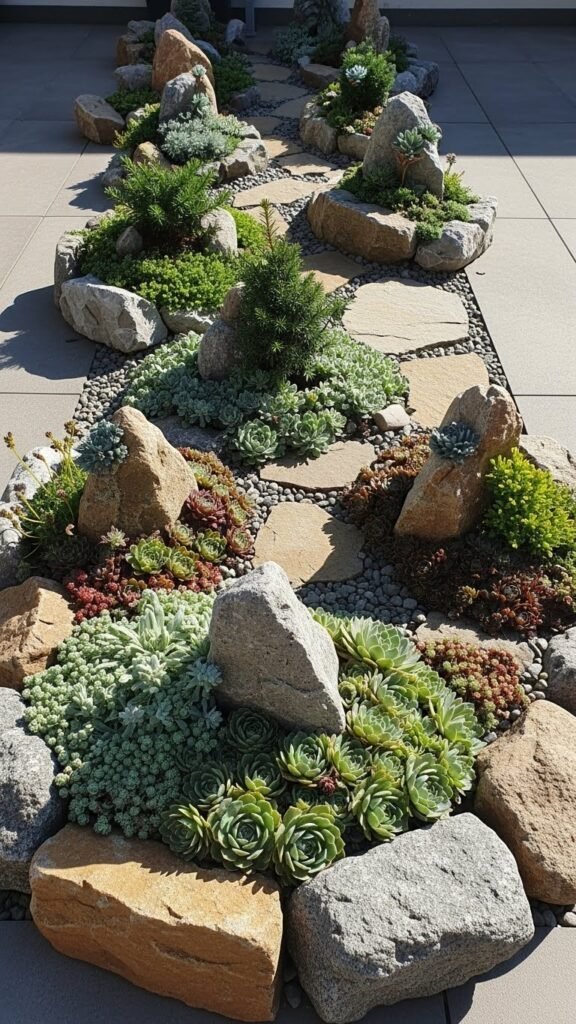
When space is tight, you can bring alpine charm to patios and narrow beds with compact, low-growing alpines that thrive on grit and good drainage. You’ll favor alpine miniatures with sculpted peak silhouettes, planting them in shallow pockets and crevices for bold texture.
You’ll prune sparingly, let wind and sun shape forms, and enjoy a liberated, low-maintenance rockscape that feels expansive.
Drought-Tolerant Succulent Pockets
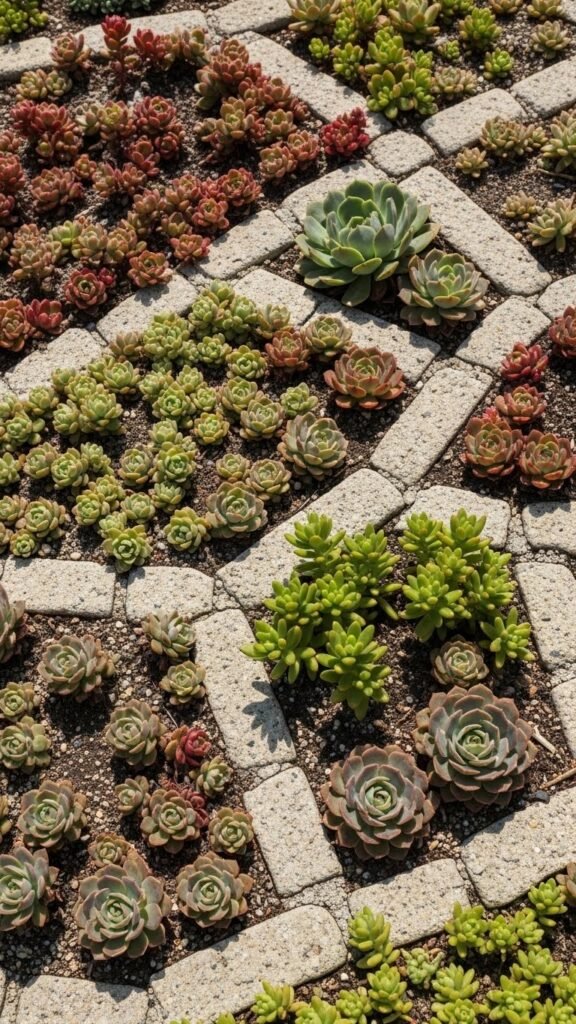
If you liked the sculpted peaks of alpine miniatures, you’ll find succulent pockets offer a similarly architectural effect with even less fuss.
You’ll place rosette and columnar varieties into crevices, crafting succulent mosaics that read like living tile. Choose gritty soil and orient pockets to sun and wind so drought microclimates form; they’ll thrive with minimal water and free you to roam.
Mat-Forming Groundcover Between Stones
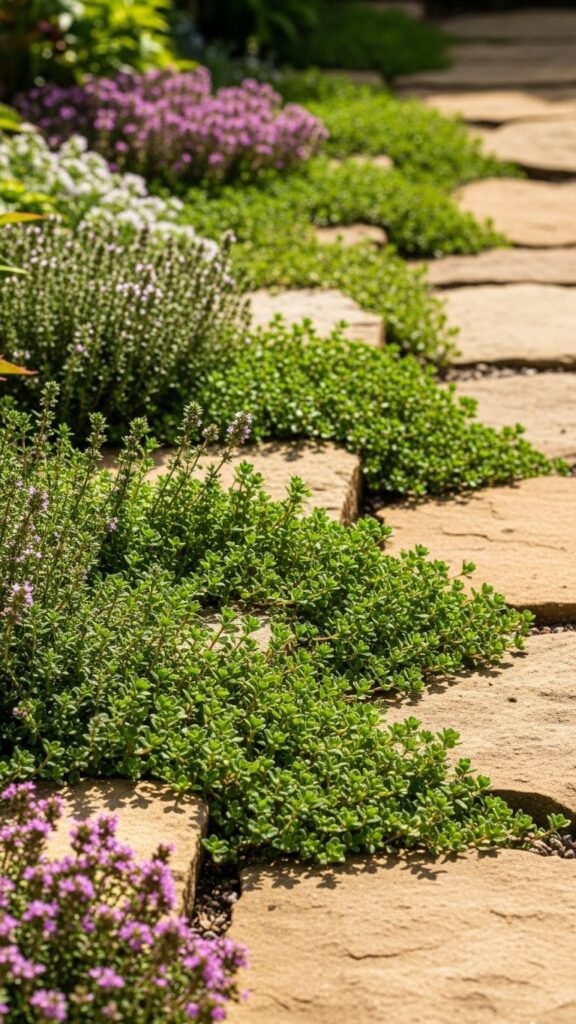
Planting mat-forming groundcovers between stones tucks living carpet into crevices, softening hard edges while suppressing weeds and conserving moisture.
You’ll choose low, resilient options like creeping thyme and sedum carpet to stitch paths and pockets. They handle foot traffic, bloom with minimal care, and cut maintenance.
Lay them in shallow soil, water briefly to establish, then let them spread and free your time.
Gravel-Covered Xeriscape Beds
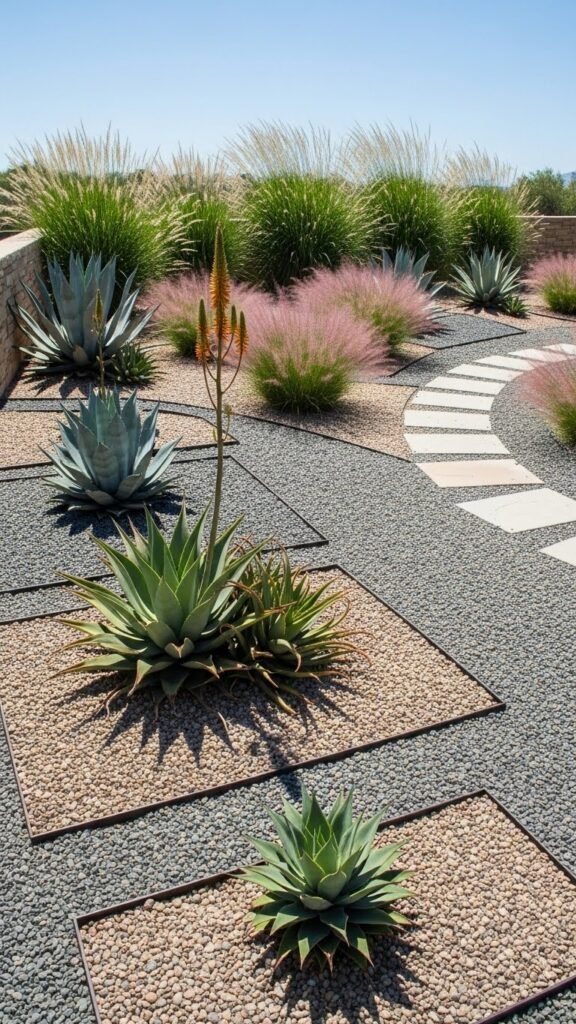
Moving from softening stone edges with mat-forming groundcovers, you can use gravel-covered xeriscape beds to extend that low-maintenance aesthetic across larger areas.
You’ll lay gravel mulch, choose sculptural succulents and native grasses, and space plants for water-wise impact.
This approach supports drought planning, reduces chores, and gives you a liberated, modern landscape that’s tidy, textured, and resilient.
Stepped Terraces With Low Evergreen Anchors
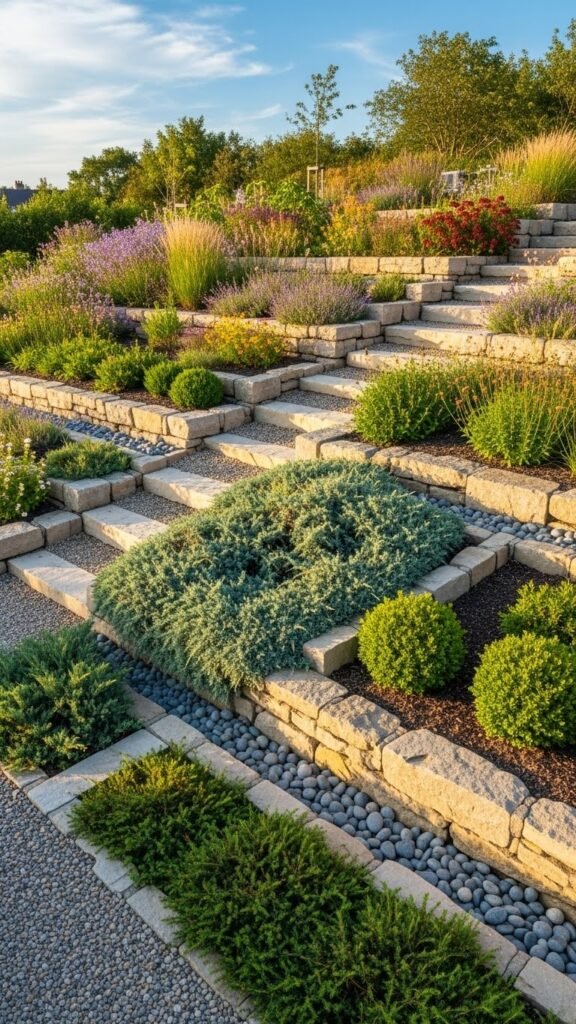
When you terrace a slope into stepped beds, anchor each level with low evergreens—think dwarf yews, prostrate junipers, or compact boxwoods—to provide year-round structure and simplify maintenance.
You’ll place evergreen anchors at corners and midpoints, combine them with drought-tolerant perennials and gravel, and prune sparingly.
Stepped terraces guide water, reduce erosion, and give you a calm, low-effort landscape to enjoy.
Pebble Zen Court With Sculptural Boulders

After you’ve set terraces and anchored them with low evergreens, consider a Pebble Zen Court to bring a quieter, sculptural counterpoint: arrange a low, raked pebble bed punctuated by one to three sculptural boulders and a few sparse, sculpted plants like hakone grass, dwarf conifers, or moss to keep the palette restrained.
You’ll focus on stone placement and raked patterns, pruning minimal plants for freedom and form.
Sun-Baked Mediterranean Rockery
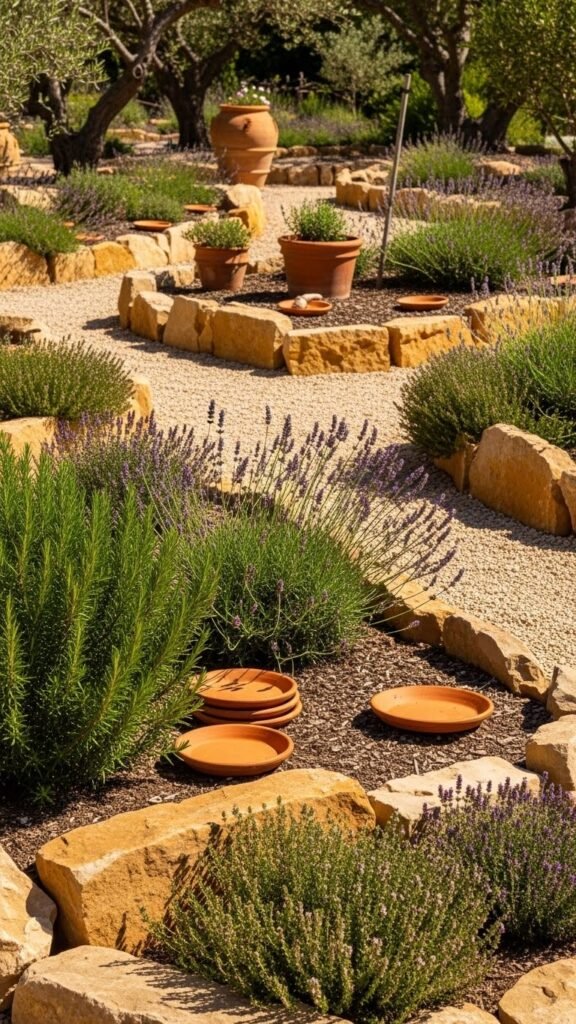
Lean into heat and light with a Sun‑Baked Mediterranean Rockery that celebrates drought-tolerant textures and aromatic foliage.
You’ll plant sun loving herbs—rosemary, lavender, thyme—among warm stones, creating low-care drifts. Use terracotta accents for pots and saucers to reinforce color and warmth. Arrange gravel paths for easy movement, prune minimally, and let resilient forms provide freedom, scent, and lasting structure.
Shaded Rock Nook With Fern Alternatives
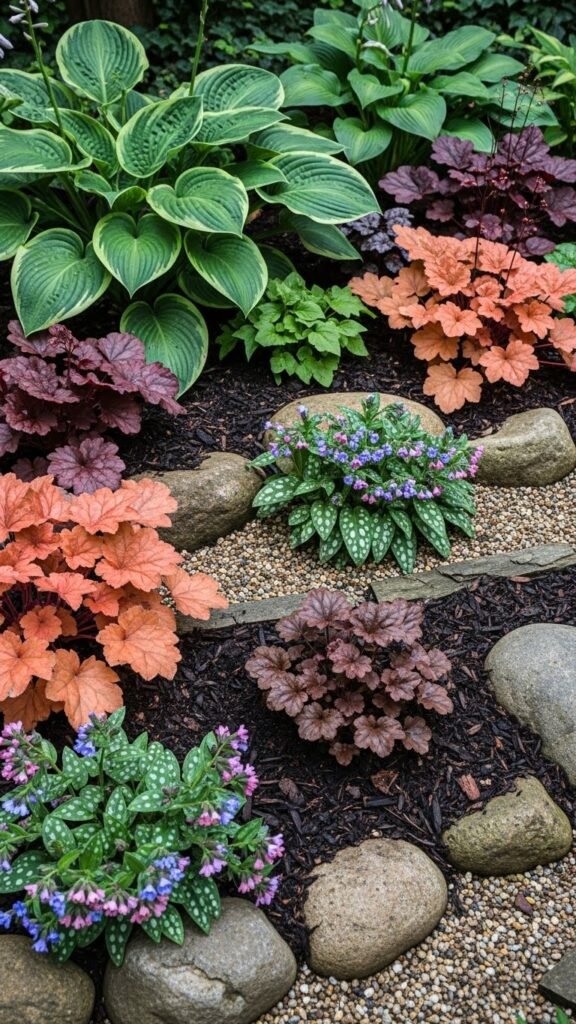
Though shade limits sun lovers, it opens up a quiet world of textured foliage and cool tones you can use to craft a shaded rock nook that’s low‑maintenance and visually rich.
Choose a shaded rockbed with fern substitutes like hostas, heucheras, and lungwort. Group stones, layering grit and leaf mulch, and let plants self-seed sparingly so you retain freedom and minimal upkeep.
Bulb-Focused Early-Season Color Pockets
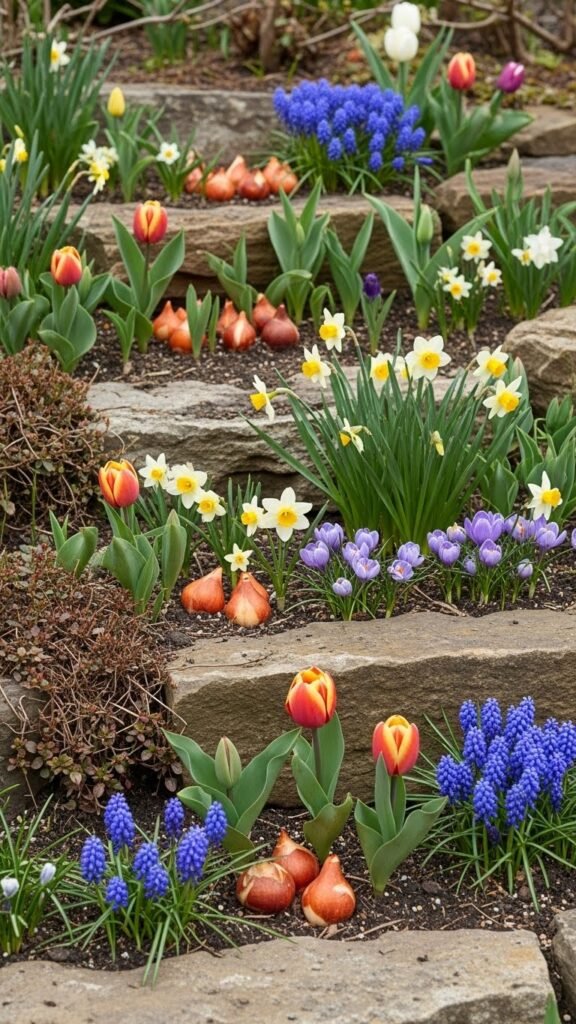
Bring in bursts of early-season color by tucking pockets of bulbs—tulips, daffodils, crocus, and muscari—into crevices and between stones where they’ll naturalize with minimal fuss.
You’ll plant early spring bulbs in staggered depths and timing to create a layered bloomscape that unfolds over weeks.
Choose hardy varieties, mulch lightly, and let seasonal foliage die back to feed future displays.
River-Rock Stream Bed Accent

After placing low-profile grass clumps, consider carving a shallow river-rock stream bed to add movement and contrast.
You’ll use streambed planting—low, textured perennials and sedges—to soften stones and attract pollinators.
Lay rocks for natural flow, combine with waterwise edging to define the line and reduce maintenance, and space plants for easy self-seeding.
This keeps the scene organic, low-effort, and liberating.
Recycled Glass and Succulent Contrast
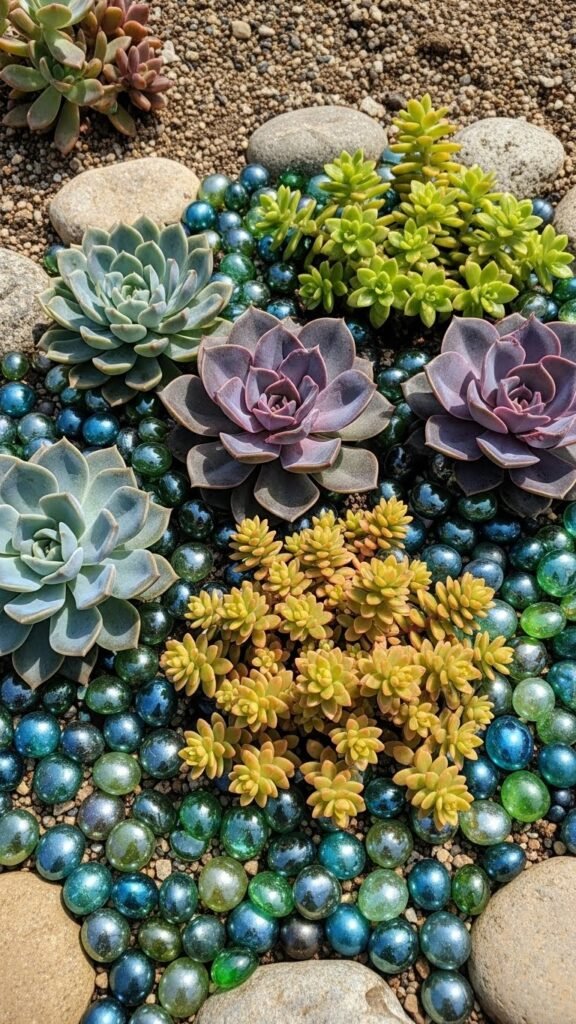
Pair recycled glass with drought-tolerant succulents to create a low-maintenance display that pops with color and texture. You’ll arrange iridescent pebbles around echeveria and sedum for crisp succulent contrast, anchoring plants in gritty, free-draining soil.
Keep compositions simple, mulch sparingly, and adopt water wise arrangements so your rock garden stays vivid, effortless, and ready for spontaneous living.
South-Facing Heat-Monitor Pockets
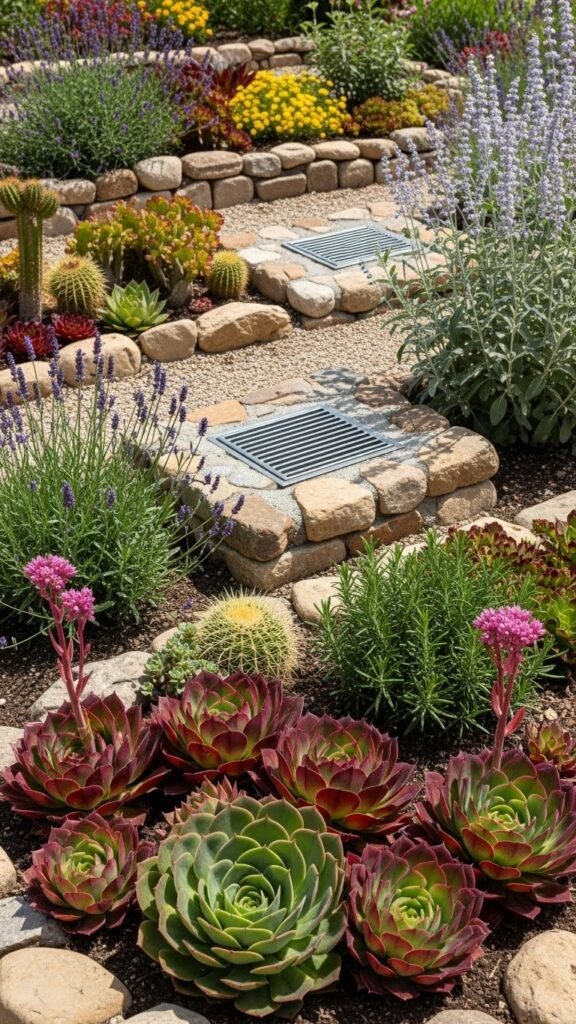
Because south-facing pockets get the most intense sun, you’ll want to design them as heat-monitor zones where hardy, heat-tolerant plants can thrive and you can quickly spot stress.
Create heat tolerant niches among stones, using thermal mass pockets to moderate temperature swings.
Choose drought-wise succulents and small shrubs, arrange for airflow, and leave access for quick checks so your garden feels free and resilient.
Mossy Crevice Microhabitats
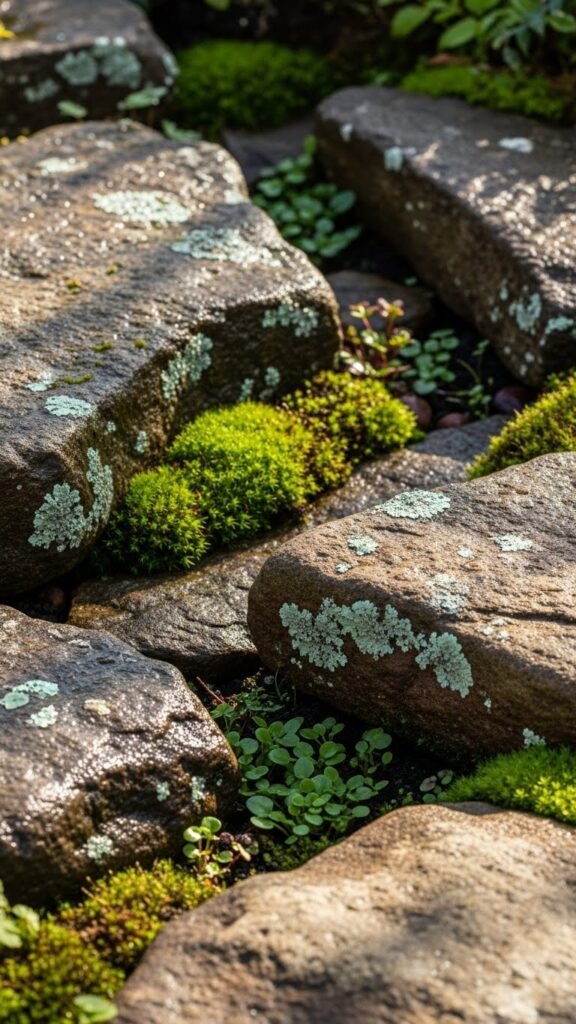
Shift from sun-baked pockets to cool, shaded nooks by carving shallow crevices between stones where moss can settle and tiny plants will find refuge. You’ll design for shaded moisture retention, positioning slabs to trap dew and runoff.
Encourage lichen friendly niches by using varied stone textures and subtle shade layers. This low-effort approach gives you wild, tranquil pockets that require minimal care.
Mixed Stone Cottage Rock Pockets
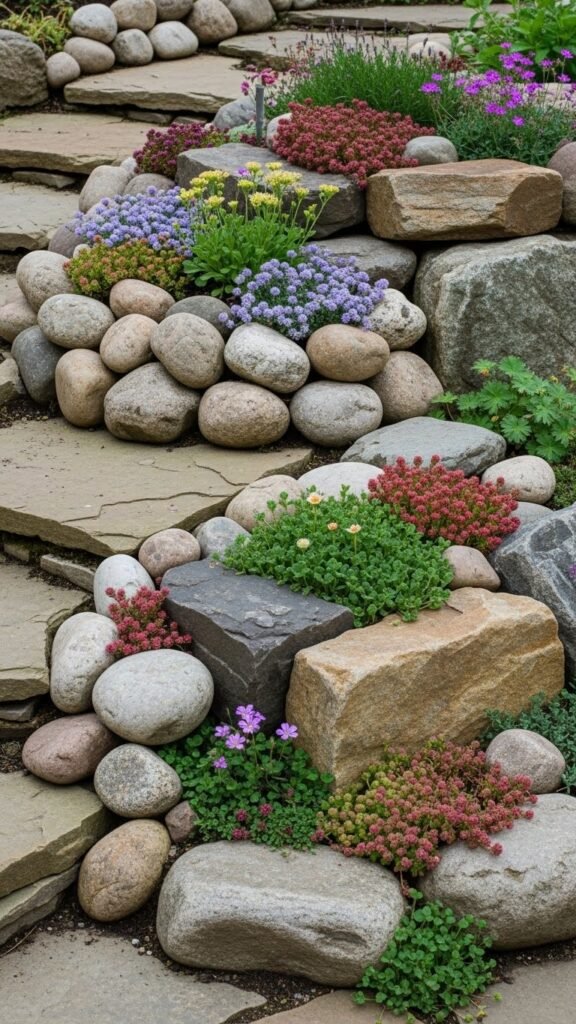
Mix in a variety of stones—rounded river rocks, weathered flagstone, and chunkier fieldstone—to carve snug cottage-style pockets where small perennials and alpine herbs can root. You’ll create textured pockets and weathered arrangements that cradle drought-tolerant plants, offer seasonal color, and simplify care.
Plant low-growing sedums, saxifrages, and dwarf geraniums, spacing for growth and easy maintenance while keeping a relaxed, free-spirited aesthetic.
Compact Thyme Walkways and Borders
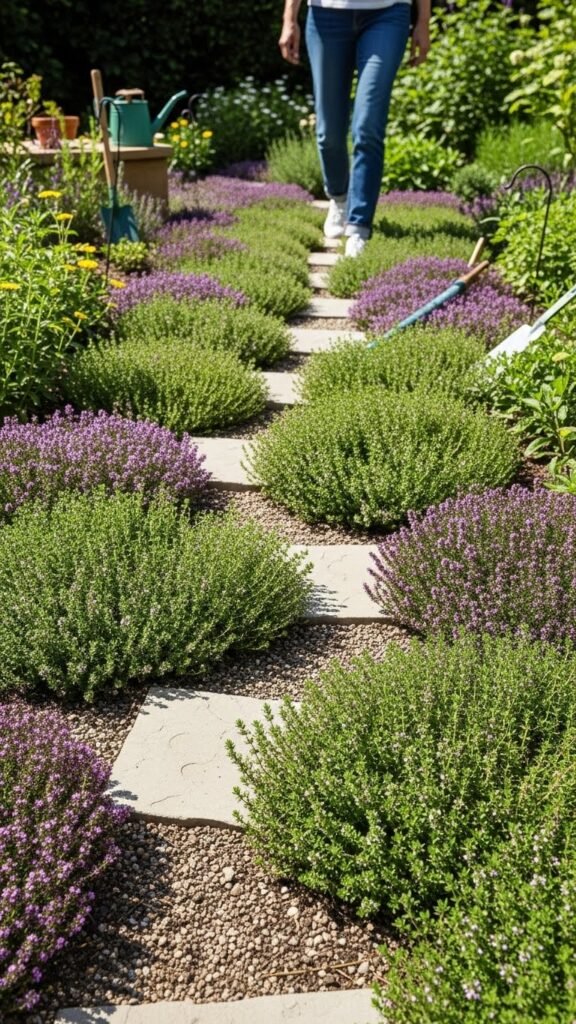
Lay low‑maintenance paths and neat borders with compact thymes—these tiny, aromatic mats tolerate light foot traffic, withstand drought, and form a soft, fragrant carpet between stepping stones or along edging.
You’ll plant mini thyme and micro thyme in gritty soil, enjoy pathway aroma as you walk, and rely on creeping texture to hold soil. Maintain by occasional trimming and minimal watering.
Raised Planter Rocks for Better Drainage

Because excess water is the main culprit behind root rot and compacted soil, building up your planter with a layer of rocks or coarse gravel beneath the planting mix gives roots the oxygen and drainage they need to thrive.
Use raised drainers to lift soil, create a permeable base, and choose angular stones for stability.
You’ll free plants to grow with minimal fuss.
Native Pollinator-Friendly Rock Patch
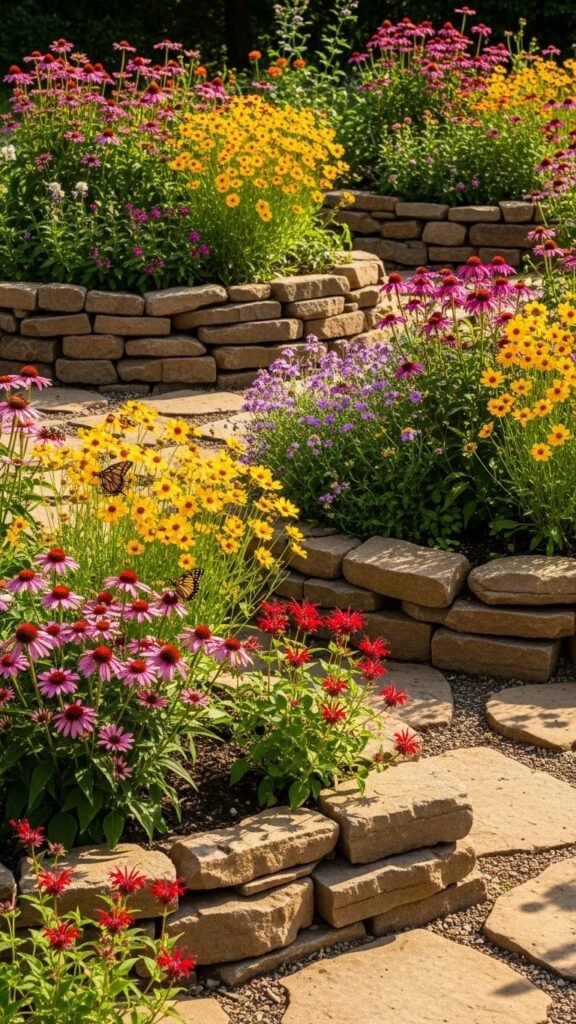
After improving drainage with raised rocky planters, you can create a small rock patch planted with native blooms that attracts bees, butterflies, and beneficial beetles.
Choose sun-loving, drought-tolerant native bloom varieties, tuck low stones for warmth, and group nectar-rich perennials. You’ll build a resilient pollinator habitat that’s low-maintenance, visually freeing, and invites wildlife without fuss.
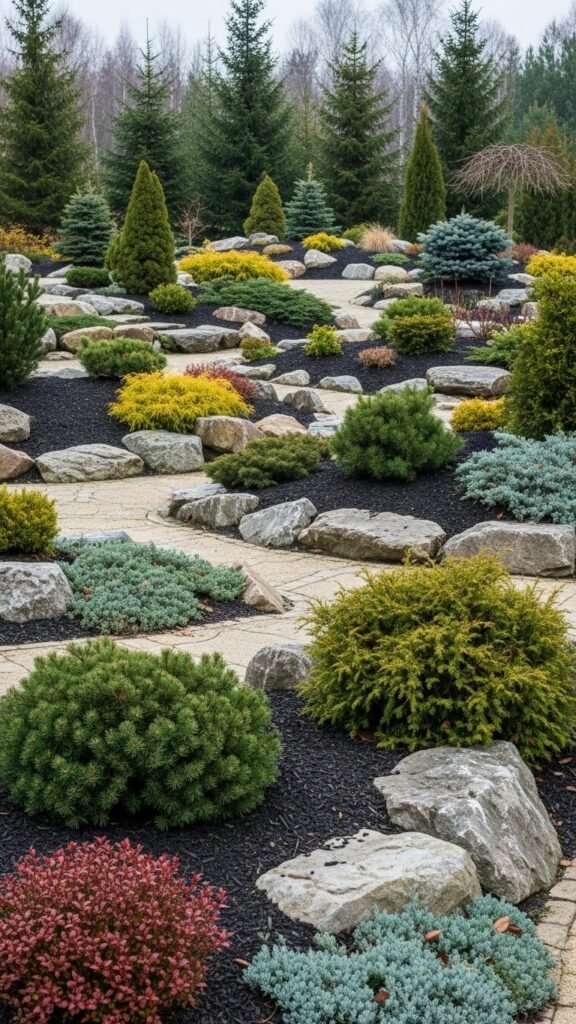
Winter-Interest Evergreen Rock Frame
Minimalist Monochrome Gravel Quadrants
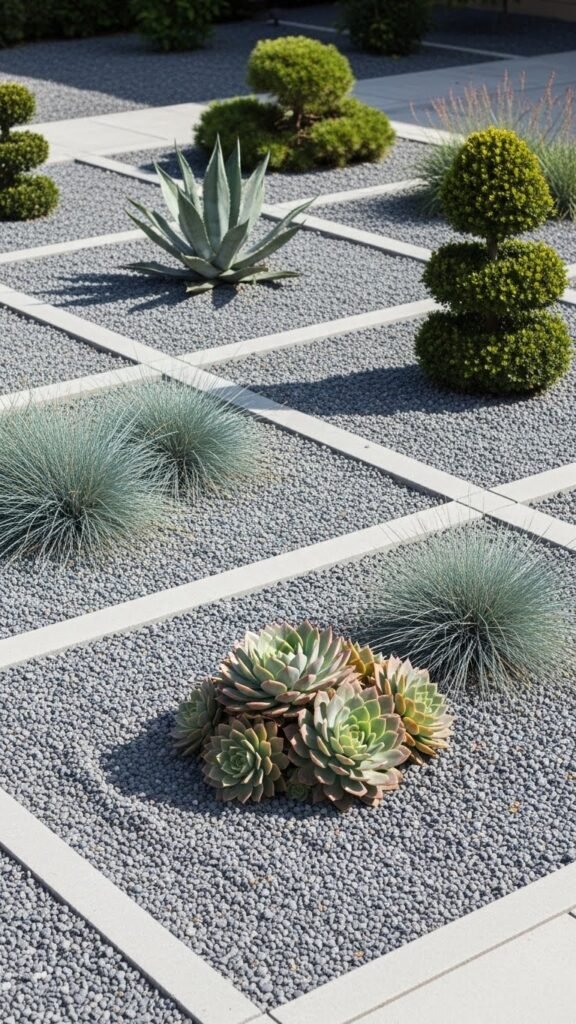
When you divide a low-maintenance rock garden into clean gravel quadrants, you get a restrained canvas that highlights form and foliage while cutting down on upkeep.
Embrace monochrome symmetry with uniform stone color; gravel zoning clarifies beds and pathways.
Plant sculptural succulents, dwarf grasses, and textured evergreens in each quadrant so maintenance stays minimal and you’ll enjoy open, freeing sightlines.
Edged Flagstone Path With Planting Pockets
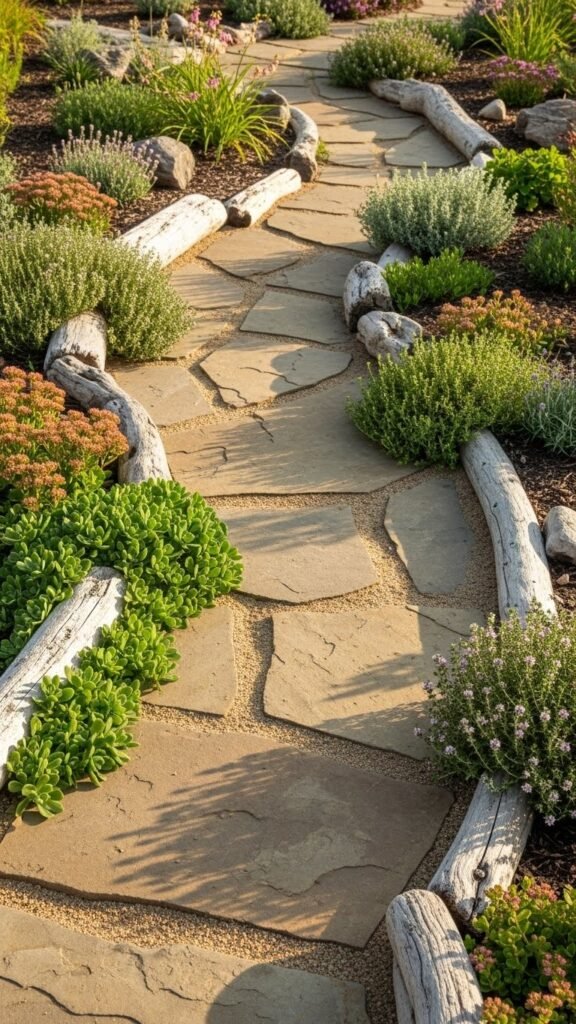
You’ll find an edged flagstone path with planting pockets gives a rock garden both structure and soft, living detail while staying low-maintenance.
Lay flagstones with compacted sand, add driftwood edging for a casual, coastal feel, and create pockets for sedums, thyme, and alpines.
Use microclimate mapping to place plants where they thrive, minimize watering, and keep maintenance liberating and easy.
Slope-Stabilizing Rock Terraces
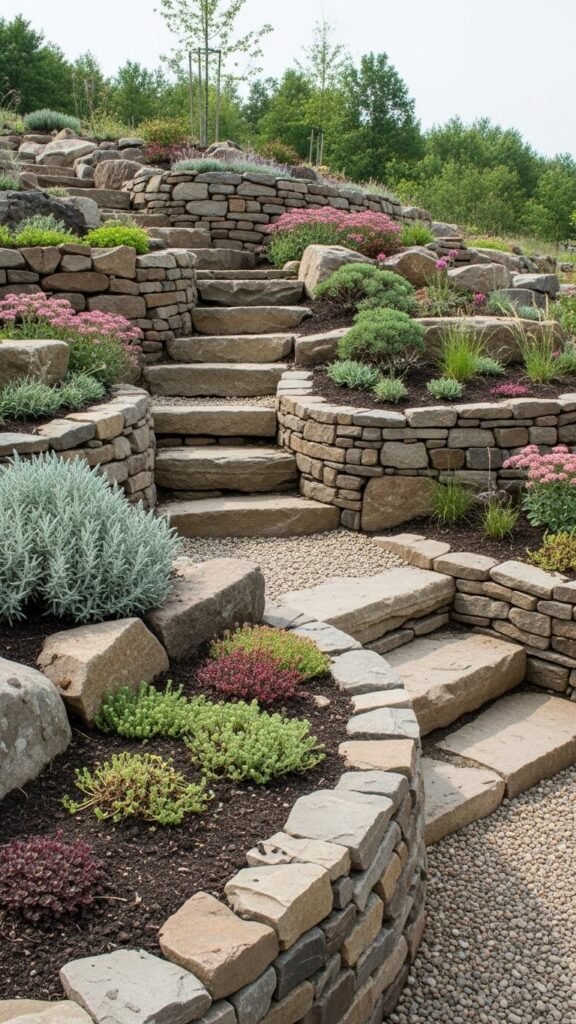
On sloped sites, rock terraces anchor soil, slow runoff, and create stepped microhabitats where drought-tolerant alpines, sedums, and low grasses can thrive.
You’ll build dry stone walls or shallow beds to lock soil and provide erosion control while letting plants root freely.
Arrange varied stone sizes, add gritty soil, and plant tight clusters for a liberated, low-maintenance slope that feels intentional and wild.
Low-Water Mediterranean Shrub Islands
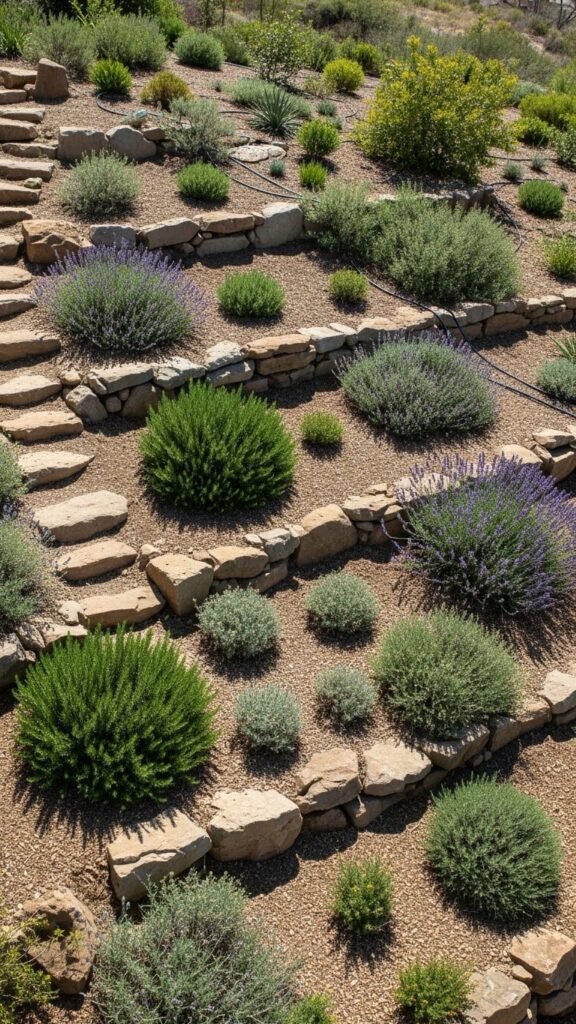
Rock terraces naturally lead to flatter pockets where you can create low-water Mediterranean shrub islands—compact clusters of rosemary, lavender, cistus, dwarf olive, and drought-tolerant santolina that read like anchored brushstrokes across the slope.
You plant in gritty soil, group by water need, and prune for form.
Enjoy Mediterranean scent and coastal scrub textures; these islands free you from constant care while keeping a crisp, sunlit look.