
You can turn paths, patios and planters into tactile artworks that guide movement and highlight plantings. Picture terracotta patchwork weaving through lavender, pebble rivers curving past sedum, and iridescent glass stepping stones catching dappled light. I’ll show durable techniques, color harmonies and plant pairings that make each mosaic feel planted, not stuck on — and leave you with several ideas to start sketching your own.
Mosaic Pathways With Patchwork Field Tiles
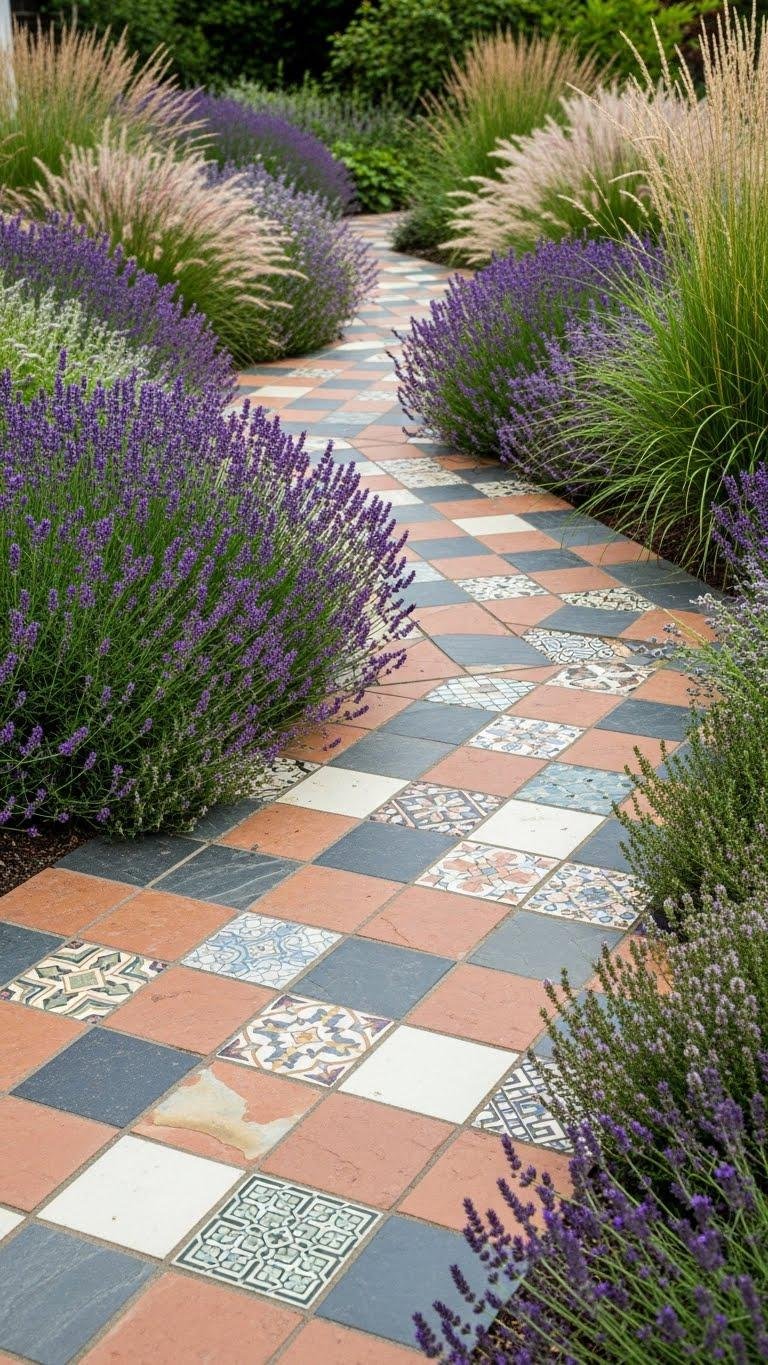
When you lay a mosaic pathway with patchwork field tiles, picture stepping stones stitched from sun-warmed terracotta, slate, and salvaged ceramic that guide visitors through beds of lavender, thyme, and ornamental grasses; the varied textures and colors create ribbons of contrast that echo the surrounding plantings and help define garden rooms.
You choose color theory to harmonize blooms, plant edging for flow, and practical maintenance tips for effortless freedom.
Pebble Mosaic Curving Patios
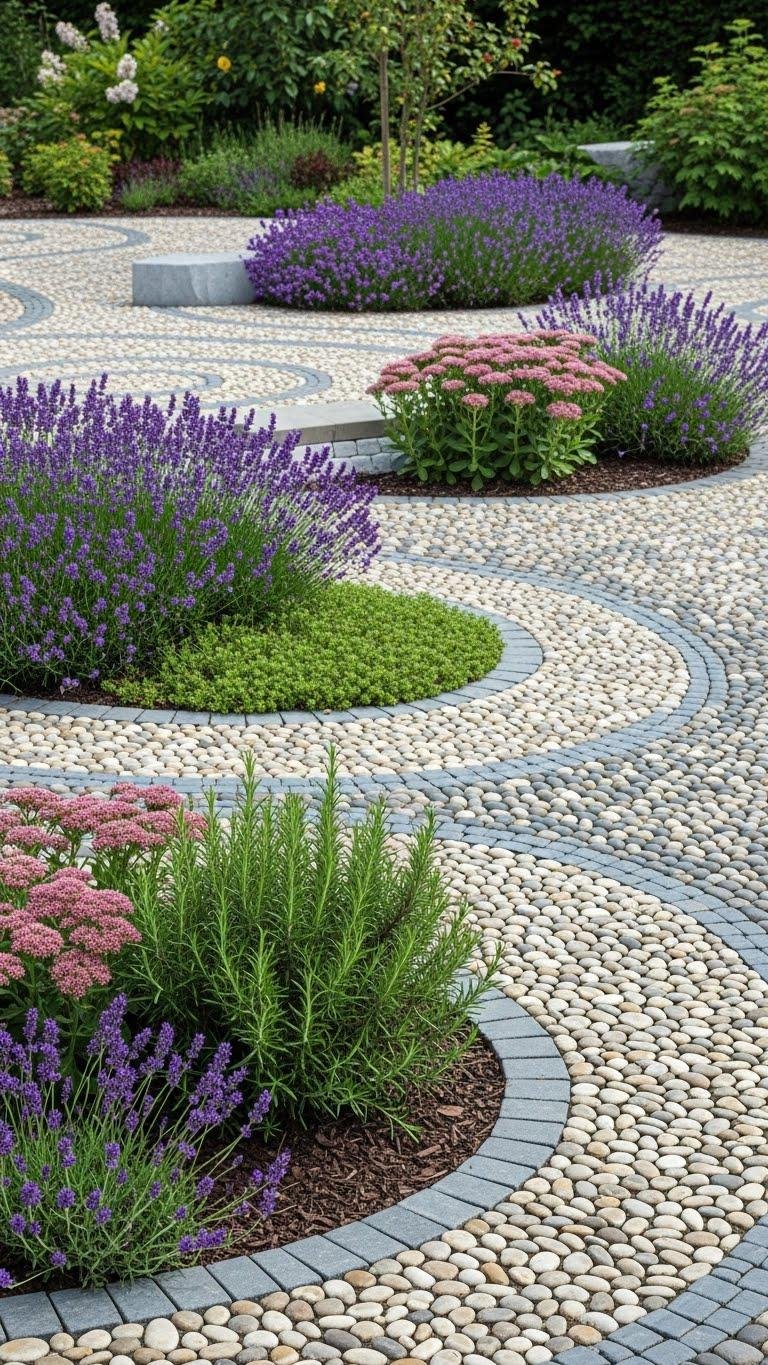
From the patchwork paths of terracotta and salvaged ceramic, your garden can broaden into a softer, more sinuous room with pebble mosaic curving patios that invite lingering. You’ll shape freeform curves around lavender, sedum, and rosemary, arranging pebble tones to echo foliage.
Plan drainage planning discreetly beneath, slope surfaces gently, and let plantings soften edges so movement feels effortless and liberating.
Stepping Stones of Broken Glass and Porcelain
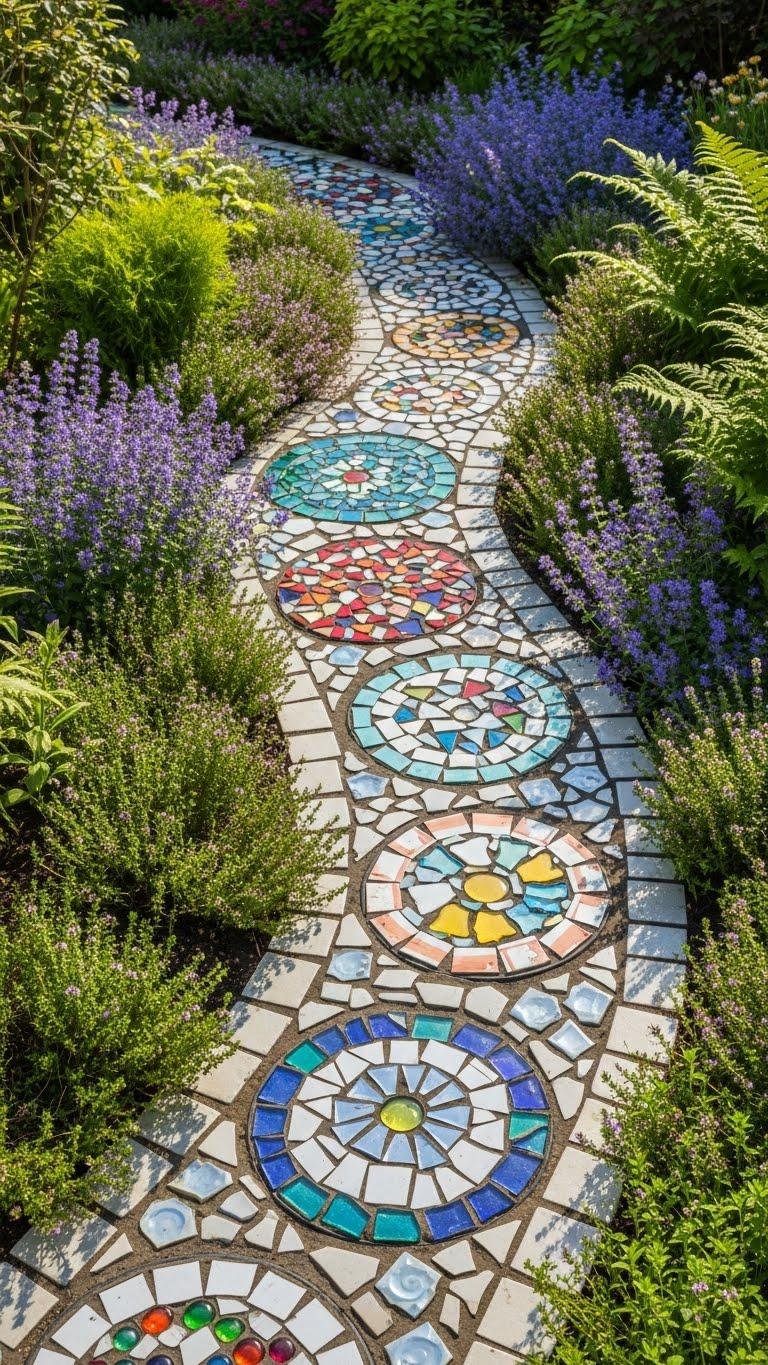
Lay out playful stepping stones of broken glass and porcelain to catch light and lead you through beds of thyme, catmint, and ferns. You’ll place recycled glass mosaics within concrete pavers, arranging colors to echo nearby foliage. Porcelain shard pathways curve between low herbs, creating reflective punctuation. You move freely, composing durable, plant-centric routes that invite barefoot wandering and seasonal color interplay.
Mortar-Set Pebble Walkways With Spiral Patterns
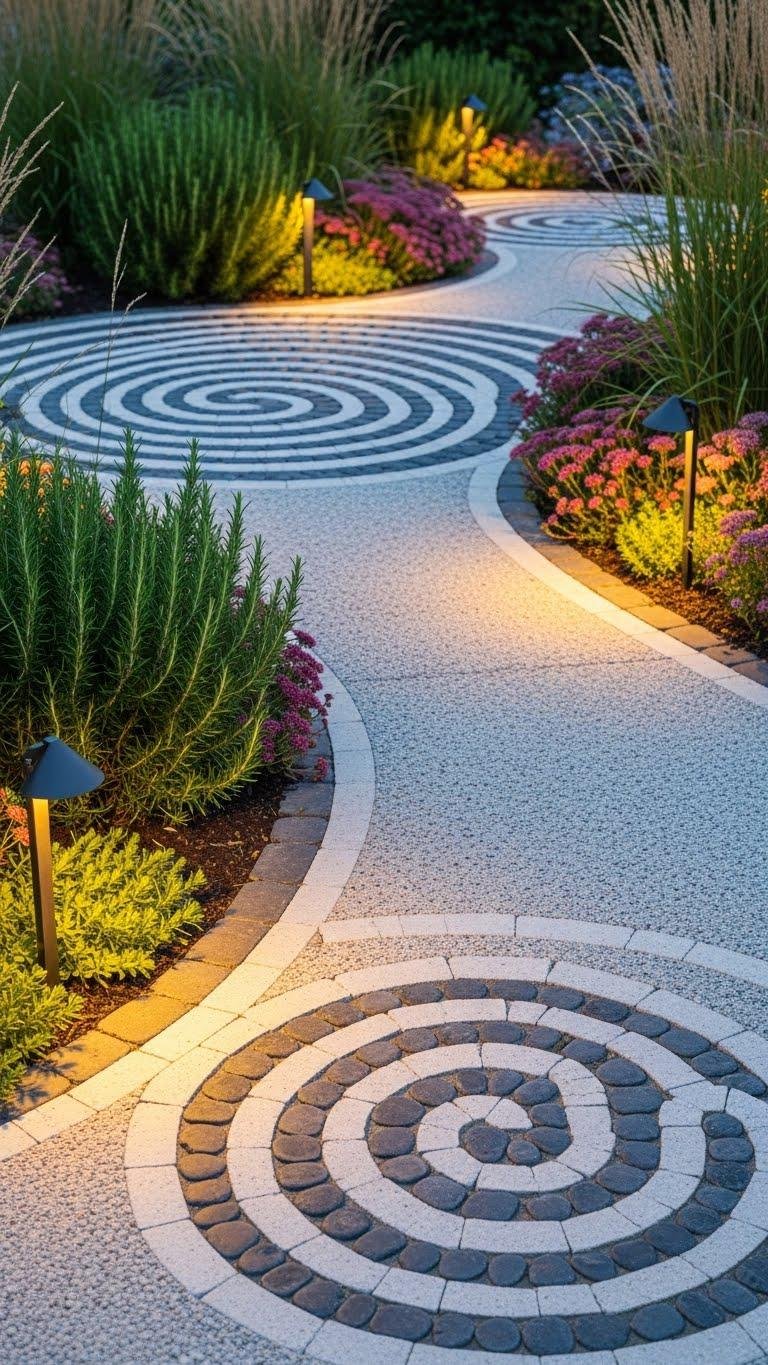
After you’ve enjoyed the sparkle of glass and porcelain underfoot, consider a softer, earthier route: mortar-set pebble walkways arranged in spirals that echo planting beds.
You’ll place pebbles to guide movement, use contrasting grout to define whorls, and weave low spiral lighting for dusk atmosphere.
Frame beds with rosemary, sedum, and grasses so paths feel free, living, and intentional.
River-of-Life Walkway Designs
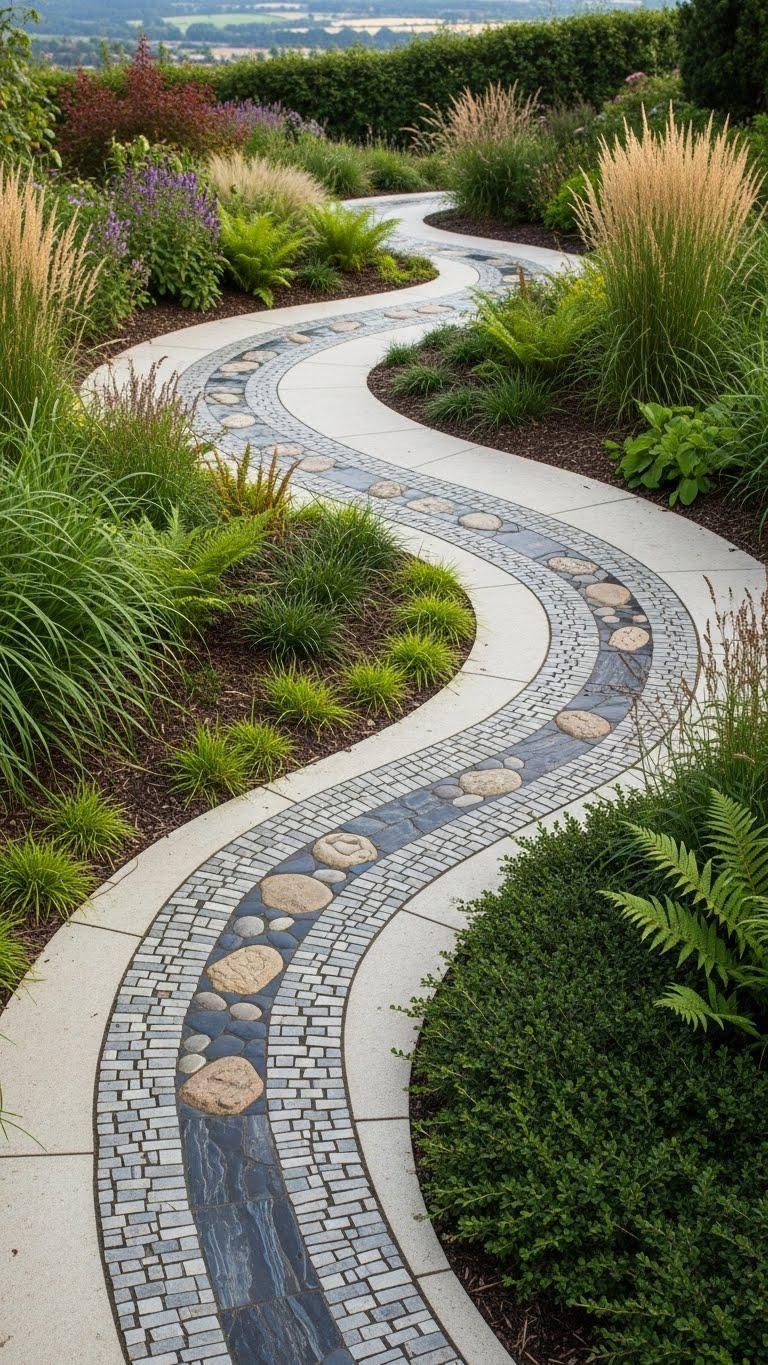
When you trace a sinuous path through the garden, design it like a living river that guides movement and frames plant communities; smooth, sweeping lines draw the eye while varying widths create natural pauses for plantings.
You’ll lay a river mosaic of stones and tile, aligning textures with grasses, ferns, and low shrubs.
Let the life path curve, reveal vistas, and invite wandering discoveries.
Coordinated Mosaic Planters and Pots
[IMAGE PROMPT: A vibrant garden scene featuring coordinated mosaic planters and pots in various colors, textures, and forms. The planters are grouped by color coordination, showcasing a mix of repeating glaze tones and pebble textures. Heights of the pots are varied to highlight different foliage and blooms. Lightweight pots with visible drainage solutions are displayed. The arrangement includes herbs, trailing vines, and sculptural succulents, creating a cohesive and liberated planting statement.]
Bring your garden vessels into visual harmony by coordinating mosaic planters and pots that echo the colors, textures, and forms of surrounding plantings. You’ll group containers by color coordination, repeating glaze tones and pebble textures.
Arrange heights to showcase foliage and blooms. Choose lightweight pots with proper drainage solutions.
Mix herbs, trailing vines, and sculptural succulents to create a liberated, cohesive planting statement.
Upturned Pot Waterfalls With Mosaic Cascades
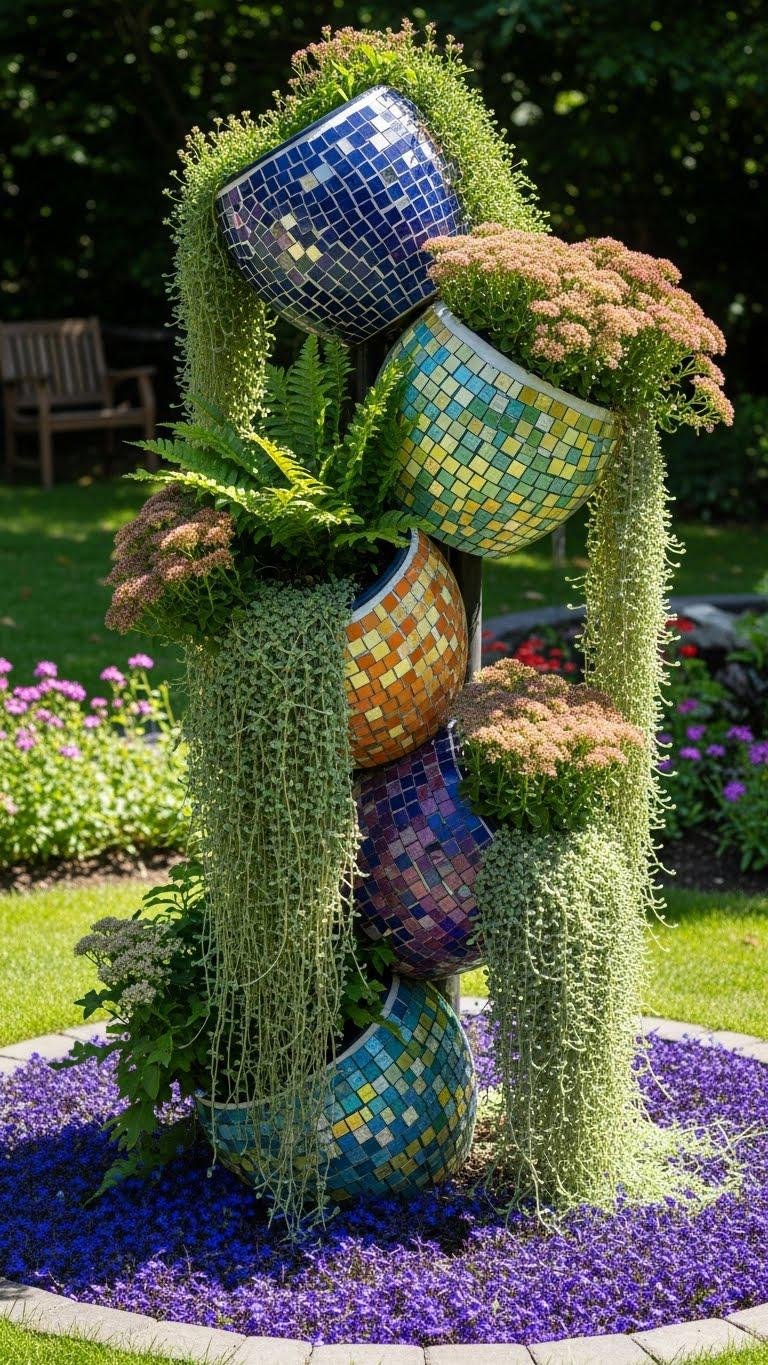
If your coordinated mosaic planters already guide the eye across beds and borders, let an upturned pot waterfall extend that rhythm with flowing form and texture. You’ll place staggered pots to create an upturned cascade, mosaic faces catching light. Plant trailing sedums, ferns, and lobelia so the pot waterfall feels alive, spilling color and scent while keeping a relaxed, open garden mood.
Mosaic Birdhouses and Small Structures
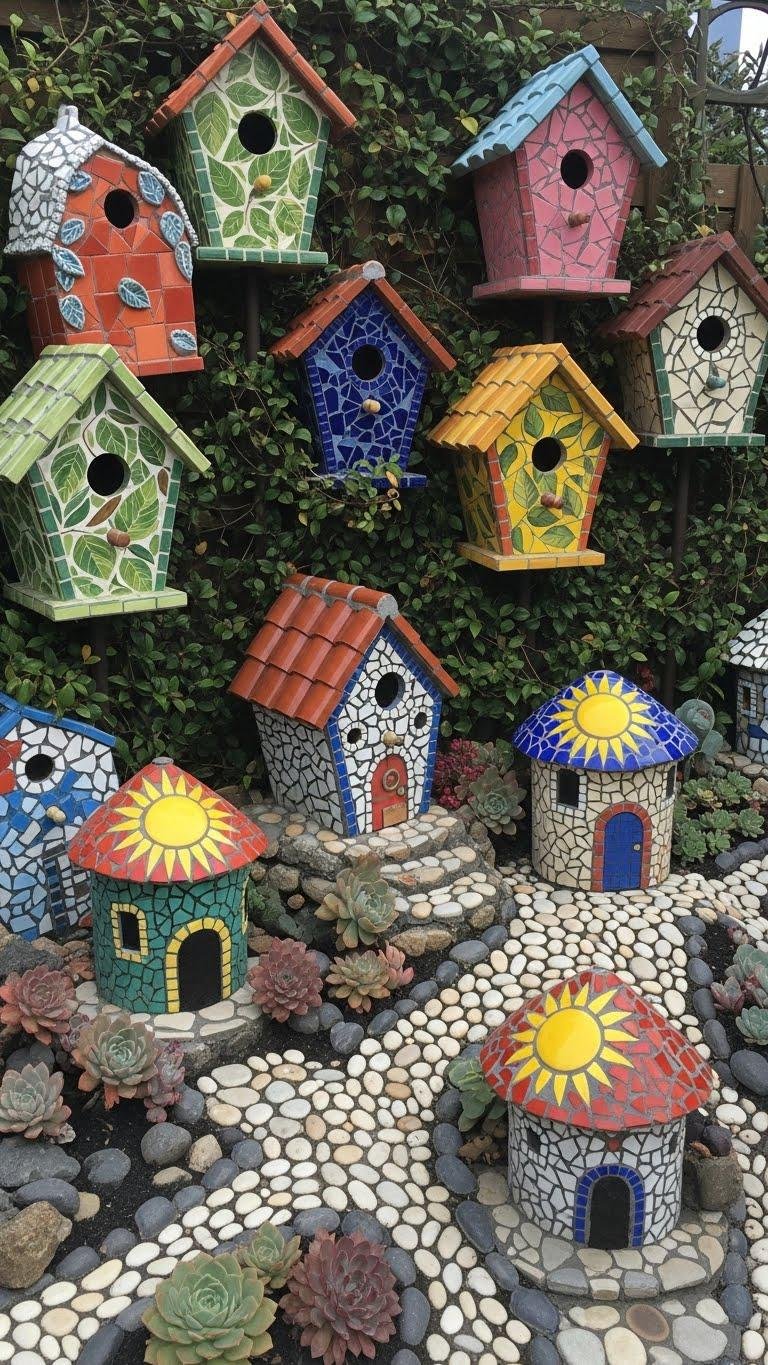
Set a charming focal point by dressing birdhouses and small garden structures in tile and glass mosaics that echo your plantings. You’ll accent vintage feeders with leafy patterns, mirror vine colors, and texture.
Create miniature cottages with roof tiles that catch sun, pathways of pebble mosaics, and pocket niches for succulents. These pieces let birds and blooms share a liberated, artful space.
Trompe L’œIl Koi Pond Tile Murals
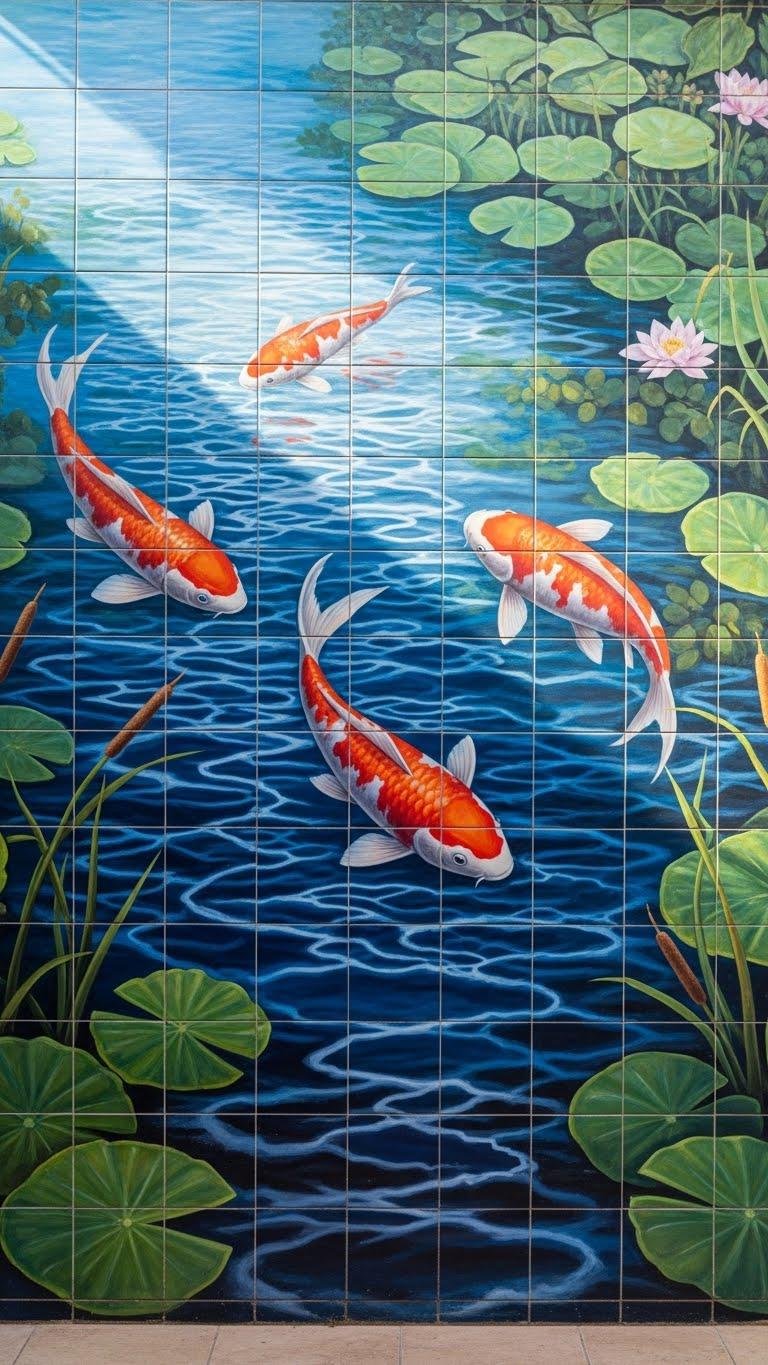
When you edge a real pond or tile a courtyard wall with painted tiles, a trompe d’œil koi mural turns water and plants into a staged performance—vivid fish seem to glide beneath rippling reflections while lily pads and rushes appear to press against ceramic edges.
You choose plant palettes, place illusion carpentry accents, and fit painted tiles so the garden feels untethered, alive, and intentionally free.
Sunburst Mosaic Framed Spouts
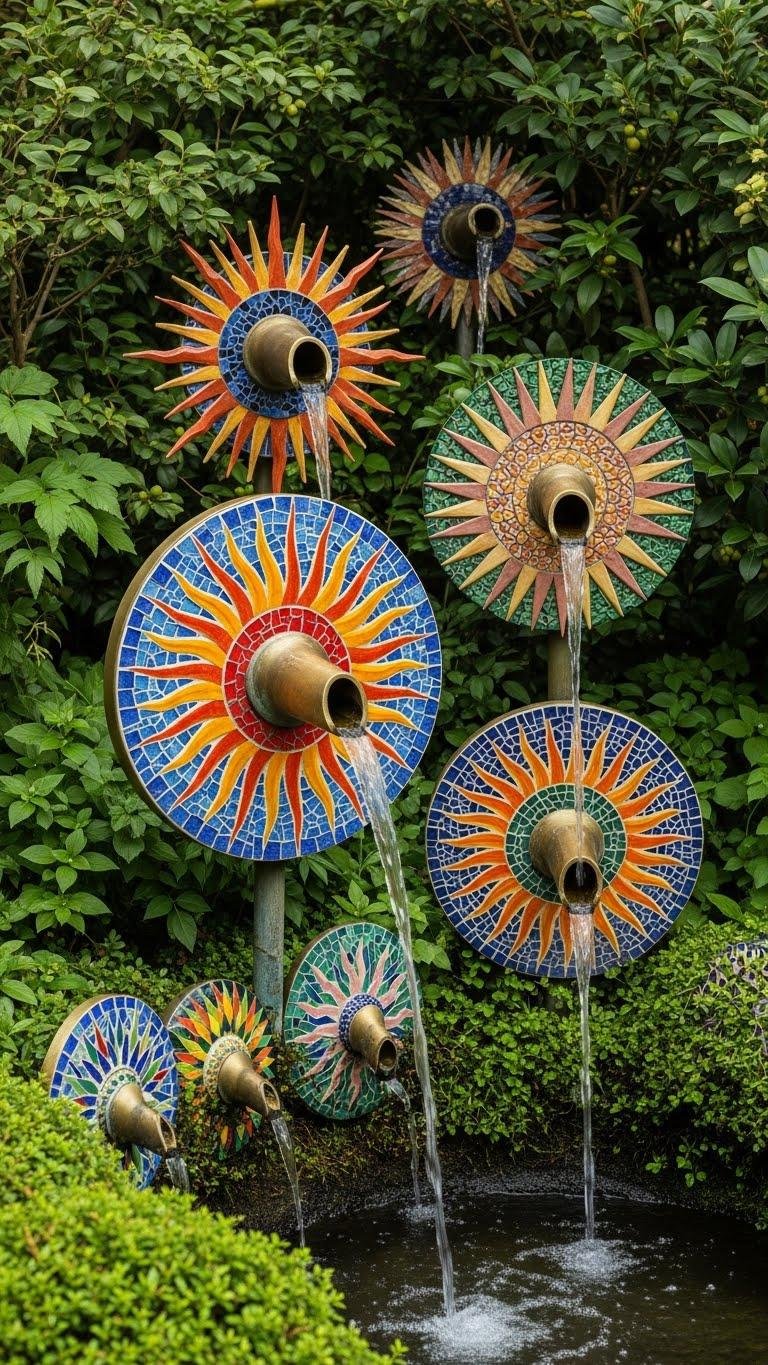
Moving from painted ponds to functional accents, sunburst mosaic framed spouts turn water outlets into botanical focal points that echo the garden’s planting.
You’ll place ceramic sunbursts around brass or stone spouts, marrying color with leaf shapes.
Spout mosaics guide water like rays, contrast foliage textures, and free you to choose scale, hue, and grout patterns that celebrate sunlight and growth.
Mosaic Birdbaths and Basin Accents
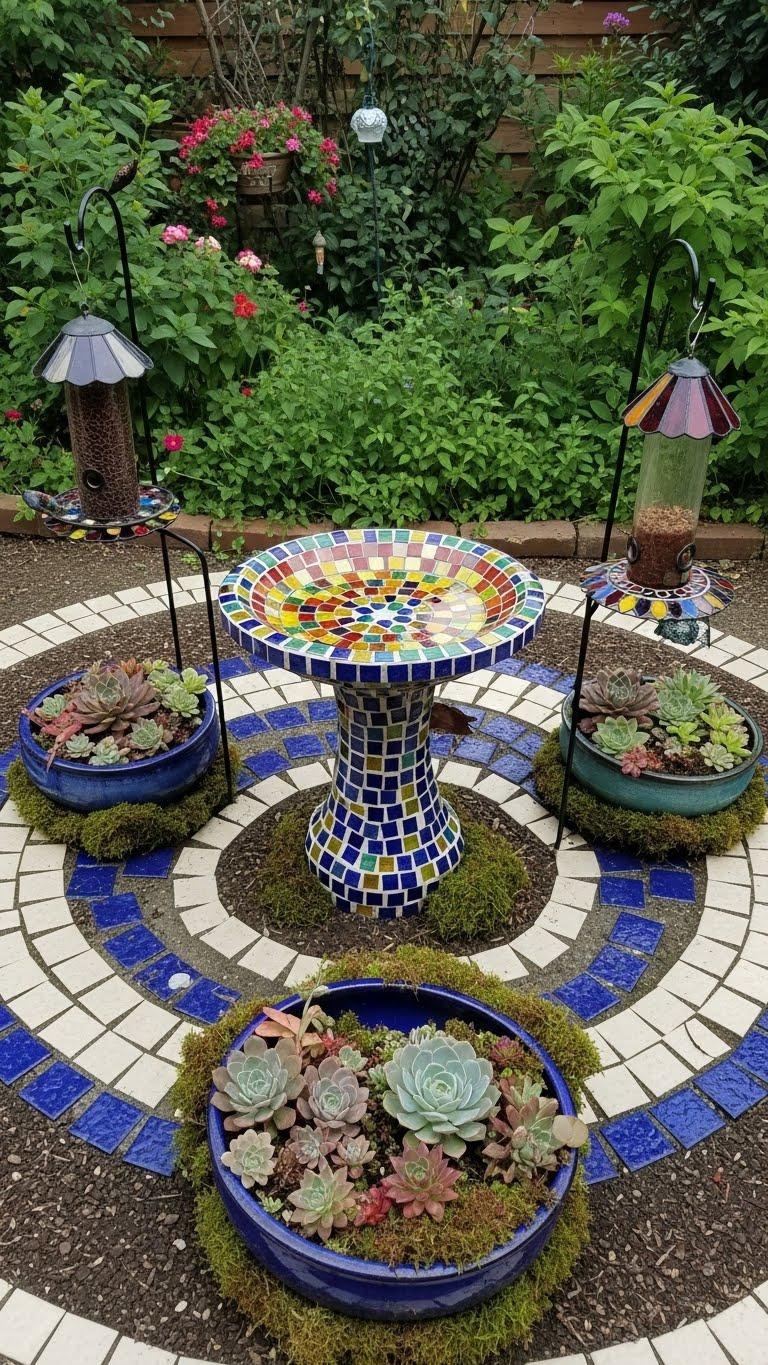
Often you’ll find that a mosaic birdbath becomes the garden’s hummingheart, its tiles catching light like petals while inviting birds to pause.
You place stained glass feeders nearby, vivid and translucent, and line ceramic tile basins with succulents and moss.
You design concentric tile patterns that echo surrounding foliage, guiding birds and freeing your layout to feel wild, intentional, and alive.
Frozen Water Feature Tile Cascades
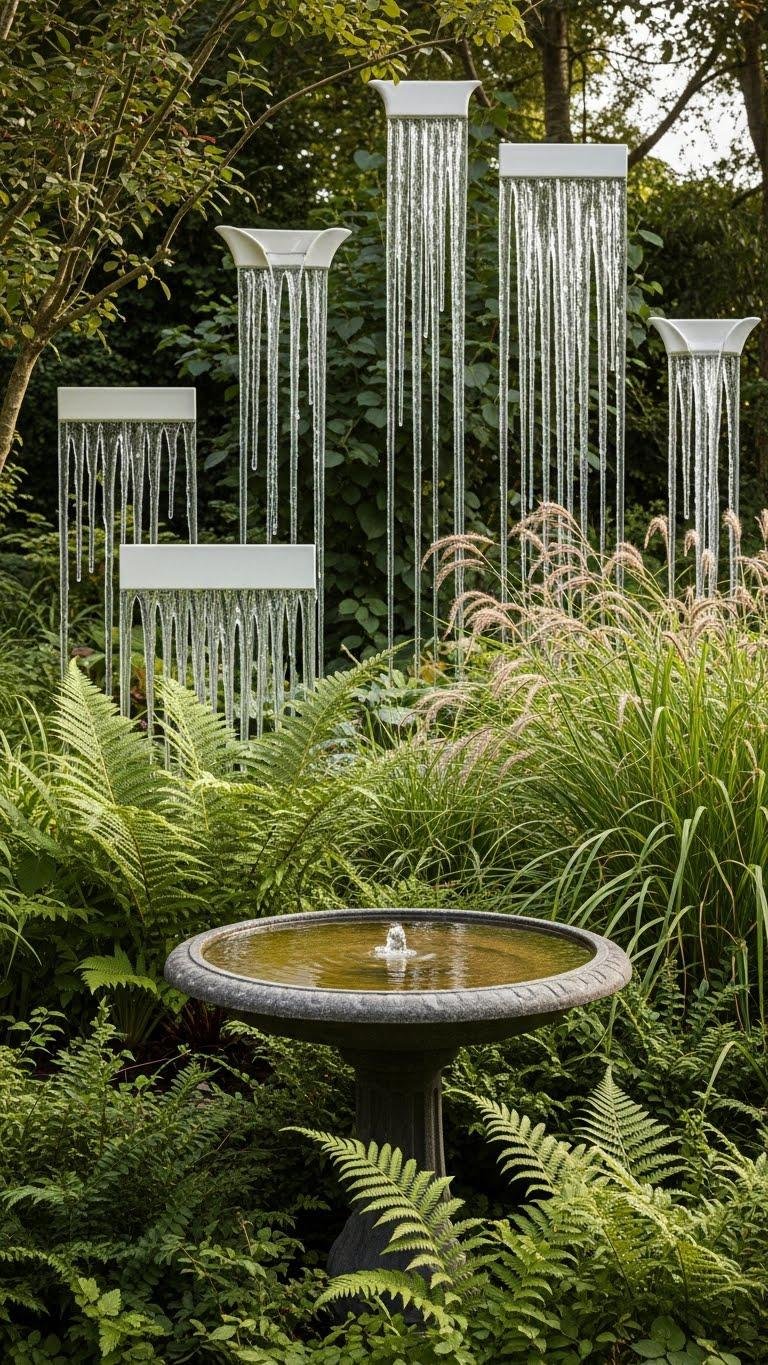
Let the reflective tiles of your birdbath inspire a colder counterpoint: frozen water feature tile cascades use glass and ceramic to catch light in shards and sheets, creating sculptural ribbons that mimic icicles among your plants.
You’ll place ice tiles as vertical veils beside ferns and grasses, guiding water’s trickle into silent frozen cascades that accentuate form, texture, and the garden’s open, liberated flow.
Pebble Edging Strips for Ponds and Beds
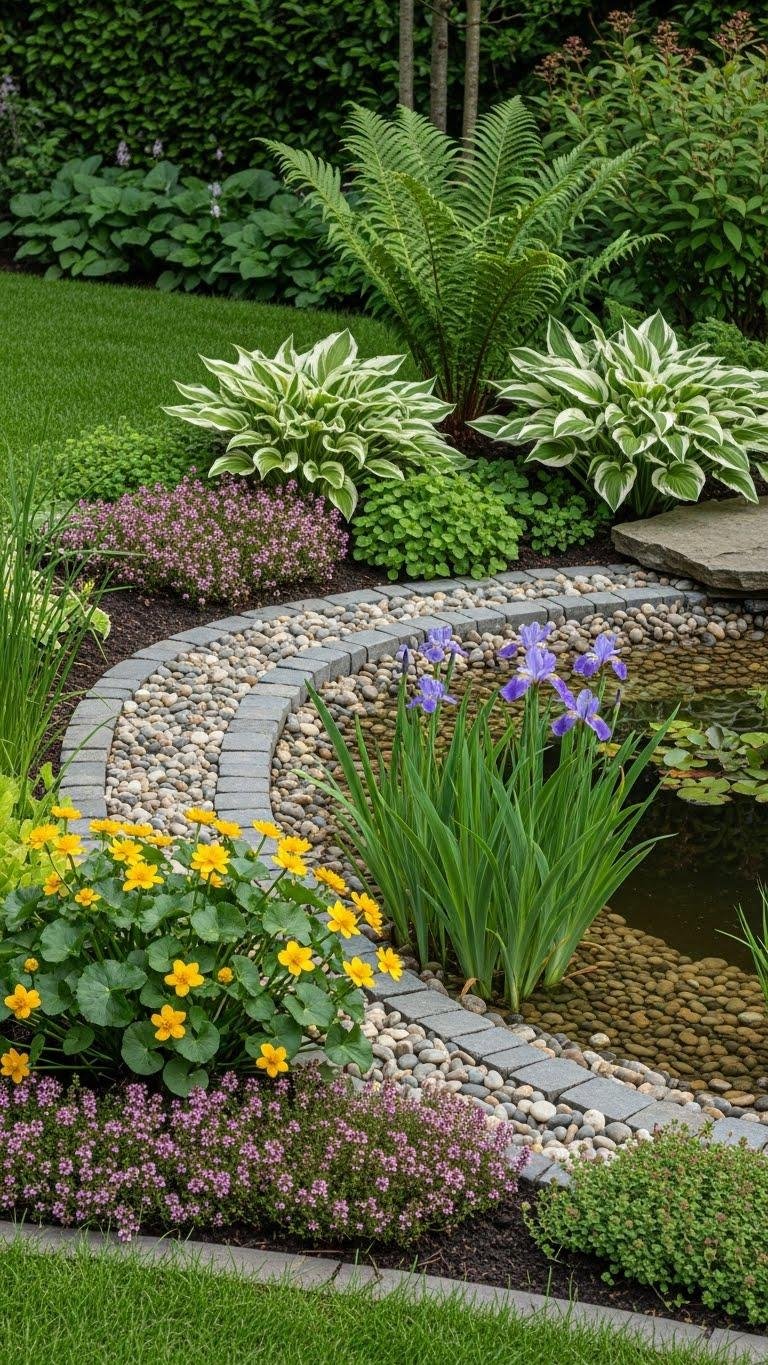
Frame your pond and planting beds with narrow pebble edging strips that echo natural shorelines and keep soil, mulch, and errant stones in check.
You’ll define borders, create smooth shifts between lawn and planting, and contrast foliage with aquatic textures.
Place low-profile strips to accent moisture-loving perennials, sedges, and bog plants.
The effect is tidy, free-flowing, and visually rooted in the landscape.
Stacked Mosaic Tile Columns on Walls
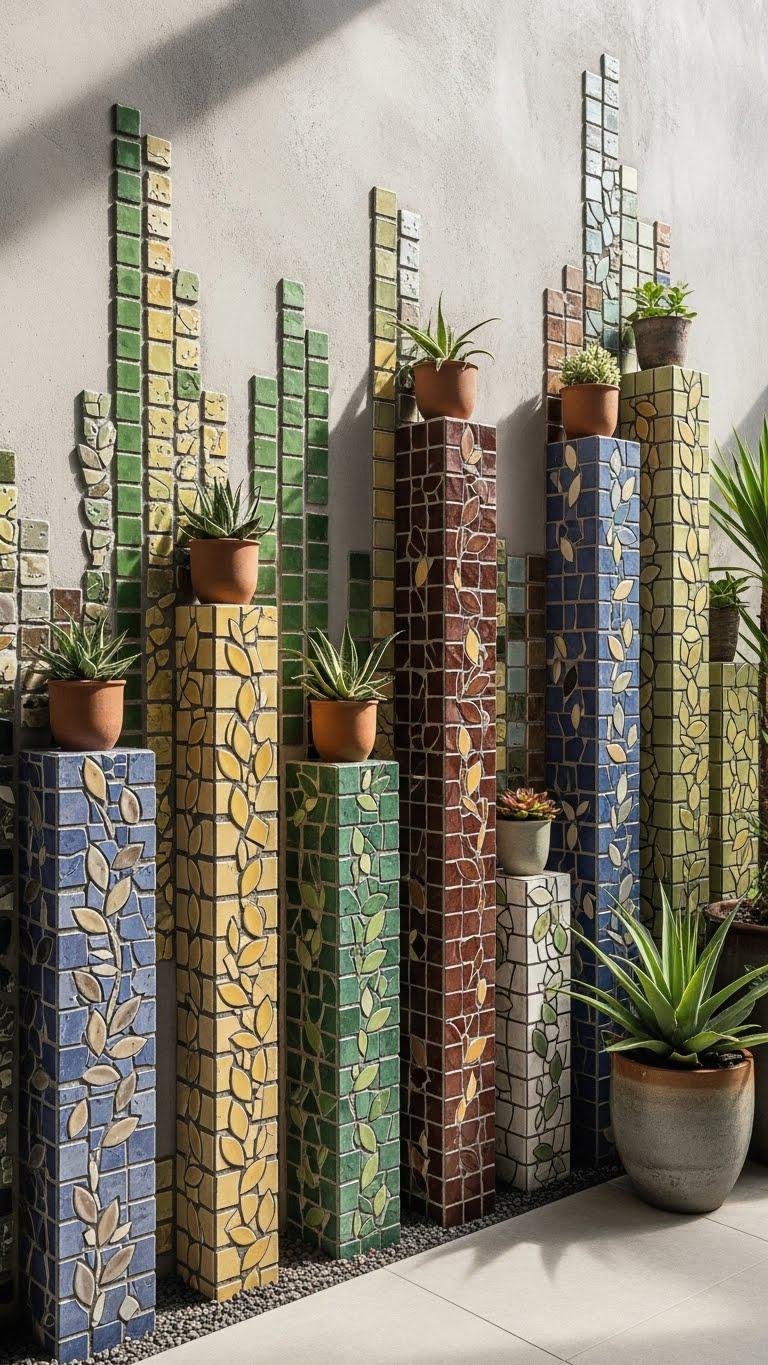
Bring vertical interest to walls with stacked mosaic tile columns that play off your planting layers and sunlight. You’ll place slim vertical columns to echo stems, climbers and spires, using varied tile sizes and colors to mirror foliage. Let textured grout add shadow and tactile contrast.
You can stagger heights, frame pots, and guide sightlines, creating a liberated, garden-forward rhythm.
Abstract Mosaic Wall Panels in Series
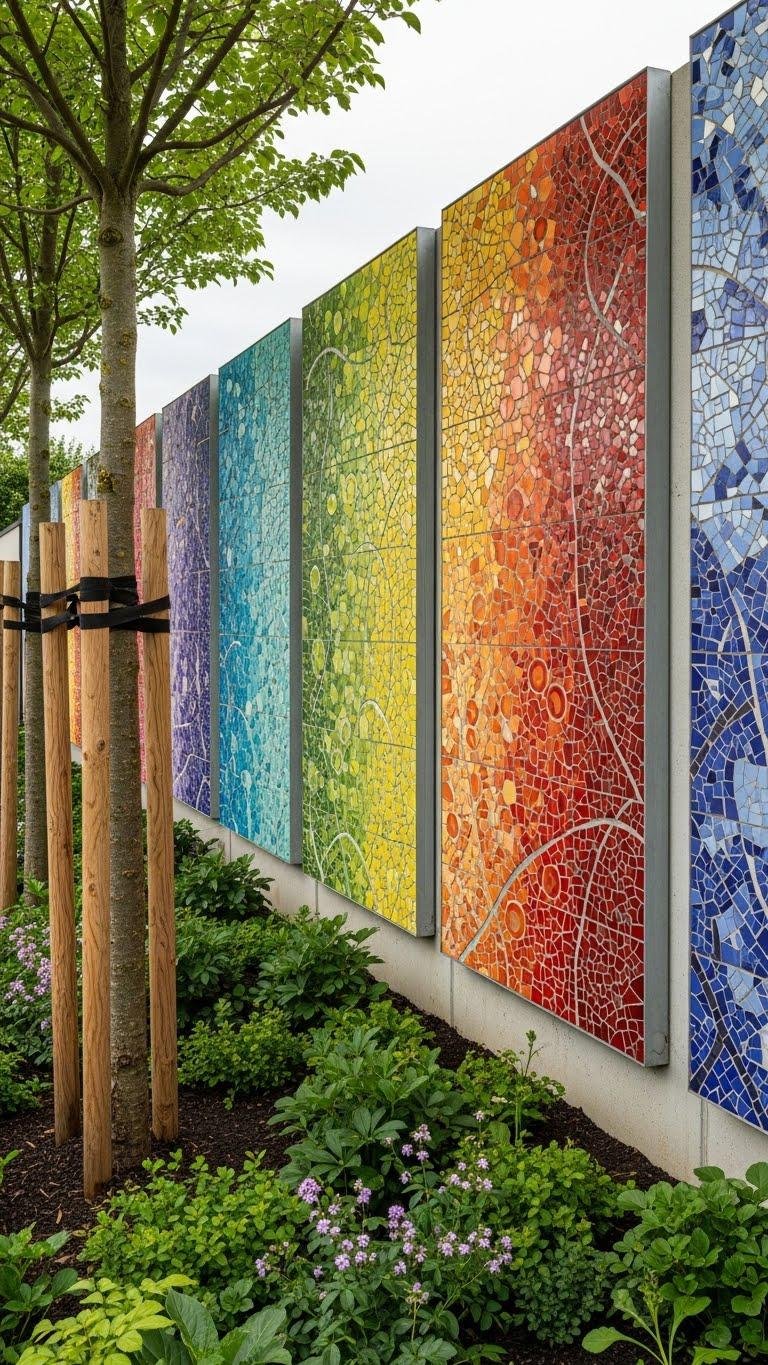
When you arrange a series of abstract mosaic panels along a garden wall, they act like a stitched sequence of seasonal shifts—each panel a distinct study in texture, tone, and movement that echoes beds and canopies.
You’ll place panels to guide sightlines, using color gradient shifts, planted swaths and sculptural trunks to mirror geometric repetition, freeing composition while anchoring plant rhythms.
Mediterranean and Moroccan Terrace Floors
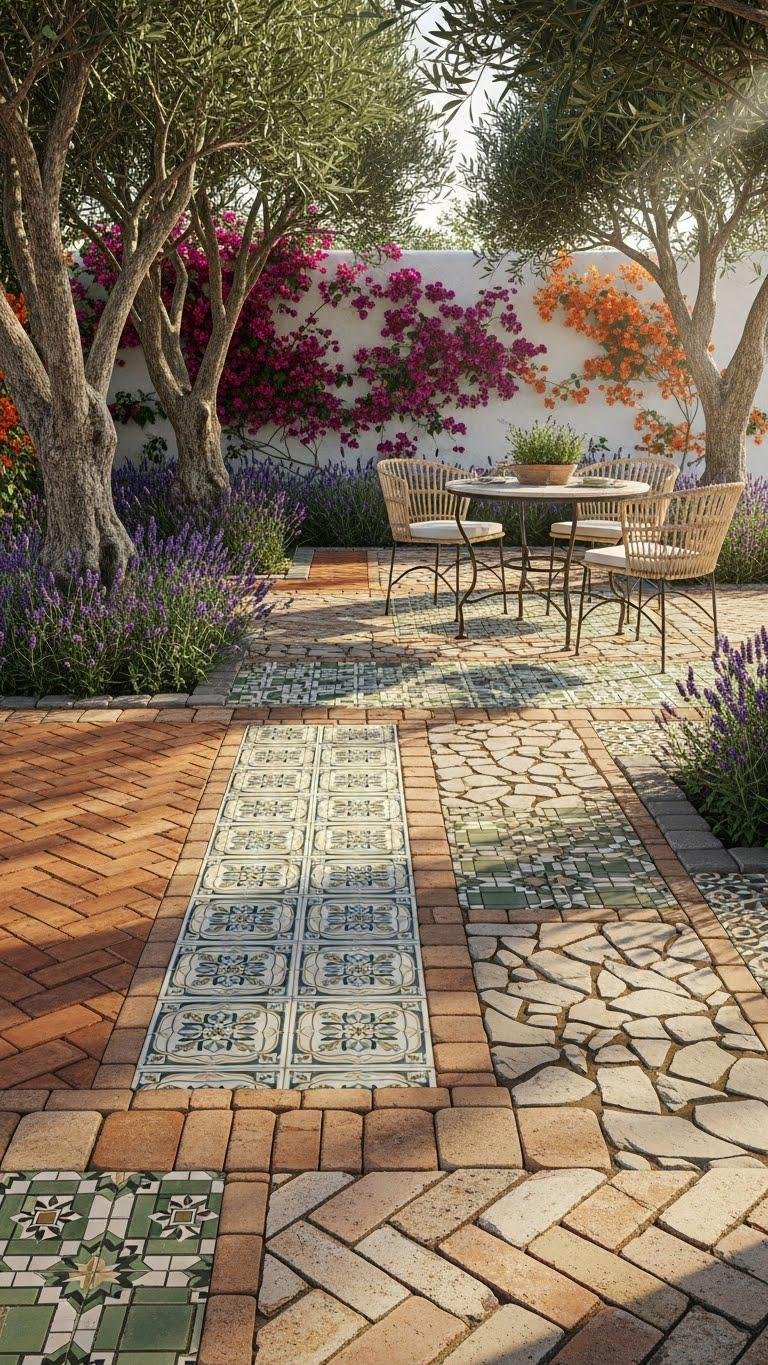
If you want your terrace to read like a sunlit room outdoors, start with a floor that sets the mood—terracotta tiles, encaustic cement patterns, or hand-cut stone laid in herringbone or zellige grids will anchor the planting scheme and guide circulation.
You’ll choose sun drenched tiles and embrace encaustic revival, pairing geometric mosaics with olive, lavender, and cascading bougainvillea for airy, free-flowing outdoor rooms.
Mosaic Discs and Pavers to Frame Seating Areas
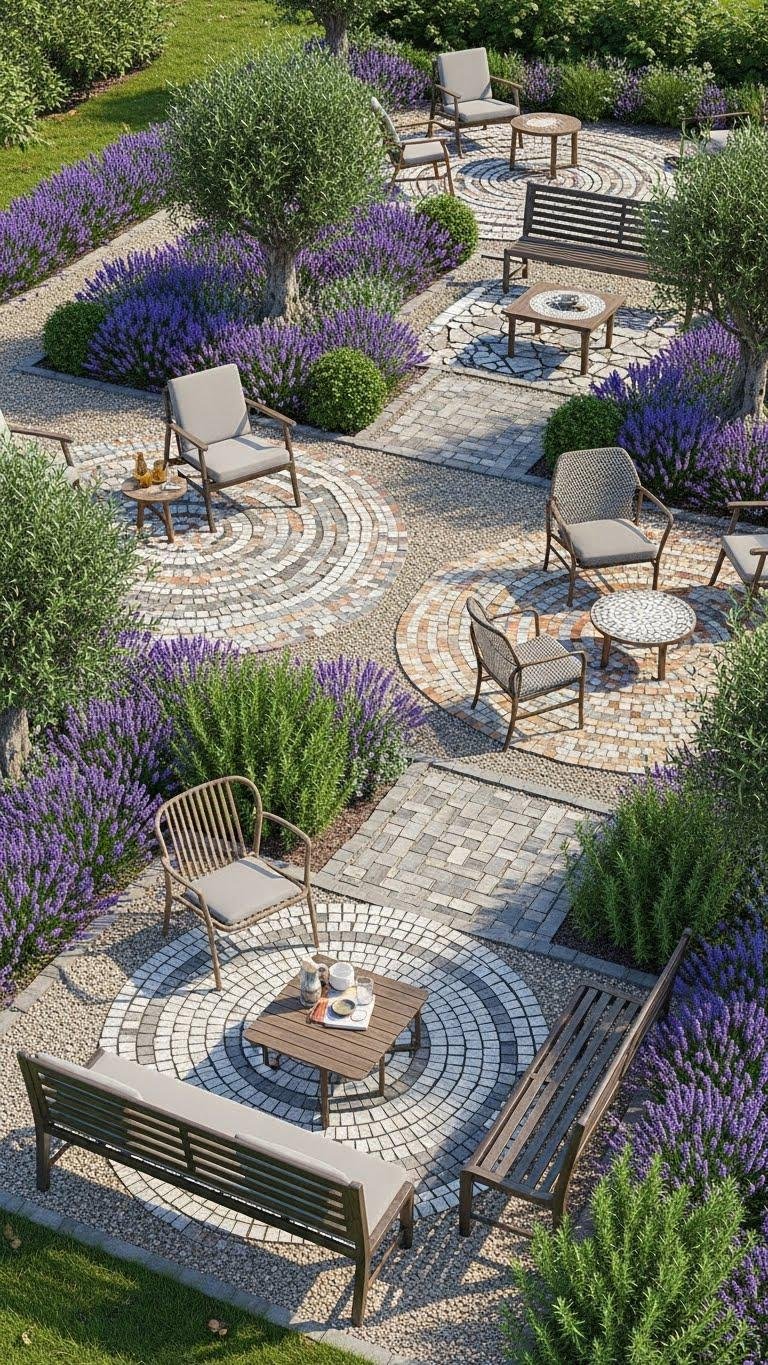
Set into gravel or lawn, mosaic discs and pavers create focused seating islands that read like planted stages—each patterned circle or rectilinear slab frames a chair, bench, or low table and guides foot traffic around beds of lavender, rosemary, and compact olives.
You’ll place pieces with weatherproof adhesives, favor seating symmetry or deliberate offset, and pair textures and tones so your spot invites lingering and effortless freedom.
Pebble-Filled Stepping Stone Edges
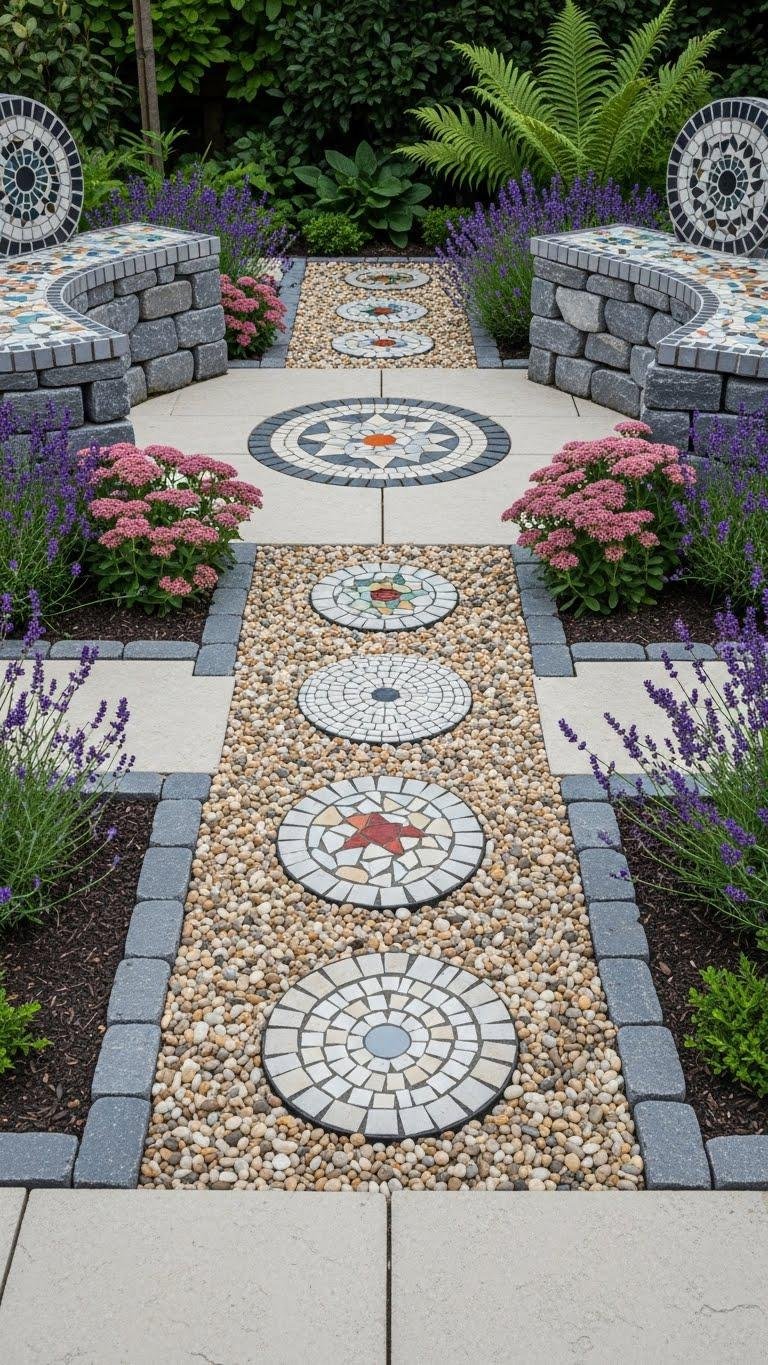
After framing seating with mosaic discs and pavers, let pebble-filled stepping stone edges guide movement and soften boundaries around your plantings.
You’ll place border mosaics beside lavender, sedum, and ferns, using pebble gradients to shift color and texture.
Walkways feel deliberate yet free; plant edges gain gentle definition.
Maintain simple grout lines, vary pebble sizes, and prune to reveal mosaicked margins.
Customized Floral and Initial Stepping Stones
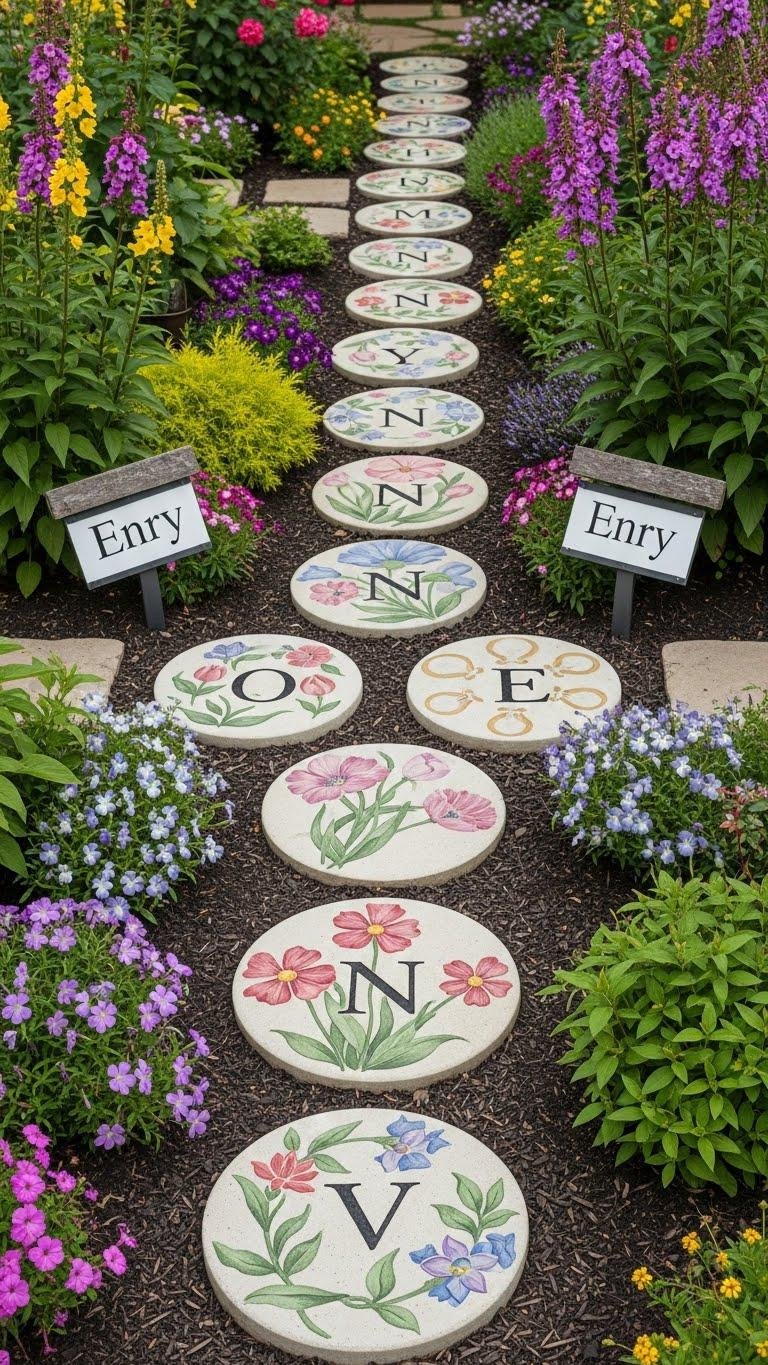
Personalize your path with stepping stones that carry floral motifs or initials, placing each piece where it complements nearby plantings and sightlines.
You choose shapes, colors and scale to echo shrubs, groundcovers and blooms.
Arrange personalized monogramstones near entry beds, scatter heirloom dateplaques by focal perennials, and balance texture and rhythm so movement through the garden feels intentional, free and distinctly yours.
Mosaic-Decorated Tree Stump Seats
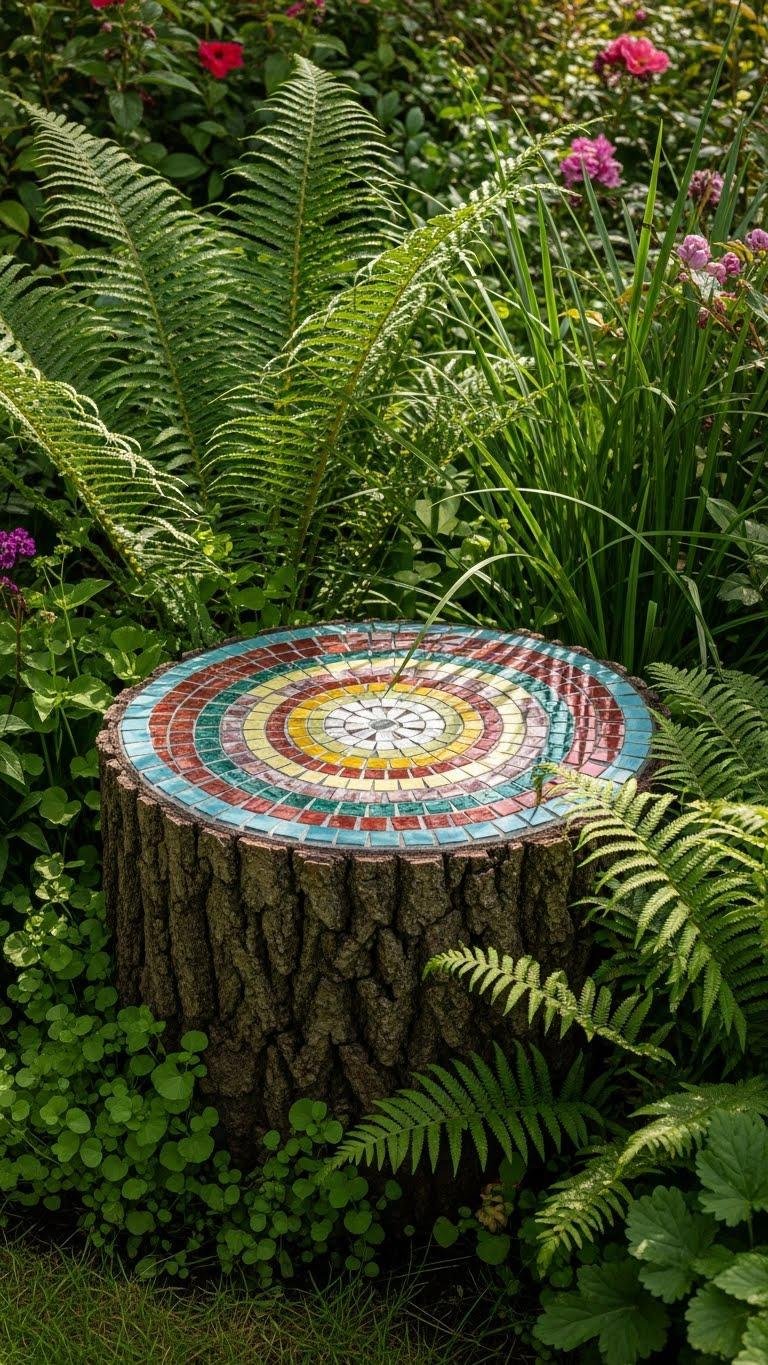
A mosaic-topped stump turns a leftover tree into a sculptural seat that echoes the garden’s palette and plant textures.
You’ll transform an upcycled stump with concentric mosaic inlays, arranging colorful tesserae to mirror nearby blooms and foliage.
Seal joints carefully, apply weatherproof sealing, then situate the seat among ferns or grasses so it invites rest, contemplation, and roaming creativity.
Stone-Grass Hybrid Paths With Moss Infill
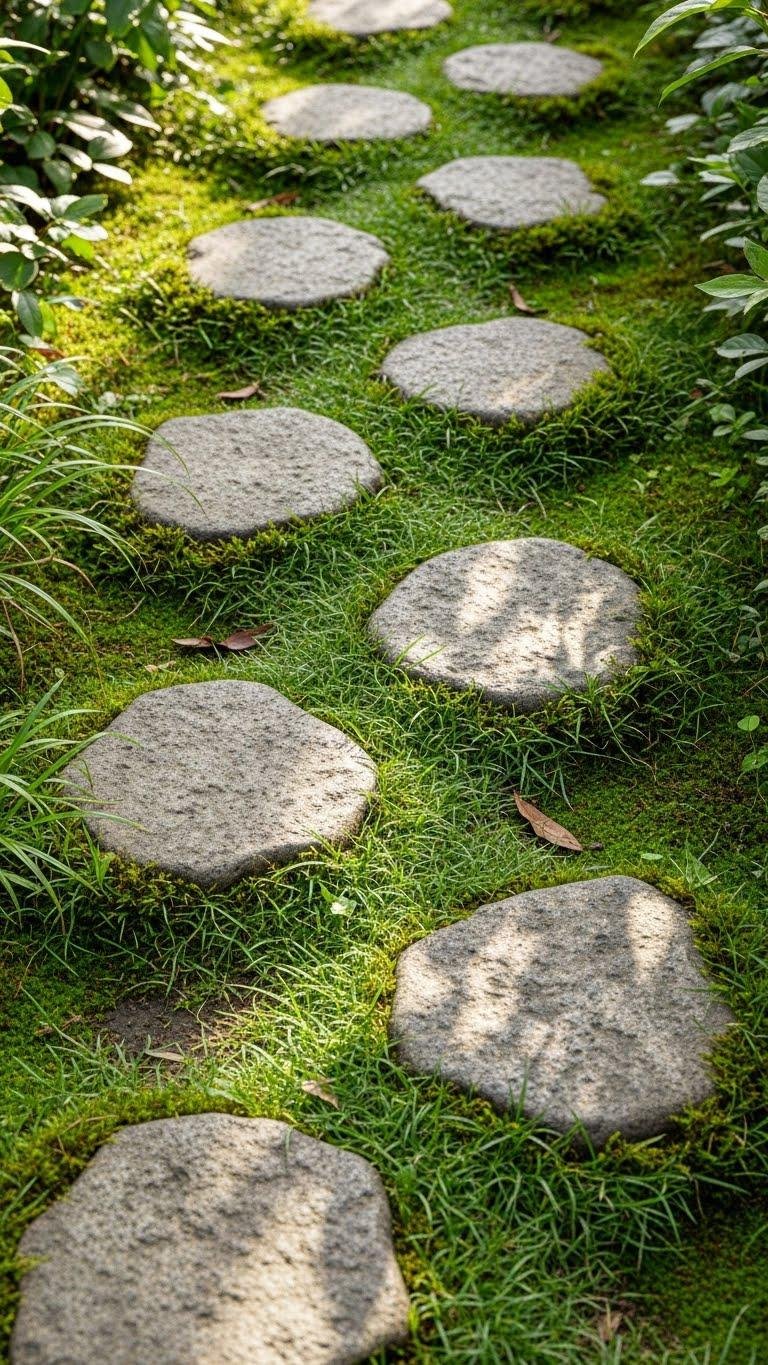
When you weave irregular stepping stones into ribbons of lawn and tuck soft moss into the seams, the path reads as both sculpture and living groundcover—guiding footsteps while celebrating plants’ textures and tones.
You’ll lay stones with purposeful gaps, install turf inlays, and press mossy seamwork into crevices. The result feels free, tactile, and botanical, inviting wandering, barefoot exploration, and quiet pauses.
Shell and Stone Coastal Path Motifs
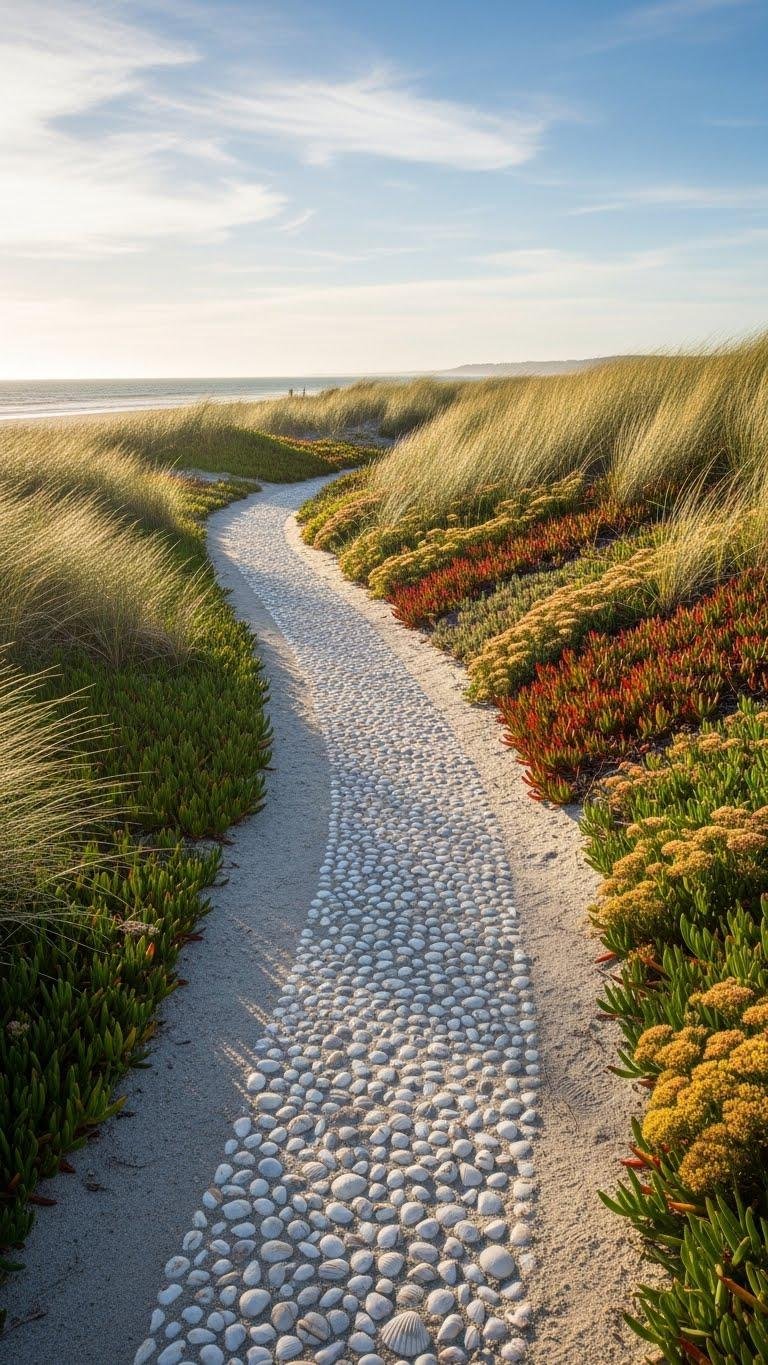
You can carry the tactile intimacy of mossy seams and lawn ribbons toward a coastal mood by trading verdant inlays for sandy textures and shell accents.
You arrange stones and low grasses in clean bands, set seashell mosaics into pale grout, and map tidal motifs along curves.
Plant salt-tolerant grasses and succulents to soften edges, letting pathways breathe and invite wander.
Iridescent Marble and Glass Accent Patterns
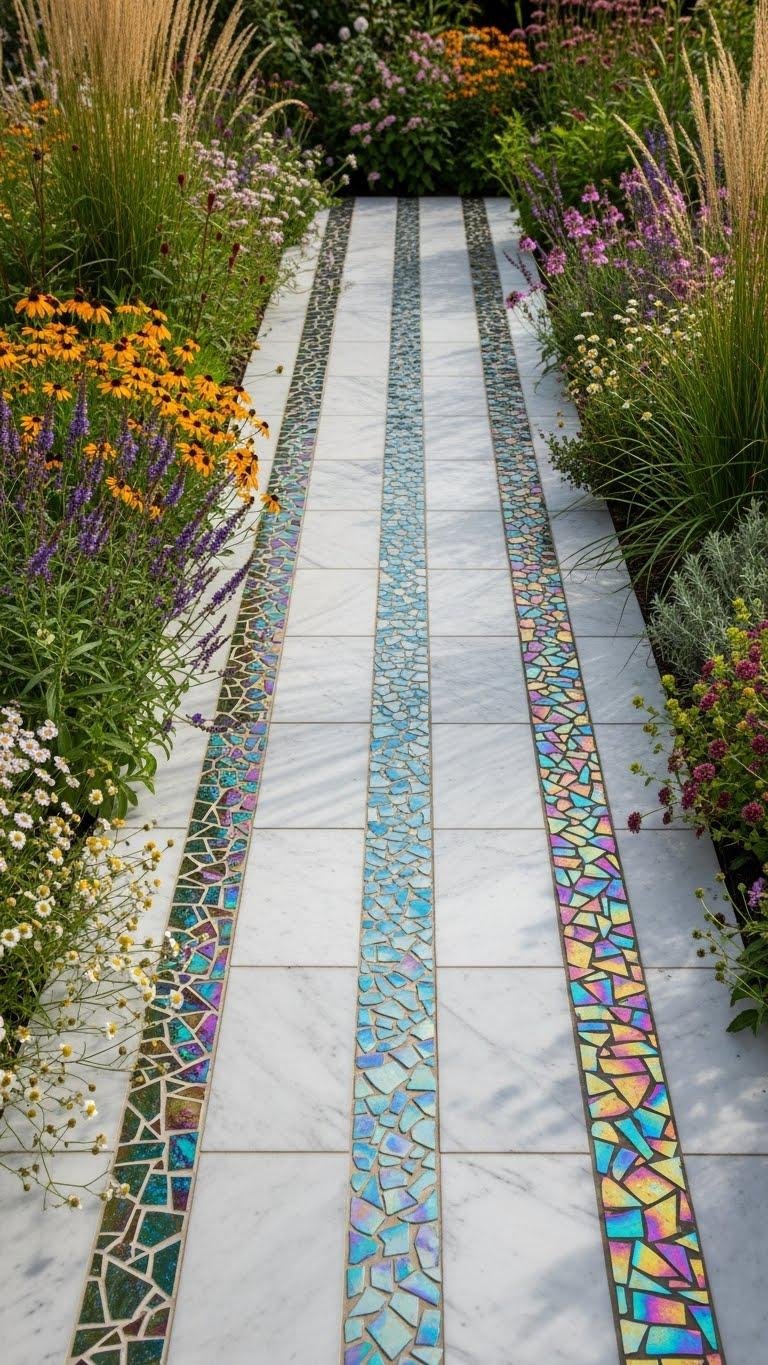
Often subtle glints of iridescent marble and glass lift garden paths into luminous accents, so think with respect to bands and focal petals that echo nearby plant forms. You’ll place iridescent tesserae in rhythmic rows, framing native blooms and grasses. Use reflective grout to sharpen contrast, guide sightlines, and create breathable patterns that let plant textures remain the true stars of your freer, living design.
Tropical and Moroccan Motif Garden Zones
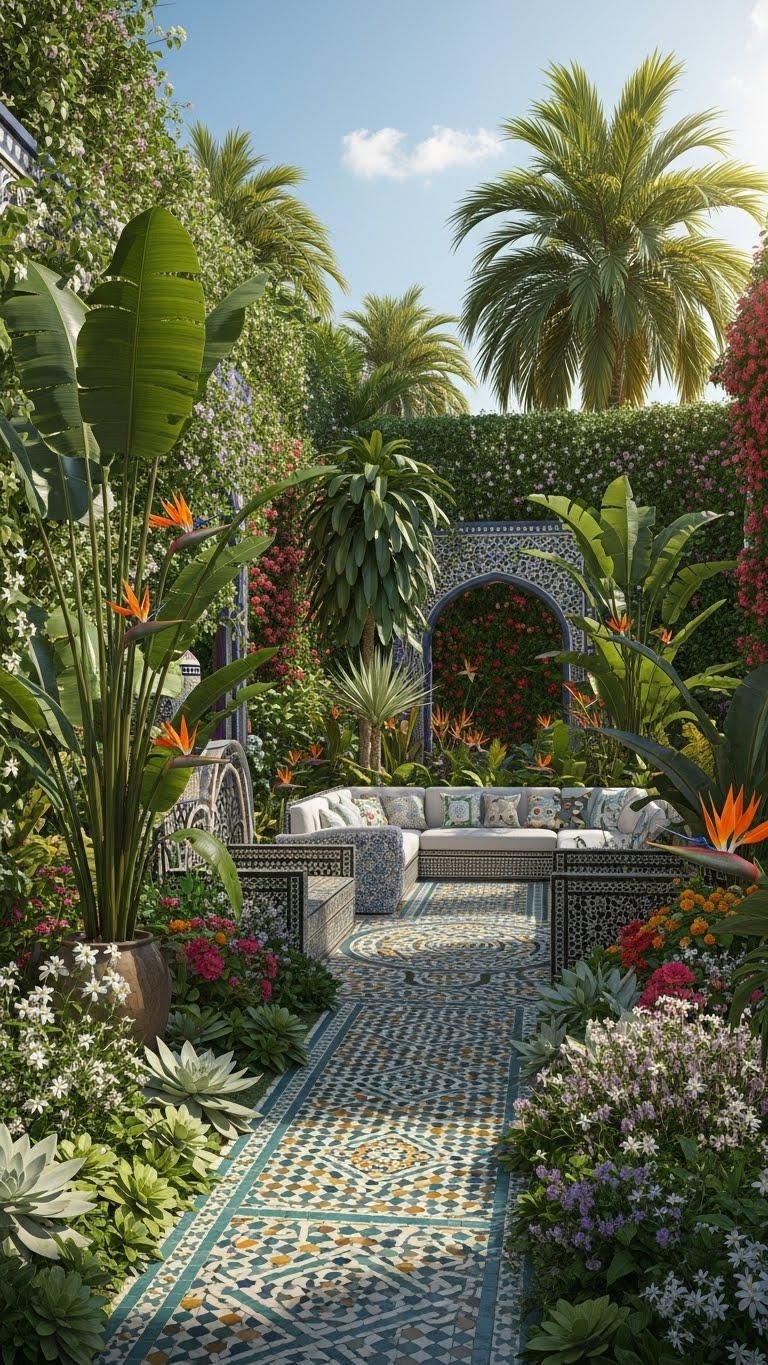
From those shimmering bands and petal echoes, steer your eye toward bolder palettes and layered textures: Tropical and Moroccan motif garden zones will let you pair lush, oversized foliage with geometric tilework and fragrant, sun-loving plantings.
You’ll frame pathways with Tropical tiles, punctuate seating with Moroccan motifs, and plant sculptural palms, bird of paradise, jasmine and succulents for contrast and liberated, tactile color.