
You can transform any room with the right mix of texture, color, and form — from bold, velvety Anthuriums to easygoing pothos and sculptural figs. I’ll outline 25 plants that suit different light levels, maintenance styles, and design goals, and point out which rare or variegated varieties need extra care. Start with a statement plant, then layer in trailing and low‑maintenance options to balance the space — and discover which choices truly elevate a room.
Monstera Deliciosa – the Classic Statement Plant
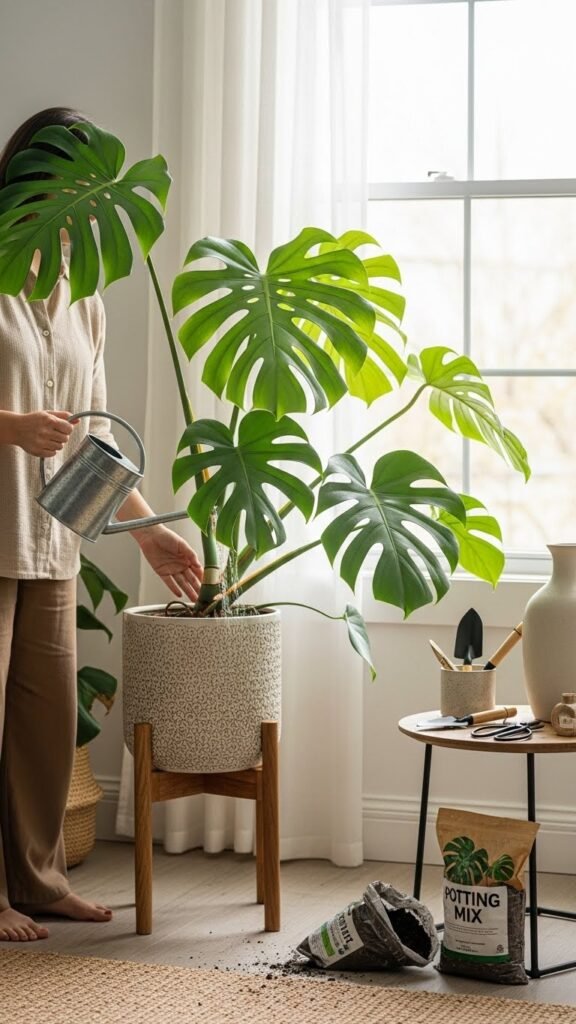
Although it thrives in bright, indirect light, Monstera deliciosa’s dramatic split leaves are what make it a go-to statement plant for any room.
You’ll master Monstera care by watering when topsoil’s dry, providing support, and rotating for even growth.
Inspect leaf fenestration to gauge maturity and light; larger holes mean healthy development.
Prune selectively to maintain form and freedom of space.
Variegated Monstera Esqueleto
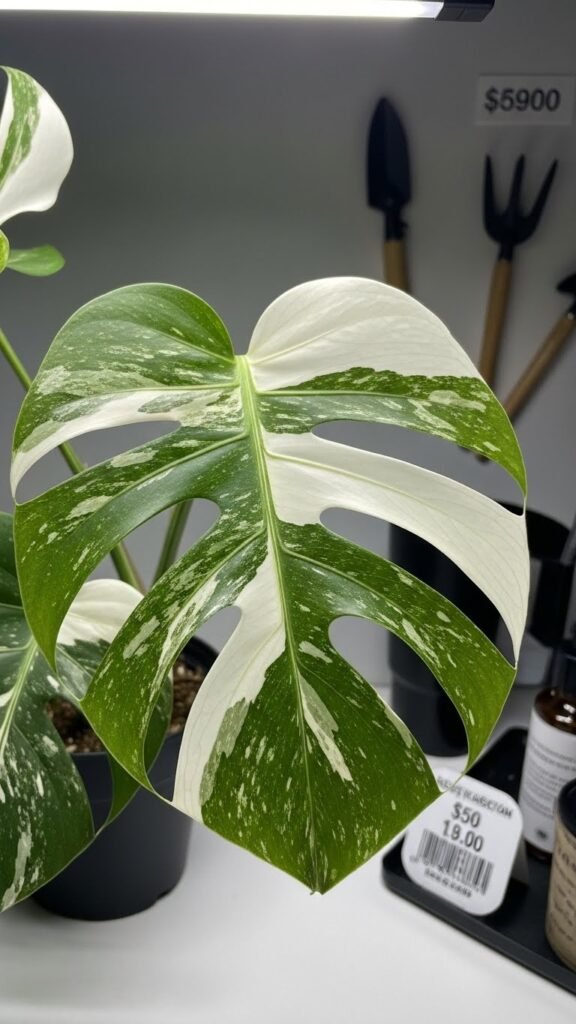
Variegated Monstera Esqueleto brings striking white and cream patterns to the classic fenestrated silhouette, but it also demands a bit more attention than its all-green cousin.
You’ll manage light, watering, and feeding carefully to protect unstable Variegation genetics and prevent reversion. Expect higher prices and selective sourcing; the Rarity market rewards patience and provenance, so choose sellers with clear records and good photos.
Philodendron Spiritus Sancti
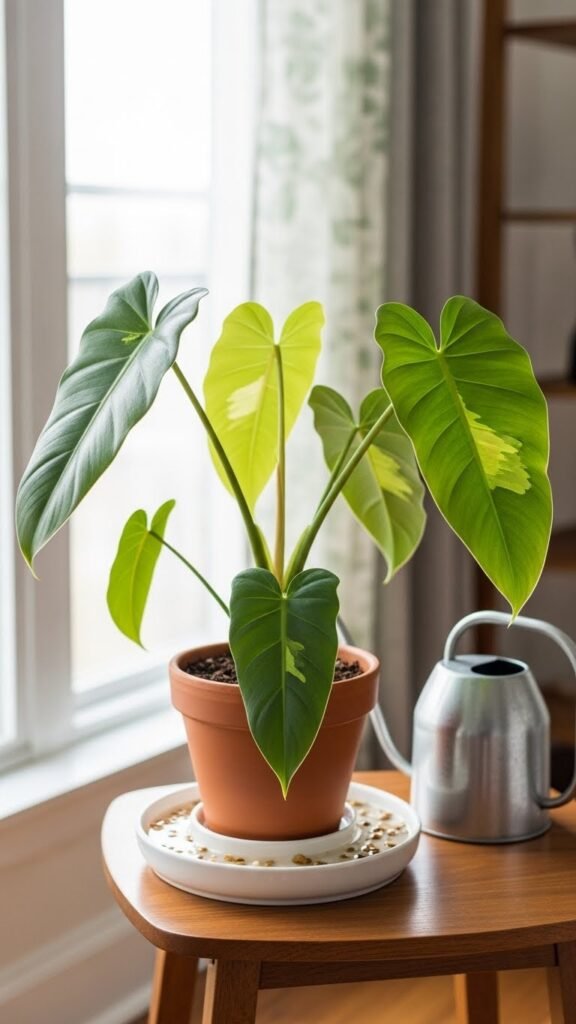
Handle Philodendron Spiritus Sancti with care: this rare, velvety-leaved aroid demands high humidity, bright indirect light, and careful watering to thrive. You’ll monitor soil moisture, provide humidity trays, and rotate gently.
Appreciate its subtle leaf variegation and respect conservation status—don’t support wild collection. Propagate responsibly from reputable growers so you can enjoy freedom in styling while protecting wild populations.
Variegated Alocasia Frydek
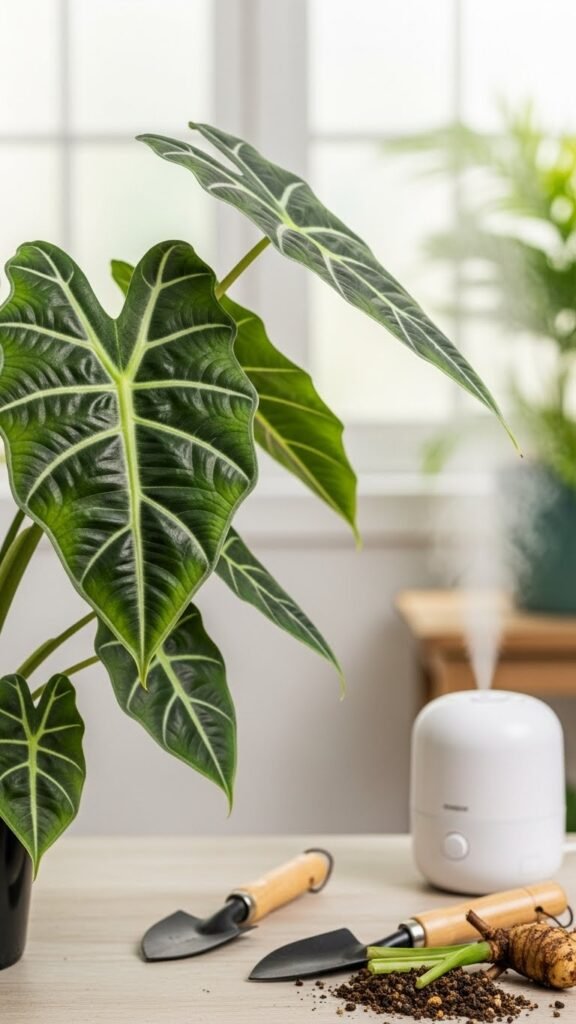
Meet the Variegated Alocasia Frydek, a striking aroid prized for its velvety, dark green leaves streaked with creamy to white variegation and dramatic, arrowhead-shaped form. You’ll enjoy bold visual impact with focused care requirements: bright indirect light, consistent humidity, well-draining mix, and careful watering.
Learn propagation methods like division or rhizome cuttings to expand your collection confidently and independently.
Anthurium Warocqueanum (Variegated)
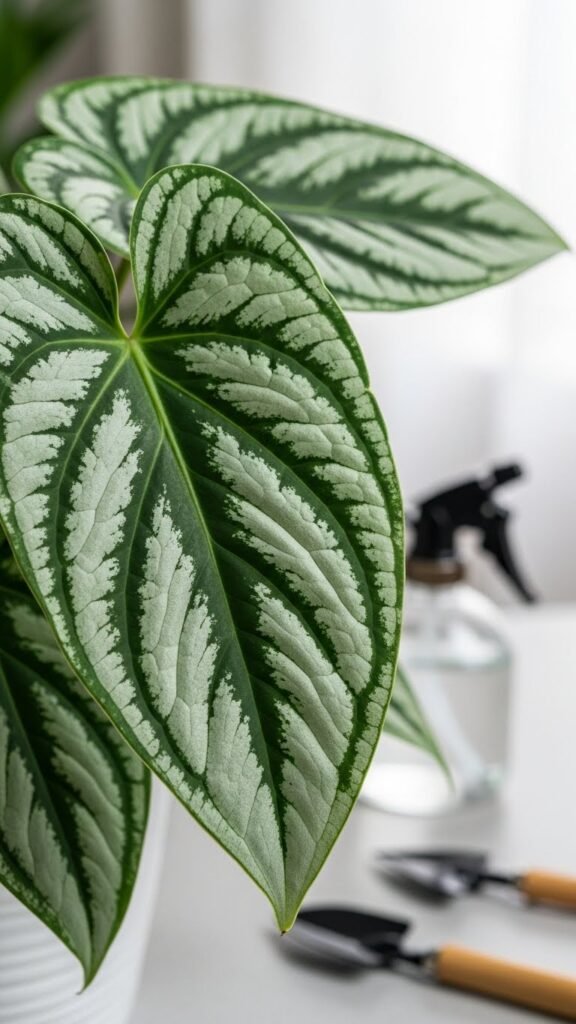
Glazed in silvery-white streaks against deep, textured green, the variegated Anthurium warocqueanum — often called the queen of the velvet — rewards attentive growers with dramatic, elongated leaves that can reach impressive sizes indoors.
You’ll prioritize variegation care: stable humidity, bright indirect light, and airy mix. Inspect leaf texture regularly for pests or rot, and prune selectively to preserve vigor.
Anthurium Silver Blush
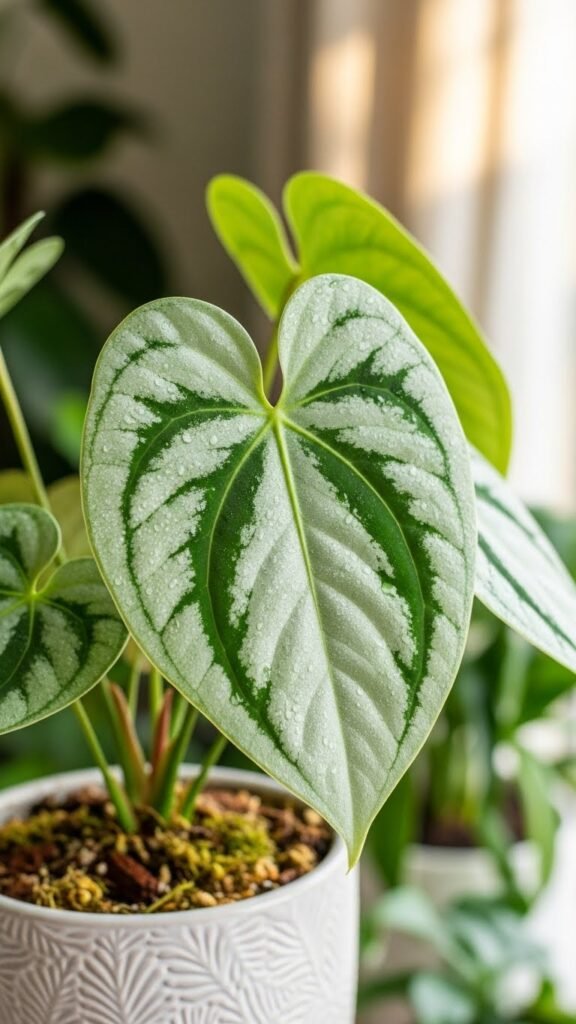
Anthurium Silver Blush is a standout for collectors who want striking, silvery variegation without sacrificing vigor; you’ll notice its heart-shaped leaves dusted with pearly variegation that can shift with light and age. You’ll appreciate straightforward Anthurium care: bright, indirect light, airy mix, and moderate humidity.
Understand Blush genetics to predict variegation stability and select plants that suit your adventurous, free-living home.
Begonia Rex Hybrid
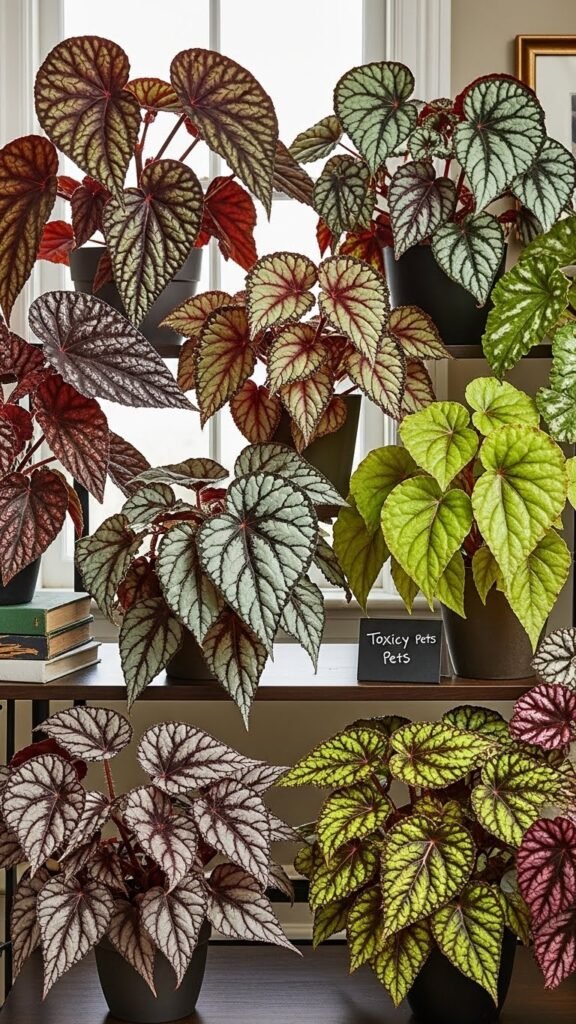
If you want dramatic foliage that becomes the focal point of any room, Begonia Rex hybrids deliver with richly textured leaves, bold patterns, and a spectrum of colors from deep burgundy to silver and chartreuse.
You’ll enjoy diverse color morphs and compact habits that suit shelves or statement stands. Water moderately, provide bright indirect light, and consider pet safety—they’re toxic if ingested, so position them wisely.
Begonia Popular Houseplant Hybrid
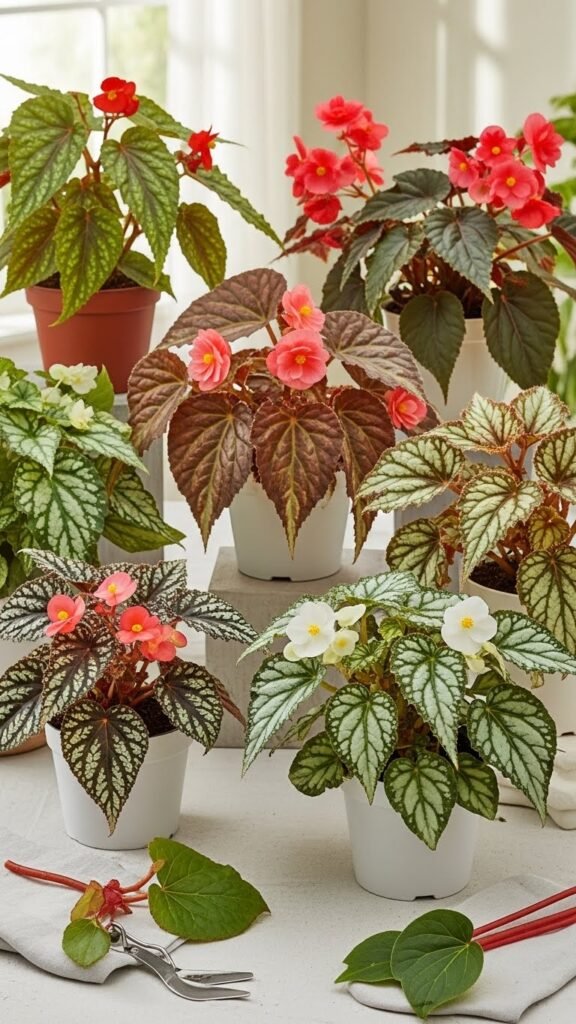
Moving from the dramatic Rex types, you’ll find many popular Begonia houseplant hybrids that prioritize easy care and reliable performance while still offering attractive foliage or flowers.
You’ll choose hybrids for predictable Begonia care, tolerant light preferences, and compact habits. Use straightforward Hybrid propagation—leaf or stem cuttings—to expand your collection.
These hybrids free you to enjoy beauty without fuss.
Philodendron Hybrid Rarity Picks
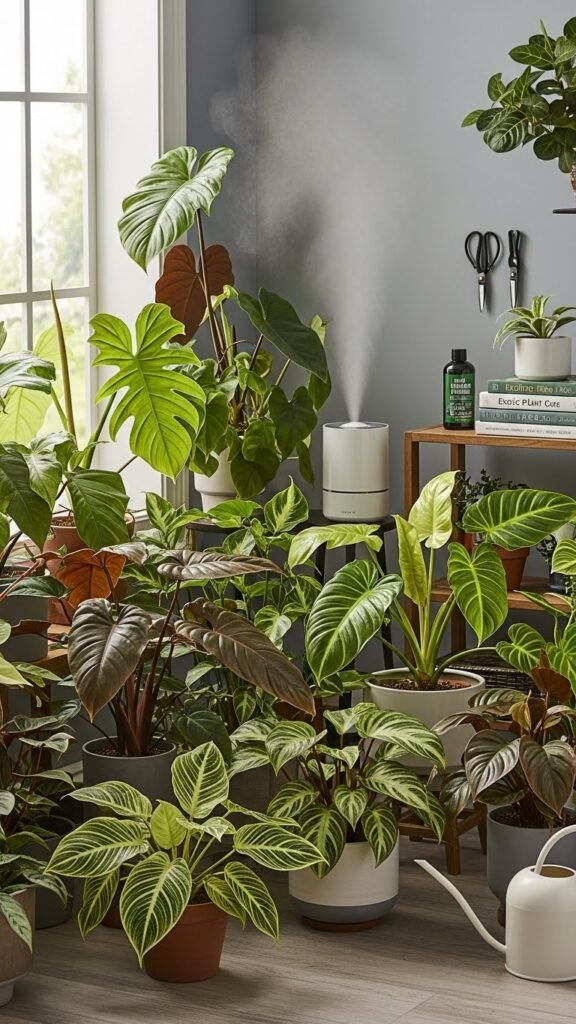
Philodendron hybrids that lean toward rarity offer collectors striking forms and colorations you won’t often see at big-box stores, so you’ll want to plan care and placement deliberately.
You’ll assess hybrid provenance to confirm authenticity, track rarity valuation trends, and choose stable microclimates.
Give bright indirect light, consistent humidity, and measured feeding so each rare philodendron rewards your freedom to style boldly.
Golden Pothos (Epipremnum Aureum)
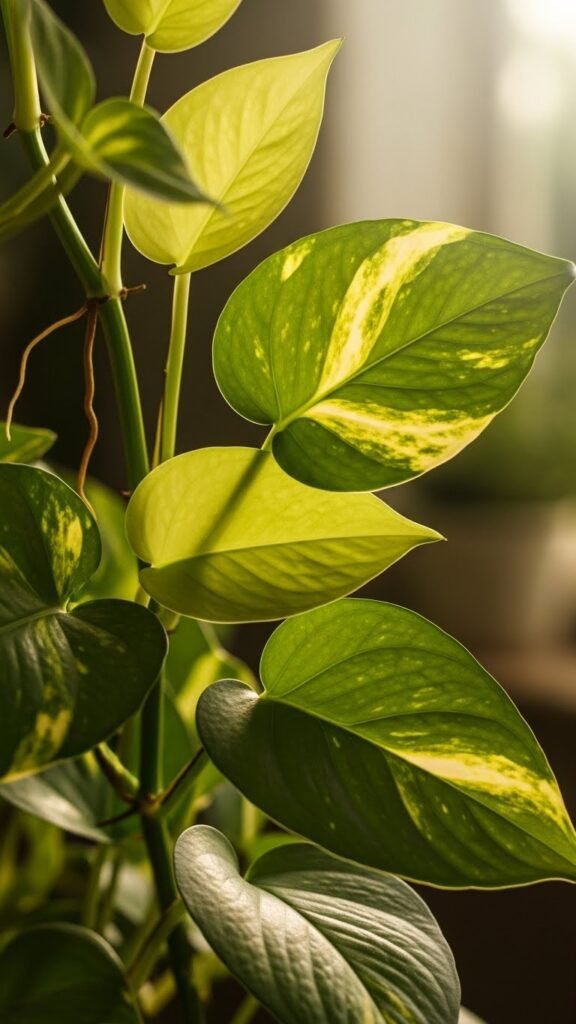
Often overlooked for its ubiity, Golden Pothos (Epipremnum aureum) is one of the most forgiving and versatile houseplants you can keep, thriving in a wide range of light and humidity while rewarding regular, simple care.
You’ll enjoy fast, reliable lightning propagation from stem cuttings; follow basic beginner care: moderate watering, occasional feed, and bright indirect light. It frees your space with resilient, trailing growth.
Marble Queen Pothos
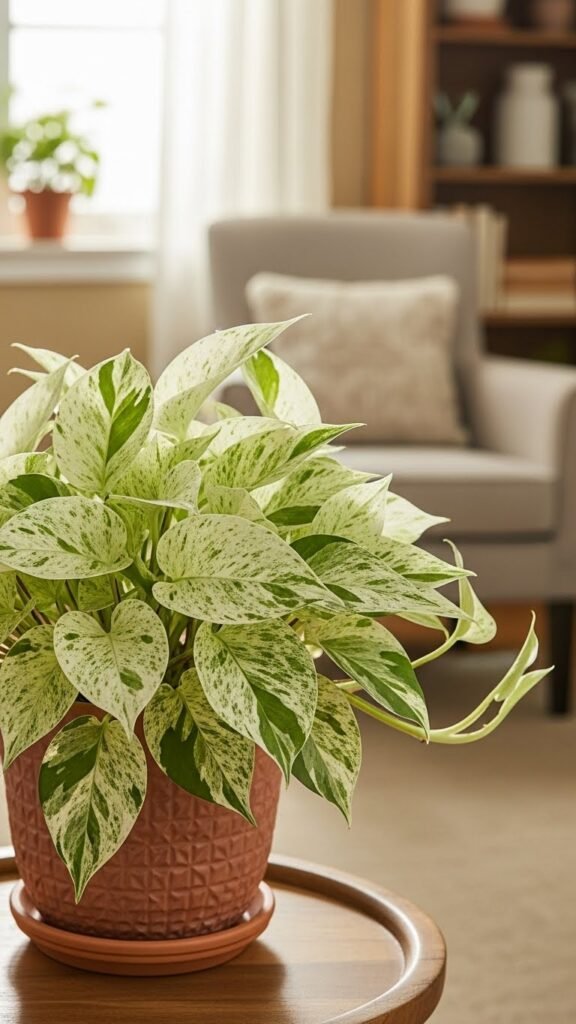
Marble Queen Pothos brightens any room with its striking white-and-green variegated leaves and compact, bushier habit compared with the Golden Pothos.
You’ll love its low light tolerance; follow clear care requirements: moderate watering, well-draining mix, occasional fertilizing.
For freedom-seeking growers, easy propagation techniques—stem cuttings in water or soil—let you expand or share plants quickly and confidently.
Pothos Cebu Blue
Snake Plant (Dracaena Trifasciata)
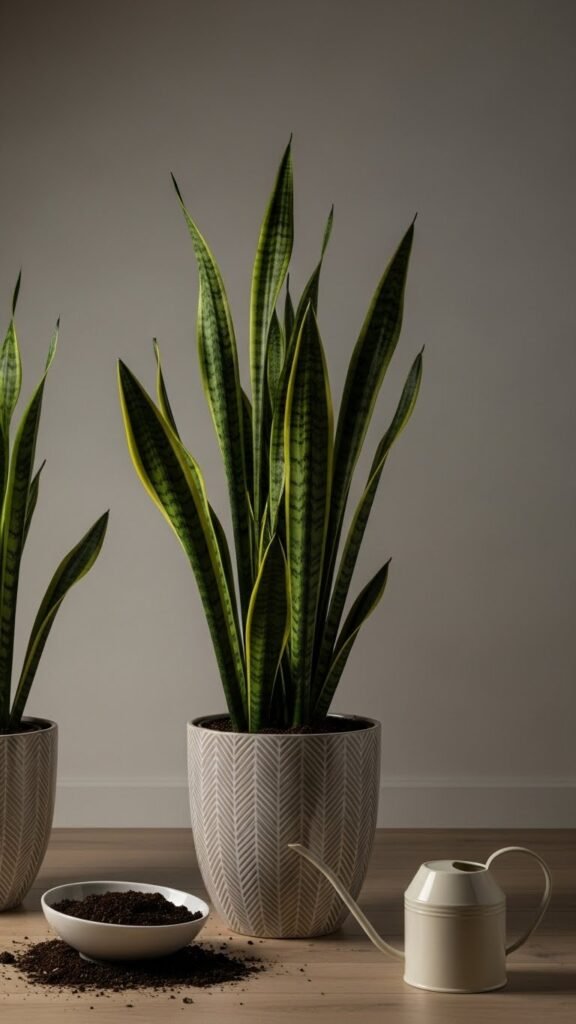
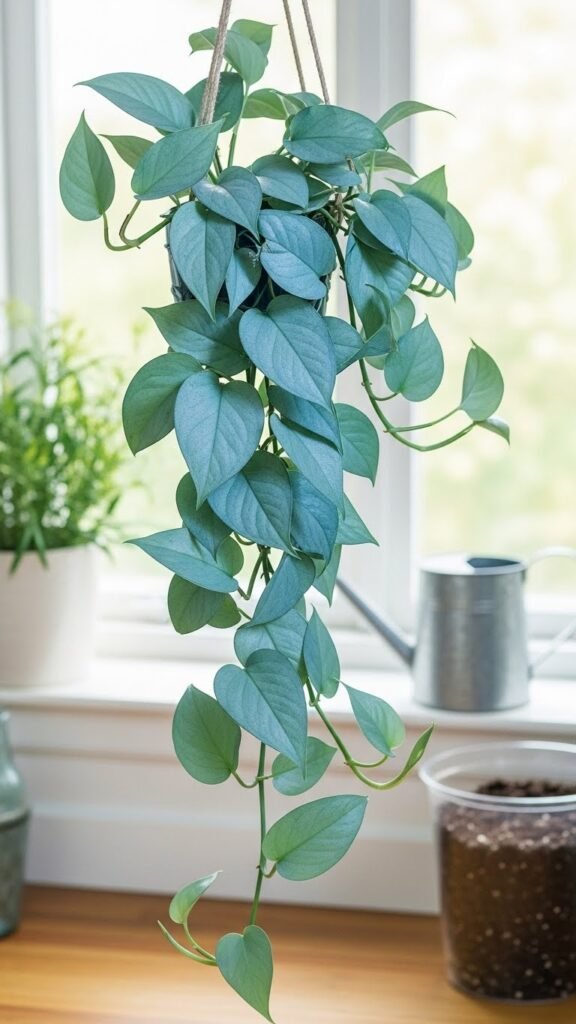
If you loved the low-maintenance appeal of Cebu Blue, you’ll appreciate the Snake Plant (Dracaena trifasciata) for its even tougher tolerance and sculptural form.
You’ll get real air purifying benefits and reliable low light resilience, so placement’s flexible.
Water sparingly, use well-draining soil, and rotate occasionally.
It frees you from constant care while adding bold vertical structure to any room.
ZZ Plant (Zamioculcas Zamiifolia)
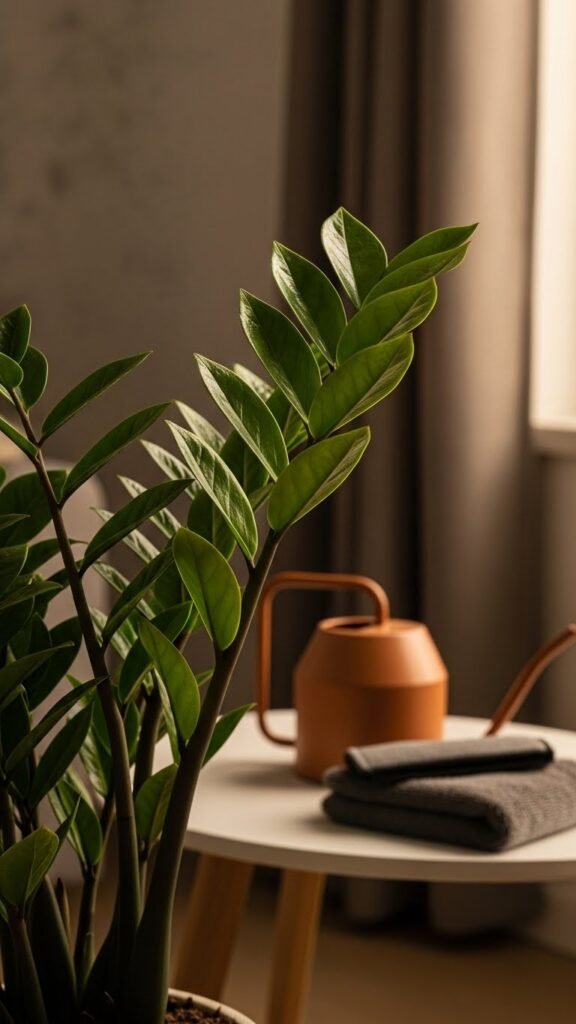
Often overlooked, the ZZ plant (Zamioculcas zamiifolia) is a remarkably tough, low-maintenance houseplant that suits almost any room.
You’ll appreciate its low light tolerance and resilient rhizomes. Place it where you want freedom from fuss; water sparingly, allow soil to dry, and wipe leaves for glossy leafcare.
It rewards minimal effort with sculptural form and lasting presence.
Rubber Plant (Ficus Elastica)
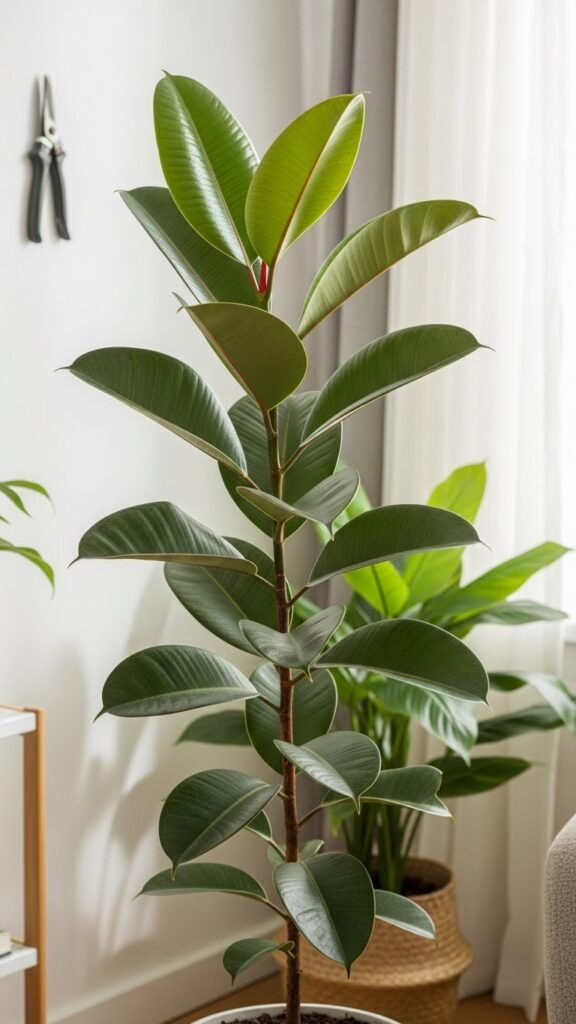
Bring bold, glossy foliage into your space with a rubber plant (Ficus elastica), a statement-making houseplant that’s surprisingly straightforward to care for.
You’ll enjoy air purifying benefits, low-maintenance watering, and adaptable light tolerance. Position it where it can grow tall and prune to control size. Handle sap carefully — latex allergy precautions matter — and you’ll gain freedom with a striking, reliable indoor tree.
Fiddle Leaf Fig (Ficus Lyrata)
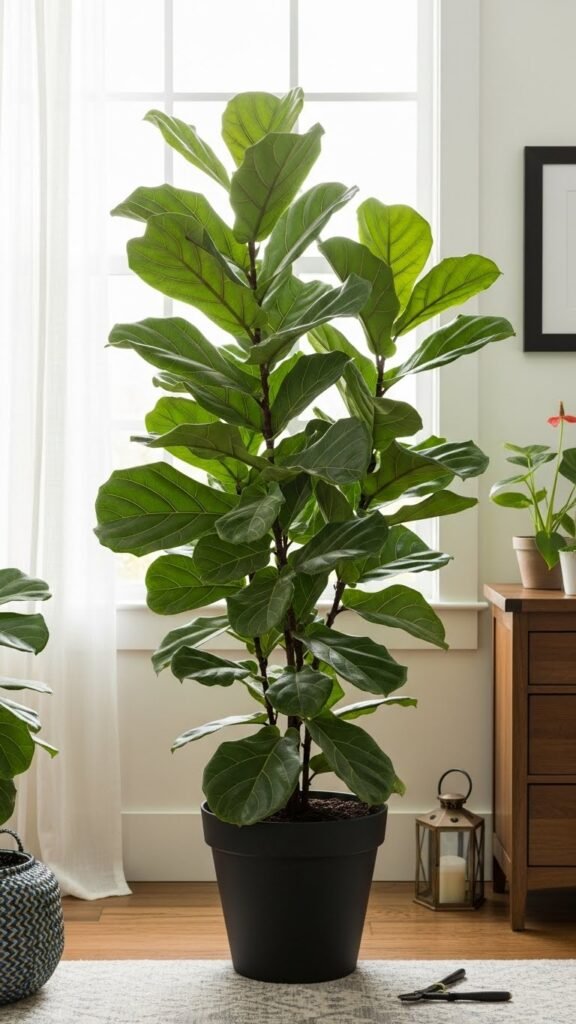
Like the rubber plant, the fiddle leaf fig (Ficus lyrata) makes a dramatic focal point but favors broad, sculptural leaves and a taller, tree-like presence. You’ll position it near bright, filtered light, rotate for even growth, and prune to shape.
I’ll give clear styling tips and growth troubleshooting so you can keep freedom-friendly, bold form without fuss or overcare.
Chain of Hearts (Ceropegia Woodii)
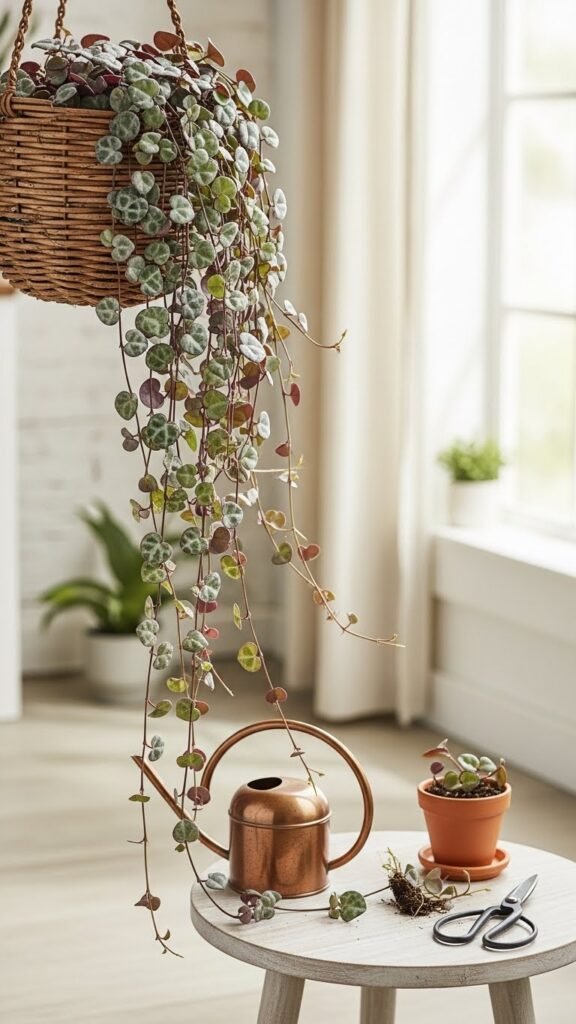
You’ll often spot the Chain of Hearts (Ceropegia woodii) trailing gracefully from hanging baskets or high shelves, its delicate, heart-shaped leaves and wiry stems making it a perfect choice for adding soft, vertical movement without taking up floor space.
You’ll love its easy propagation tips, minimalist hanging display, clear watering schedule (dry between drinks), and bright, indirect light preferences for thriving freedom.
Dischidia Nummularia ‘string of Nickels
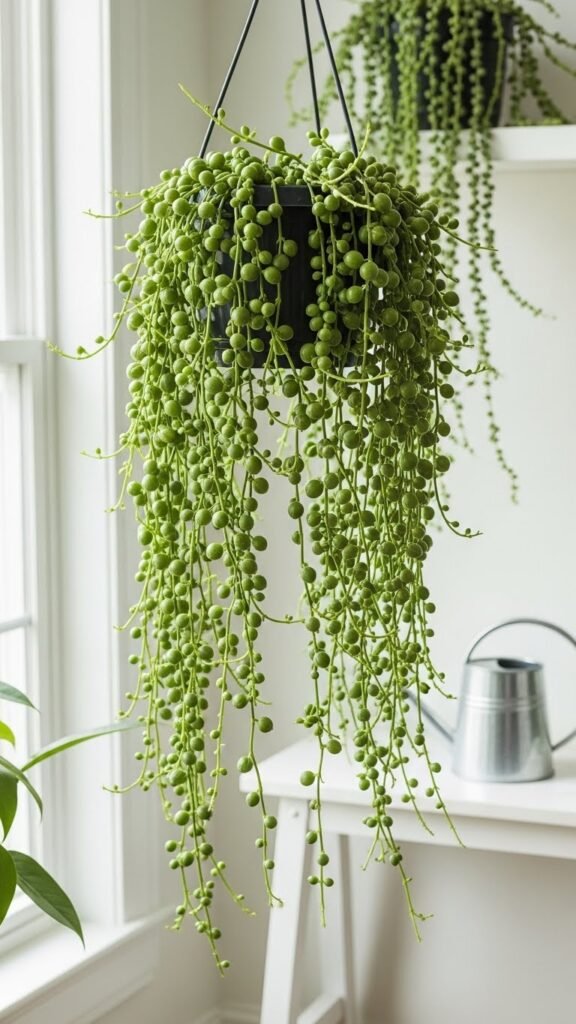
Tuck a String of Nickels (Dischidia nummularia) into a hanging pot or high shelf and watch its coin-like leaves spill over in dense, glossy ropes that brighten any room without demanding much space.
You’ll enjoy simple propagation tips: stem cuttings root quickly in warm, airy mix. Provide bright, indirect light preferences, moderate humidity, minimal watering, and freedom to drape or train it.
Dischidia Ruscifolia ‘Million Hearts
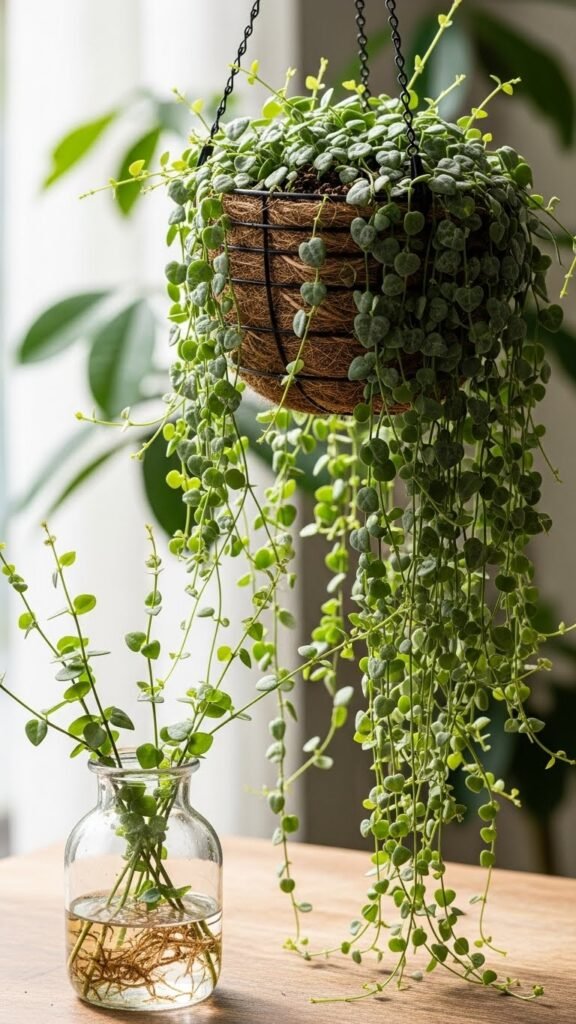
Often admired for its delicate charm, Dischidia ruscifolia ‘Million Hearts’ produces strings of tiny, heart-shaped leaves that cascade beautifully from hanging baskets or shelf edges.
You’ll enjoy easy care requirements: bright, indirect light, well-draining mix, moderate humidity, and careful watering.
For freedom-loving growers, propagation methods are simple—take stem cuttings, root in water or moss, then transplant once roots form.
Hoya Callistophylla
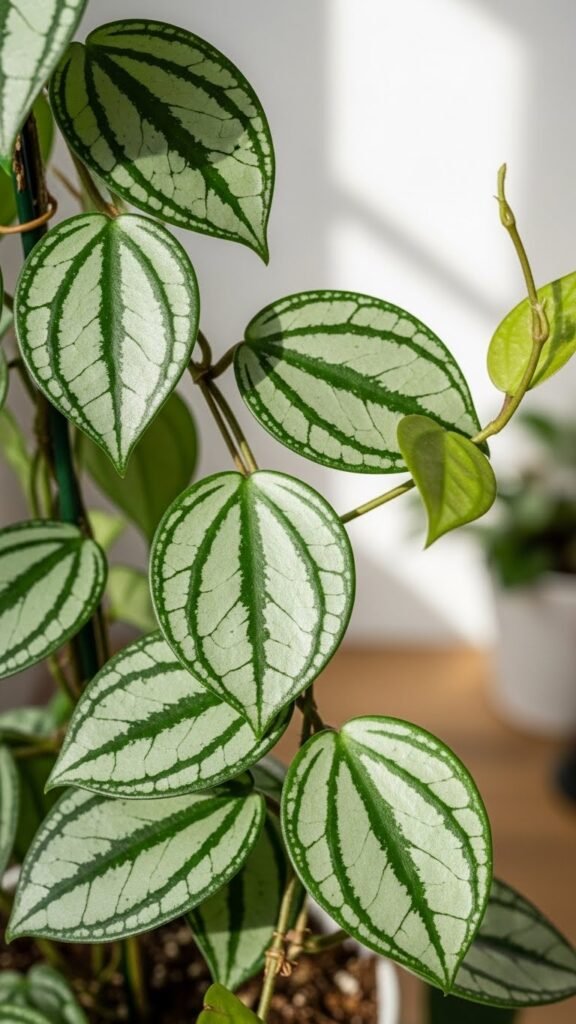
Think of Hoya callistophylla as a sculptural vine prized for glossy, heart- to oval-shaped leaves marked with striking silver venation and occasional raised flecks that catch the light.
You’ll enjoy low-maintenance hoya care: bright indirect light, well-draining mix, and sparse watering.
Its distinctive leaf patterns reward patience, and you’re free to train or let it trail for sculptural impact in any room.
Fittonia (Nerve Plant)
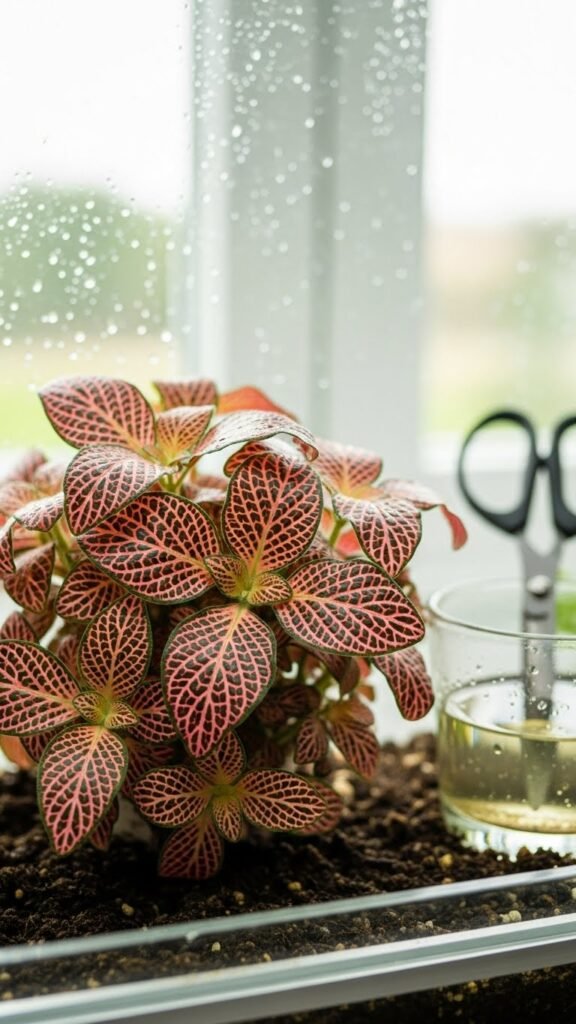
Occasionally dramatic despite its small stature, Fittonia (nerve plant) rewards you with densely veined leaves in pink, white, or red that create instant visual texture on a shelf or terrarium floor.
You’ll appreciate clear care requirements: bright, indirect light, high humidity, evenly moist soil.
For freedom, use simple propagation methods: stem cuttings in water or moist substrate. Trim regularly to maintain compact growth.
Button Fern (Pellaea Rotundifolia)
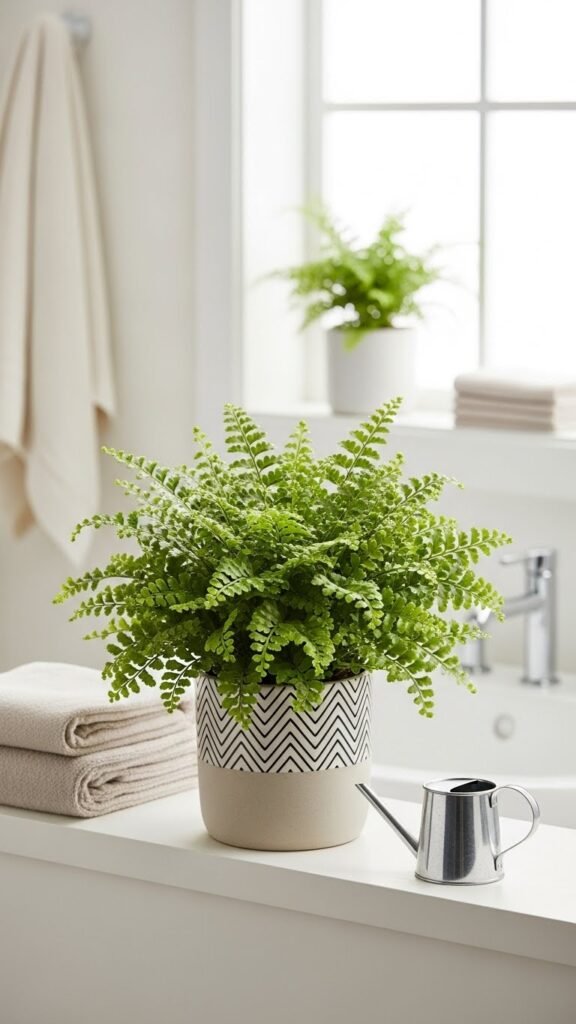
Frequently overlooked for flashier houseplants, the Button Fern (Pellaea rotundifolia) brings tidy, coin-shaped fronds and a compact habit that suit shelves, bathrooms, or small pots.
You’ll appreciate simple button fern care: bright, indirect light, consistent moisture without sogginess, and good drainage. For propagation, use division or careful round leaf propagation techniques. It’s low-maintenance, space-smart, and liberating for busy lifestyles.
Syngonium Mojito
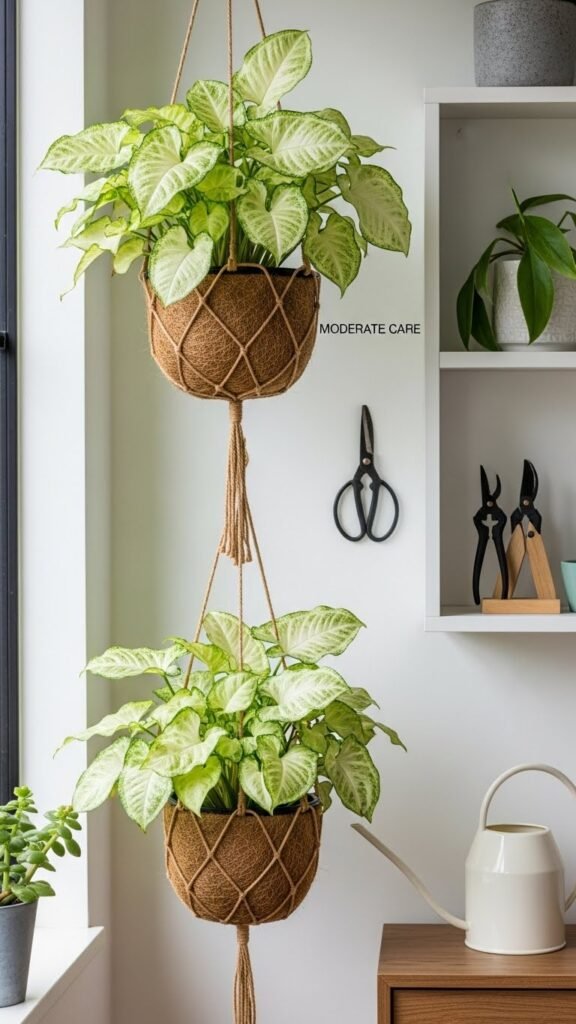
Often admired for its fresh, variegated foliage, Syngonium ‘Mojito’ adds a bright, modern touch to shelves, hanging baskets, or compact corners.
You’ll appreciate its adaptable growth and clear instructions for compact care: bright, indirect light, moderate watering, and occasional pruning. Watch variegation patterns shift with light; move the plant to refine contrast.
It rewards you with low-maintenance style and swift, controlled growth.
Peace Lily (Spathiphyllum)
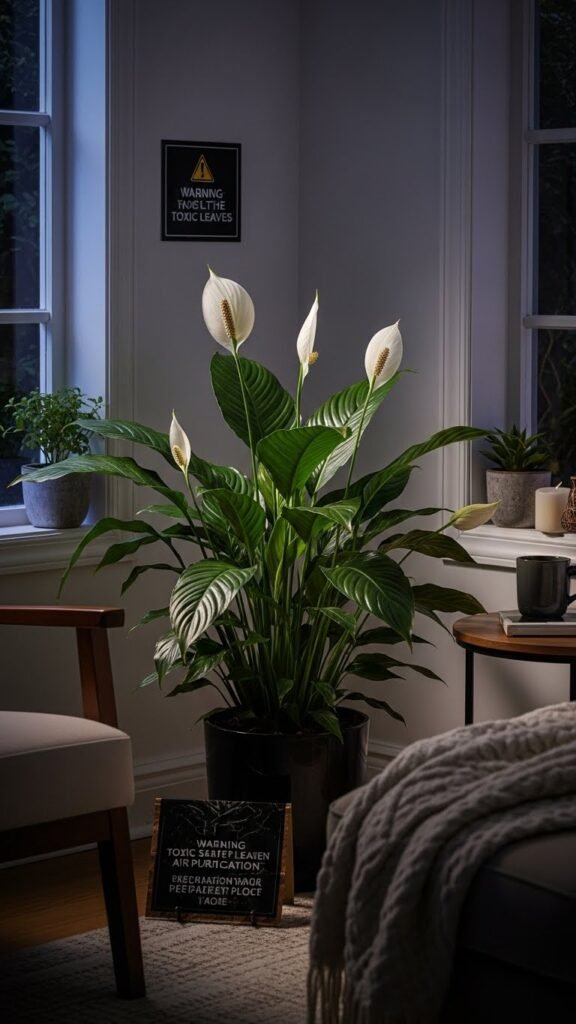
Usually appreciated for its glossy, dark leaves and elegant white spathes, the Peace Lily (Spathiphyllum) brings calm and air-purifying benefits to indoor spaces while staying surprisingly easy to care for.
You’ll enjoy low light tolerance, clear guidance on pet safety since leaves are toxic, and straightforward watering attuned to humidity preferences. Place it where you can relax and breathe cleaner air.
Bird’s Nest Fern (Asplenium Nidus)
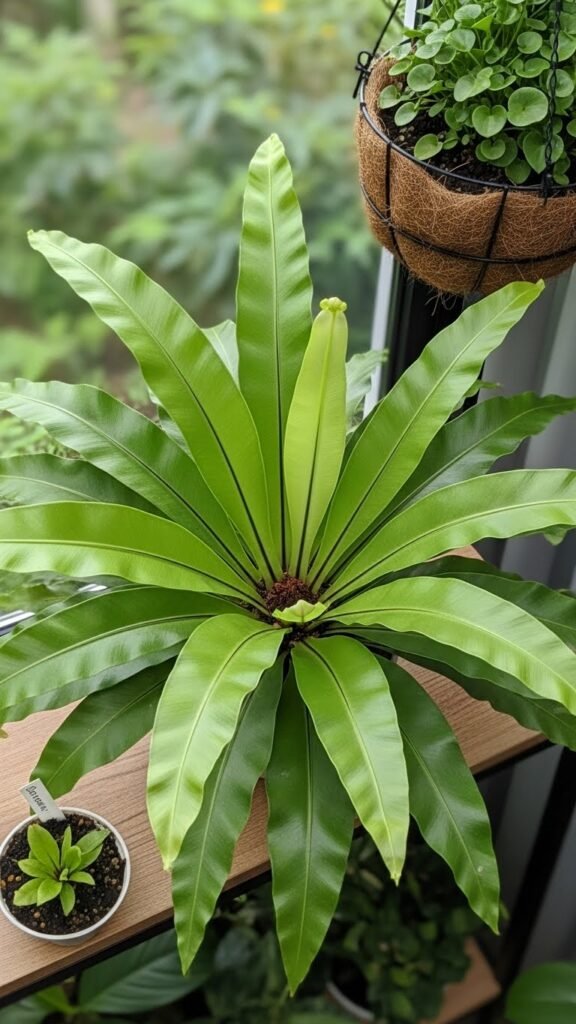
Bring a touch of tropical lushness to your home with the Bird’s Nest Fern (Asplenium nidus), which unfurls broad, glossy fronds in a tidy rosette that suits shelves, hanging baskets, or shaded corners.
You’ll give moderate, indirect light, high humidity, and epiphytic care when mounting. Water evenly, avoid soggy roots, and try frond propagation by dividing offsets to expand your liberating indoor jungle.