
You’ll recognize resort character in the silhouettes, textures, and growth habits of palms, and you’ll judge species by canopy shape, trunk form, leaf architecture, and site tolerance. This list profiles 23 varieties—from architectural Foxtail and Majesty to shade‑tolerant Areca and Kentia—so you can match palm biomechanics to landscape intent, whether screening, focal point, or understory layer. Keep going to see which palms fit your microclimate.
Foxtail Palm

Often overlooked in temperate landscapes, the foxtail palm (Wodyetia bifurcata) delivers a compact, architectural silhouette you’ll immediately recognize by its full, plume-like fronds and smooth, ringed trunk.
You’ll value its high drought tolerance and predictable growth rate. Place it where it gets bright light; you can attempt indoor cultivation with supplemental light and strict drainage, keeping roots aerated and soil fast-draining.
Areca (Butterfly) Palm
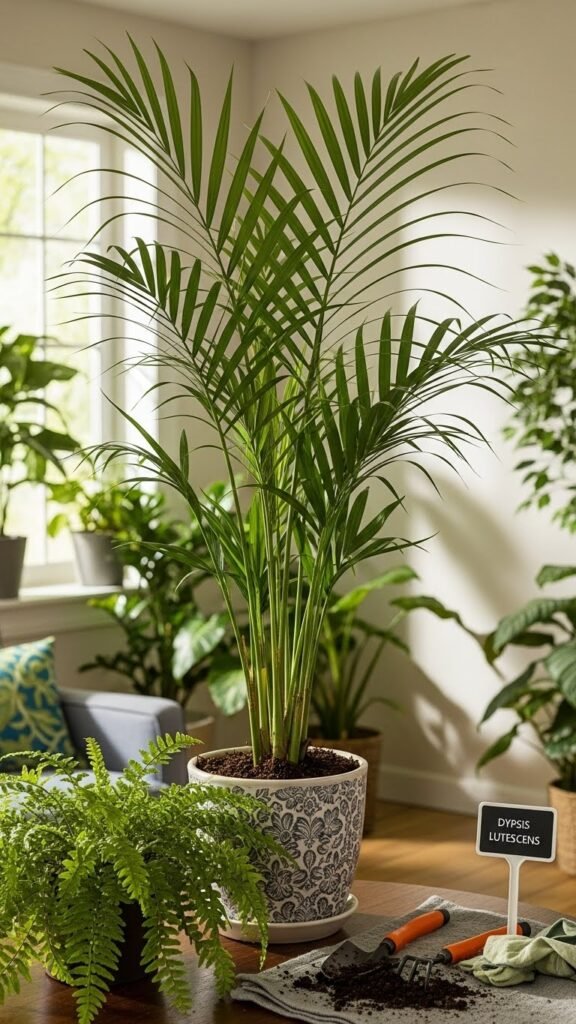
Frequently prized for its graceful, arching fronds and clustered, cane-like stems, the Areca (Dypsis lutescens) — commonly called the butterfly palm — performs reliably as a screenscape and indoor specimen; it tolerates partial shade, prefers evenly moist, well-drained soil, and responds well to regular feeding and moderate humidity.
You’ll manage container care precisely, monitor rootbound status, and use division for indoor propagation to retain vigor and mobility.
Royal Palm
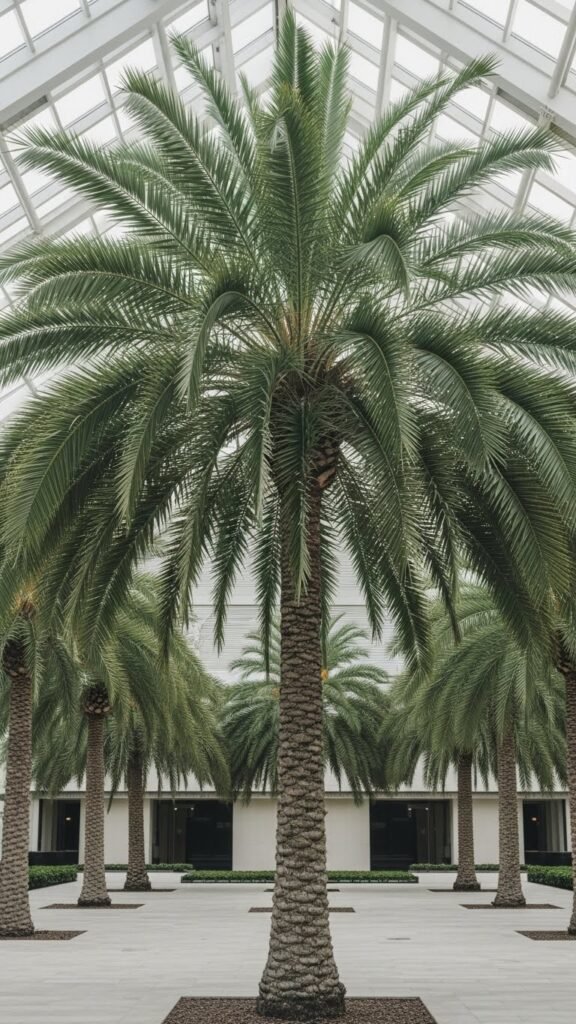
Majesty suits the Royal Palm (Roystonea spp.), a columnar species valued for its tall, smooth gray trunk, clean crownshaft, and symmetrical canopy of pinnate fronds that create strong vertical and formal accents in landscapes and large interiors.
You’ll use it as a definitive specimen: its presence signals landscape symbolism of order and freedom, provides shade, aids urban heat mitigation, and demands structured spacing and maintenance.
Canary Island Date Palm
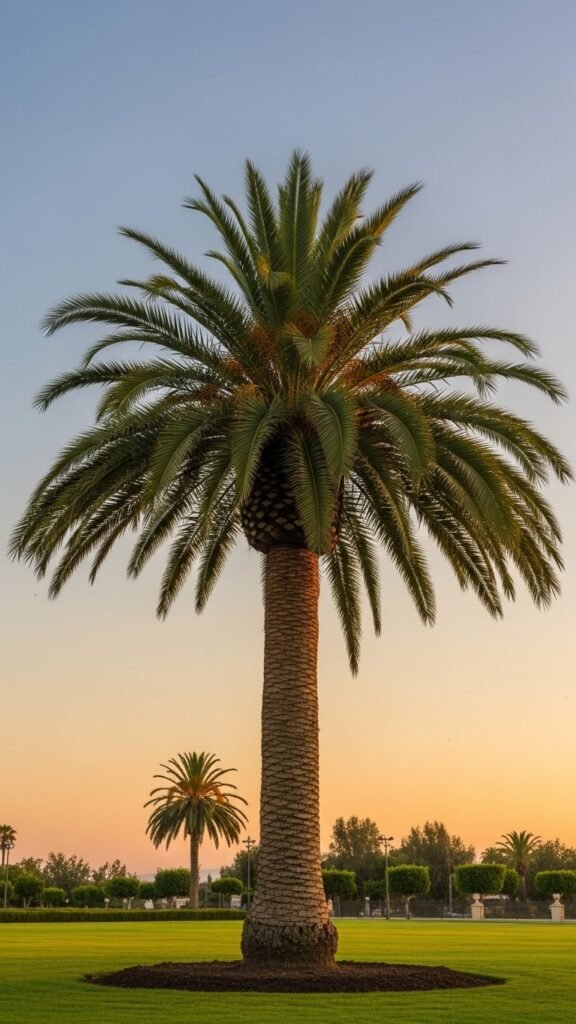
You’ll recognize the Canary Island Date Palm (Phoenix canariensis) by its massive, stout trunk and dense crown of rigid pinnate fronds that form a broad, domed silhouette; it functions as a monumental specimen in formal plantings and large landscapes.
You’ll value its sunset silhouette for dramatic composition, but plan rootball care meticulously during transplanting, ensuring intact soil, stable anchorage, and controlled irrigation for unrestricted, long-term establishment.
Pindo Palm
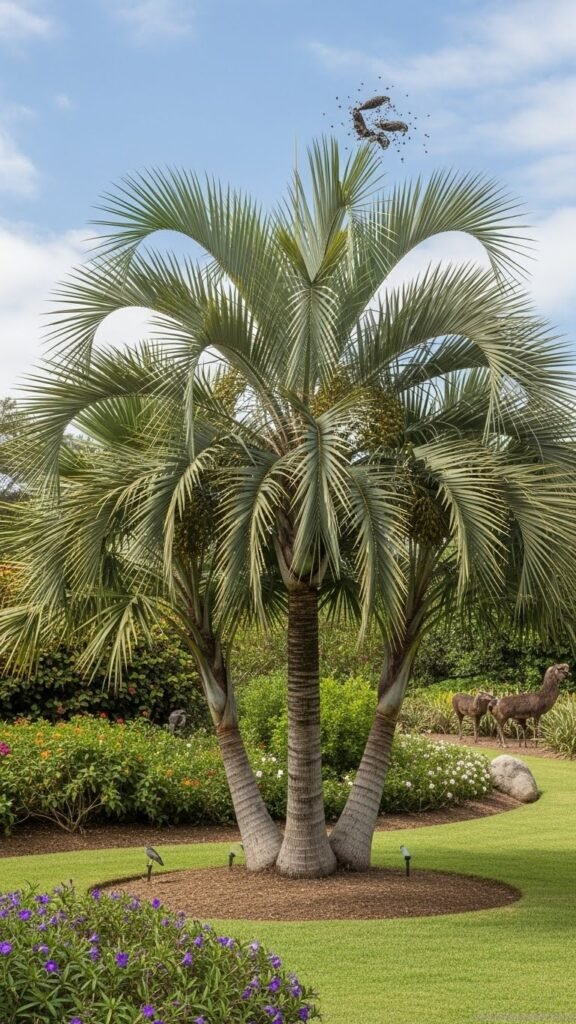
Turn to the Pindo Palm (Butia capitata) when you want a cold-hardy, clump-forming palm with a tidy, arching crown of bluish-green pinnate fronds and stout, fibrous trunks. You’ll appreciate its measured cold tolerance, compact habit, and low-maintenance requirements.
Monitor soil drainage and light exposure for consistent growth. Expect notable fruit production that attracts wildlife and offers ornamental value without demanding intensive care.
Christmas Palm
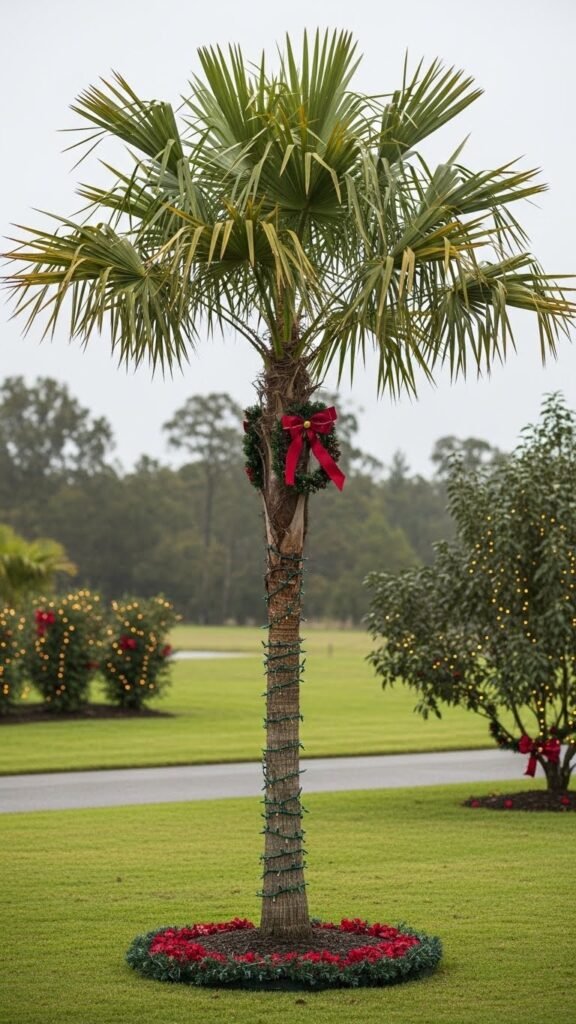
If you liked the Pindo’s wildlife-attracting fruit and tidy habit, consider the Christmas Palm (Adonidia merrillii) for its compact, single-trunk form and predictable seasonal display.
You’ll appreciate its strict canopy geometry, consistent fruiting schedule, and tolerance for pruning. Use it as focal planting, support discrete holiday lighting, and integrate seasonal décor without obscuring structure—maintaining clean lines while freeing your landscape for relaxed use.
Sabal Palm
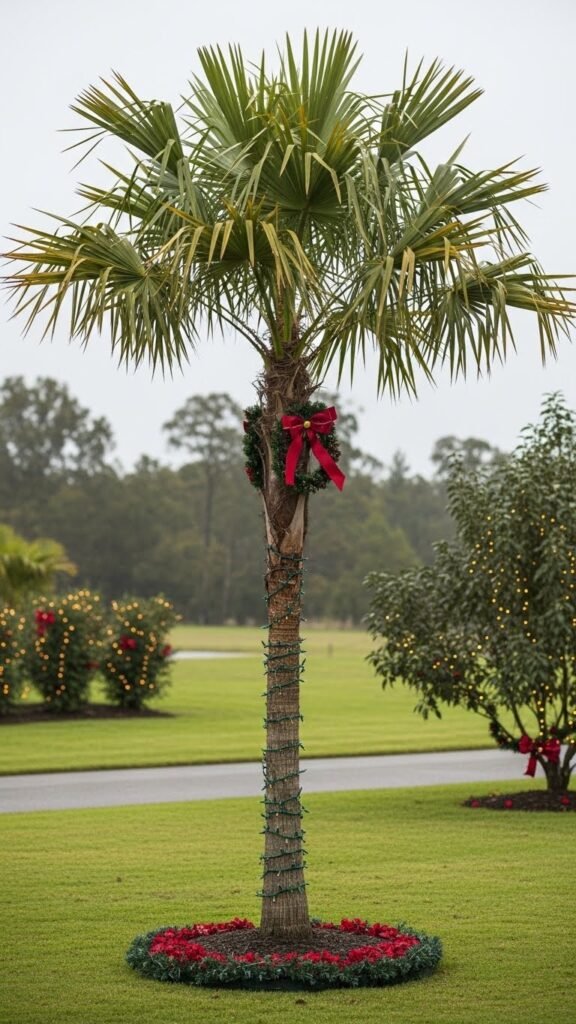
Durability defines the Sabal palm (Sabal spp.), a clump- or single-trunk genus prized for its fan-shaped fronds and rugged, salt-tolerant physiology. You’ll appreciate its low-maintenance habit and clear growth metrics: predictable trunk diameter, canopy spread, and flowering cycles.
For sabal palm conservation and sabal palm propagation, follow seed-bank protocols, measured transplant techniques, and habitat protection to keep populations resilient and freely thriving.
Pygmy Date Palm
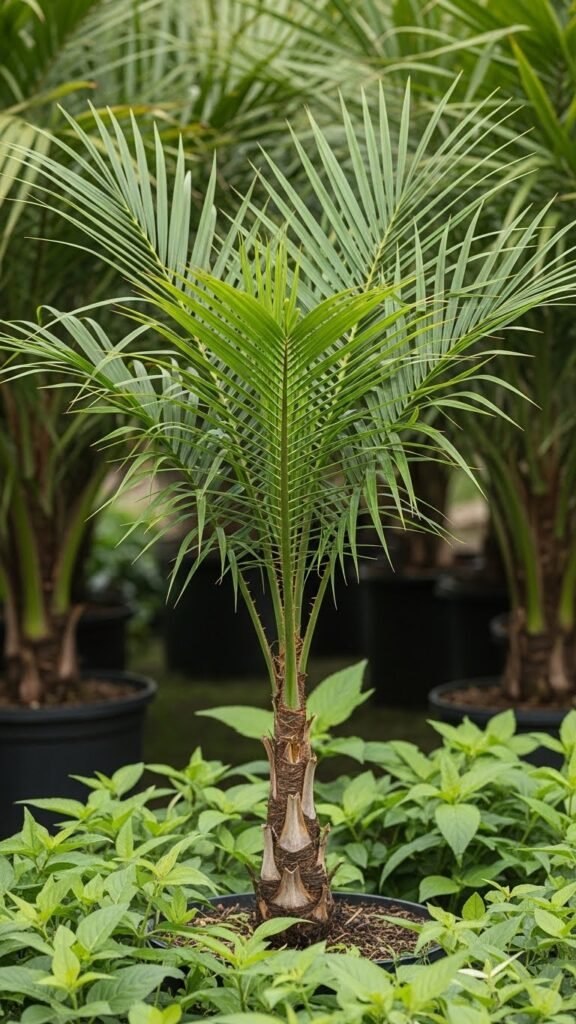
Frequently prized for its compact stature and reliable form, the Pygmy Date Palm (Phoenix roebelenii) presents a graceful, single or clustered trunk topped with finely pinnate fronds that rarely exceed 6–10 feet in mature height.
You’ll favor its predictable architecture for dwarf propagation experiments and container cultivation; you’ll monitor light, drainage, and juvenile spacing precisely to maintain health and the liberated aesthetics you want.
Bismarck Palm
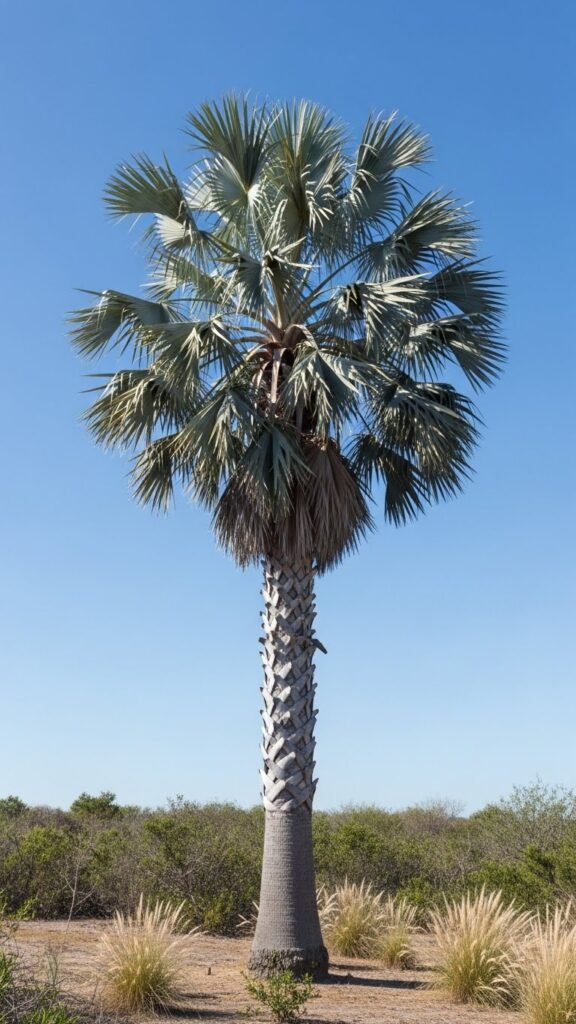
Moving from the compact form of the Pygmy Date, you’ll notice the Bismarck Palm (Bismarckia nobilis) commands attention with a massive solitary trunk and broad, stiff, fan-shaped fronds that can span up to 18 feet.
You’ll appreciate the blue gray foliage and distinctive silver trunk; its slow growth rewards patience, while exceptional wind tolerance suits open, liberating landscapes where you want bold, low-maintenance structure.
Lipstick Palm

Often overlooked in mixed-species plantings, the Lipstick Palm (Cyrtostachys renda) stands out for its vivid scarlet crownshaft and petioles that contrast sharply with glossy, pinnate fronds.
You’ll appreciate its red trunk as a measured focal point; compact growth lets you place it near pathways or courtyards. It demands high humidity, consistent moisture, and light filtering for peak coloration.
Purple Palm
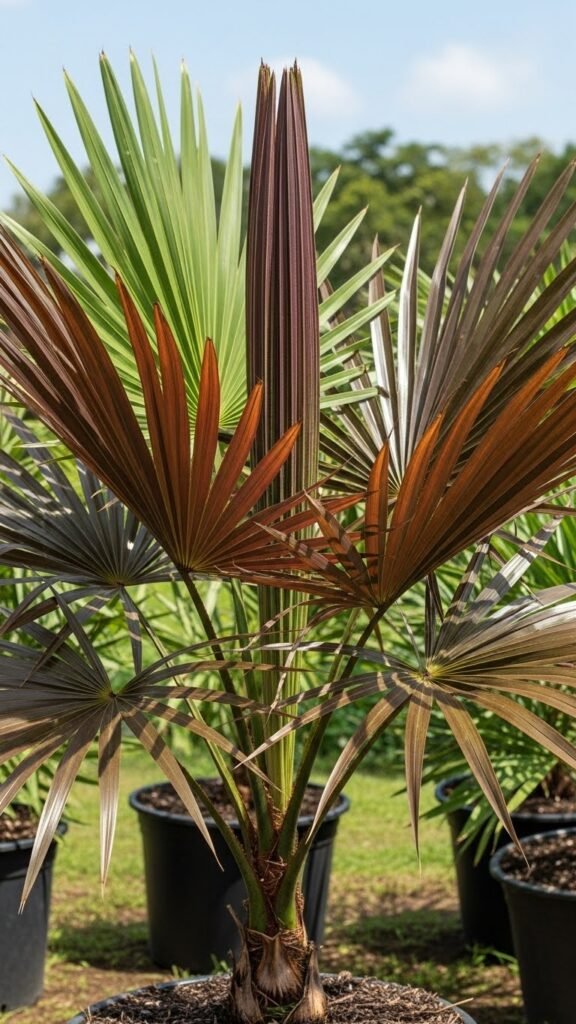
Rarely subtle, the Purple Palm (e.g., Roystonea purpurea and certain Syagrus hybrids) grabs attention with deep violet to burgundy new fronds that mature to green while leaving a persistent purple sheath at the crown.
You’ll assess growth rates, monitor light and nutrient regimes, apply purple palm propagation tips precisely, and adapt purple palm container care for freedom-seeking landscapes, ensuring vigor without constraint.
King Palm
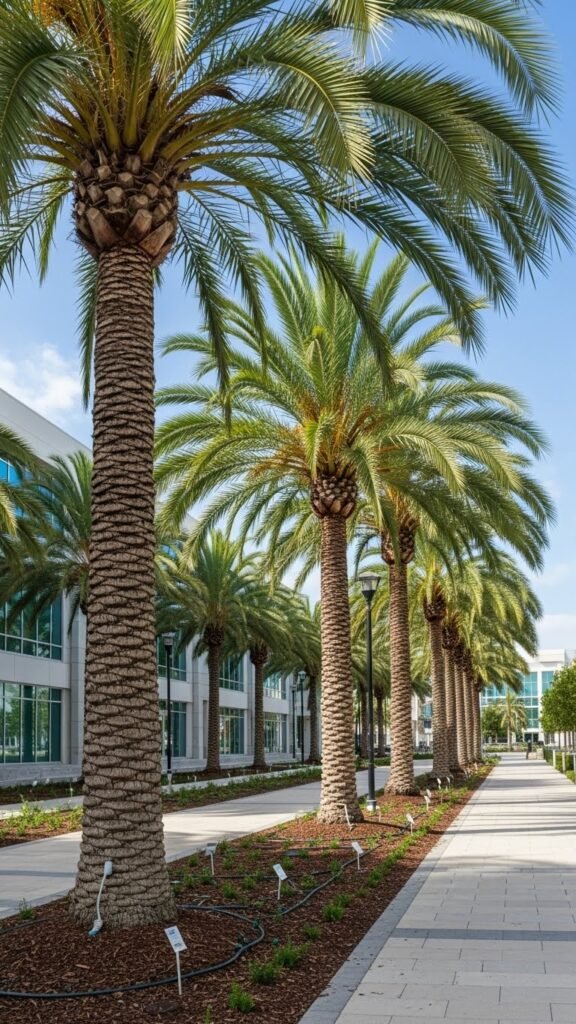
Although you’ll notice its graceful, ringed trunk and feather-like fronds at first glance, the King Palm (Archontophoenix cunninghamiana and hybrids) earns its name through uniform height growth, predictable canopy architecture, and consistent cultural responses.
You’ll select it for streamlined urban landscaping; you’ll manage irrigation, nutrient schedules, and targeted disease management to preserve form, support clear sightlines, and maintain a liberated, orderly landscape.
Queen Palm
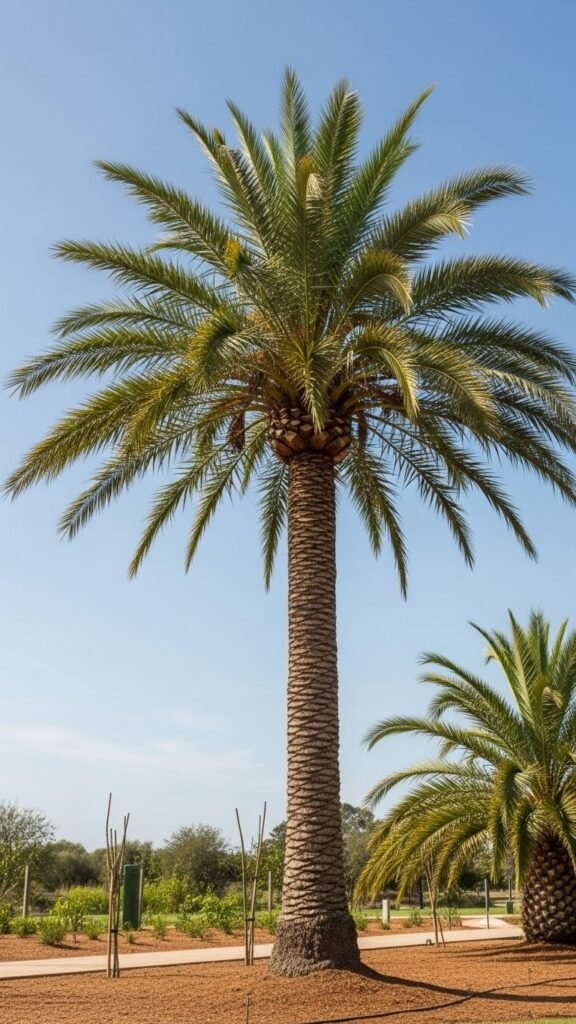
Where the King Palm offers orderly uniformity, the Queen Palm (Syagrus romanzoffiana) brings a taller, more feathery silhouette and a faster growth rhythm you can exploit for rapid canopy establishment. You’ll place it for vertical emphasis and quick screening; consider soil drainage, wind exposure, and landscape placement metrics.
Its graceful crown evokes antique palm lore, yet you’ll manage pruning and spacing with strict, efficient protocols.
Coconut Palm
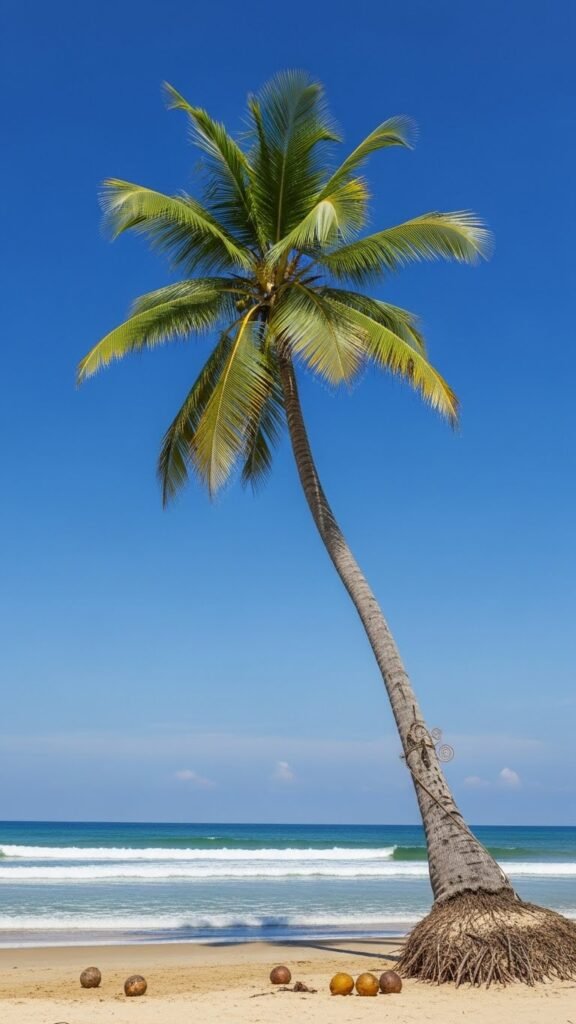
A single leaning trunk instantly signals the Coconut Palm (Cocos nucifera): you’ll use it where beachfront authenticity and functional canopy are priorities. You’ll value its salt tolerance and root architecture for mitigating beach erosion.
Observe crownshaft dimensions, nut production and documented coconut propagation techniques. Technical notes reference windthrow thresholds, soil salinity limits and cultural roles in tropical folklore, letting you plan resilient, liberated coastal designs.
Kentia Palm
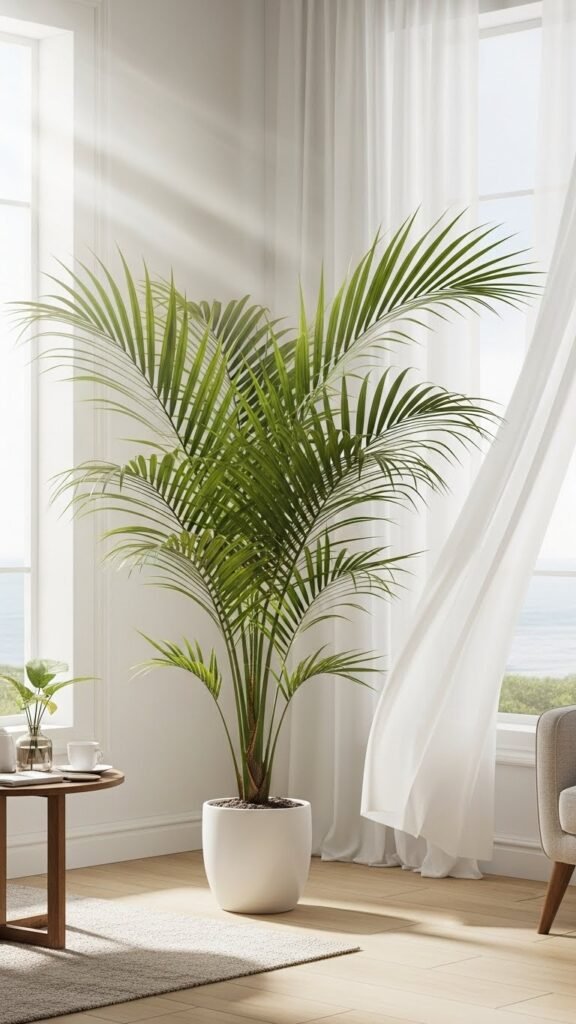
Often prized for its graceful, arching fronds, the Kentia Palm (Howea forsteriana) performs exceptionally well in sheltered coastal and inland settings where moderate wind and shaded light are common.
You’ll appreciate its tolerance for constrained spaces; indoor propagation requires sterile technique and patience. Follow strict watering, humidity, and substrate regimes—slow growth care emphasizes stability over stimulation so the specimen develops durable structure and elegant form.
Majesty Palm

You’ll usually notice the Majesty Palm (Ravenea rivularis) for its tall, arching fronds and distinctly graceful silhouette that suits large rooms or entryways.
You’ll assess light, humidity and soil to optimize indoor care, avoiding overwatering.
Expect slow growth; patience rewards proportionate trunk development and polished frond architecture.
You’ll position it where movement and air circulation reinforce a liberated, spacious interior aesthetic.
Windmill Palm
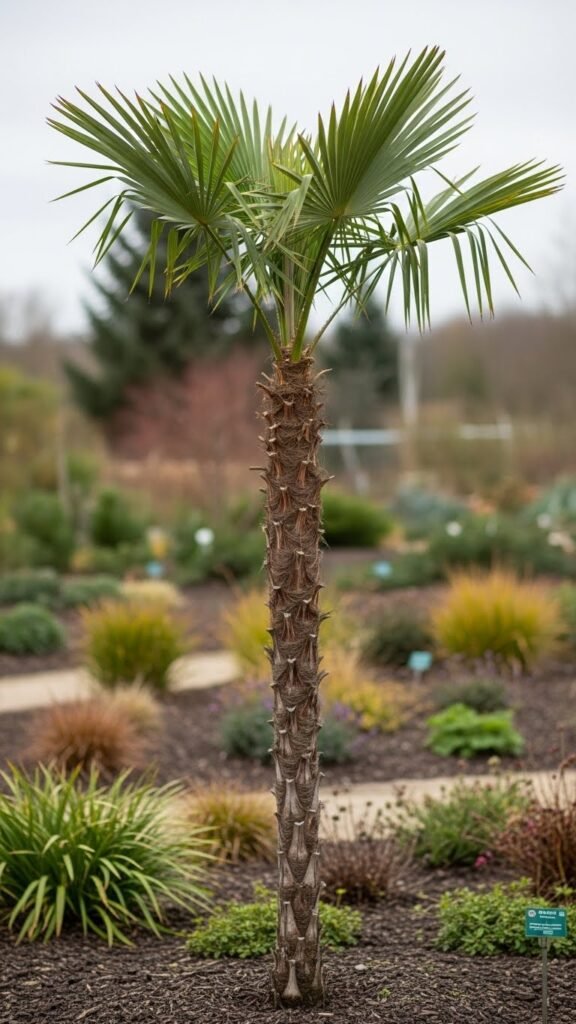
Where the European Fan Palm offers a compact, clumping silhouette and stiff, damage-resistant fronds, the Windmill Palm (Trachycarpus fortunei) presents a single-trunk habit with a slender, fibrous stem and a crown of palmate leaves that tolerate cold through dormancy physiology rather than sheer tissue hardness.
You’ll appreciate its predictable growth rate, straightforward container cultivation, and documented cold tolerance for liberated landscape design.
Kentopsis Palm
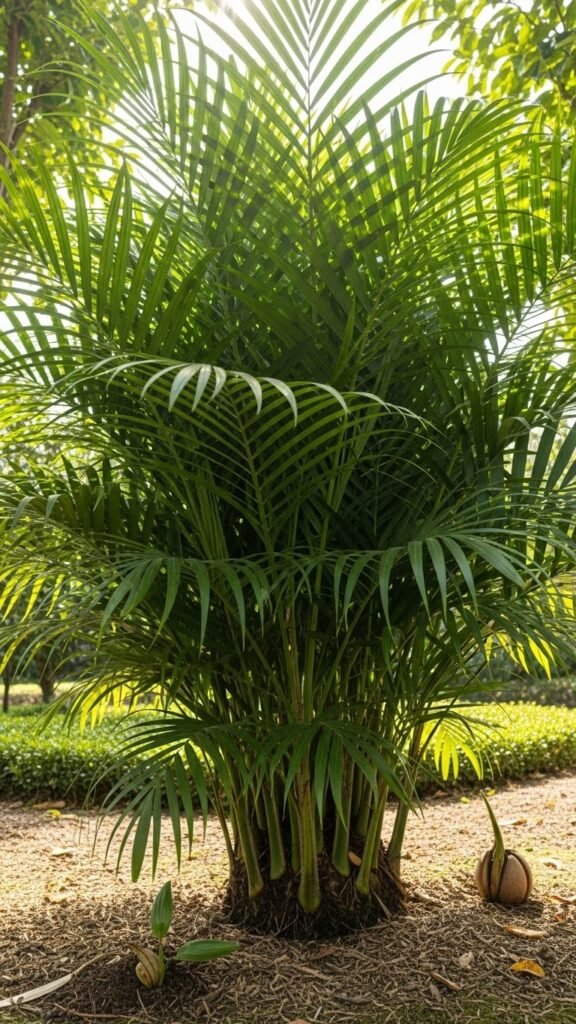
Look closely and you’ll notice Kentopsis palms combine a dense, multi-stemmed crown of pinnate fronds with a stout, short trunk that gives them a compact, sculptural profile suited to tight landscapes.
You’ll assess kentopsis light requirements precisely — bright, filtered sun — and plan kentopsis propagation via seed or sucker division. You’ll position specimens for airflow and ease of maintenance, maximizing liberty in design.
Malayan Palm
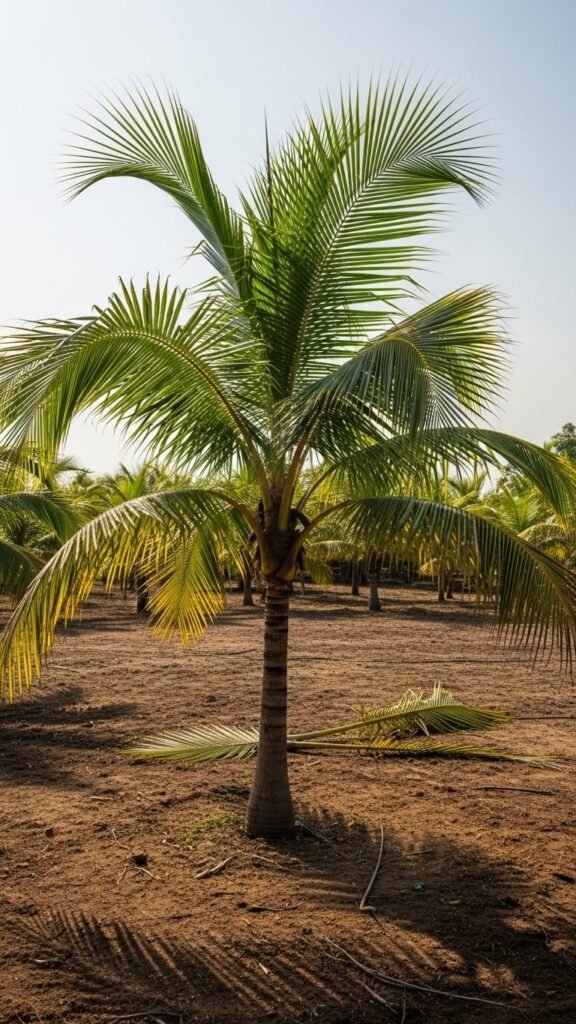
Introduce the Malayan palm as a slender, solitary-stemmed species prized for its tall, graceful silhouette and pinnate fronds that cast narrow, textured shade.
You’ll appreciate its straightforward soil preferences — well-drained, slightly acidic loam — and predictable growth rate under consistent moisture and light.
Maintain minimal interference; prune sparingly and let its erect form define open, liberating spaces.
Caranday Palm
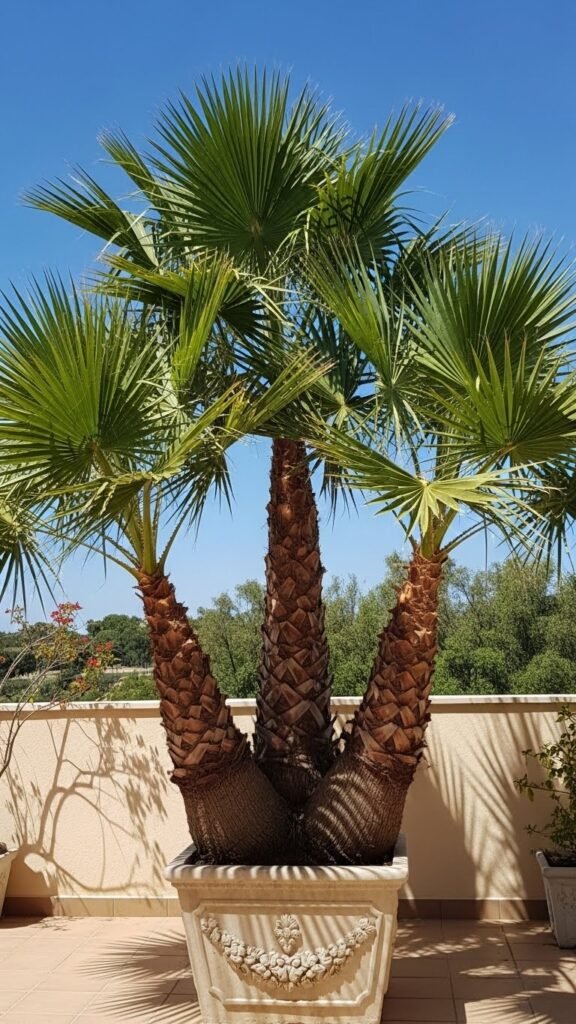
Moving from the Malayan’s slender, upright profile, the Caranday palm presents a markedly different habit: a stout, clustering trunk structure topped with rigid, fan-shaped fronds that create a broader, more architectural crown.
You’ll appreciate its documented drought tolerance and adaptability; you’re able to employ container cultivation for mobility, precise root control, and liberated placement in patios or terraces where wind and sun exposure vary.