
You can shape your outdoor space to match how you live and where you live, using plant choices, hardscape lines, and simple composition rules to set mood and function. From tight formal beds to loose prairie mixes, each style balances structure, materials, and maintenance so the garden performs for you. Pick a few priorities—seasonal interest, low water, pollinators, or edibles—and you’ll know which styles deserve a closer look.
Formal Classic Garden
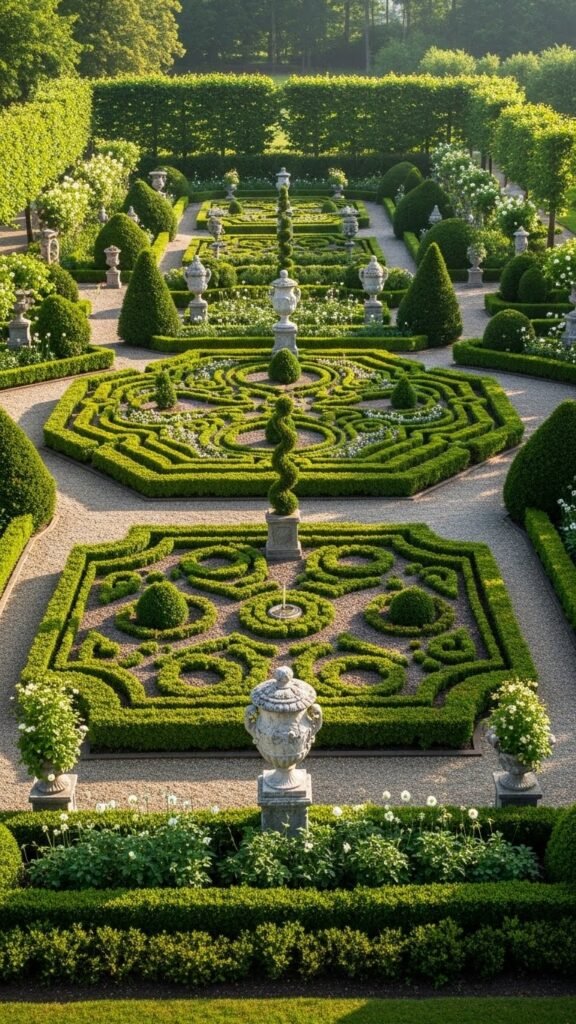
When you work with a Formal Classic garden, you’ll focus on symmetry, clear geometry, and restrained plant palettes that highlight structure and repeatability.
You’ll lay out symmetry pathways that guide movement, choose evergreen specimens for rhythm, and use clipped hedging to define rooms. You’ll balance focal urns and parterres, prioritize proportion over ornament, and plant for long-term clarity and manageable maintenance.
Cottage English Garden
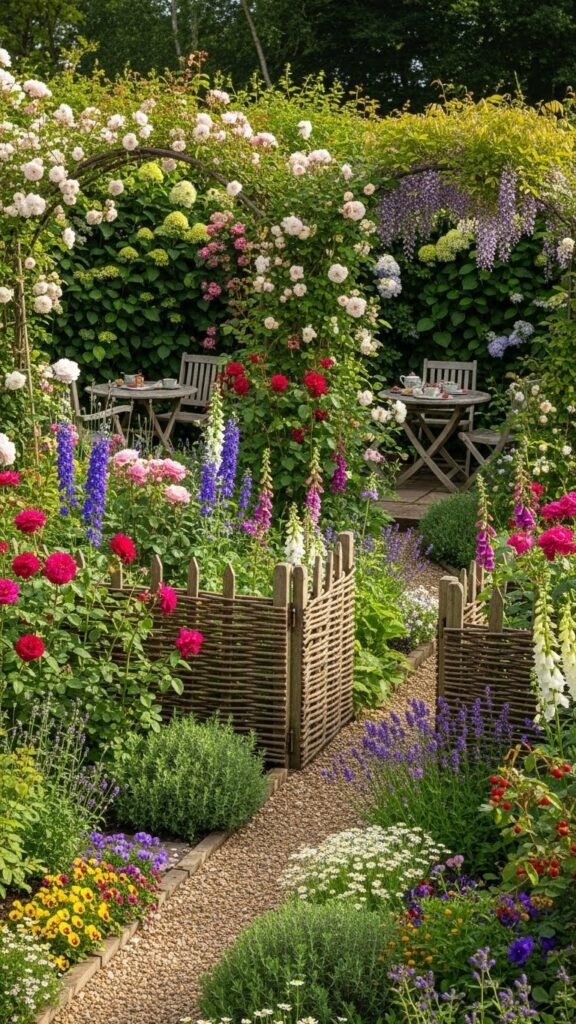
Often you’ll layer exuberant, informal planting into a compact plan that feels spontaneous but is carefully composed. You’ll favor heirloom roses and mixed perennials for scent and sequence, tuck tea corners beneath climbing vines, and edge meandering paths with herbs and cottage favorites.
Use woven picketwork fences and staggered heights to create intimate rooms, encouraging relaxed wandering and easy seasonal change.
Mediterranean Drought-Tolerant Garden
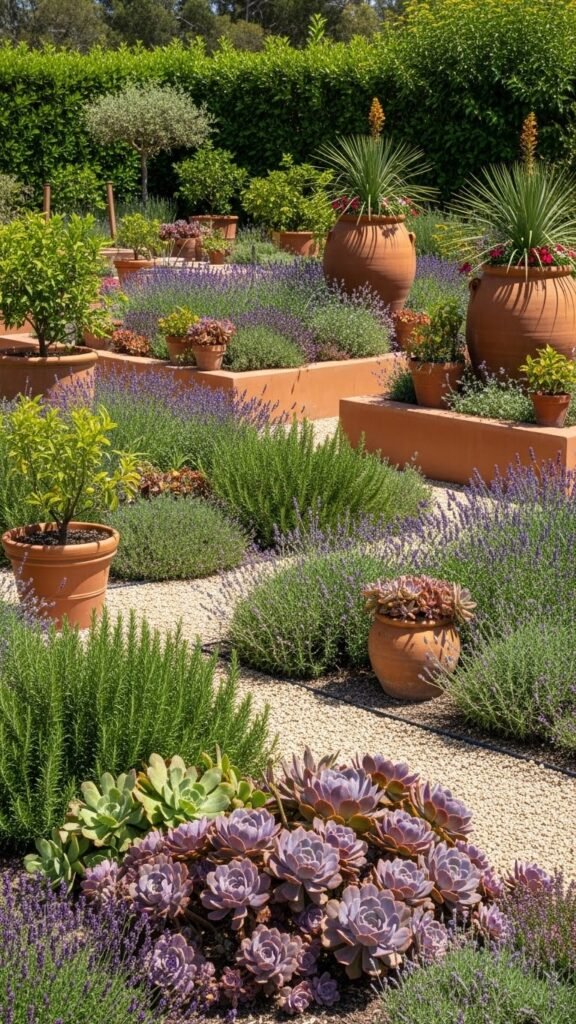
Because Mediterranean gardens thrive on low water and high impact, you’ll plan around hardy, sun-loving plants and smart soil management.
Choose low water succulents, aromatic herbs and drought-tolerant shrubs for layered texture.
Use terracotta microclimates—pots, walls and gravel—to concentrate heat and cut irrigation.
Compose bold groupings, gravel paths and focal pots so maintenance stays minimal and your outdoor space feels free and purposeful.
Japanese Zen Garden
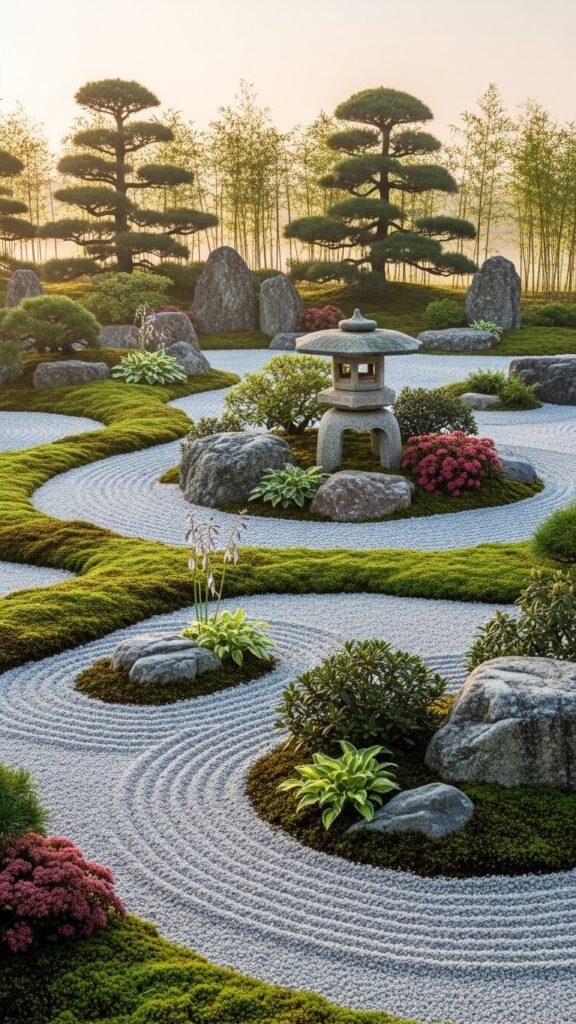
If you want a calm, low-maintenance space, a Japanese Zen garden strips design to essentials: stone, gravel, evergreens, and carefully placed plants that hold form and scale year-round. You’ll compose minimal plant groupings, use rock lanterns as focal anchors, and build moss pathways to invite barefoot movement. Prune pines and bamboo for silhouette, balance negative space, and choose hardy, slow-growing species for freedom and ease.
Desert Xeric Garden
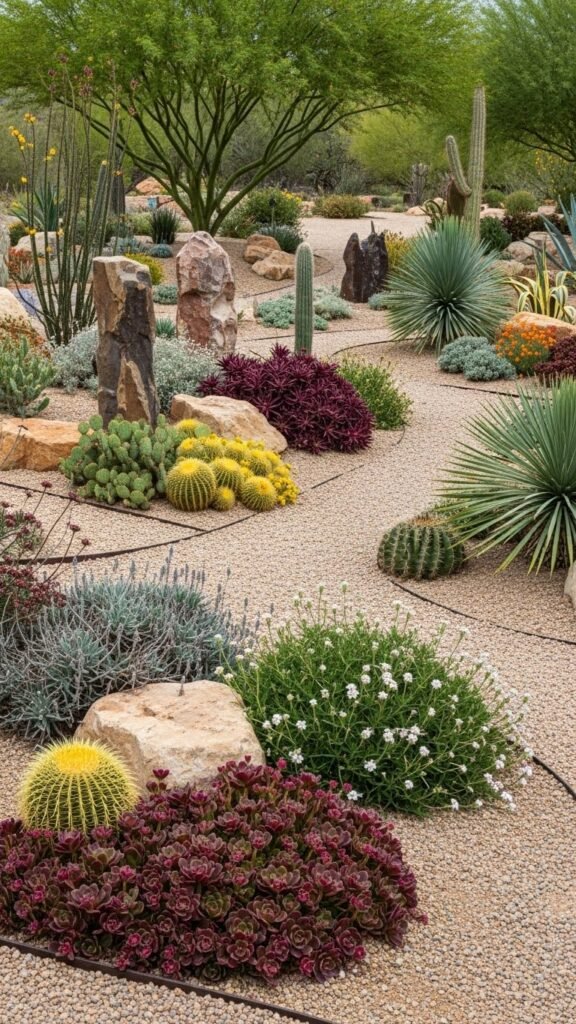
Embracing water-wise planting, a desert xeric garden pairs drought-tolerant succulents, cacti, and native shrubs with gravel, decomposed granite, and sculptural rocks to create a low-maintenance, high-impact composition.
You’ll choose succulent arrangements for form and seasonal bloom, group plants by water needs, and use gravel textures to define paths and planting pockets. The result frees you to enjoy bold, rugged simplicity.
Contemporary Modern Garden
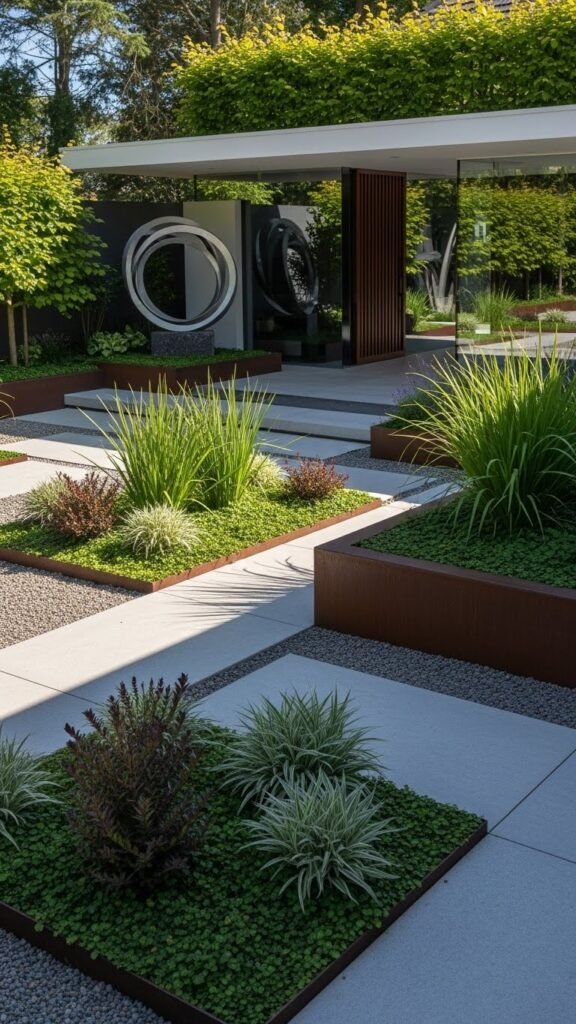
Design a Contemporary Modern garden with clean lines, restrained plant palettes, and sculptural elements that emphasize form and function. You’ll choose plants that highlight texture and silhouette, place groupings to create balance, and use bold geometry with paths and beds.
Opt for sleek materials like concrete, steel, and gravel, and prune for clarity so your outdoor space feels open, controlled, and free.
Tropical Paradise Garden
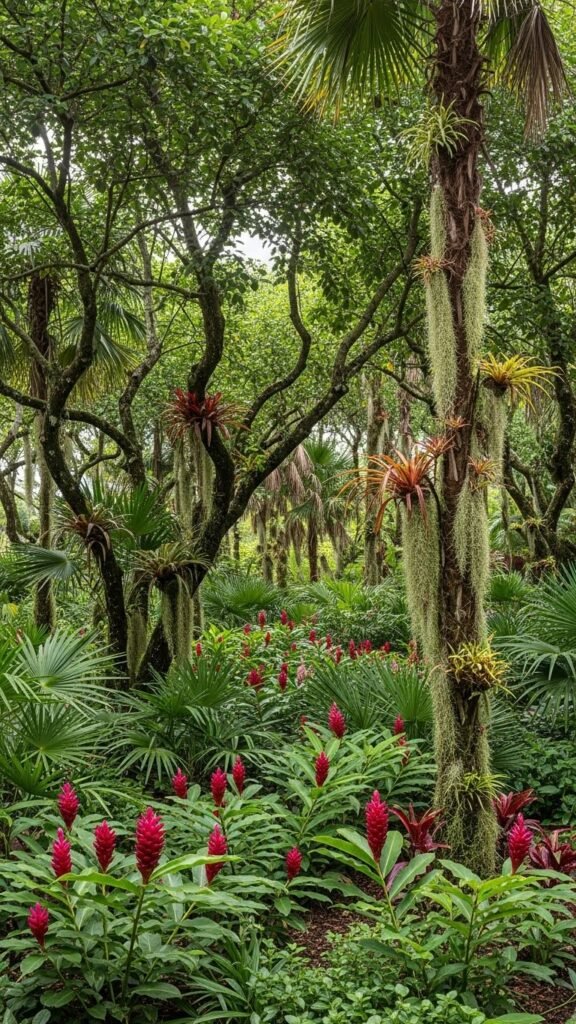
Where the modern garden celebrates restraint and sculptural form, a Tropical Paradise Garden celebrates exuberant foliage, bold textures, and layered composition that feels lush and sheltered.
You’ll plant a vigorous fruit canopy for shade, arrange exotic understory palms and gingers, encourage epiphytic layers on palms and trees, and design beds to retain a humid microclimate. Aim for movement, generous spacing, and effortless abundance.
Native Plant Garden
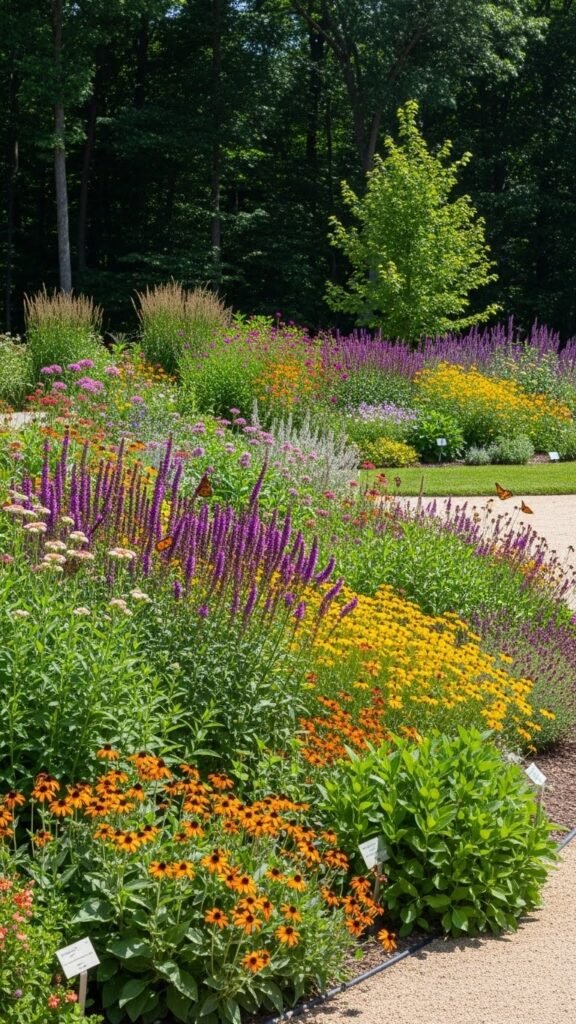
Shifting from a shaded woodland palette, a Native Plant Garden brings local ecology to the center of your composition by using species adapted to your region’s soils, climate, and pollinators.
You choose plants for structure, seasonal rhythm, and low maintenance, prioritizing seed provenance and supporting native pollinators.
Arrange masses, layers, and sightlines so the garden feels free, efficient, and unmistakably of place.
Pollinator-Friendly Garden
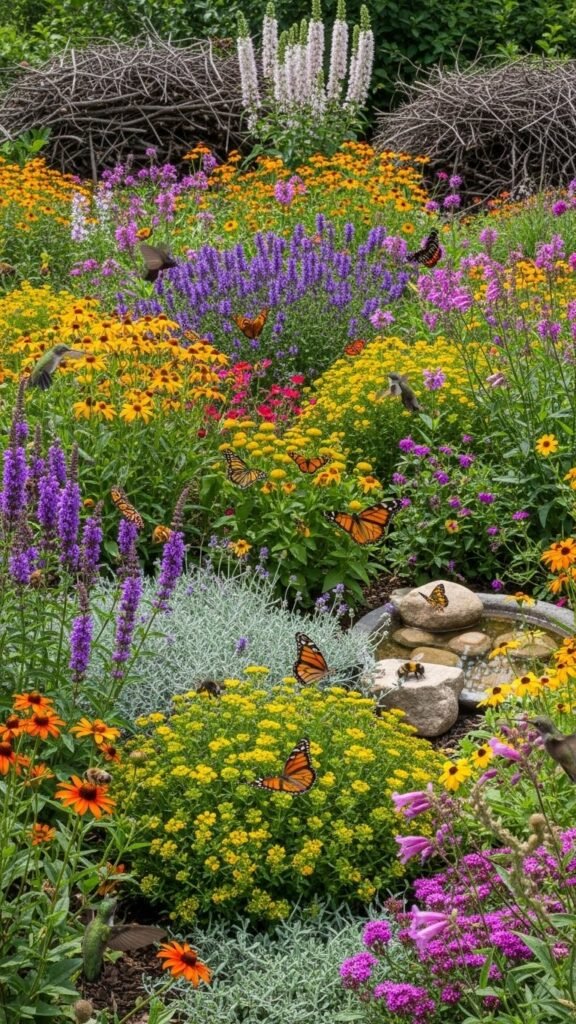
Inviting pollinators means designing with flowers, timing, and habitat in mind so your garden sustains bees, butterflies, moths, hoverflies, and hummingbirds throughout the season. You’ll choose clumps of native pollinators’ favorite blooms, layer heights for flight paths, and plant seasonal nectar plants to bridge gaps.
Keep pesticide-free zones, small water sources, and brush piles for shelter so pollinators thrive.
Wildlife Habitat Garden
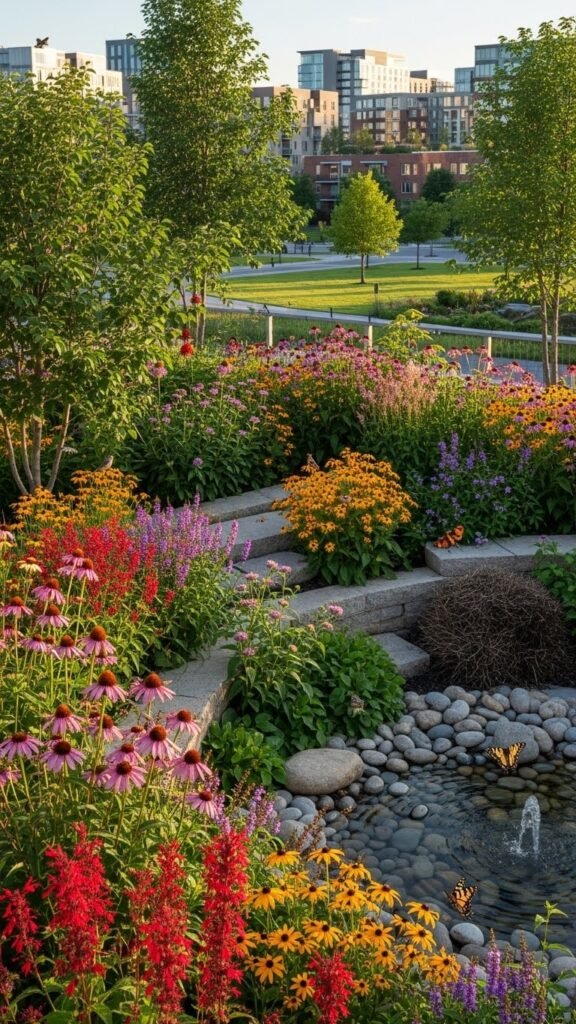
Creating a wildlife habitat garden means arranging plants and features to meet the needs of birds, pollinators, and beneficial insects so wildlife will visit, feed, nest, and shelter right in your yard.
You’ll choose native wildlife plants, layer shrubs, trees, and perennials for year-round resources, add water and brush piles, and connect green patches to urban corridors so critters move freely through your neighborhood.
Prairie Meadow Garden
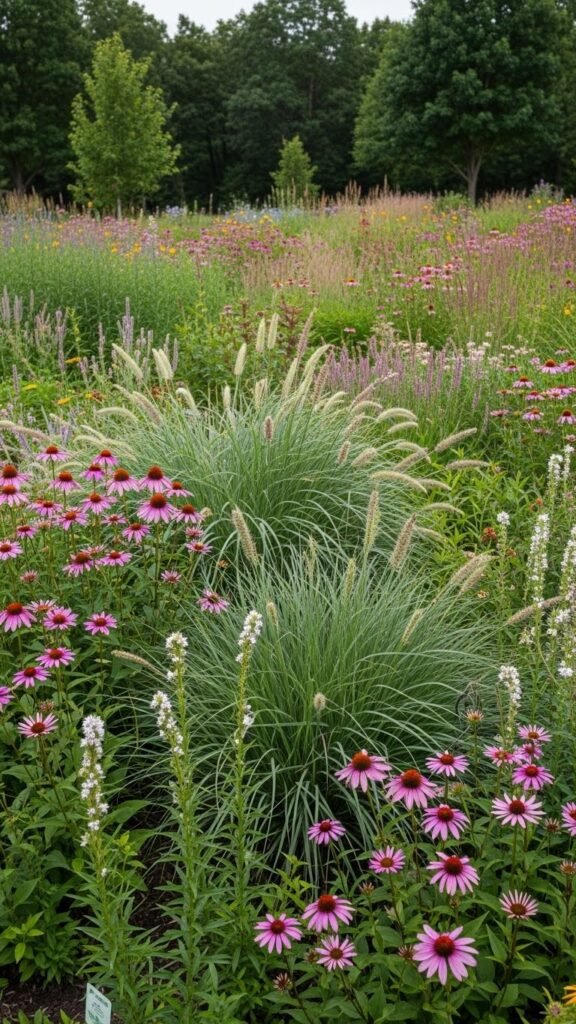
Planting a prairie meadow garden means arranging big drifts of native grasses and sun-loving perennials to mimic the open, textured look of natural prairie; you’ll favor species like little bluestem, switchgrass, purple coneflower, and blazing star for structure, seasonal bloom, and seed interest.
You’ll plan for seasonal succession, mix heights and bloom times, minimize rows, and let resilient native prairie dynamics guide a free, low-maintenance composition.
Rock Alpine Garden
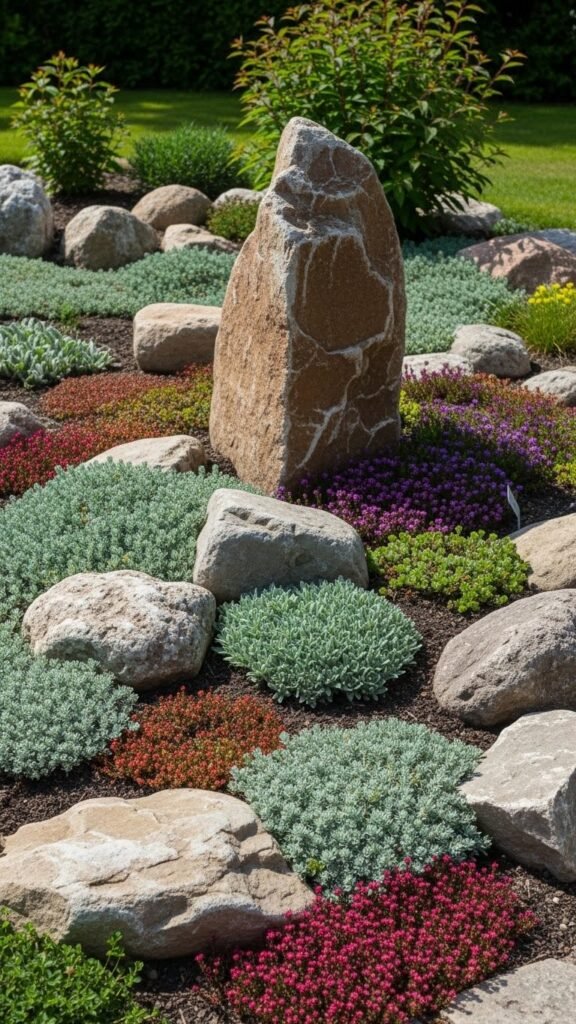
If you loved the broad, flowing sweeps of a prairie meadow, a rock alpine garden offers a compact, high-drama contrast: it emphasizes tight textures, dramatic rock placements, and low-growing, sun-loving alpines that hug the soil and reveal their structure close-up.
You’ll arrange stones to create rocky microhabitats, choose alpine bulbings and cushions for succession, and prune sparingly to keep a liberated, sculptural composition.
Coastal Salt-Tolerant Garden
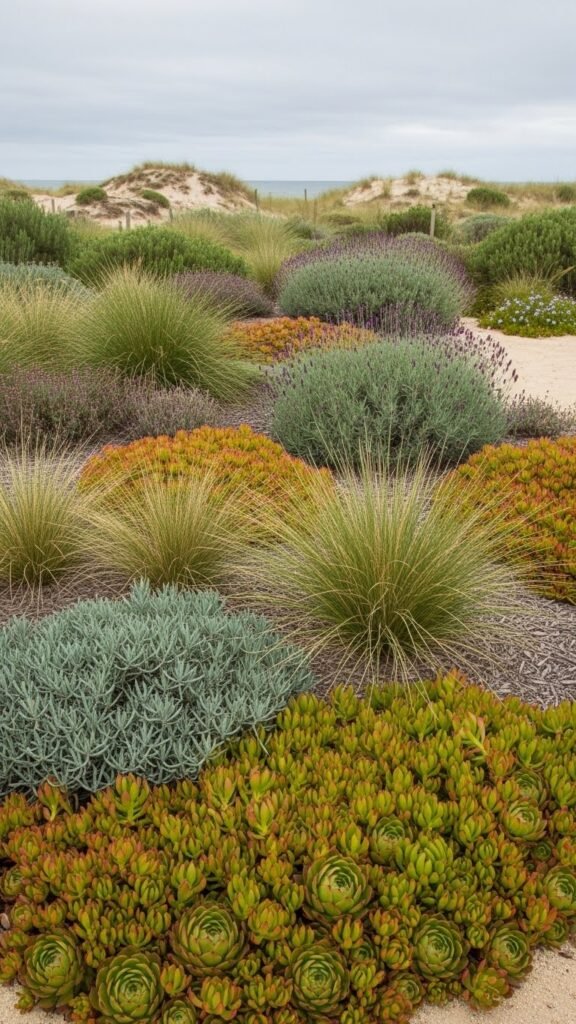
Resilience defines a coastal salt-tolerant garden, where you pick plants that shrug off salty spray, wind, and sandy soils and compose them into robust, coastal-honed arrangements.
You choose grasses, succulents, and native shrubs that anchor a beach dune, resist coastal erosion, and tolerate salt spray. Arrange by habit and root strength to maximize storm resilience and low-maintenance freedom.
Minimalist Urban Garden
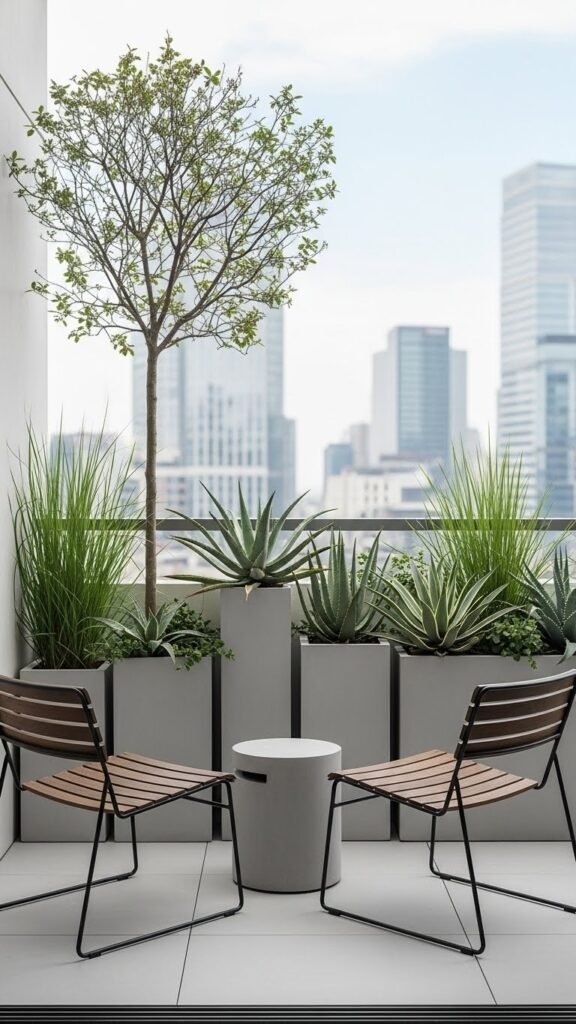
When space is tight, pare your palette to a few sculptural plants—think upright grasses, architectural succulents, and single-stemmed trees—that give rhythm and structure without cluttering a balcony or tiny yard.
You’ll use concrete planters on a micro rooftop, arrange a succulents arrangement for low care, and place compact seating to keep sightlines clear.
Prune for form and freedom.
Botanical Display Garden
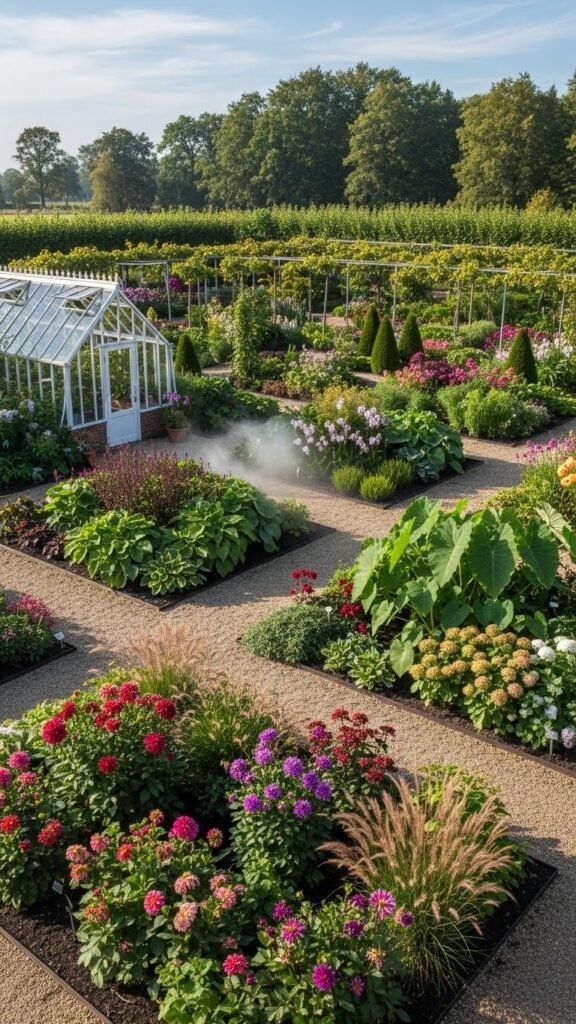
Moving from a pared-back balcony to a full botanical display garden asks you to broaden both palette and scale: swap a few sculptural specimens for layered groups that showcase form, foliage texture, and seasonal change.
You’ll plan focal seasonal specimen beds, mix bold leaf shapes, and use a mini greenhouse for tender starts.
Compose paths, sightlines, and repeat motifs so plants feel liberated, not cluttered.
Herb and Tea Garden
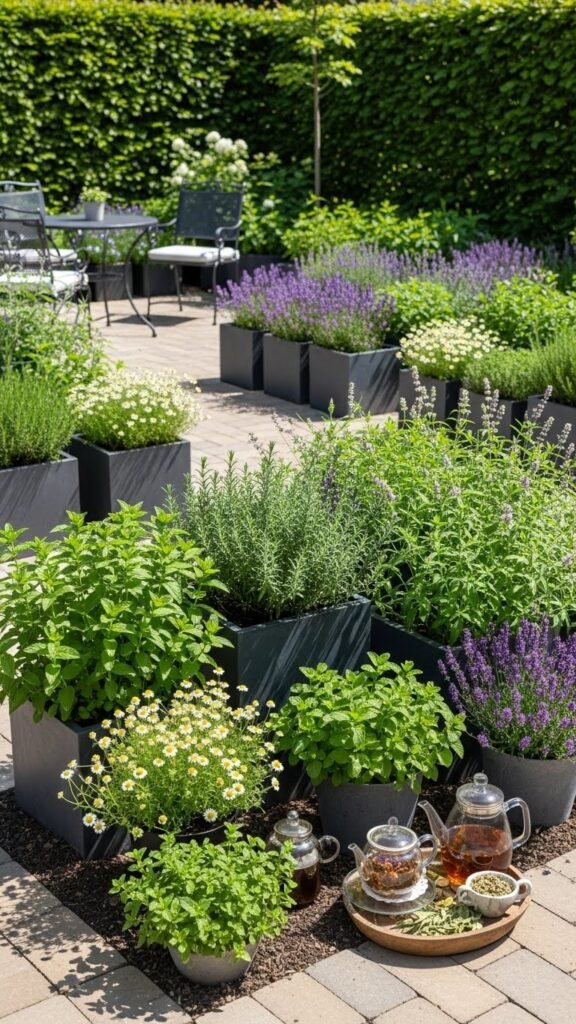
For a garden that’s both productive and sensory, dedicate sunny beds and containers to herbs and tea plants that reward you with flavor, fragrance, and seasonal interest.
You’ll arrange mint, chamomile, lavender, and lemon verbena for accessible harvests, clear pathways, and layered heights.
Emphasize medicinal uses, preserve leaf quality, and design intimate spots for mindful tea rituals that free your routine.
Rain Garden and Bioswale
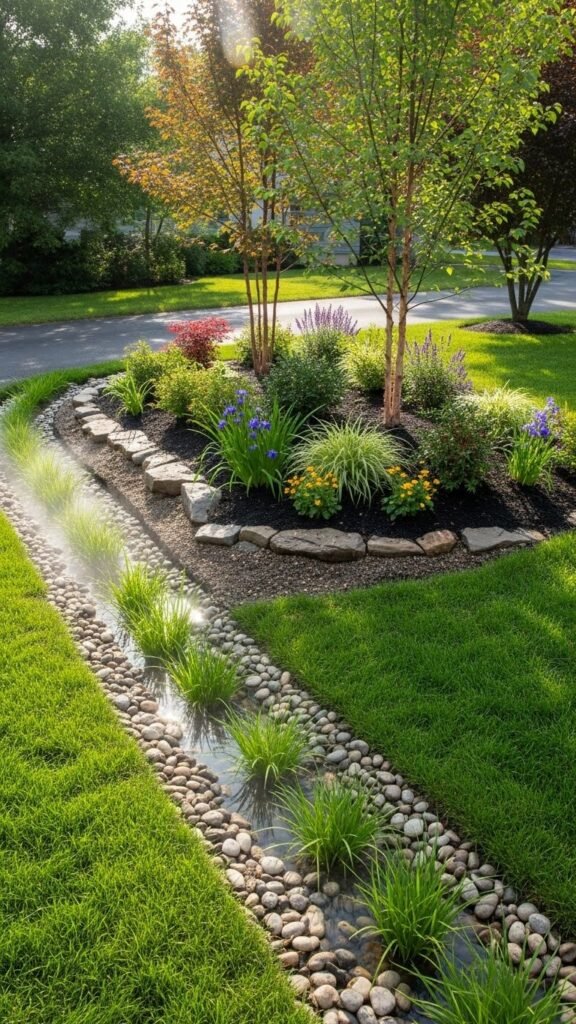
Nestled into a low spot or along a driveway, a rain garden and bioswale capture, filter, and slow stormwater while adding layered planting and seasonal interest to your landscape.
You’ll choose native riparian species for deep roots and habitat, compose swales for flow and curb appeal, perform infiltration testing before planting, and plan routine bioswale maintenance so your design stays free, functional, and beautifully low‑effort.
Formal Knot and Parterre Garden
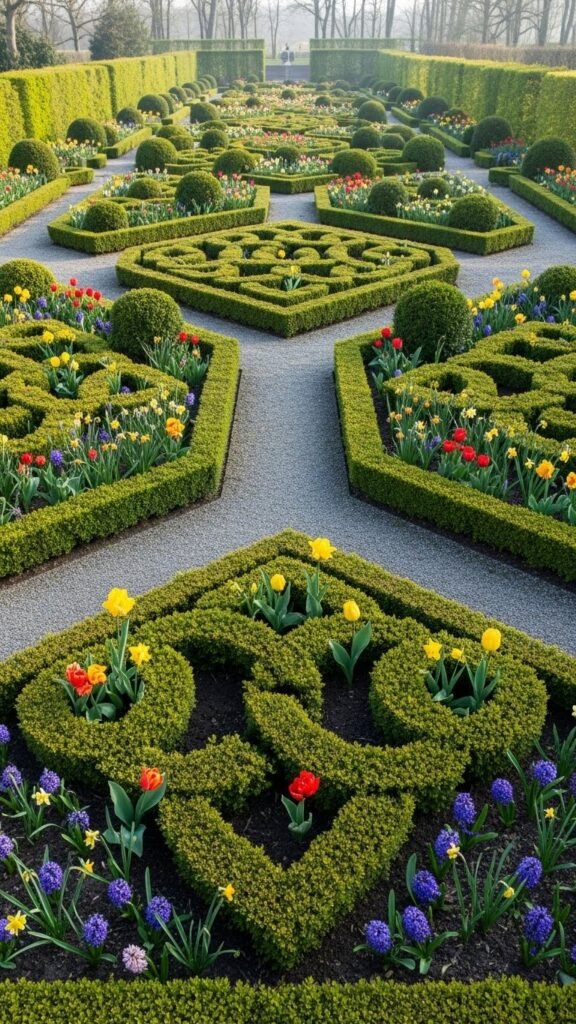
Where a rain garden and bioswale celebrate flowing, natural lines, a formal knot and parterre garden makes structure and repetition the star: you’ll arrange clipped hedges, gravel paths, and planted motifs into geometric compartments that read clearly from both up close and afar.
Use intricate boxwood to sculpt knots, add seasonal bulbings for timed color, and balance scale, sightlines, and maintenance rhythms so you stay free.
Tropical Container Garden
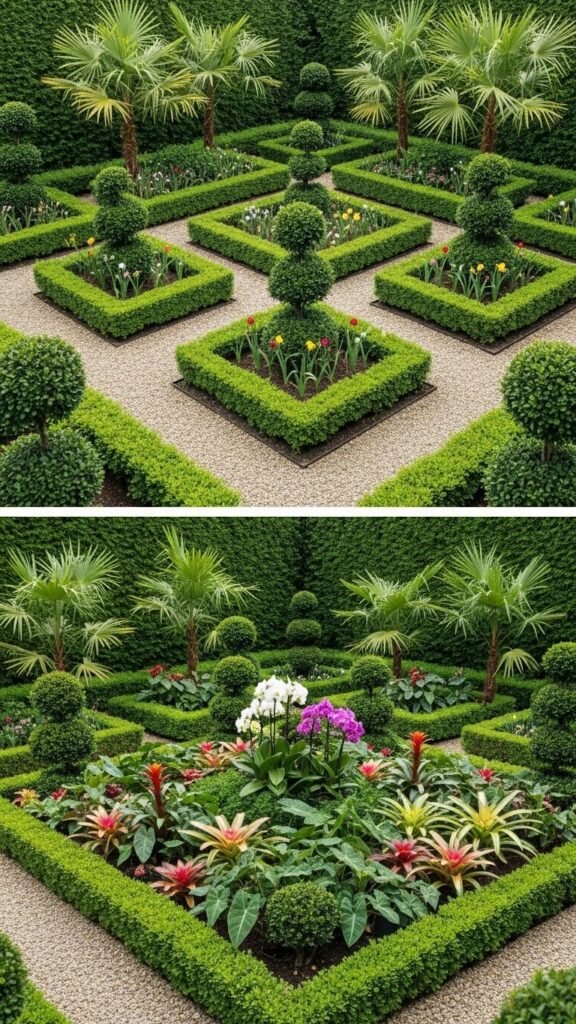
Create a lush, tropical container garden by combining bold foliage, dramatic form, and fuss-free composition so each pot reads like a miniature paradise. You’ll plant compact palms for height, mix textured philodendrons and bromeliads for midlayer interest, and tuck portable orchids into snug pockets.
Choose lightweight pots, well-draining mix, and a simple watering routine so maintenance stays freeing and effortless.
Waterwise Mediterranean Courtyard
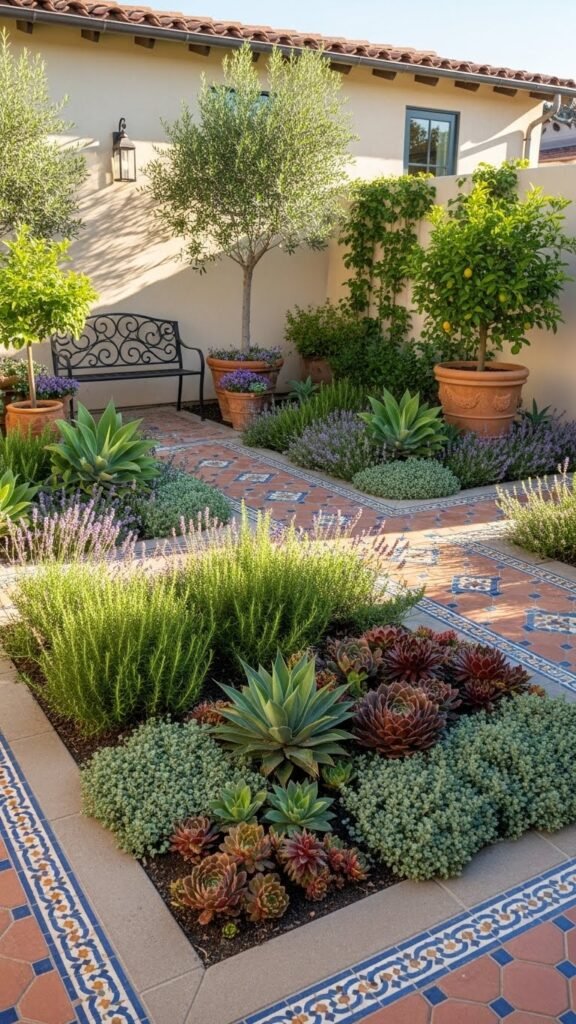
When you design a waterwise Mediterranean courtyard, prioritize drought-tolerant layers—structural shrubs and small trees, aromatic Mediterranean herbs, and low-growing groundcovers—to create year-round form and scent with minimal irrigation.
You’ll arrange olive or rosemary as anchors, use clay potting for container accents, group succulents for contrast, and place mosaic tiles to define pathways. Keep sightlines open and maintenance low for a liberating, composed space.
Fragrant Scented Garden
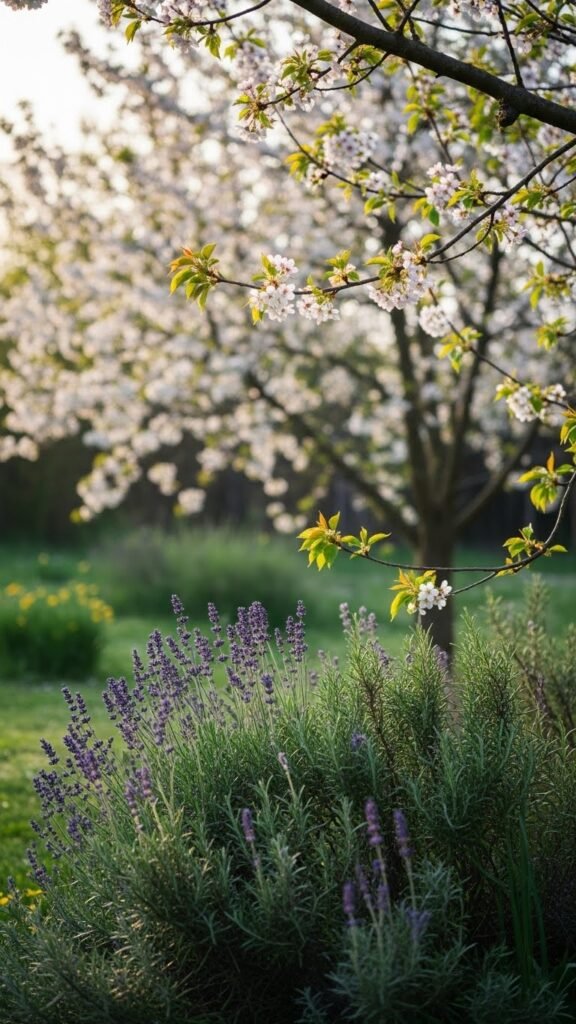
Bring scent to the center of your garden by layering plants that release aroma at different times of day and seasons so the space smells alive year-round. You’ll place night blooming fragrances along paths for evening strolls, group edible scented shrubs near seating, and balance heights and foliage for airflow.
Plan beds so scents mingle without crowding, letting you wander freely among purposeful, fragrant layers.
Victorian Parlor Garden
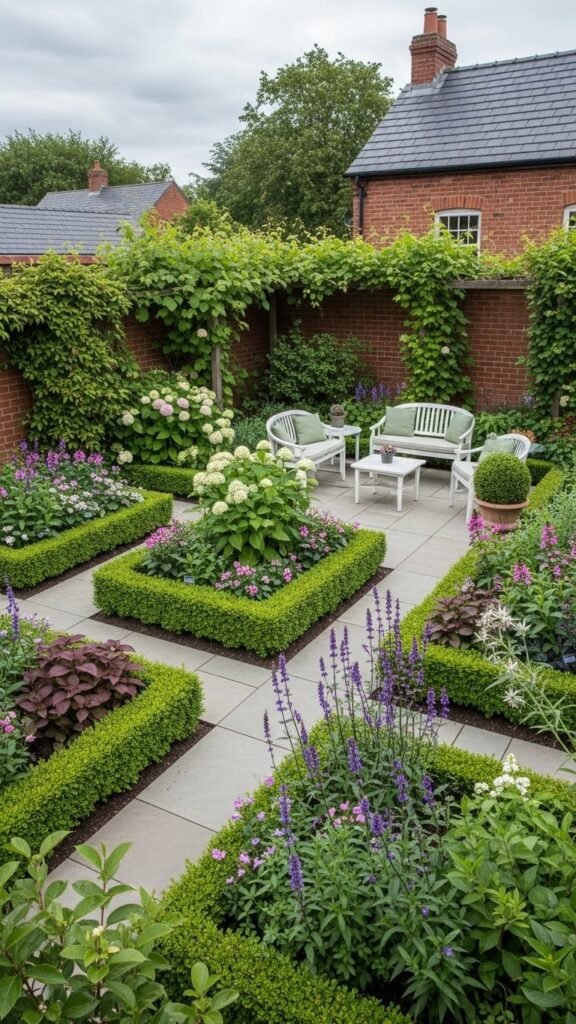
A Victorian parlor garden recreates the intimate, richly planted rooms of 19th‑century homes by arranging compact beds, clipped box hedges, and clustered specimen plants to frame seating and views.
You’ll choose layered foliage, showy perennials, and restrained color to echo parlor furnishings and invite casual listening to period music. Plan sightlines, define paths, and keep maintenance achievable so you’ll feel free to enjoy it.
Recreational Family Garden
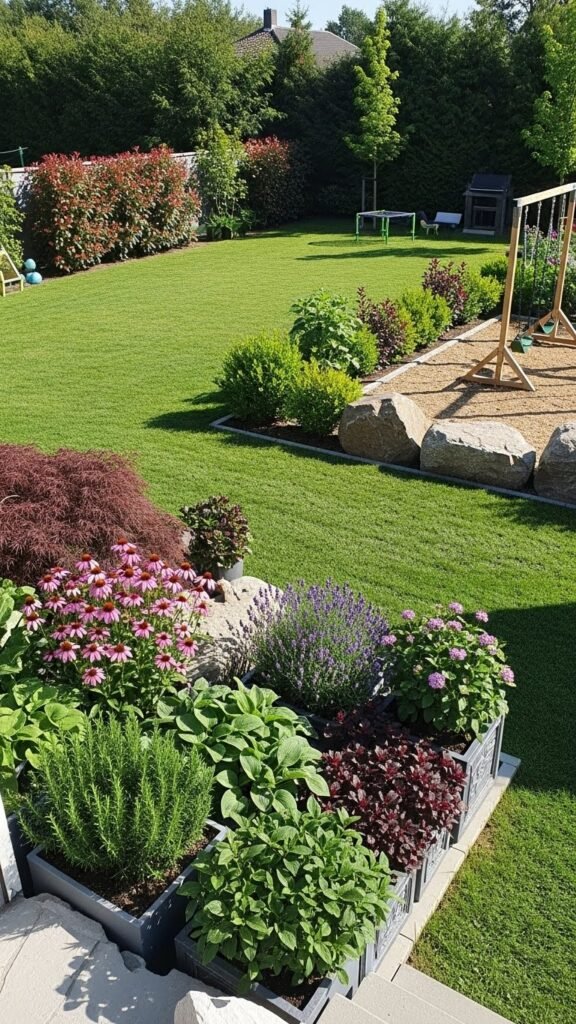
Often you’ll design a Recreational Family Garden around flexible lawns, play zones, and edible edges that invite both activity and easy maintenance.
You’ll plant hardy turf for a family game lawn, map clear sightlines, and frame a backyard obstacle course with shrubs and boulders.
Choose low-maintenance edibles, durable perennials, and modular elements so everyone can play, harvest, and rearrange freely.