
You’ll want a hedge that gives structure, seasonal color, and wildlife value without constant fuss, so this list mixes evergreens, flowering shrubs, and coppicing trees suited to different sites and needs. I’ll point out species for formal edges, quick privacy, coastal exposure, and wet soils, plus maintenance tips to keep things healthy and attractive — and a few standout picks you might not have considered.
Evergreen Alder (Alnus Jorullensis)
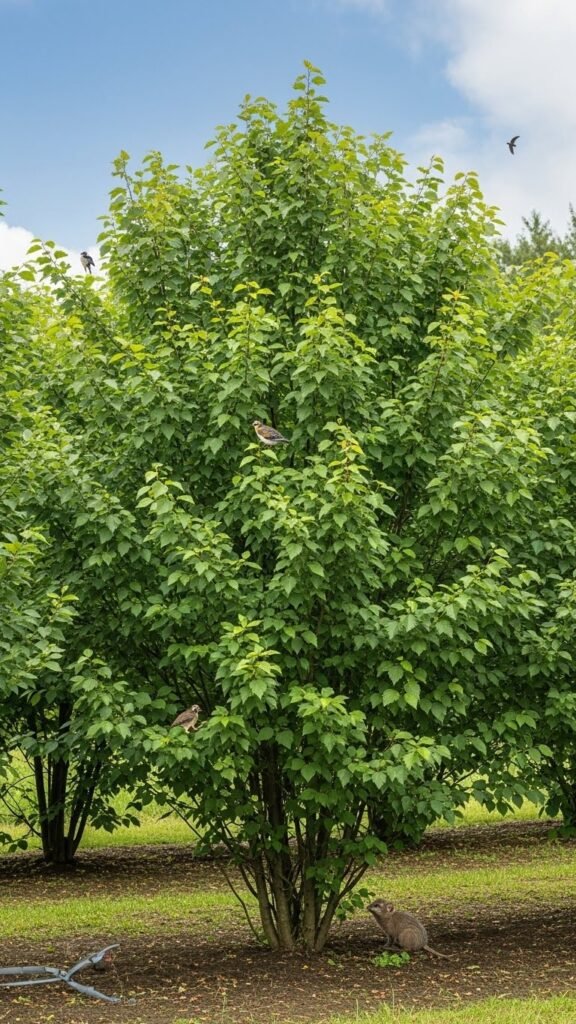
Consider the evergreen alder (Alnus jorullensis) when you want a sturdy, year-round screen that also supports wildlife. You’ll appreciate its tolerance for high elevation sites and wet soils, plus rapid growth.
It spreads by root suckering, so you can cultivate dense hedges or let thickets naturalize. Prune to shape, control spread, and maintain freedom in design while enhancing habitat and privacy.
Common Alder (Alnus Glutinosa)
Grey Alder (Alnus Incana)
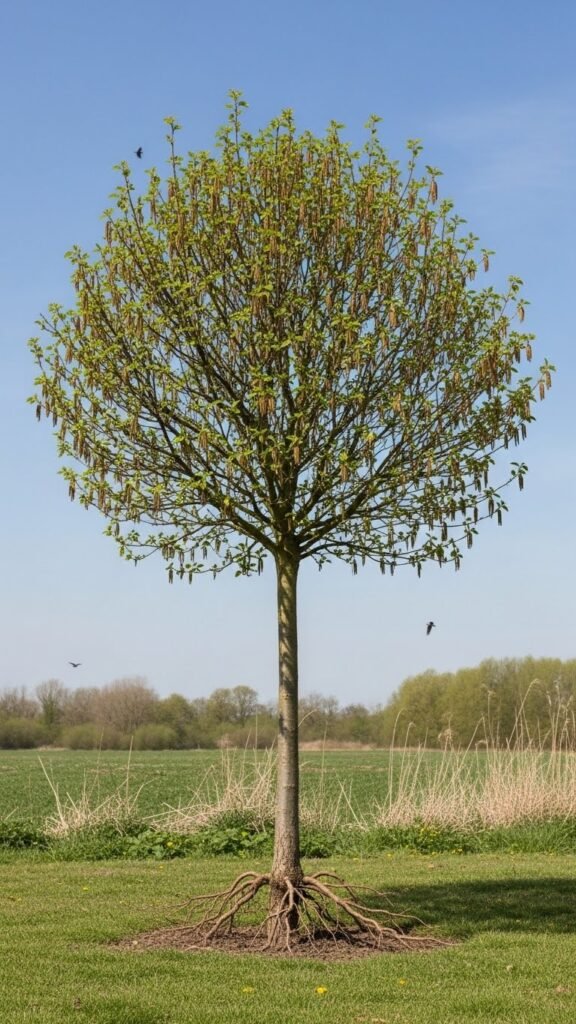
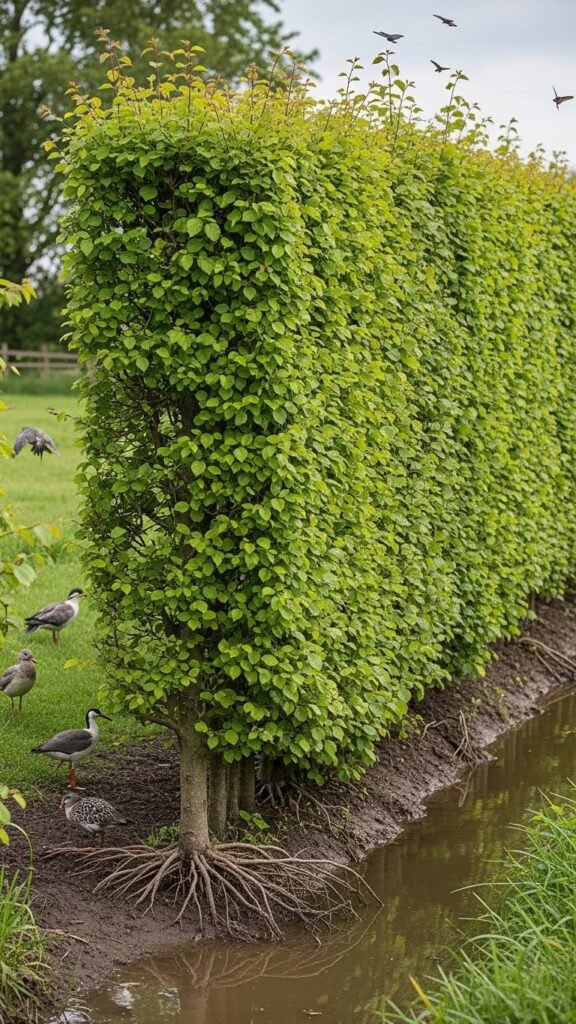
While the common alder thrives in wet soils and supports wildlife, the grey alder (Alnus incana) offers a more compact, wind-tolerant option for hedging on drier riverbanks and upland sites.
You’ll appreciate its root nodulation improving soil, predictable catkin timing for seasonal interest, good drought tolerance once established, and strong coppice response for renewal — ideal if you want low-maintenance freedom.
Italian Alder (Alnus Cordata)
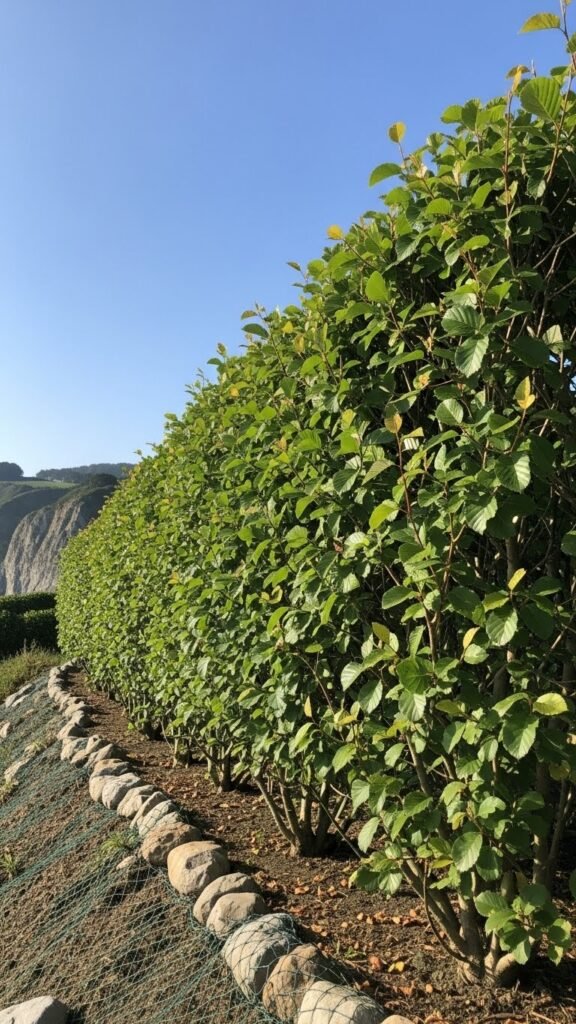
Sturdy and fast-growing, the Italian alder (Alnus cordata) makes an excellent choice when you want a durable, low-maintenance hedge that handles poor, rocky soils and coastal exposure.
You’ll value its rapid screening, erosion control and root protection while enjoying minimal care.
Plant from certified stock or try seed propagation for self-reliant landscapes; prune selectively to keep form and air circulation.
Sprinter Boxwood
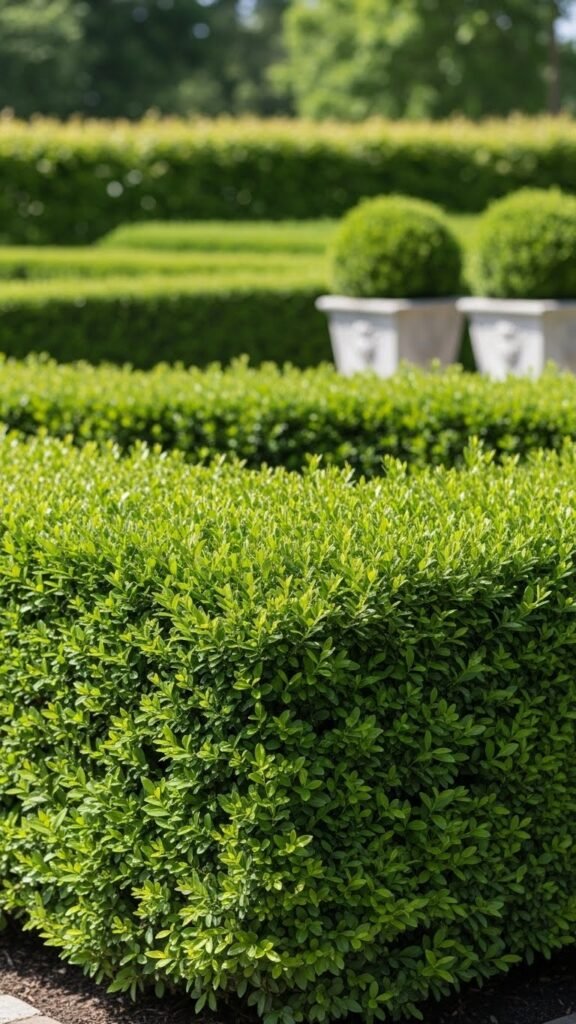
Often chosen for its compact habit and quick establishment, Sprinter boxwood (Buxus ‘Sprinter’) gives you a dense, low-maintenance hedge that fits small to medium landscapes.
You’ll appreciate versatility: use it for container planting or formal rows. It tolerates shaping well, so follow sensible pruning timing—late spring and light summer trims—to keep clean lines and let your outdoor space feel open and effortless.
Gem Box Boxwood
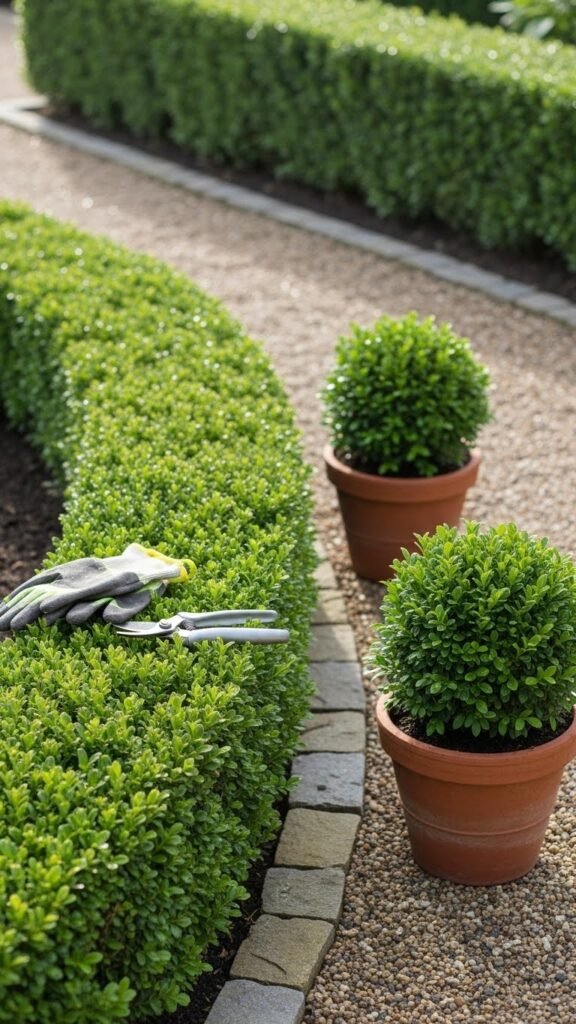
Frequently prized for its neat, compact form, Gem Box boxwood (Buxus ‘Gem’) gives you a reliable, low-growing hedge ideal for borders, edging, and small formal layouts.
You’ll appreciate its dense habit, tolerance for shaping, and suitability for container gardening. Focus on light pruning timing to maintain form; prune lightly after new growth appears so you keep clean lines without restricting your design freedom.
Sky Box Boxwood
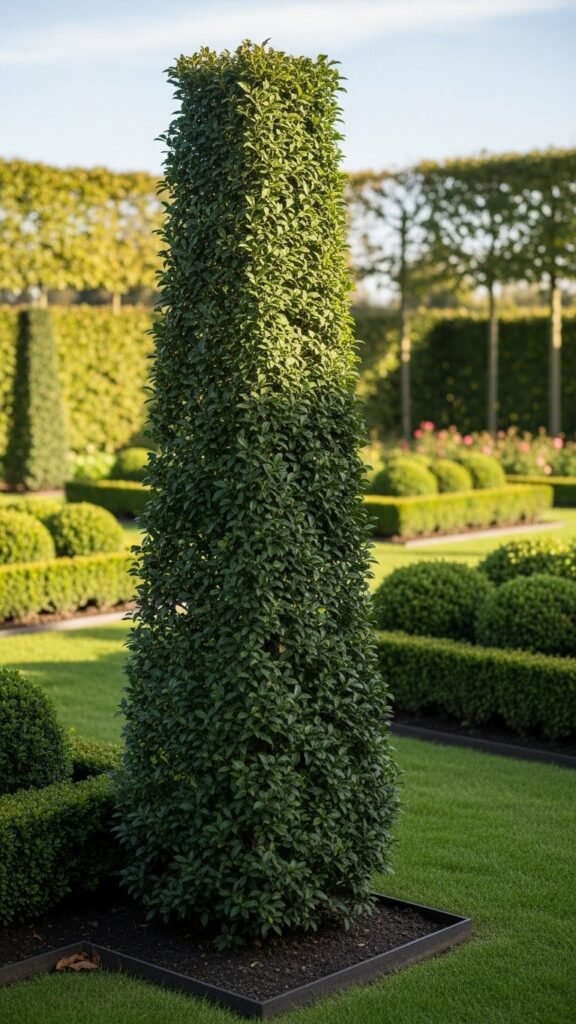
You’ll find Sky Box boxwood (Buxus ‘Skyline’ or similar cultivars marketed as Sky Box) a taller, upright selection that’s perfect when you need height without bulk—think narrow privacy screens, foundation plantings, or formal backdrops.
You’ll appreciate this dwarf cultivar’s dense habit, low maintenance and adaptability. Follow a simple pruning guide for crisp edges and annual light trims to keep freedom of form and clean lines.
Japanese Holly (Ilex Crenata)
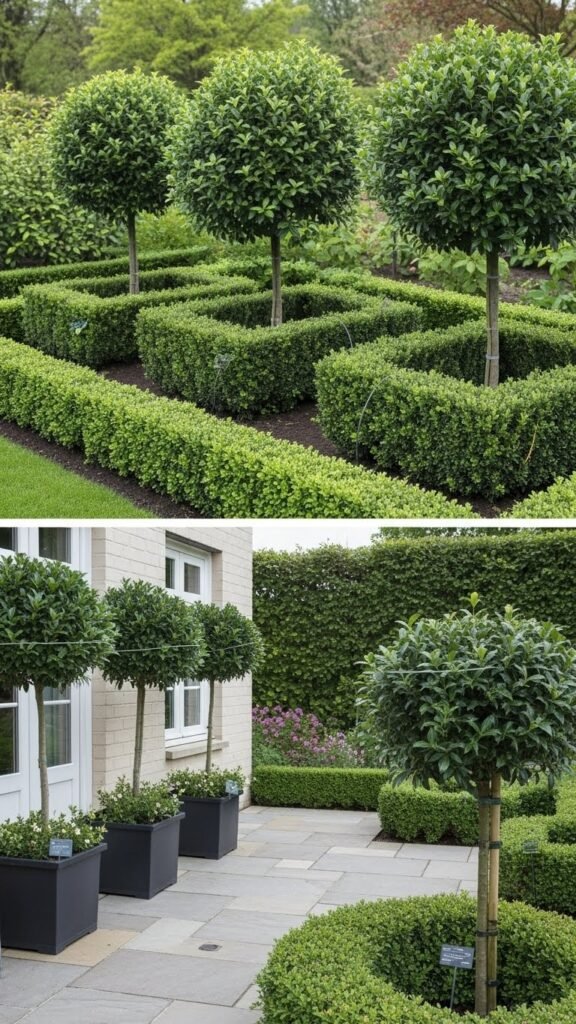
If Sky Box gives you vertical structure, Japanese holly (Ilex crenata) offers a fine-textured alternative that fits both formal hedges and softer, mixed borders.
You can shape compact forms with simple pruning techniques, maintain clean lines, and grow specimens in container cultivation for patios or tight sites. It tolerates shearing, prefers well-drained soil, and gives reliable year-round green without demanding constant attention.
Ilex Glabra ‘Gem Box
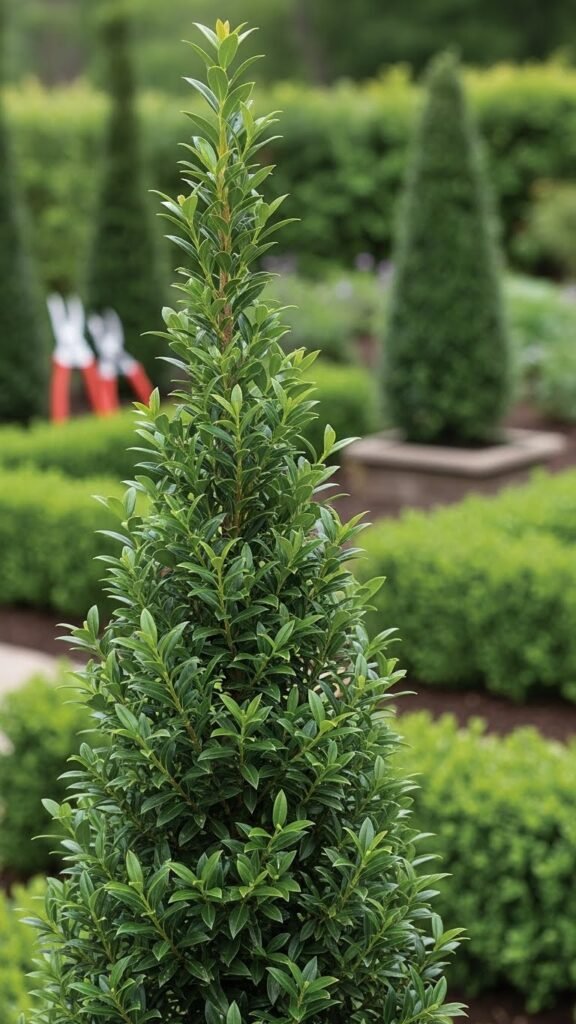
Offering dense, glossy foliage in a compact, columnar form, Ilex glabra ‘Gem Box’ is a low-maintenance evergreen ideal for narrow hedges, foundation plantings, and container borders.
You’ll appreciate its compact habit and reliable shade tolerance, easy pruning, and slow, tidy growth.
Plant it where you want structure without fuss; it gives year-round green, definition, and freedom to shape your space.
North Pole Holly
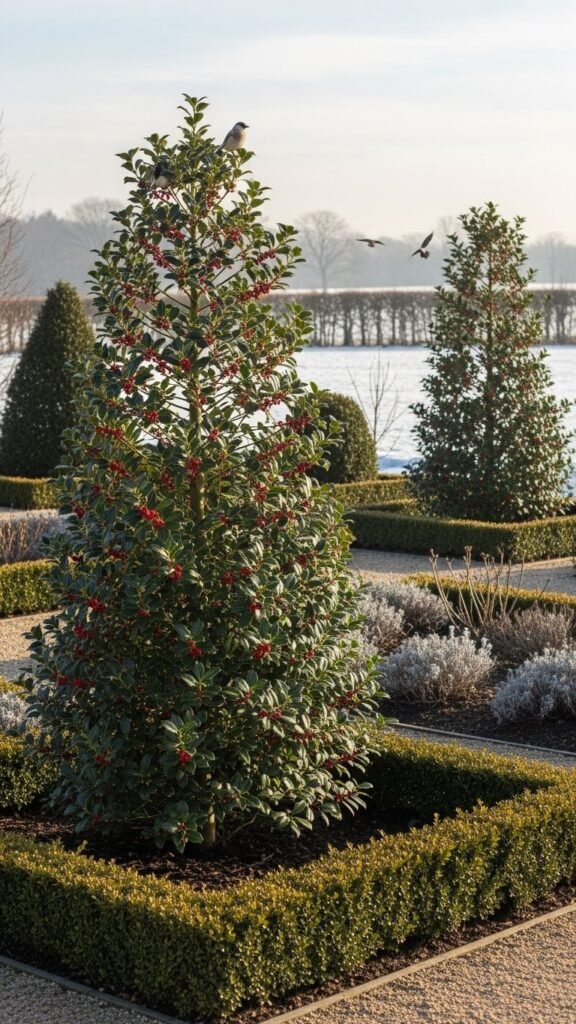
While colder climates can limit your choices, North Pole Holly gives you an elegant, winter-hardy evergreen that’s perfect for formal hedges and mixed borders.
You’ll enjoy dense evergreen foliage that screens and shapes easily, plus bright winter berries that attract birds. Plant it in sun to part shade, prune to maintain crisp lines, and you’ll get low-maintenance structure and seasonal color.
Griselinia ‘Broadway Mint
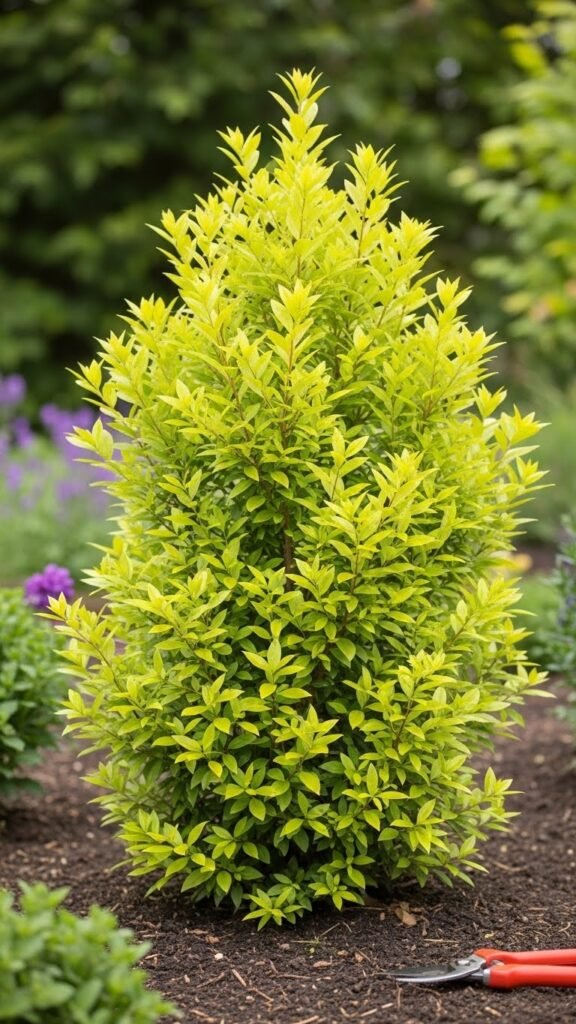
Bringing bright, glossy foliage to your garden, Griselinia ‘Broadway Mint’ is a fast-growing evergreen shrub prized for its lime-green leaves and neat, upright habit.
You’ll appreciate its drought tolerance and easy pest management; plant it in well-draining, slightly acidic soil to match soil preferences. Pruning tips: trim annually to maintain shape and freedom of movement, avoiding heavy cuts in cold months.
Pittosporum ‘Little Kiwi
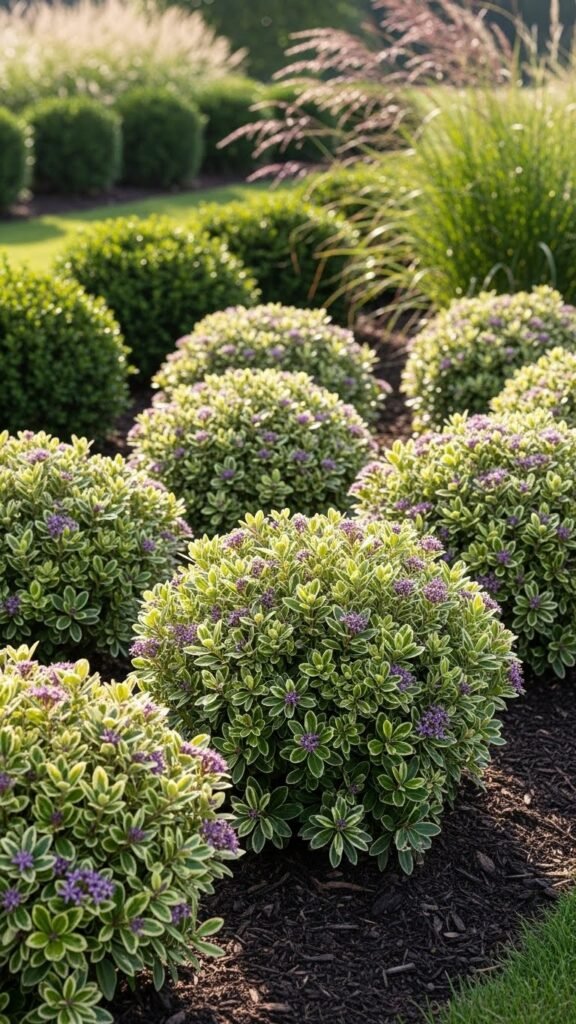
Give your border a neat, evergreen presence with Pittosporum ‘Little Kiwi’, a compact cultivar prized for its dense, rounded habit and glossy, variegated leaves that stay attractive year-round.
You’ll enjoy compact foliage that’s easy to shape; maintenance is light and predictable.
Plant it where you want structure and movement, and savor the plant’s subtle fragrant blooms that reward minimal care while freeing your outdoor design.
Westringia
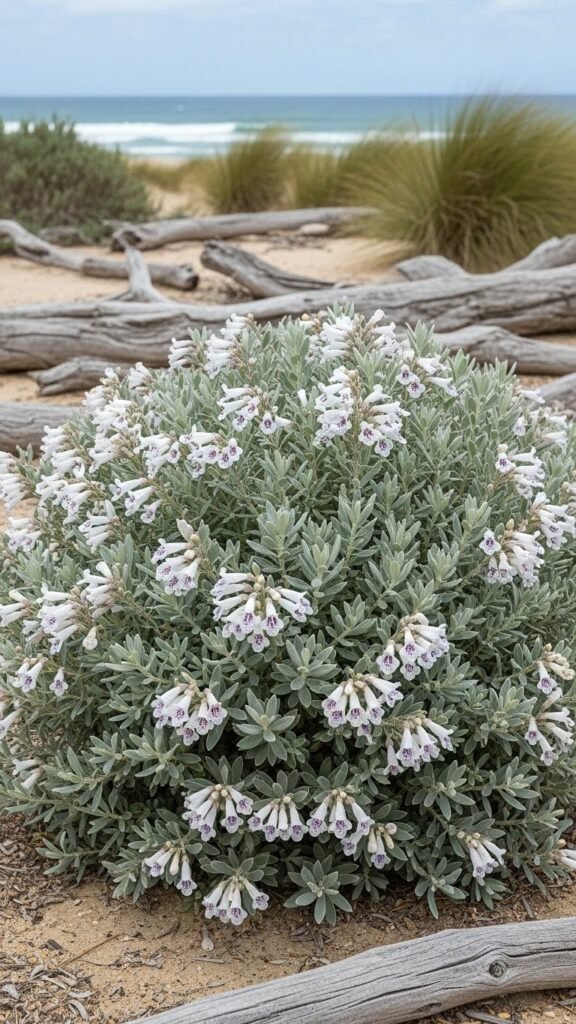
If you like Pittosporum’s tidy shape and low fuss, Westringia offers a similarly neat evergreen option with a more relaxed, coastal character.
You’ll enjoy its compact habit, soft grey-green foliage and seasonal white or lilac blooms. It tolerates pruning, shows excellent drought tolerance, and suits coastal planting.
Use it for informal screens, low hedges or windbreaks when you want resilient, low-maintenance freedom.
Privet
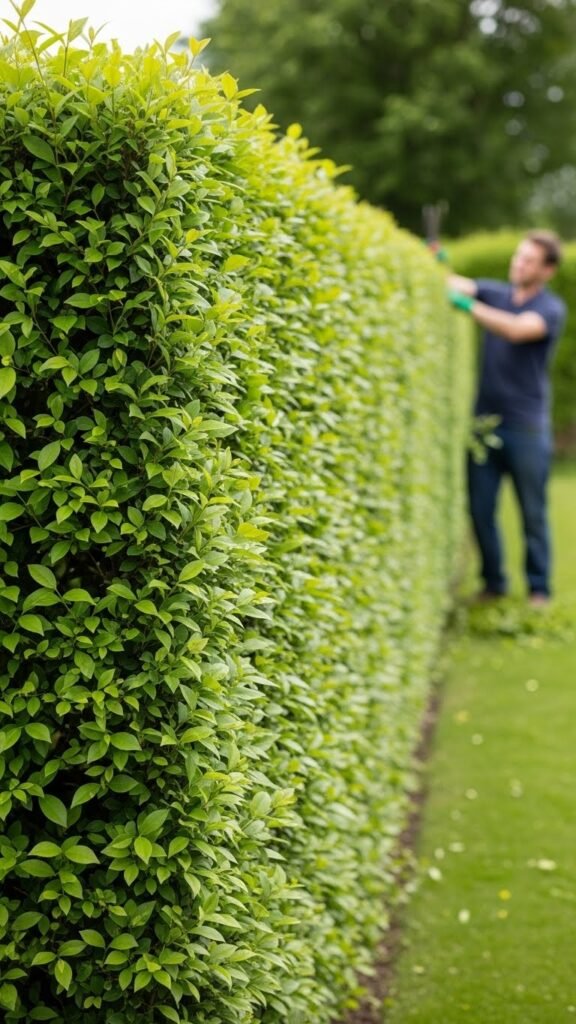
Choose privet when you want a fast-growing, dependable hedge that’s easy to shape and maintain. You’ll get dense privacy screening, year-round foliage, and quick coverage for boundaries.
Prune regularly to keep form and encourage fullness. Be mindful of invasive potential in some regions; choose non-invasive cultivars or manage seed dispersal. It’s a practical, freeing choice for confident gardeners.
Barberry
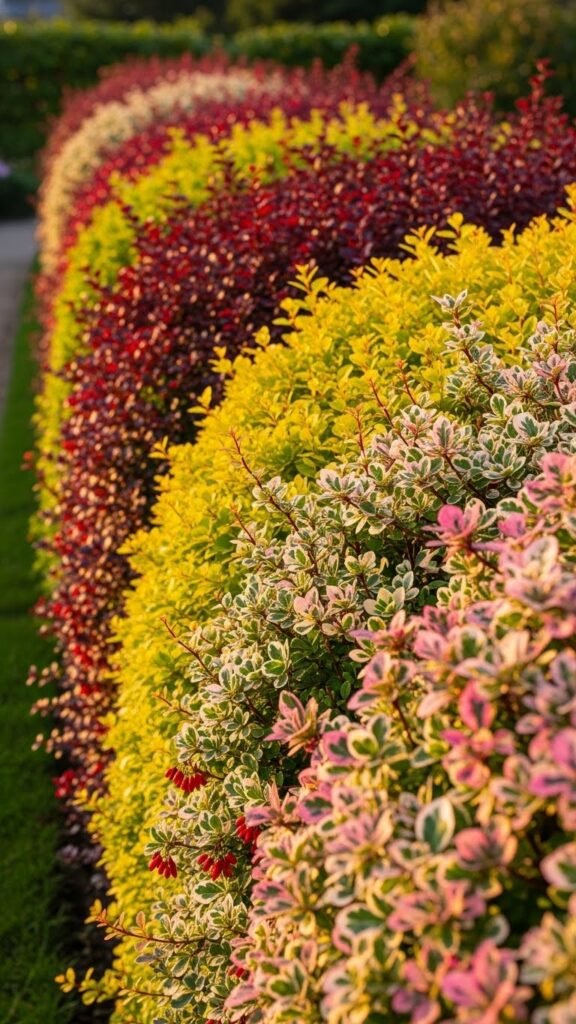
Plant barberry when you want a colorful, low-maintenance hedge that delivers year-round structure and seasonal interest.
You’ll get a reliable thorny barrier that deters intruders while offering brilliant seasonal color.
Choose cultivars for foliage contrast — deep burgundy, golden, or variegated leaves — and prune to shape.
It thrives in sun, tolerates poor soil, and frees you from constant upkeep.
Dense English Laurel
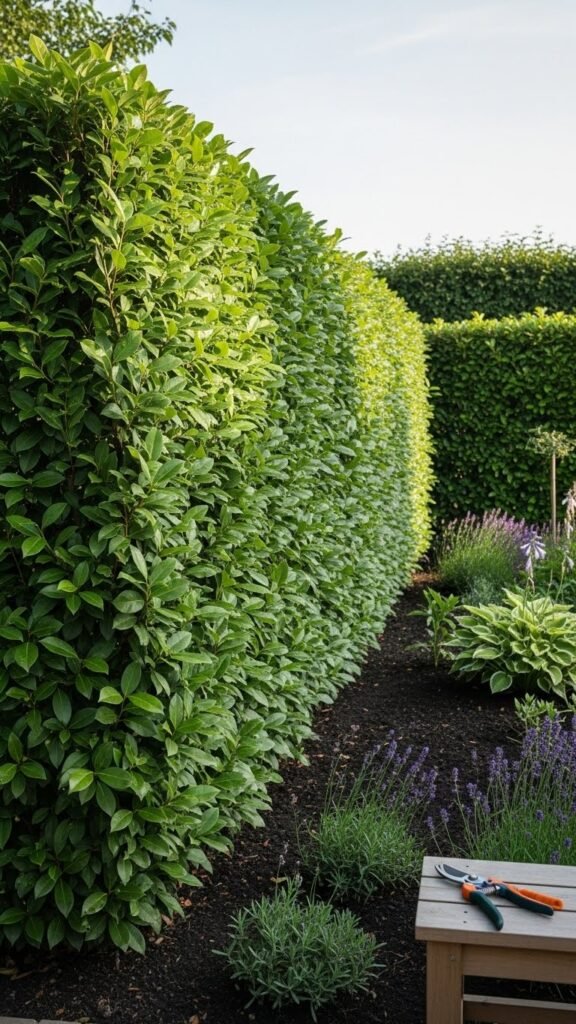
Bring in a Dense English laurel hedge when you want an evergreen screen that fills in quickly and stays neat with minimal fuss. You’ll enjoy glossy leaves, dense growth and privacy without constant upkeep. Note soil preferences — well‑drained, fertile ground suits it — and set a simple pruning schedule to shape and control size. It’s resilient, fast, and frees your time.
Portuguese Laurel
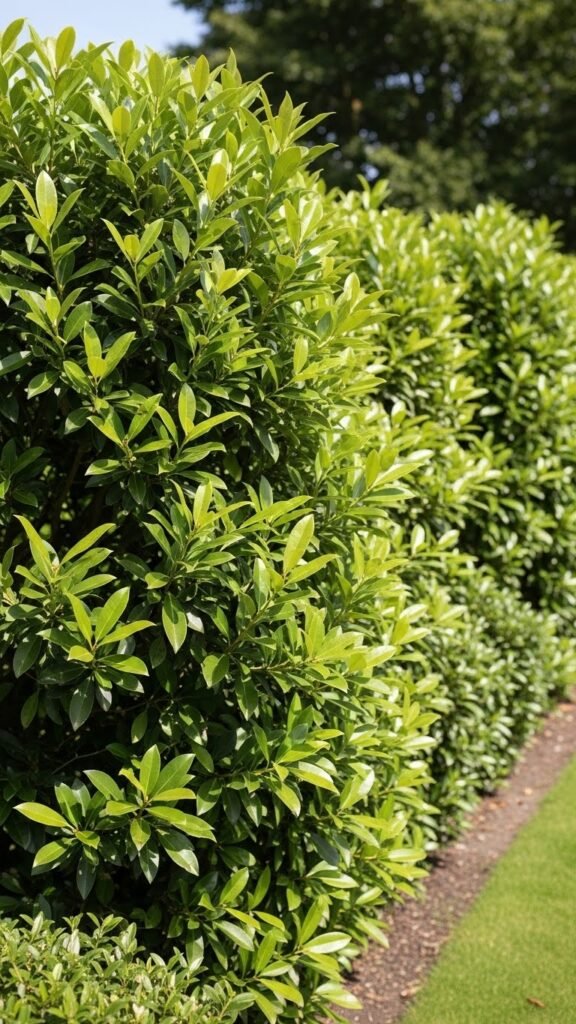
If you liked the quick fill and glossy look of English laurel, Portuguese laurel gives you similar evergreen density with a slightly larger leaf and a more robust habit.
You’ll get a fast-growing privacy hedge with glossy foliage that needs moderate pruning. It tolerates sun to part shade, resists wind, and lets you shape boundaries confidently while keeping maintenance straightforward and freeing up your time.
Hornbeam (Carpinus Betulus)
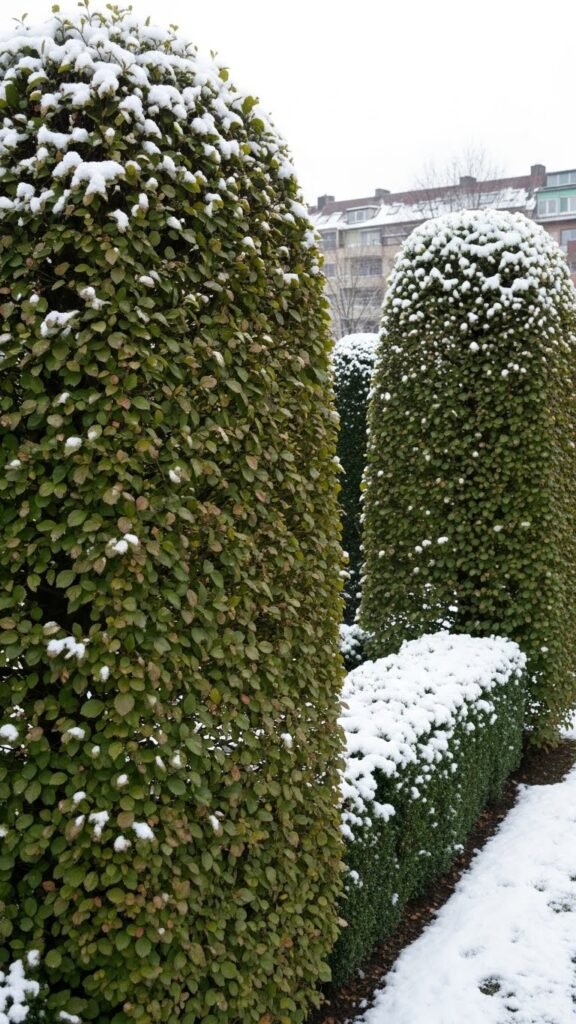
A versatile choice for structured hedges, hornbeam (Carpinus betulus) gives you dense, finely textured foliage that holds well through winter and responds superbly to pruning.
You’ll enjoy predictable pollination timing and reliable regeneration after trims. It tolerates urban conditions, showing good soil compaction tolerance, and adapts to formal or informal shapes.
Plant it for a disciplined, low-maintenance boundary that still feels liberating.
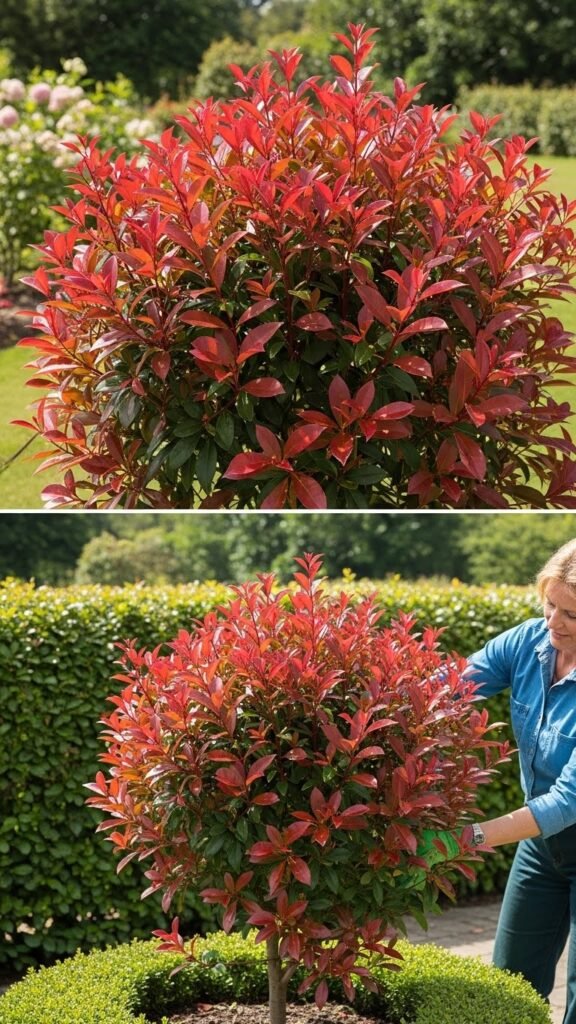
Photinia ‘Red Robin
Escallonia
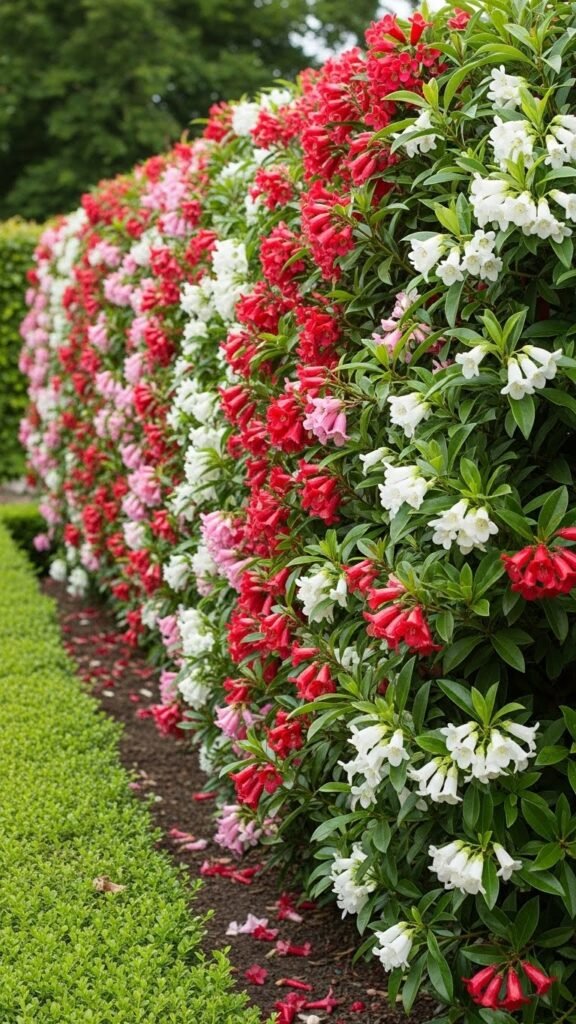
Like Photinia, Escallonia makes a striking, low-maintenance hedge but brings a different set of benefits: glossy evergreen leaves, masses of tubular flowers in pinks, reds, or white, and a naturally tidy habit that suits both informal and clipped styles. You’ll enjoy a dependable flowering habit, moderate salt tolerance, fast growth and easy shaping—ideal if you want a low-effort, freeing screen with seasonal color.
Lavender
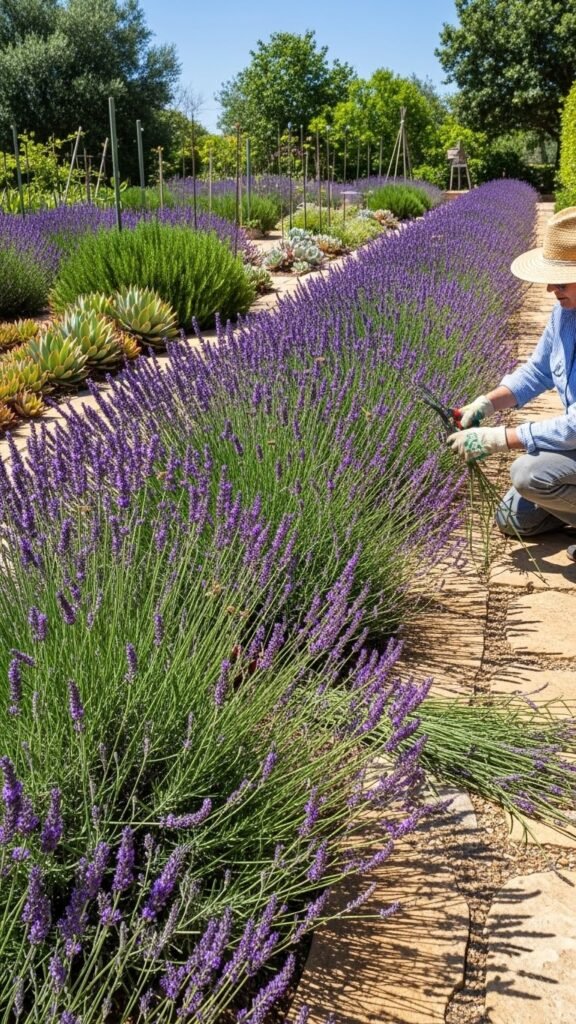
Fragrance and form make lavender an excellent choice when you want a low-maintenance, pollinator-friendly hedge that looks and smells great year-round.
You’ll enjoy its drought tolerance and silvery foliage while attracting bees. Plant in full sun, free up maintenance with gritty soil, and watch seasonal blooms.
Mind pruning timing after flowering to keep shape and prevent woody stems for years of reliable color and scent.