
You can replace thirsty turf with low, living carpets that save water and add texture, color, and seasonal interest. Pick sun-loving mats like woolly thyme or Sedum ‘Angelina’ for hot spots, shade-tolerant sedges and Phlox stolonifera under trees, or steppable, fragrant choices for barefoot paths. I’ll walk you through 24 reliable options and where each performs best — so you can picture which will transform your lawn next.
Woolly Thyme
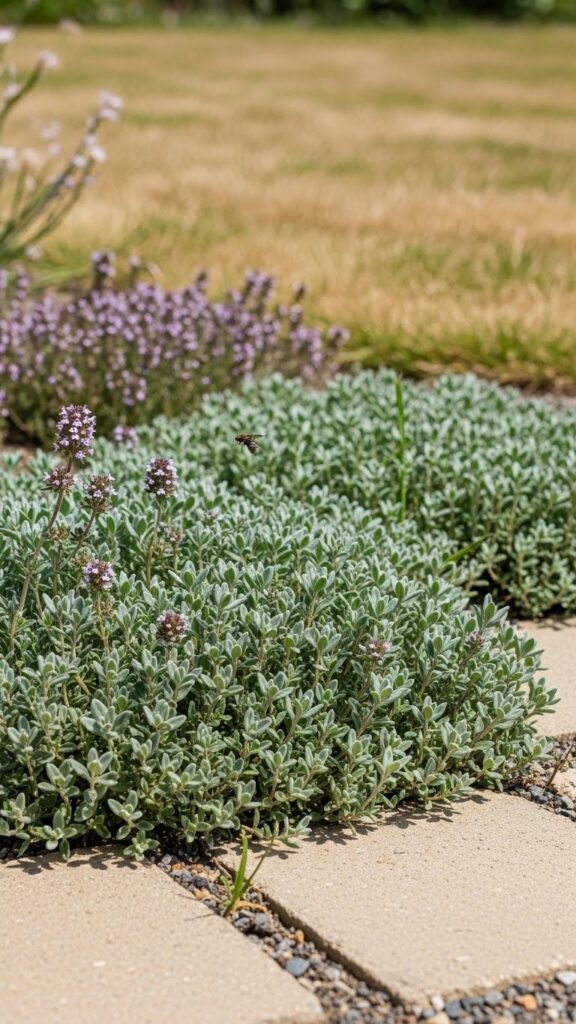
Woolly thyme often steals the spotlight in sunny, dry spots where grass struggles; its silver-green, felted foliage forms a tight, low mat that softens paths and between-paver joints.
You’ll love minimal soil preparation — gritty, well-drained mix suffices — and the scent underfoot.
Expect tiny blooms that offer pollinator benefits, resist foot traffic, conserve water, and free you from mowing.
Veronica Whyleyii
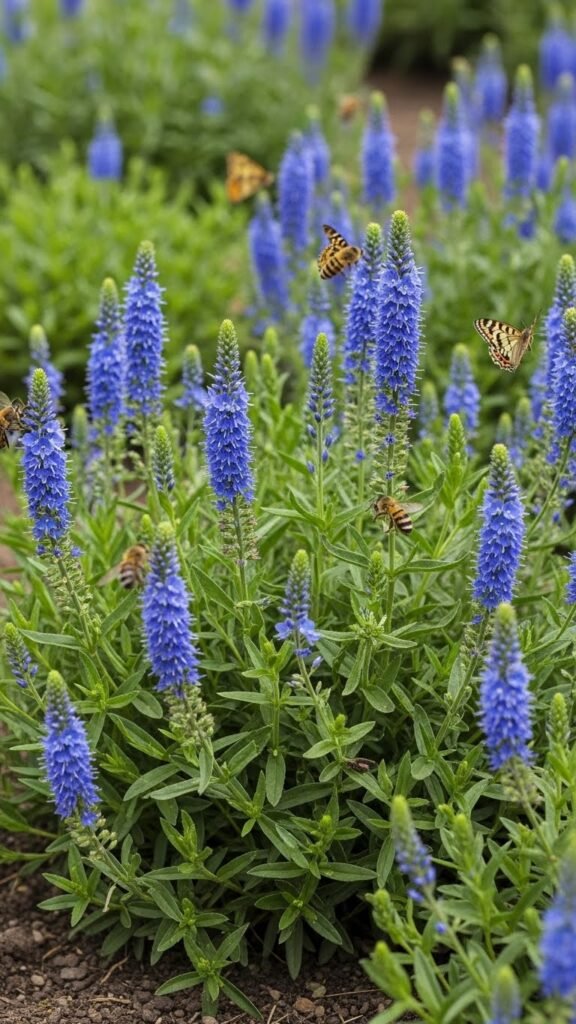
Plant Veronica Whyleyii where you want a low, spreading carpet of tiny, lance-shaped leaves and sky-blue flower spikes that bloom from late spring into summer. You’ll enjoy strong pollinator attraction as bees and butterflies patrol the blooms. Grow it in well-drained soil; match soil preferences to neutral to slightly alkaline mixes. Trim lightly after flowering to keep its free, tidy habit.
Sedum ‘Angelina’
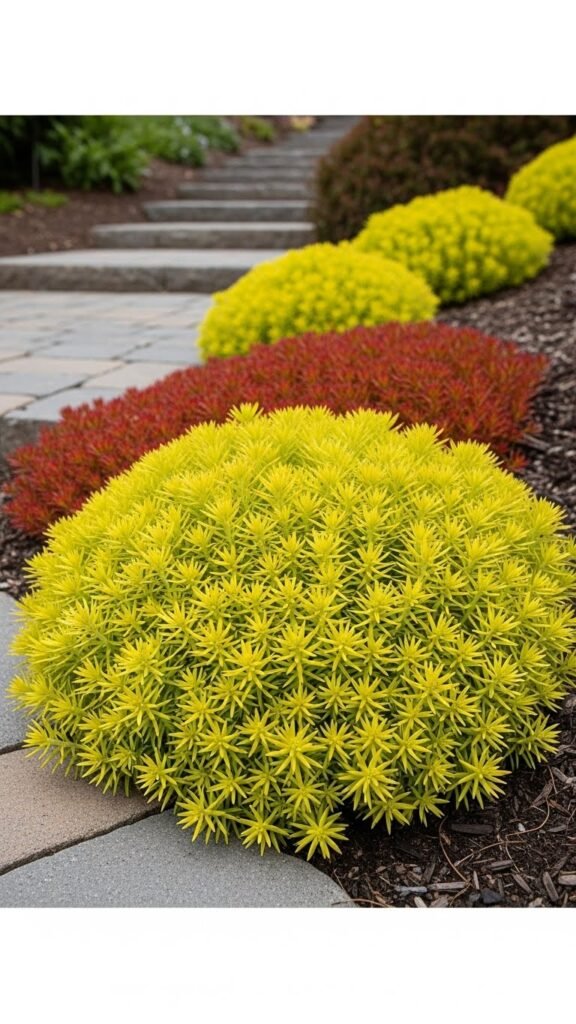
Often overlooked for beds, Sedum ‘Angelina’ forms a striking low mound of golden, needle-like foliage that flashes neon chartreuse all season and turns rich apricot in fall.
You’ll spread it on slopes, between pavers, or as a sunny mat that demands little care. Enjoy its drought tolerance and surprising winter hardiness while creating a liberated, low-maintenance tapestry of color and texture.
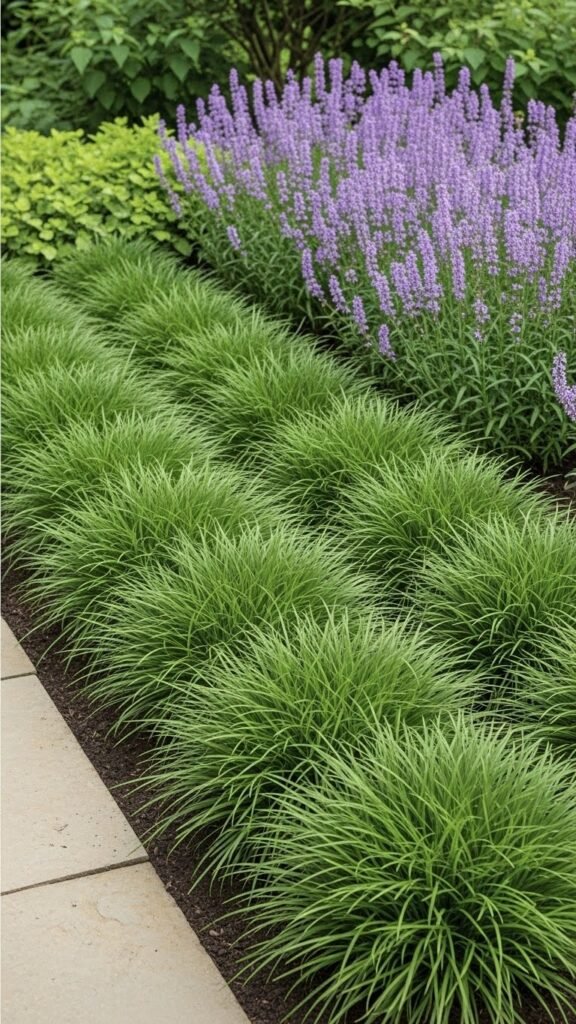
Liriope Picata
Phlox Stolonifera
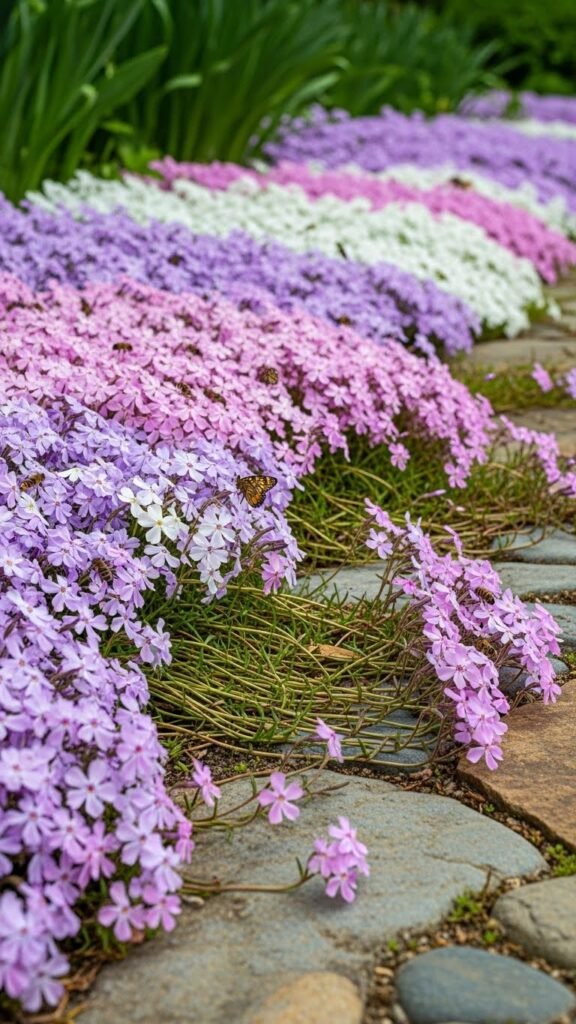
A low-growing mat, Phlox stolonifera spreads by slender runners to carpet shady borders with springtime color. You’ll love its low maintenance habit, strong shade tolerance and fragrant, flat blooms that invite bees and butterflies — solid pollinator attraction.
Plant it in drifts between stones or along pathways to create a free, living tapestry that rebounds each year with minimal fuss and vivid texture.
Creeping Thyme (Thymus Praecox)
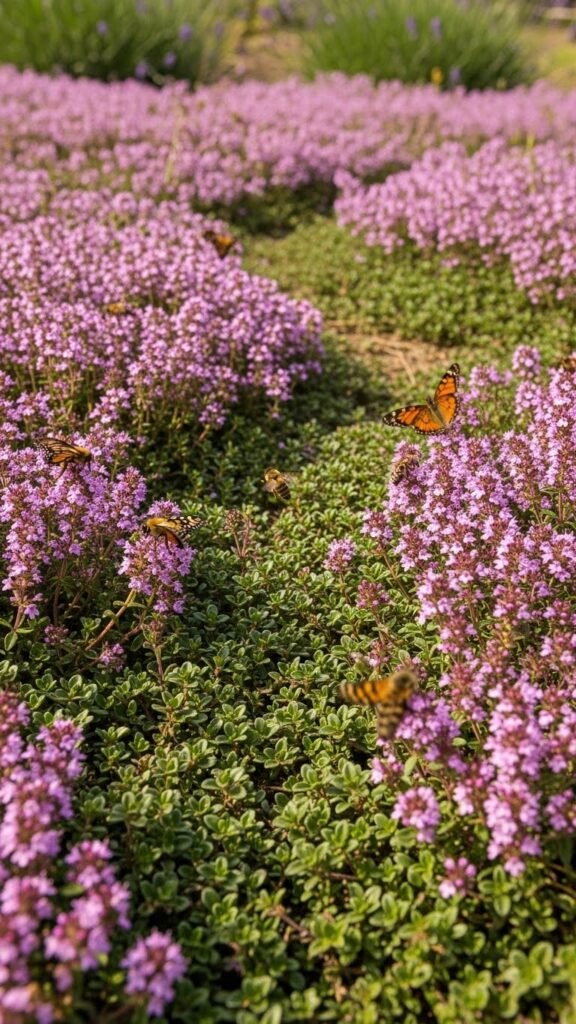
Frequently overlooked, creeping thyme (Thymus praecox) forms a dense, fragrant carpet of tiny, leathery leaves and mauve to pink flower clusters that hug the ground and tolerate light foot traffic.
You’ll love its groundcover aroma and low, spreading habit — stepable edges, drought tolerance, and easy shearing. Its pollinator magnetism draws bees and butterflies, giving your landscape freedom-filled, living pathways.
Carpet Sedum (Sedum Lineare)
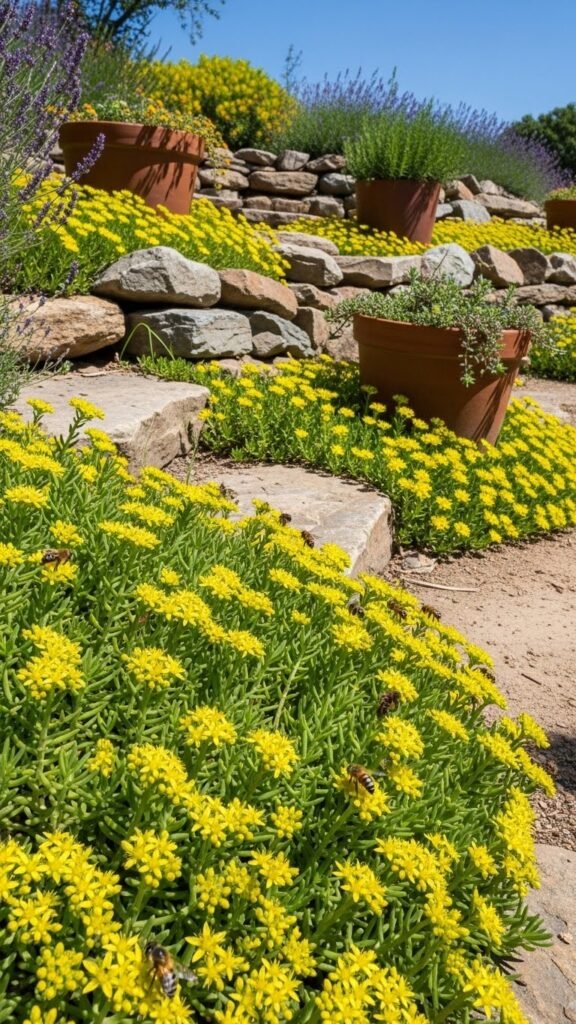
If you loved the low, fragrant carpet of creeping thyme, consider carpet sedum for spots that stay sunnier and drier.
You’ll plant flat mats of narrow, succulent leaves that shimmer in heat, offering serious drought tolerance and minimal upkeep.
It blooms tiny starry flowers that attract bees, creating a bold pollinator habitat.
Use it in rocky slopes, planters, or sun-baked paths for freedom-filled landscaping.
Phlox Subulata
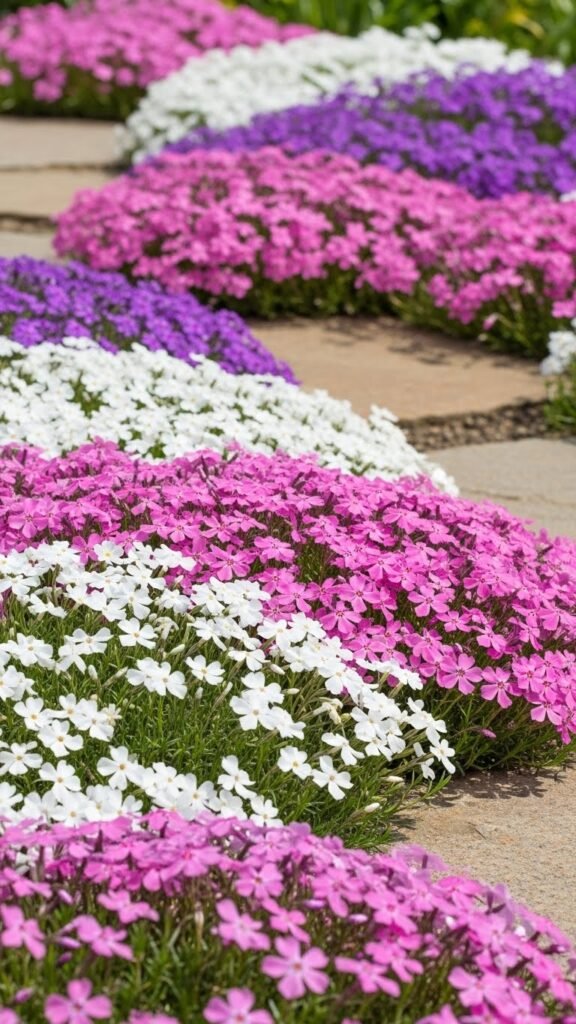
When planted in sun-drenched beds or between stepping stones, Phlox subulata spreads into dense, carpet-like mats of needle-tipped leaves and prolific, fragrant blooms that carpet the ground in pinks, whites, and purples.
You’ll love its spring bloom spectacle and low, fast habit; choose well-draining soil preferences, prune after flowering, and let it roam where you want color without fuss, drought-tolerant once established.
Red Creeping Thyme
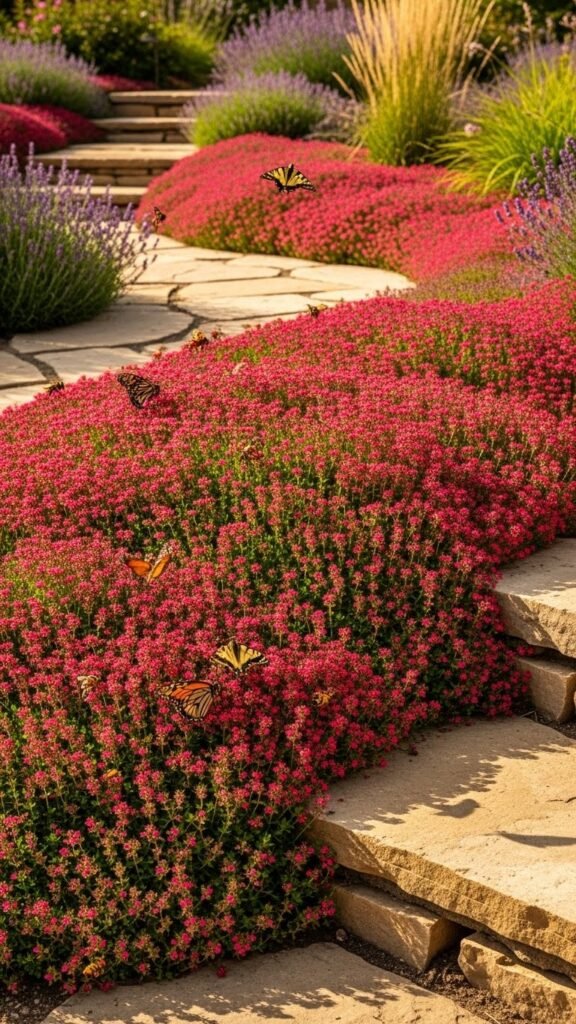
After enjoying the spring carpet of Phlox subulata, try a lower-growing, aromatic alternative: red creeping thyme. You’ll plant tight mats of tiny red blooms that hug paths and terraces, offering fragrance benefits and drought resilience. It tolerates light foot traffic, suppresses weeds, and creates a low, free-moving landscape. Expect strong pollinator attraction as bees and butterflies visit profusely.
Blue Eyed Grass (Suwannee)
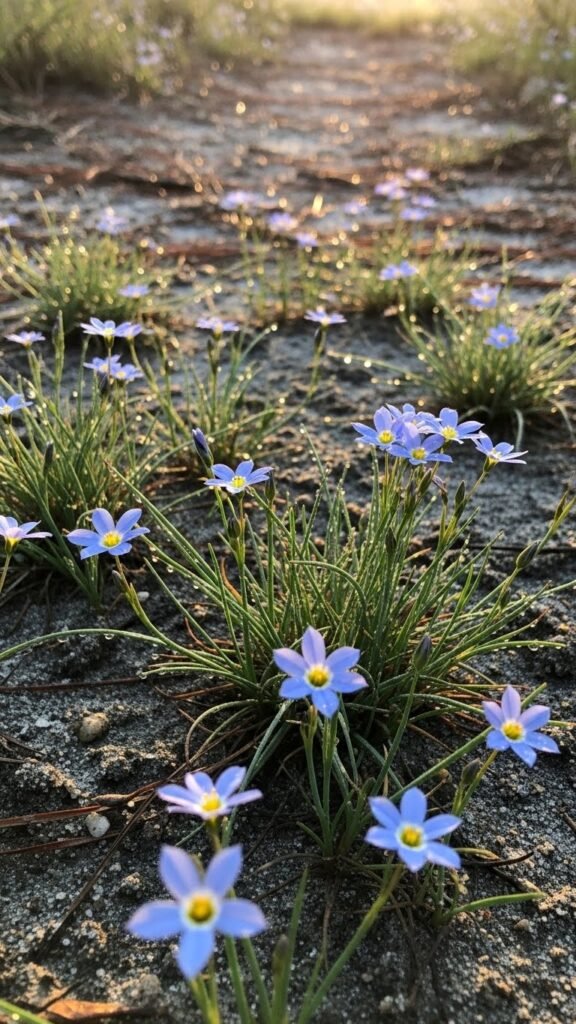
Often overlooked, Suwannee blue-eyed grass gives you delicate, starry blue flowers on grass-like clumps that brighten moist to seasonally wet spots.
You’ll appreciate its low fuss in native habitat with sandy to loamy soils.
Plant it where you want open, natural texture; bloom timing in spring brings brief, vivid patches.
It tolerates light foot traffic and invites effortless freedom in design.
Sweet Woodruff (Galium Odoratum)
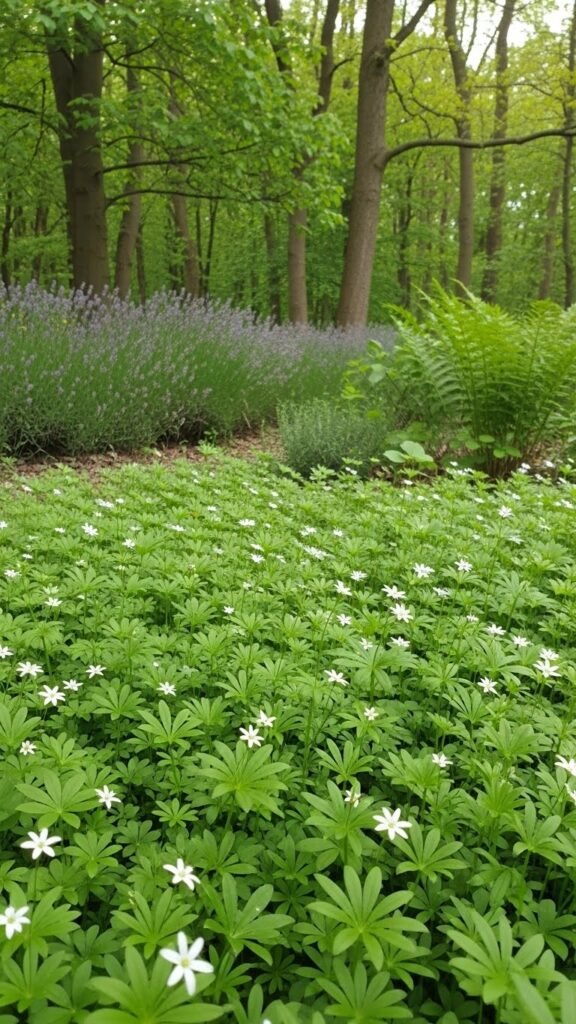
If you liked the low, textural feel of Suwannee blue-eyed grass, Sweet Woodruff offers a contrasting woodland look with tiny white starflowers and a sweet, hay-like scent in spring.
You’ll plant it for shade tolerance, soft carpet under trees, and easy maintenance.
It naturalizes quickly—use fragrance pairing with lavender or ferny herbs to craft free, aromatic paths that invite barefoot wandering.
Iris Cristata

Hardy Plumbago (Ceratostigma Plumbaginoides)
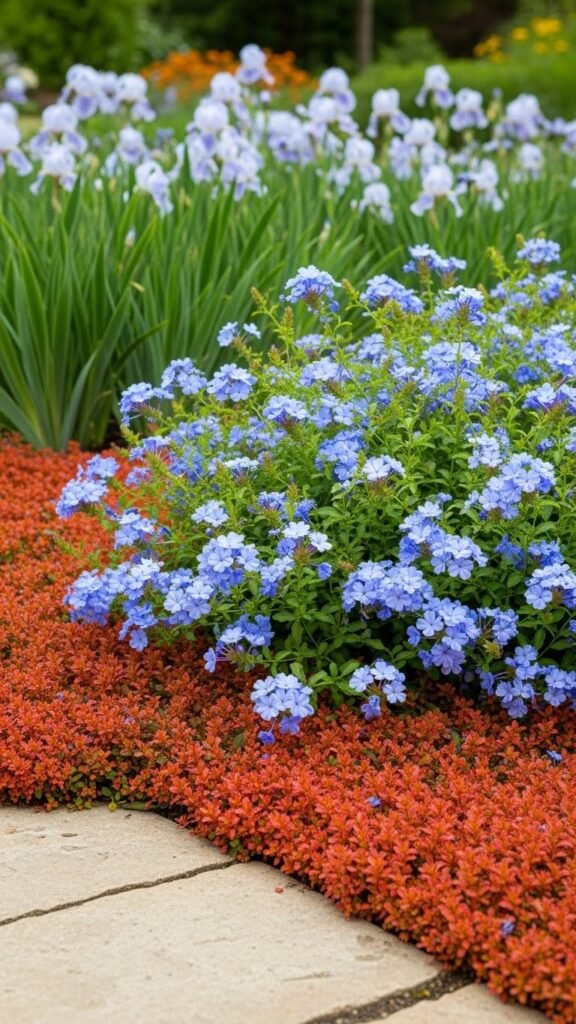
From the cool, crepe-textured drifts of Iris cristata you can move into a warmer, more jewel-toned corner with Hardy Plumbago (Ceratostigma plumbaginoides).
You’ll love its cobalt-blue late-summer blooms, coppery fall foliage and low, spreading habit.
It offers drought tolerance, easy edge definition and strong pollinator attraction, so you can swap turf for a liberated, color-rich carpet that needs minimal fuss.
Carex Appalachica (Appalachian Sedge)
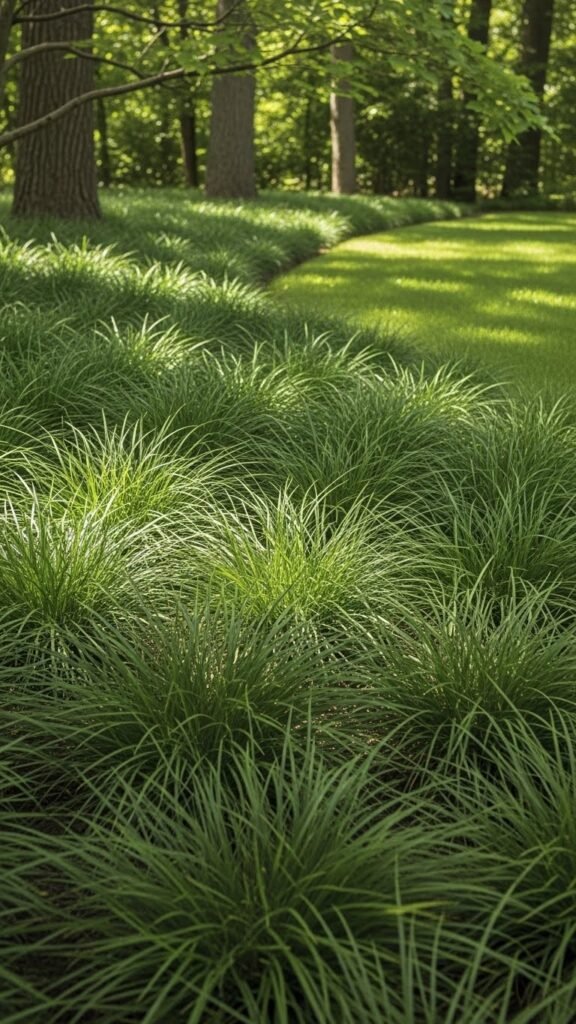
Though it prefers shady, woodland edges, Appalachian sedge (Carex appalachica) makes a fine, low-maintenance turf alternative that stays neat without constant mowing.
You’ll love its fine, arching blades and soft carpet feel. Match soil preferences to rich, well-drained humus; tolerate drier spots. Establish by plugs or seed propagation, then let it spread quietly, freeing you from rigid lawn chores.
Carex Pensylvanica (Pennsylvania Sedge)
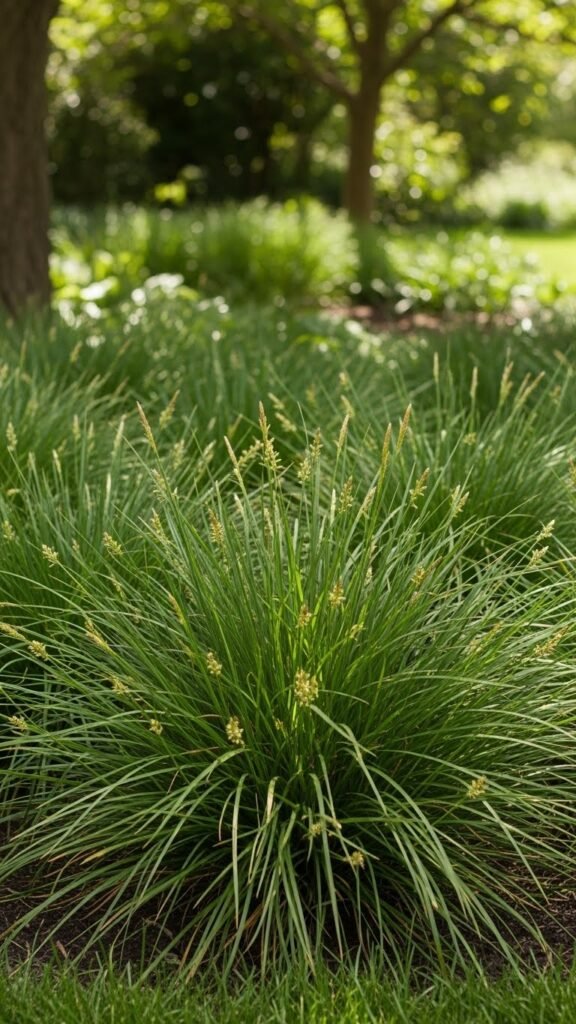
If you liked Appalachian sedge for a low-mow carpet, Pennsylvania sedge (Carex pensylvanica) offers a similar fine-textured look but thrives in sunnier, drier spots.
You’ll appreciate its graceful, narrow blades, subtle spring flowers, and spreading habit that forms soft mats. It shows good shade tolerance yet prefers light. Use it as a mowing alternative for naturalistic, low-maintenance landscapes that invite barefoot freedom.
Chamomile (Chamaemelum Nobile)
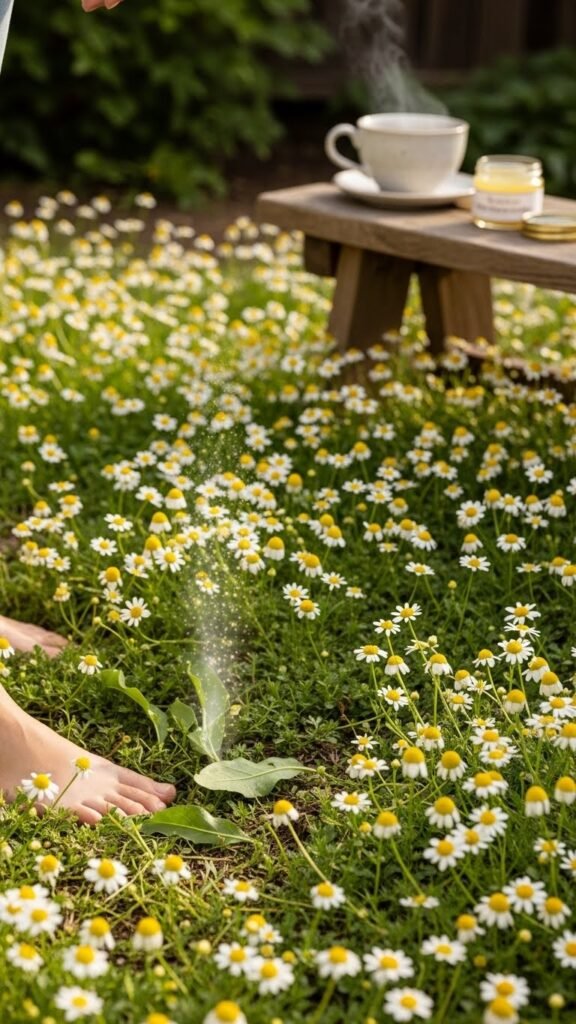
Think of chamomile as a low, fragrant carpet that invites barefoot strolls and rewards you with tiny daisy-like blooms; Chamaemelum nobile stays compact, spreads modestly by stolons, and gives off a warm apple scent when crushed.
You’ll enjoy its medicinal uses in teas and salves, easy care, drought tolerance, and steady pollinator attraction—perfect for a liberated, low-maintenance lawn alternative.
White Clover (Trifolium Repens)
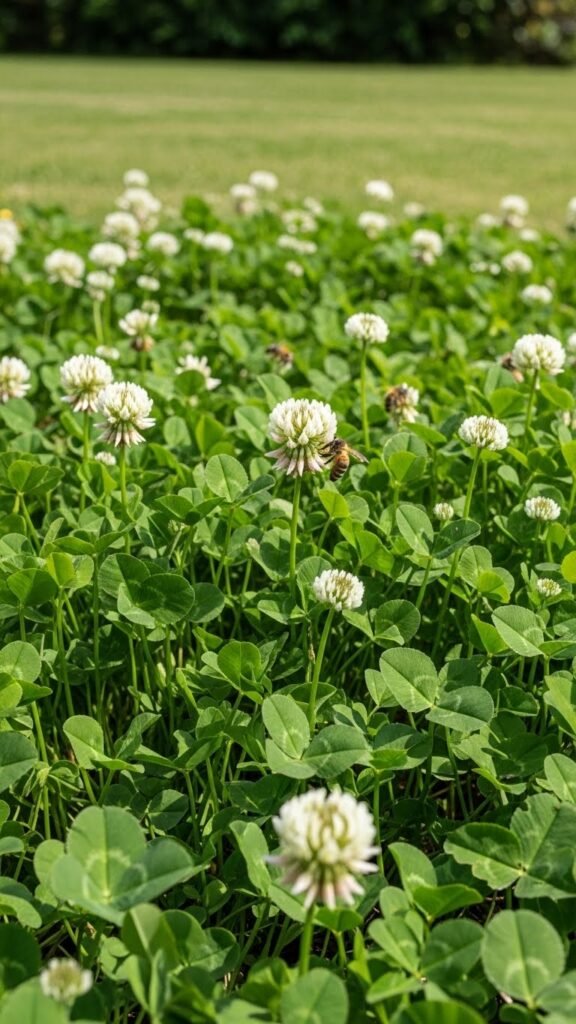
A carpet of rounded trifoliate leaves and soft white flower heads, white clover (Trifolium repens) fixes nitrogen, tolerates foot traffic, and fills thin lawns with low, cooling green.
You’ll welcome resilient, self-seeding mats that suppress weeds, need less mowing, and rebloom through summer. It attracts pollinators as reliable bee forage, withstands light wear, and gives you a liberated, low-maintenance turf alternative.
Ajuga Reptans
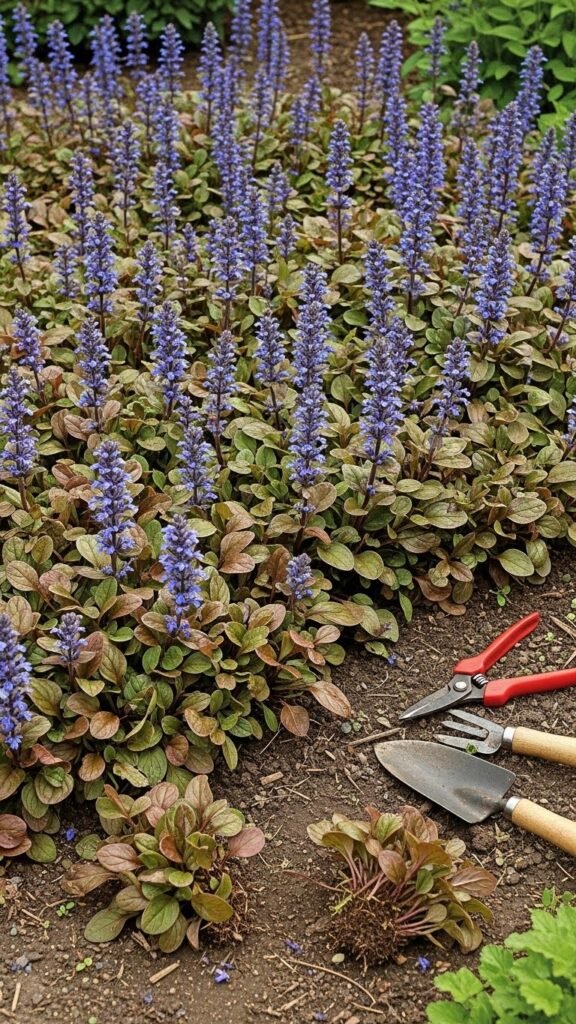
With glossy, bronze-tinged foliage that creeps into gaps and forms dense mats, Ajuga reptans makes a dramatic, low-growing groundcover that tolerates shade and light foot traffic.
You’ll enjoy bold color, blue flower spikes that offer pollinator support, and simple groundcover maintenance: occasional trimming to prevent runaway runners, divide crowded clumps, and let it spread where you want freedom from mowing.
Creeping Jenny
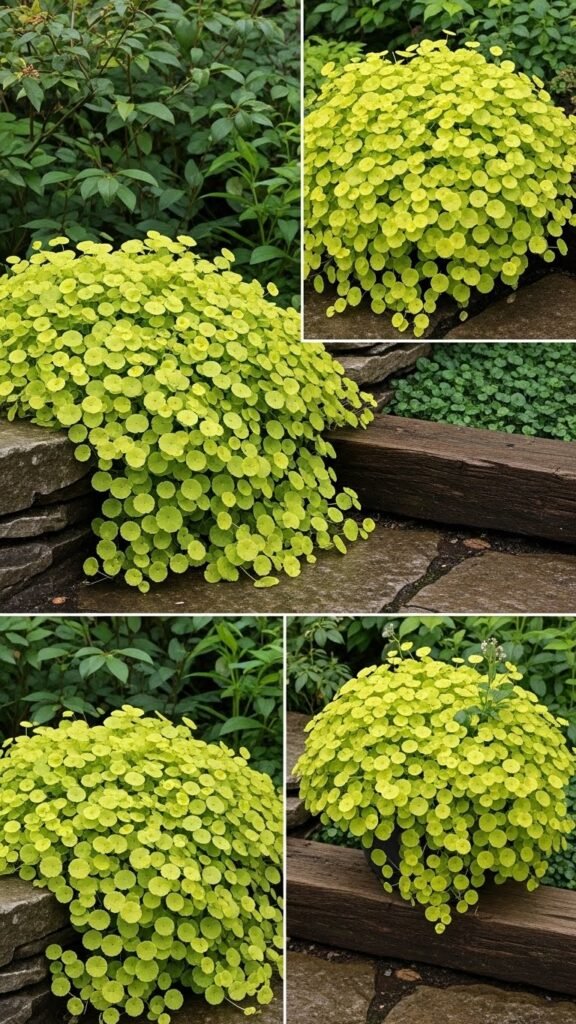
Often overlooked, Creeping Jenny (Lysimachia nummularia) carpets moist spots with round, chartreuse leaves that brighten shade and tame edges.
You’ll love its quick spread and bold color contrast against stone or wood. Use it where grass fails: shaded banks, damp paths, or in container planting for portable swaths.
It shows strong shade tolerance but needs occasional pruning to keep freedom from takeover.
Snow Flurry Aster
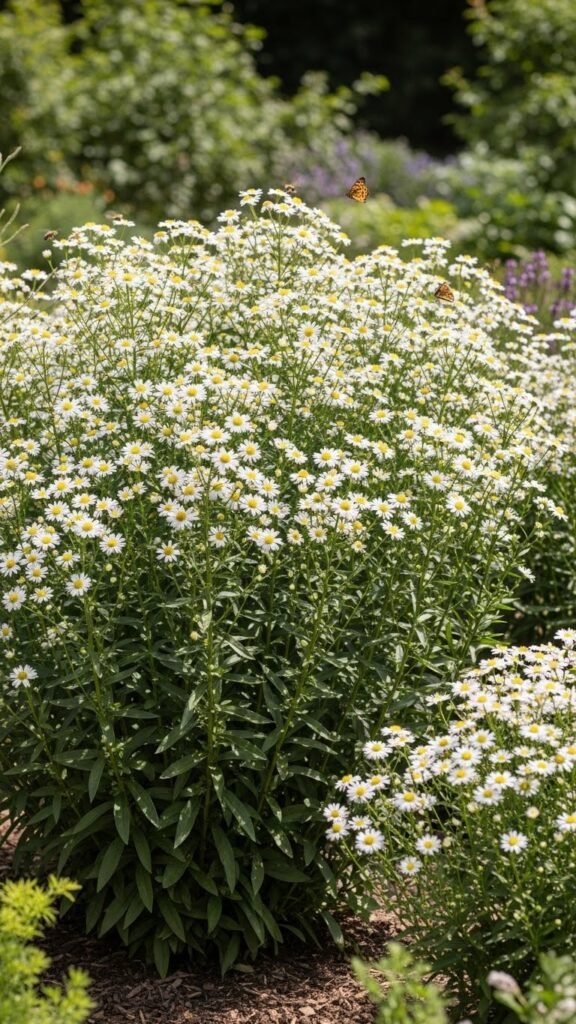
Snow Flurry Aster bursts into late-season life with clouds of tiny white daisies that brighten borders and edges when most other perennials are winding down. You’ll love its airy habit and easy care: full sun, well-drained soil, low maintenance.
It boosts pollinator attraction, supports bees and butterflies, and self-seeds if you let it — seed propagation keeps colonies expanding for freedom-filled, low-lawn landscapes.
Sedum Spp. (Stonecrop)
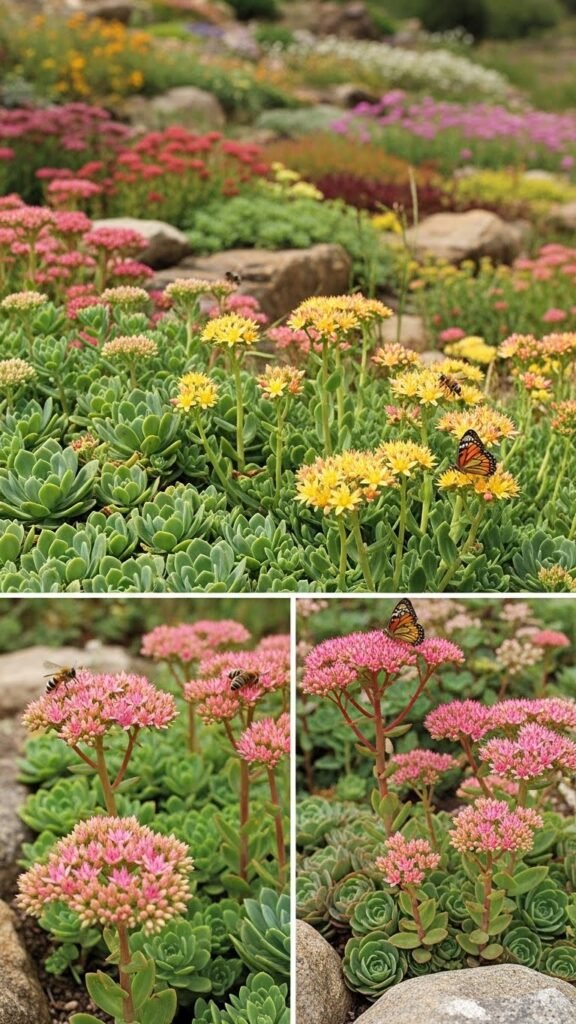
Sedums (stonecrops) give you tough, low-growing coverage that thrives where grass won’t — rocky, dry beds and sunny slopes. You’ll love their sculptural mats, succulent leaves and bright flowers that attract pollinators.
They offer exceptional drought tolerance, need minimal soil, and fit wild, free landscapes. Use simple propagation methods — stem cuttings or division — to spread them fast and effortlessly.
Bearberry (Arctostaphylos Uva-Ursi)
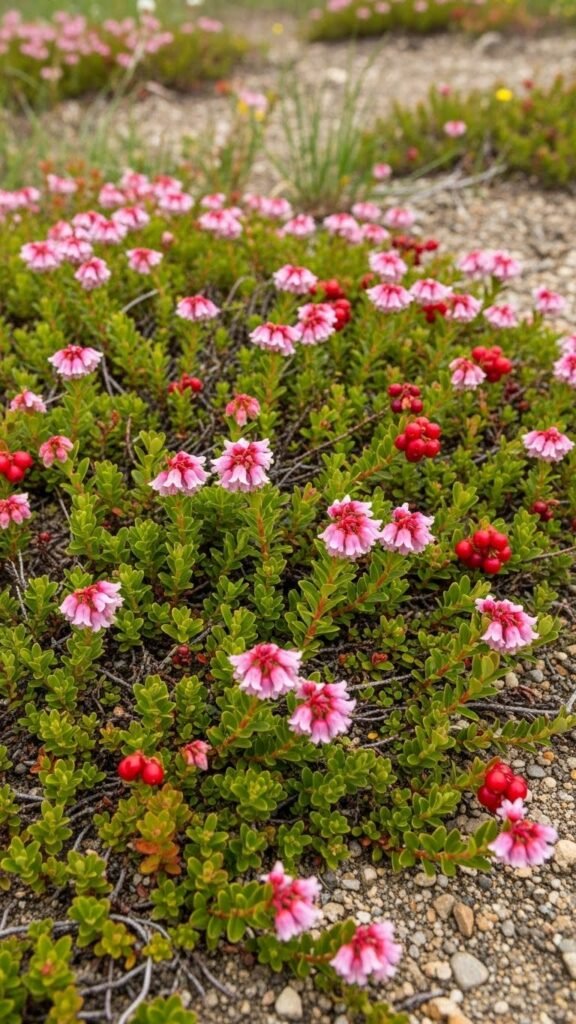
While low and spreading, bearberry (Arctostaphylos uva-ursi) packs a lot of landscape impact: glossy evergreen leaves form a dense mat, pink urn-shaped flowers in spring feed pollinators, and bright red berries persist into winter.
You’ll plant it in poor, well-drained soils, add minimal soil amendment, and enjoy erosion control plus wildlife benefits — a carefree, sculptural groundcover for wild gardens.
Field Sedge (Carex Praegracilis)

Tight clumps of Field Sedge (Carex praegracilis) create a fine-textured, grasslike carpet that’s ideal for replacing turf in sunny, dry spots; you’ll appreciate its narrow, arching blades, tolerance for foot traffic, and clean, low-maintenance habit.
You’ll like its drought tolerance and modest root competition, minimal invasive potential in managed sites, and subtle pollinator support from wind- and insect-friendly blooms.
Sheet Moss (Hypnum Imponens)
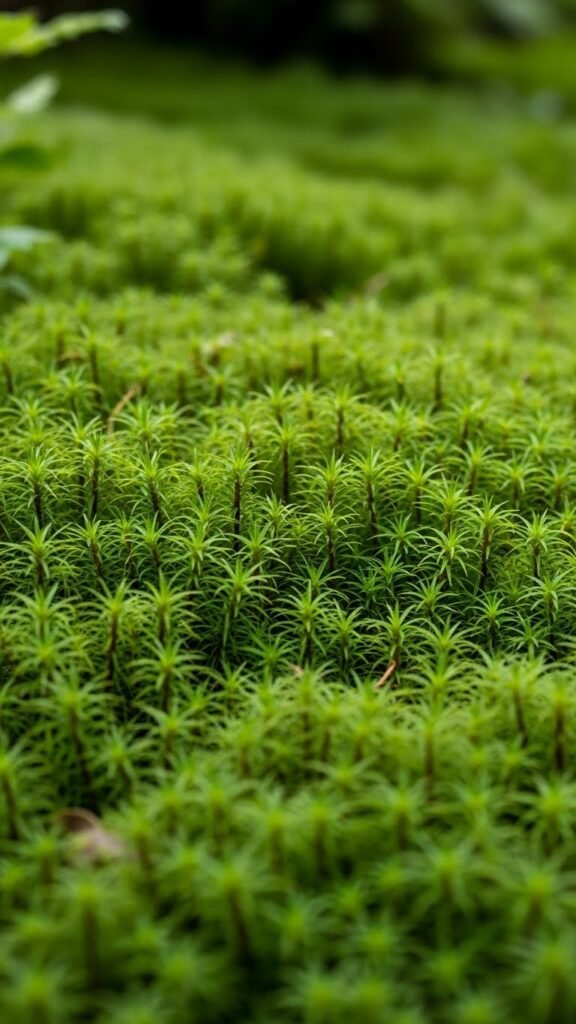
A soft green carpet, sheet moss (Hypnum imponens) thrives in shady, moist pockets where grass fails, forming dense, low mats of feathery stems that you can walk on lightly and admire up close.
You’ll favor its low maintenance, erosion control, and quick spread; use in moss terrarium displays or larger bryophyte restoration projects to reclaim corners, free your lawn from mowing, and invite quiet texture.