
You’ll find practical, space-smart layouts to reset any yard or balcony, with clear circulation, soil-building steps and plant groupings that cut maintenance and boost yields. I’ll guide you through border strategies for tight spaces, symmetric twin beds, keyhole and terrace systems, spirals and container ensembles so you can pick a plan that matches your site and season — and then tweak it for pollinators, rotation and easy harvests.
Border Gardens for Narrow Spaces
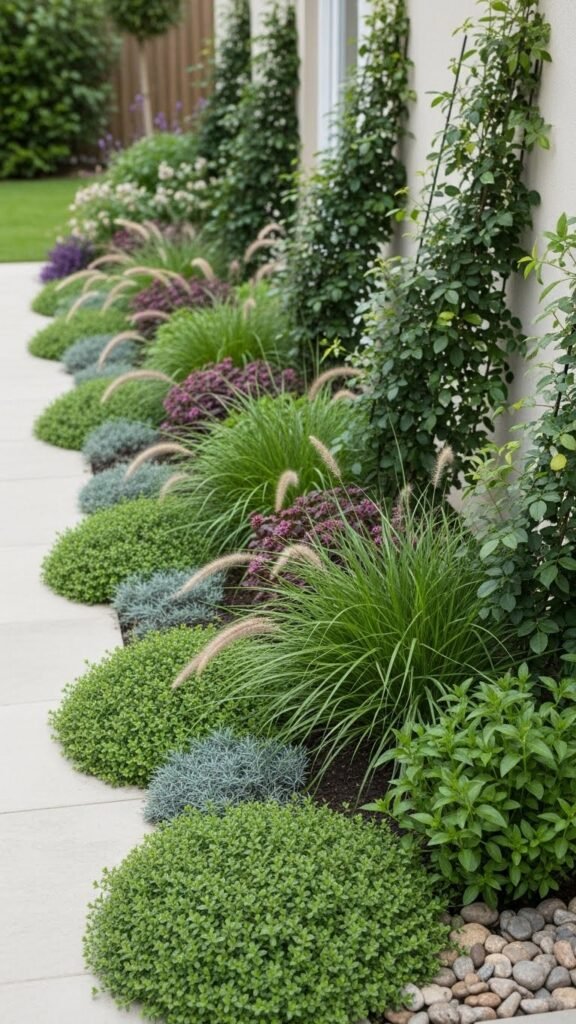
If you’re working with a narrow strip, think vertical and layered: place low-growing, durable edging plants up front, medium-height perennials or ornamental grasses behind them, and narrow-stature shrubs or trained climbers at the back to create depth without crowding the walkway.
Use vertical herb beds and a micro rockery to add texture, conserve space, guide movement, and let you arrange freedom-focused, low-maintenance borders.
Twin Gardens for Symmetry

Mirror your layout to create calm, ordered spaces: twin gardens pair identical beds, paths, and focal points on either side of an axis so you get instant balance and an easy-to-maintain design.
You’ll use mirror plantings and balanced pathways to simplify decisions, repeat successful combinations, and speed upkeep.
Place a central feature, match materials, and keep proportions consistent so maintenance stays freeing and straightforward.
Four-Garden Classic Layout
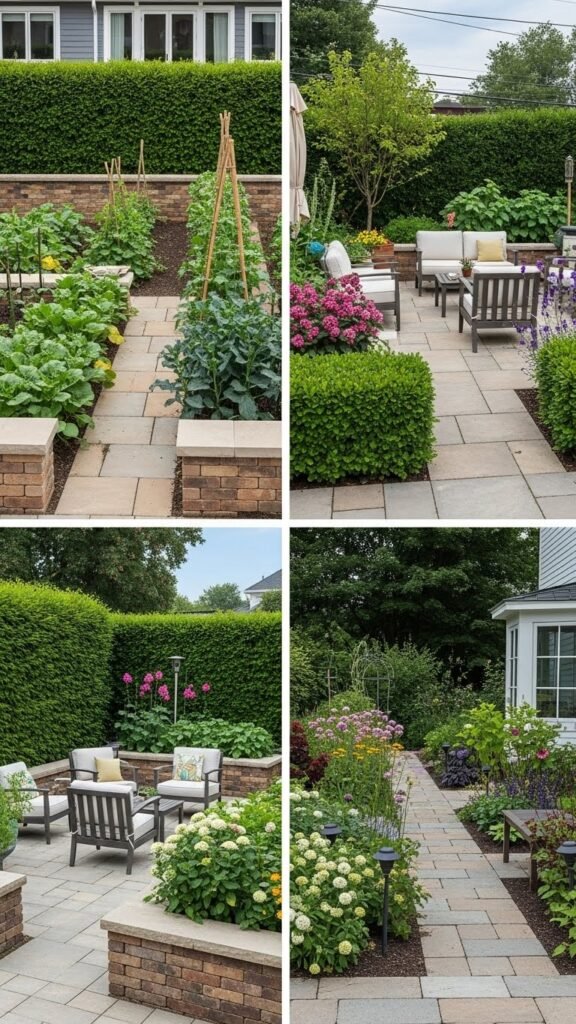
A classic four-garden layout divides your outdoor space into four distinct but connected rooms, each defined by paths, hedges, or low walls so you get clear zones for different uses.
You’ll arrange formal quadrants for function—produce, ornamentals, relaxation, and experimentation—keeping an heirloom focus in one bed.
Design clear circulation, choose durable materials, and plant for easy maintenance so you stay free to adapt.
Keyhole Garden Design
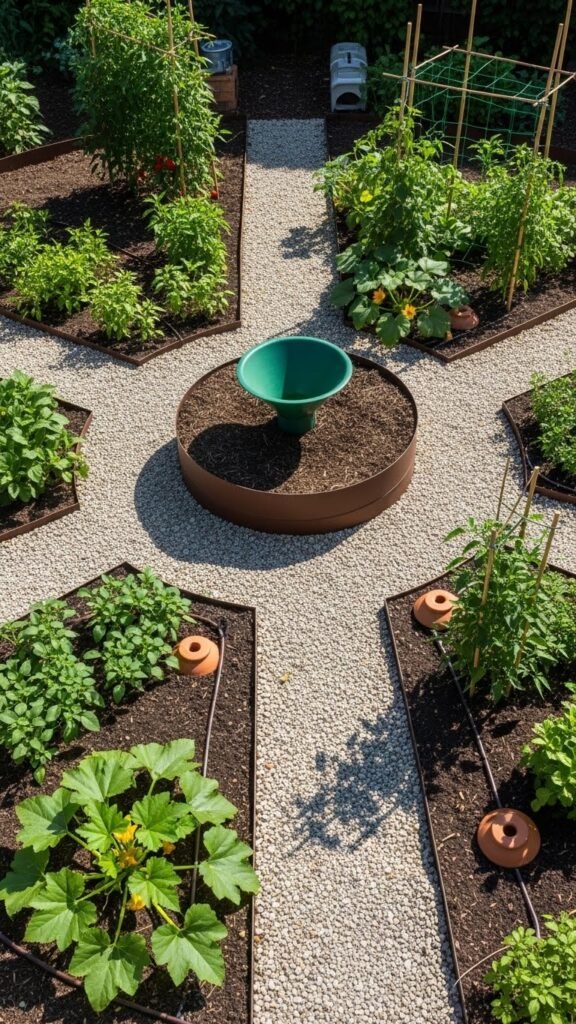
Moving from the organized quadrants of the four-garden plan, you’ll find the keyhole garden offers a compact, highly productive alternative that concentrates work and resources for maximum yield.
You’ll arrange a circular bed with a central compost funnel for easy feeding, shape microclimate mounds to shelter heat-loving crops, and plan radial paths for access.
Build soil depth, water efficiently, and rotate crops seasonally.
Vertical and Block Vegetable Beds
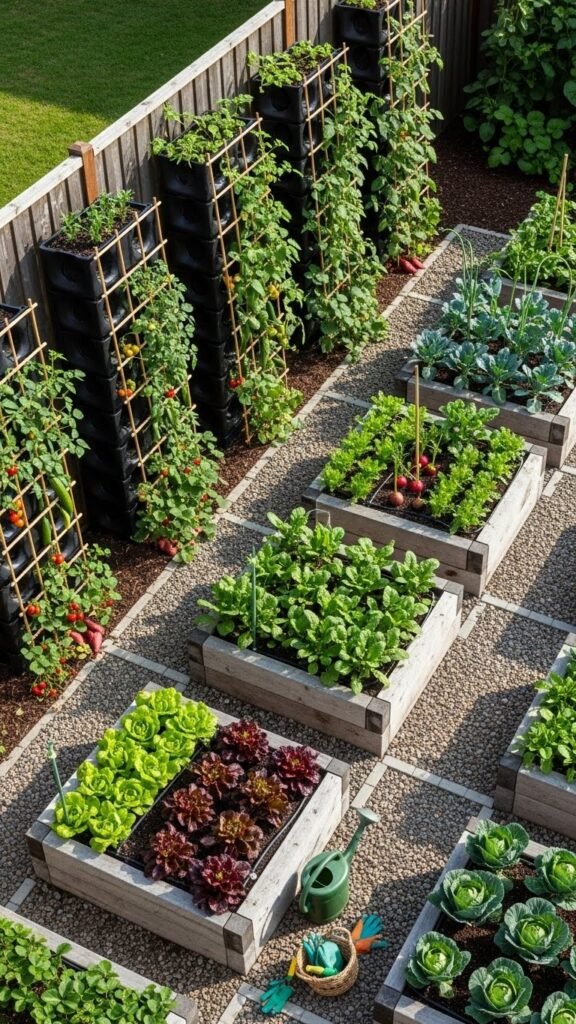
Think about stacking and grouping to get more food from the same footprint: vertical beds lift vining and trailing crops into layers, while block beds concentrate root vegetables and leafy greens in contiguous, easily managed squares. You’ll design with vertical trellises and staggered tiers, assign sunlight, pathways, and irrigation, and prune, sow, and rotate crops to maximize yield while keeping maintenance simple and liberating.
Courtyard Kitchen Garden
Framing your edible patch around a sheltered courtyard gives you year-round access, microclimate control, and intensive production in a compact footprint.
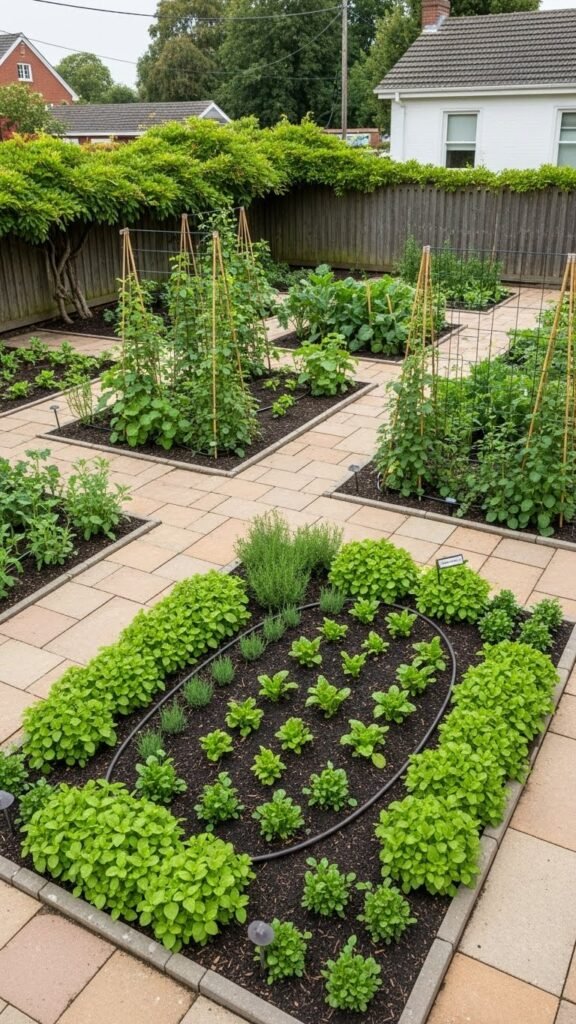
You’ll use microclimate mapping to place sun‑loving herbs, shade‑tolerant greens, and heat sinks for season extension. Design paths for harvest flow, integrate trellises for edible privacy, and choose low‑maintenance irrigation.
This keeps the space productive, private, and liberating.
Raised Bed Rectangle Plan
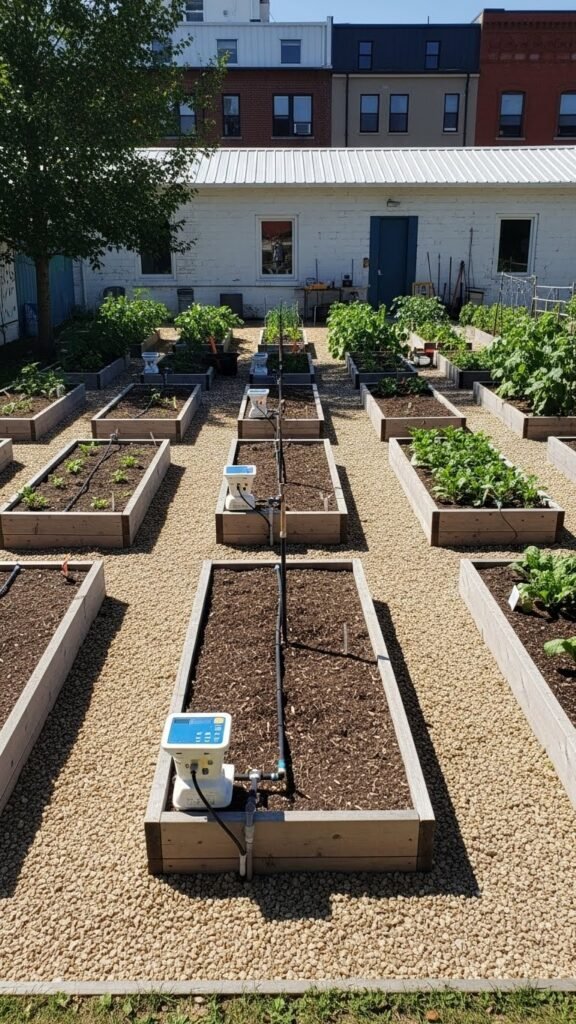
Shifting from a courtyard’s compact microclimate to a raised bed rectangle lets you scale productive, accessible growing space without sacrificing structure or aesthetics.
You’ll orient long beds for sun, perform soil testing to set amendments, and plan an irrigation layout that minimizes waste.
Build 3–4 ft wide beds for reach, set paths for freedom of movement, and choose durable materials for crisp edges.
Square Foot Garden Grid
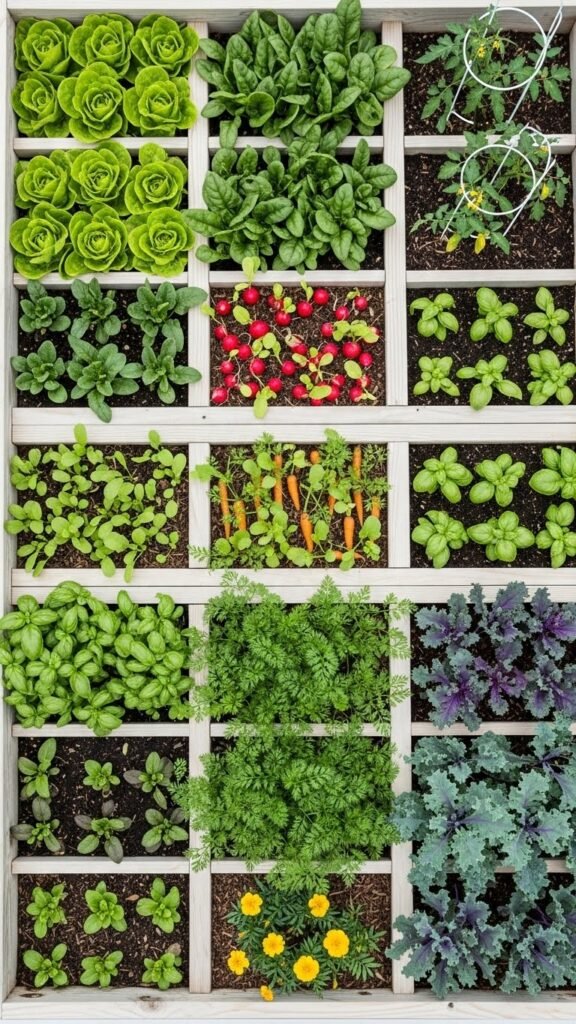
Lay out a tidy grid of one-foot squares so you can maximize yield in a compact space and keep planting, watering, and harvesting precise. Use companion mapping to group compatible crops, note spacing per square, and rotate crops each season. Perform soil testing before planting, amend as needed, and mark nutrient zones. This system gives you flexible, efficient beds that simplify care and boost harvests.
3×12 Raised Bed Series
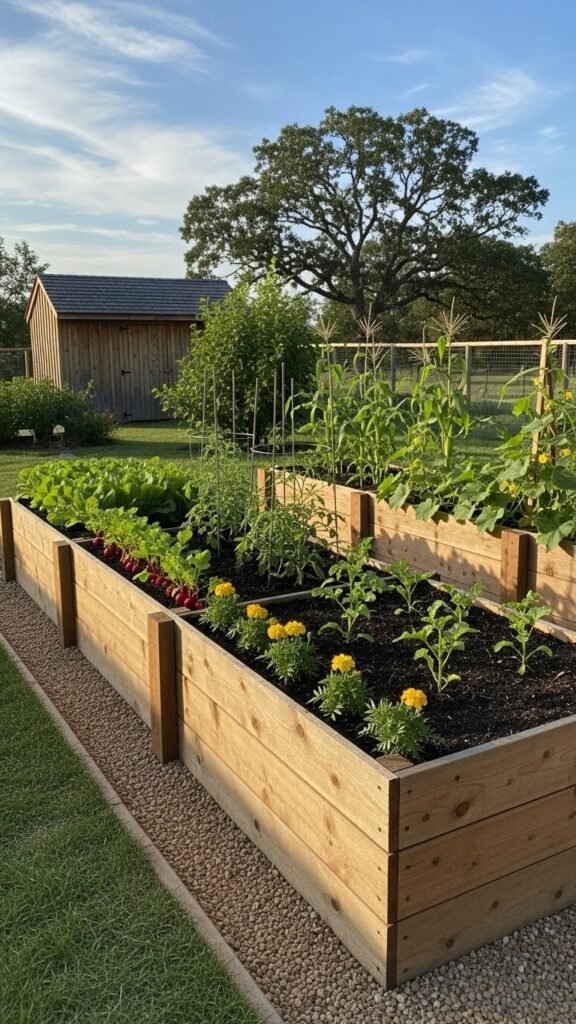
Moving from a one-foot grid to a multiple-bed system lets you scale that same precision across a full garden: the x12 Raised Bed Series multiplies modular beds for crop diversification, season extension, and ergonomic spacing.
You’ll arrange twelve standardized beds for rotational planting, plan perennial integration along edges, and design an efficient irrigation layout.
This lets you manage soil, access, and timing with confident freedom.
Herb Spiral for Compact Flavor
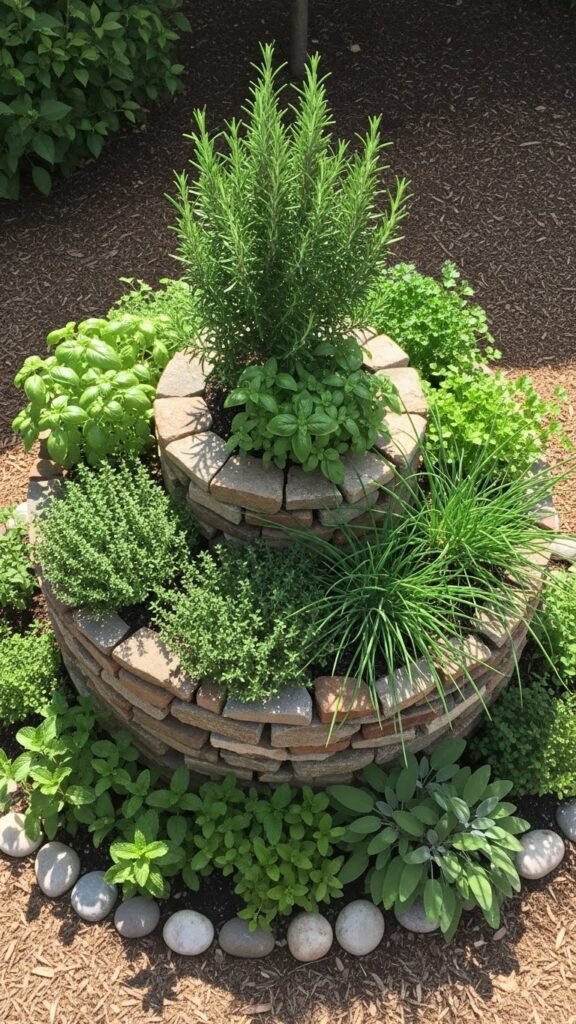
Build an herb spiral to pack a variety of microclimates into a small footprint and give each herb the drainage, sun exposure, and soil depth it prefers. You’ll sculpt terraces for height, place thirsty plants low, drought lovers high, and use spiral irrigation to target roots. Focus on microclimate design, compact access paths, and layered planting so you’ll harvest intensely with minimal maintenance.
Intensive Block Planting

Maximizing yield in a small space, intensive block planting replaces single-file rows with compact, closely spaced blocks of crops so you can harvest more per square foot while cutting weed and water needs.
You’ll design high density beds using intensive spacing, plan staggered succession for continuous harvests, and apply microclimate management—shade, windbreaks, mulches—to free you to garden efficiently and creatively.
Corner L-Shaped Border Bed
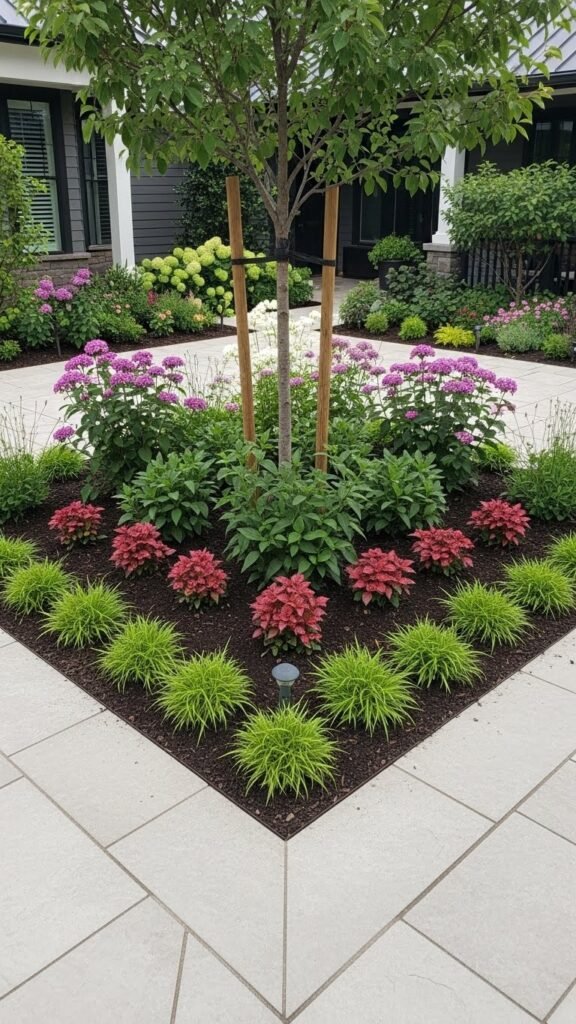
If the U-shaped workstation put everything within reach for active tasks, the corner L-shaped border bed lets you frame and soften hard edges while keeping high-impact planting where people see and use it most.
You’ll position bold specimens at sightlines, add soil amendment for structure, and route corner irrigation discreetly. Keep paths clear, layer heights for freedom of movement, and prune to maintain rhythm.
Perimeter Fence Planting
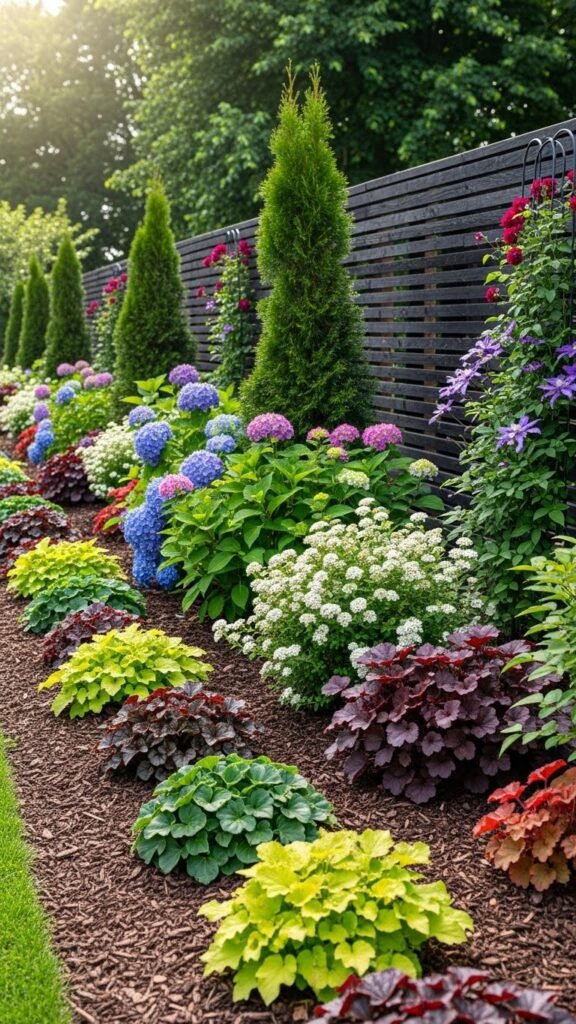
Think of the perimeter fence as both a backdrop and a working edge: you’ll use it to screen views, steady wind, and create a vertical plane for layered planting.
Position a native hedge for structure, intersperse climbers on trellis, and leave gaps to support wildlife corridors.
Choose low-maintenance spacing, stagger heights, and plan access for pruning and seasonal shifts so you stay free to adapt.
Pocket Garden Clusters
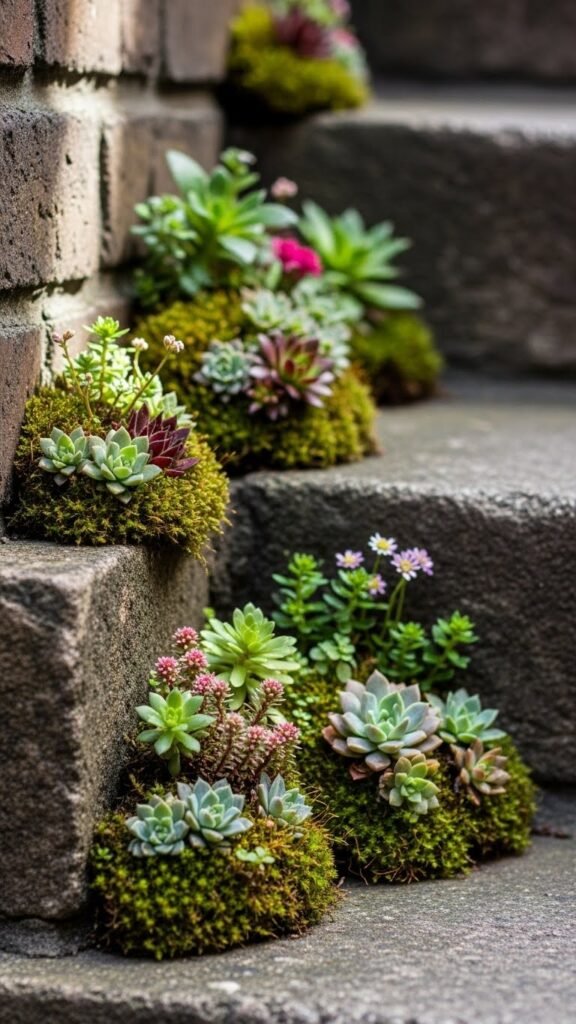
Moving from the edge treatments around a fence, you can concentrate energy into compact, high-impact pocket garden clusters that fit into courtyards, corners, or between paths.
Design micro pocket beds with layered heights, drought-tolerant anchors, and aromatic edges.
Plant edible clusters for quick harvests and visual rhythm.
You’ll maximize yield, maintain access, and preserve a sense of open, liberated space.
Central Pathway Split Beds
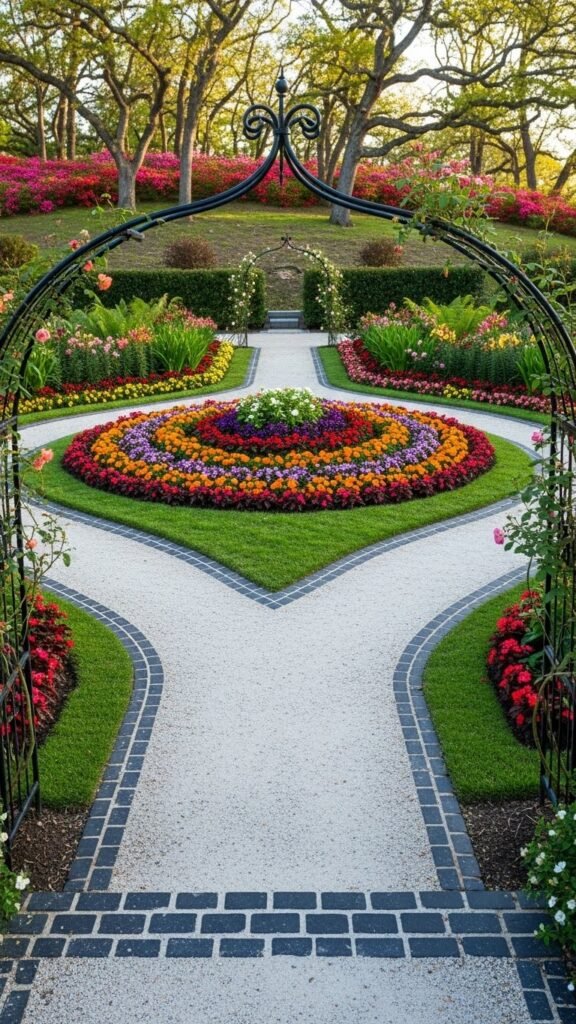
Along a central path, split beds create a strong organizing axis that guides movement and frames views while giving you doubled growing edge for planting. Place a centered walkway for balance, then size beds for reach and rotation.
Use split hedging to define sightlines without confinement. Plant layered textures, leave clear access, and rotate crops or ornamentals so you keep freedom and order.
Serpentine Border Beds
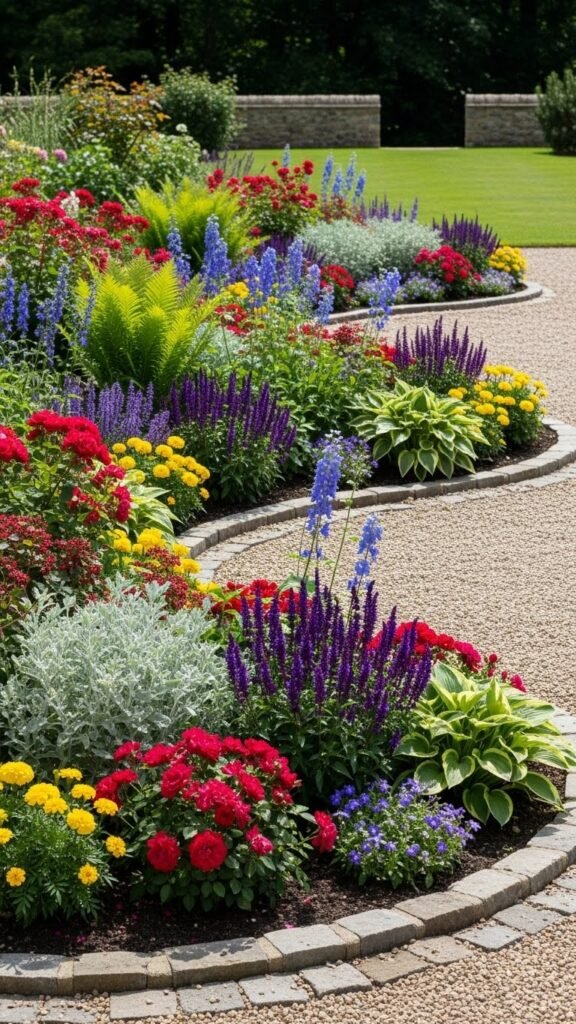
Often a serpentine border softens hard edges and draws the eye along a flowing edge, giving your garden a relaxed, natural rhythm while maximizing planting frontage.
Use curves to create meandering natives beds, stagger heights, and place focal plants at bends. You’ll encourage habitat corridors, ease maintenance paths, and maintain freedom to tweak compositions seasonally for resilient, expressive borders.
Alleyway and Side Yard Strips

If serpentine borders teach you how curves and focal bends make the most of narrow edges, alleyway and side yard strips ask you to work with even tighter footprints and different constraints.
You’ll prioritize linear planting, sunken planters to save space and retain moisture, and crisp paths.
Use verticals and utility screening to hide meters, keep access, and create a liberated, orderly flow.
Patio Container Ensemble
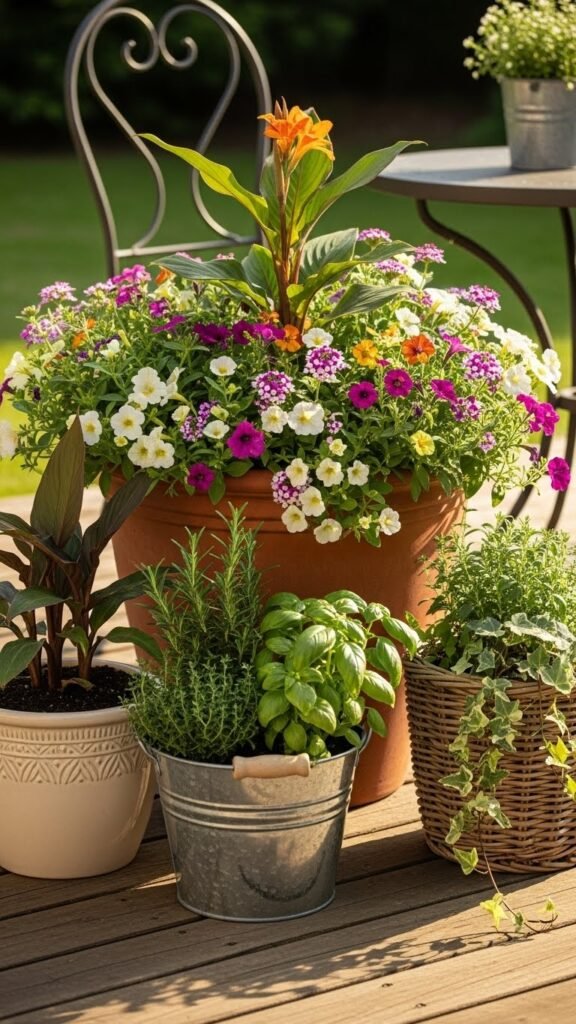
Patio container ensembles let you create a full garden in a compact, movable package; think of them as layered compositions where pot size, scale, and placement determine rhythm and sightlines.
You’ll choose a focal container, balance with companion pots, and use a succulent arrangement for texture. Plan irrigation, weight, and seasonal rotation so you can rearrange freely and keep the composition sharp.
Driveway Edge Planting
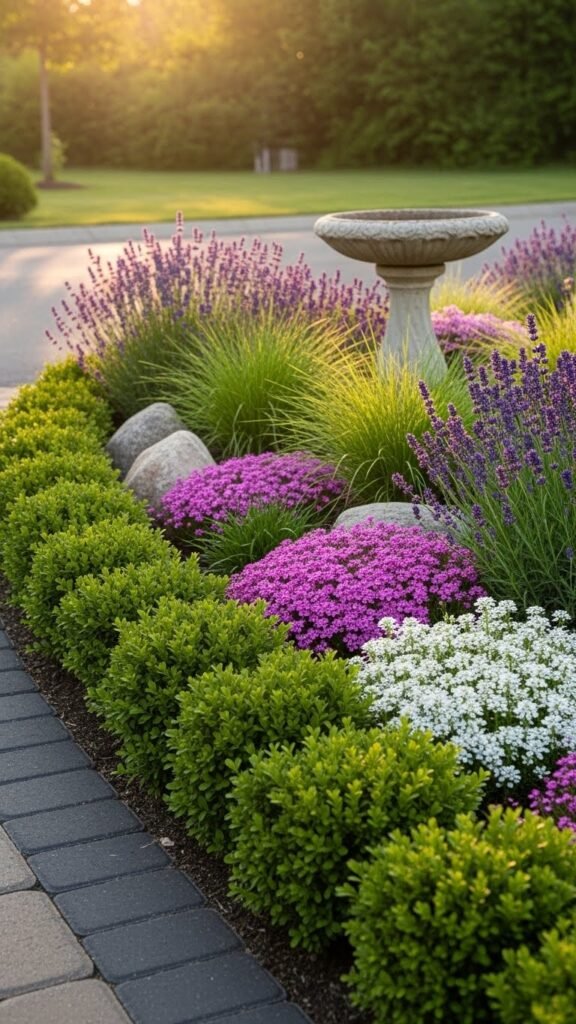
Line your driveway edge with a clear plan: pick plants that define the boundary, control sightlines, and tolerate salt, heat, and occasional foot traffic. You’ll choose low maintenance edging like clipped grasses, compact shrubs, and gravel ribbons.
Place drought tolerant borders for resilience, allow clear sightlines for safety, and leave gaps for access. Maintain annually with light pruning and mulch refresh.
Pollinator-Friendly Flower Border

After framing your driveway with clipped grasses and drought-tolerant shrubs, bring color and wildlife closer to the house by planting a pollinator-friendly flower border along the next sunny edge. You’ll select native pollinators’ preferred blooms, stagger heights for structure, and group seasonal nectar plants for continuous forage.
Mulch lightly, avoid pesticides, and prune deadheads to encourage repeat blooms and freedom in your garden.
Seasonal Succession Blocks

When you design seasonal succession blocks, plan plant groupings so one crop finishes as the next is ready to take its place, maximizing yield from the same bed across spring, summer, fall, and even winter.
You’ll map beds with clear season mapping, schedule succession plantings, rotate families, and stagger sowings. Lay paths for access, label dates, and reclaim space efficiently for freedom to adapt.
Multi-Level Terrace Beds
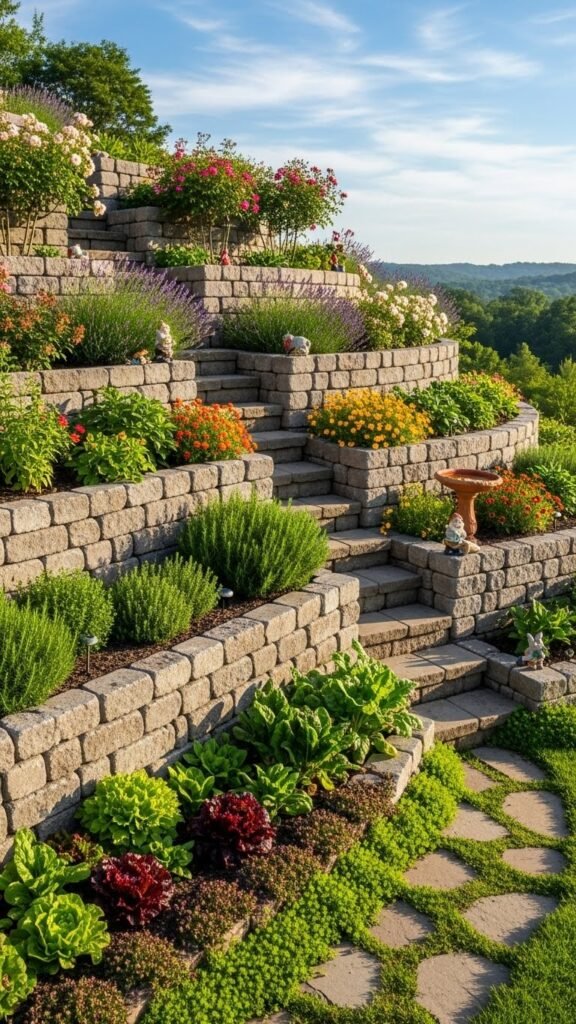
Staggering beds into multi-level terraces lets you work with slope and microclimates to boost usable growing area and control erosion; you’ll place higher beds for heat-loving crops and lower, moister shelves for greens and root vegetables.
Design sunken terraces to retain moisture, shape paths for access, and use dry stone risers for stability.
You’ll plan irrigation, soil mixes, and maintenance zones for freedom in harvest.
Crop Rotation Bed Series
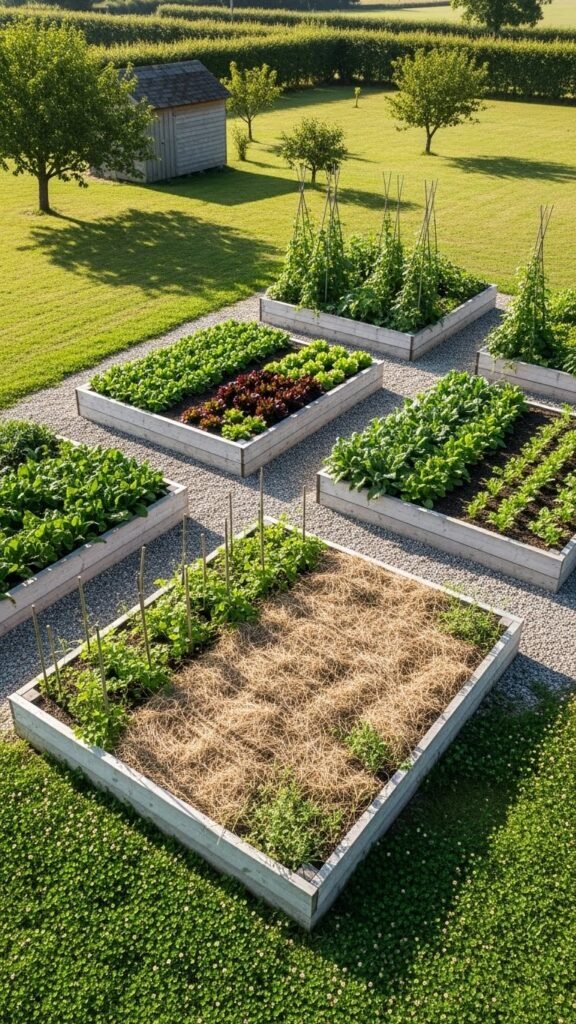
Although crop rotation takes a little planning up front, it keeps your beds productive, breaks pest and disease cycles, and balances soil nutrients across the season.
You’ll sketch soil mapping to track bed histories, assign families by year, and rotate heavy feeders to avoid depletion. Schedule legume fallow to replenish nitrogen, note timing, and label beds so you can act with confident, liberated design.
Compost-Integrated Bed System
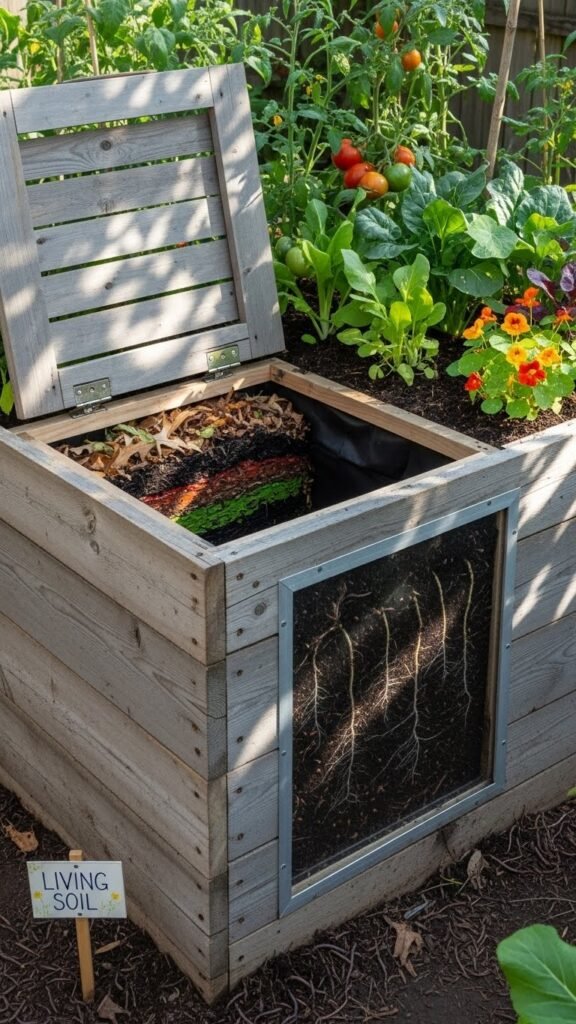
With a simple plan and regular input, you’ll make compost the backbone of each bed so soil life, structure, and nutrients are renewed where crops need them most.
Design trenches for compost trenching along planting rows, topdress pathways, and layer compost to feed roots. Add microbial inoculants to jumpstart biology, monitor moisture, and rotate crops to keep beds productive and low-maintenance.