
You’ll find 25 garden pathway ideas that make moving through your yard feel intentional and lovely. From meandering flagstone trails layered with thyme to crisp herringbone brick and modern concrete grids with grass seams, each concept balances look, drainage, and upkeep. You’ll get practical notes on materials, edging, planting, and lighting — enough to spark a plan for your own space and keep you wanting one more option.
Flagstone Meandering Path With Creeping Thyme
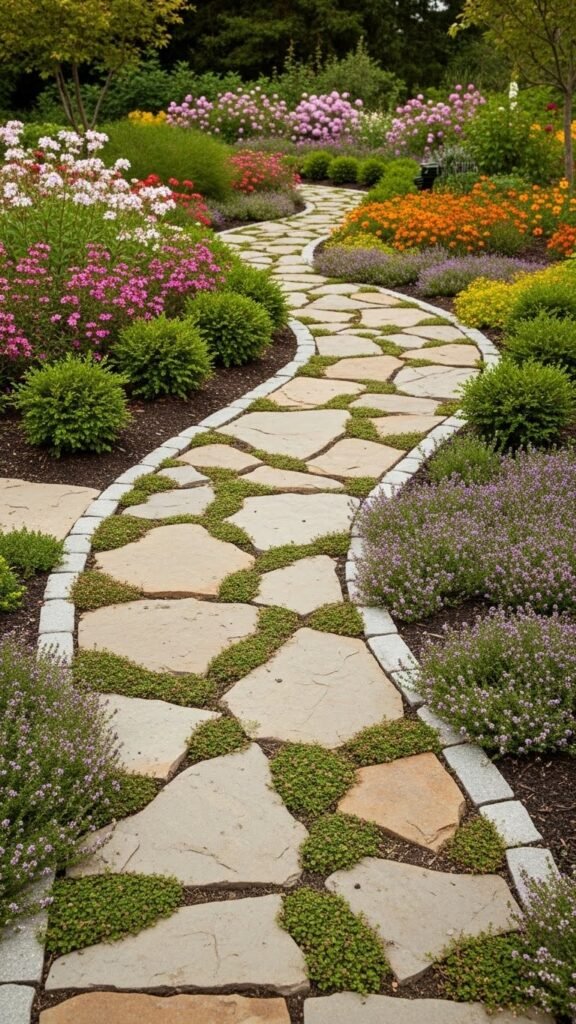
Winding through beds and under low shrubs, a flagstone meandering path with creeping thyme gives your garden a natural, lived-in look while staying low-maintenance.
You’ll set irregular stones with minimal mortar, tuck scented groundcover between joints, and anchor edges with subtle stone edging.
The result feels free and intentional: barefoot-friendly, aromatic, and easy to maintain so you can wander without worrying about upkeep.
Classic Brick Herringbone Walkway
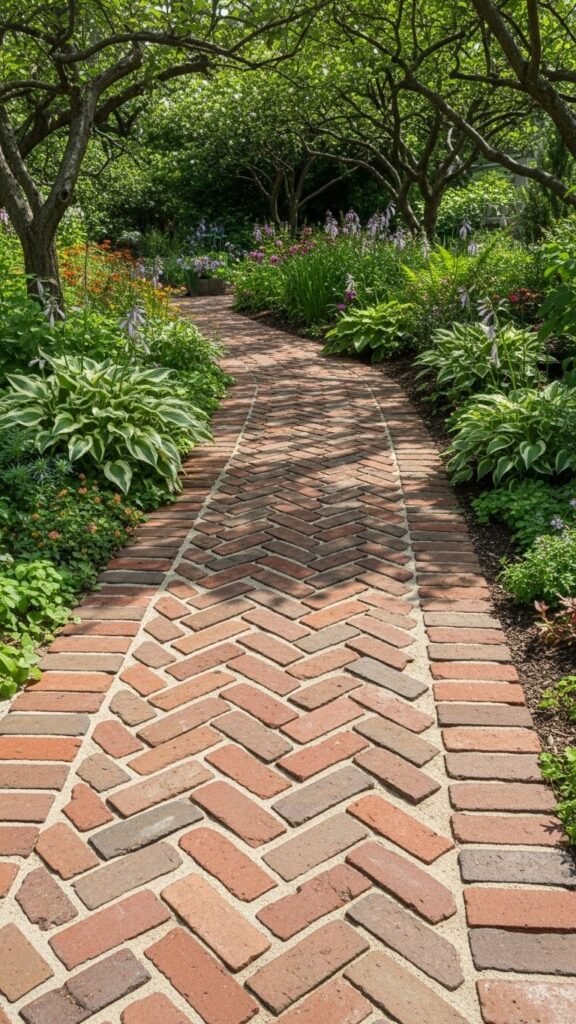
Lay a timeless brick herringbone walkway to give your garden a sturdy, formal spine that still feels warm and inviting.
You’ll set bricks in a tight interlocking pattern that resists shifting, revealing patterned joints that emphasize rhythm.
Choose reclaimed bricks for antique charm, edge with low planting, and compact sand between joints.
You’ll get a durable, elegant path that invites wandering and choice.
Gravel Stepping Stones With Grass Infill
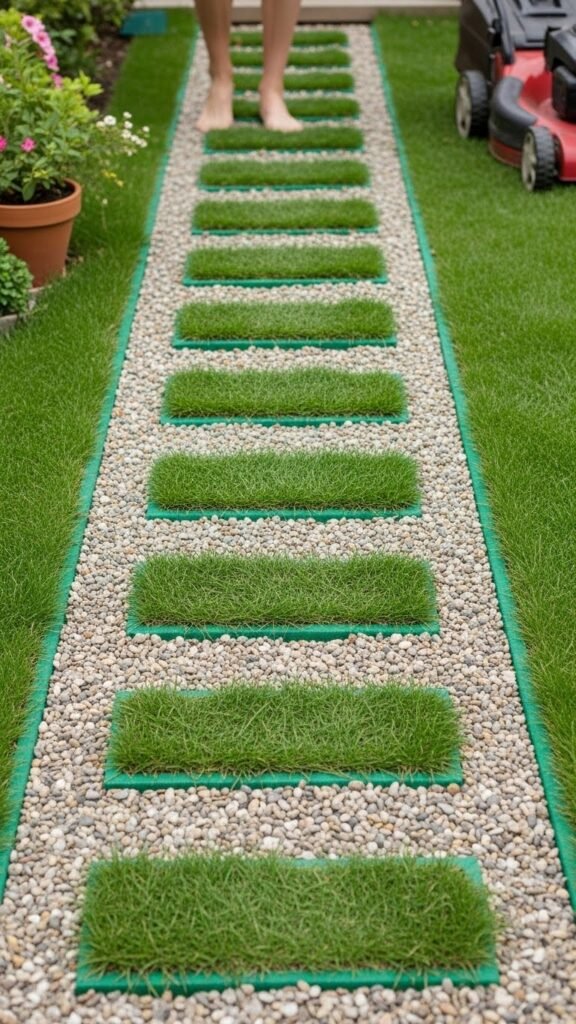
Blending gravel stepping stones with grass infill creates a relaxed, permeable path that feels both tidy and organic, and you’ll get soft green seams that reduce heat and invite bare feet.
You’ll lay stones with DIY installation, tuck hardy grass between gravel for a low maintenance, pet friendly route, and plan simple seasonal care—mow sparingly, remove weeds, and refresh gravel when needed.
Limestone Stepped Terrace Path
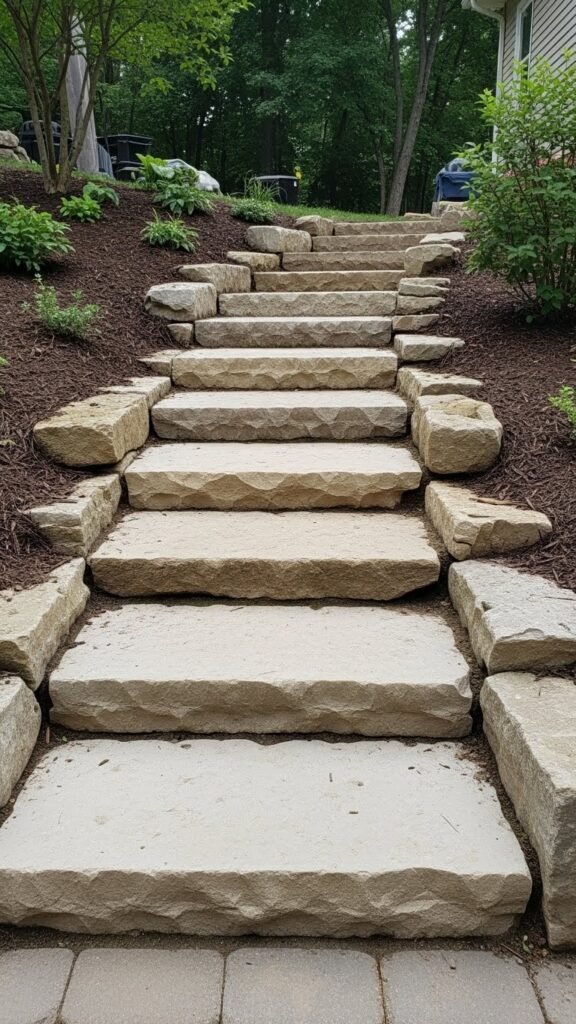
A limestone stepped terrace path transforms a sloped yard into a series of usable levels, giving you safe, natural-looking access while controlling erosion. You’ll place low risers and wide treads, anchor stones into the slope, and route terraced drainage behind each step.
The look feels rugged but refined; limestone maintenance is minimal if you seal joints and clear debris, letting you roam freely.
Modern Concrete Paver Grid With Grass Strips
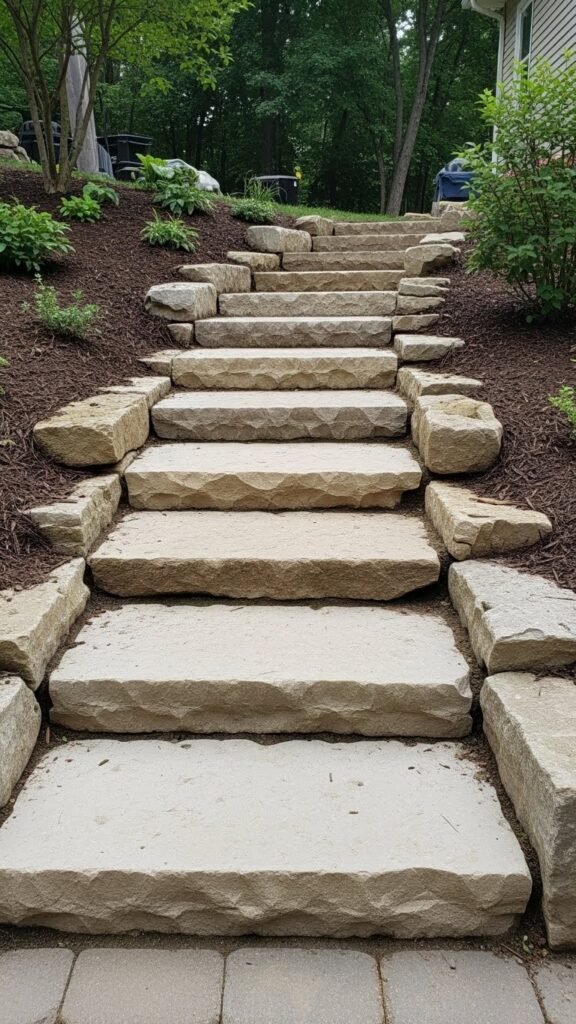
Concrete-grid paving with grass strips gives you a clean, contemporary pathway that softens hardscape with living texture. You’ll use permeable pavers set in a precise grid, letting water sink while defining walking lines.
Narrow low maintenance turf between slabs keeps upkeep minimal and looks free-spirited. Install a stable base, stagger joints for grip, and enjoy a minimalist route that feels open and effortless.
Circular Mosaic Stone Patio Path
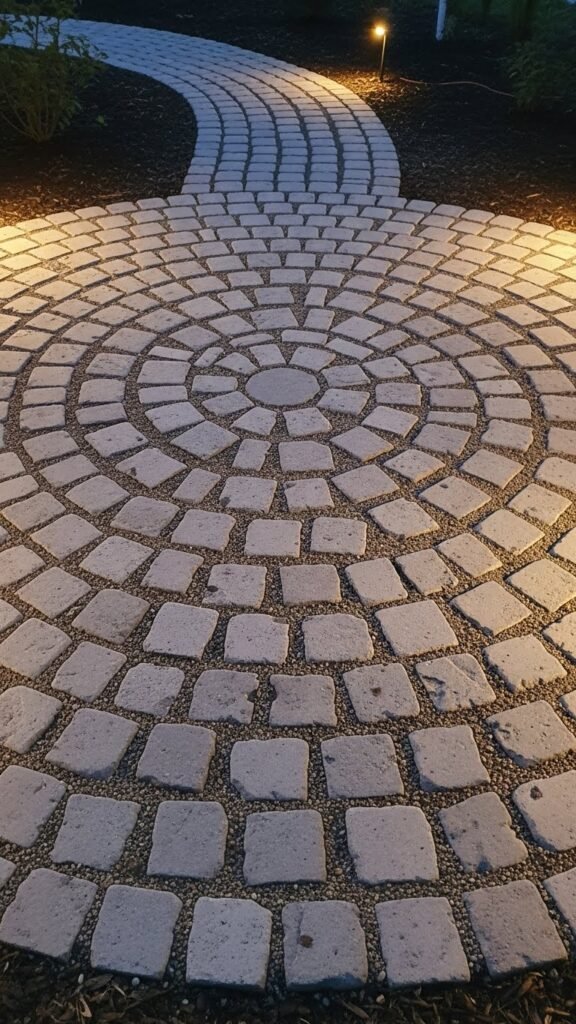
Circular-motif paving draws the eye inward, creating a welcoming focal point for your yard that feels both crafted and organic. You’ll lay concentric rings of hand cut mosaics set in sand or mortar, carving pathways that invite wandering.
Keep edges simple, use low ambient lighting to extend evenings, and choose gritty stone for traction so you’ll enjoy freedom to roam without fuss.
Rustic Wood Slice Stepping Trail
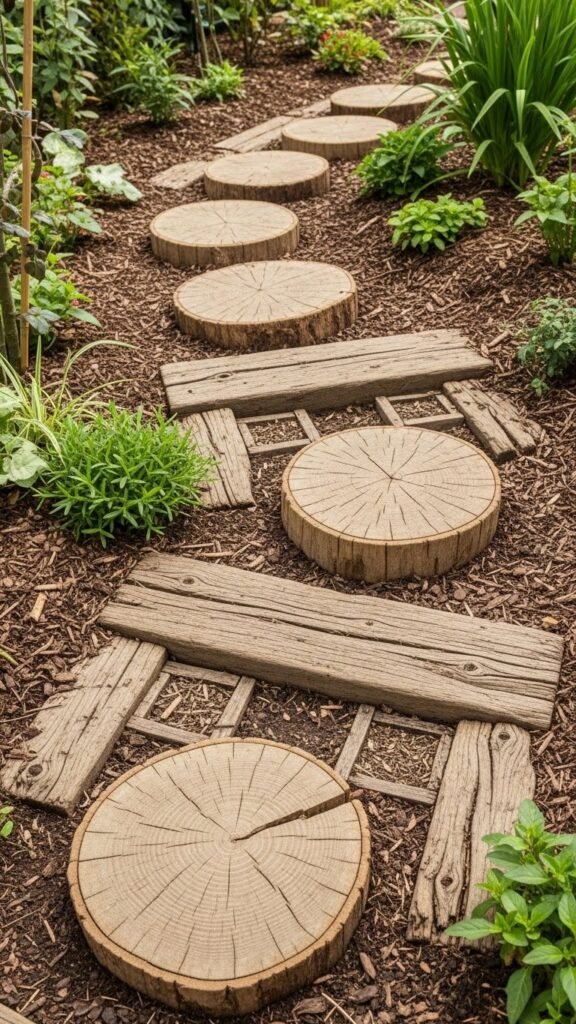
Step onto a Rustic Wood Slice Stepping Trail and let the irregular rounds of reclaimed timber guide you through the garden, their varied diameters and weathered grain creating a tactile, natural pathway that blends with planted edges and mulch.
You’ll place slices on compacted soil, apply simple weatherproofing techniques, space for drainage, and encourage wildlife habitat beneath — free, functional, and low-maintenance.
Slate Stepping Path Through Shade Garden
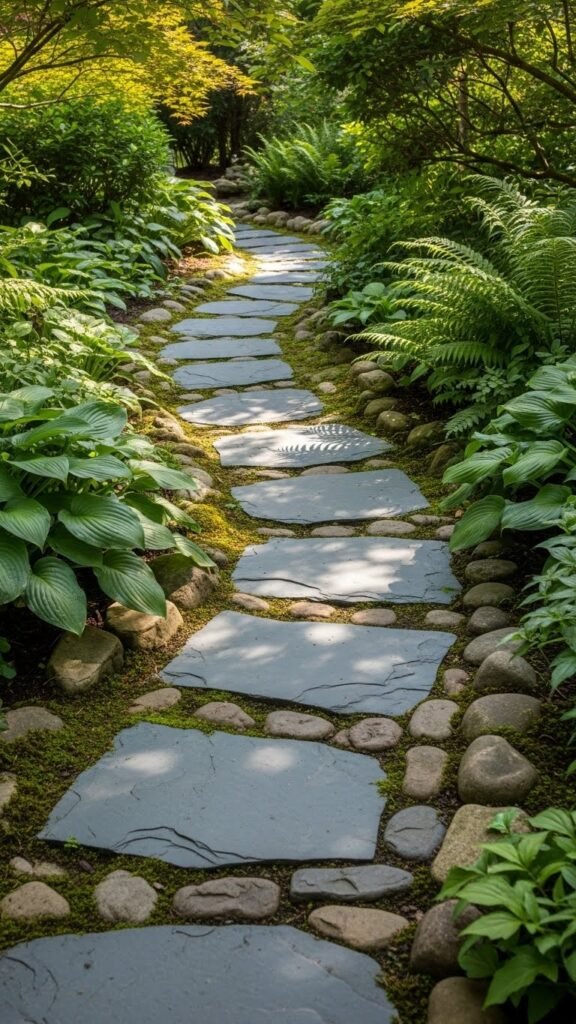
Framed by ferns and hostas, a slate stepping path winds through your shade garden, its flat, cool slabs providing steady footing and a calm visual rhythm.
You’ll tuck irregular stones into mossy edges, let shade loving ferns soften borders, and position slabs where dappled light falls.
The result’s effortless: a low-maintenance, free-flowing route that invites slow wandering and quiet choices.
Narrow Formal Boxwood-Lined Walk

Line a narrow walk with clipped boxwood and you transform a simple path into a disciplined, elegant corridor. You’ll use symmetrical hedging to frame movement, embracing narrow geometry that clarifies sightlines and pace.
Keep plants small, prune regularly, and choose a firm surface so the corridor reads as intentional. The result feels structured yet freeing, guiding you steadily through the garden.
Permeable Pea Gravel Path With Metal Edging
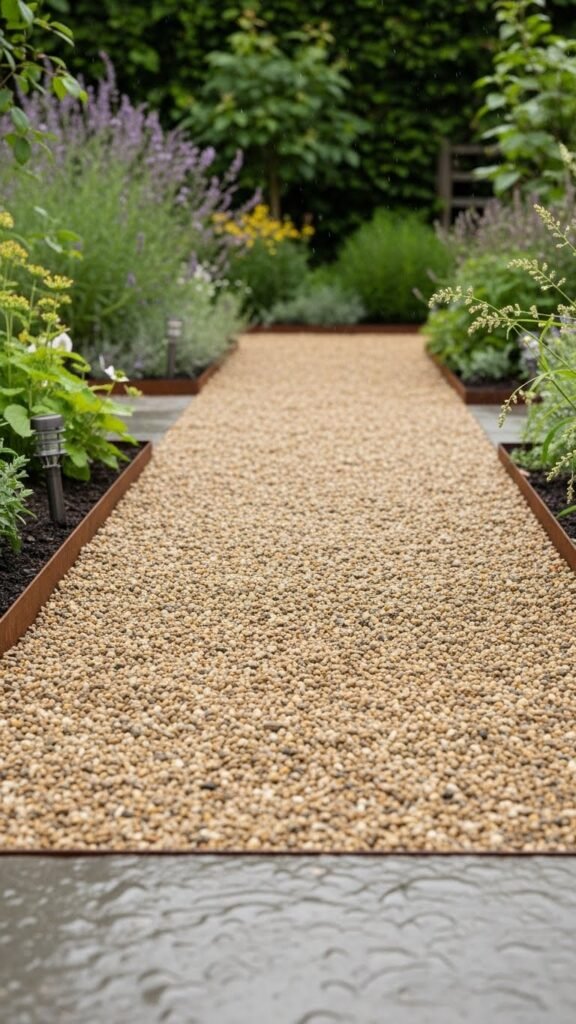
A permeable pea-gravel path with rusted metal edging gives your garden a clean, casual look while letting water soak through the surface.
You’ll lay a compacted base, perform permeability testing to make certain proper drainage, then spread pea gravel.
Edging installation keeps gravel contained and defines flow.
You’ll enjoy low-maintenance texture, easy repairs, and a liberating, natural route through your landscape.
Reclaimed Brick Basketweave Path
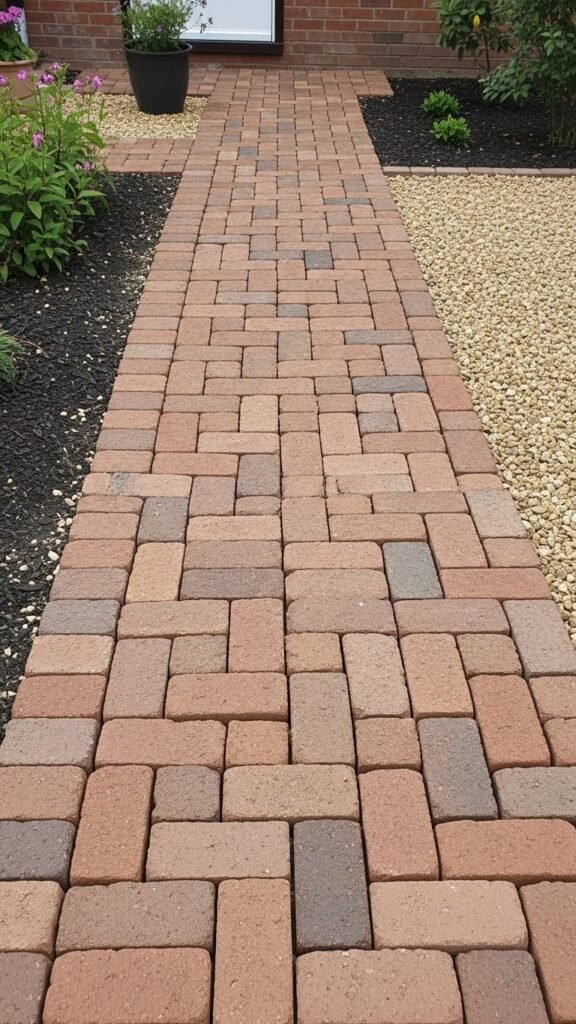
Switching from the soft, forgiving feel of pea gravel, reclaimed brick in a basketweave pattern gives your path a tighter, more formal look that still feels warm and lived-in.
You’ll lay a salvaged layout, fitting imperfect bricks for character. Choose mortar alternatives like polymeric sand or dry jointing for flexibility, then compact and edge the path so it stays tidy while allowing movement and freedom.
Curved Meadow Path With Native Wildflowers
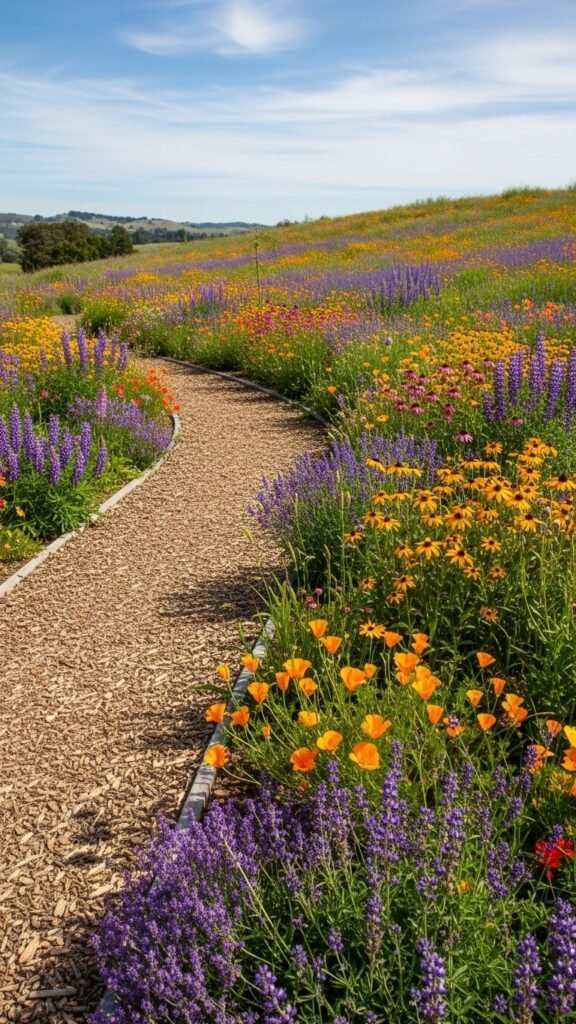
Winding your path through a meadow of native wildflowers softens edges and draws the eye with seasonal color and scent. You’ll curve the trail to reveal vistas, step on firm mulch or crushed stone, and leave swaths of seasonal blooms for rhythm.
Plant for varied heights and bloom times to support a thriving pollinator habitat, keep mowing minimal, and enjoy roaming freedom.
Raised Boardwalk for Wet or Boggy Areas
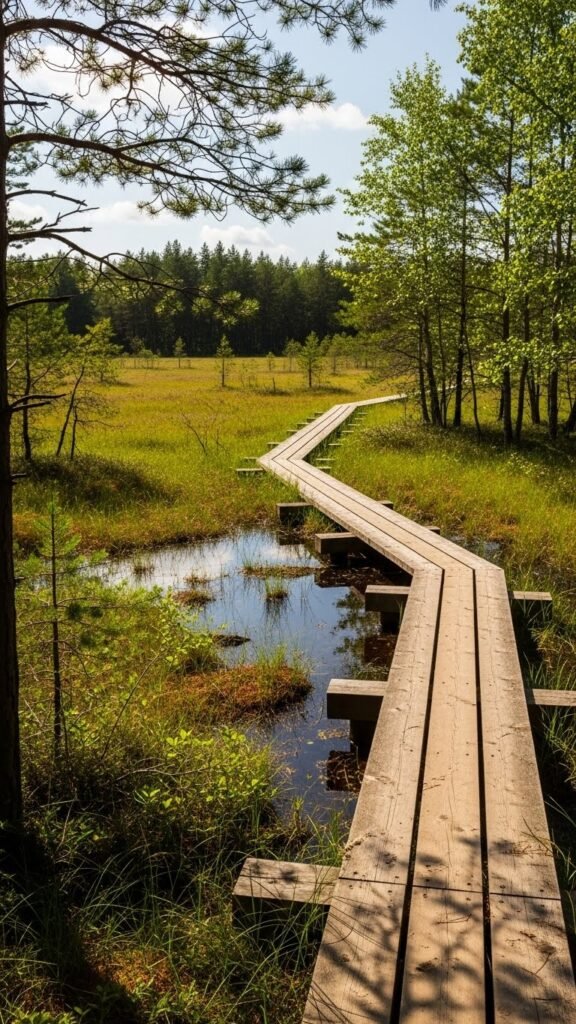
When your meadow leads into soggy ground or a seasonal bog, elevate the path on a raised boardwalk to keep feet dry and protect sensitive soils.
You’ll float an elevated boardwalk on simple pilings, choosing rot-resistant decking for clean lines and minimal impact. It guides movement, preserves wetland plants, aids bog stabilization, and gives you confident, free access without trampling fragile habitats.
Alternating Stone and Gravel Ribbon Walk
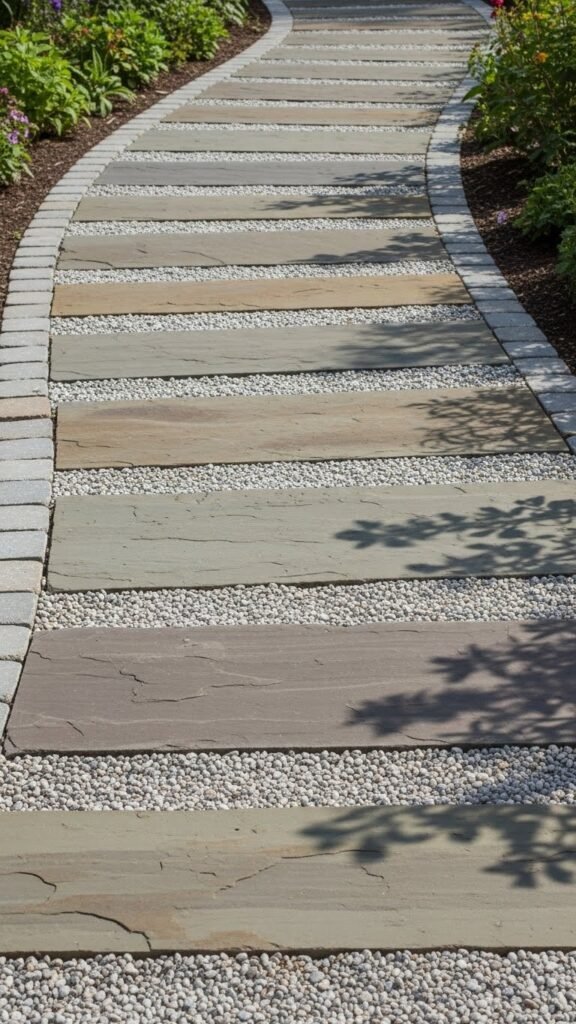
Lay alternating bands of flat stone and compacted gravel to create a ribbon walk that reads as both path and pattern. You’ll place stone ribbons wide enough to step on, pack gravel between for drainage, and edge each band for neatness. The gravel contrast highlights the stone’s texture, guiding movement and inviting exploration.
Install on a slight grade for runoff and minimal maintenance.
Spiral Herb Garden Path Around a Central Bench
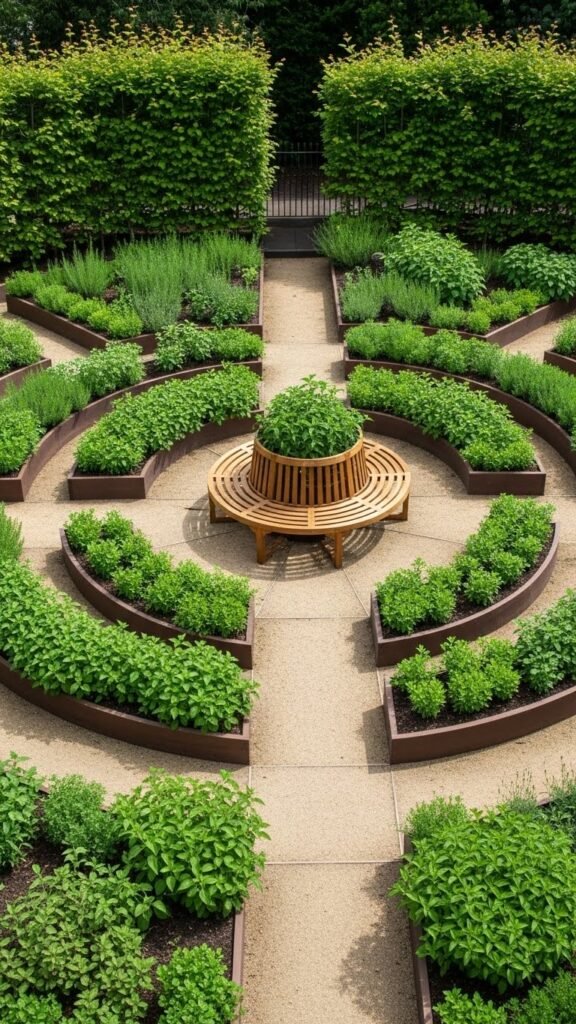
Circling a central bench, a spiral herb path lets you move through layered plantings while pausing to smell and harvest as you go. You’ll build raised swirls that rise toward the bench, creating herb scented seating and easy reach.
Use a companion planting spiral to group flavors, deter pests, and guide barefoot exploration. Maintain clear edging and short paths for effortless freedom.
Patterned Concrete Path With Inlaid Tiles
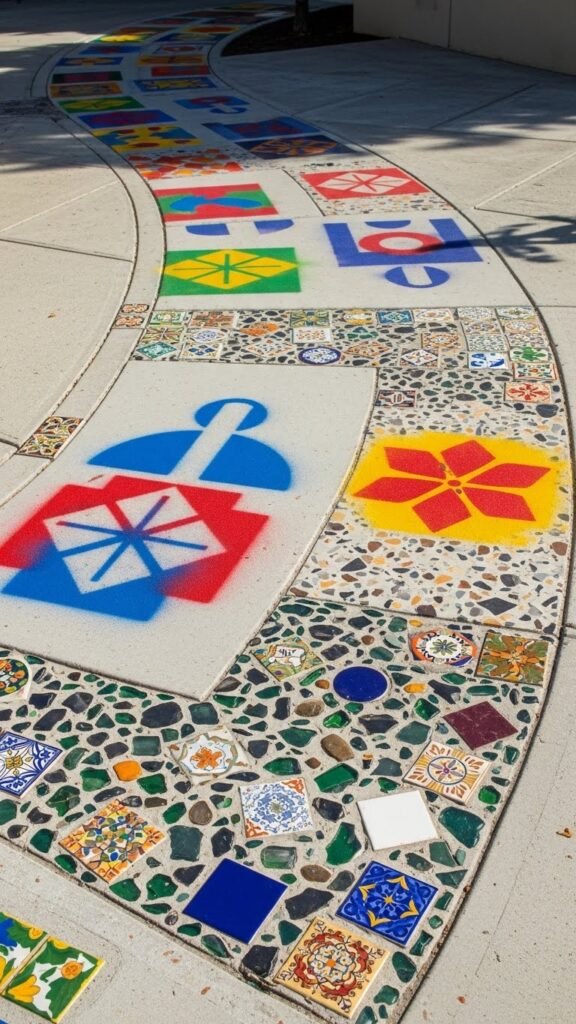
Pick a stencil or sketch your motif, then pour smooth concrete and set colorful tiles into the wet surface to create a patterned path that reads like durable pavement art. You’ll work with stenciled motifs and terrazzo inserts to personalize runs or curves.
Seal for longevity, keep joints controlled, and choose bold colors for freedom-loving, low-maintenance walkways that feel like intentional outdoor galleries.
Informal Pebble Path With Larger Accent Stones
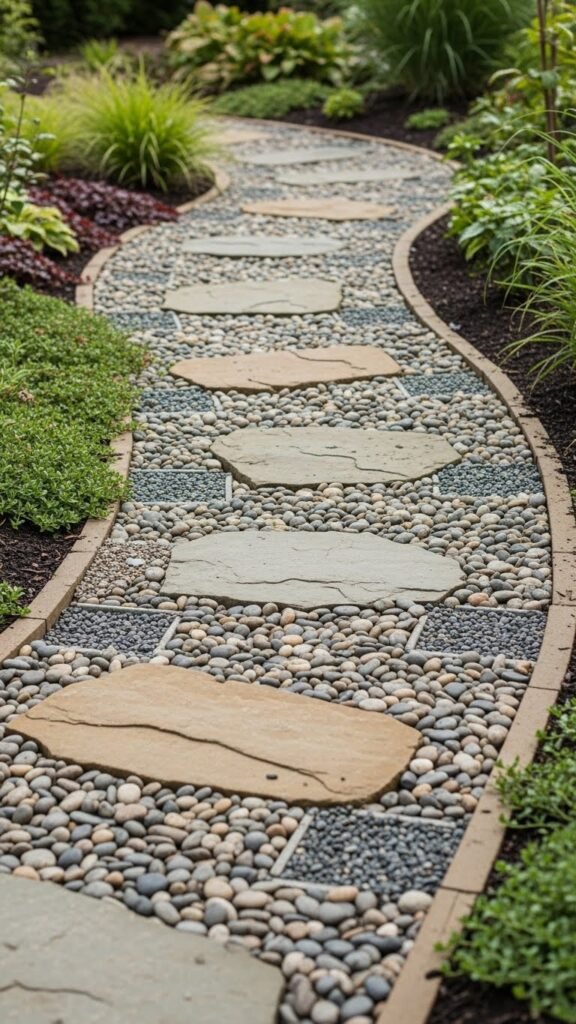
If you loved the graphic feel of stenciled concrete, try loosening the look with an informal pebble path that mixes small stones and larger accent rocks for a natural, tactile route.
You’ll place larger stones as stepping focal points, secure edges with rustic edging, and compact a permeable base. Keep drainage considerations in mind so water won’t pool, and enjoy an unfussy, free-flowing walkway.
Stepped Stone Path Up a Sloped Yard
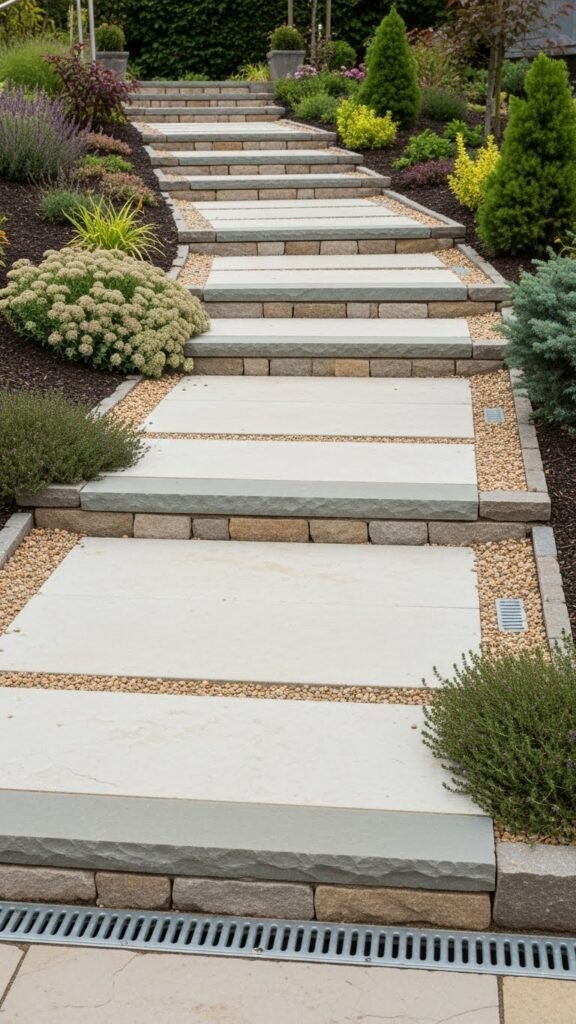
Climb your sloped yard with a stepped stone path that balances safety and style: set broad, flat treads at regular intervals, embed risers into the slope for stability, and stagger stones slightly to follow the natural grade so each step feels secure underfoot.
You’ll pair stone risers with gravel backfill and clear drainage solutions, plant low anchors, and keep sightlines open for effortless, freeing movement.
Urban Courtyard Path With Geometric Pavers
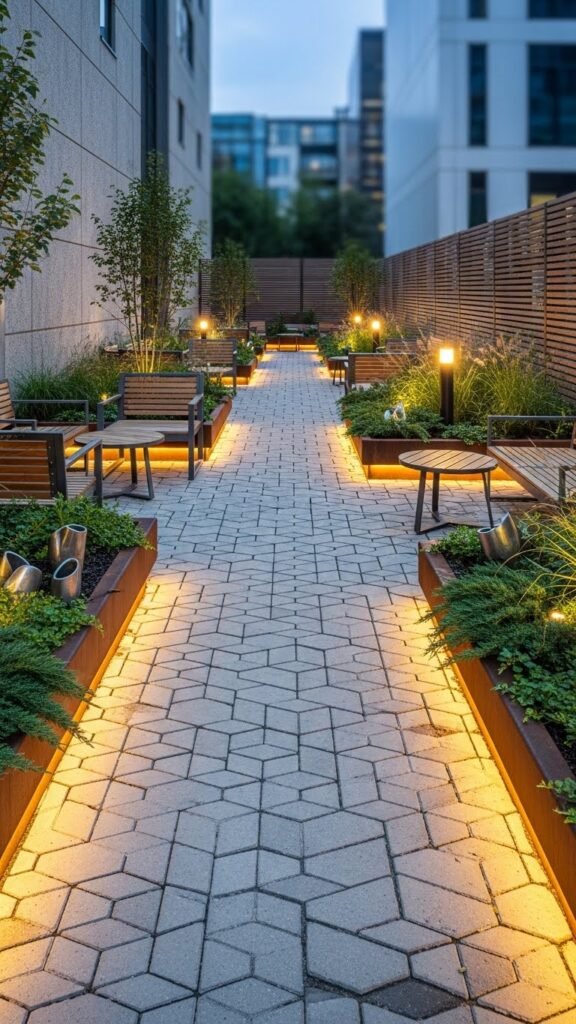
An urban courtyard path lined with geometric pavers gives your small outdoor room a crisp, modern backbone: set repeating shapes—squares, hexes, or elongated rectangles—on a tight grid or offset pattern to guide movement and frame seating areas.
Choose permeable pavers to manage runoff and cool the urban microclimate; add low planters, movable seating, and warm lighting so you can rearrange freely.
Woodland Mossy Stepping-Stone Sequence
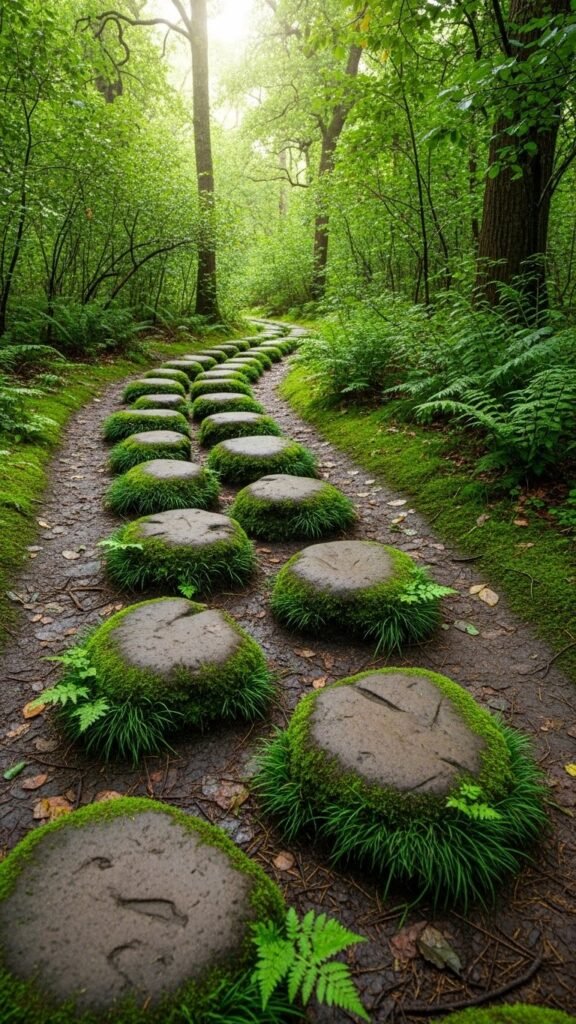
Tucked beneath a dappled canopy, a mossy stepping-stone sequence leads you through a woodland corner with a soft, natural rhythm: irregular flagstones spaced to encourage slow steps, their edges cushioned by emerald moss and low ferns.
You’ll plan each gap to suit a woodland microclimate, choose stones that sit level, and adopt simple moss maintenance—light shade, consistent moisture, gentle foot traffic—to keep the path alive.
Flagstone Path Framed by Lavender Rows
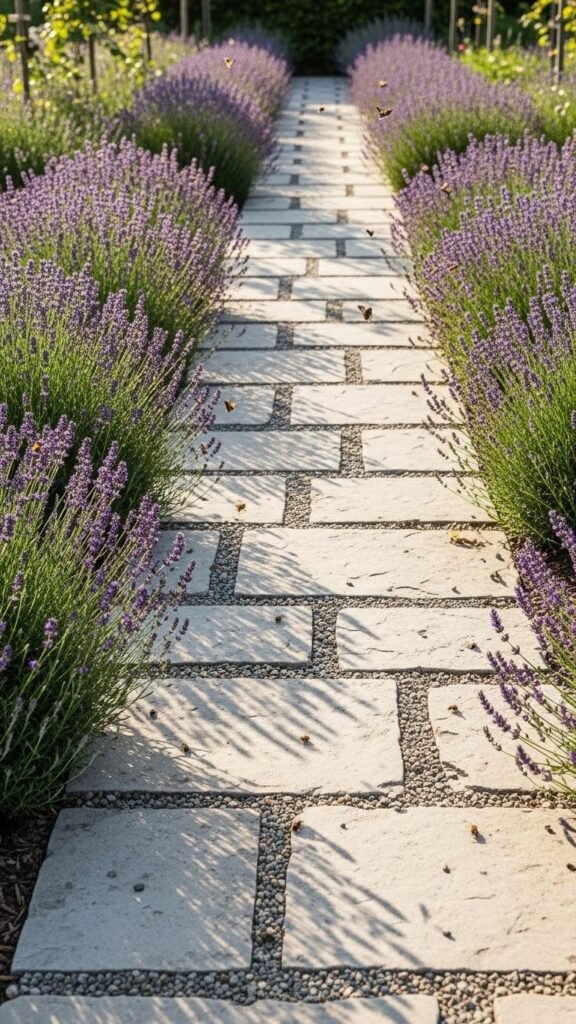
Framed by neat rows of silvery-green lavender, a flagstone path leads you through a sunlit garden with fragrant focus and clear sightlines. You’ll walk barefoot or with boots, enjoying pollinator attraction as bees and butterflies glide.
Lay stones with tight joints for clean lines; add gravel for drainage. Maintenance tips: prune after bloom, weed between stones, and mulch lavender roots to keep this free, low-effort route.
Recycled Pallet Wood Path With Low Lighting
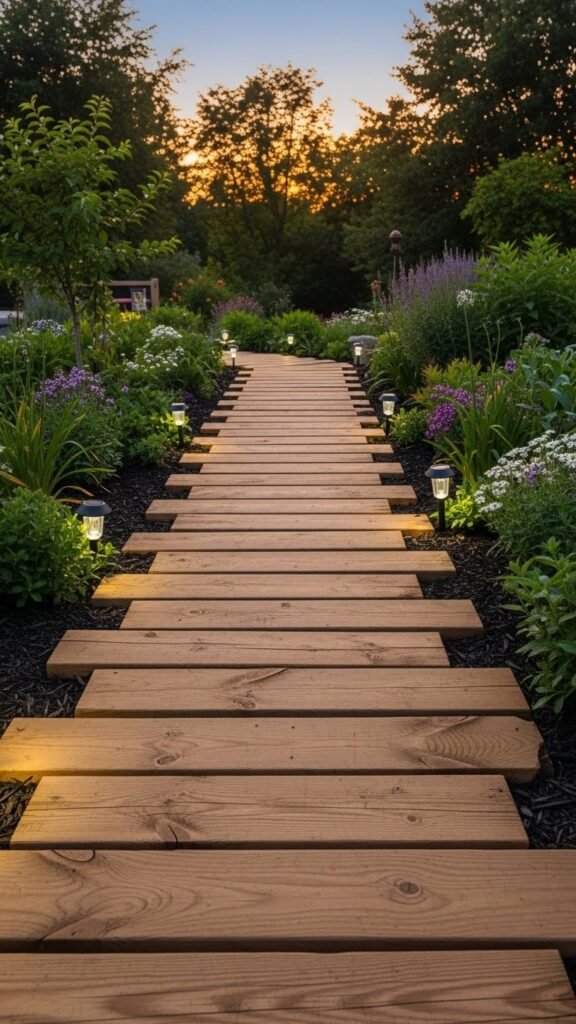
Repurpose pallet boards into a rustic, low-maintenance walkway that guides you through the garden after dusk; stagger the planks for drainage, sand sharp edges, and seal for weather resistance.
You’ll anchor boards on gravel, edge with mulch borders for tidy contrast, and add low solar accents for subtle evening glow.
The path feels free, reclaimed, and easy to maintain.
Mixed-Material Transition Path to a Patio
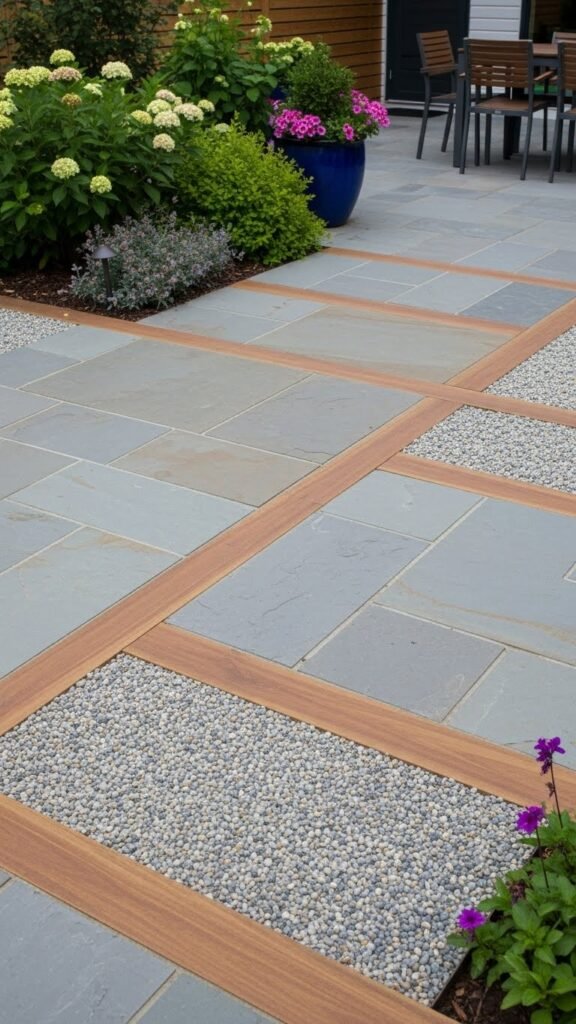
Blend materials to ease the shift from garden to patio so the changeover looks intentional and feels natural underfoot. You’ll layer flagstone, wood and gravel to create a seamless threshold that guides you forward.
Embrace texture contrast—smooth stone against coarse gravel, warm wood strips—to define zones. Keep edges clean, drainage simple, and pathways wide enough for comfort so you can move freely outdoors.
Sunken Gravel Alley With Tall Grasses
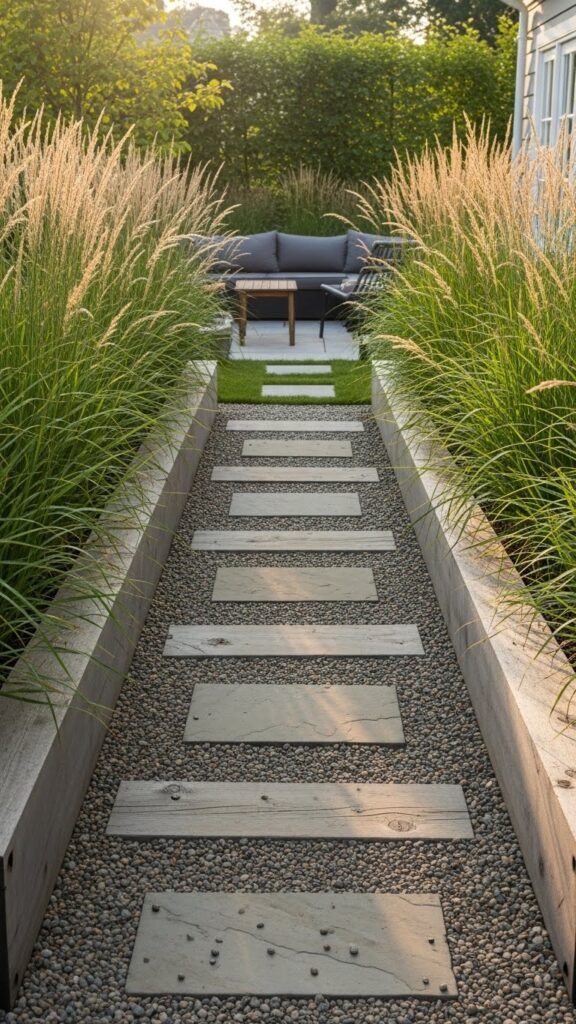
If you liked the layered feel of flagstone, wood and gravel leading to a patio, consider sinking a narrow gravel alley between raised beds to slow movement and heighten focus.
You’ll plant tall grasses for privacy screening and movement, bed edges retaining soil while improving soil drainage. The sunken route narrows your path, encourages slow steps, and gives you a secluded, free-feeling corridor.
Garden Entrance Path With Arbor and Climbing Vines
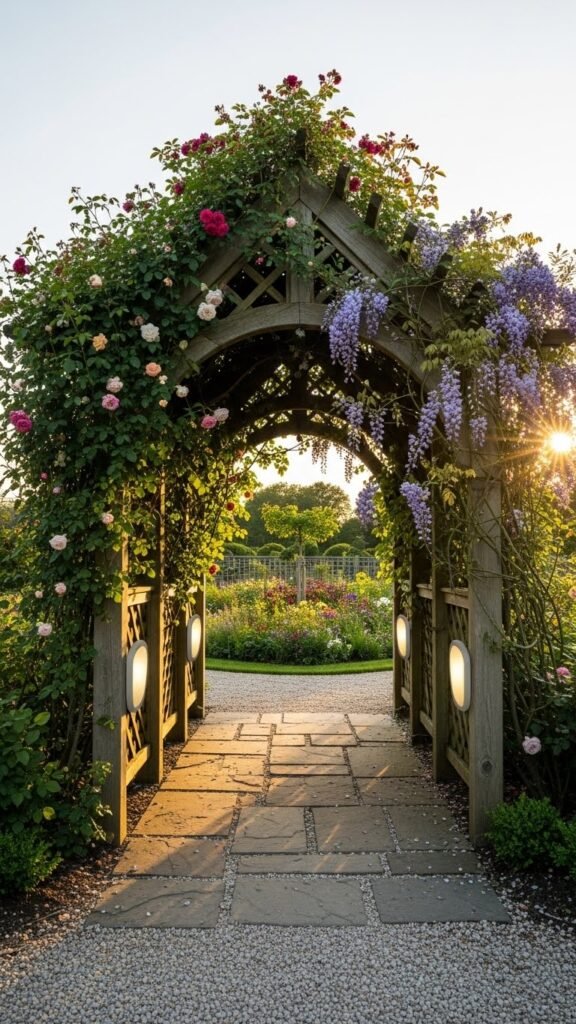
Step through an arbor draped in climbing vines and you instantly narrow sightlines, frame the garden, and set a welcoming tone.
You’ll choose hardy climbers, train tendrils, and schedule seasonal vine care so growth stays sculpted. Pair with arched walkway lighting for drama and safety. Keep the path simple—gravel or flagstone—so the arbor remains the bold, freeing entrance you’ll return to.