
You’ll want a path that guides people and sets the tone before they step onto your property. Think bold herringbone turns, soft running-bond rows, and playful checkerboard turf that frame movement and show careful craft. Each pattern balances function, drainage, and maintenance differently, so knowing the trade-offs matters—stick around for practical choices and simple ways to make each layout last.
Running Bond Path Design

Herringbone Stone Walkway
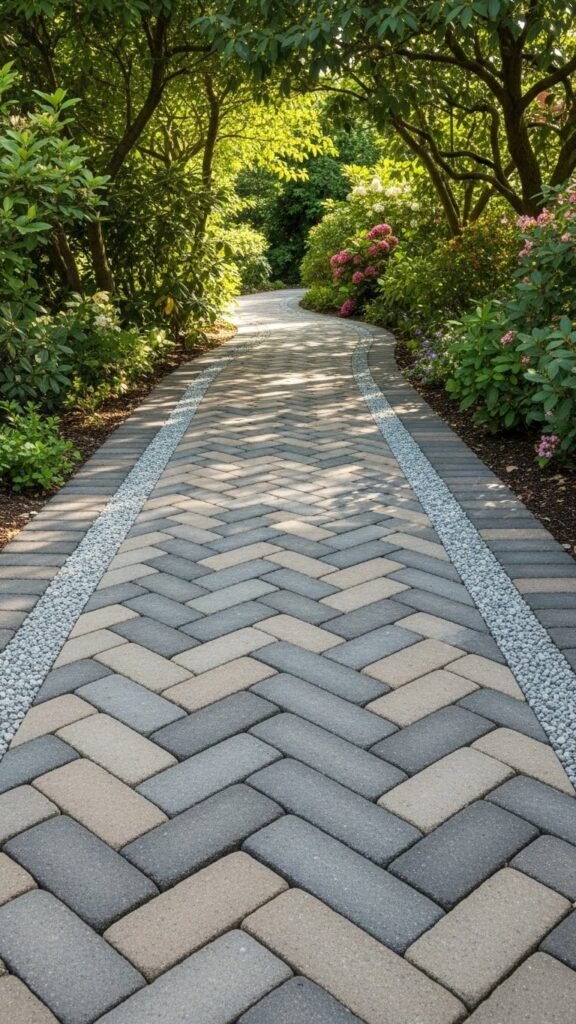
Often overlooked, a herringbone stone walkway gives your garden instant structure and movement by laying pavers in a tight V-shaped pattern that resists shifting and handles foot traffic well.
You’ll set pattern orientation to suit sightlines, lock edges for durability, and use permeable joints to aid drainage and natural growth. The look feels orderly yet free, guiding steps without imposing.
Crazy-Pave Garden Route
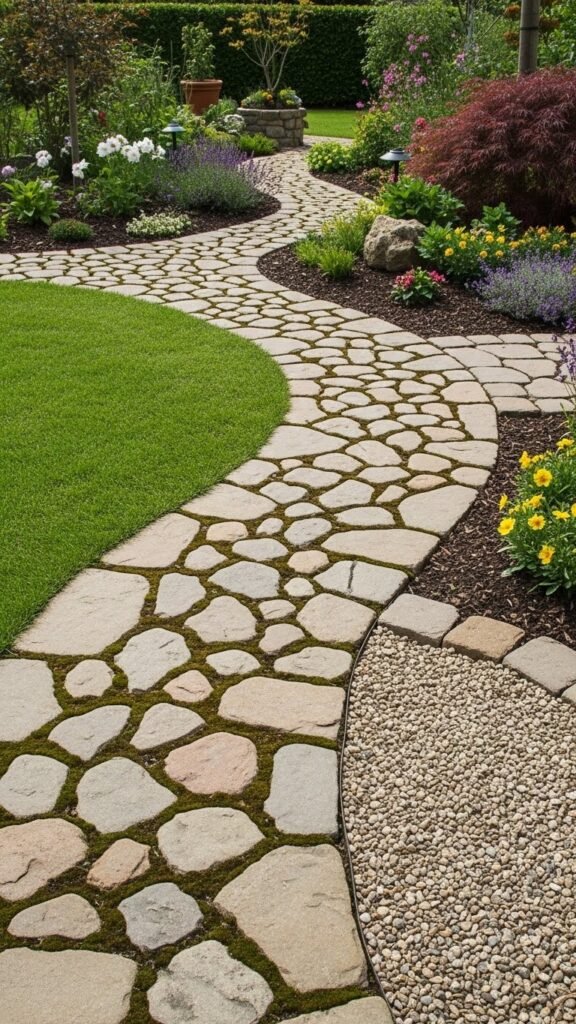
Break up straight lines with a crazy-pave garden route that stitches irregular stone pieces into a natural, mosaic-like path you can walk comfortably.
You’ll embrace rustic irregularity while laying stones to create seamless shifts between lawn, beds, and gravel. Work with varied shapes, tamping joints and adding sand or moss.
The result feels free, handcrafted, low-maintenance, and inviting to wander.
Lattice Diamond Path
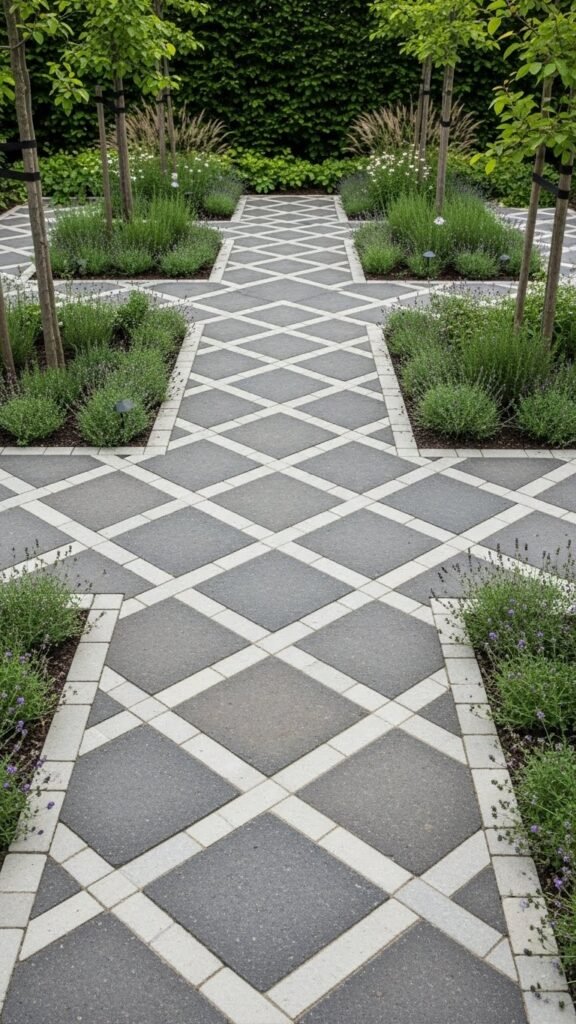
Weave a Lattice Diamond Path through the garden by laying stones or pavers in a repeating diamond grid that guides movement and frames planting pockets.
You’ll place stones with diagonal grout lines to emphasize rhythm, then choose a scaled motif for repeat size.
Walkways stay airy, edges stay crisp, and planting pockets invite low, free-growing herbs and grasses that soften geometry.
Stepping Stone Lawn Trail
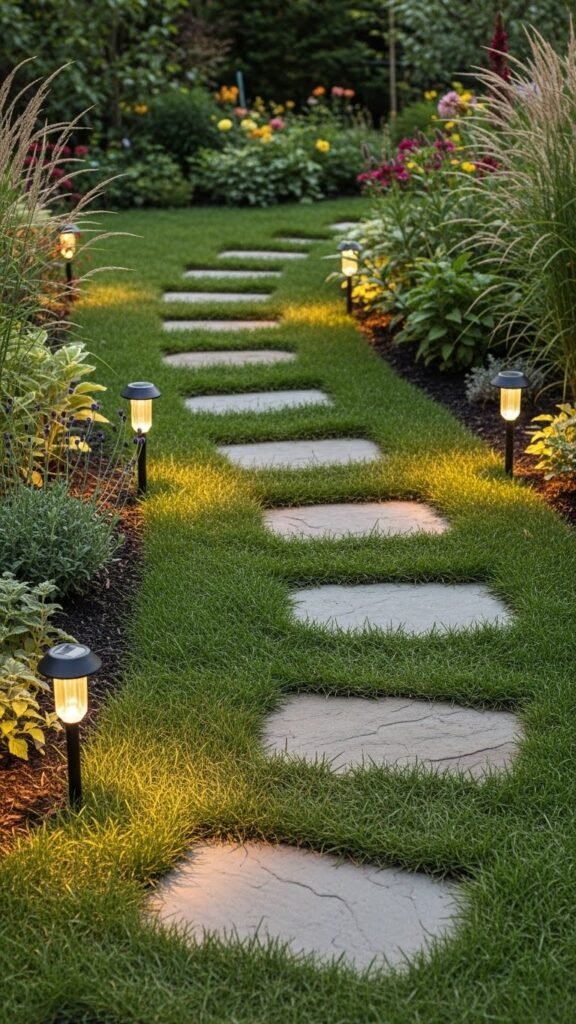
Mixed Material Mosaic Walk
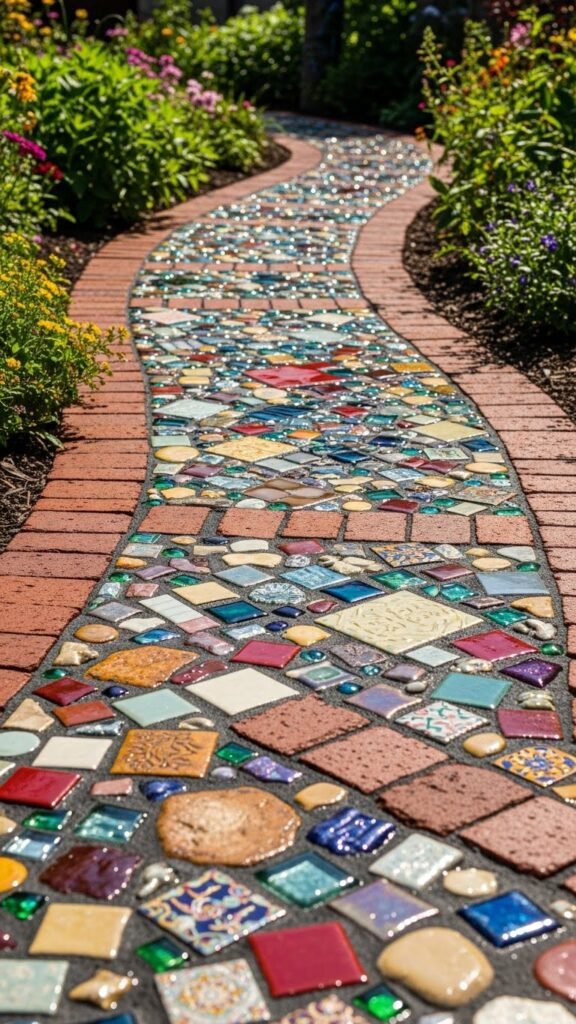
Mix different stones, reclaimed bricks, and ceramic tiles to create a mosaic walk that feels intentional and artful underfoot. You’ll lay varied textures and colors in loose patterns, embedding recycled glass accents for sparkle. Keep joints tight, slope for drainage, and set pieces with durable bedding. Finish with eco friendly sealants to protect surfaces and free you to enjoy a low-maintenance, expressive path.
Basket Weave Paving Pattern

Imagine a pattern that reads like woven fabric underfoot: basket weave paving pairs pairs of rectangular pavers set perpendicular to each other, creating a rhythmic, checkerboard effect you can scale to suit a walkway or patio.
You’ll lay units with crisp perpendicular joints and choose bevelled edges for subtle shadowing.
It’s orderly, bold, and lets you craft a liberated, tactile path.
Circular Rosette Pathway
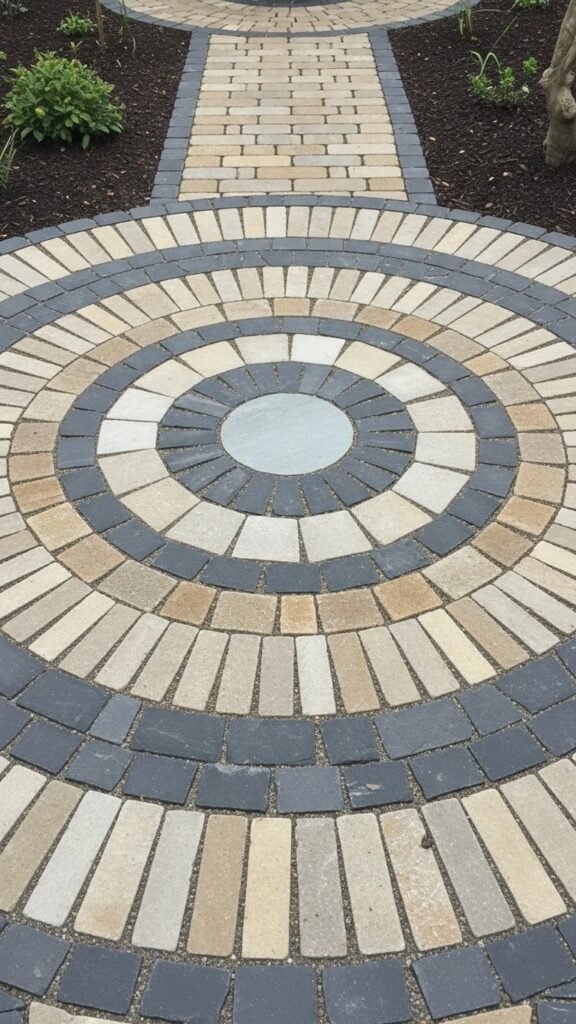
A circular-rosette layout centers a focal medallion and radiates concentric rings of stones, so you’ll guide footsteps toward a garden feature or entry with graceful geometry. You’ll balance pattern symmetry and material contrast—mix smooth slate with rough fieldstone—to create visual rhythm. Lay rings on a stable base, cut pieces precisely, and leave subtle gaps for planting to keep the design airy and free.
Radial Flagstone Drive

Stone circles radiate from a central point in a radial flagstone drive, and you’ll orient those concentric arcs to channel cars smoothly toward the entrance.
Choose native stone for character, set pieces on permeable paving to reduce runoff, and grade for radial drainage so water escapes the center.
You’ll mark wheel alignment subtly with groove spacing, keeping the layout bold, free, and efficient.
Stacked Bond Linear Path
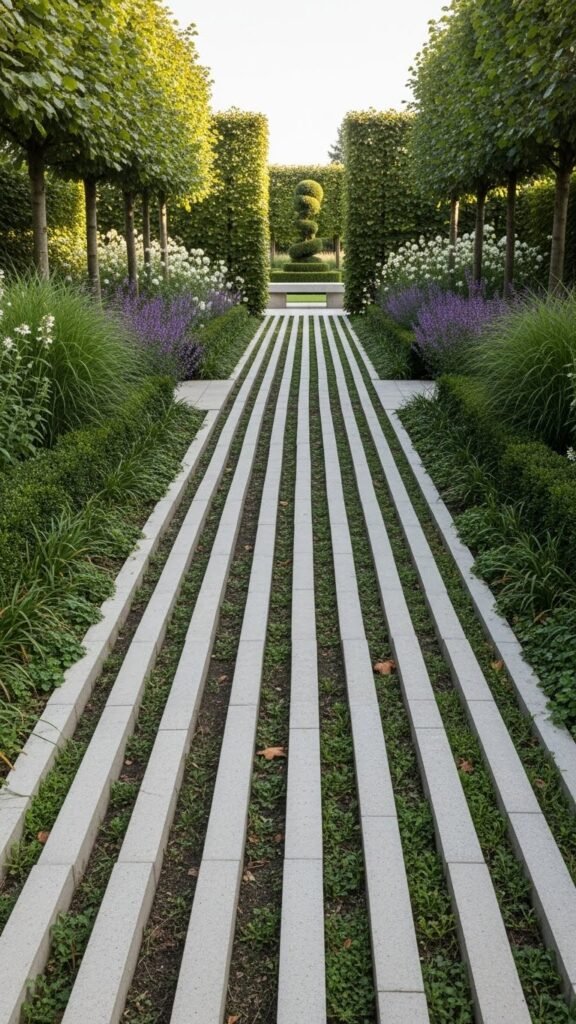
Where the radial drive focused on curves and concentric flow, the stacked bond linear path emphasizes straight lines and repetition to guide movement with quiet certainty.
You’ll lay stones in precise stone alignment, rows stacked like steps of intention.
The linear repetition creates rhythm and open sightlines, letting you move freely.
It’s efficient, minimal, and bold—perfect for clear routes through gardens or yards.
Offset Ashlar Walk
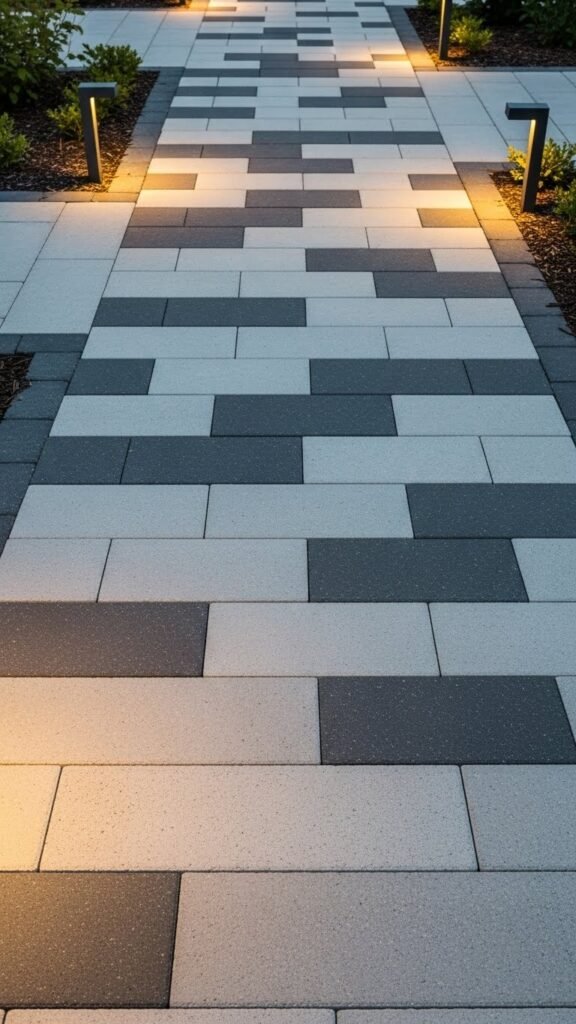
Lay the Offset Ashlar Walk when you want a balanced blend of order and subtle variation: rectangular pavers are set in staggered rows so joints don’t align, creating a rhythmic, sturdy surface that reads both intentional and relaxed.
You’ll enjoy offset ashlar’s clean lines, simple maintenance tips, subtle ashlar lighting for ambience, and planting edges that soften borders while keeping movement free.
Cobblestone Roman Pattern
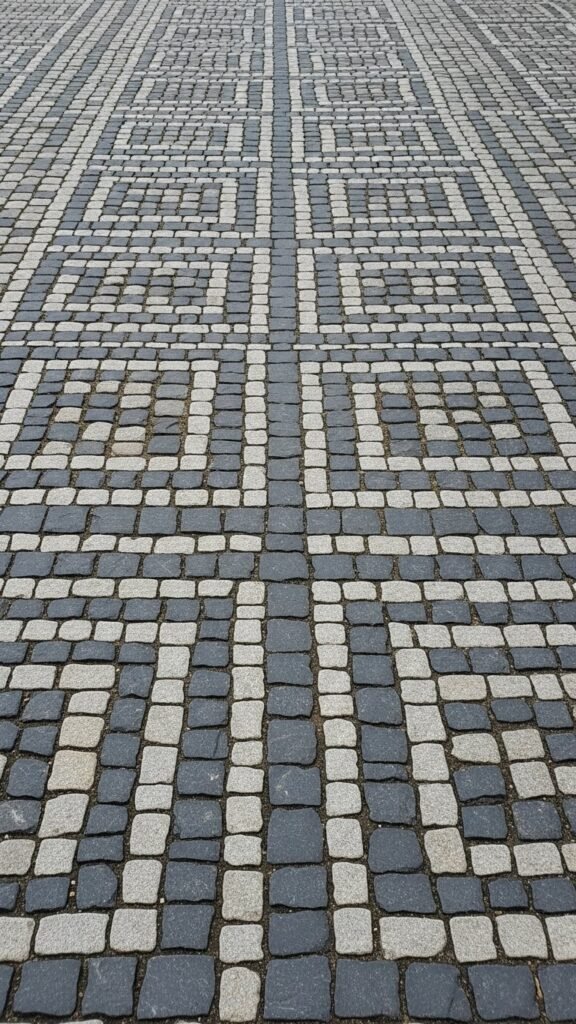
When you choose the Cobblestone Roman Pattern, you get a classic, textured surface made from small, rounded cobbles set in repeating rectangular and square groupings that create a rhythmic, cobbled tapestry. You’ll appreciate the ancient laying techniques and clear pattern symmetry that guide installation, producing durable, walkable art. It frees you to craft bold borders, visual corridors, and low-maintenance charm for open, roaming spaces.
Random-Sized Cut-Stone Trail

If you love the rhythmic order of the Cobblestone Roman Pattern but want a more organic, rugged look, the Random-Sized Cut-Stone Trail offers that natural variation while keeping durability and walkability.
You’ll arrange varied slabs for textured shifts and irregular edging, letting paths feel free and lived-in. Follow maintenance tips to reset stones, control weeds, and plan creative lighting for safe, atmospheric strolls.
Border-Framed Walkway
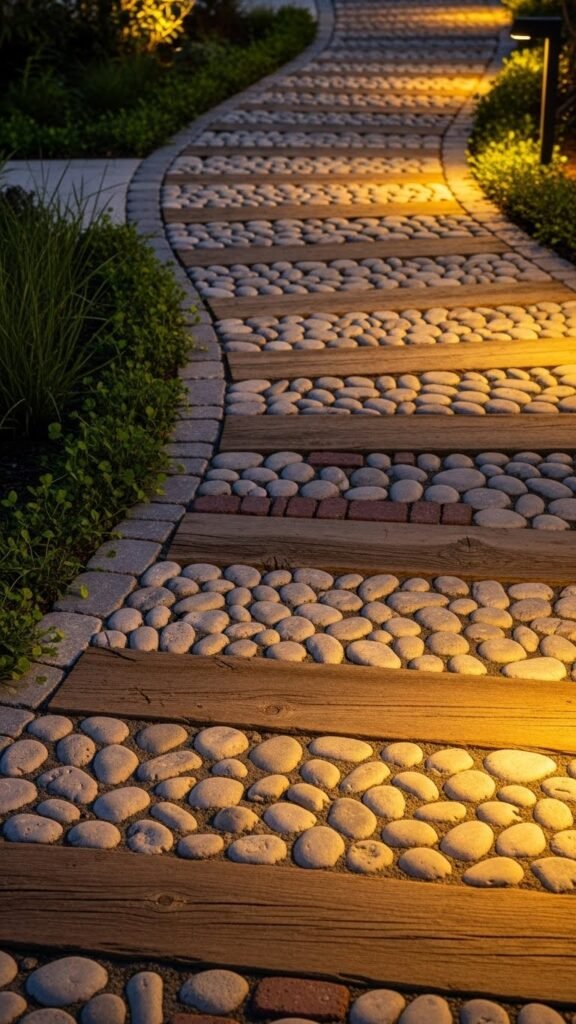
Framing your walkway with a defined border gives the path instant structure and polish, guiding footsteps and protecting edges from erosion.
You’ll lay stone cleanly, cap edges with brick or timber, and slip in edging plants for softness. Keep profiles low so movement feels free; add subtle low lighting for safe, dreamy nights. The result’s tidy, inviting, and effortlessly bold.
Gravel-Infill Grid Path

A gravel-infill grid gives you a crisp, low-maintenance path by combining modular pavers or timber slats with loose stone filling the gaps. You’ll enjoy a permeable surface that eases runoff; simple drainage solutions keep it stable. Follow maintenance tips: rake gravel, reset edges, refresh stone annually. Line the route with native plants for effortless, free-spirited curb appeal and natural resilience.
Checkerboard Stone and Grass
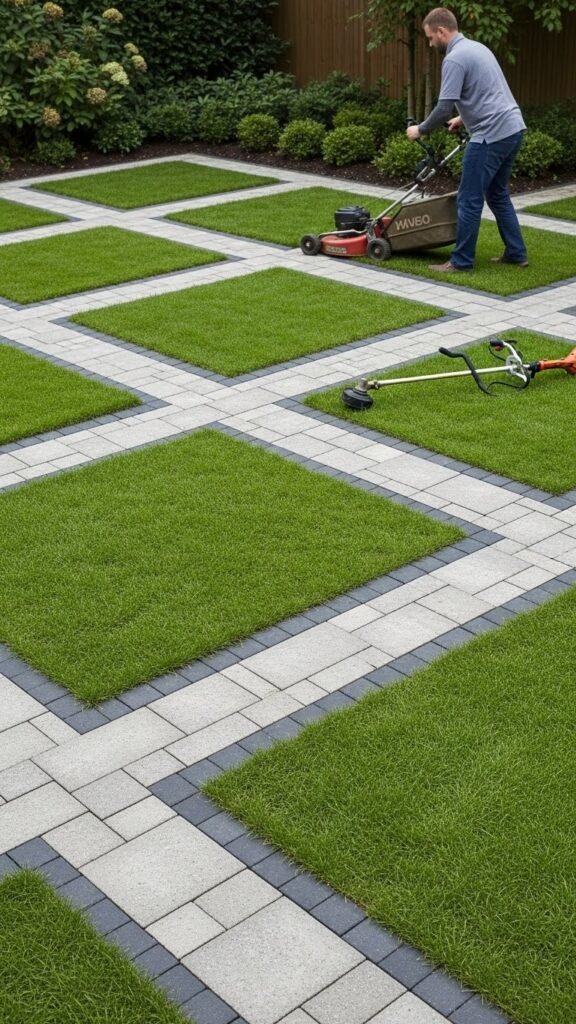
Move from the loose, permeable look of a gravel-infill grid to a sharper geometric feel with checkerboard stone and grass. You’ll love the clean alternation of pavers and turf; it feels open and deliberate.
Plan for simple checkerboard maintenance: mow carefully, use a string trimmer, and spot-seed. Regular grass edging care keeps lines crisp so the pattern reads strong and effortless.
Interlocking Wave Pattern
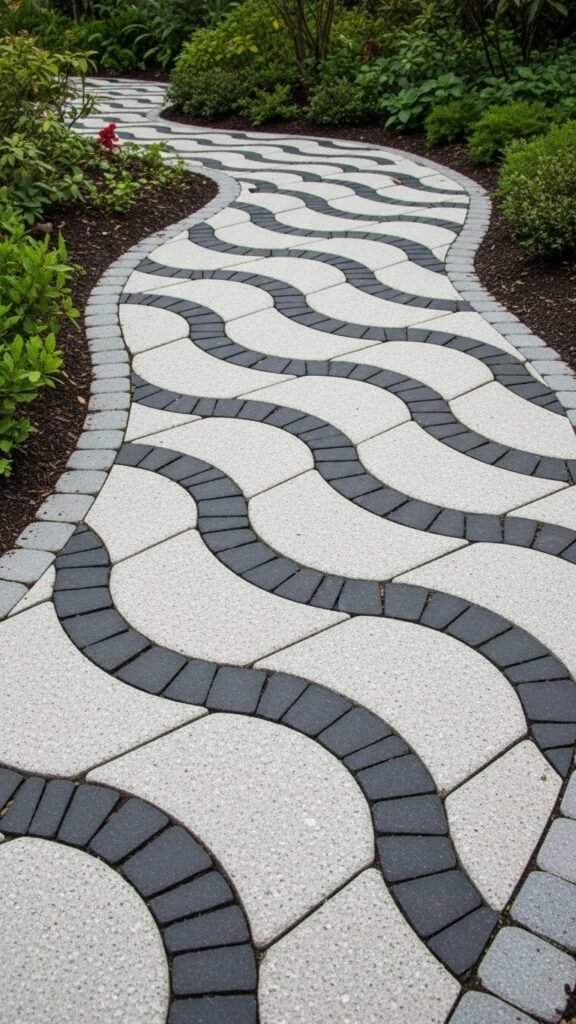
Often you’ll choose an interlocking wave pattern when you want motion and rhythm in a path without sacrificing structure.
You’ll lay stones like coastal ripples, curves guiding footsteps and sightlines.
Choose materials that sit flush, add ergonomic edging for smooth shifts, and keep joints tight for easy mowing.
The result feels free and purposeful, a flowing route that invites wandering without chaos.
Spiral Garden Path

Spiral paths draw you inward with a clear center and layered turns that slow your pace and focus your view.
You’ll lay concentric stones that guide movement and frame a focal planting. Choose native plants for texture and scent, letting them soften curves. Use low maintenance edging to keep lines crisp. The design frees you to wander, pause, and enjoy a compact, intentional retreat.
Timber and Stone Hybrid Trail

When you combine timber sleepers with flagstone insertions, the result is a warm, durable trail that balances structure and natural texture. You’ll use timber edging to hold crisp lines while mixing irregular stone inlay for organic flow.
Walkways feel grounded yet open; maintenance stays simple. Lay compacted gravel beneath, stagger sleepers for rhythm, and let native plants soften edges for a free, lived-in look.
Repeating Semi-Circle Steps
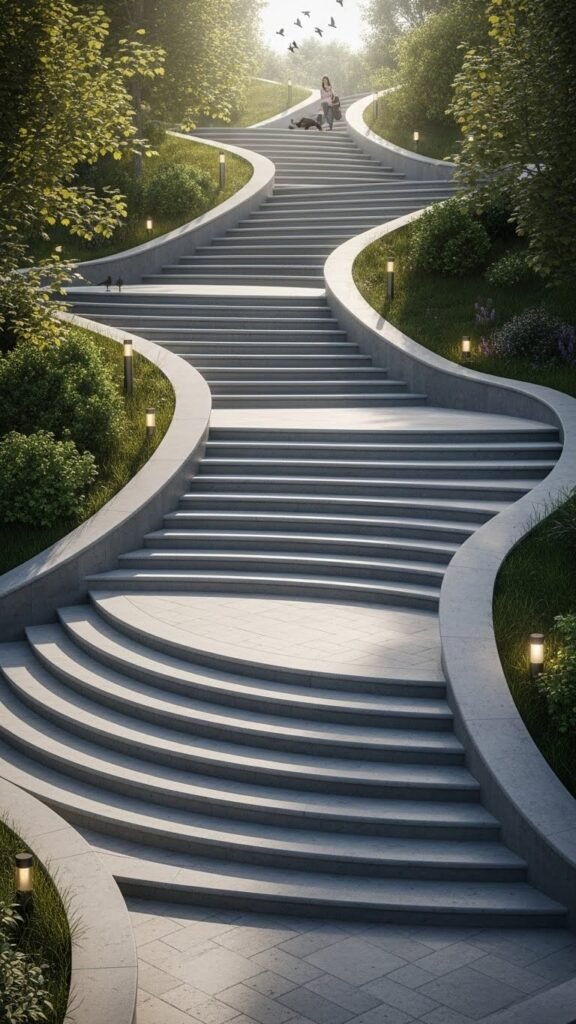
Building repeating semi-circle steps creates a rhythmic, welcoming ascent that reads clearly from both above and below.
You’ll place stones to emphasize semi circle repetition, guiding movement with effortless curves. Choose broad treads and subtle risers so your feet flow. Curved stepwork symmetry makes shifts feel natural, invites exploration, and frees you to shape landscapes that feel open, calm, and distinctly yours.
Contrasting Color Stripe Path

After the soft rhythm of semi-circle steps, a contrasting color stripe path can snap a space into focus and guide your eye with bold, linear clarity.
You’ll lay long pavers or stones in parallel bands, using high contrast edging to define lanes and colored grout accents between pieces. The result feels intentional and free — directional, modern, and easy to maintain while expressing personality.