
You’ll want edges that look deliberate and hold soil, mulch, and plantings where they belong. Picture sleek aluminum, warm reclaimed timber, neat brick lines, or flexible recycled rubber hugging beds and paths while managing roots and runoff. I’ll walk you through options that balance style, installation, drainage, and maintenance so you can pick what fits your garden’s needs—and spot a few surprises that work better than you’d expect.
Aluminum Edging: Sleek, Rust-Resistant Borders
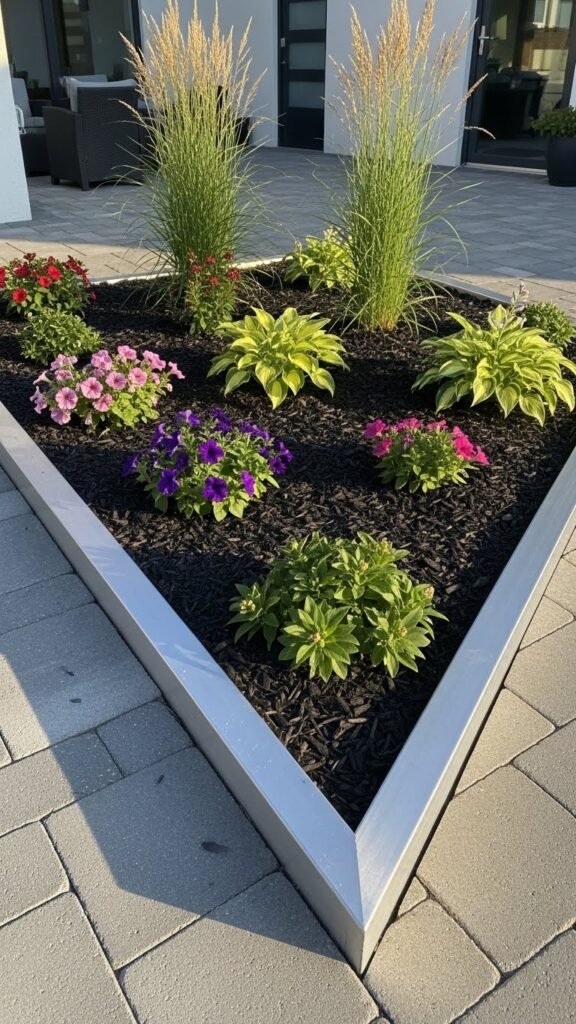
Sleek and low-profile, aluminum edging gives your beds a crisp, modern line that keeps mulch and soil neatly contained while letting plants take center stage.
You’ll appreciate low maintenance profiles that resist rust and fade, so you spend time gardening, not repairing.
Installations are quick and adaptable—minimalist installations that free your layout to flow, frame plantings, and support effortless, liberated garden design.
Steel Edging: Heavy-Duty Commercial Strength
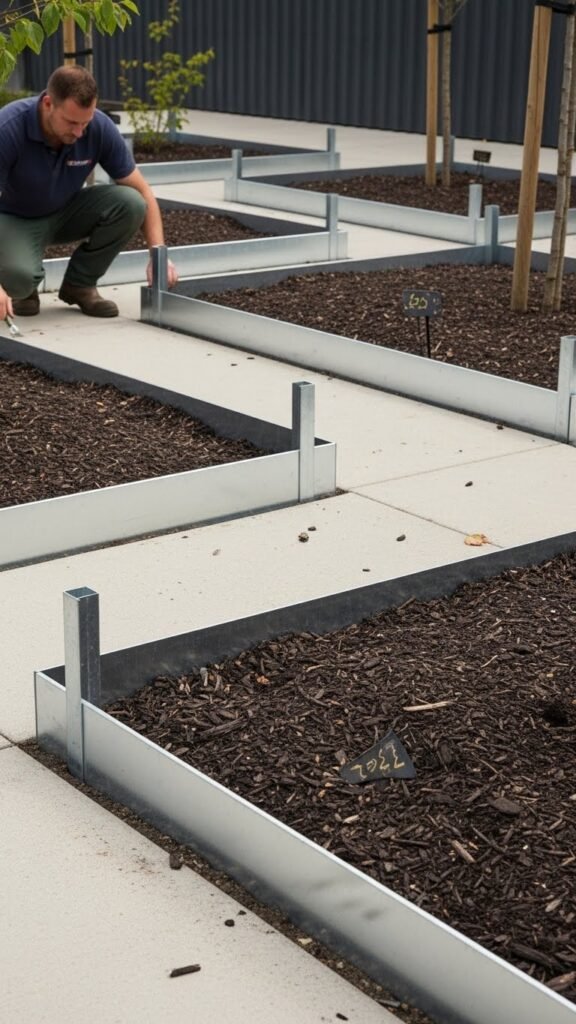
Choose steel edging when you want industrial-strength borders that hold up under heavy use and tight lines. You’ll appreciate commercial durability for pathways, beds, and high-traffic designs. Picture crisp, precise edges after an industrial installation with stout stakes.
A galvanized finish resists rust, and clear maintenance requirements—occasional inspection, touch-up paint—keep borders sharp without tethering your gardening freedom.
Plastic Edging: Budget-Friendly Flexible Strips
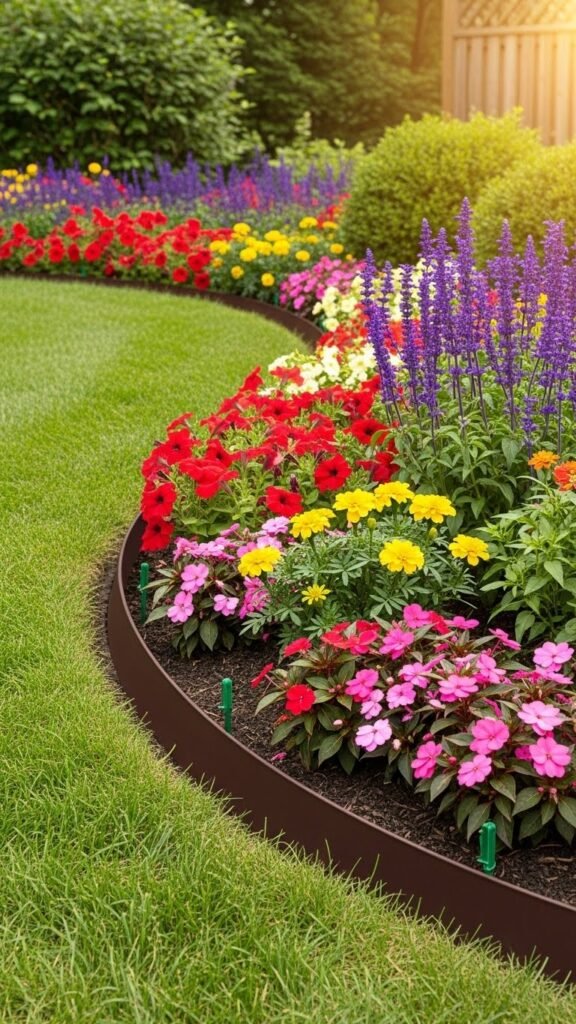
Steel’s industrial strength suits heavy use, but when you want a low-cost, adaptable option for curving beds or quick projects, plastic edging gives you a lot for very little.
You’ll shape flexible strips around plantings, stake them for neat lines, and enjoy simple DIY installation. Choose UV durability, tuck edges to stop turf runover, and keep borders tidy without fuss.
Rubber Edging: Recycled, Soft and Flexible Borders
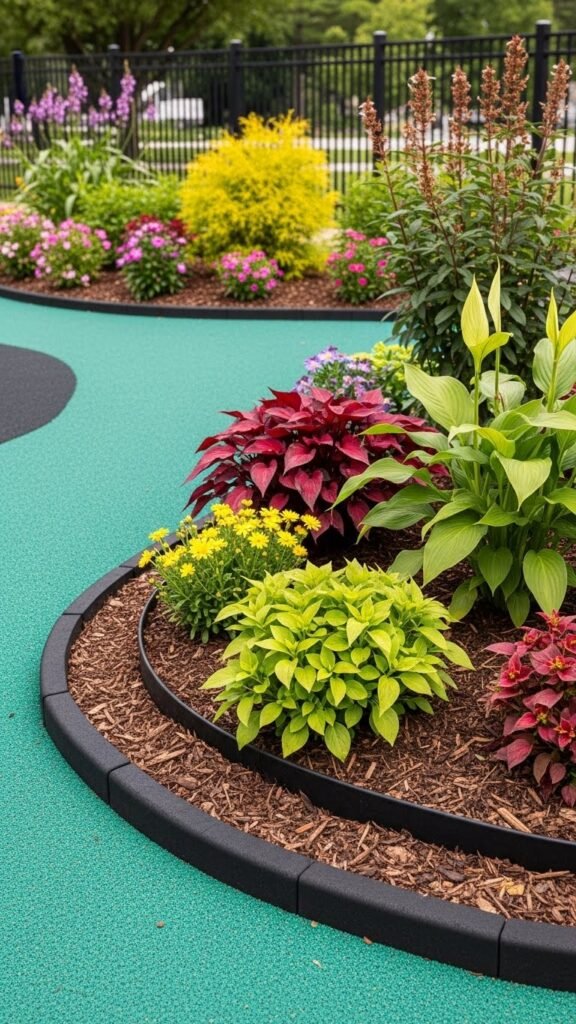
Anyone looking for a durable, eco-friendly border will appreciate rubber edging made from recycled tires and mats.
You’ll shape curves easily, install a low-profile root barrier, and keep mulch tidy while preventing soil erosion.
Upcycled tires repurpose waste into flexible edges used in playground surfacing, so your beds stay soft at the path edge and bold, free-form plantings stay contained.
Brick Edging: Classic Masonry Lines
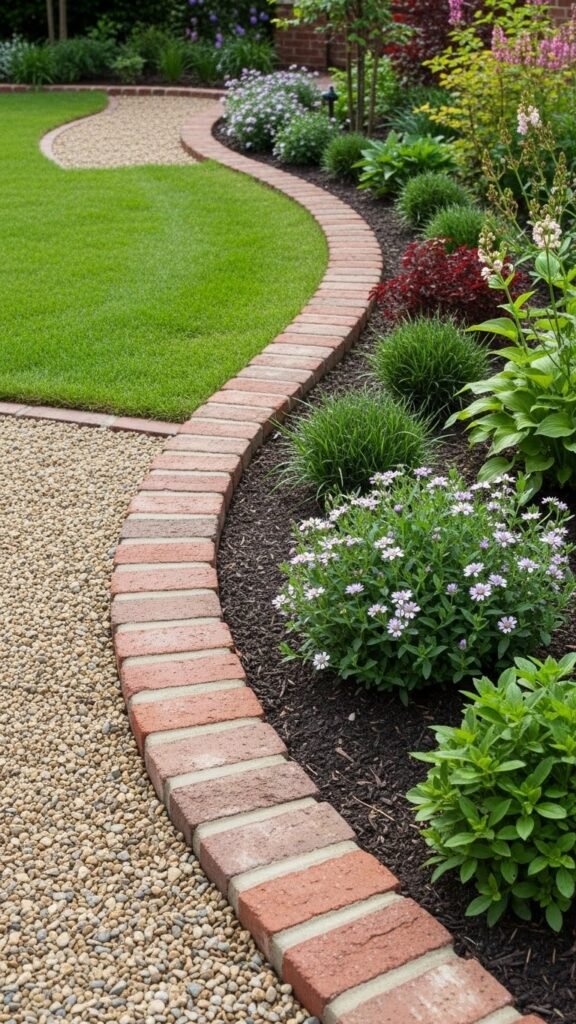
Because brick offers straight, clean lines and timeless texture, it’s a go-to edging for beds where you want a crisp shift between lawn, path, and planting. You’ll lay bricks in patterns that echo historical aesthetics, choosing mortar techniques for strength or a looser, airy feel. Brick lets you define curves or rigid borders while showcasing foliage and giving you lasting, low-maintenance freedom.
Natural Stone Edging: Rustic Durable Edges
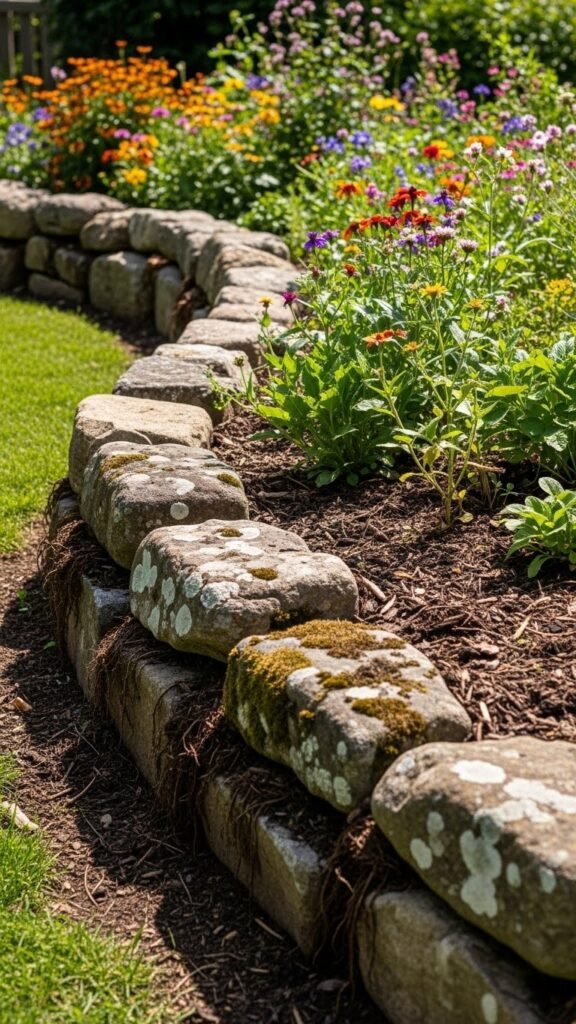
With natural stone edging, you get a rugged, long-lasting border that complements informal plantings and textured foliage.
You’ll pick varied shapes and colors that echo seasonal weathering patterns, then set stones using simple installation techniques—level trenching, compacted base, tight joints.
The result feels free and timeless, contains mulch and roots, and frames wildflower drifts without rigid lines or fuss.
Cut Stone Slab Edging: Clean, Flat Stone Borders
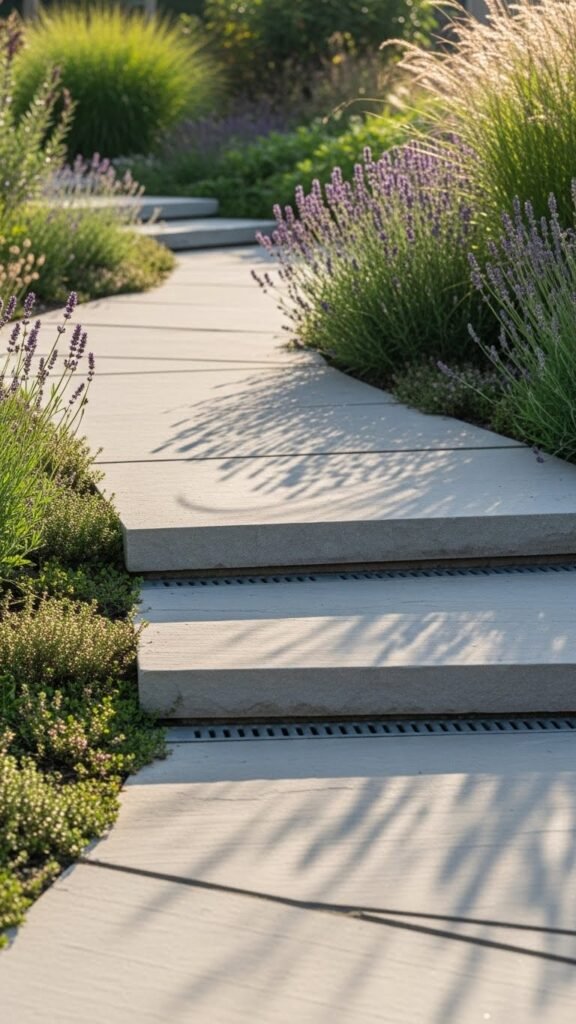
Lay clean, flat stone slabs along beds and pathways when you want a crisp, contemporary edge that still reads natural next to plantings. You’ll set flat flagstones with minimal mortar, adjust heights for smooth shifts, and use precision cuts for tight joints.
This approach frames perennials, channels water, and gives you a low-maintenance, sculpted border that lets plants and pathways breathe.
Timber Edging: Warm, Natural Wood Borders
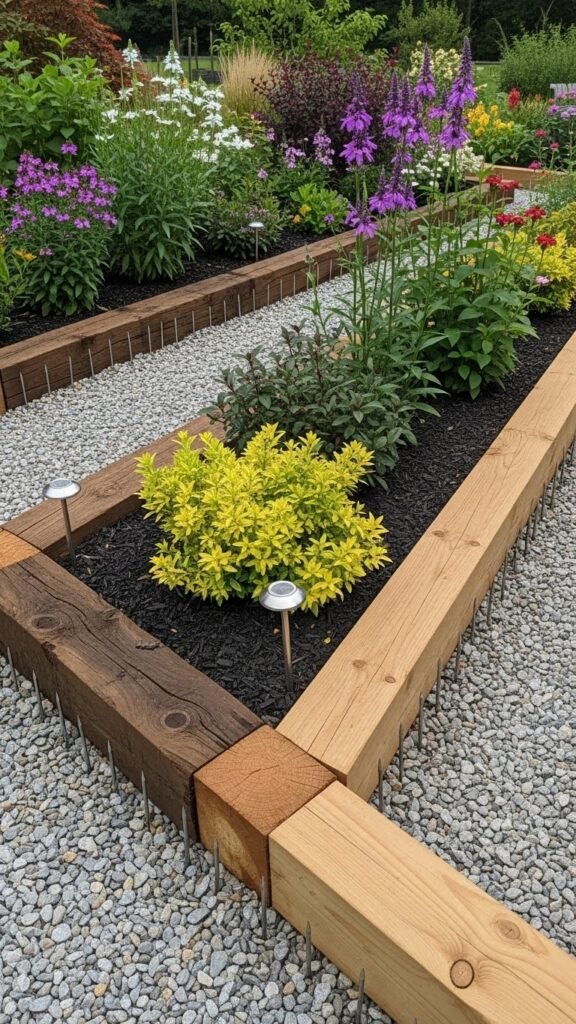
Timber edging brings a warm, living edge to beds and paths that blends naturally with perennials and shrubs; you can choose reclaimed railway sleepers for rustic heft or milled cedar for a neat, long-lasting line.
You’ll anchor sustainable timber with gravel or spikes, let soil breathe, and plan seasonal staining to age gracefully.
Install tight joints for tidy weeding and free-flowing planting.
Railroad Tie Edging: Bold, Industrial Garden Edges
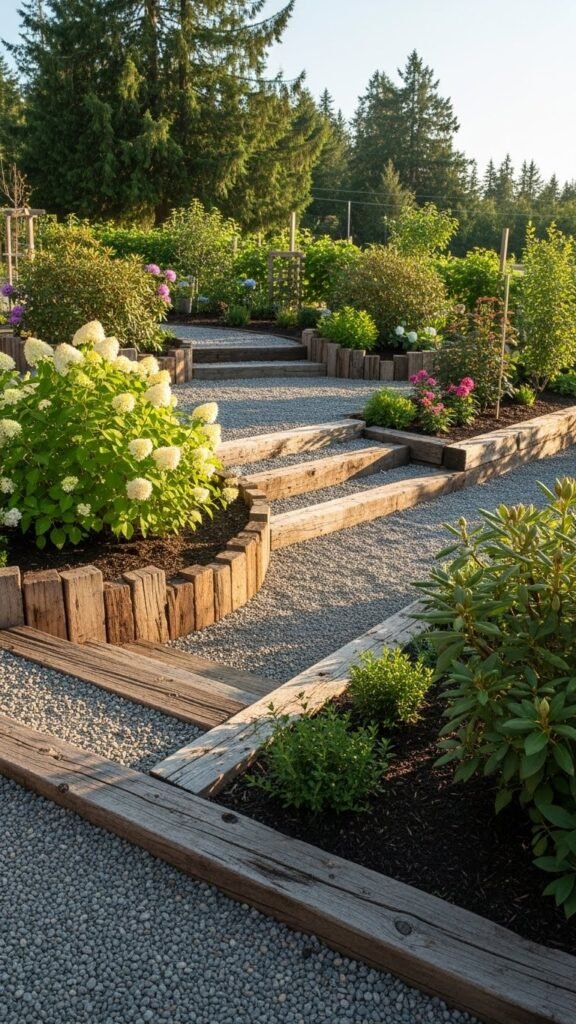
If you like the warmth of wood but want a tougher, more industrial look, railroad tie edging gives beds a bold, structural boundary that anchors large shrubs and gravel paths alike.
You’ll embrace a rustic railway vibe using reclaimed timbers from industrial salvage, set low or stacked for terraces. It’s durable, plant-friendly when sealed, and lets you craft dramatic, liberated garden lines.
Concrete Curbing: Permanent Sculpted Borders
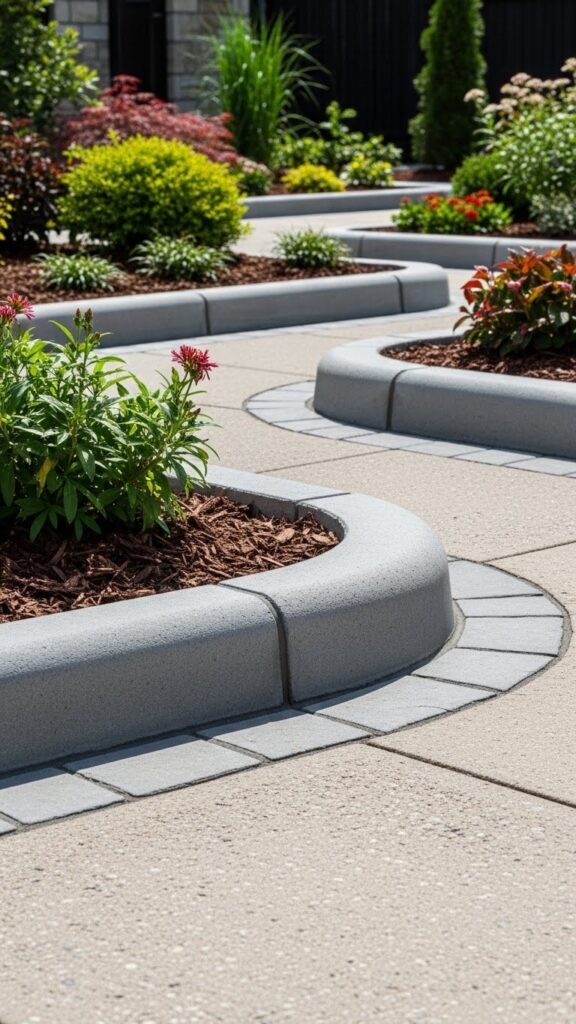
When you want a clean, permanent edge that reads like a low sculpted wall, concrete curbing gives beds a crisp, architectural finish that frames plantings and pathways with precision. You’ll sculpt curves or straight runs, using molded seams for neat joins and reinforced rebar for longevity.
It keeps mulch in, roots contained, and paths defined—durable, low-maintenance, and confidently finished.
Poured Concrete Edging: Seamless Modern Lines
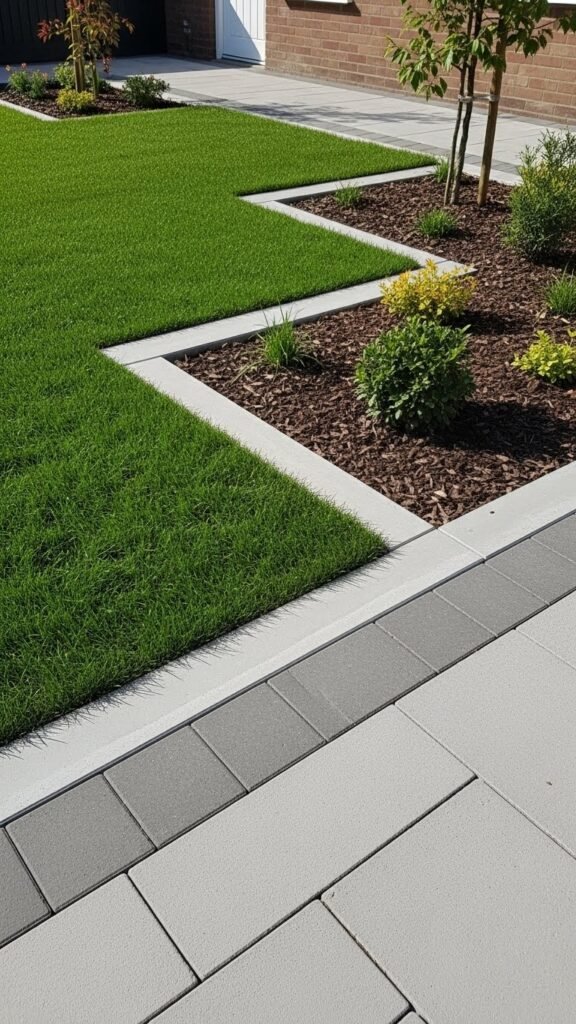
For a sleeker, more modern look than sculpted curbing, poured concrete edging creates a continuous, low-profile seam between lawn, beds, and hardscape that reads like a single architectural element.
You’ll get sleek minimalism that frames planting without fuss, a smooth edge you can mow to, and integrated drainage options to protect roots.
Install lines to guide sight and movement while keeping soil and mulch tidy.
Concrete Paver Edging: Modular Durable Borders
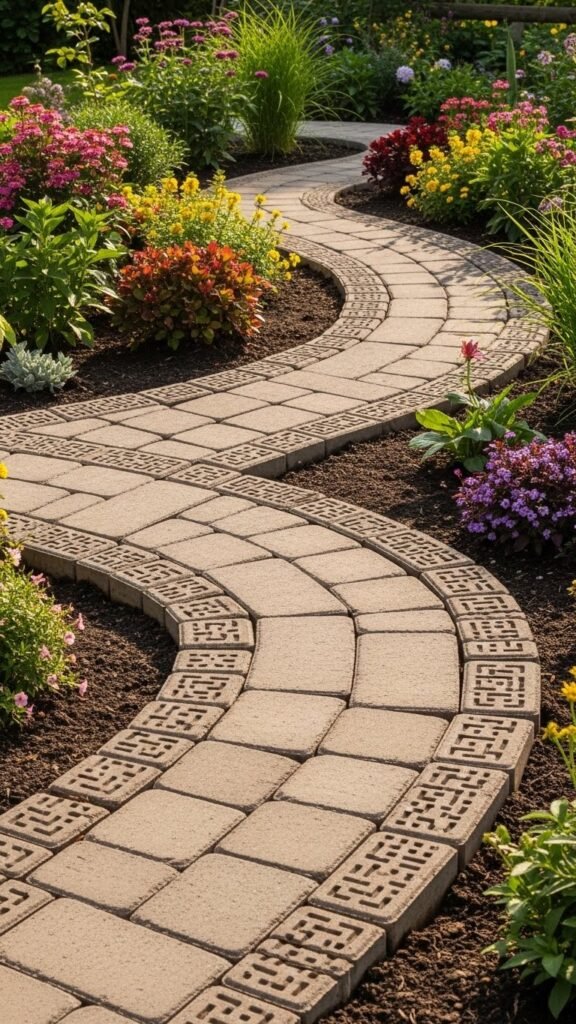
Choose concrete paver edging when you want a modular, durable border that’s easy to tailor to curves, straight runs, and mixed materials. You can lay permeable pavers to let water nourish beds, arrange patterned joints for visual rhythm, and mix sizes for organic lines.
Install with a simple base, compact edges, and plant-friendly gaps so your garden breathes and you stay flexible.
Cobblestone Edging: Old-World Charm Borders
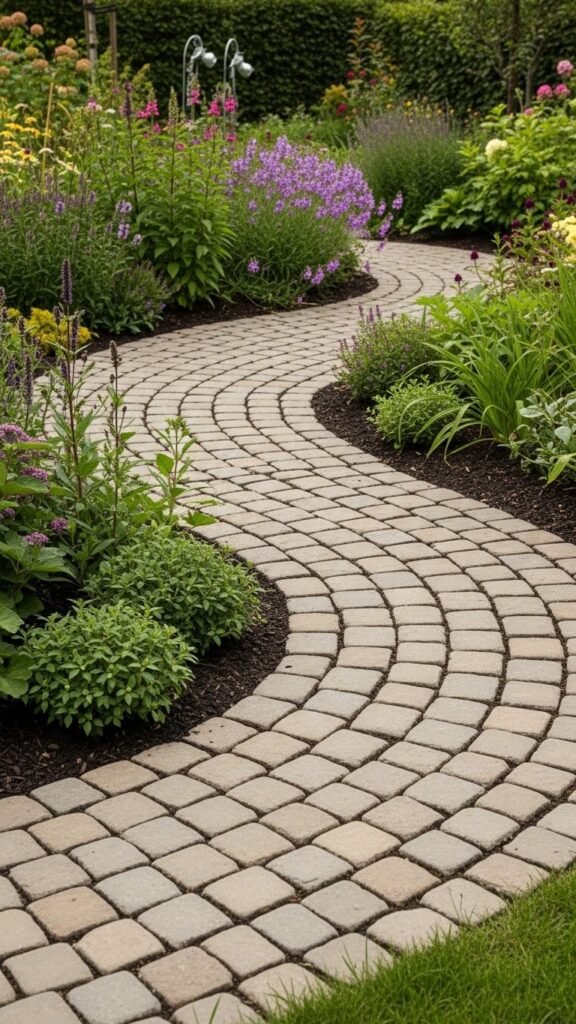
Cobblestone edging brings old‑world charm and strong presence to garden beds, letting you create winding, cottage‑style borders that age gracefully.
You’ll set antique cobblestones on a compacted base, arranging them in relaxed European paving patterns or staggered rows. This sturdy edge tames soil and grass, frames perennials and shrubs, and invites barefoot paths—low maintenance, tactile, and freeing for gardeners who favor texture and timeless lines.
Gabion Wall Edging: Rock-Filled Wire Borders
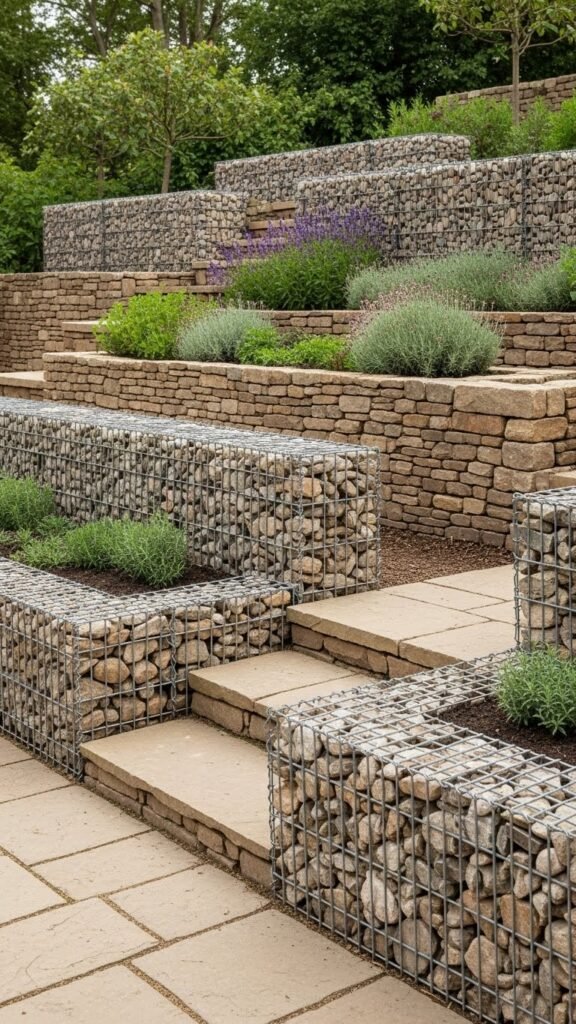
Though rugged in appearance, gabion wall edging can feel surprisingly light in the garden when you set wire cages filled with stone to define beds, terraces, or slopes.
You’ll choose a drystone gabion for raw texture or a decorative gabion for patterned interest. Position low walls to retain soil, create steps, and showcase drought-tolerant plants, keeping maintenance simple and flexible.
Living Plant Edging: Low Hedge and Groundcover Borders
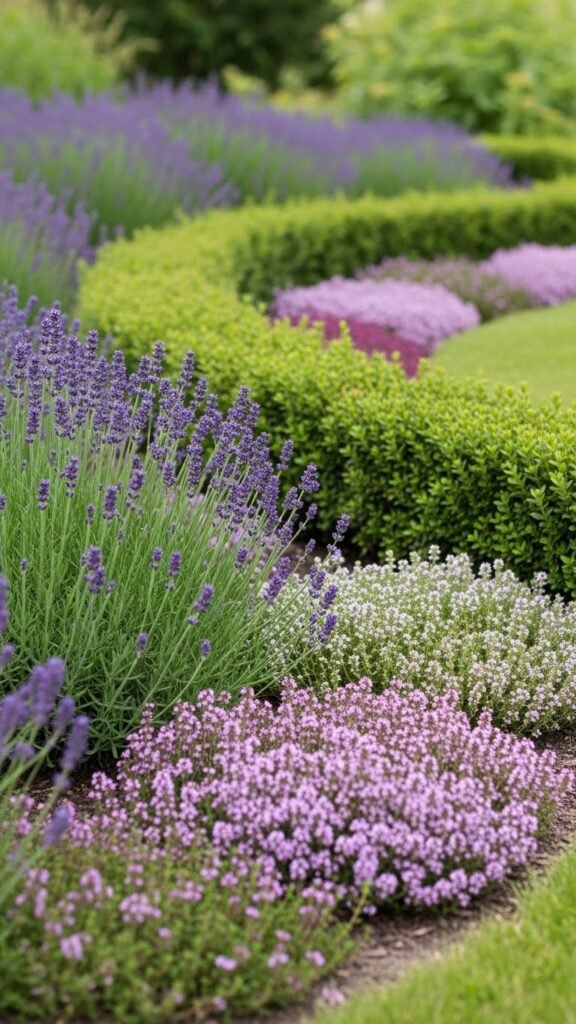
When you edge beds with low hedges or spreading groundcovers, the border becomes a living, breathing frame that softens hard lines and feeds pollinators.
You’ll choose a pollinator hedge like dwarf lavender or thyme, and weave seasonal groundcover for texture and bloom succession.
Prune for shape, leave gaps for insects, and let edges evolve—practical, free, and garden-wise.
Cast Iron Edging: Victorian-Style Durable Borders
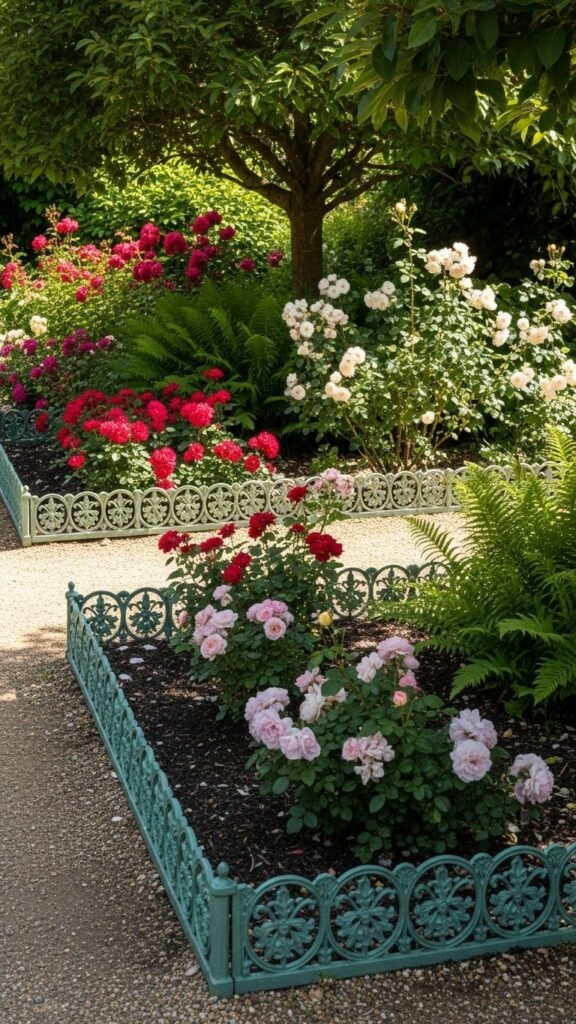
If you want a border that reads like a period piece yet stands up to today’s garden demands, cast iron edging delivers Victorian charm with industrial strength.
You’ll set ornate Victorian motifs along beds, anchoring roses and ferns while keeping edges crisp. Choose recycled pieces or invest in cast restoration to remove rust and repaint, then sink segments solidly for lasting, low-maintenance structure.
Precast Concrete Edging Blocks: Consistent, Easy-to-Install Borders
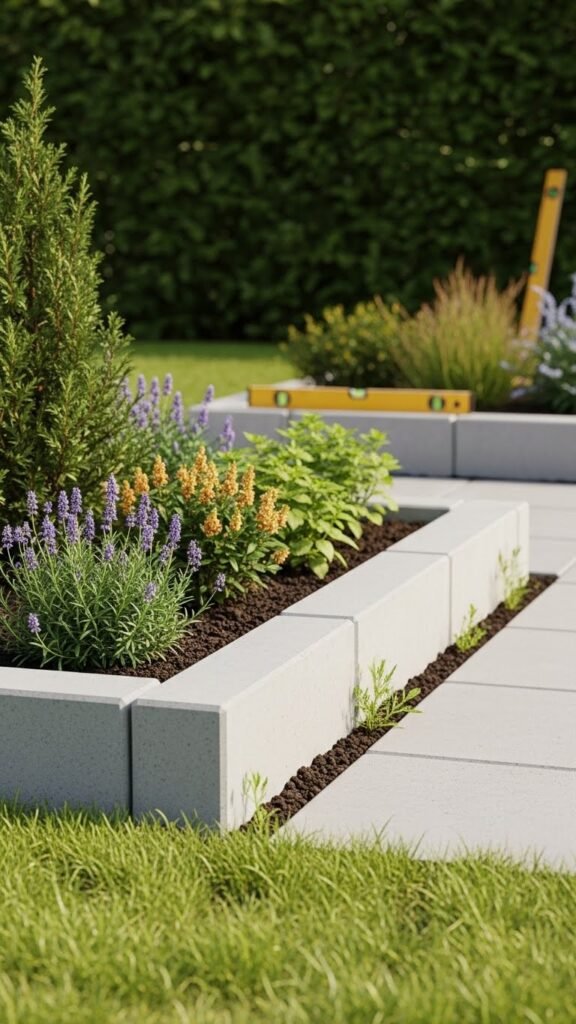
Leaving the ornate look of cast iron behind, you can opt for precast concrete edging when you want clean lines and dependable performance without fuss.
You’ll place uniform blocks to define beds, tuck plants close, and enjoy low upkeep. Use basic installation tools, level each piece, and follow simple maintenance tips like occasional weeding and joint re-sanding so borders stay crisp and free.
Terracotta Edging: Warm Clay Border Accents
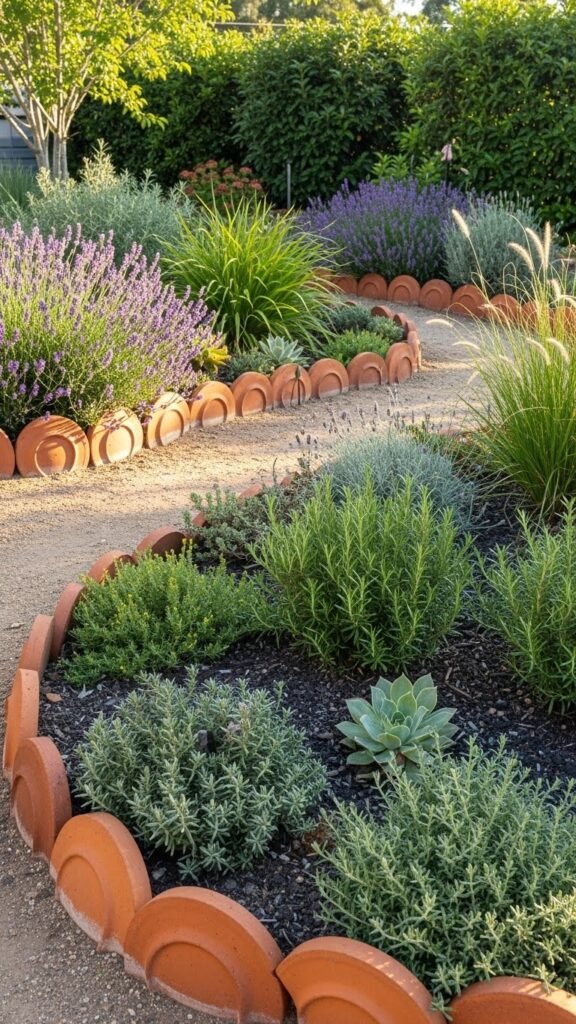
Terracotta brings a warm, earthy edge to your beds that complements Mediterranean, cottage, and drought-tolerant plantings. You’ll place saucer-style tiles or short half-rounds to define curves, tuck them low for a subtle lip, and let clay patina age attractively.
Routine terracotta maintenance is easy: brush debris, reset shifted pieces after frost, and enjoy a durable, sun-loving border that feels free and lived-in.
Gravel and Rock Edge: Informal Natural Borders
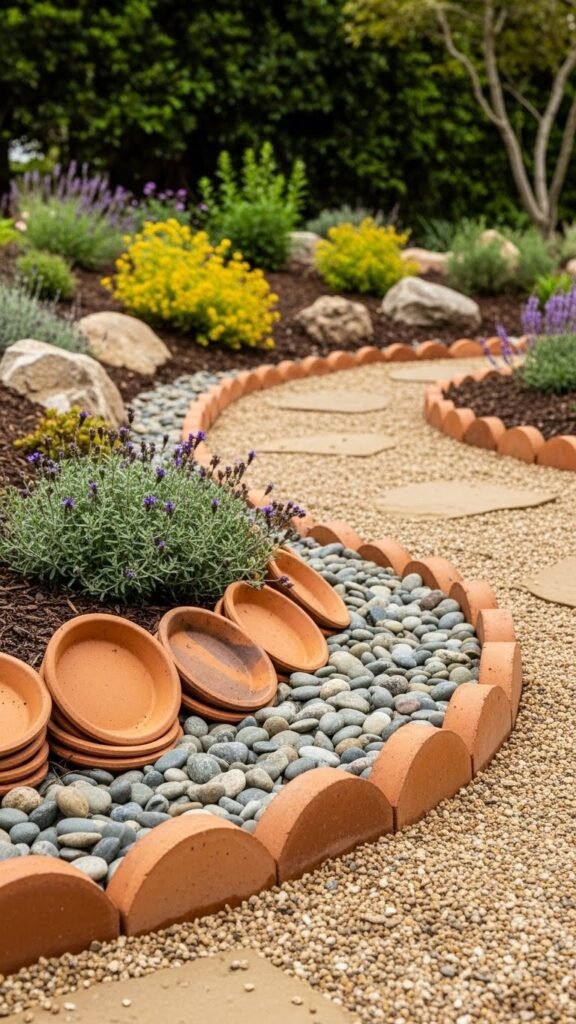
A gravel or rock edge gives your beds a relaxed, natural look that blends with native plantings and xeric landscapes—think crushed stone, river rock, or flagstone chips lining curves and pathways.
You’ll define spaces without rigid barriers, encourage drought tolerant plants, and create texture with wildlife friendly stones that warm paths, hold mulch, and let water infiltrate. Keep slopes subtle and edges tidy.
Recycled Bottle Border: Creative Upcycled Edging
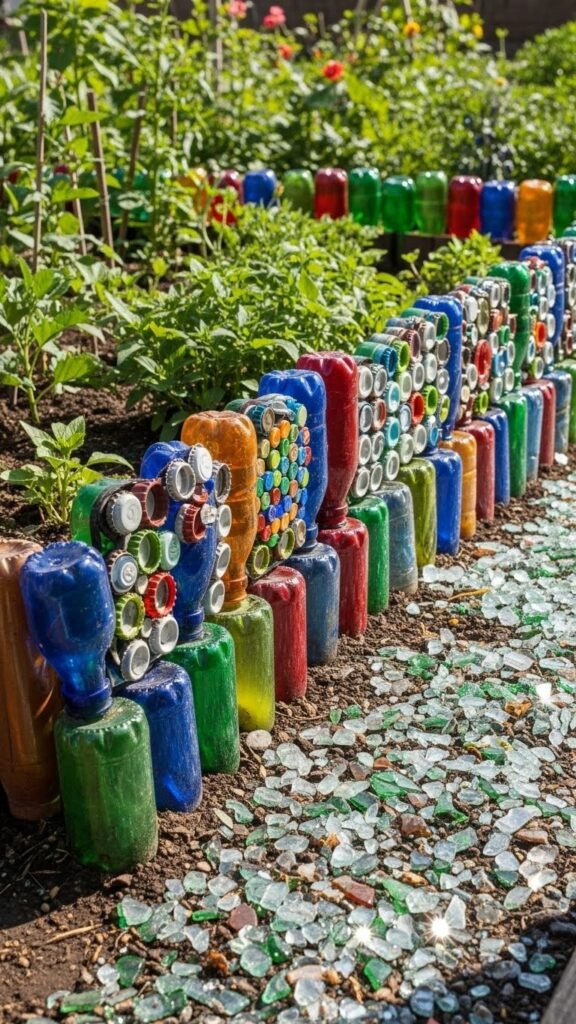
Give leftover glass and plastic a second life by turning bottles into a colorful, low-cost garden border that’s both decorative and functional. You’ll bury necks or stack bases to create sturdy edges, weave in bottle cap mosaics for playful texture, and scatter glass shard pathways where sunlight catches facets. It’s a free-spirited, plant-wise approach that defines beds while protecting roots and encouraging creativity.
Concrete Lawn To Garden Strip: Minimalist Functional Edge
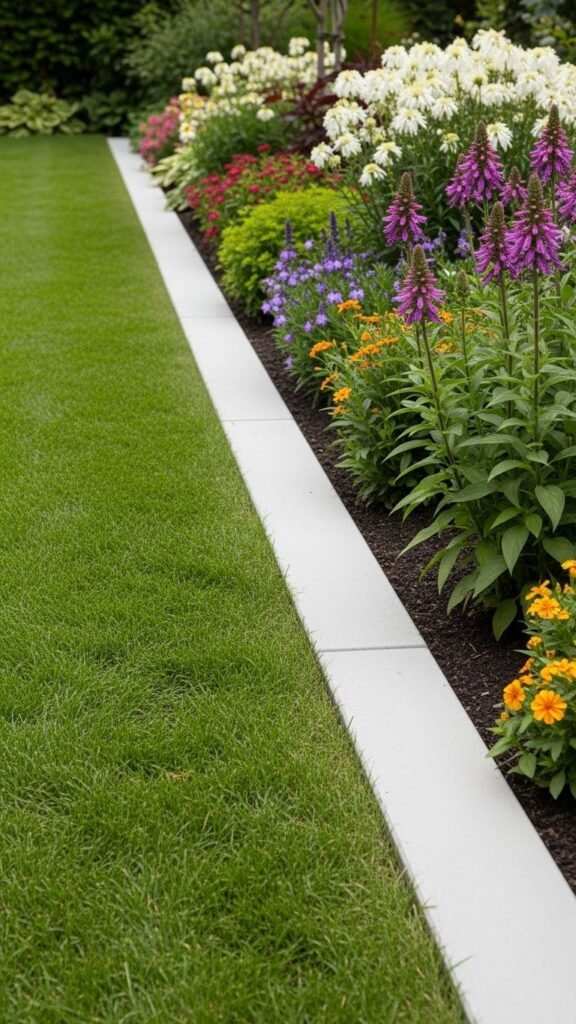
Think of a clean strip of concrete as a quiet backbone between your lawn and beds: poured level and slightly raised, it keeps turf from creeping in, gives you a straight line for mowing, and resists weather without distracting from plants.
You’ll love the minimalist drainage it offers, a subtle monochrome texture that frames perennials, lets you sculpt beds freely, and simplifies maintenance.
Metal Edging With Powder Coating: Colorful Long-Lasting Borders
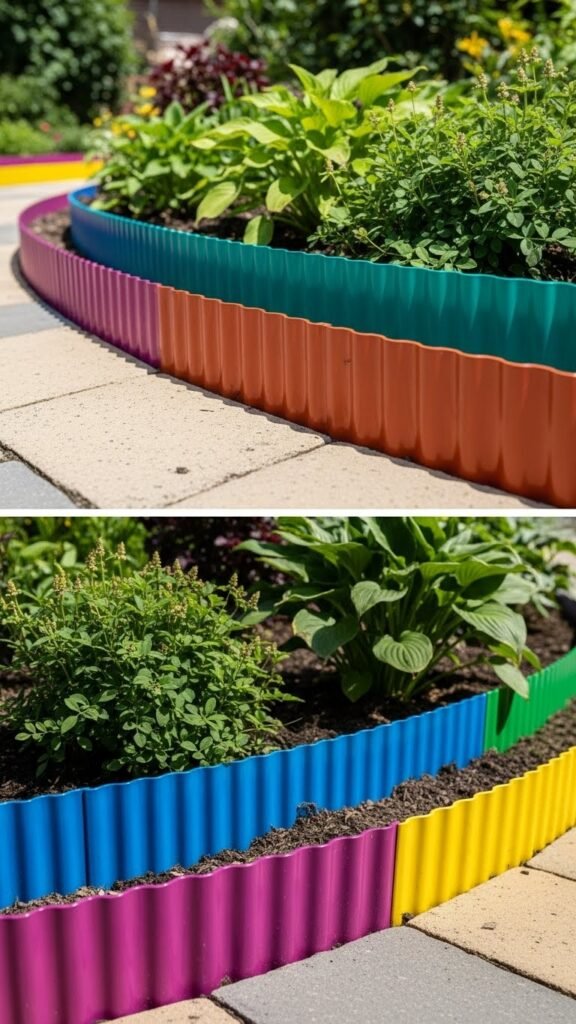
If you like the clean line concrete creates, metal edging with powder coating offers the same sharp definition but in color and with a slimmer profile you can bend to curves.
You’ll choose hues with Color matching techniques, pick plants to contrast edges, and expect durable finishes after UV resistance testing.
Install shallow, anchor firmly, and enjoy tidy beds that feel unfettered and alive.
Edging With Mulch and Timber Restraint: Soft Natural Containment
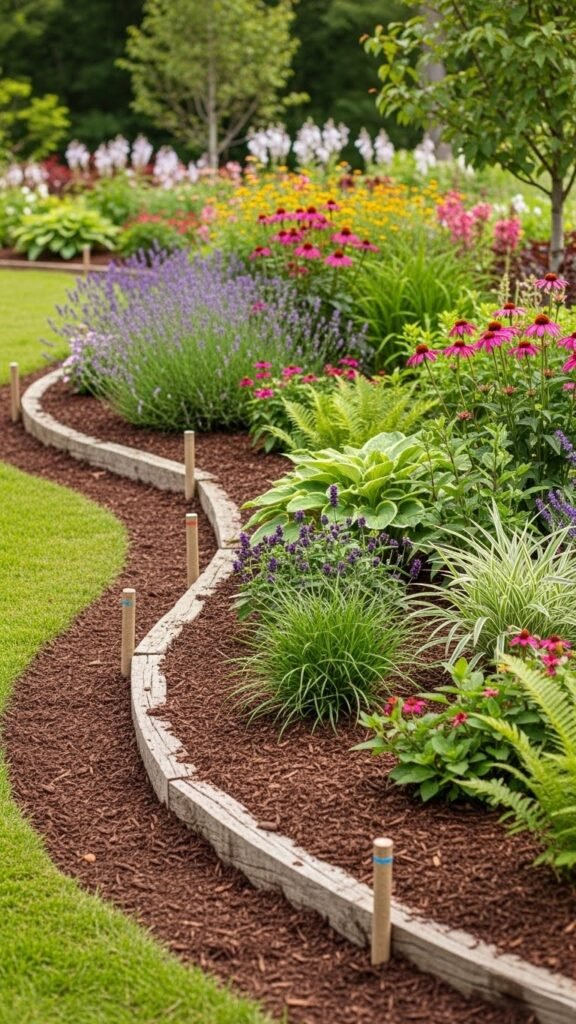
When you want a soft, natural edge that complements planting beds, mulch paired with timber restraint gives you a low-impact containment that’s both attractive and functional. You’ll sculpt mulch berms to define lines, anchor timber with biodegradable stakes, and let beds breathe. This approach favors curves, quick installation, soil health, and a liberated, low-maintenance aesthetic that grows more natural over time.