
You can transform your yard without a landscaping degree—just a few smart moves and plant choices. Swap turf for a wildflower patch, add raised kitchen beds or rolling containers, and layer shrubs, grasses, and sages in muted tones for year‑round texture. Tuck in a hammock, vintage bench, or a mossy fence for quiet charm, then try a pollinator strip or diagonal brick edging to finish—here’s how to bring all 25 ideas together.
Create a Neutral White Flower Border for Minimalist Tranquility

For a serene, minimalist edge to your yard, plant a white-flowering border that emphasizes texture and form over color. You’ll create a white bordered strip of minimalist blooms—lavender, white salvia, ornamental grasses—for serene edging and a calm palette.
Space plants for airflow, deadhead sparingly, and choose low-maintenance varieties so you enjoy freedom and effortless, elegant structure.
Install a Mossy “Go Away Green” Fence to Blend With Plants
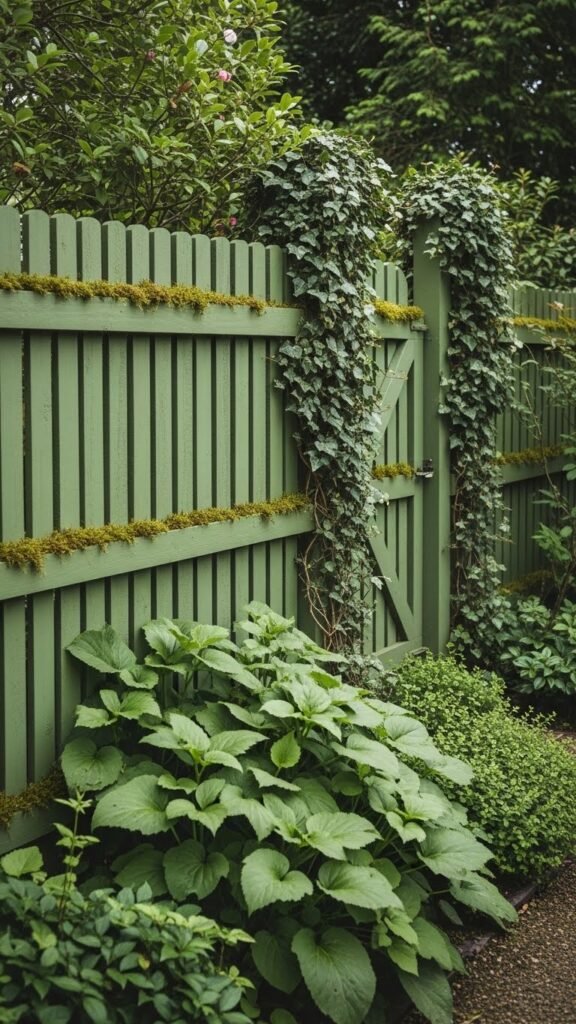
Pair that calm white border with a mossy “go away green” fence to make the structure recede and let your plants take the spotlight. You’ll paint or use a moss stencil, then encourage real moss between slats for texture.
Tuck a secret gate among trailing vines for private access. Keep tones muted, maintenance simple, and let native foliage reclaim the edge for a free, wild feel.
Replace Lawn With a Native Wildflower Meadow
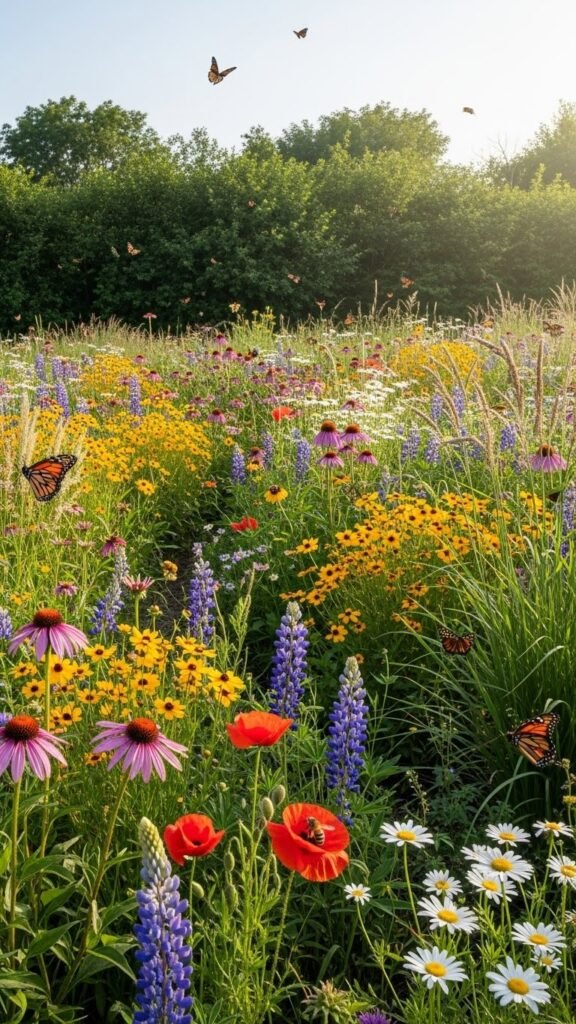
Transforming your lawn into a native wildflower meadow gives you a low-maintenance, wildlife-rich landscape that actually improves soil and local ecology.
You’ll choose regional seed mixes, thin turf, and sow in fall or spring.
Embrace varied heights, paths, and seasonal bloom succession for year-round interest.
This native meadow approach supports pollinators, reduces mowing, and advances quiet urban rewilding with effortless, freeing beauty.
Build Portable Container Gardens on Wheels
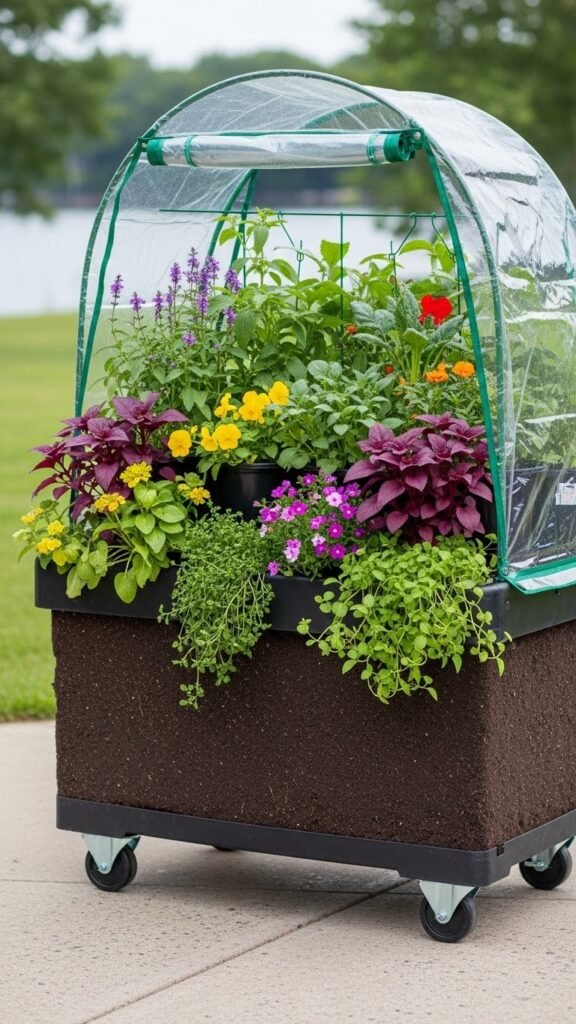
Rolling container gardens bring big impact to small spaces, letting you rearrange color, texture, and height with ease while keeping plants healthy.
Build a sturdy mobile planter on casters, choose lightweight soil, and mix edibles with ornamentals. Add a removable mini hoophouse to act as a rolling greenhouse for seedlings or frost protection.
You’ll gain freedom to follow light and change scenes instantly.
Plant a Pollinator Strip in the Parking Strip

Creating a narrow pollinator strip in your parking strip brings beauty and purpose to an often-overlooked slice of turf.
You’ll choose native blooms for seasonal nectar, group plants by height, and mulch to retain moisture.
Edge the space to define curb habitat, add a low bench or stepping stones, and maintain with light pruning — freedom to shape a small, wildlife-friendly statement.
Group Window Boxes With All-White Florals
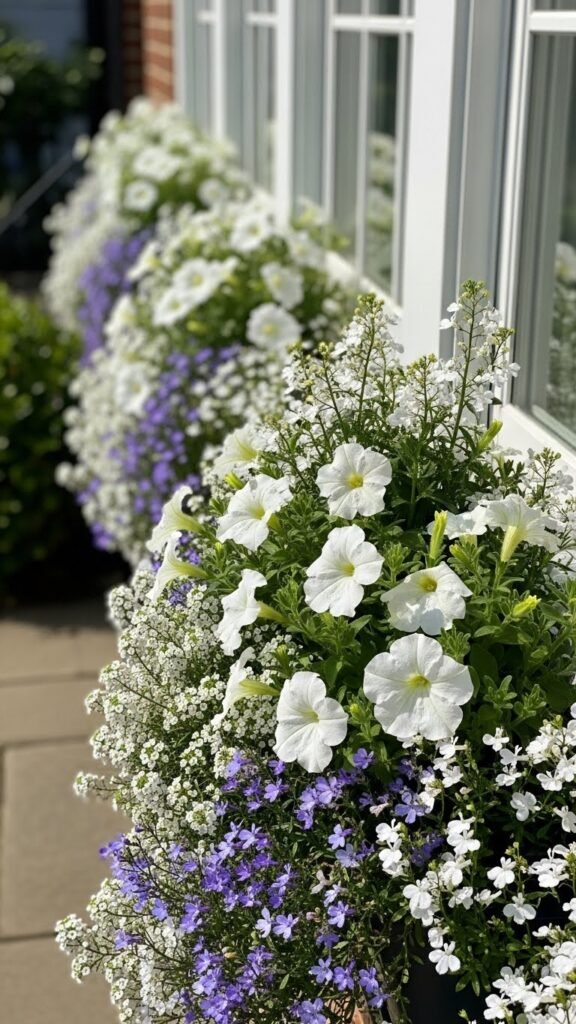
Pair a set of narrow window boxes across a facade and fill them with all-white blooms to give your windows a cohesive, refined look that reads as one thoughtful installation. You’ll choose a monochrome windowbox approach, mixing a white flowering trio—petunias, alyssum, and lobelia—for varied texture.
Water wisely, deadhead regularly, and enjoy a liberated, clean curbside statement that’s low-fuss and elegant.
Use Repurposed Wooden Crates as Hanging Planters
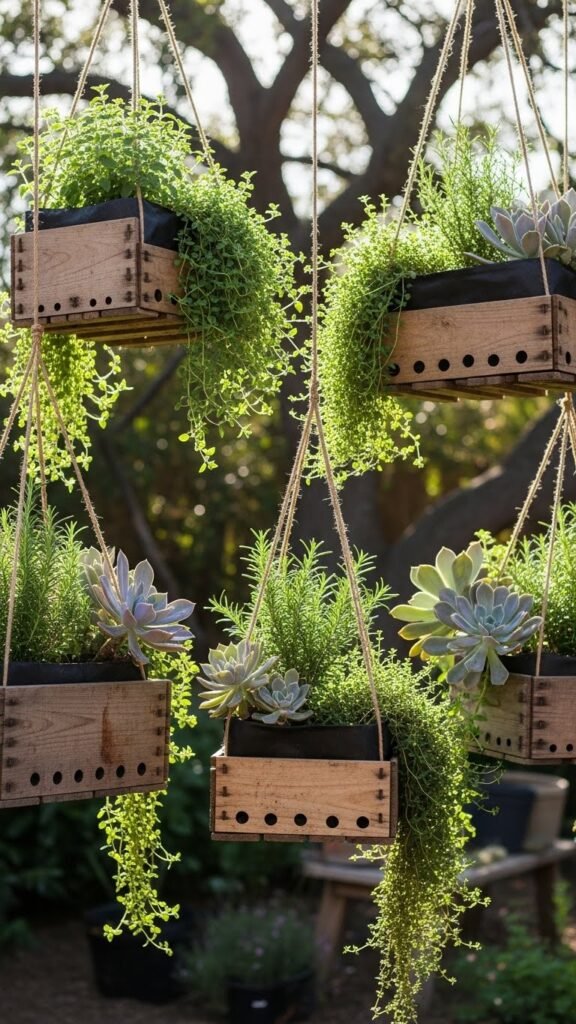
If you like the neat, unified look of grouped window boxes, repurposed wooden crates give you a similarly polished effect with more rustic character and vertical interest.
You can create a rustic hanging crate herbarium by lining crates, adding drainage, and planting trailing herbs and succulents. Hang them at varied heights for freedom of layout, easy access, and an instantly lived-in, plant-savvy vibe.
Add a Vintage Wrought-Iron Bench as a Focal Point

Set a vintage wrought-iron bench as the centerpiece of a garden nook to anchor the space with timeless charm and durable function.
You’ll choose a spot with views, layer cushions that resist moisture, and flank it with shrubs and potted perennials.
Learn basic antique restoration to preserve patina, schedule simple wrought‑iron maintenance, and enjoy a liberated, low-fuss retreat that invites lingering.
Design a Gradient of Wildness on a Hillside With Native Grasses

Toning a hillside with a gradient of wildness starts by mapping zones of intensity—from closely mown edges near paths to full, untamed drifts at the crest—and choosing native grasses that suit each band.
You’ll plan slope seeding for stability, stagger species for texture, and create wildlife buffers where needed. Let sections loosen into meadowy freedom while keeping access and visual rhythm intact.
Install Raised Beds for an Easy Kitchen Herb Garden
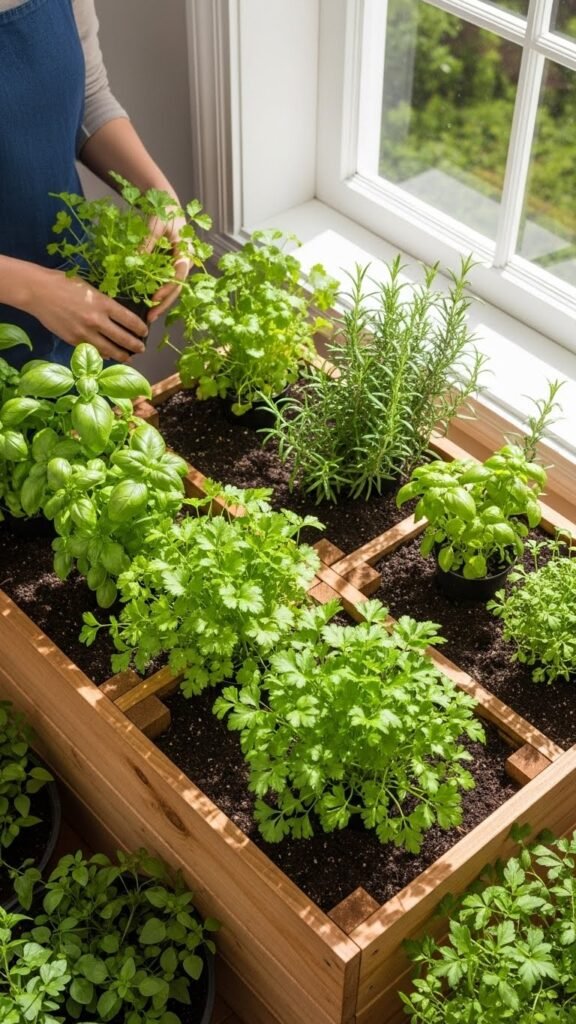
Build a compact raised bed or two to bring fresh culinary herbs within arm’s reach of your kitchen—closer soil warmth, better drainage, and clearer control over soil quality make them ideal for busy cooks and small yards alike.
You’ll choose simple DIY planters, amend soil, and position beds for prime Light placement.
Harvest easily, prune for vigor, and enjoy fragrant freedom every meal.
Create a Cottage-Style Border With Peonies and Dianthus
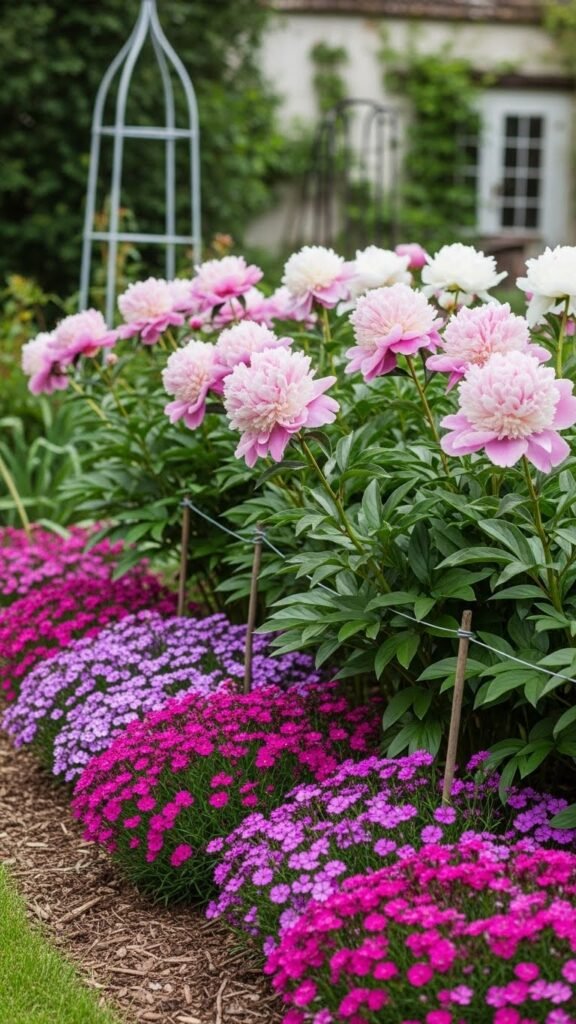
After you’ve sown the convenience of kitchen herbs nearby, bring the same hands-on charm to your yard edge by planting a cottage-style border of peonies and dianthus. You’ll enjoy fragrant borders and layered blooms; place taller peonies behind low, colorful dianthus. Stake peonies lightly, mulch for moisture, and weave a vintage trellis for support and rustic structure that still feels free and effortless.
Hang Antique Bird Cages as Plant Holders
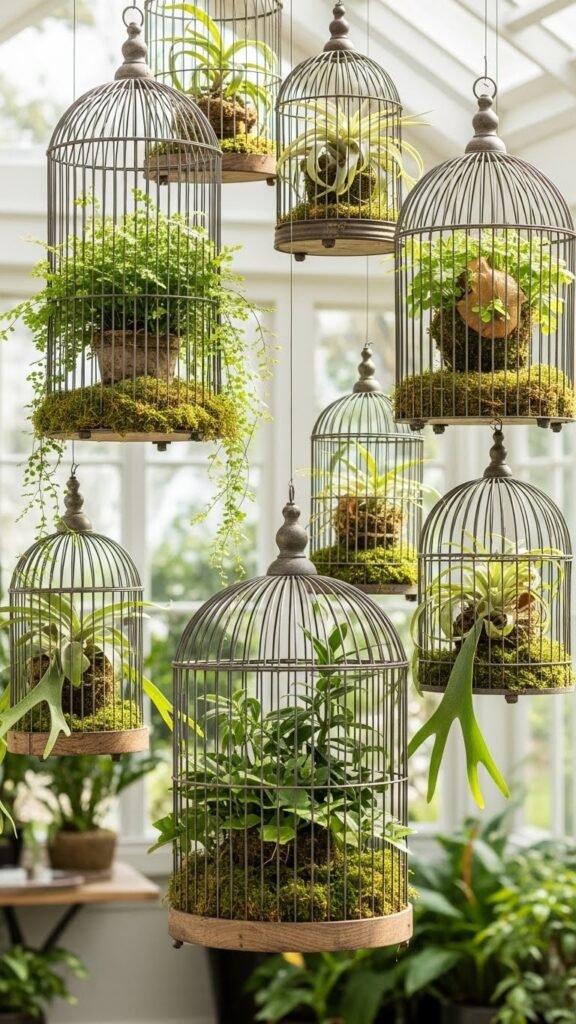
Hanging antique bird cages as plant holders lets you transform a faded relic into a living focal point; suspend them at varying heights to add vertical interest and use moss-lined bases or small pots inside to give roots room to breathe. You’ll choose antique cageholders that drain, secure sturdy hooks, and favor hanging epiphytes or trailing ferns for airy, low-maintenance charm.
Incorporate Succulents and Herbs Into Permeable Paver Driveways
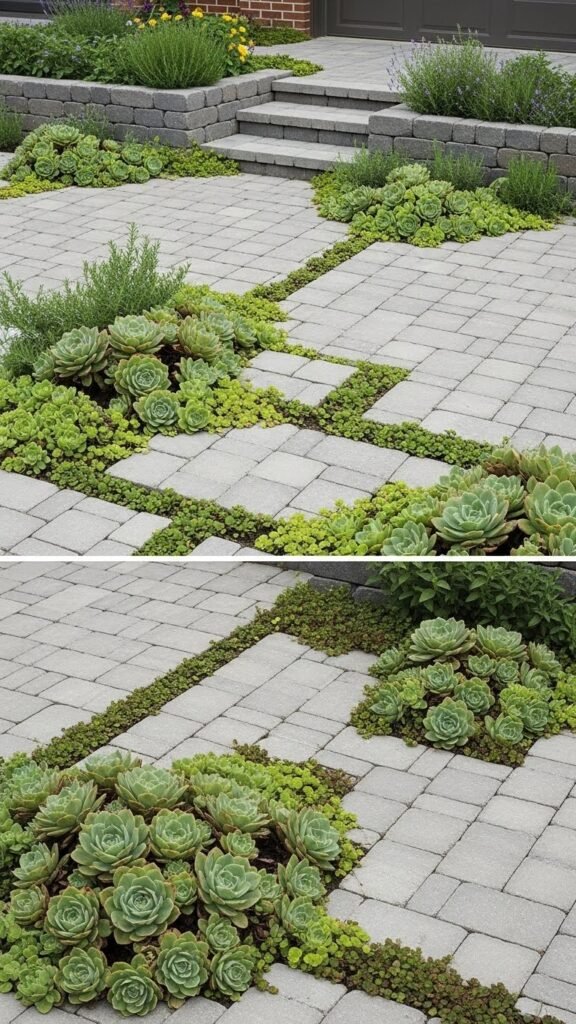
By weaving low-growing succulents and fragrant herbs into the joints and edges of a permeable paver driveway, you’ll soften hard surfaces, boost biodiversity, and create a fragrant, drought-tolerant landscape element that still handles foot and vehicle traffic.
Plant succulent islands in wider gaps, tuck herb pockets near steps for scent, choose tough species, compact soil, and enjoy low-maintenance freedom.
Build a Wooden Arbor and Train Wisteria or Clematis
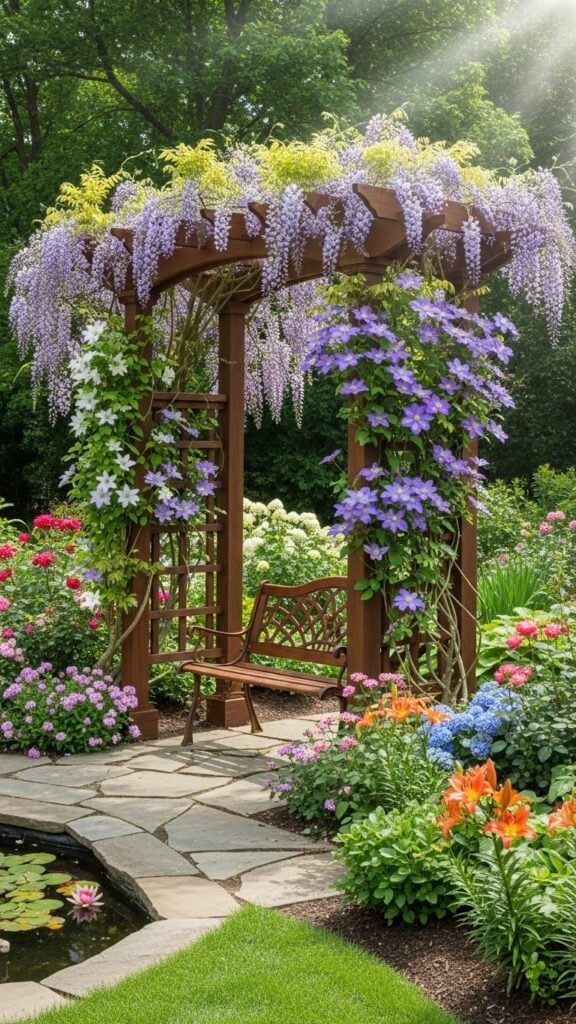
Soft planting near hardscape naturally leads you to think vertically — an arbor adds height, shade, and a flowering focal point.
Build sturdy wooden posts, attach a simple trellis, and plant wisteria or clematis with free-form ambition. Prune annually, watch for vine tangling, practice trellis maintenance and root management to prevent invasion. Enjoy scented drapery and gentle shelter without fuss.
Arrange a Bee-Friendly Pollinator Garden on a Rooftop
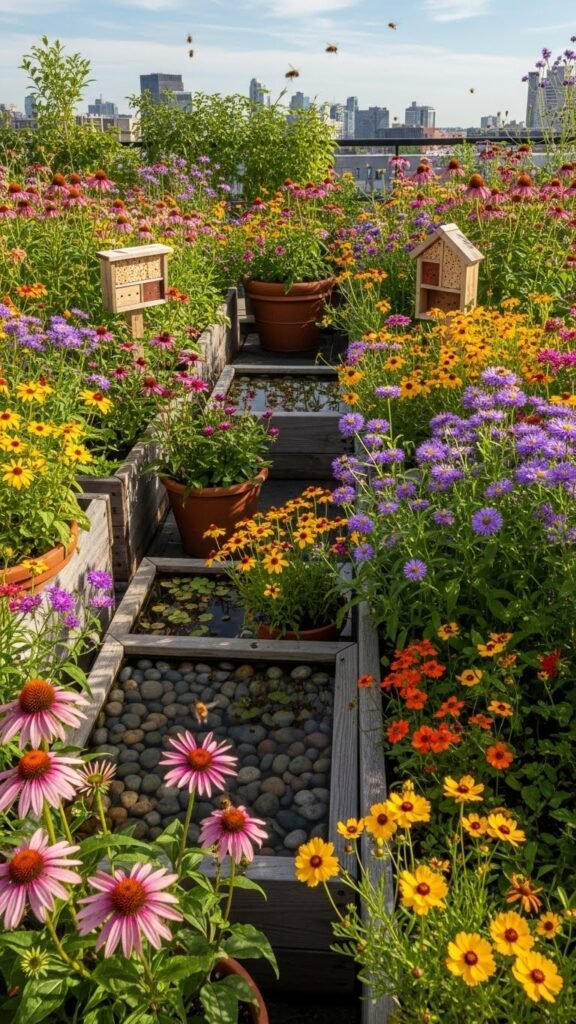
Creating a bee-friendly pollinator garden on your rooftop starts with thoughtful planning: choose sturdy containers, lightweight soil mixes, and a sunny layout that gives pollinators easy access to nectar and pollen.
You’ll pick pollinator friendly substrates, cluster native blooms for continuous forage, add shallow water, shelter, and consider rooftop beehives or solitary bee boxes.
Maintain pesticide-free care and enjoy liberated, buzzing life.
Use Pastel Hydrangeas and Hedges Instead of a Fence

When you swap a conventional fence for pastel hydrangeas and clipped hedges, you get privacy that feels softer and more living: hydrangeas bring seasonal drama with large, cloud-like blooms in powder blues, blush pinks, and creamy whites, while evergreen hedges provide year-round structure and screening.
Plant a pastel hedgerow with mophead or lacecap varieties, spacing for airflow; prune hedges for neat hydrangea privacy.
Add a Hammock and Essential-Oil Diffuser for a Spa Vibe
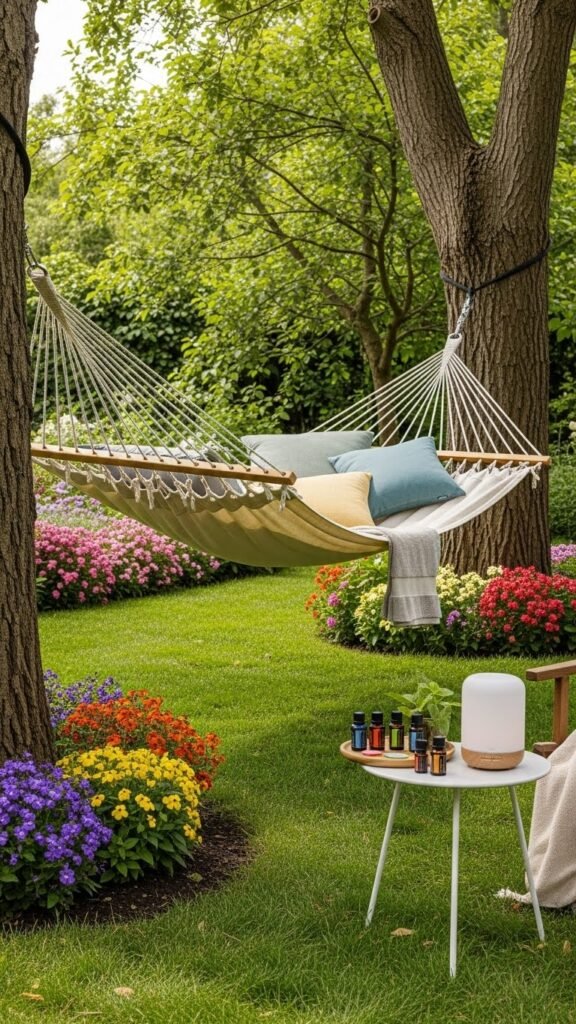
After you’ve carved out a wild corner that hums with pollinators, make a nearby spot for unwinding by hanging a hammock between two sturdy posts or trees so you can soak up the view.
Create a hammock nook with weatherproof fabric, add cushions, and place a small table for an essential-oil diffuser. Choose plant-savvy diffuser blends—lavender, cedar, mint—to deepen relaxation and free your mind.
Install Vertical Planters on a Small Balcony
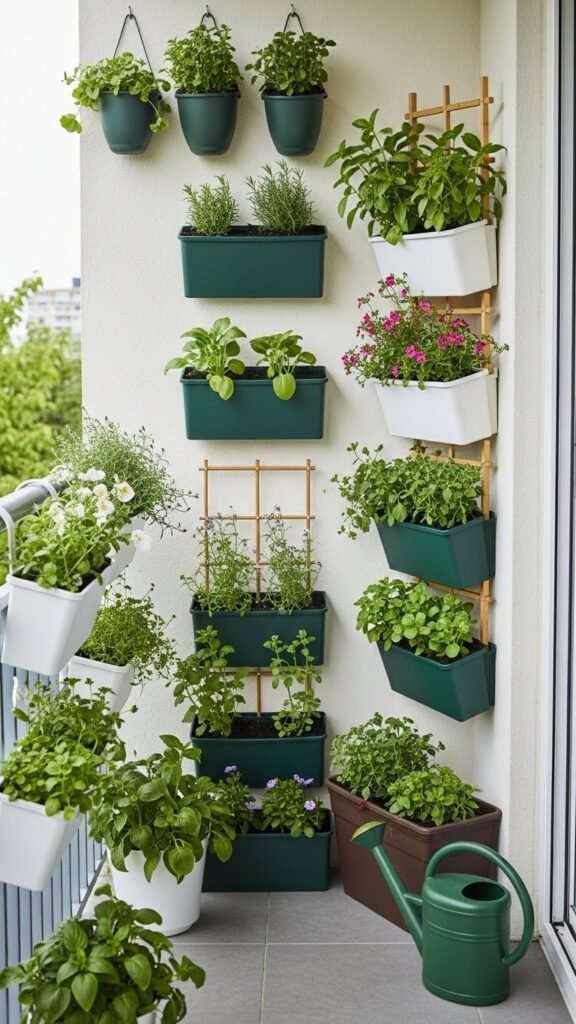
On a small balcony, vertical planters turn limited floor space into a layered, productive garden you can tend without feeling crowded. You’ll mount hanging pockets, trellis planters, or staggered shelves to grow herbs, compact veggies, and trailing flowers.
Choose lightweight containers, quality potting mix, and a drip or watering-can routine. This setup frees you to cultivate lush, low-maintenance green freedom.
Create a Native Shrub and Wildflower Hedge for Privacy

If you want privacy that’s beautiful and wildlife-friendly, plant a native shrub and wildflower hedge to create a living screen that changes with the seasons.
You’ll choose local shrubs for structure, stagger spacing, and seed native wildflowers for wildflower succession. Mulch, prune lightly, and let volunteers fill gaps. This native hedgeplanting gives freedom, habitat, and low-maintenance year-round privacy.
Repurpose a Canoe or Vintage Object as Garden Sculpture
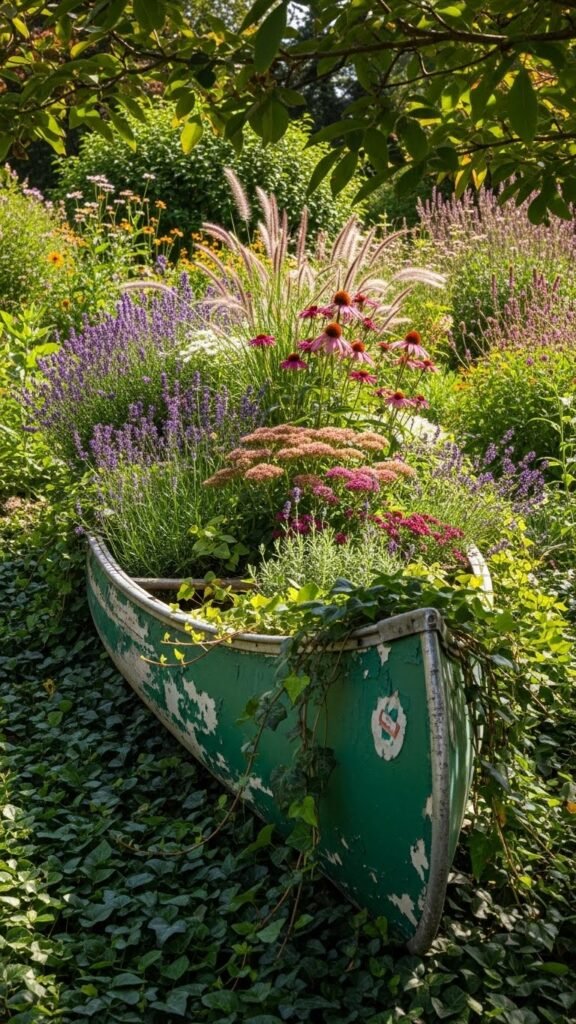
Give a retired canoe or a weathered vintage find new life as a sculptural focal point in your garden, where its shape, patina, and scale can echo the landscape and highlight surrounding plants.
Turn it into a canoe planter or nautical sculpture: drill drainage, add soil mixes for drought-tolerant perennials, position for sightlines, and let wild vines or grasses soften edges while you enjoy creative freedom.
Design a Pet-Friendly Garden With Safe Native Plants
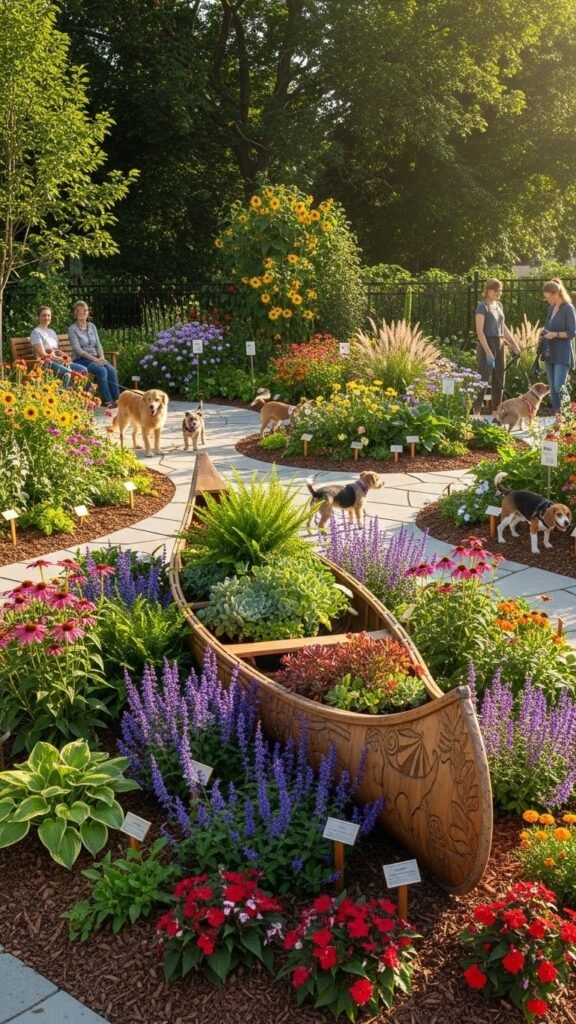
That sculptural canoe can share space with curious pets, so you’ll want to plan plantings that keep animals safe while still looking beautiful. Choose plants native to your region for resilience, nectar, and habitat.
Create clear paths, shady beds, and use pet safe mulch. Avoid toxic ornamentals, label specimens, and let your garden be a free, thriving place both you and your pets enjoy.
Plant Redbuds and Lilacs for Seasonal Structure and Scent
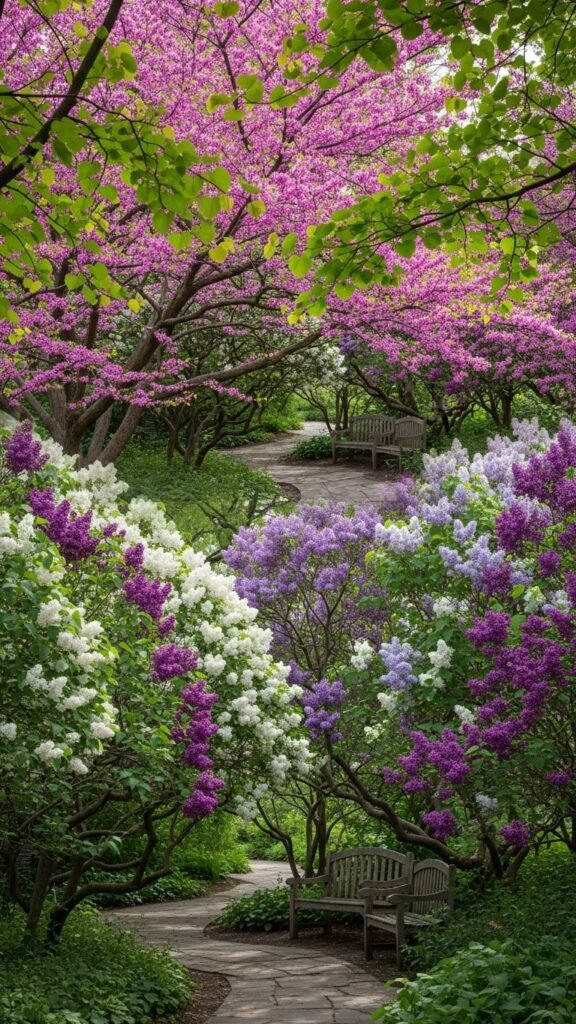
Plant redbuds and lilacs to anchor your garden with reliable seasonal structure and irresistible scent — redbuds deliver early spring color with heart-shaped leaves and pea-like blossoms, while lilacs offer late-spring clouds of fragrant flowers and dense, shapely stems that frame paths or seating areas.
Space them for understory planting, prune for form, and enjoy enduring spring fragrance that invites relaxed, free-flowing outdoor life.
Layer Textures With Neutral Tones: Grasses, Sages, and Evergreens

After enjoying the spring perfume and structure of redbuds and lilacs, you can carry that seasonal rhythm into summer and winter by layering neutral-toned textures — think swaying grasses, silvery sages, and the steady presence of evergreens.
You’ll use textural layering and a sage palette to craft low-maintenance rhythm, mixing ornamental grasses, Salvia, and compact conifers for movement, contrast, and year-round calm.
Use Diagonal Brick Edging to Frame a Whimsical Cottage Bed
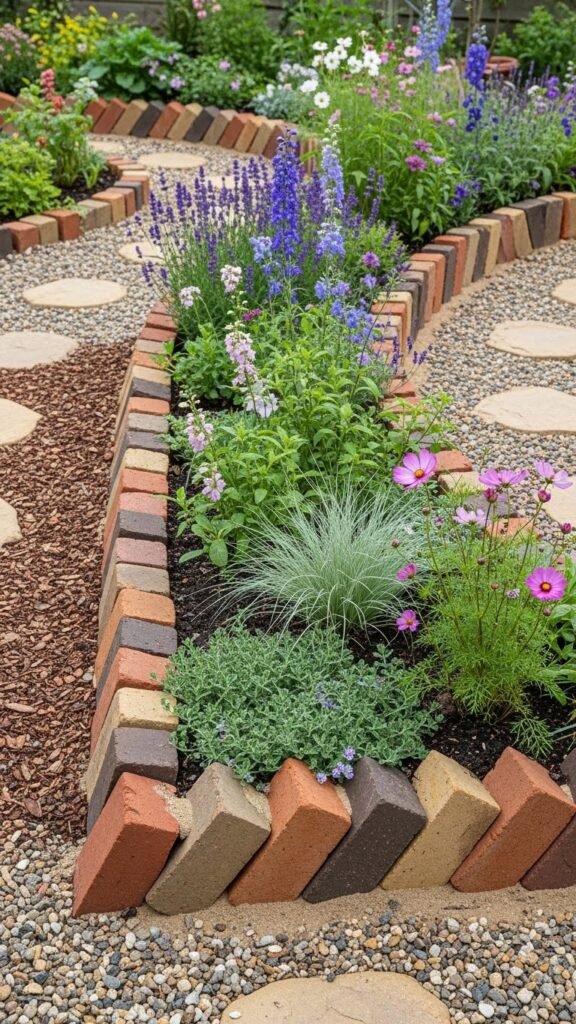
Lay diagonal brick edging to give your cottage bed a handcrafted, storybook edge that both contains soil and invites the eye to wander.
You’ll set bricks on a shallow trench, tilt them in diagonal patterning, and compact sand for stability.
This cottage edging channels water, defines plant groupings, and lets you shape informal paths—perfect if you crave a free, tactile garden that’s both tidy and unfussy.