
You can grow a surprising range of fruit in pots if you match species to container size, light, and soil. Choose dwarf or naturally compact varieties, use well‑draining, nutrient‑rich mix, and plan for regular feeding, pruning, and winter root protection. Many trees and vines fruit reliably when kept root‑bound and managed correctly — here are 22 practical options and how to handle their specific needs.
Figs

Figs adapt surprisingly well to containers, so you can grow productive trees on a balcony or patio with limited space. You’ll employ container pruning to shape canopy, encourage fruiting and manage vigor.
Choose wide, shallow pots to impose gentle root restriction, which concentrates energy into fruiting. Prune annually, monitor moisture, and fertilize modestly so your fig remains compact, resilient and freely productive.
Dwarf Citrus Trees

Dwarf citrus trees are ideal for container culture because they keep a full fruiting canopy in a manageable size, let you control root volume and soil mix precisely, and respond well to pruning and feeding regimes.
You’ll choose well-draining soil mixes, position pots for maximum sun, water consistently, and apply targeted fertiliser. Monitor for scale and mites; integrate organic pest management and quick removal of affected foliage.
Strawberries
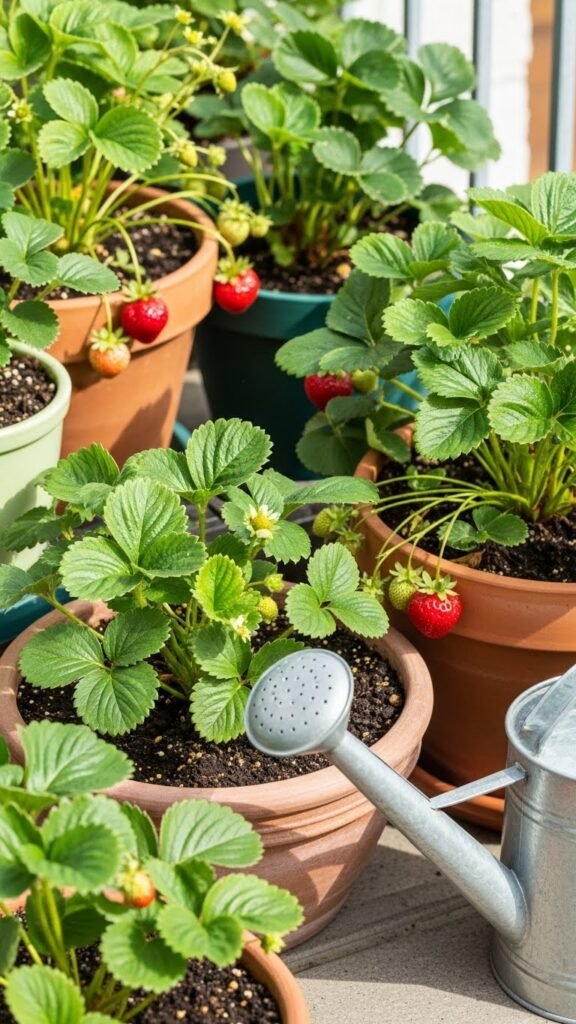
Often overlooked, strawberries make excellent container fruits because they thrive in restricted root space, fruit quickly, and let you control soil, moisture, and pests precisely.
You’ll choose container strawberries for patios and balconies, pick everbearing or alpine varieties for continuous harvest, and use well-drained, fertile mix. Water consistently, feed lightly, remove runners selectively, and enjoy fresh fruit with minimal obligation and maximal freedom.
Dwarf Apples

Look for dwarf apple varieties grafted onto compact rootstocks (like M26, M9, or MM106) so you get full-sized fruit from a tree that stays small enough for a patio pot.
You’ll choose rootstock selection to control vigor, container size, and winter hardiness.
Prune with espalier techniques to save space, improve light, and make harvesting effortless while keeping botanical form and freedom of placement.
Dwarf Pears

Grow dwarf pear trees on compact rootstocks (like Quince A or BA29) to get full-sized pears from specimens that stay manageable in containers.
You’ll choose rootstock selection for vigor control and cold tolerance, potting in free-draining mix and staking for stability.
Plan container pollination: place compatible cultivars nearby or use grafted multi-graft trees.
Prune annually to maintain shape and airflow.
Dwarf Peaches
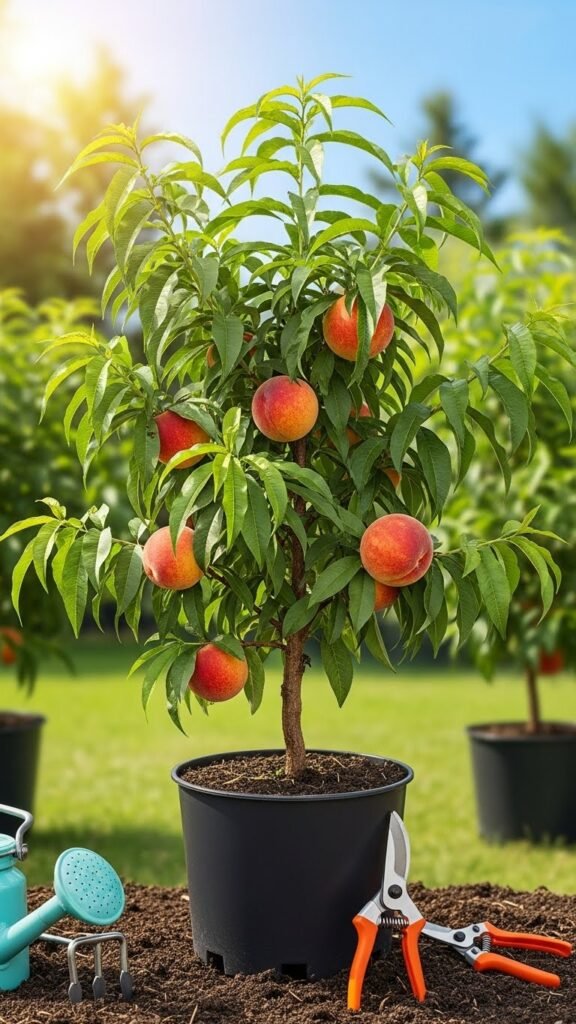
If you’ve had success with dwarf pears in pots, dwarf peaches offer similarly big fruit from compact trees. You’ll choose well-drained soil, full sun, and a sturdy container.
Follow dwarf peachcare tips: regular watering, balanced fertilizer, and winter chill needs. Apply container pruning techniques to maintain shape, promote airflow, and control size so you keep freedom to move and harvest easily.
Dwarf Nectarines
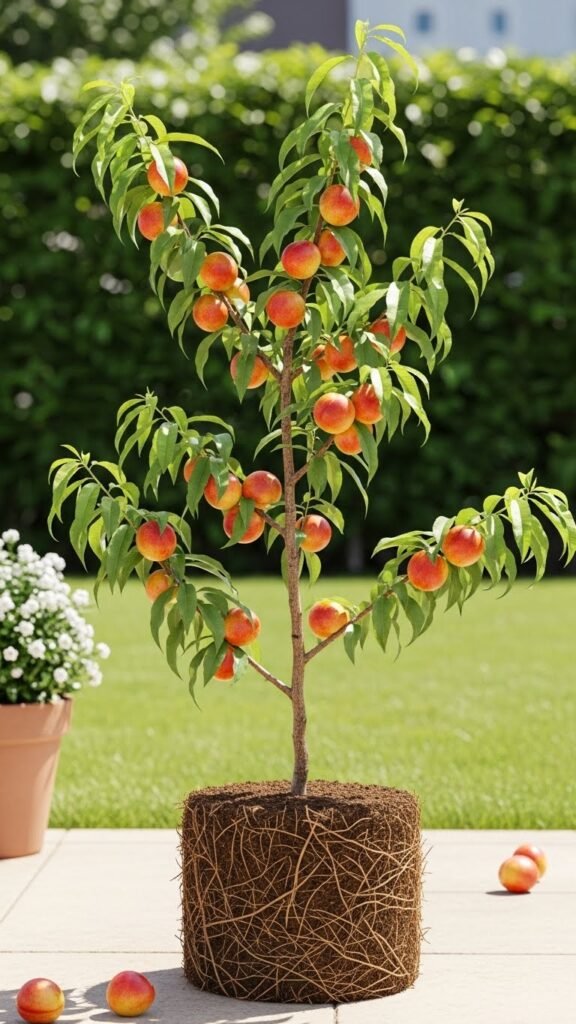
Often overlooked by container gardeners, dwarf nectarine trees deliver smooth-skinned, fragrant fruit from a compact, manageable form that’s ideal for patios and small yards.
You’ll choose well-drained soil, full sun, and a roomy pot. Train branches for air circulation, perform annual container pruning to control size and encourage fruiting, and protect roots from extremes so you can harvest freely and reliably.
Pomegranates
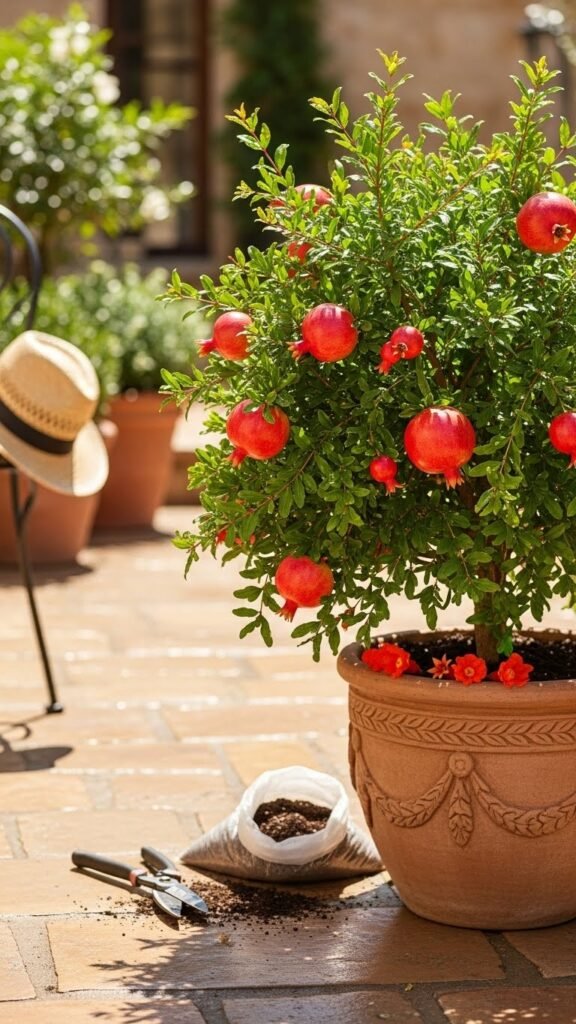
Switching from nectarines to pomegranates, you’ll find a remarkably hardy fruiting shrub that adapts well to containers and hot, sunny patios. You’ll choose dwarf cultivars for easier container management, prune to maintain airflow, and use gritty, well-drained mix.
Position the pot for full sun, irrigate deeply then let soil dry slightly, and hand-assist indoor pollination if blooms are protected or weighty fruit is desired.
Dwarf Plums

For container growing, dwarf plums are compact trees that give you full-size flavor with a smaller footprint; choose true dwarf rootstocks (Pixy, St. You’ll plant in well-draining soil mixes, position for sun, and train a central leader.
You’ll perform regular container pruning to control size, improve air flow and fruiting. Water deliberately, feed lightly, and expect reliable, portable harvests that free your space.
Dwarf Cherries
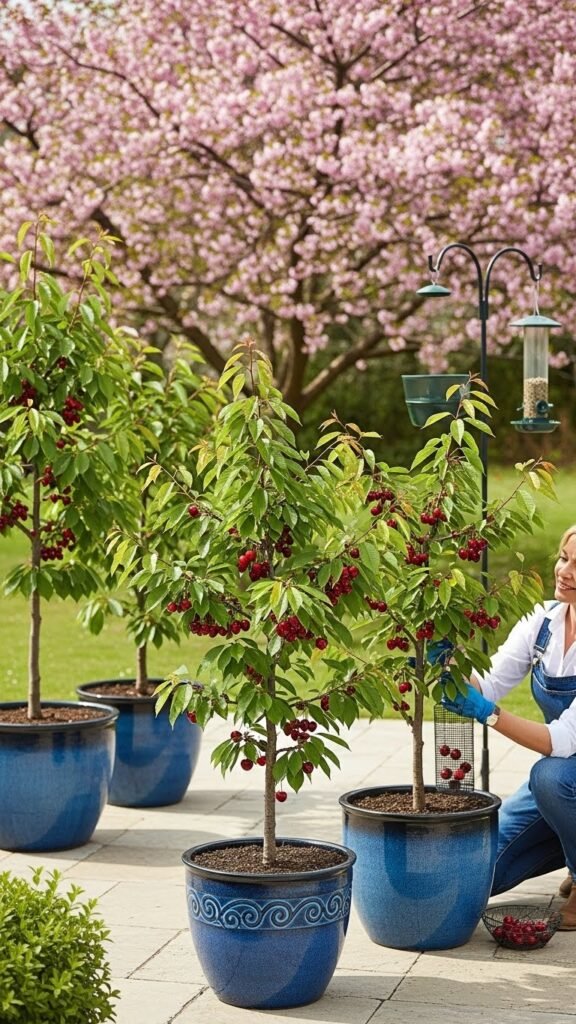
Grow dwarf cherry trees in containers to enjoy early, manageable harvests without a full orchard plot. You’ll select self-pollinating cultivars for small spaces, choose deep pots with good drainage, and use loamy acidic soil.
Prune annually to control size and stimulate fruiting. Container cherries suit patios; ornamental cherries provide bloom and structure. Water consistently, feed in growing season, and protect from birds.
Mulberries
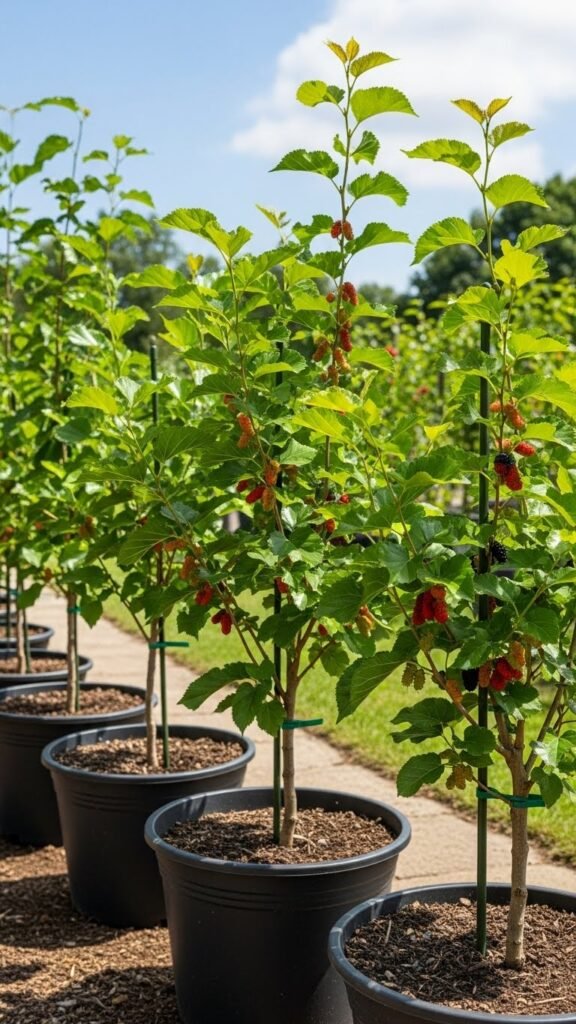
Offering fast growth and generous fruiting, mulberries are excellent container candidates when you pick compact varieties and give them ample root space. You’ll choose dwarf or semi-dwarf container varieties, use free-draining mix, and stake for structure.
For reliable mulberry care, water deeply but infrequently, fertilize in spring, and prune to maintain size and airflow so you keep harvests bountiful and manageable.
Passion Fruit
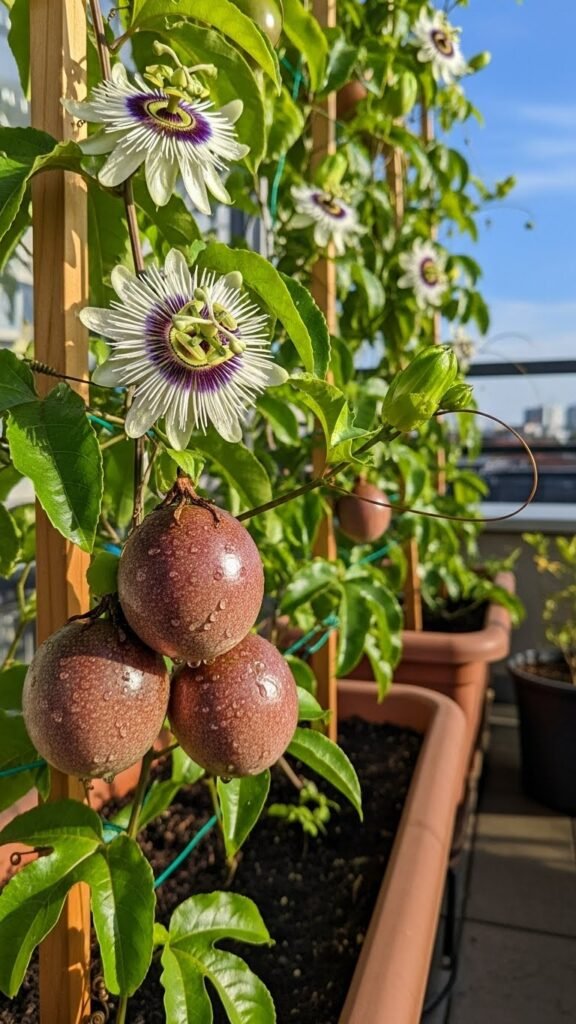
Train a vigorous passion fruit vine up a sturdy trellis or frame in a large container, and you’ll get fragrant, tropical fruit even on a balcony. You’ll choose trellis varieties suited to container growth, provide rich, well‑drained soil, and secure regular watering.
Prune for airflow, monitor pollination needs—hand‑pollinate if insects are scarce—and harvest when fruits wrinkle and scent.
Container Grapes
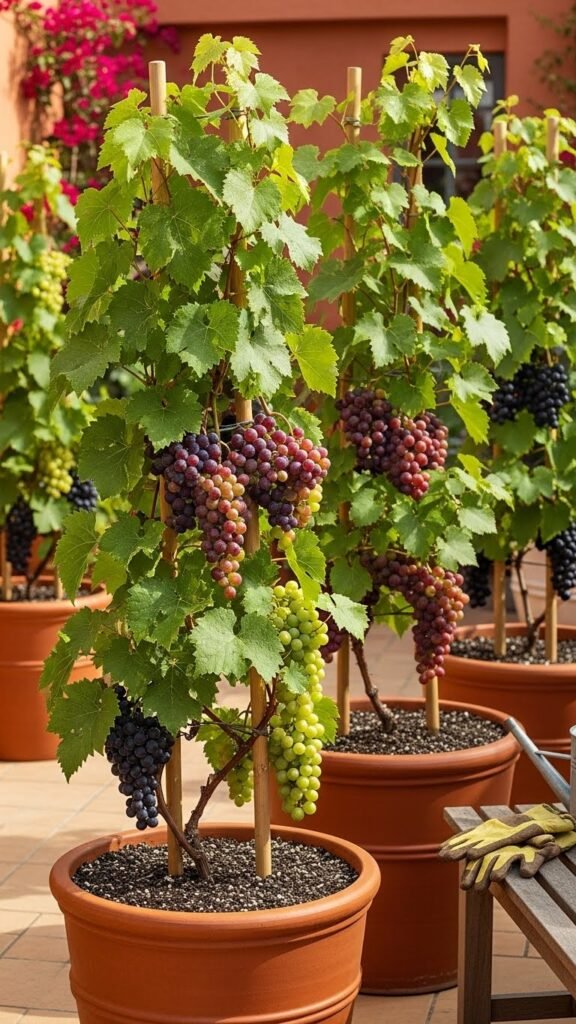
If you enjoyed tending a passion fruit vine, grapevines offer another satisfying container option that rewards careful pruning and trellising with clusters of sweet fruit.
You’ll choose dwarf or patio cultivars, plant in rich, well‑draining mix, and use training vines via vertical trellising to conserve space.
Prune annually to control vigor, encourage fruiting wood, and maintain freedom to reposition pots.
Kiwifruit (Hardy Varieties)
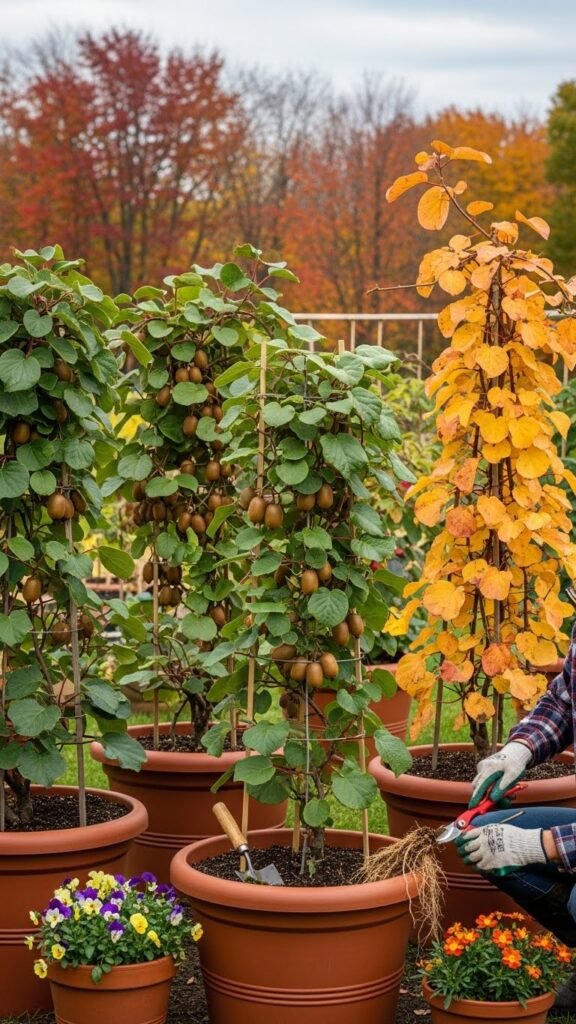
Often overlooked in container gardens, hardy kiwifruit (Actinidia spp.) make a compact, vigorous choice for cooler climates and will reward you with aromatic, vitamin‑rich fruit.
You’ll select cold hardy cultivars, train vines with container training frames, and meet pollination requirements by planting male and female plants or using self-fertile types.
Schedule root pruning and repotting to maintain vigor and freedom of placement.
Gooseberries
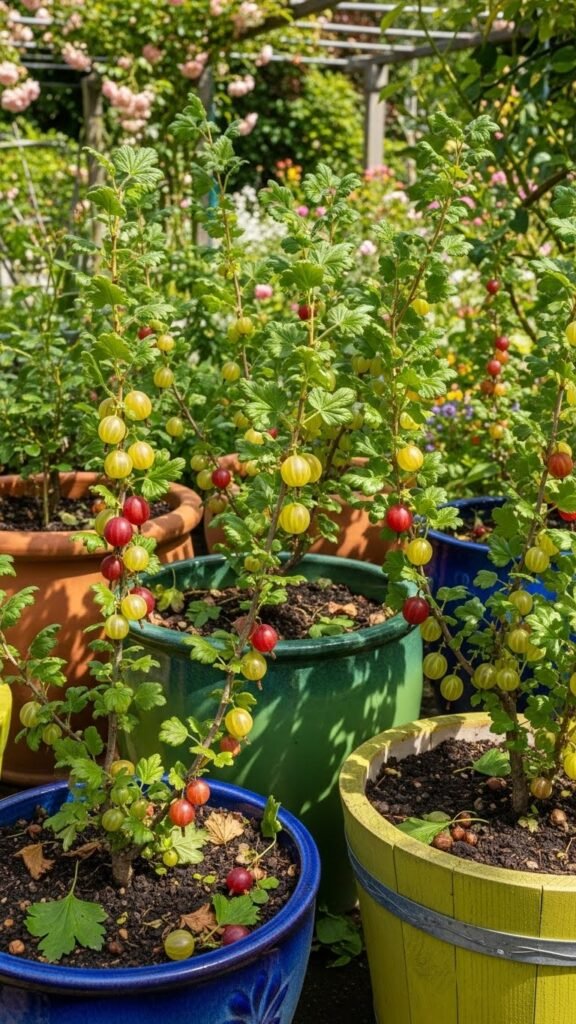
Gooseberries are compact, cold‑tolerant shrubs that thrive in containers and give you early, tangy fruit with minimal space.
You’ll choose compact container varieties and well‑draining mix, place pots in full sun to light shade, and water consistently.
Apply targeted pruning techniques annually to open the canopy, remove old wood, and maintain size.
Enjoy reliable harvests and freedom to move pots as needed.
Currants
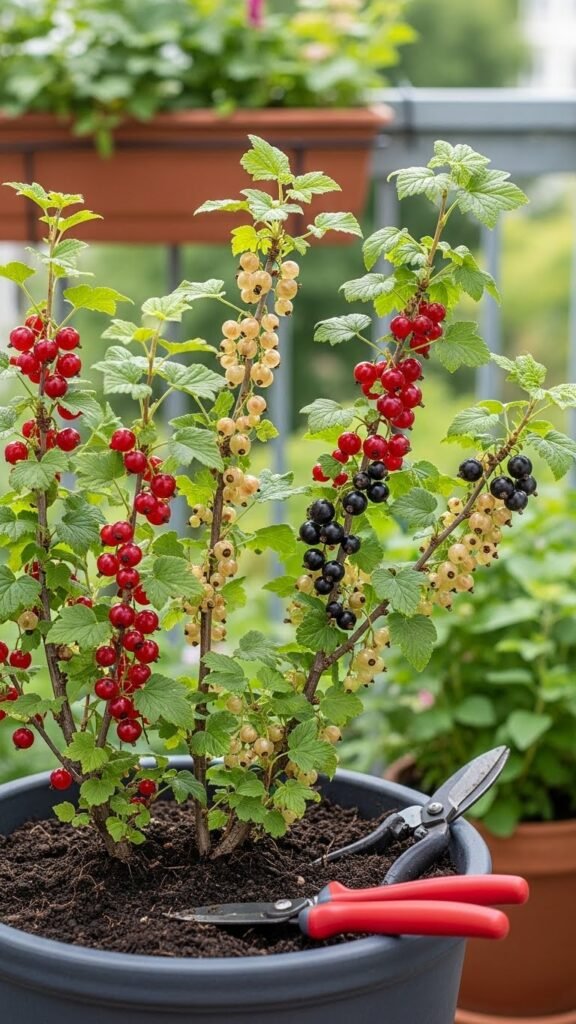
Because currants tolerate cool climates and stay compact, they’re excellent container fruiting shrubs for small gardens and balconies.
You’ll choose cultivars for flavor and reliability; sour currants add bright, culinary punch.
Use fertile, free-draining mix and a deep pot.
Practice annual container pruning to maintain airflow, fruiting wood and manageable size, so you keep autonomy over harvests and plant health.
Persimmons (Small Varieties)
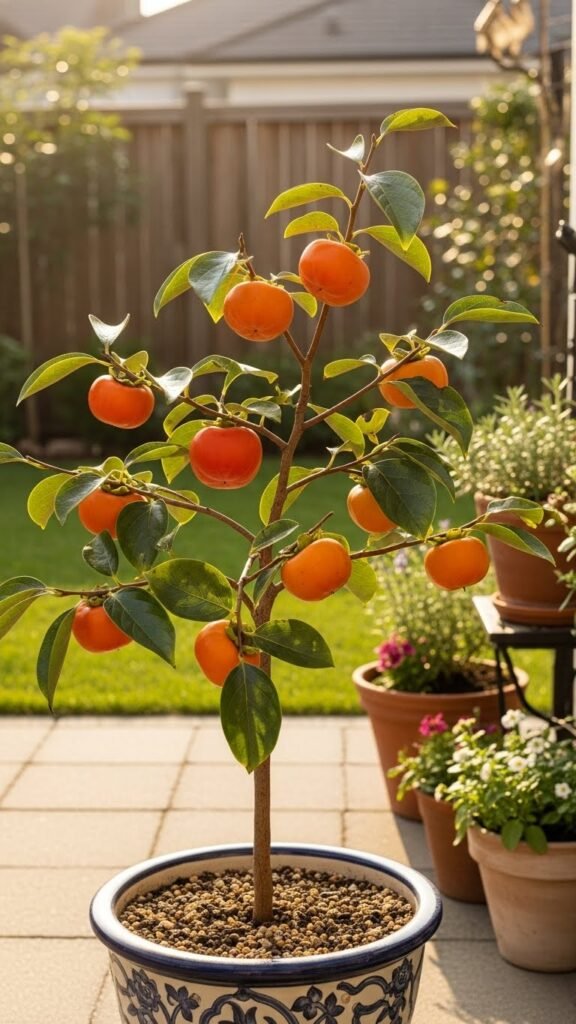
Consider dwarf persimmons if you want a compact, productive tree for a patio or small yard; cultivars like ‘Izu’, ‘Jiro’, and ‘Fuyu’ (dwarf strains or grafted onto dwarfing rootstocks) give sweet, dessert-quality fruit without a large footprint.
You’ll choose well-draining soil, full sun, and a roomy pot.
Use container grafting to maintain size and vigor; prune minimally to preserve structure.
Pineapple
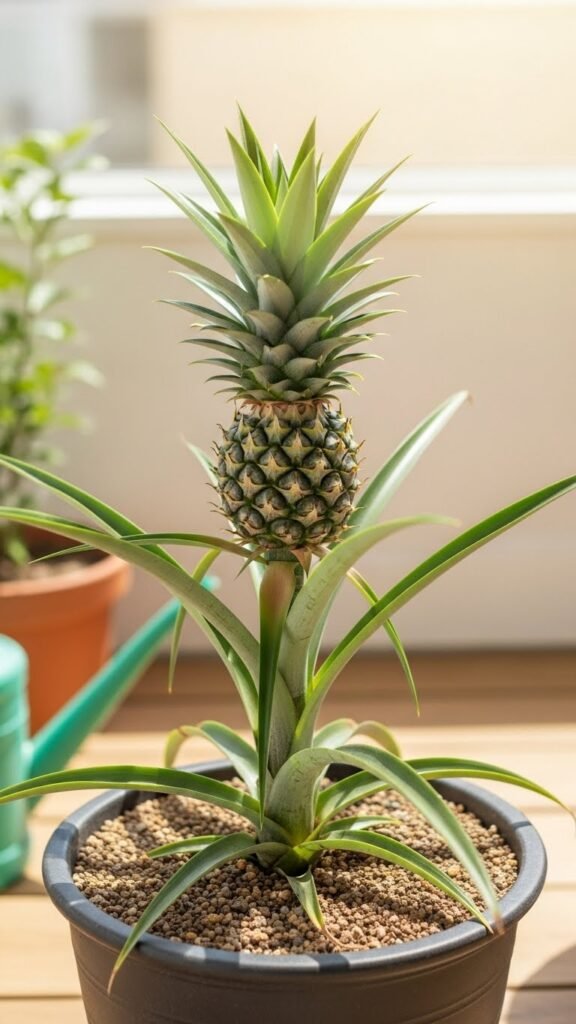
If you liked the compact habit of dwarf persimmons, you’ll find pineapples are another outstanding choice for containers: the entire plant rarely exceeds 2-3 feet, produces a single central fruit, and fits easily on a sunny patio.
You can grow a pot pineapple with coarse, well-draining mix, steady warmth, bright light, and moderate humidity.
For indoor cultivation, water sparingly and fertilize monthly for reliable fruiting.
Fig-Leafed Figs (Brown Turkey or Similar)
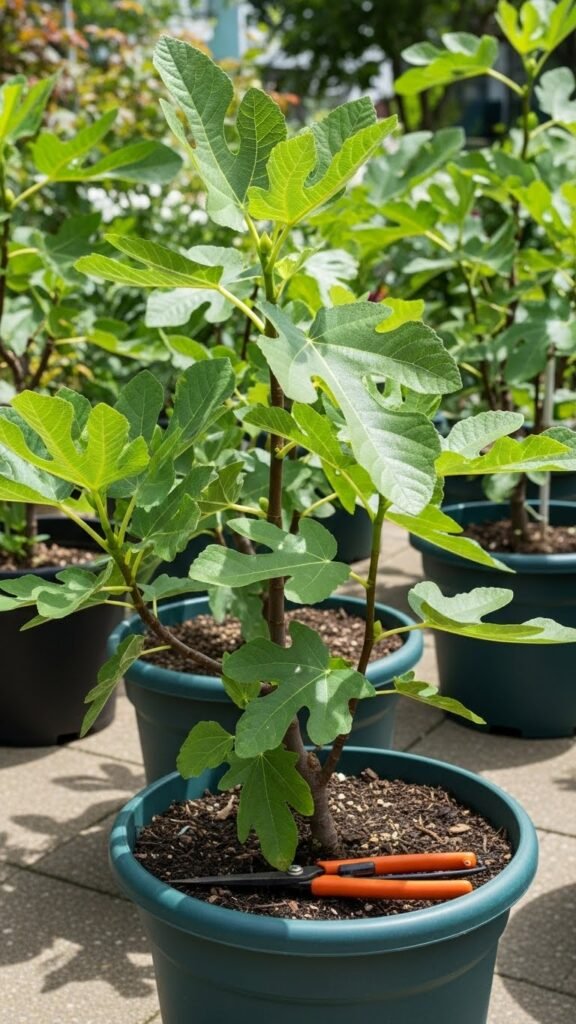
Often overlooked, fig-leafed figs like Brown Turkey thrive in containers and give you big, lobed leaves and generous crops on a compact root system.
You’ll space pots in sun, use well-draining mix, and employ container pruning to control size and encourage fruiting.
Observe leaf variegation for cultivars; prune selectively, feed moderately, and protect roots in winter to maintain vigor and autonomy.
Fig-Almond Hybrids
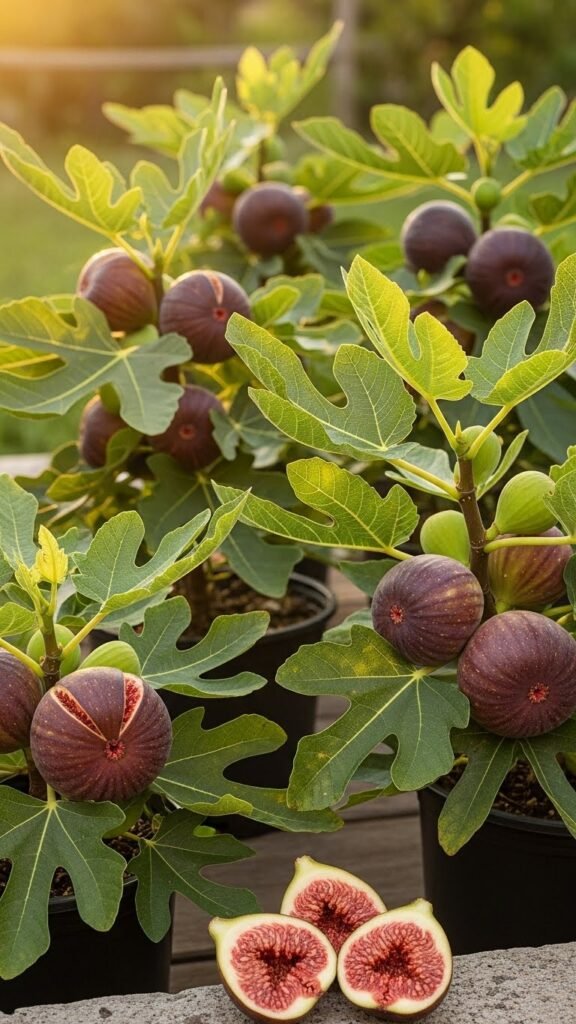
Moving from the robust Brown Turkey types, fig-almond hybrids offer a distinct option for container growers seeking nutty-flavored figs with compact habits.
You’ll select cultivars with proven graft compatibility to standard rootstocks, prune for airflow, and control irrigation.
Understand pollination requirements—some need wasp vectors or hand-pollination—to guarantee fruit set.
They reward freedom-minded gardeners with concentrated flavor and manageable size.