
You can shape a garden that smells as inviting as it looks by choosing plants known for memorable fragrance and season-long interest. Start with climbers and shrubs for structure, add fragrant perennials and herbs near paths and patios, and use containers to move scent where you want it most. I’ll outline 27 top picks, site and care tips, and timing ideas so you can plan fragrant moments throughout the year—starting with the easiest choices.
Honeysuckle (Lonicera Periclymenum)
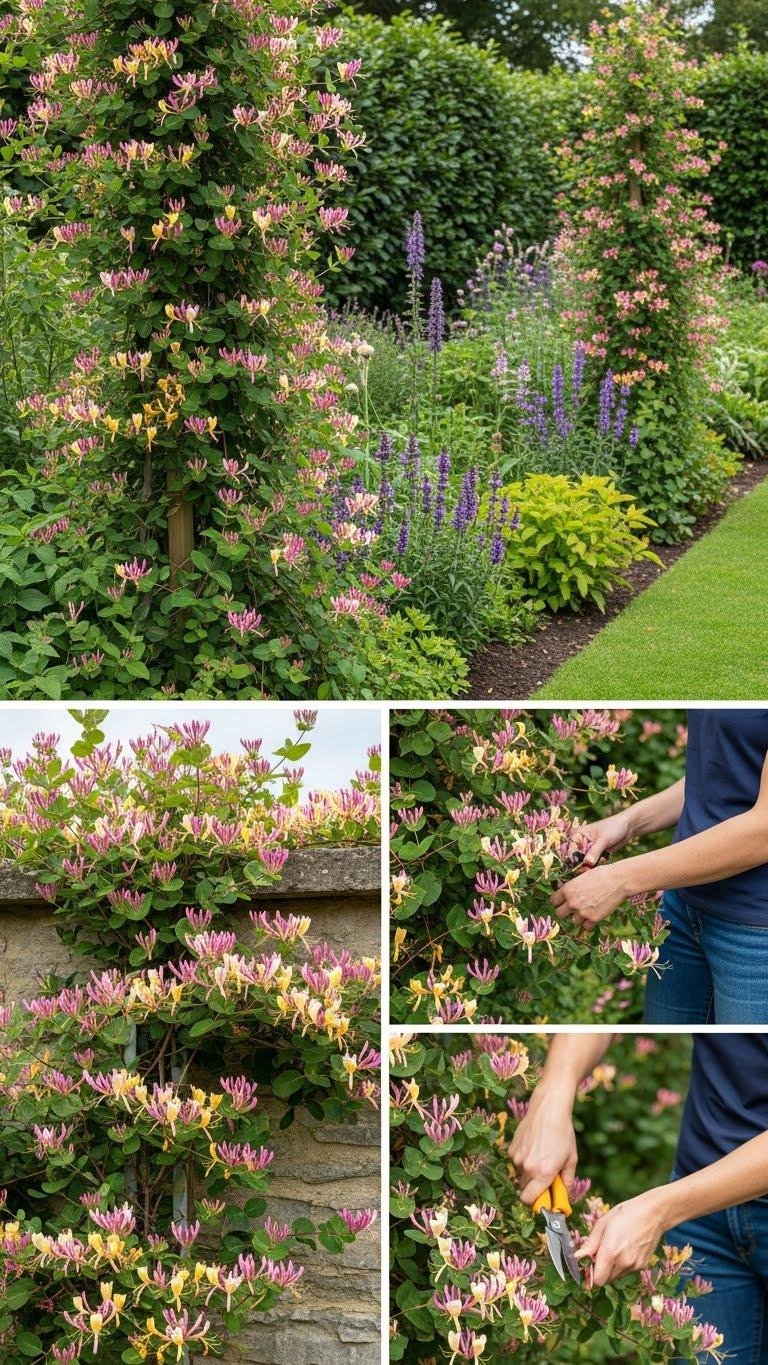
Though often trained up trellises and walls, honeysuckle (Lonicera periclymenum) also makes a fine, fragrant hedge or focal climber in mixed borders; you’ll get tubular, nectar-rich blooms that attract hummingbirds and pollinators from mid-summer into autumn.
You’ll encourage pollinator attraction and manage vigor with annual pruning techniques: cut older wood after flowering, trim to shape, and remove weak stems to keep growth airy and free.
Aphrodite’ Sweetshrub
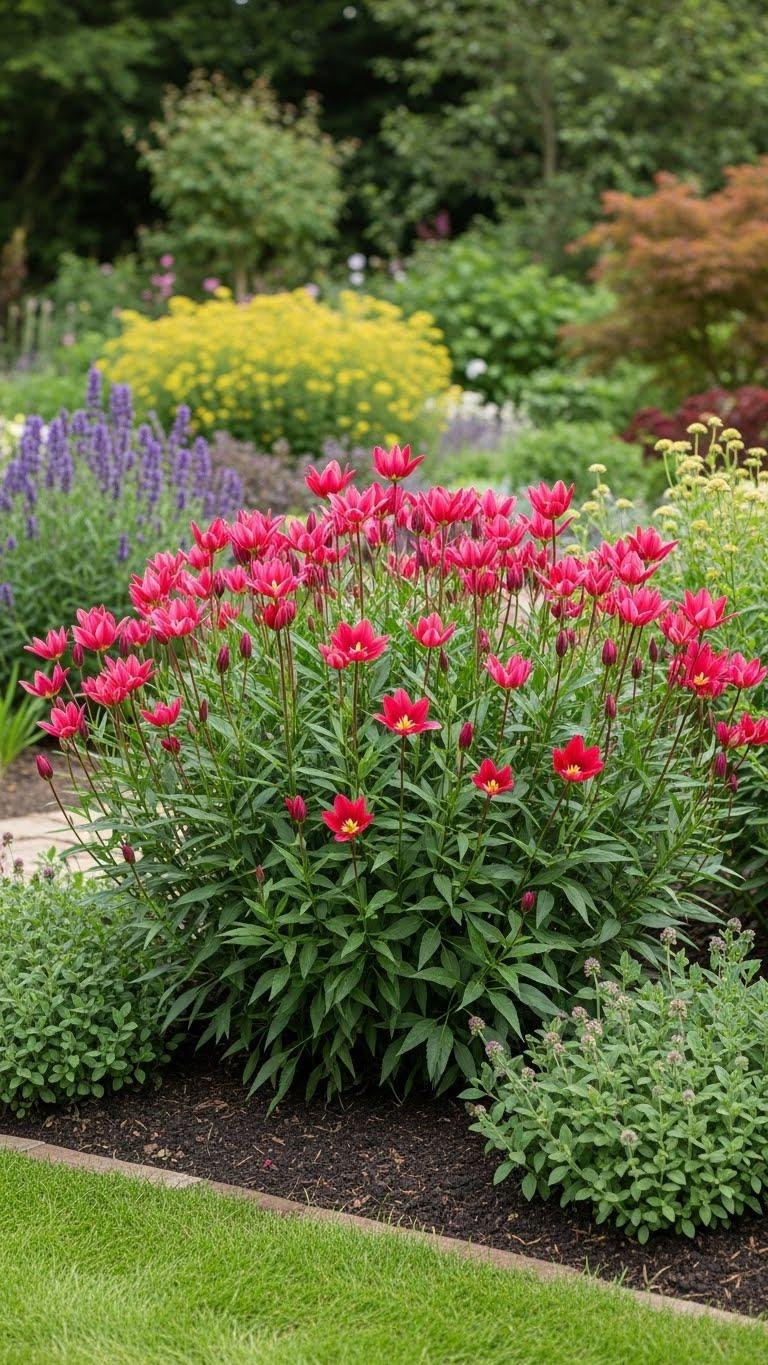
Often prized for its intoxicating fragrance and reliable bloom, Aphrodite sweetshrub (Calycanthus × raulstonii ‘Aphrodite’) gives you fragrant, wine-red, tulip-like flowers from late spring into early summer and a compact, rounded habit that fits well in mixed borders or as a specimen.
You’ll appreciate low-maintenance growth, fragrant resin that deters pests, strong pollinator attraction, and adaptable soil tolerance for liberated, confident garden design.
Ruby Anniversary Abelia
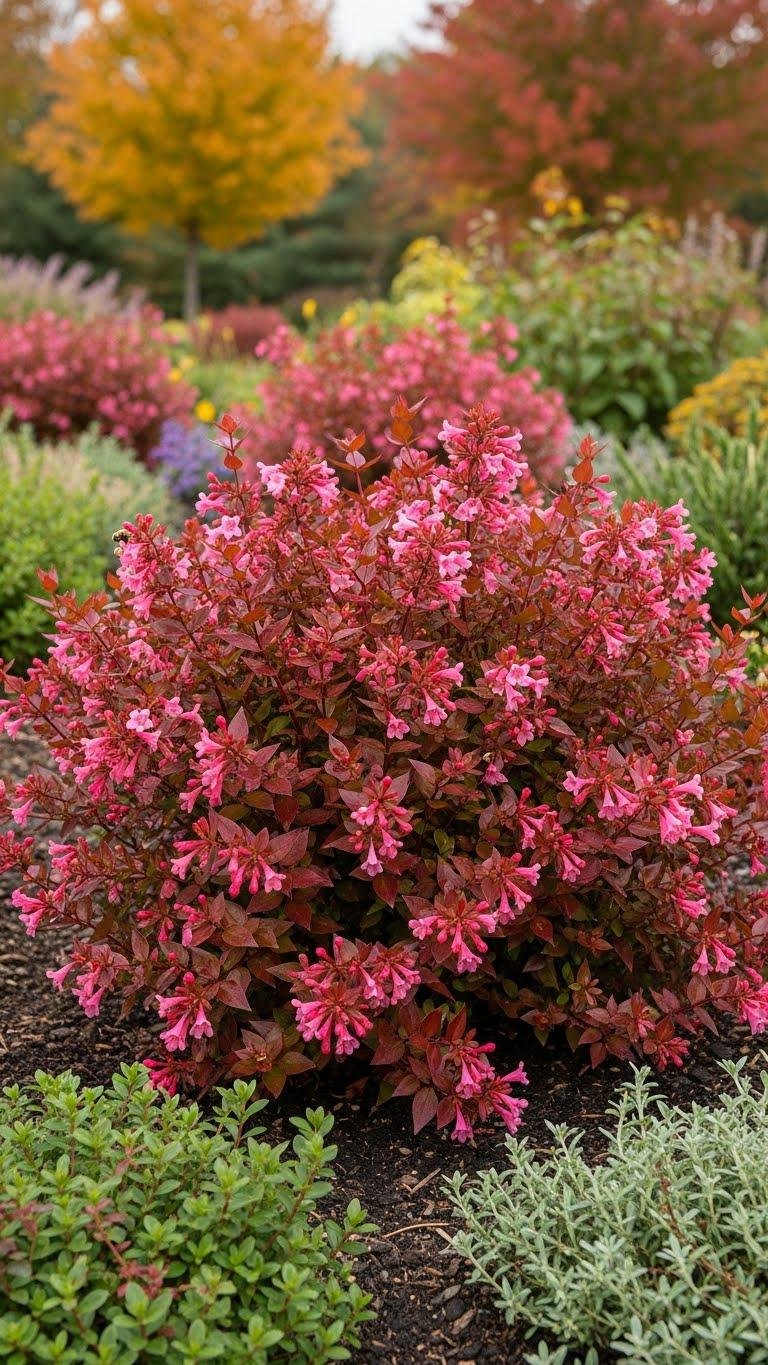
You’ll find Ruby Anniversary Abelia (Abelia × grandiflora ‘Ruby Anniversary’) brings dependable color and compact form to mixed borders and foundation plantings, with glossy foliage that deepens to burgundy and loads of tubular, rose-pink to ruby flowers from late spring through fall.
You’ll appreciate its low-maintenance habit, smart cultivar selection for hardiness, and how anniversary planting marks seasons while granting flexible, evergreen structure.
August Beauty Gardenia
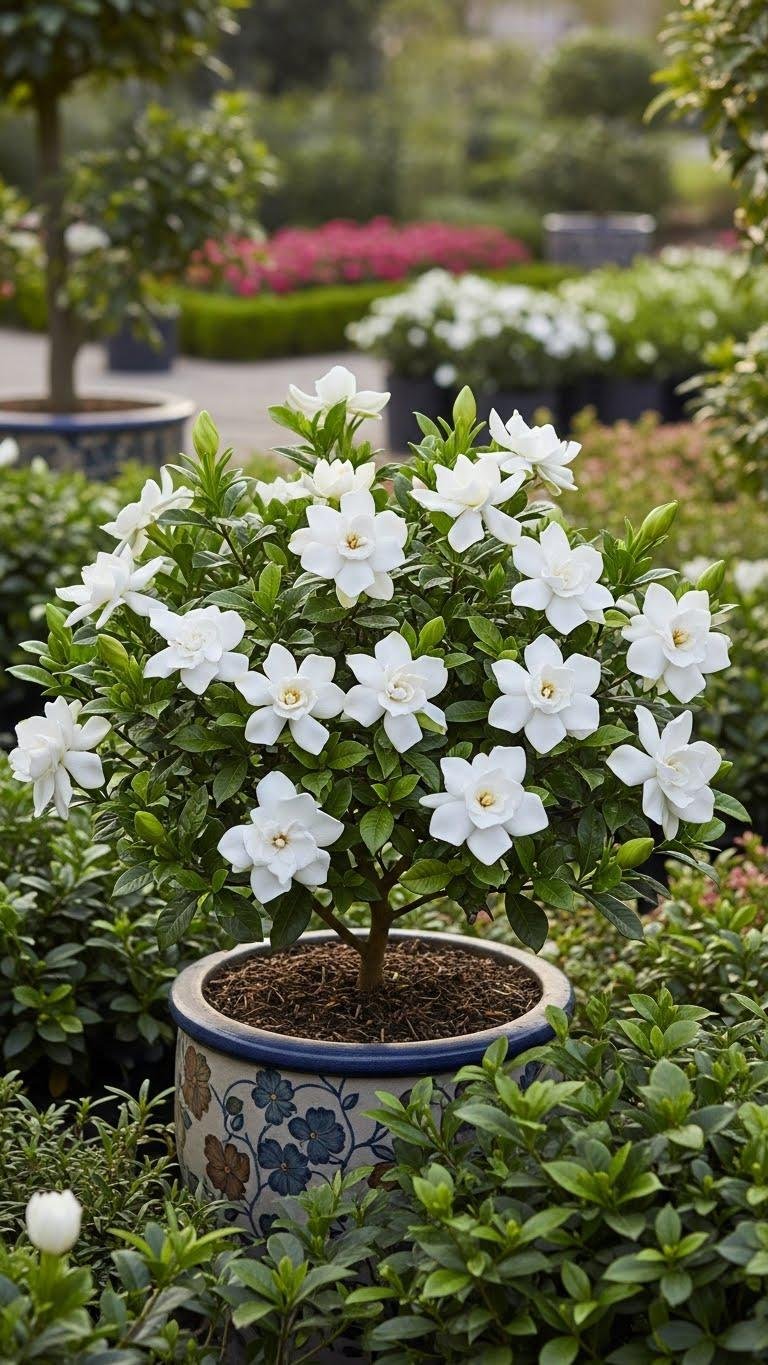
If you liked the reliable color and compact habit of Ruby Anniversary Abelia, August Beauty Gardenia brings an entirely different kind of seasonal impact: large, fragrant, waxy white blooms that perfume evening borders from mid-summer into early fall.
You’ll plant it for scent, favor acidic soil, use container cultivation for mobility, and follow strict pruning timing to shape growth without sacrificing blooms.
Ack‑Scent Camellia
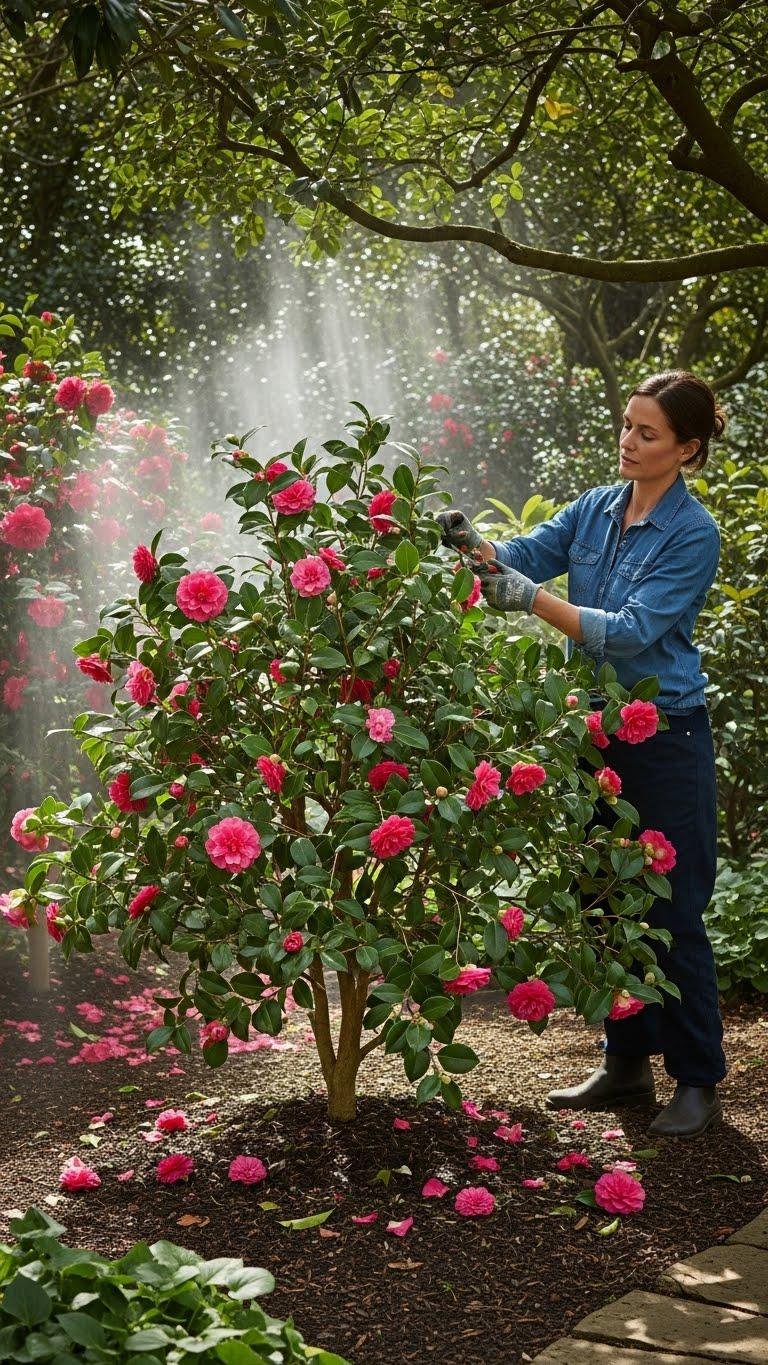
Frequently prized for its intense fragrance and late-winter bloom, the Ack‑Scent Camellia gives you a reliable splash of perfume and form when most other shrubs are dormant.
You’ll appreciate scent chemistry that favors sweet, tea-like notes.
For freedom-minded gardeners, follow cultivation tips: acidic, well-drained soil, dappled shade, consistent moisture, and light pruning after bloom to maintain shape and prolong flowering.
Osmanthus
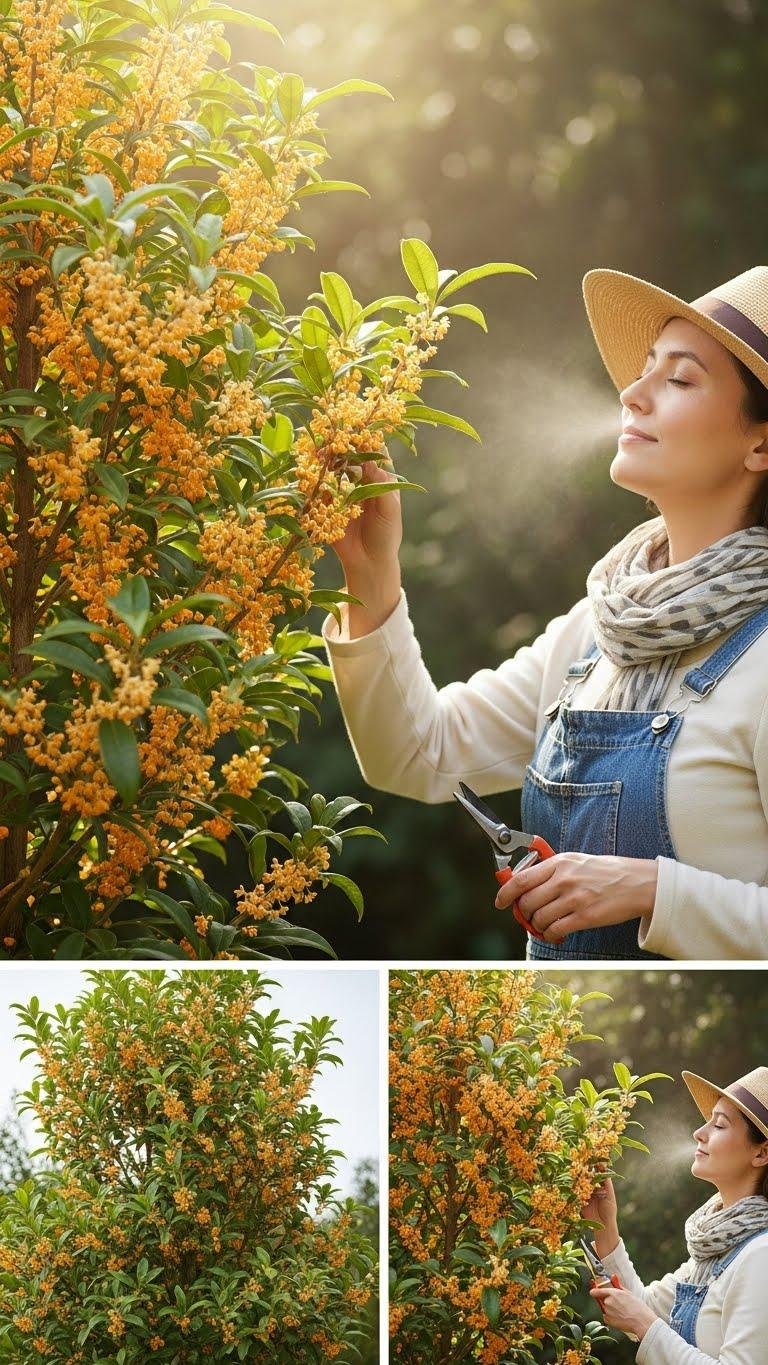
While the Ack‑Scent Camellia brightens late winter with tea‑like perfume, osmanthus takes over in autumn with a concentrated, honeyed scent that seems to hang in the air.
You’ll appreciate its compact habit, learn basic scent chemistry to choose varieties, and plan pruning timing to preserve blooms.
Plant where you can enjoy fragrance up close and prune lightly after flowering for freedom and longevity.
Night‑Blooming Jasmine
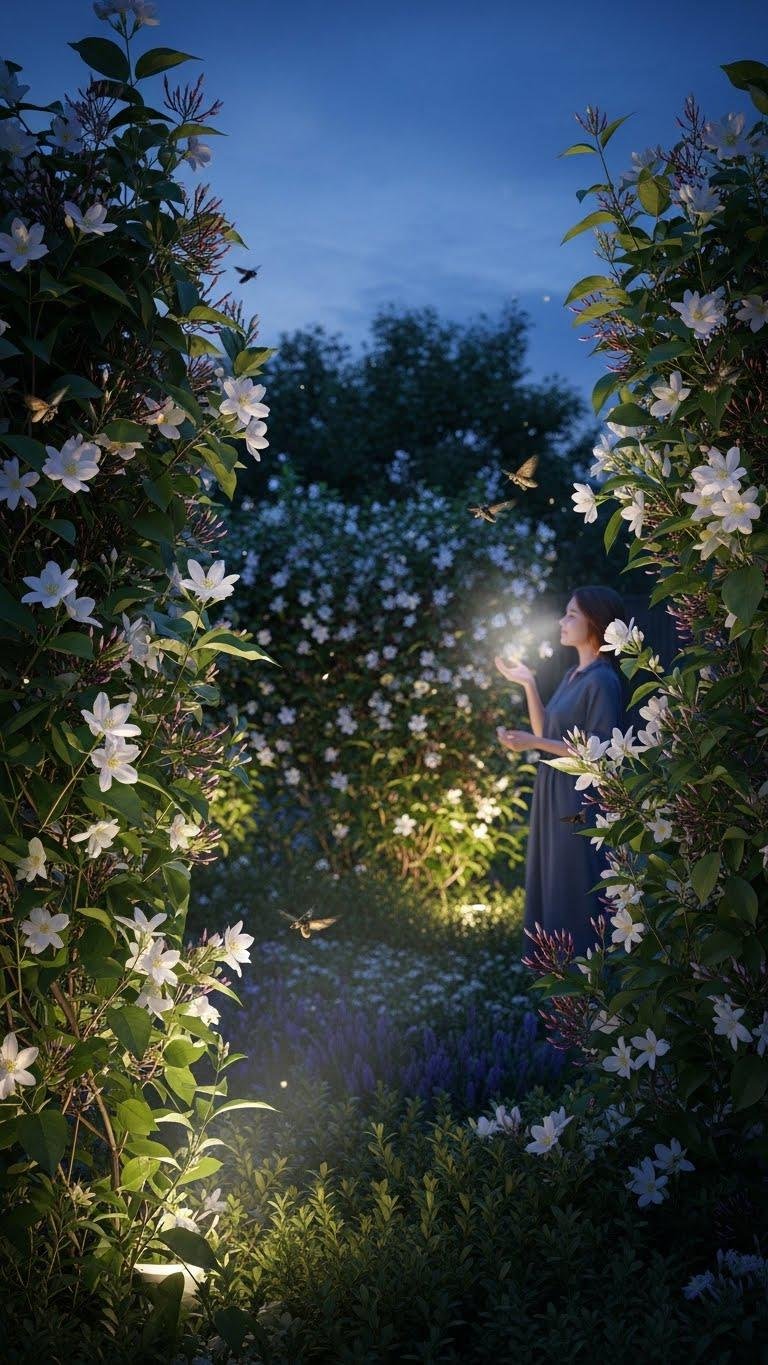
Often you’ll notice night‑blooming jasmine releasing its intense, heady perfume just as dusk falls, drawing moths and people alike to its glossy vines.
You’ll plant it where evening air moves freely; prune for airflow and repeat flowering.
Learn its primary scent compounds to choose cultivars, and expect visits from night pollinators.
It rewards minimal care with powerful fragrance that extends your outdoor living hours.
Sweet Pea
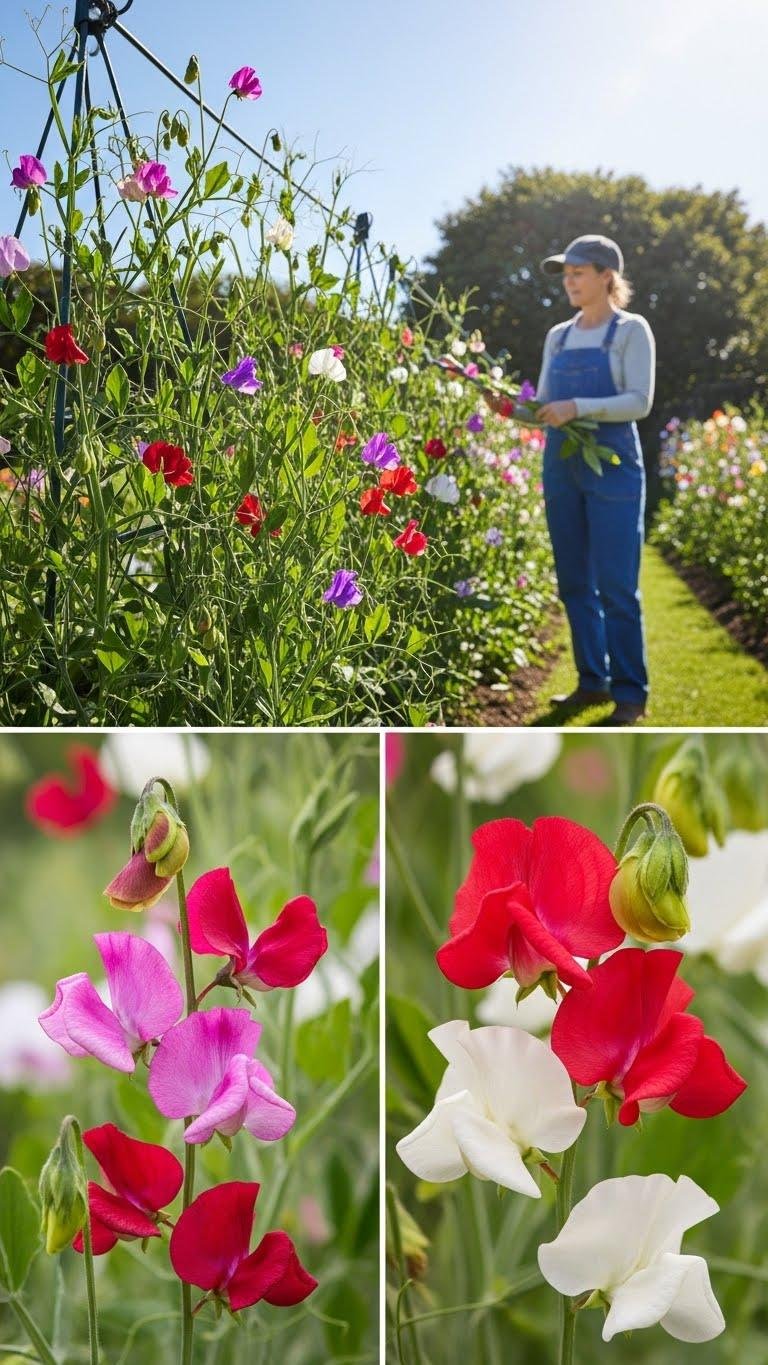
Night‑blooming jasmine draws evening visitors with scent and atmosphere; sweet peas, by contrast, bring a daytime perfume that’s bright, complex and immediately familiar. You’ll choose climbing cultivars, plan vine training for airy displays, and deadhead to prolong bloom.
Select varieties from modern fragrance breeding for consistent scent. Grow in sun, feed lightly, and harvest stems early morning to keep fragrance vivid and free.
Lavender
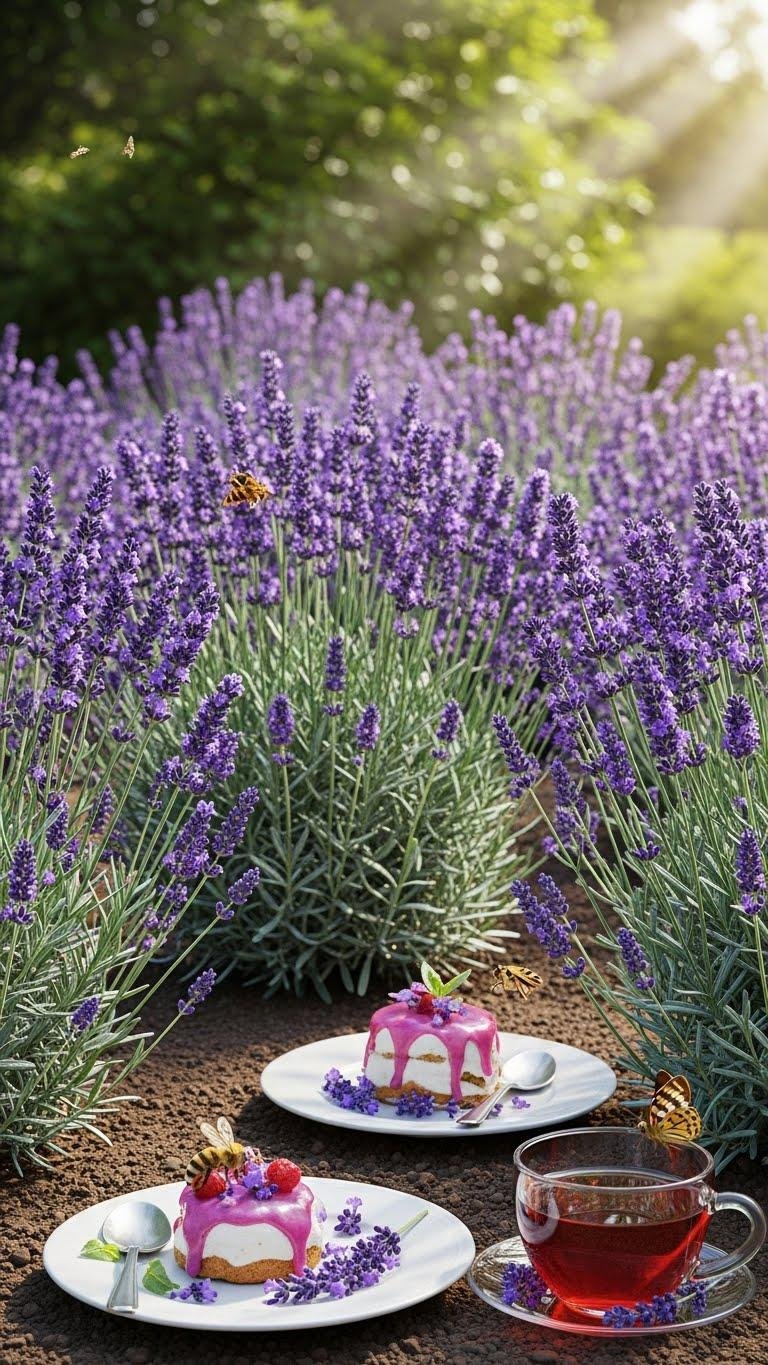
Paragraphs
Peppermint Mountain Mint
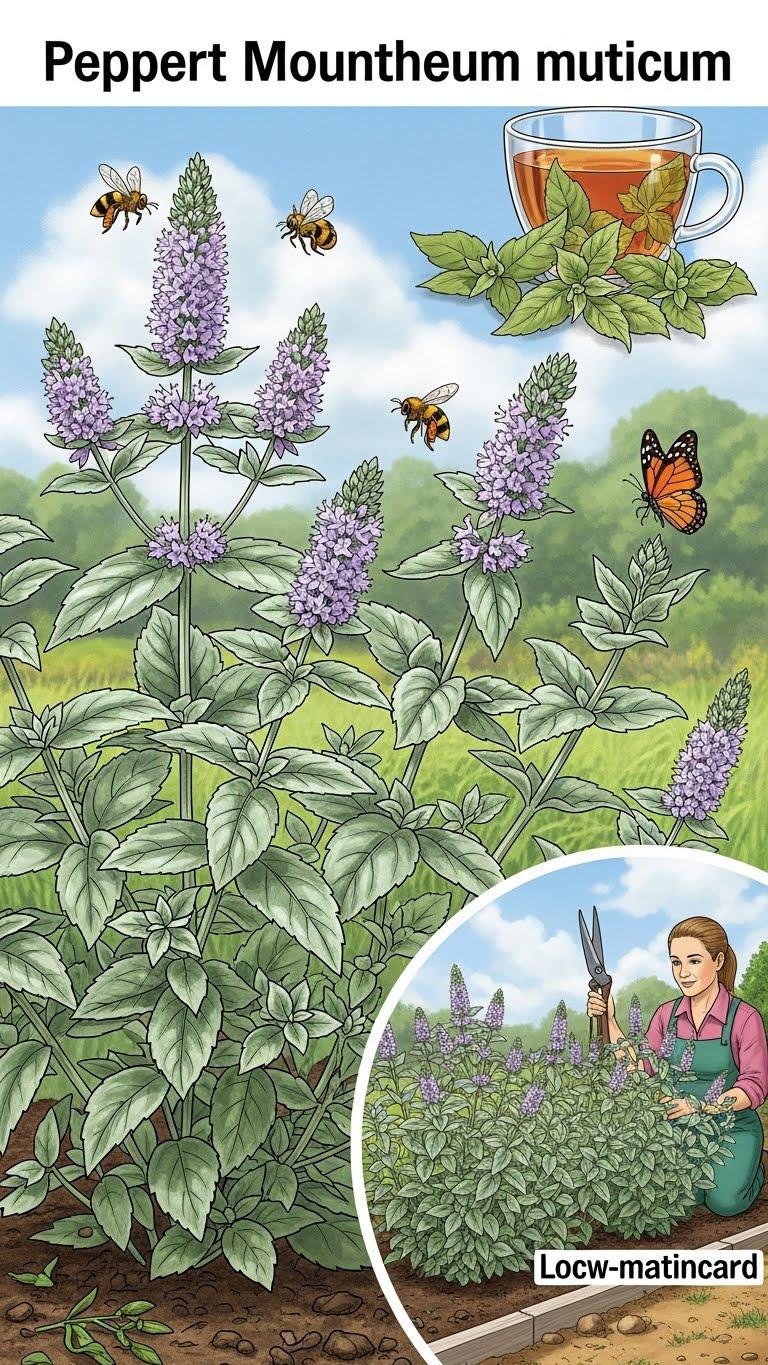
You’ll find Peppermint Mountain Mint (Pycnanthemum muticum) is a reliably fragrant, low-maintenance perennial that brings silvery-green foliage and tight, mint-scented flower clusters to sunny, well-drained beds and borders.
You can grow it for pollinator attraction, light medicinal uses like teas and inhalation, and in container gardening to control spread; prune after bloom and divide every few years to keep vigor.
Dwarf Myrtle
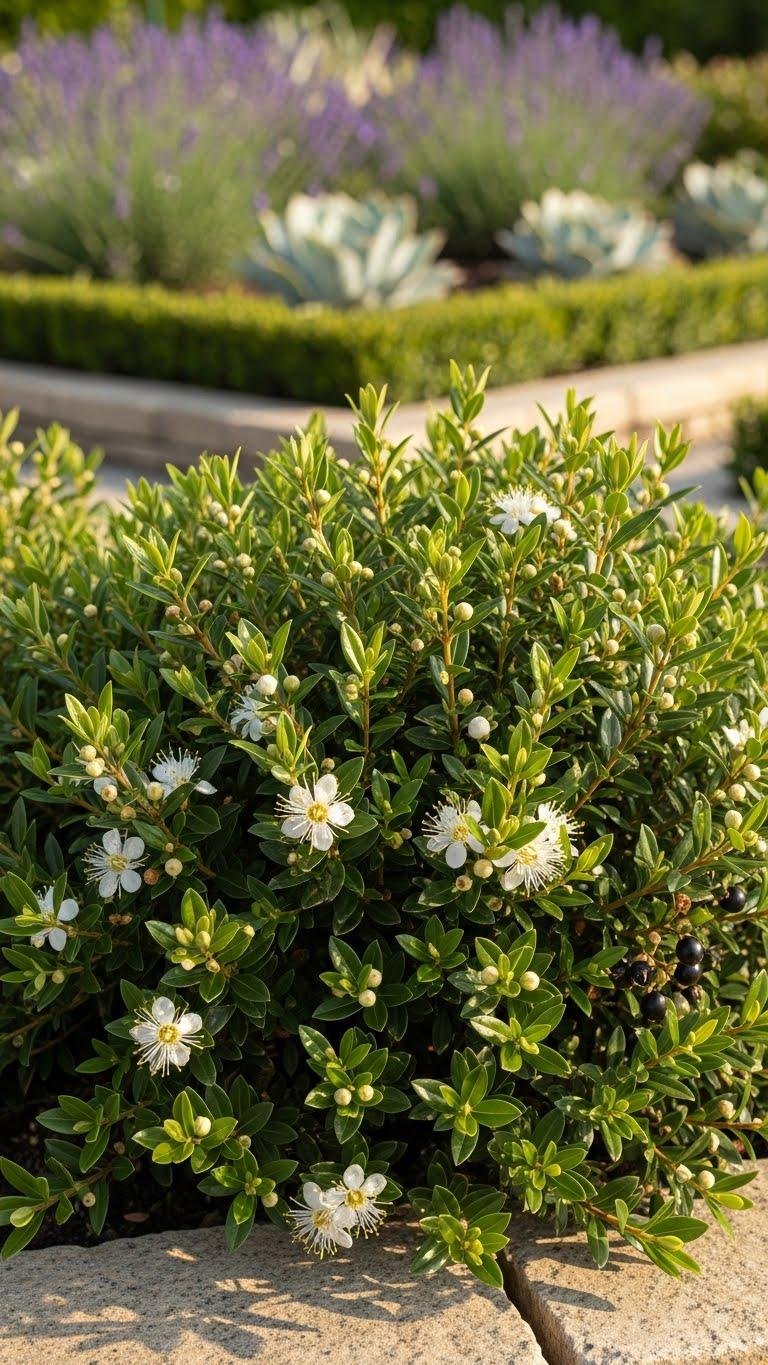
If you liked the fresh, herbaceous perfume of Peppermint Mountain Mint, Dwarf Myrtle (Myrtus communis ‘Compacta’) offers a different, resinous fragrance that works beautifully in tight spaces and formal edging.
You’ll appreciate its compact groundcover habit, glossy evergreen leaves and tiny white blooms.
It’s a salt tolerant cultivar, easy to prune, drought-friendly once established, and ideal for libertarian gardeners seeking low-maintenance structure.
Mock Orange (Philadelphus)
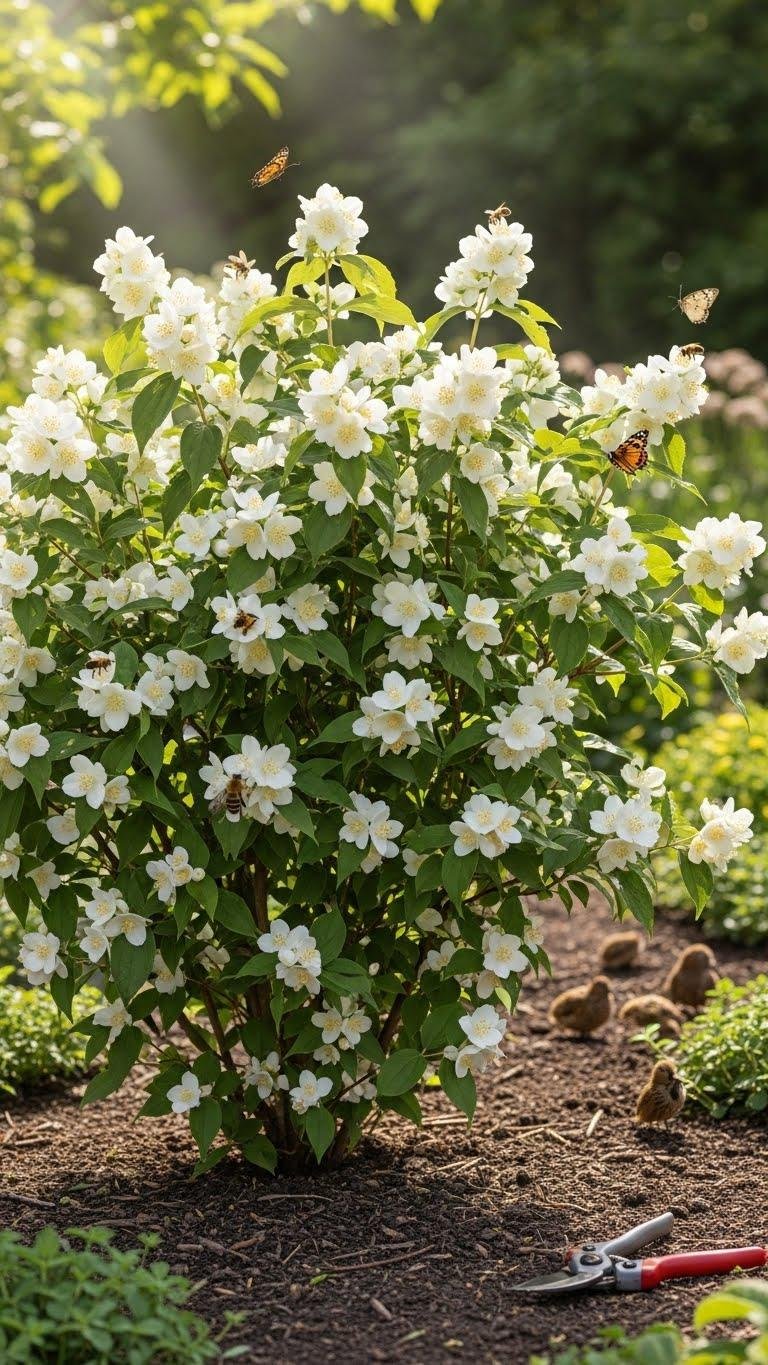
Turn to Mock Orange (Philadelphus) when you want a shrub that delivers heady, citrusy-sweet blooms without demanding constant care. You’ll plant in sun to light shade, expect late spring fragrance, and prune timing right after flowering to preserve next year’s buds.
It tolerates varied soils, supports pollinators, and minimal wildlife interactions make it ideal if you value low-maintenance, fragrant freedom.
Sweet Alyssum
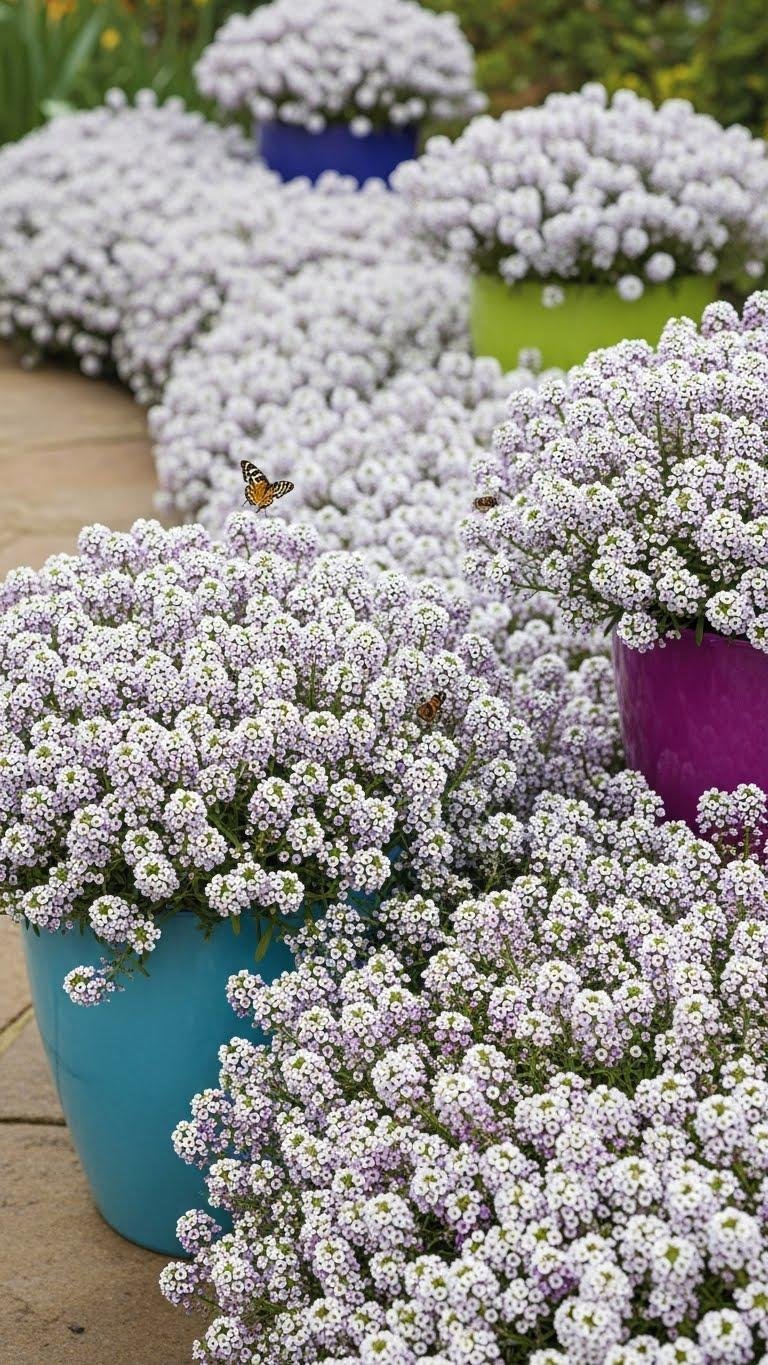
Often tucked along borders and in containers, sweet alyssum (Lobularia maritima) rewards you with dense clusters of tiny, honey-scented blooms that attract pollinators and provide long-lasting color from spring into fall.
You’ll choose compact varieties for edging and window boxes, sow freely for continuous bloom, and enjoy strong pollinator attraction while minimizing maintenance — trim spent stems and water moderately for best results.
Scented Geranium (Pelargonium)
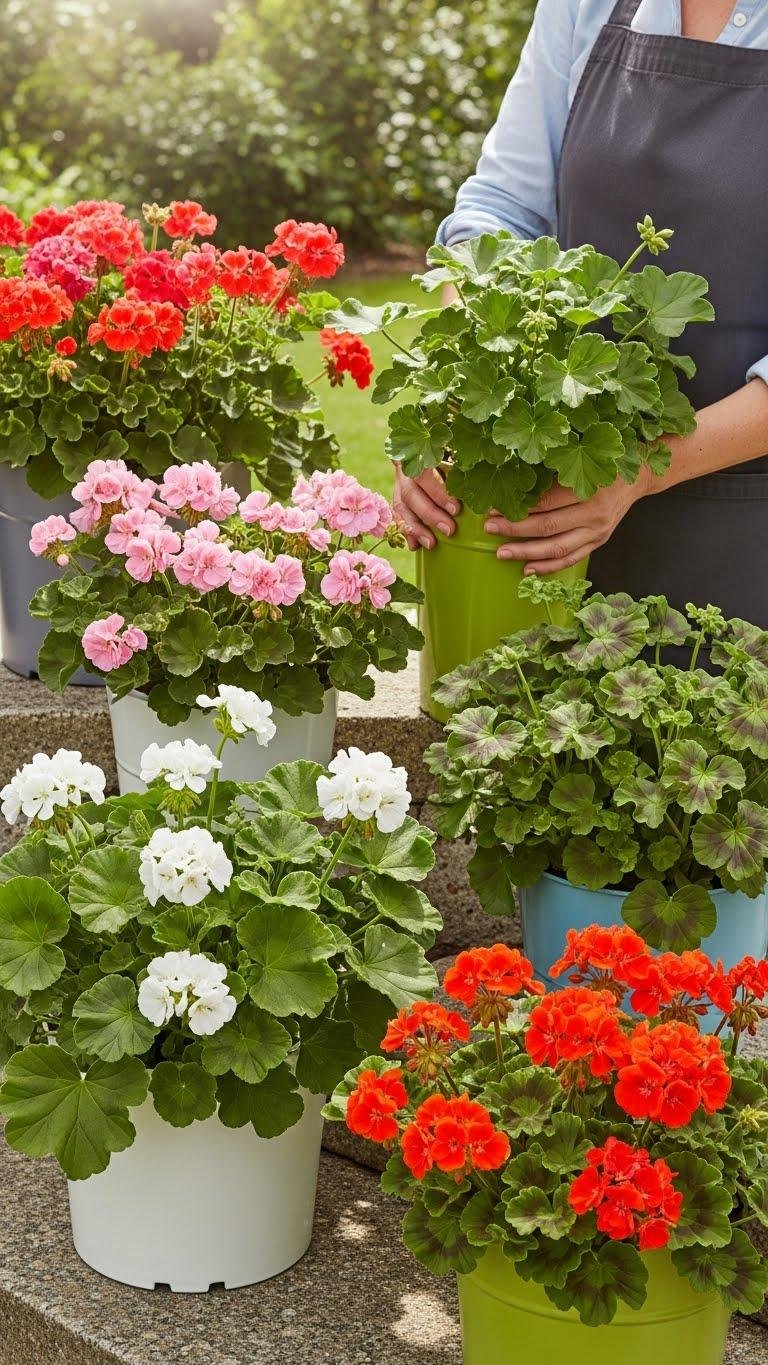
Scented geraniums (Pelargonium) bring fragrant foliage and versatile garden use to containers, beds, and windowsills, offering lemon-, rose-, mint-, or spice-scented leaves you can crush for bouquets, potpourri, or culinary accents. You’ll choose plants by leaf textures and container varieties, prune for shape and rebloom, place in sun to partial shade, and harvest leaves regularly to intensify scent.
Fragrant Stock
Paragraphs
Evening Primrose
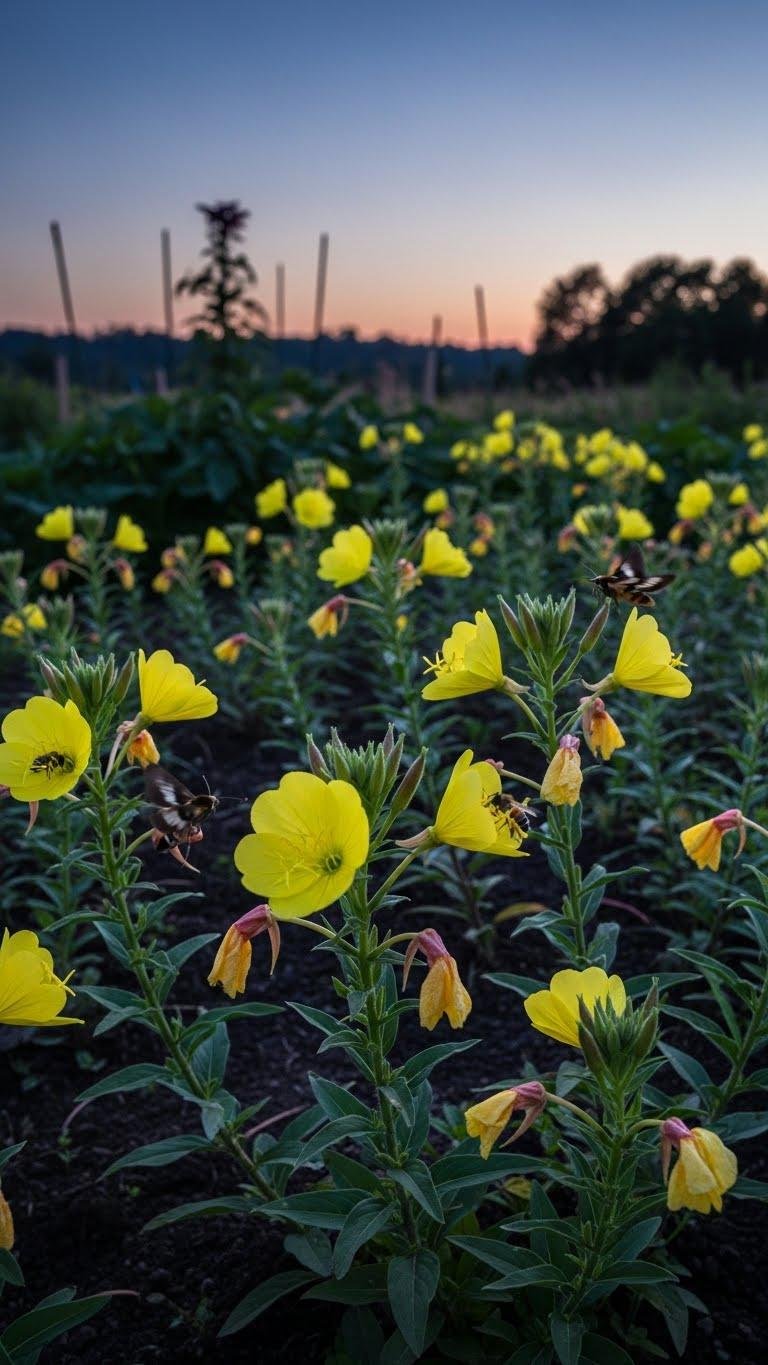
Bring evening primrose into your garden for a reliable source of late-day fragrance and pollinator activity; these hardy biennials and short-lived perennials open their lemon-scented, four-petaled flowers at dusk and attract moths and bees through the night.
You’ll plant where soil drains, expect quick self-seeding, and enjoy strong pollinator attraction and subtle nocturnal fragrance that frees your garden to thrive autonomously.
Jasmine Sambac
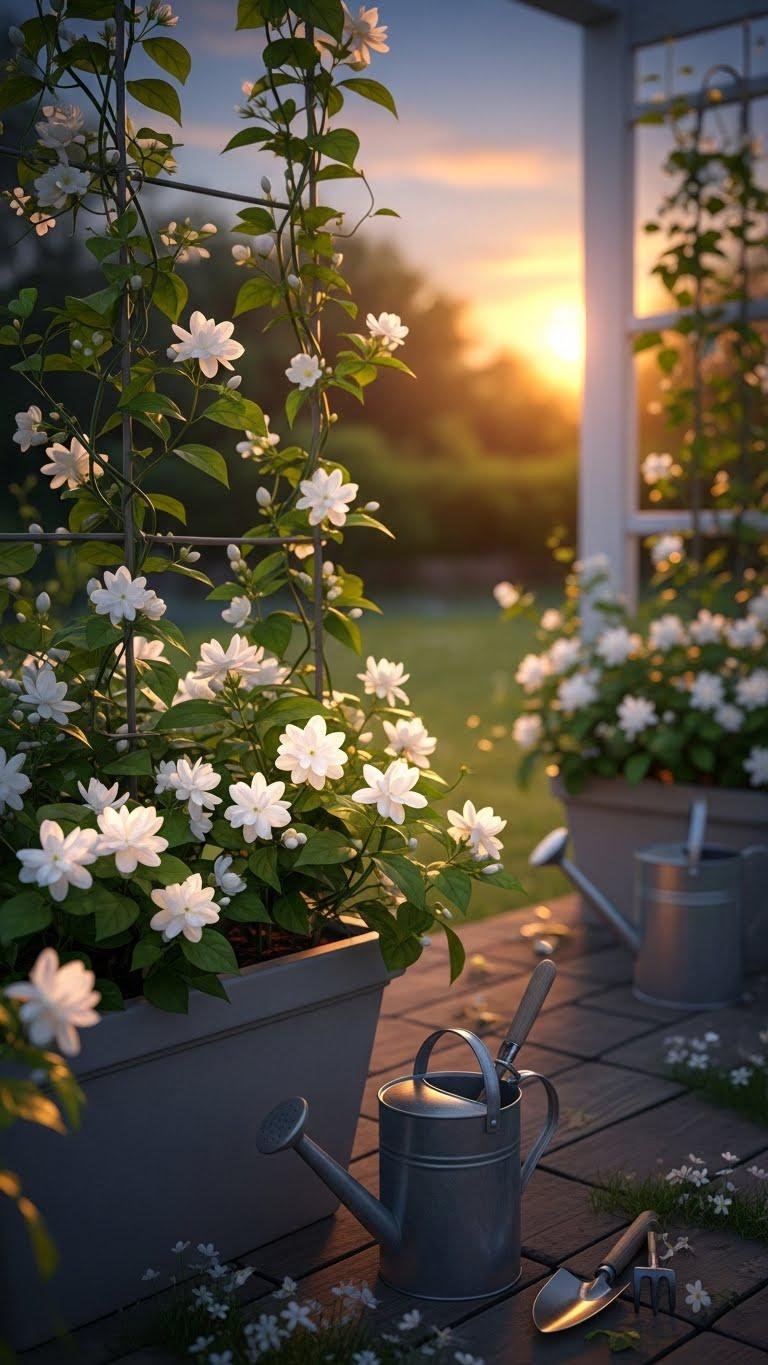
Fragrance defines Jasmine sambac’s appeal: you’ll get intensely sweet, heady blooms that perfume warm evenings and indoor spaces alike.
You’ll grow it easily in container cultivation, pruning to keep shape and encourage flowering.
Place it where you can enjoy scent at dusk, water consistently, and feed during growth.
Appreciate its cultural symbolism while training vines freely for privacy and joyful scent.
Daphne Odora
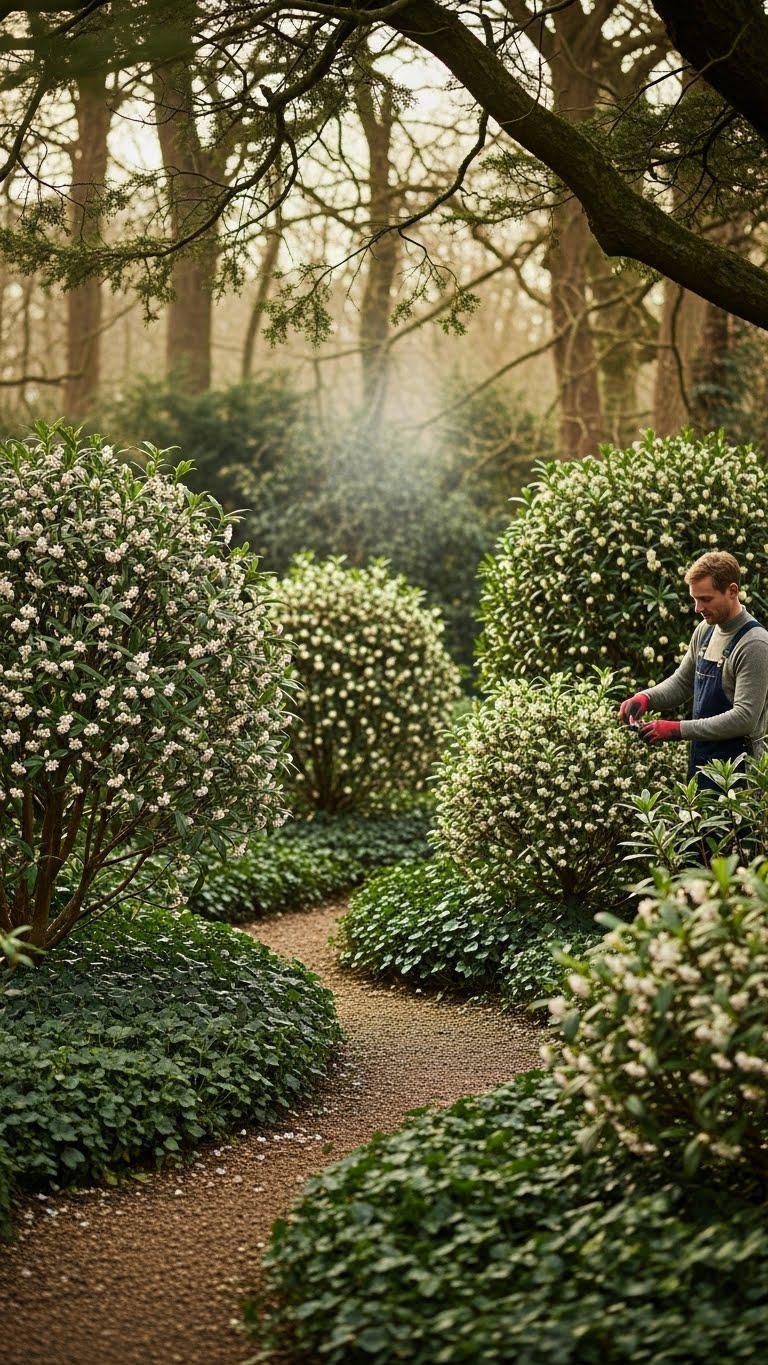
Often overlooked in mixed borders, Daphne odora rewards a little attention with an intoxicating, citrus-vanilla perfume that wafts from late winter to early spring. You’ll place it where you can enjoy scent near paths; its shade tolerance lets you site it beneath trees.
Feed lightly, avoid root disturbance, and perform careful winter pruning to shape growth and maintain health without stressing the plant.
Star Anise Shrub (Illicium)
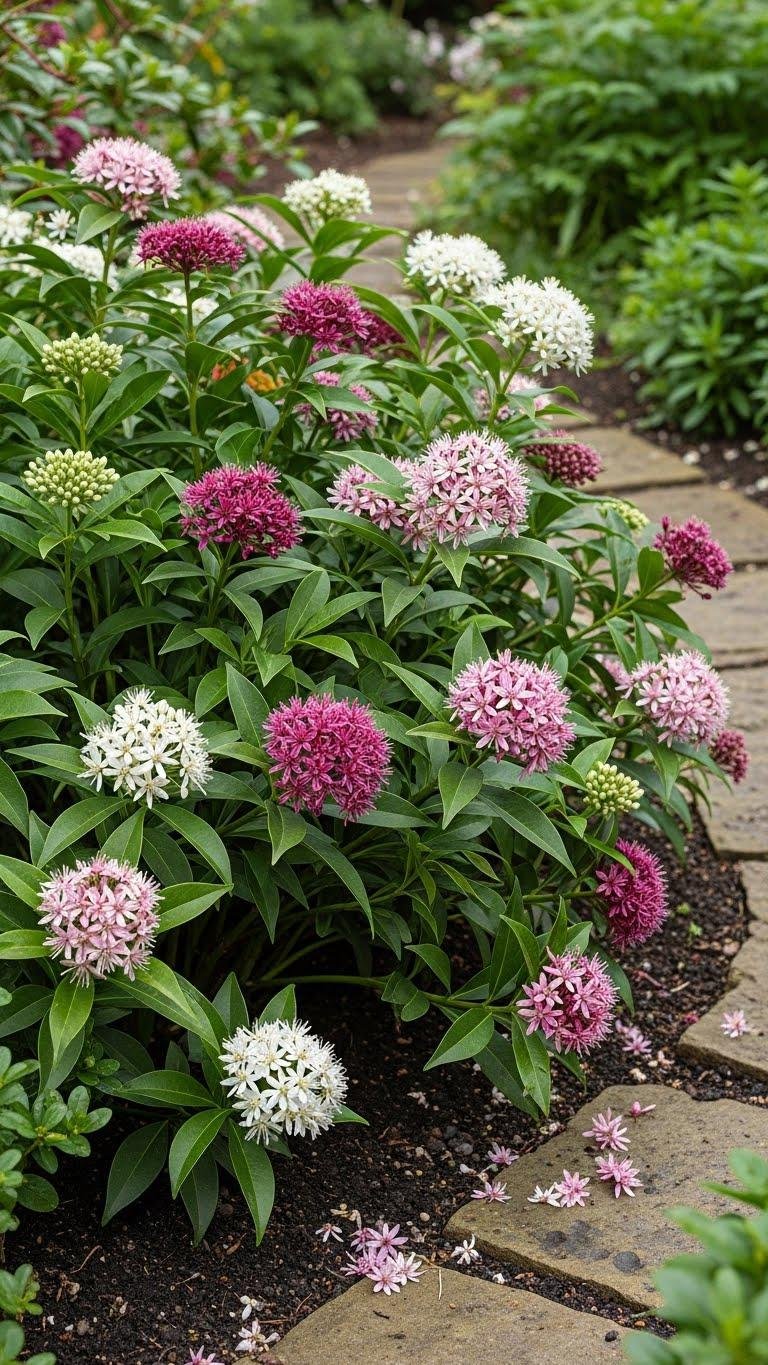
Slip an Illicium into a shaded border and you’ll get glossy evergreen foliage and clusters of star-shaped, anise-scented blooms that brighten late winter to spring.
You’ll appreciate its evergreen habit, low maintenance and resistance to deer. Prune for shape after flowering, place in moist, well-drained soil, and rely on fragrant compounds in petals to perfume paths without overpowering nearby plantings.
Garden Phlox
Paragraphs
Tea‑Scented Honeysuckle (Lonicera Japonica ‘Halliana’)
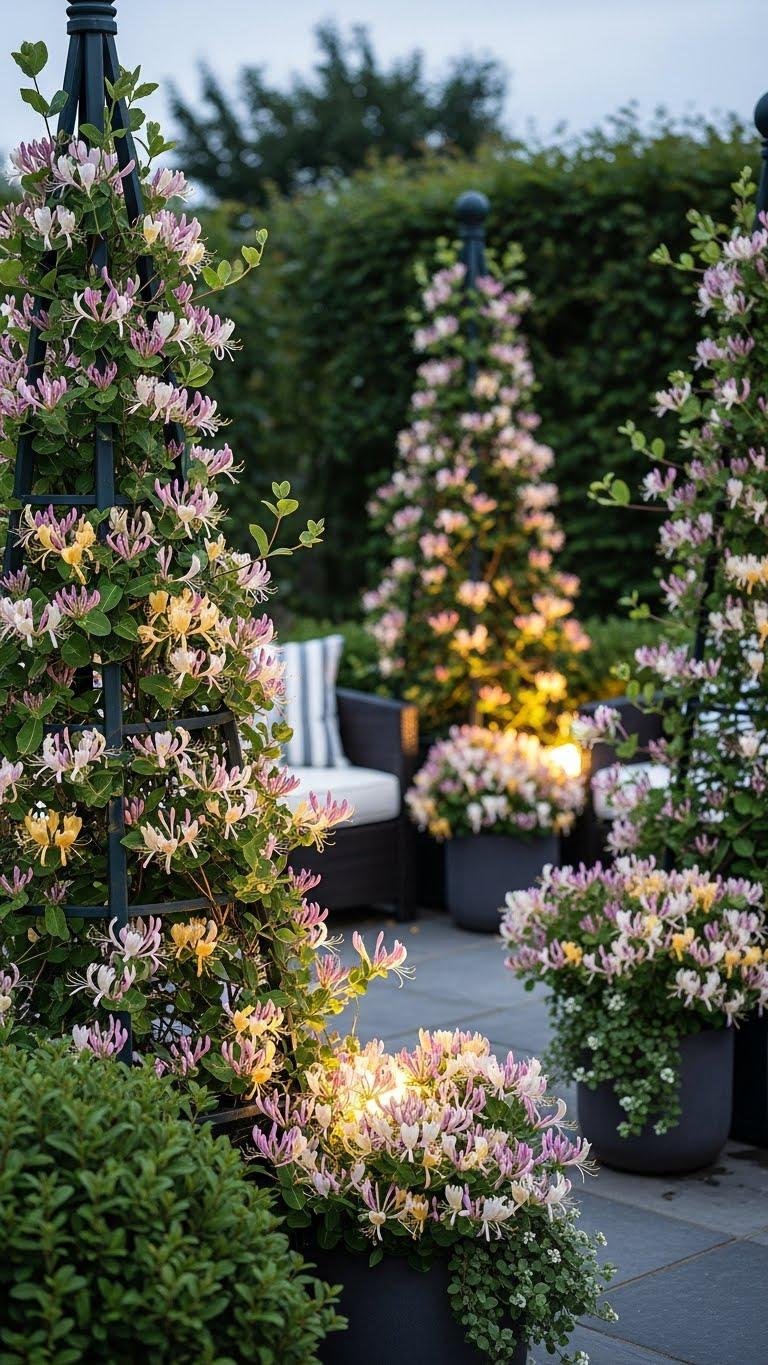
Tea‑scented honeysuckle (Lonicera japonica ‘Halliana’) brings a sweet, tea-like fragrance to evening and early-morning gardens, making it a reliable choice when you want scent to carry through borders and arbors.
You’ll train it on trellises, mind pruning timing to prevent overgrowth, and enjoy flexible container cultivation for patios or small plots, giving you scented freedom without sacrificing control.
Stephanotis Floribunda (Madagascar Jasmine)
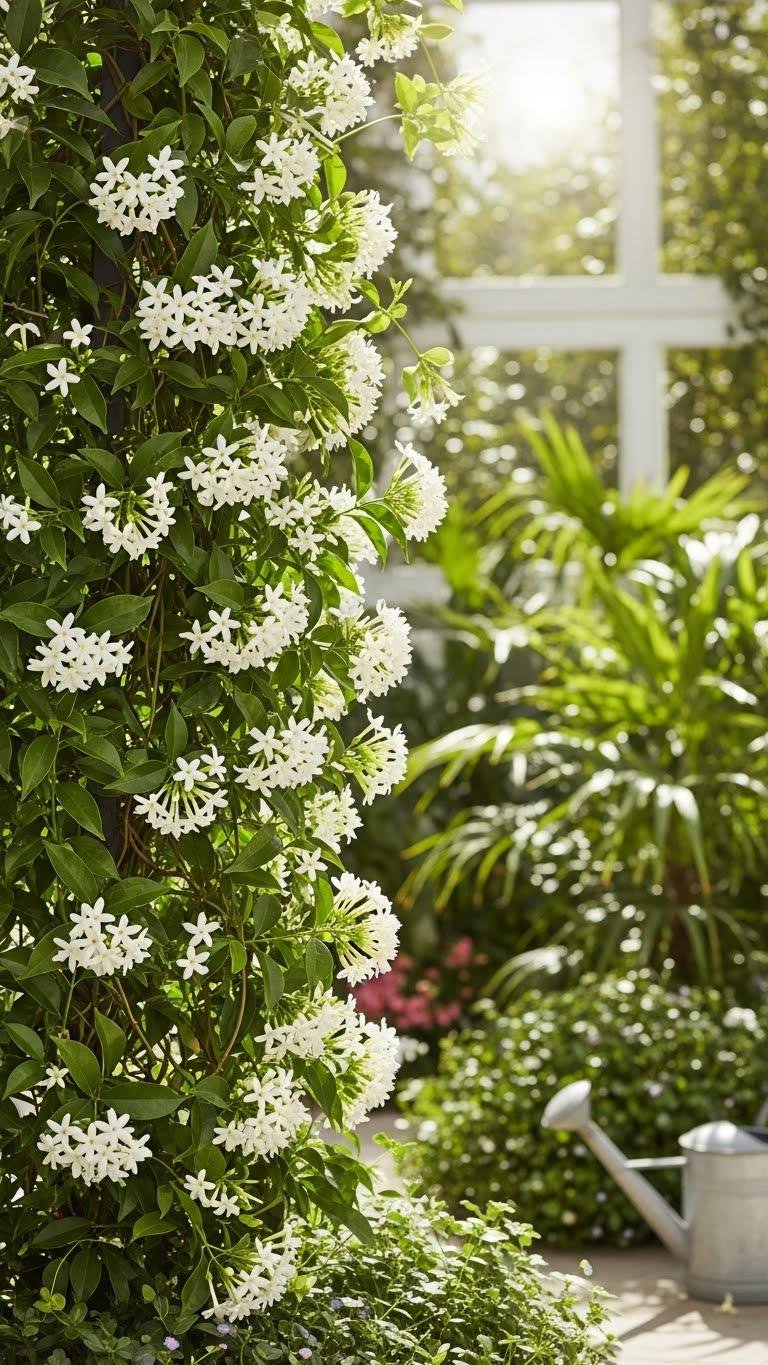
Although it’s native to Madagascar, Stephanotis floribunda adapts well to temperate gardens and containers, rewarding you with waxy, highly fragrant white blooms that perfume evenings and wedding bouquets alike.
You’ll train this fragrant vine on a trellis, give bright indirect light, consistent moisture, and occasional fertiliser. Treat it with tropical care during growth and protect it from frost to keep blooms reliable.
Magnolia (Scented Varieties)
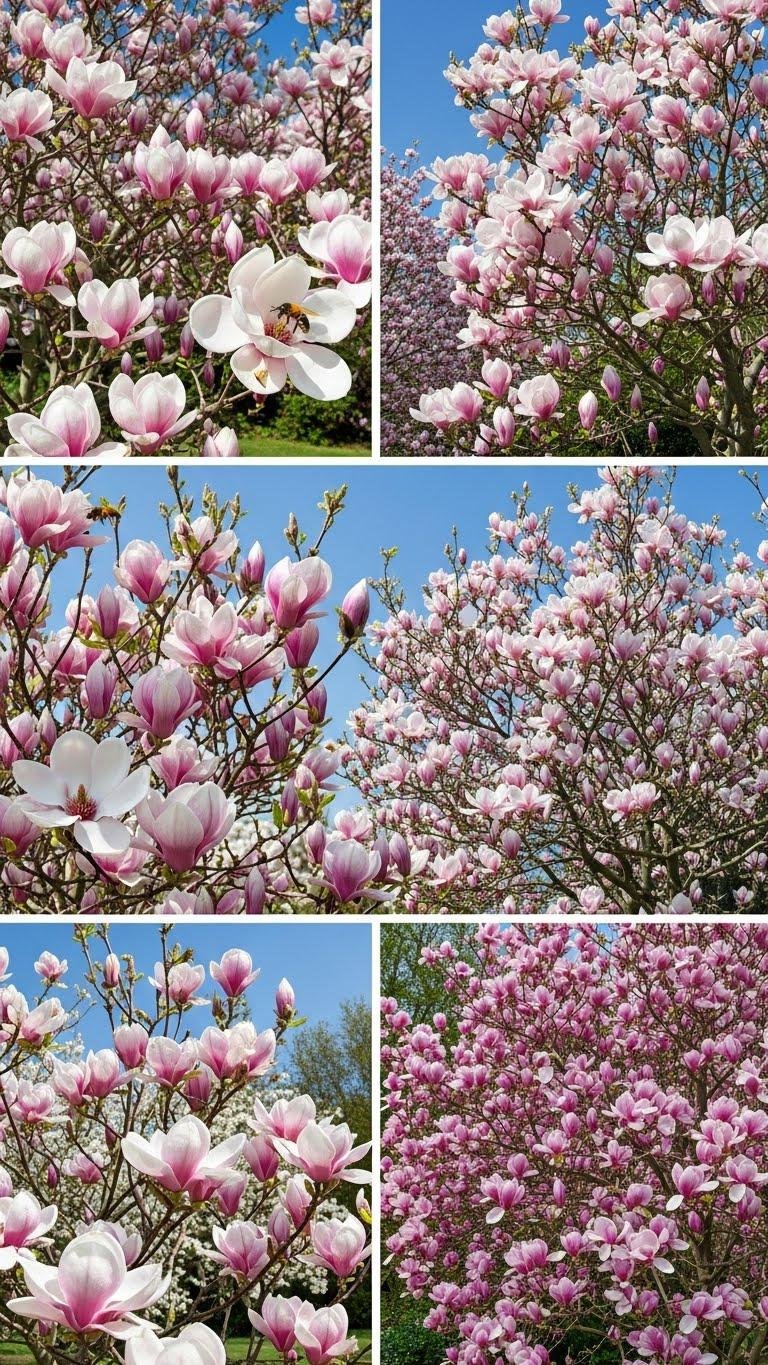
Plant scented magnolias where you’ll enjoy their heady, citrusy‑to‑lemon‑vanilla fragrances wafting through spring and early summer — varieties like Magnolia × soulangeana, M. grandiflora cultivars, and M. stellata each offer distinct scent profiles and bloom times.
You’ll choose Fragrant cultivars for site, soil, and size, pruning sparingly, and consider Pollination ecology: beetle and beetle‑pollinated systems suit open, robust blooms for resilient, freeing design.
Lily of the Valley
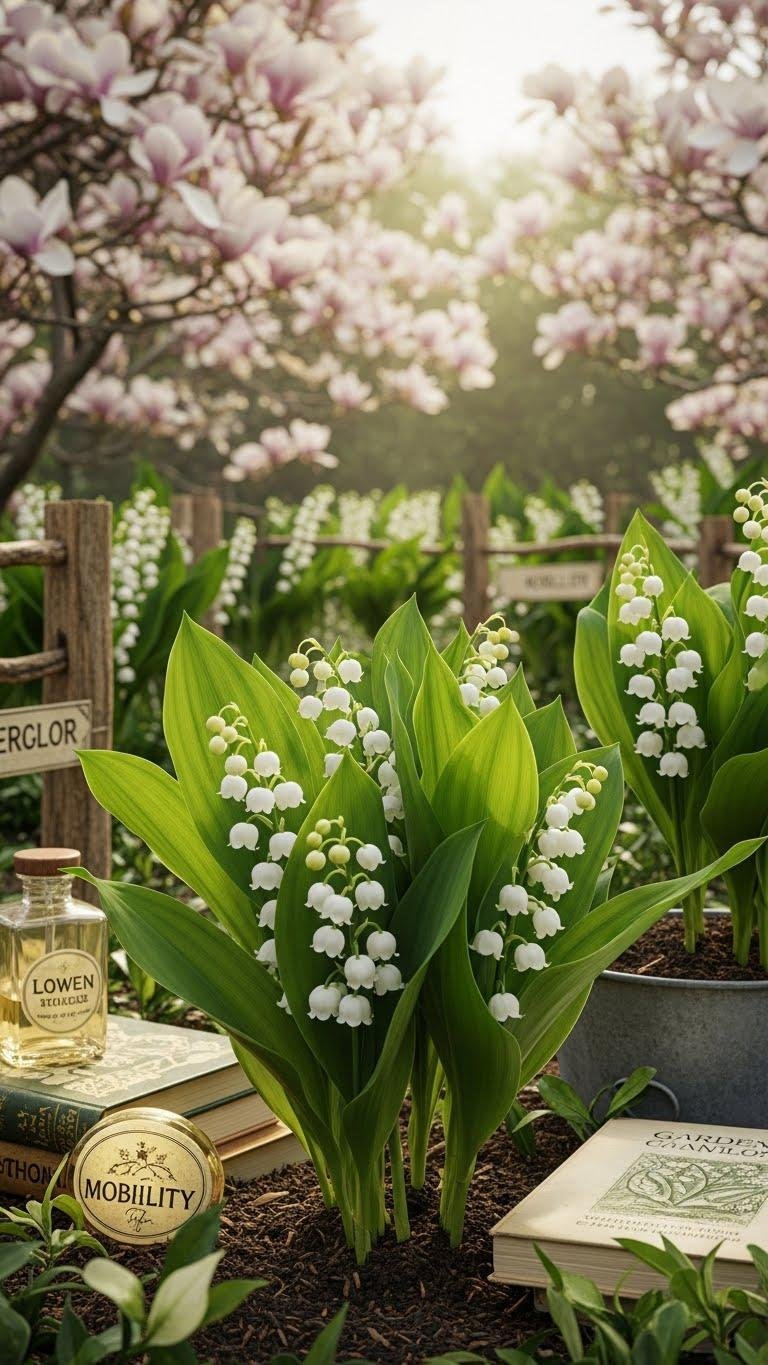
After enjoying magnolias’ heady, citrusy-to-vanilla notes in trees and large shrubs, you’ll find Lily of the Valley (Convallaria majalis) brings an entirely different, delicate perfume at ground level—tiny, bell-shaped white flowers that smell sweet, green, and slightly honeyed.
You’ll learn garden folklore, appreciate shade tolerance, manage spread with barriers, and try container cultivation for controlled scent and mobility.
Rosa ‘Fragrant Cloud’ (Scented Rose)

Savor the rich, complex perfume of Rosa ‘Fragrant Cloud’, a hybrid tea rose prized for its deep, damask-citrus aroma that fills a garden on warm afternoons; its large, semi-double blooms show glowing coral-red petals that hold fragrance exceptionally well, making it ideal for cutting, sensory focal points, or a scented hedge where you’ll want high-impact scent without constant fuss.
You’ll prune smartly, use precise cutting techniques, stagger blooms, and consider fragrance chemistry when placing plants to maximize scent diffusion and freedom to shape growth.
Sweet Osmanthus Hybrid Selections
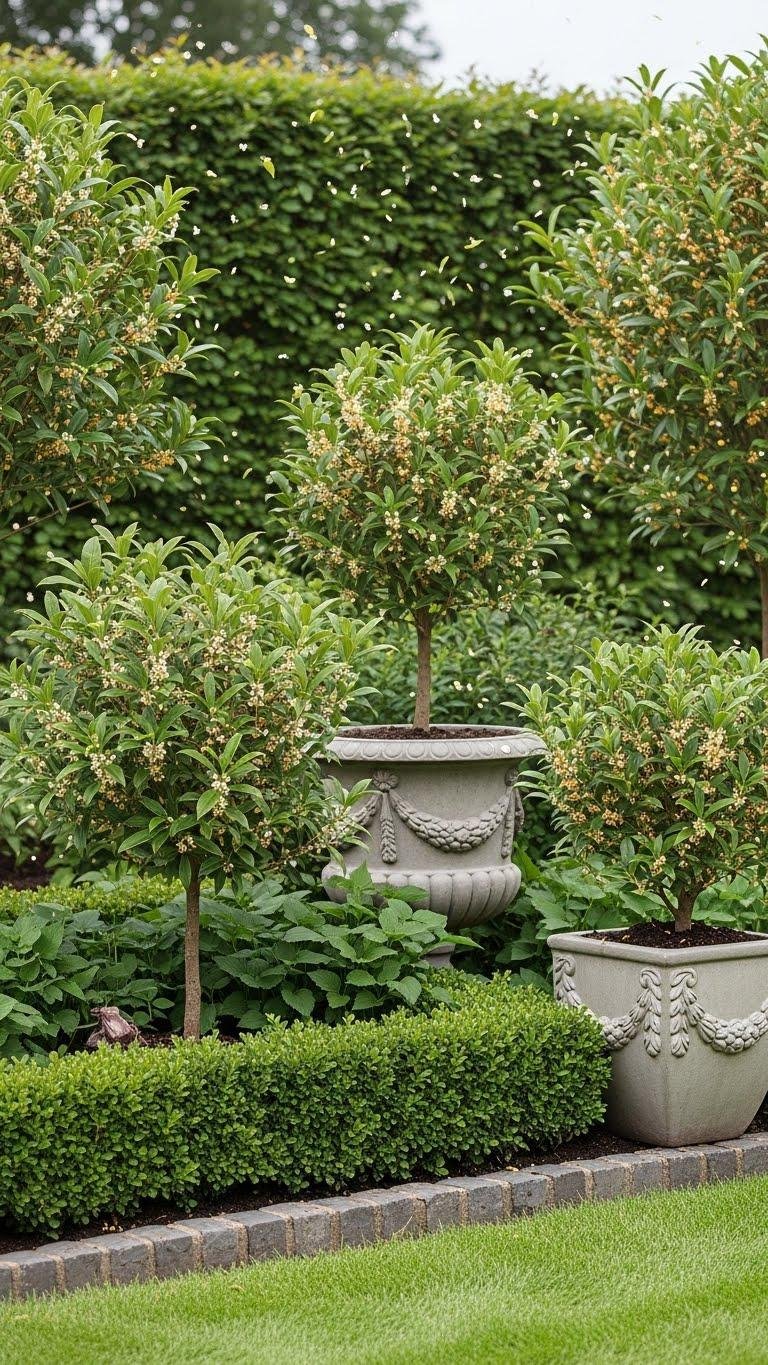
Though often understated in mixed borders, sweet osmanthus hybrids reward you with a concentrated, apricot-tinged fragrance and versatile habit that works as a hedge, specimen, or container plant.
You’ll select cultivars by cold hardiness zones and size, balancing bloom intensity with maintenance.
Learn basic fragrance chemistry to match scent strength to placement, prune for shape, and plant where air movement carries perfume to living spaces.
Broom (Cytisus)
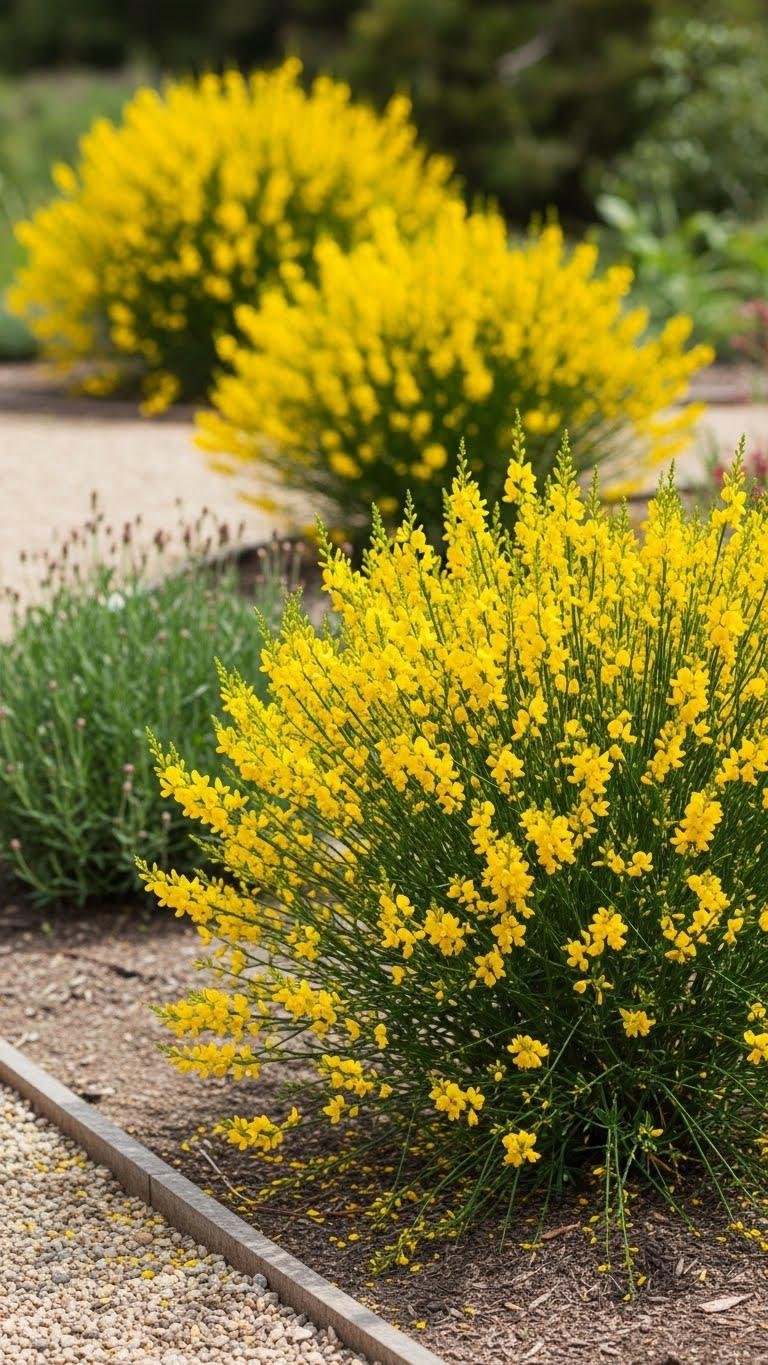
Moving from the concentrated, apricot-scented charm of sweet osmanthus, consider broom (Cytisus) when you want bright, long-lasting color with minimal fuss.
You’ll appreciate its freedom-friendly habit: drought-tolerant, low-maintenance, and fragrant. Check soil preferences—well-drained, lean soils suit it. Prune after flowering to shape. Note wildfire risk in dry climates and site plants with defensible space to reduce hazard.