
You’ll find practical, plant-first layouts that make a front yard look intentional without excess work. Think symmetrical entry beds, curved walkway borders, and layered foundations with evergreen anchors for year-round structure. Each idea pairs repeat drifts of perennials or drought-tolerant natives with clear edging and maintenance access. I’ll show how to pick height, color, and irrigation so your curb appeal improves—and you won’t be stuck with high‑maintenance surprises.
Symmetrical Entryway Beds Flanking the Front Door
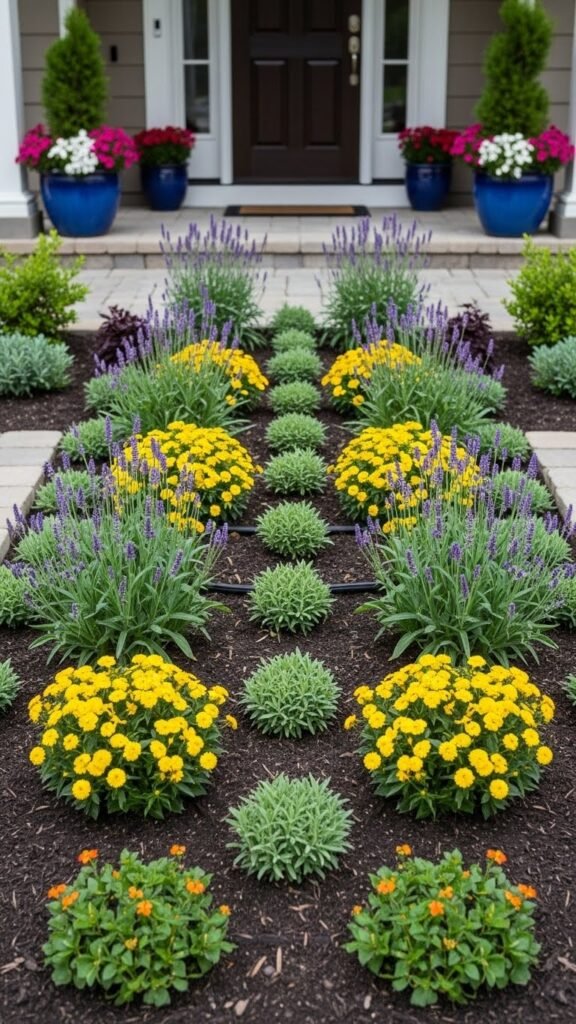
Balance your entrance by planting matching beds on either side of the front door; symmetry creates a clear focal point and guides visitors to the entry.
You’ll choose hardy, low-maintenance perennials and repeat colors and textures for mirror plantings.
Define edges, match soil amendments and irrigation, and stagger heights for sightlines.
Entrance symmetry feels orderly yet freeing, letting you tweak plants seasonally without breaking the balance.
Gently Curved Walkway Borders
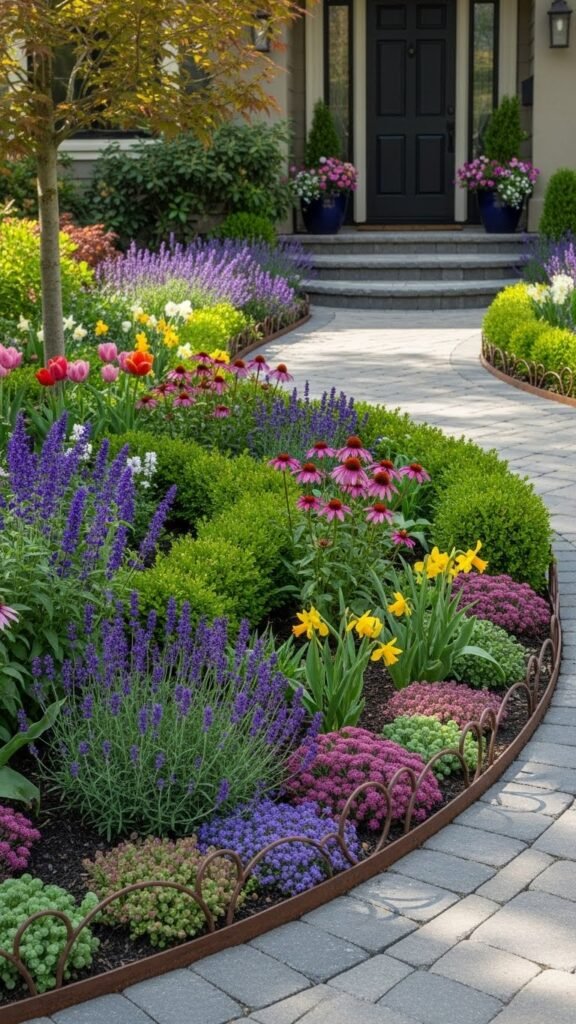
Draw visitors in with gently curved walkway borders that soften hard lines and create a more inviting approach to your front door.
You’ll plant layered textures—low shrubs, perennial drifts, and strategic seasonal bulbings—to maintain year-round interest. Install meandering edging to define form and ease maintenance, then choose drought-tolerant, pollinator-friendly species so you’re free to enjoy a low-fuss, expressive path that frames your entry.
Island Bed With Central Specimen Tree
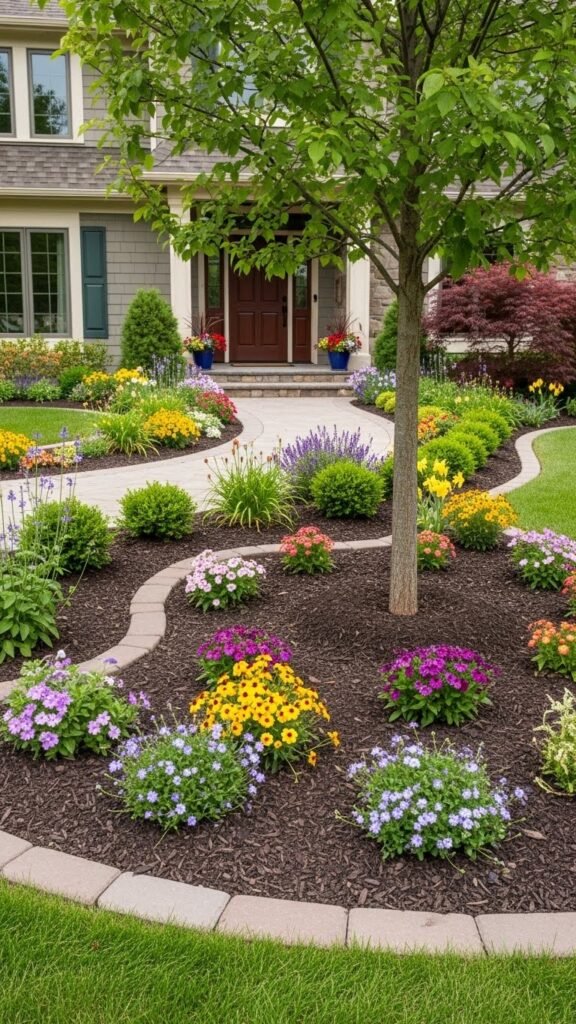
If your walkway borders guide visitors inward, an island bed anchors the middle of a lawn and gives the whole front yard a focal point.
You’ll plant a specimen understory beneath a central tree, spacing per canopy spread, mulching but keeping root flare care visible.
Choose low-maintenance perennials for seasonal color, edge cleanly for freedom to mow, and plan irrigation at the drip line.
Layered Foundation Bed With Evergreen Anchors
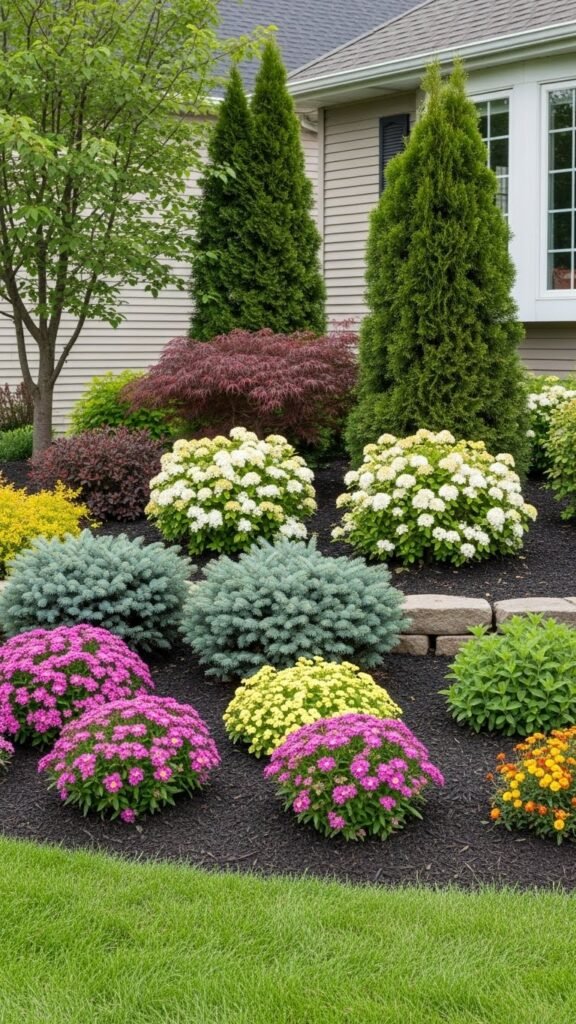
Anchor your foundation planting with a few strategically placed evergreens, then layer shorter shrubs and seasonal perennials outward to create year-round structure and changing color.
You’ll use evergreen focalpoints for winter form, mid-height shrubs for seasonal blooms, and low perennials for soft edges.
Plant in staggered groups to build layered texture, allow access for maintenance, and choose native, low-water species for carefree freedom.
Repeating Color Drift Beds
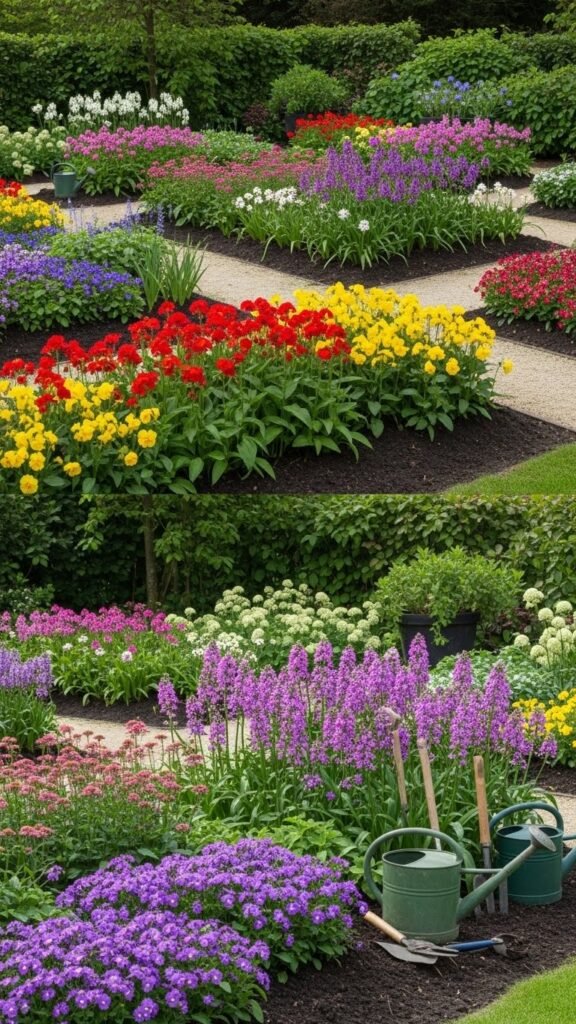
Often you’ll plant repeating color drifts to create a cohesive, flowing look that guides the eye and simplifies maintenance.
You choose perennials and bulbs for continuous colorbanding, spacing groups so massing reads from the street.
Staggered bloomcasts extend interest; alternate early, mid, late bloomers.
Keep soil, watering, and deadheading routines consistent so the drifts stay bold, low-effort, and freeing.
Low Shrub Corner Beds by the Driveway
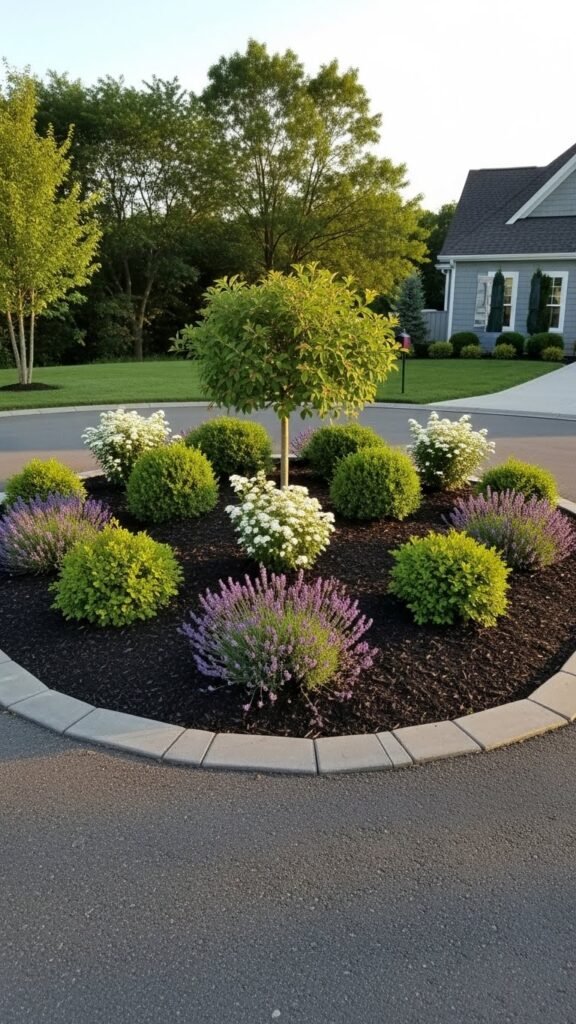
Frame your driveway corners with low shrubs that provide year-round structure without blocking sightlines; choose species under 3 feet tall like dwarf boxwood, spirea, or lavender and plant them in groups of three to five with 18–36 inch spacing so the masses read from the street. For shrubs selection, prioritize hardiness, form, and low maintenance. Use clean driveway edging and mulch for tidy, independent looks.
Narrow Window Well Plantings
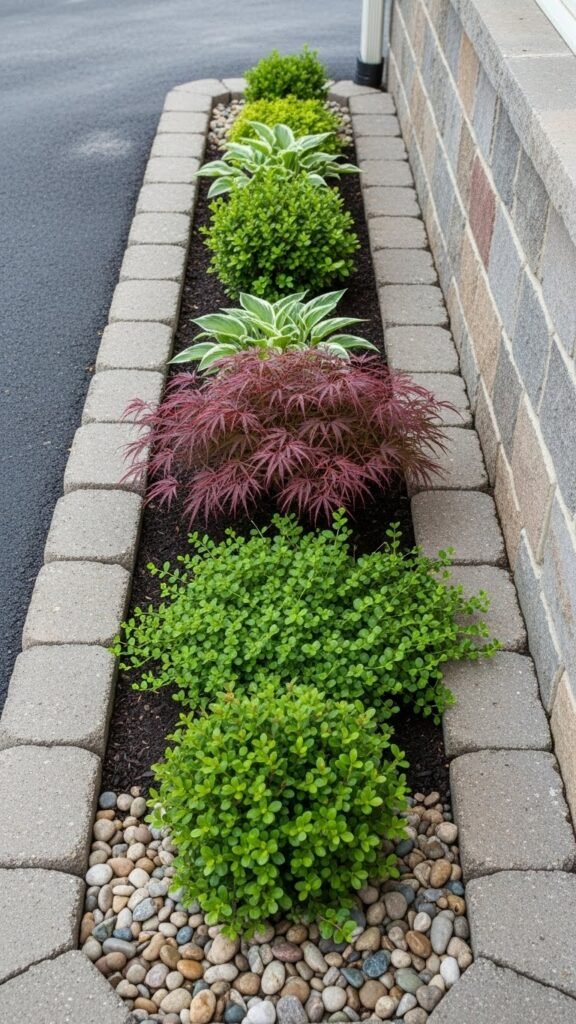
Just as low shrubs tidy driveway corners, narrow window well plantings make small, tight spots look intentional and cared for. You’ll choose compact, low-maintenance species and shade tolerant groundcovers to soften edges without blocking light.
Focus on shallow-rooted plants, clean soil grade, and window well drainage so moisture won’t pool. Plant spacing and occasional pruning keep access open and the aesthetic crisp.
Raised Bed Terrace on a Slope

Because slopes can erode and waste planting space if left untreated, you’ll build raised bed terraces to create level, manageable planting zones that stabilize soil and concentrate moisture for your plants.
You’ll design low retaining wall tiers, plan terraces irrigation runs, and select native plants for drought tolerance and root strength. Maintain beds with mulch, staged drainage, and periodic soil checks to guarantee erosion control.
Mixed Perennial and Ornamental Grass Bed
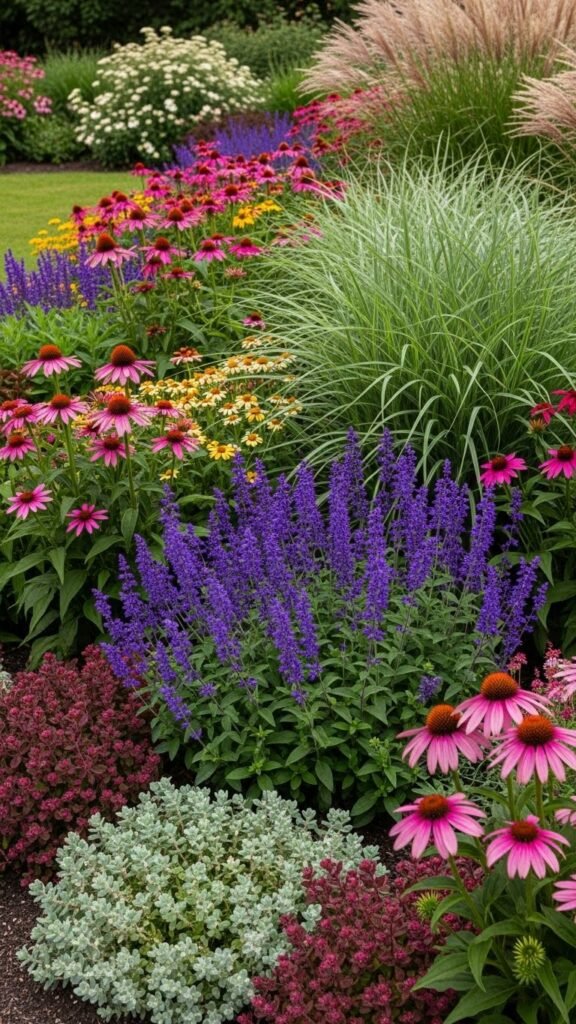
Along a border or in a central bed, mixing perennials with ornamental grasses gives you seasonal color, texture, and structure with low maintenance.
You’ll pair clumps of Miscanthus or Panicum with sturdy Echinacea, Salvia, and Sedum to create strong textural contrasts and intentional seasonal succession. Plant in drifts, allow room for clumping, deadhead selectively, and cut grasses back in late winter for clean renewal.
Formal Boxwood-Framed Flower Bed
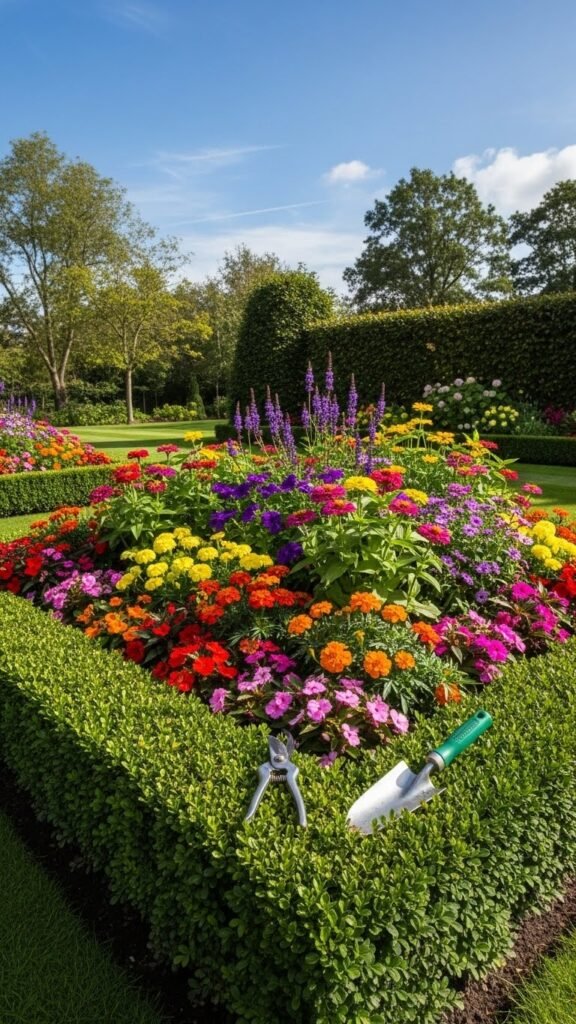
When you frame a flower bed with clipped boxwood, you create a crisp, year-round structure that highlights seasonal plantings and keeps maintenance predictable.
You’ll set tidy hedges, plan root space, and schedule boxwood pruning every spring and late summer. Amend soil with compost as a soil amendment before planting.
Choose compact perennials, keep defined edges, and enjoy flexible, controlled curb appeal.
Drought-Tolerant Mediterranean Bed
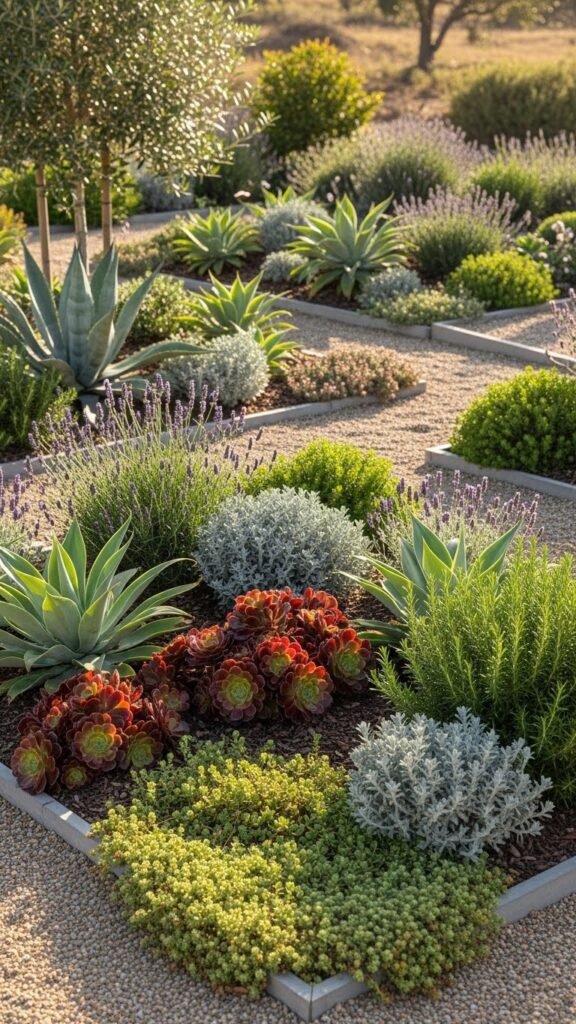
If you liked the crisp lines of a boxwood-framed bed but want lower water needs and a more relaxed palette, a drought-tolerant Mediterranean bed gives you year-round structure with plants built for heat and sun.
You’ll combine Mediterranean succulents, grey leaved shrubs and sage tones, position gravel drainage, mulch sparingly, and space for airflow so each plant thrives with minimal fuss.
Cottage-Style Layered Flower Bed
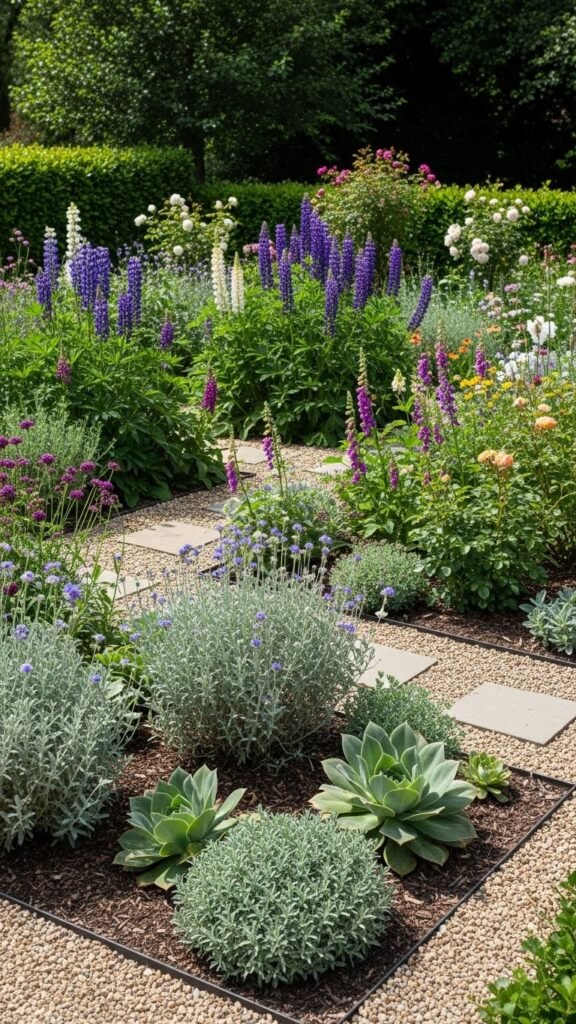
Because cottage beds thrive on charm and abundance, you’ll layer heights, textures, and bloom times to create a relaxed but intentional composition. Choose heritage variety selection—old roses, lupines, and foxgloves—for resilience and character.
Plant in drifts with lower edging and taller centers, allow informal path weaving of stepping stones, and deadhead selectively so plants rebloom and you keep a free, managed wildness.
Long Narrow Border Along a Fencing Line

Along a fencing line, a long narrow border becomes a designer’s toolkit for rhythm and screening; choose plants that layer vertically to maximize the slim footprint and provide year-round interest. You’ll select narrow columnar shrubs, tall perennials and trailing edge plants for privacy planting and layered textures. Plant in staggered groupings, match mature heights, and root into well-draining soil for low-maintenance success.
Minimalist Rock and Low-Plant Bed
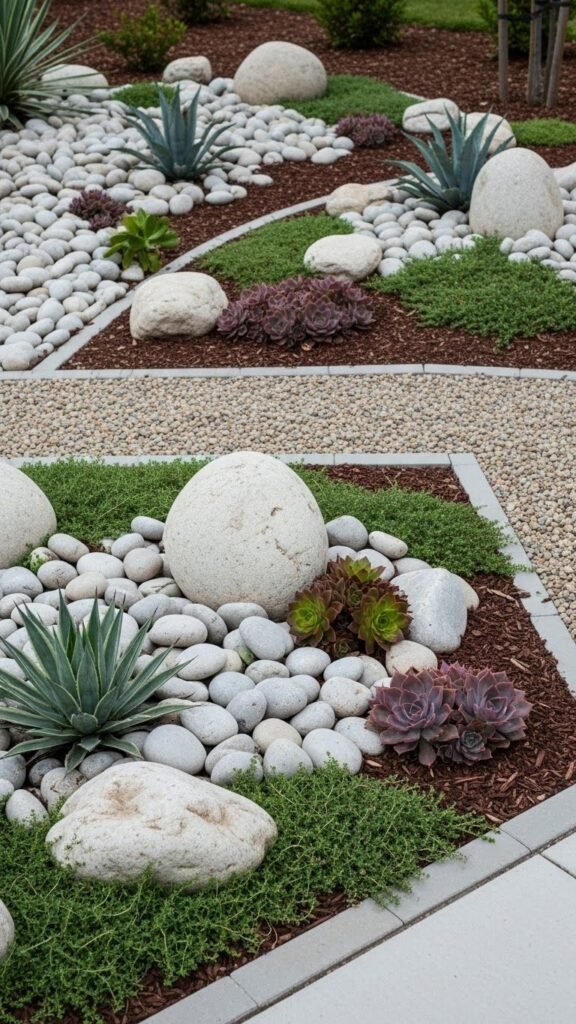
Think of a minimalist rock and low-plant bed as a pared-back composition where each stone and plant has a clear job: define lines, reduce maintenance, and accentuate texture.
You’ll use rock mulch to suppress weeds and outline pathways, place a succulents grouping for low-water interest, and select compact natives and groundcovers.
Maintain spacing, prune sparingly, and enjoy a liberated, tidy curb statement.
Seasonal Accent Bed Near the Porch
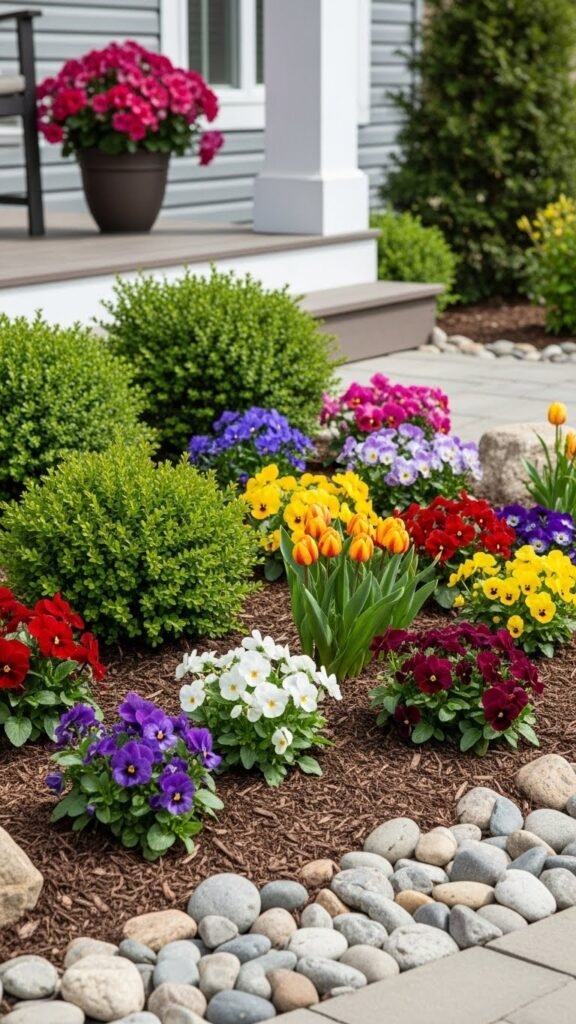
If your minimalist rock bed keeps things restrained, a seasonal accent bed by the porch adds timely color and scent without overwhelming your tidy lines. You’ll choose seasonal plantings for staggered bloom, compact shrubs for structure, and low-maintenance bulbs for spring pop. Coordinate porch colorways with foliage and flower tones, site plants for sun exposure, and mulch to retain moisture and simplify upkeep.
Curved Island With Boulders and Groundcover

Framing your lawn with a curved island of boulders and low-growing groundcover gives you a sculpted, low-maintenance focal point that still feels natural; place larger stones toward the inner curve and step them down toward the edges to create depth and a sense of movement.
Choose native groundcover for drought tolerance, plan rock placement for erosion control, and mix textures so maintenance stays minimal while look remains effortless.
Entryway Container Cluster With Surrounding Bed
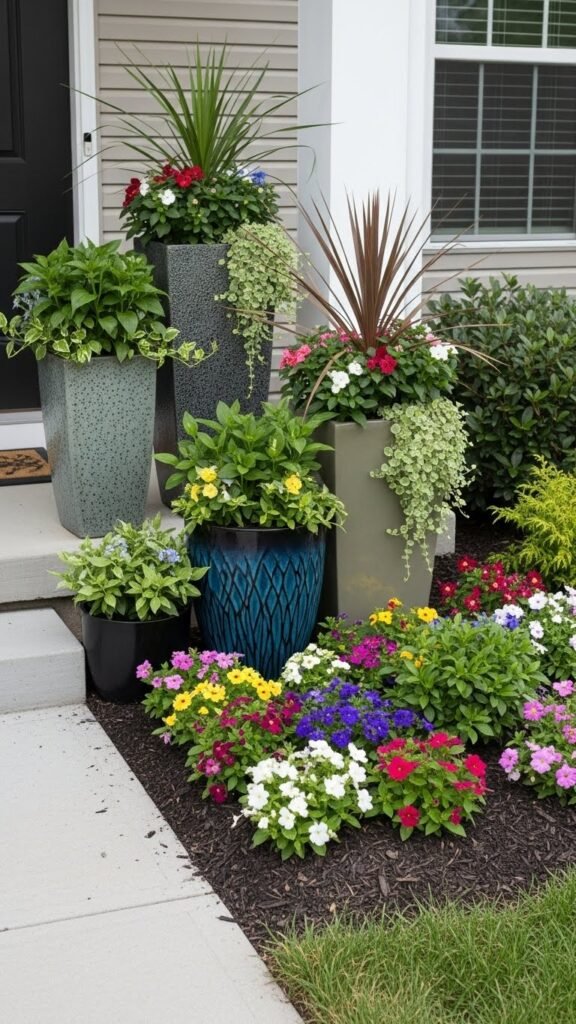
Anchor your entry with a cluster of containers placed on the porch or flanking the walkway, then tie them into a surrounding planting bed to create a cohesive, layered welcome.
You’ll use porch symmetry to balance tall foliage, spillers and anchors. Choose adaptable perennials and annuals for easy seasonal rotation, mulch edges, and match soil needs so plant choices thrive and maintenance stays simple.
Pollinator-Friendly Wildflower Strip
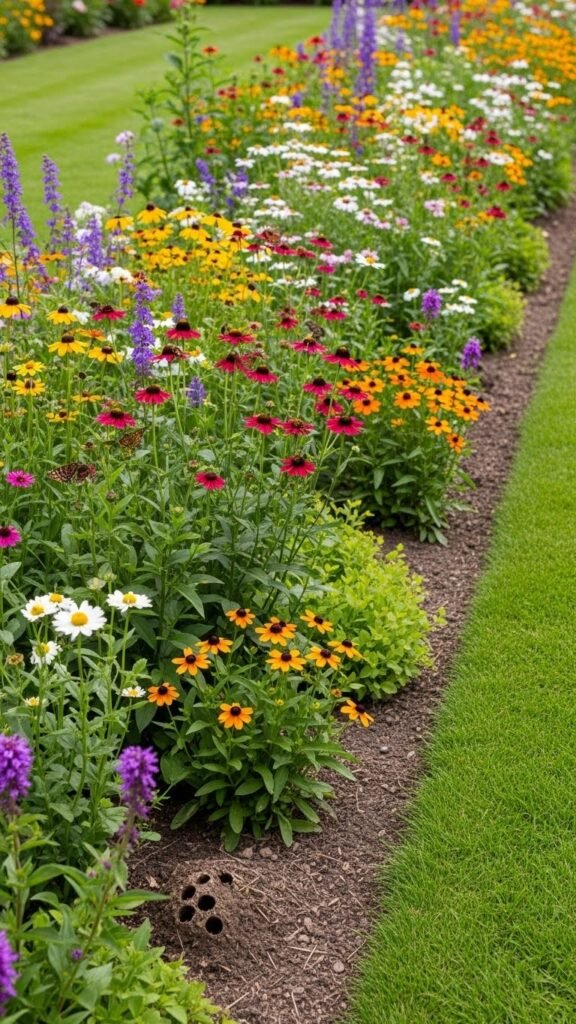
Creating a pollinator-friendly wildflower strip transforms a narrow lawn edge or pathway margin into a high-value habitat that attracts bees, butterflies, and beneficial insects. You’ll choose native nectar plants, arrange layered heights, and group blooms to form seasonal bloom corridors.
Plant deep-rooted perennials for drought resilience, leave small bare patches for ground-nesters, and mow selectively to preserve nectar sources while keeping tidy lines.
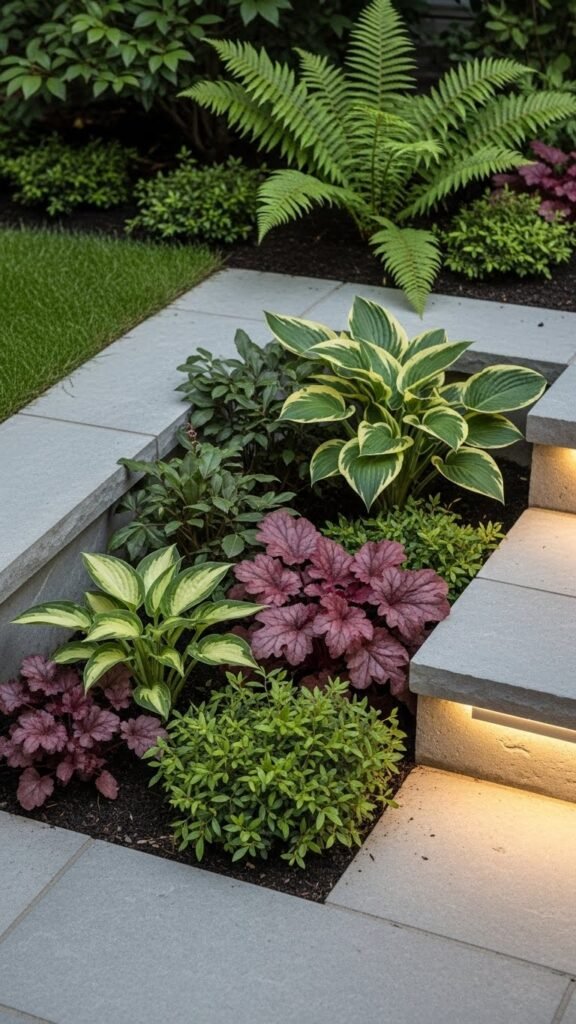
Recessed Planting Bed at the Base of a Stair
Pathside Rhythm Beds With Repeated Groups
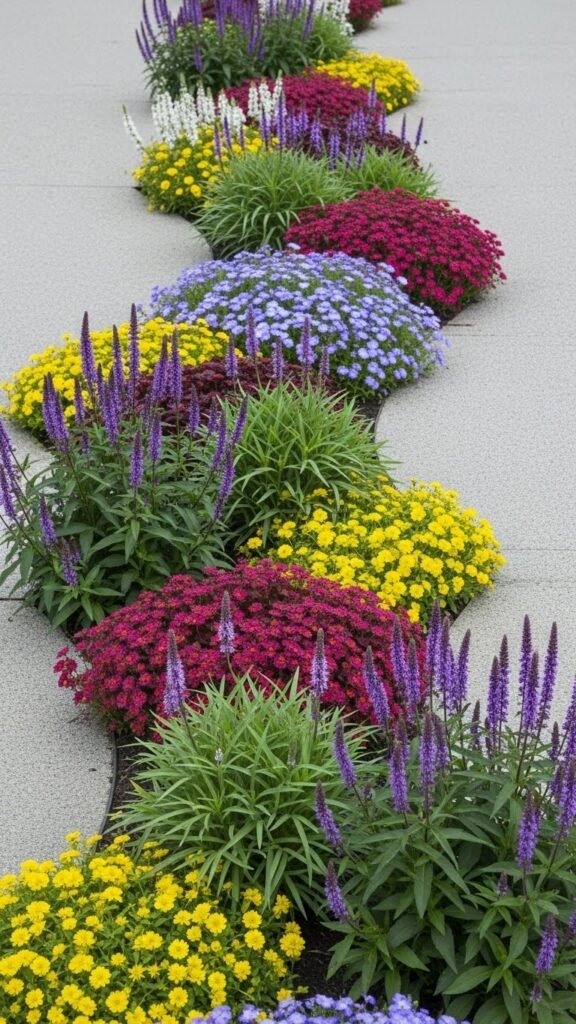
Line up repeated groups of three to five plants along a path to create a steady, measured rhythm that guides the eye and foot traffic. You’ll pick sturdy perennials and annuals placed in repeating rhythms, using staggered clusters to soften edges.
Space plants for mature spread, match heights for sightlines, and leave room for maintenance. The result feels intentional and liberating.
Compact Bed for Small Urban Front Yards
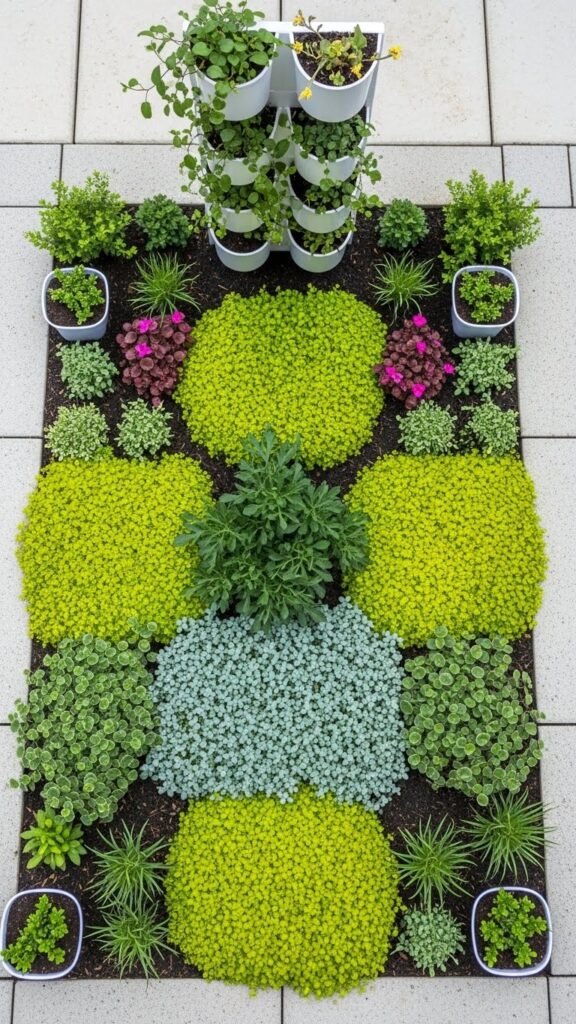
If you loved the orderly beat of pathside rhythm beds, you can use the same idea on a much smaller scale: a compact bed squeezes strong color and structure into a narrow urban frontage without overcrowding.
You’ll pick low-growing anchors, add vertical planters for height, tuck micro containers at corners, and space plants for airflow. Prune tightly, choose drought-tolerant varieties, and keep maintenance minimal.
Accent Bed Framing a Bay Window
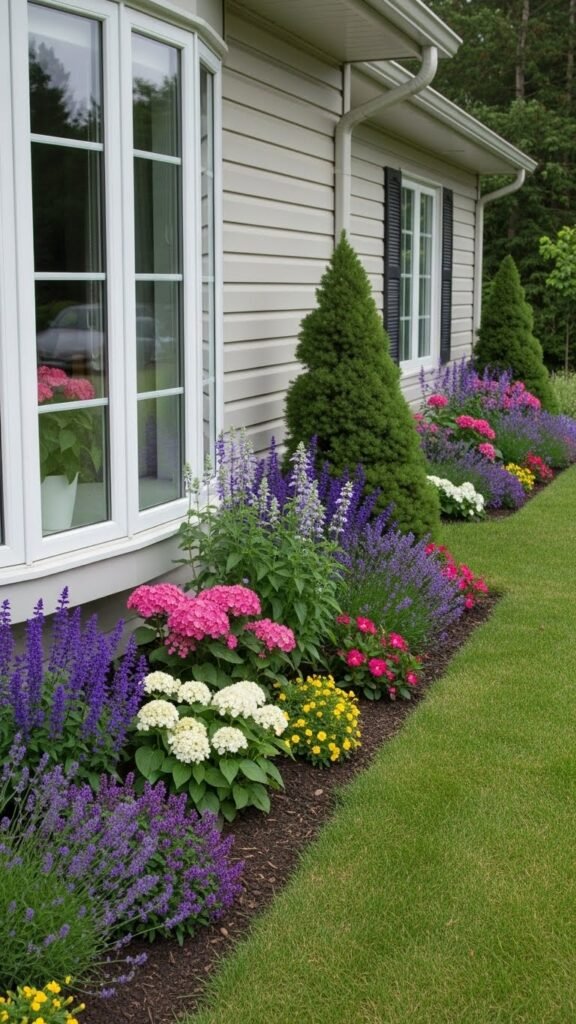
Bring attention to your bay window with a narrow, layered accent bed that balances form and function. You’ll plant low evergreens at the back, mid-height perennials for seasonal color, and edging groundcovers to keep sightlines clean for a window seat view.
Use a curated bay flower list—salvias, dwarf hydrangea, lavender—to create effortless maintenance, clear sightlines, and a framed view that feels freeing.
Symmetrical Twin Bed Frames for Twin Garages
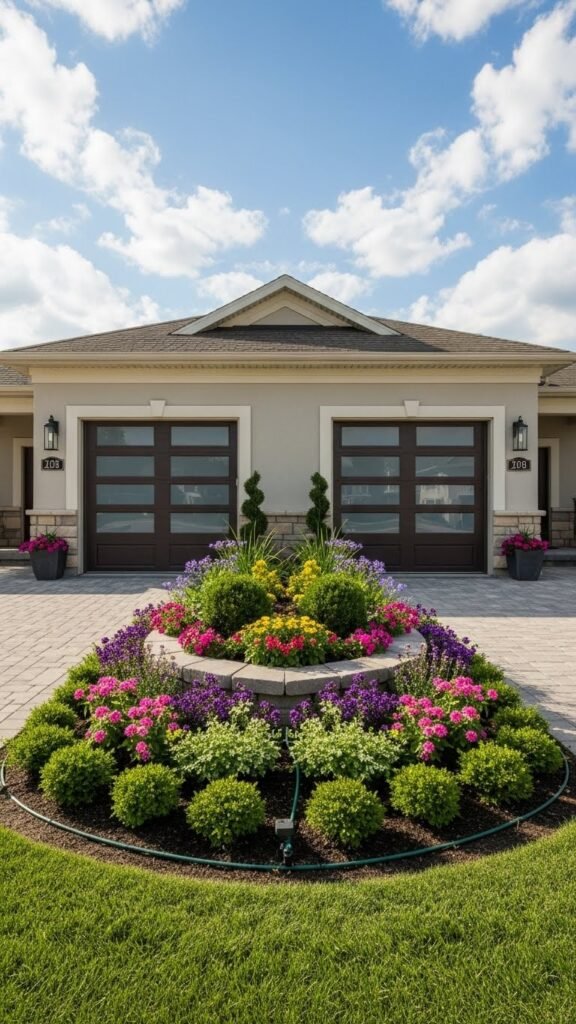
Framing a bay window taught you how layered plantings can shape a view; the same clarity works when you’re designing twin beds flanking a double garage.
You’ll use mirror planting to repeat height, texture and bloom on each side, choosing low evergreen anchors, mid-height perennials and seasonal accents.
Maintain equal spacing, matching soil and drip irrigation to secure garage symmetry and effortless freedom.
Rain Garden Bed for Seasonal Runoff
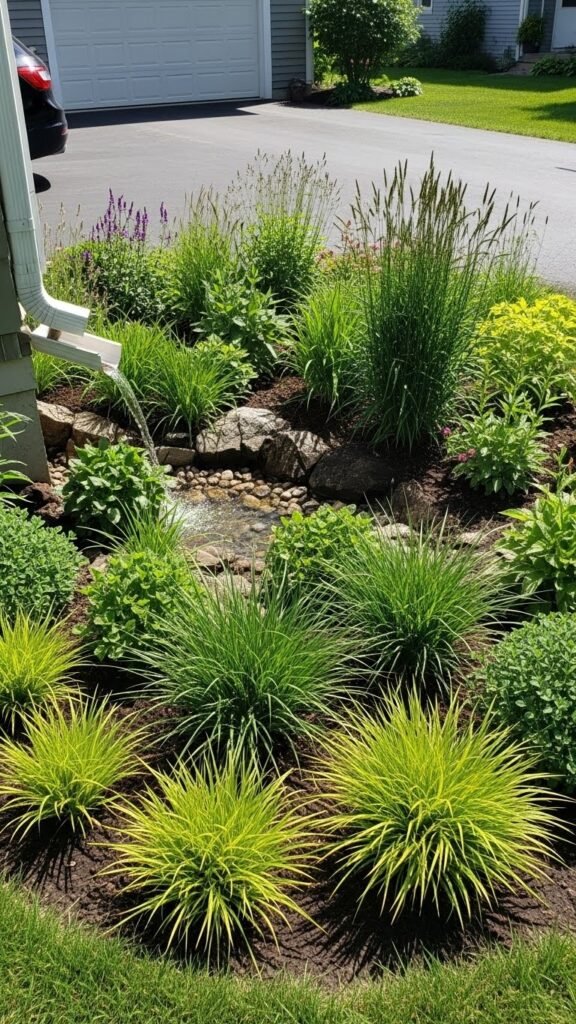
When seasonal runoff pools near your driveway or downspout, design a rain garden bed that captures and soaks water while showcasing moisture-loving plants.
You’ll grade a shallow basin, amend soil for rainwater retention, and choose sedges, rushes, and native perennials. Plant in drifts for visual flow, position taller species in back, and plan seasonal planting to handle wet springs and dryer summers.
Mixed Evergreen and Blooming Perennial Bed
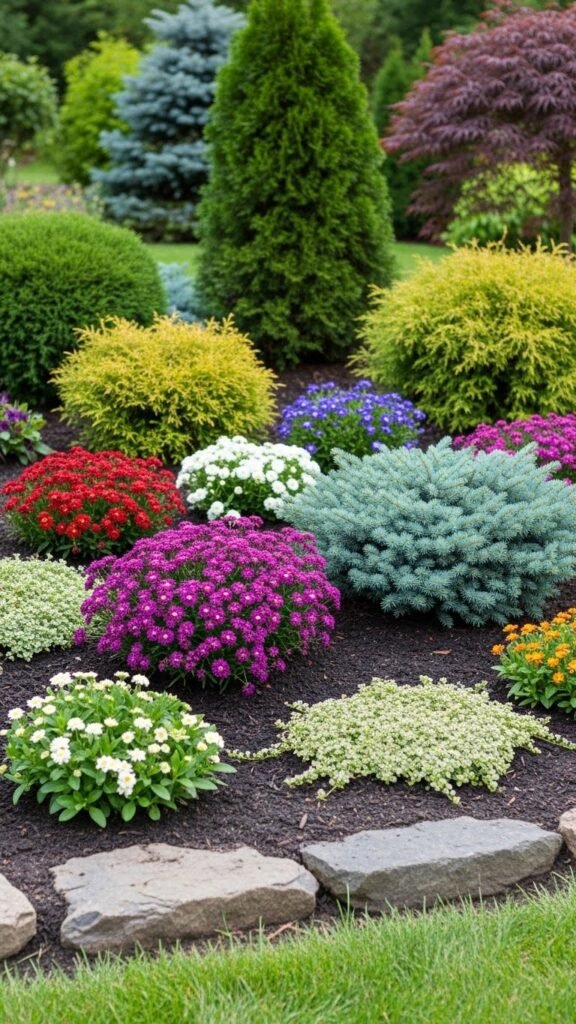
Mix evergreen structure with season-long color by pairing low-maintenance shrubs and groundcovers with staggered perennials so your bed looks deliberate through winter and into summer. You’ll choose plants for winter interest, textures, and bloom succession.
Prioritize soil preparation: amend deeply, guarantee drainage, and mulch. Space for air and growth, plant groupings for easy maintenance, and let the design feel free and unfussy.
Low-Profile Bed to Preserve Sightlines

Lighting-Integrated Nightscape Flower Bed
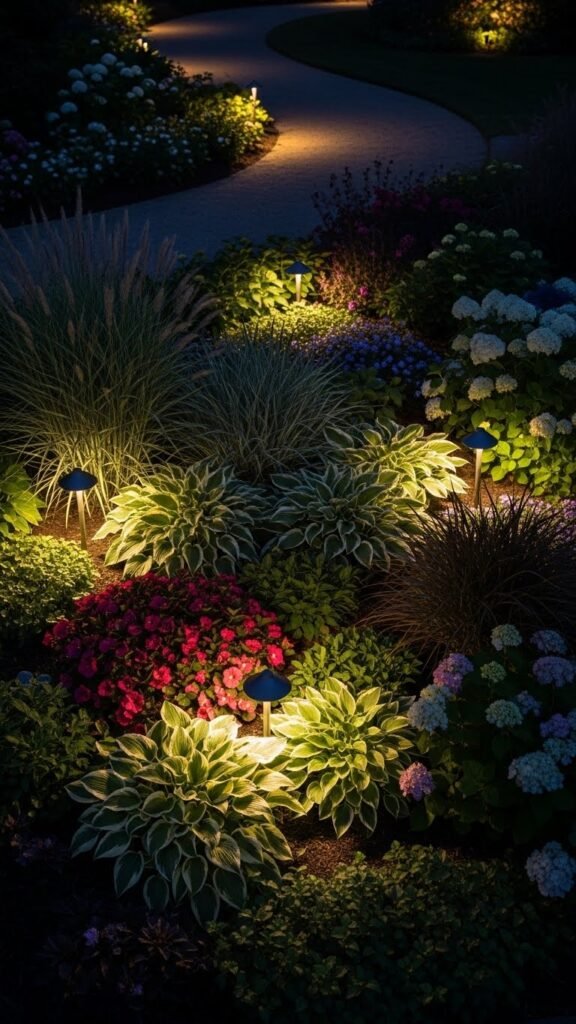
Keeping sightlines clear at night is just as important as during the day, and integrating low-voltage lighting into your flower bed lets you highlight plants without creating glare for drivers or neighbors.
You’ll use LED uplighting to dramatize texture, place fixtures low and shielded, and add a moonlighting pathway from overhead for safe, liberated movement while preserving plant health and sightline integrity.