
You can make your garden both beautiful and climate-smart without huge expense or effort. Start by choosing waterwise natives, grouping plants by needs, and swapping petrol tools for electric or hand alternatives. Combine rain barrels, drip lines, mulches, peat‑free compost and pollinator beds to cut water, waste and chemical use — and boost resilience. There’s more to adopt that’ll save time, money and habitat if you want practical next steps.
Choose Drought-Tolerant Plants
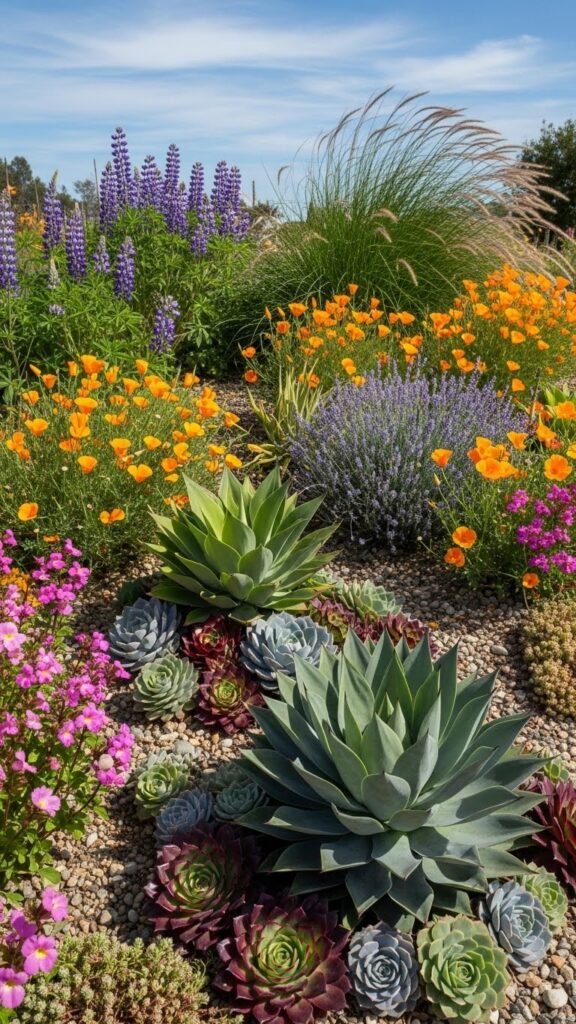
Choosing drought-tolerant plants lets you cut water use, reduce maintenance, and support a resilient garden that benefits your neighborhood during dry spells.
You’ll favor native species, use succulent arrangements for focal points, and plant ornamental grasses to stabilize soil. Evidence shows these choices lower irrigation needs and boost biodiversity. You’ll save time, money, and help your community adapt with practical, liberated stewardship.
Design a Xeriscape or Gravel Garden
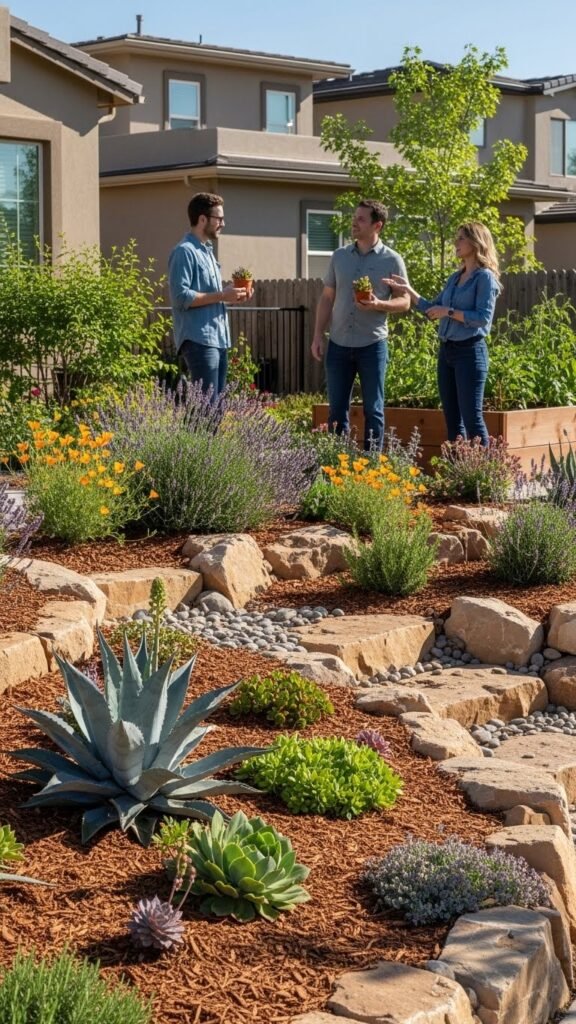
Often you’ll find that a well-planned xeriscape or gravel garden gives you maximum impact with minimal water and upkeep.
You can arrange low maintenance succulents among drought-tolerant shrubs, add decorative rockwork for structure, and layer mulch to retain moisture.
Choose native species, group by water needs, invite neighbors to share tips, and enjoy a resilient, freeing landscape that saves time and resources.
Replace Turf With Clover Lawns
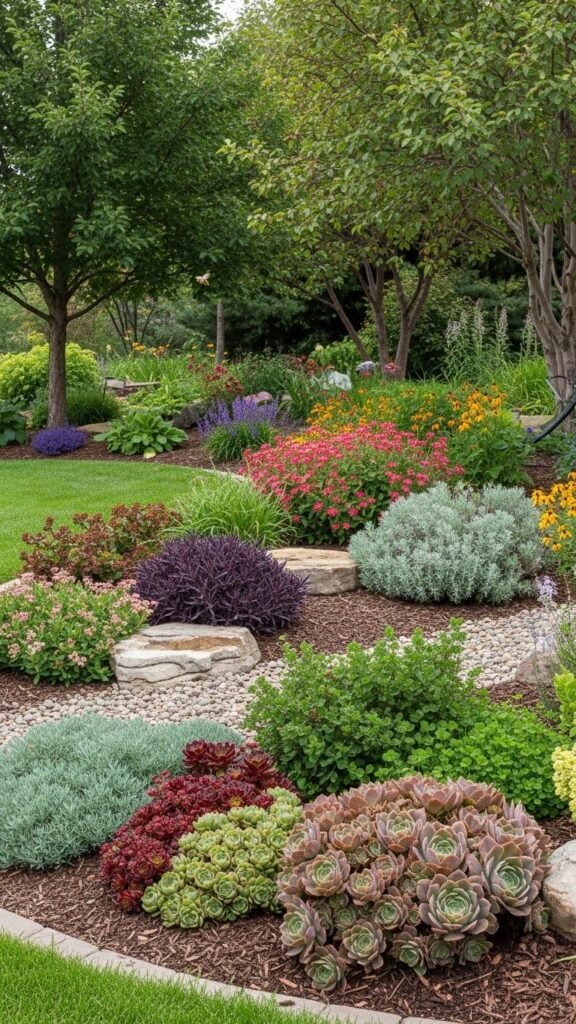
Swapping out thirsty turf for a clover lawn cuts water use, reduces mowing, and supports pollinators without sacrificing a soft, green yard.
You can seed microclover for resilience and learn microclover benefits like nitrogen fixing and drought tolerance.
Choose shade tolerant clover varieties where trees limit sun.
Neighbors often welcome lower maintenance, and you’ll reclaim time and independence while helping local ecology.
Install a Rainwater Harvesting System
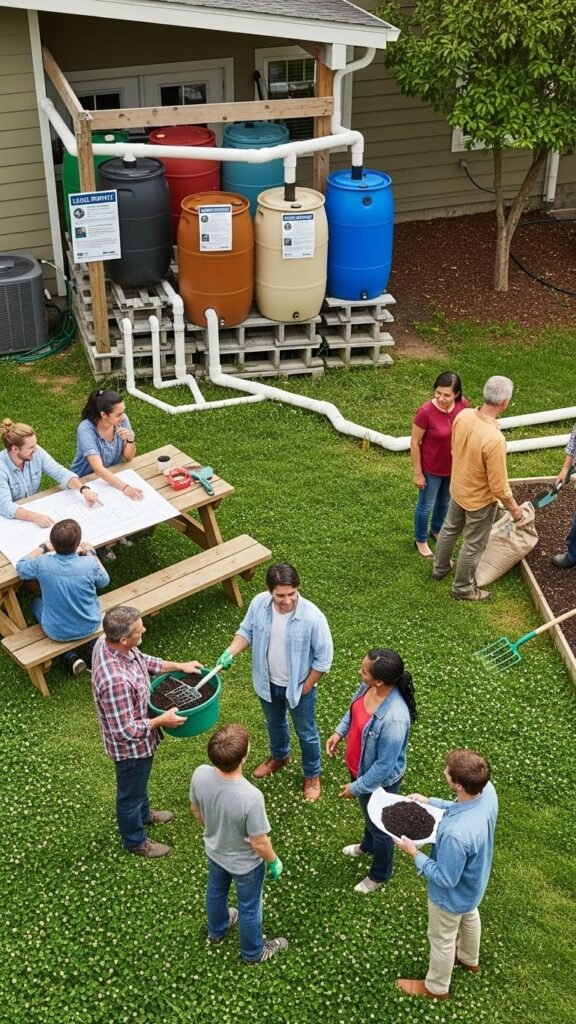
A clover lawn will cut your yard’s thirst, and you can take that water savings further by capturing rain on-site with a simple rainwater harvesting system.
You’ll choose barrels, check legal permits, and set overflow to protect neighbors.
Follow tested filtration, schedule barrel maintenance, and join local groups to share plans and bulk-buy materials so you keep independence, lower bills, and strengthen community resilience.
Prioritize Native Perennials
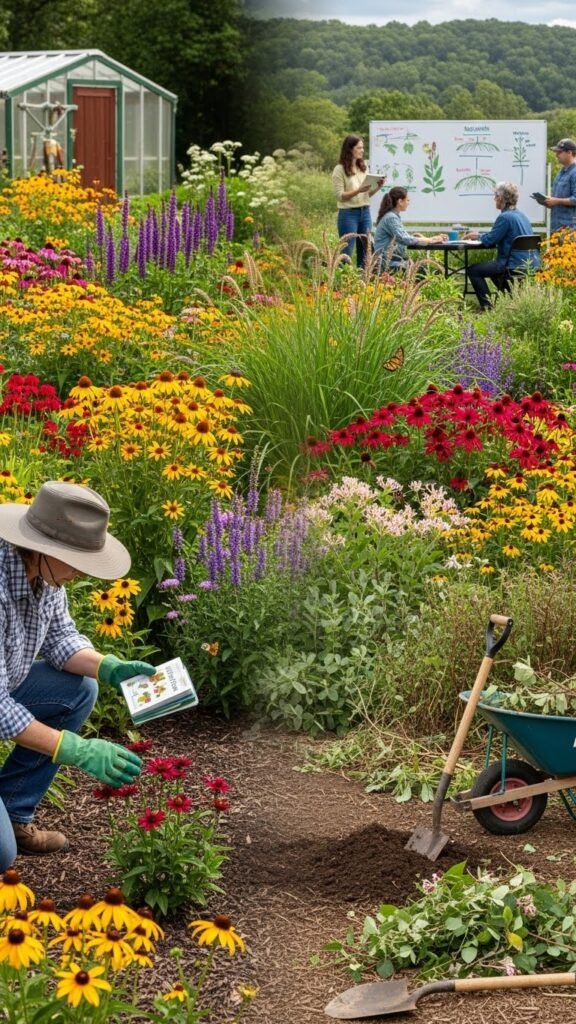
Avoid Invasive Species
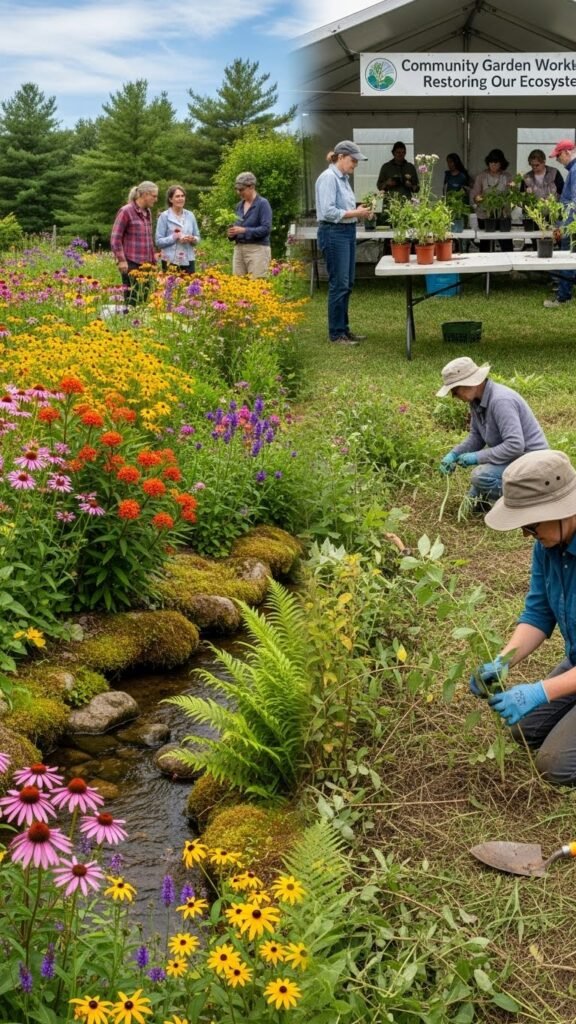
Because invasive plants can quickly outcompete natives and disrupt local ecosystems, you should learn to identify and avoid them when planning your garden.
Use prevention education to choose species wisely, practice early detection and rapid response to new invaders, and join community outreach to share alerts and resources.
You’ll protect habitat, preserve choice, and keep landscapes resilient without heavy-handed controls.
Implement No-Till Gardening
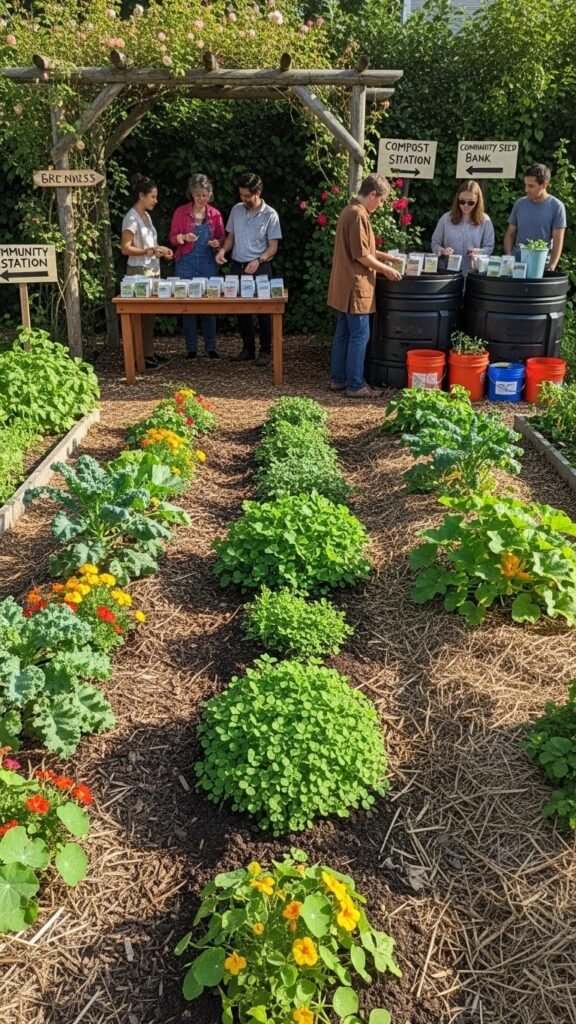
Preserving soil structure and microbial life, no-till gardening lets you grow healthier plants with less work and fewer inputs.
You’ll mulch, cover-crop, and plant directly to protect soil structure and boost carbon sequestration.
Embrace community seed swaps and shared compost to scale benefits, reduce disturbance, and reclaim time.
This practical, evidence-based approach gives you freedom to garden sustainably and collaboratively.
Build Raised Beds With Clean Soil
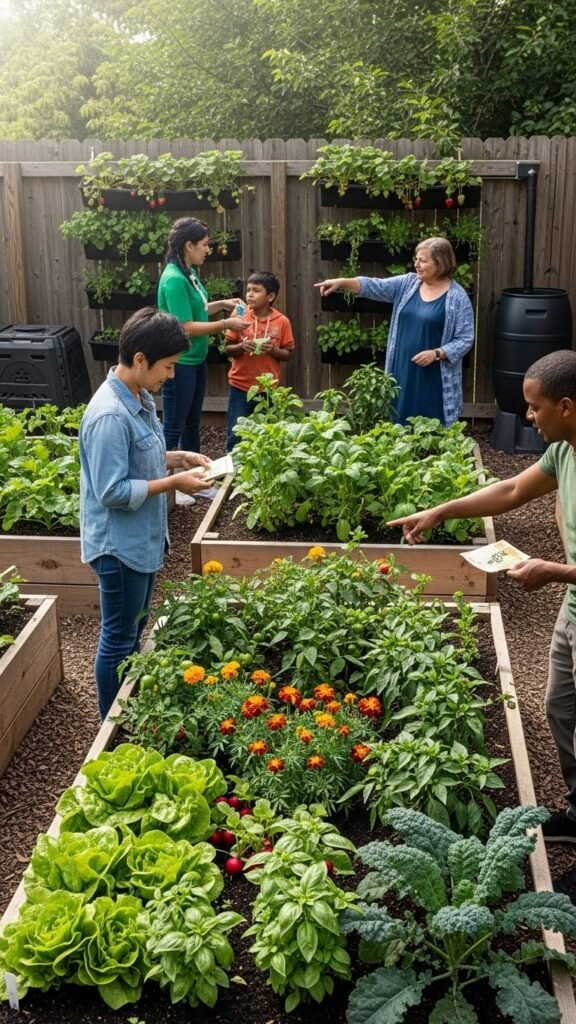
Start by choosing a location and filling your raised beds with clean, well-structured soil so your plants get a healthy start; raised beds let you control soil composition, drainage, and compaction while reducing weed pressure and soil-borne contaminants.
You’ll pair companion planting and vertical planters to maximize yield, conserve resources, and build community seed swaps so gardeners share knowledge, freedom, and locally adapted seeds.
Mulch With Fallen Leaves
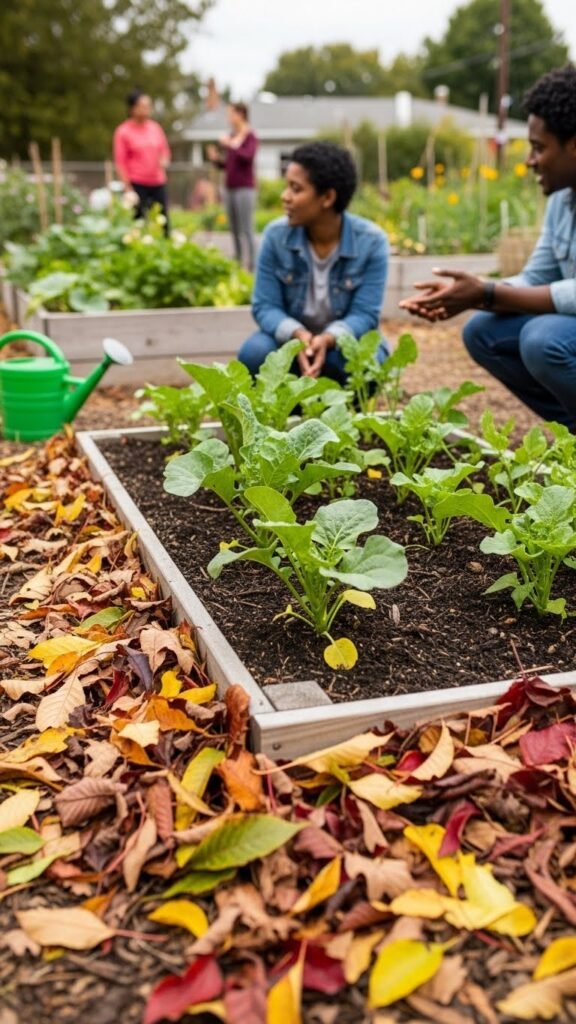
Once your raised beds are settled with clean soil and smart plant arrangements, you can use fallen leaves as a low-cost, high-benefit mulch that improves soil health and conserves moisture.
You’ll shred leaves for faster breakdown, apply a 2–3 inch leaf mulch layer, and monitor moisture. This supports nutrient cycling, reduces weeds, saves water, and empowers neighbors to share resources.
Start a Home Compost System
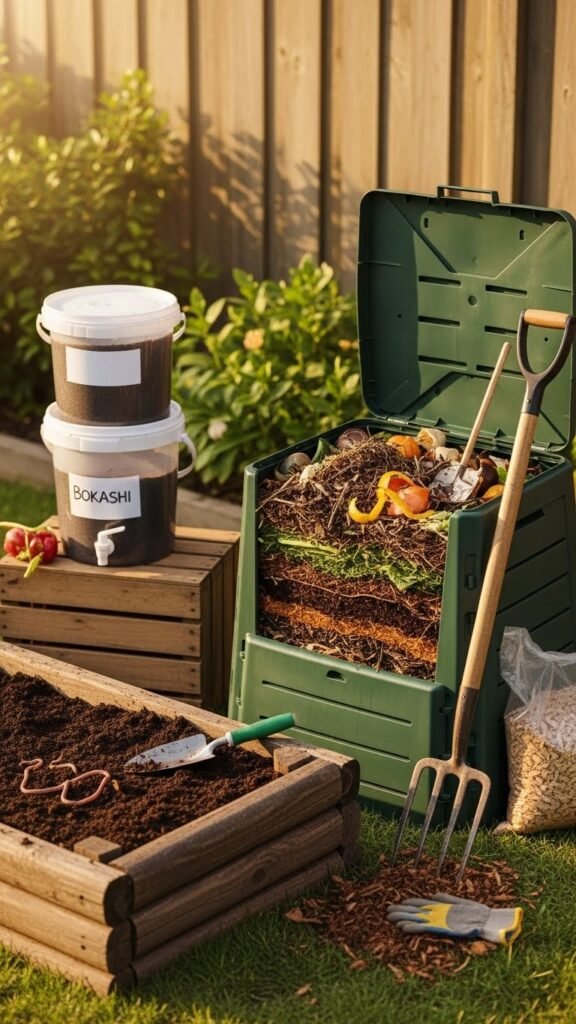
Building a simple home compost system lets you turn kitchen scraps and yard waste into rich, usable soil — and you can get one going with minimal time and cost. You’ll choose methods like a bin, kitchen bokashi for quick fermentation, or worm trenching for continuous breakdown.
Share tools, track temperatures, and exchange tips with neighbors to scale composting responsibly and freely.
Use Organic Fertilizers and Green Amendments
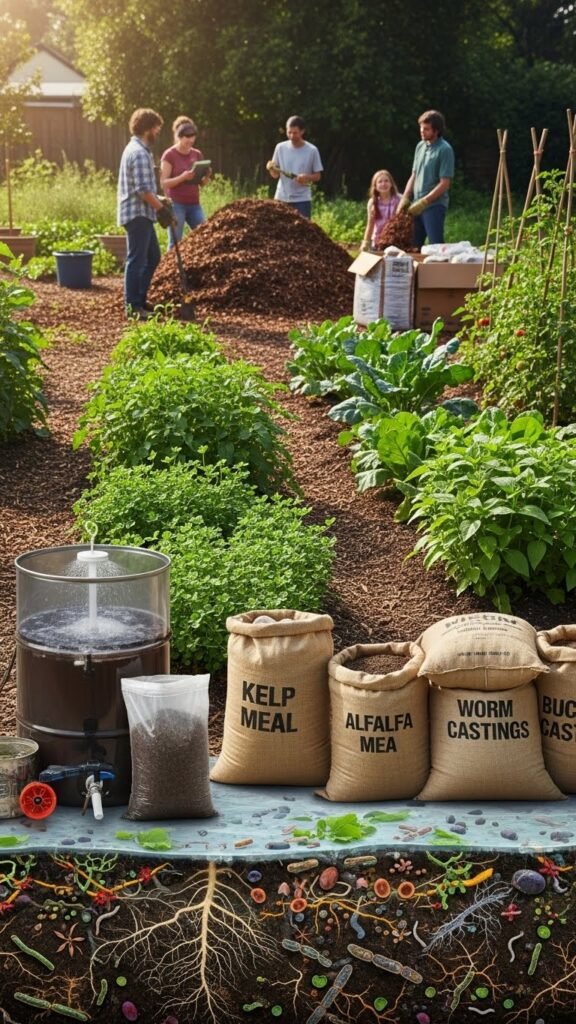
Boost your soil’s health by choosing organic fertilizers and green amendments that feed microbes, improve structure, and lock in nutrients over time.
Use compost tea for quick microbial boosts and apply kelp meal for trace minerals and growth hormones.
Work with neighbors to source bulk amendments, rotate green manures, and monitor plant responses so you stay effective, independent, and ecologically responsible.
Switch to Battery-Powered or Electric Tools
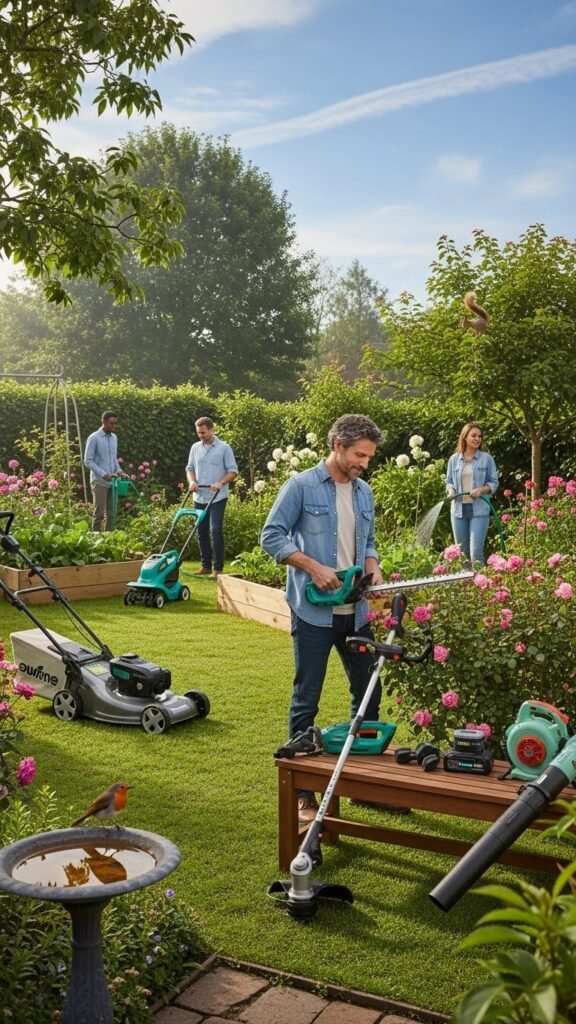
Make the switch to battery-powered or electric tools and you’ll cut noise, fumes, and routine maintenance without sacrificing performance. You’ll enjoy quiet operation that respects neighbors and wildlife, while reduced emissions free you to garden more often.
Learn simple battery maintenance to extend runtime, join tool-share programs to lower costs, and coordinate community charging stations for resilient, independent green living.
Use Hand-Powered Tools Instead of Leaf Blowers
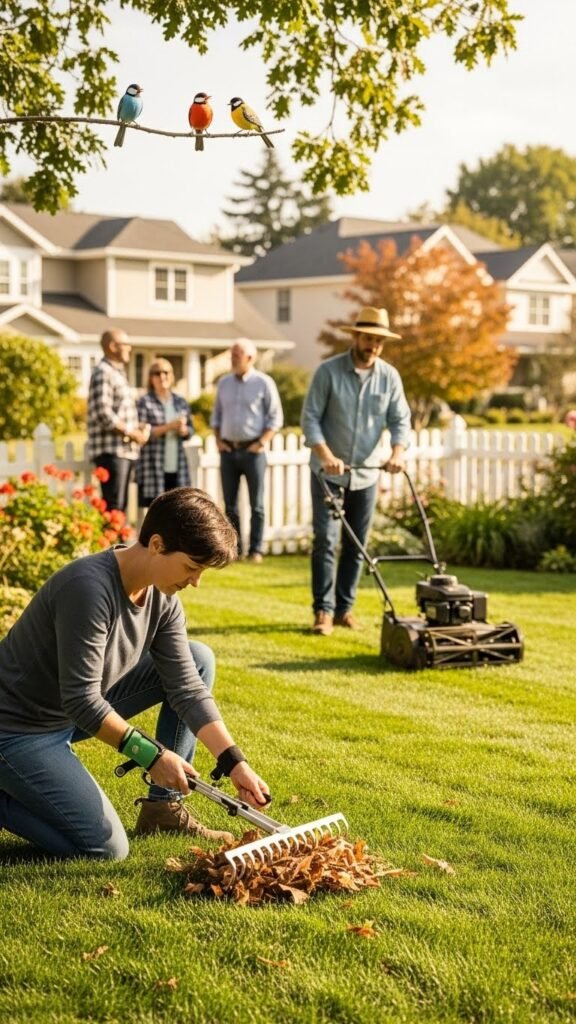
Often you’ll find that a simple rake or broom does the job just as well as a noisy leaf blower, and it does so with far less harm to neighbors and wildlife.
You can choose wrist powered rakes for precision and quiet, and reel mowers for tidy lawns. You’ll reduce noise, emissions, and costs while supporting a calmer, freer neighborhood gardening culture.
Adopt Solar-Powered Garden Equipment
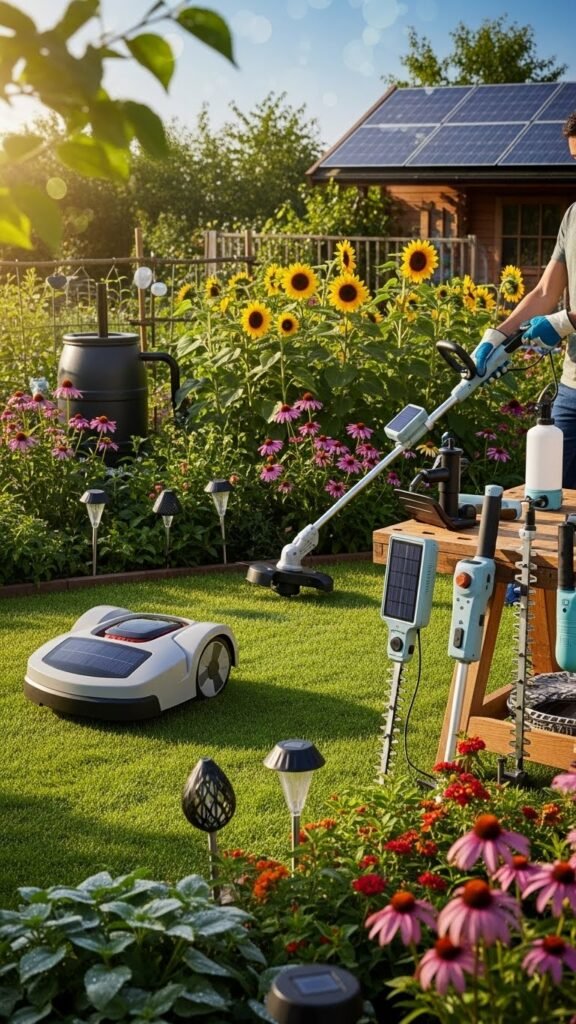
Switching from hand-powered tools to solar-powered garden equipment lets you keep noise and emissions low while adding convenience and longer runtimes.
You’ll choose reliable panels, plan panel maintenance, and evaluate inverter integration for battery storage.
Join neighbors to bulk-buy kits, share skills, and document performance.
That practical, evidence-based approach frees you from fuel dependence while strengthening community resilience and choice.
Create Wildlife-Friendly Habitats
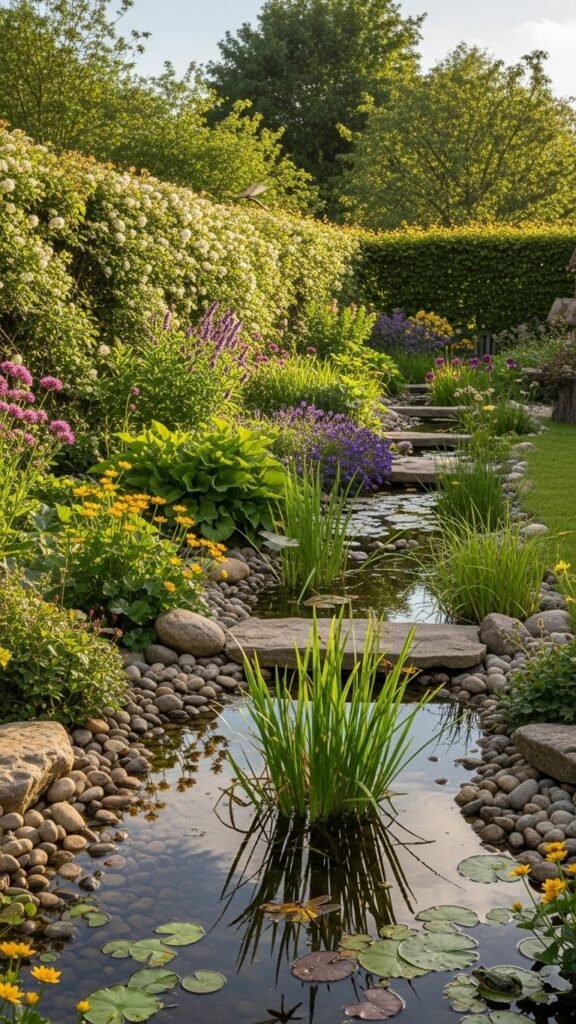
When you design your garden with wildlife in mind, you’ll boost local biodiversity while getting practical benefits like natural pest control and pollination.
Use native hedgerows for food, shelter and corridors; install shallow water, log piles and nocturnal shelters for bats and hedgehogs.
Coordinate with neighbors, monitor species, and choose pesticide-free practices so your green space supports resilience, freedom to enjoy nature, and local ecology.
Replace Hardscaping With Shrubs and Trees
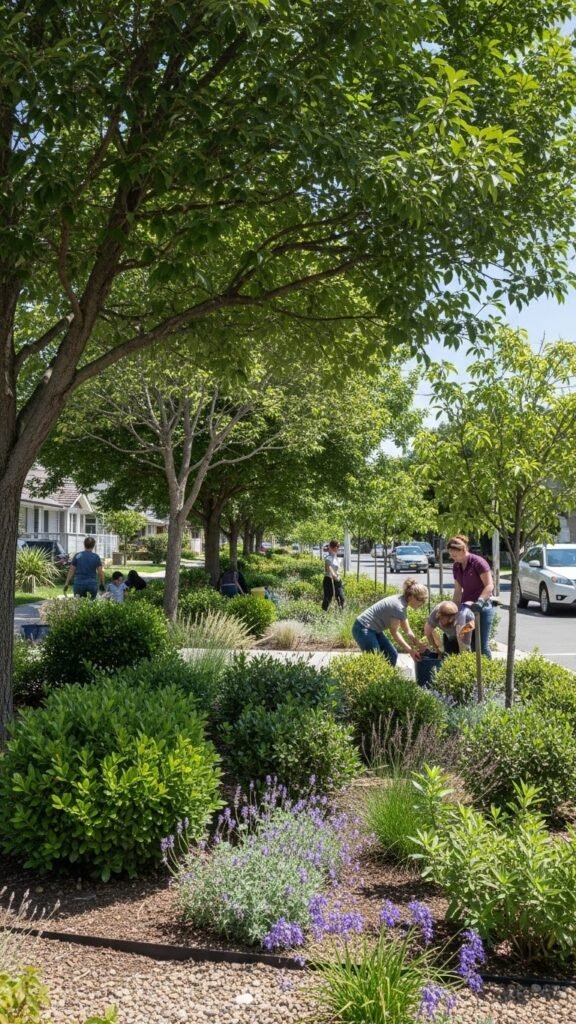
Replace expanses of concrete and gravel with shrubs and trees to cool surfaces, manage stormwater, and create habitat while keeping maintenance simple.
You’ll plant street trees for shade and air quality, and establish buffer hedgerows to filter runoff and support pollinators.
Choose native, drought-tolerant species, group by water needs, and coordinate with neighbors to extend canopy benefits across blocks for resilient, low-maintenance freedom.
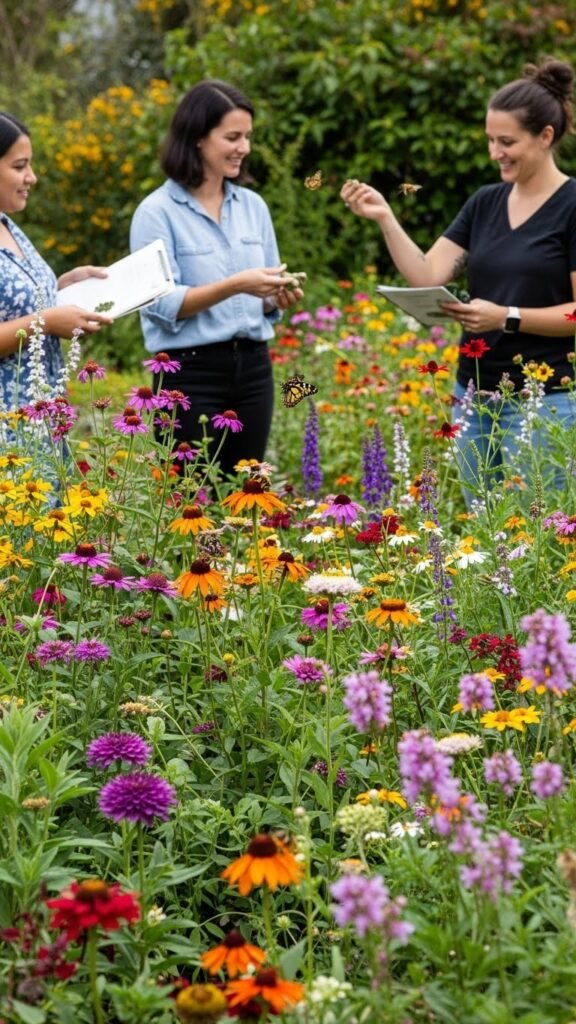
Grow Pollinator-Friendly Flowering Plants
Incorporate Water-Smart Irrigation Techniques
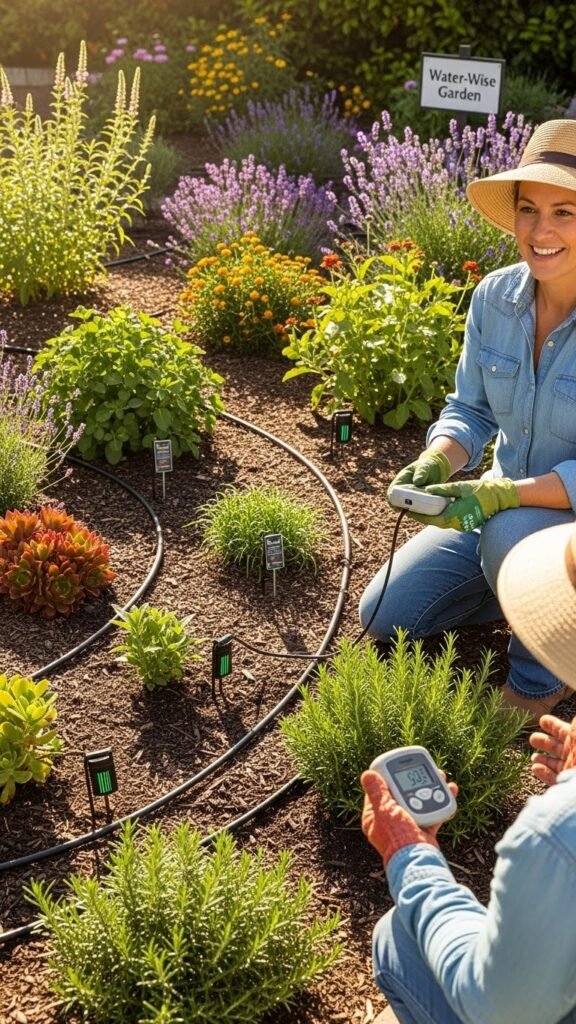
Often, you can cut water use dramatically by matching how and when you irrigate to plants’ actual needs rather than watering on a fixed schedule. Use drip emitters and targeted tubing to send water where roots need it, and install soil moisture sensors to prevent overwatering.
Join neighborhood swaps for timers and parts, conserve water, and gain gardening freedom through smarter, evidence-based choices.
Add Houseplants to Improve Indoor Air Quality
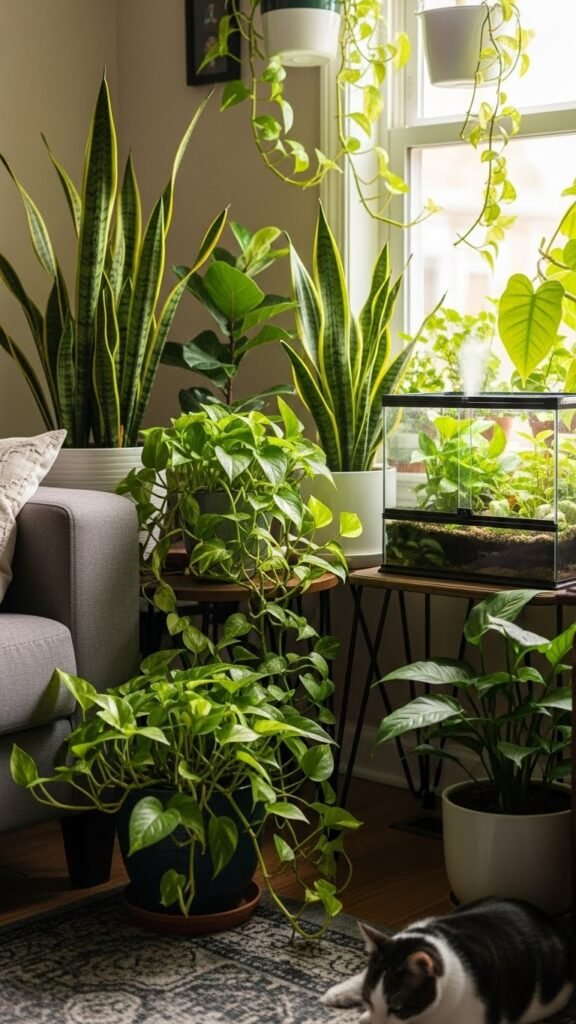
Regularly bringing houseplants into your home can cut indoor pollutants, boost humidity where it’s dry, and create a healthier living space without much fuss.
Choose air purifying species and low light survivors like snake plant or pothos to free up time and space. Opt for pet safe plants if you have animals, and try humidity boosting terrariums to support sensitive greenery and shared wellbeing.