
You can turn ordinary discard into stylish planters that freshen your space and save money. These 21 projects show practical, low-cost ideas—from painted tins and mason-jar succulents to self-watering bottles and pallet vertical gardens—each with simple steps and smart tips on drainage and materials. Pick a project that fits your skill level and tools, and you’ll be surprised how quickly a handful of recycled items becomes a small, thriving garden—ready for more.
Tin Can Herb Garden
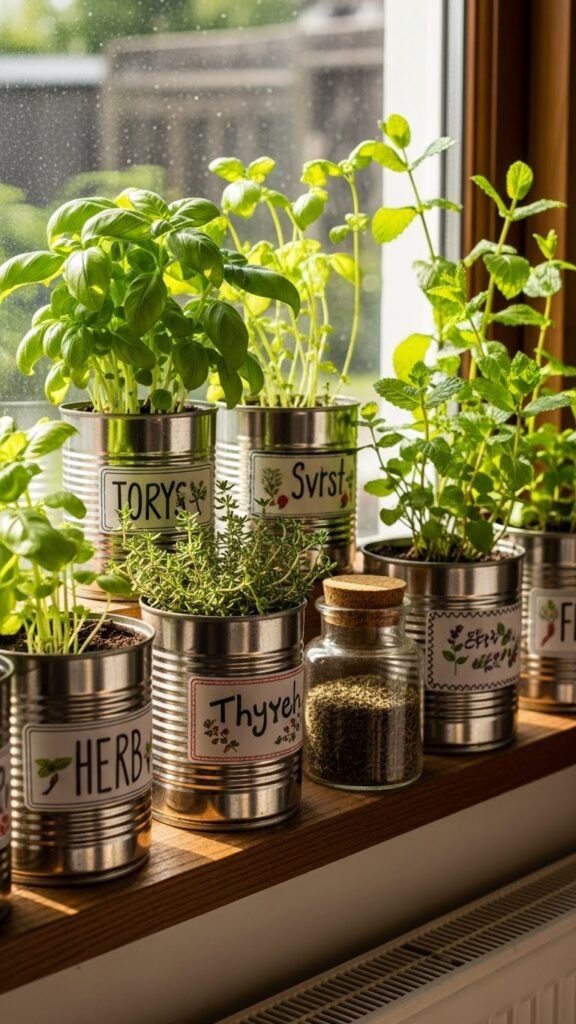
Grab an empty tin can, give it a good wash, and you’re minutes away from a compact herb garden that fits on any windowsill.
You’ll pot basil, thyme, or mint, add drainage, and rotate for light.
When harvesting, think dried herb preservation and use decorative labeling so each jar reflects your style.
It’s portable, frugal, and freeing—grow wherever you choose.
Plastic Bottle Vertical Tower
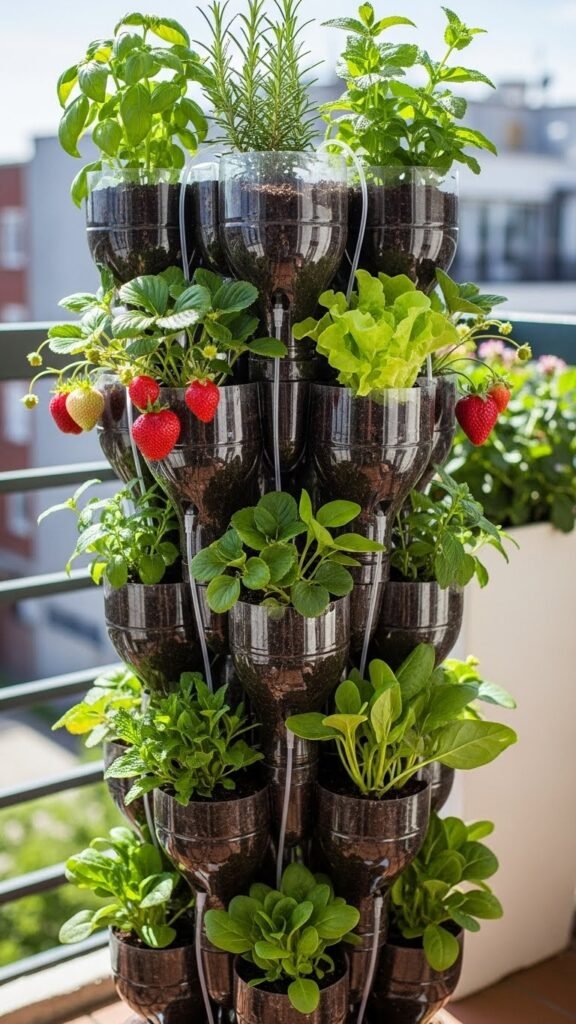
Turn a stack of empty plastic bottles into a space-saving vertical tower that lets you grow herbs, strawberries, or salad greens on a balcony, fence, or small patio.
You’ll cut openings, stack and secure bottles into a bottle trellis, add soil and seedlings, and rig simple vertical irrigation so water trickles down.
It’s freeing, efficient, and low-cost gardening.
Cardboard Seedling Pots
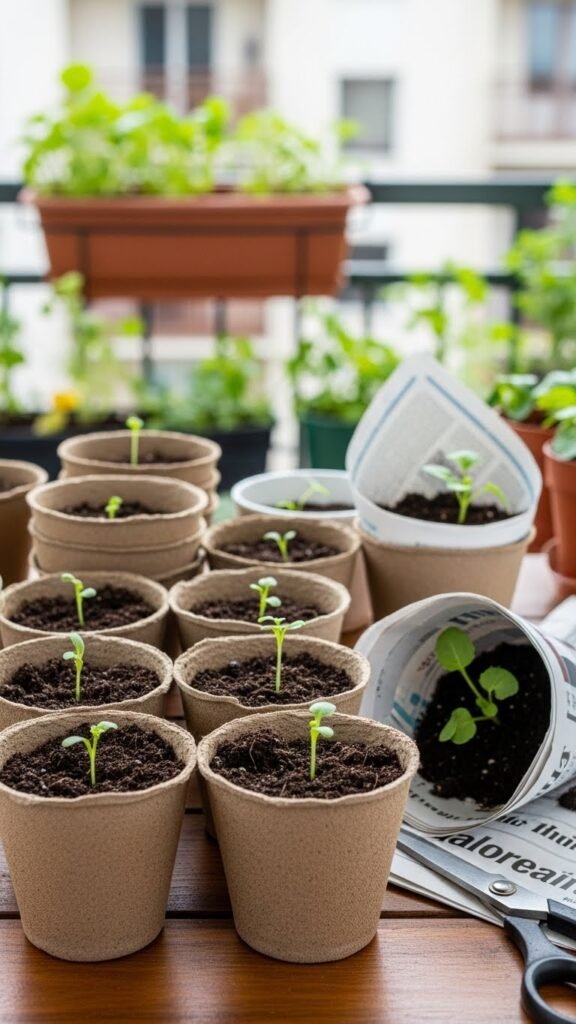
If you liked the bottle tower for saving space, cardboard seedling pots give you another low-cost, low-waste way to start plants before they move to your balcony or garden.
You can craft peat pots or fold newspaper cones to hold soil, seeds, and water. They’ll biodegrade when transplanted, freeing you from plastic and letting your seedlings thrive with simple, resourceful care.
Wooden Crate Raised Planter
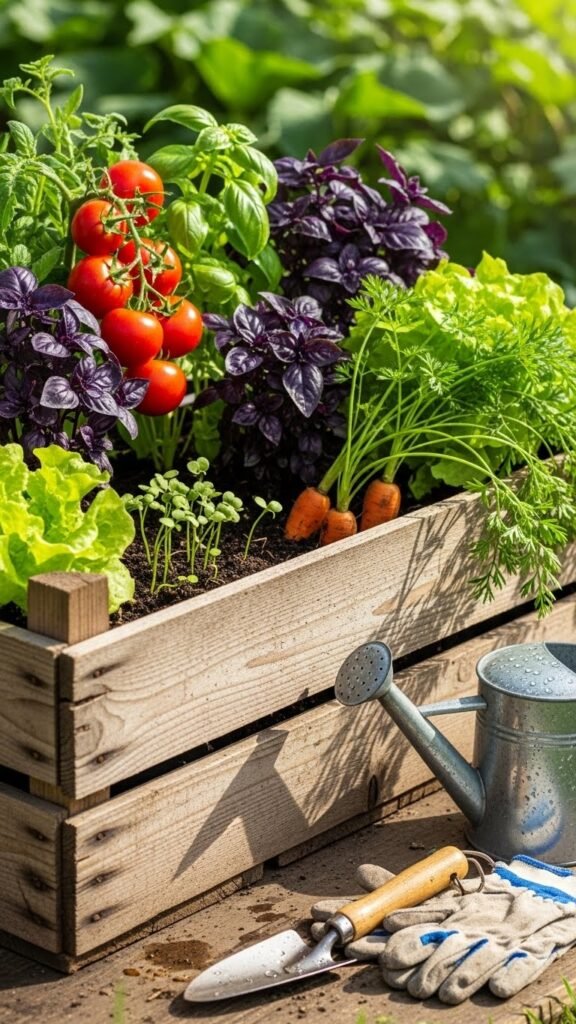
When you repurpose an old wooden crate into a raised planter, you get a sturdy, low-cost bed that lifts vegetables and herbs up to eye level and makes watering and harvesting easier.
You’ll line it, add soil with compost integration, and position for sun. With simple repairs and seasonal rotations, you’re free to grow more, experiment, and harvest on your own terms.
Mason Jar Succulent Display

Create a charming mason jar succulent display by layering pebbles, activated charcoal, and succulent potting mix, then nestling small rosettes or cuttings into each jar for an easy, low-maintenance centerpiece.
You’ll arrange jars for drama, water sparingly, and rotate for even light. Try air layering basics or tiny terrarium creation ideas to expand your freedom-filled green décor without fuss.
Wine Bottle Hanging Planter
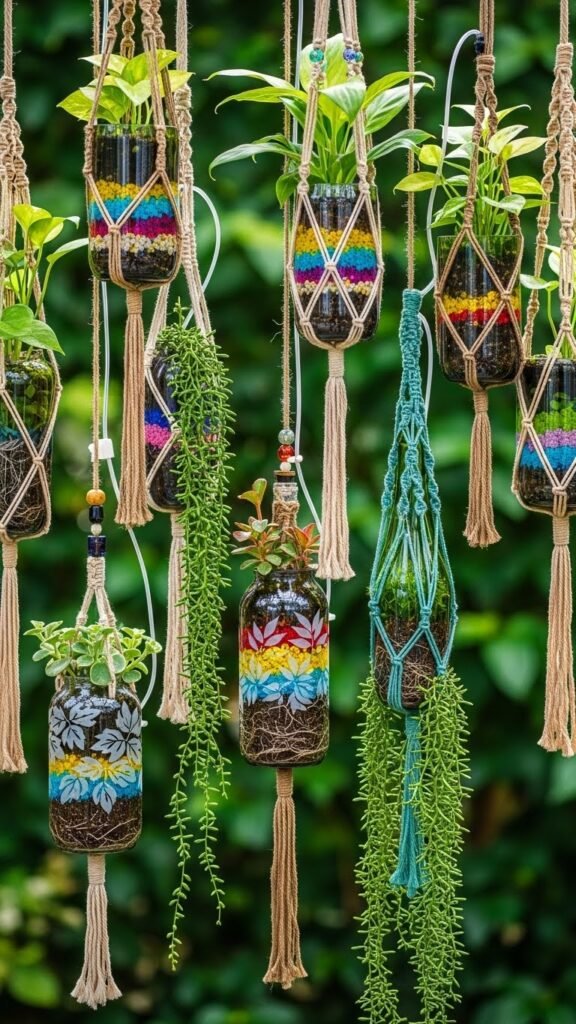
Upcycle empty wine bottles into striking hanging planters by cutting or drilling drainage holes, adding a layer of gravel or pebbles, and filling them with well-draining potting mix suited to your plants.
You can add personality with glass etching, secure bottles with rope or macramé, and integrate a simple drip irrigation tube for consistent moisture.
Hang freely, personalize, and enjoy low-waste greenery.
Upcycled Ice Cream Tub Planter
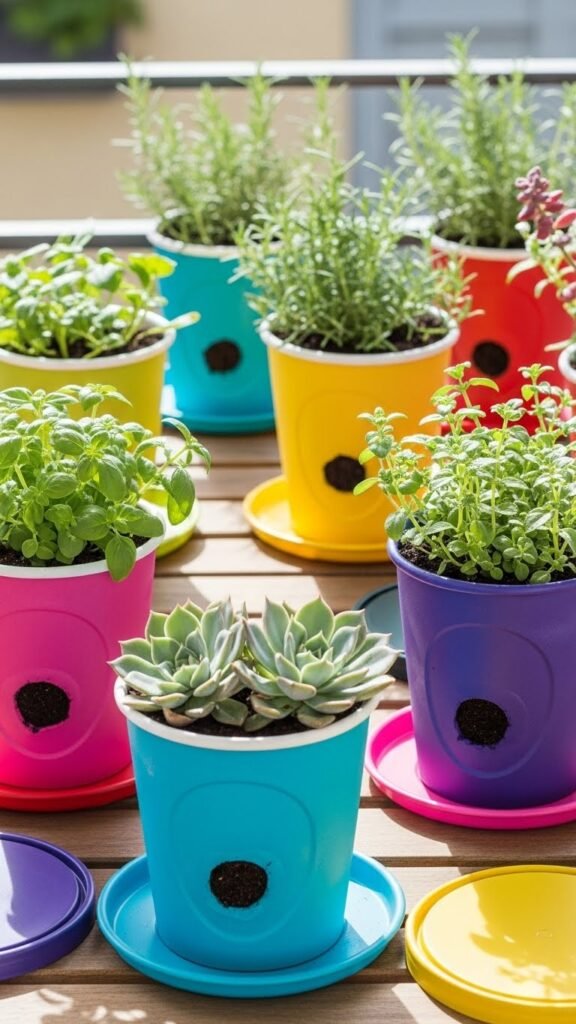
If you liked the charm of hanging wine-bottle planters, you’ll find that empty ice cream tubs make an equally delightful and ultra-simple alternative for tabletop or balcony greenery.
You can paint tubs, repurpose colorful lids as saucers, and punch drainage holes for healthy roots.
Fill with soil, choose carefree herbs or succulents, and arrange freely — it’s low-cost, bold, and instantly liberating.
Pallet Wall Garden
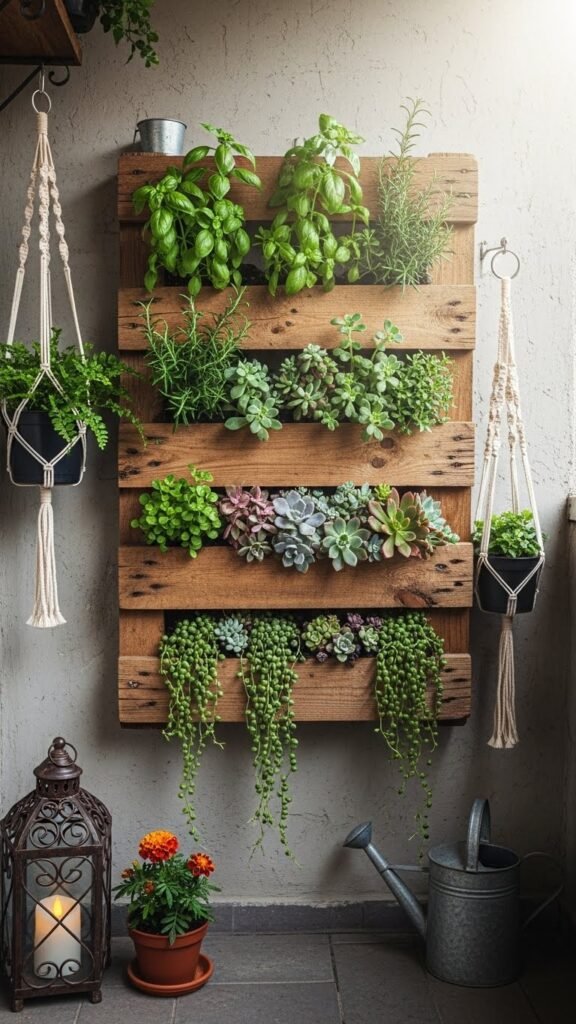
When you mount a reclaimed pallet vertically, it becomes an instant green wall that maximizes small outdoor spaces and adds rustic charm to any balcony or yard.
You’ll secure vertical slatlights or hang modular pocketed liners, then plant herbs, succulents, or trailing vines. It’s low-cost, freeing, and customizable—transforming scrap wood into a living screen that frees your space and sparks creativity.
Glass Terrarium From Recycled Jars
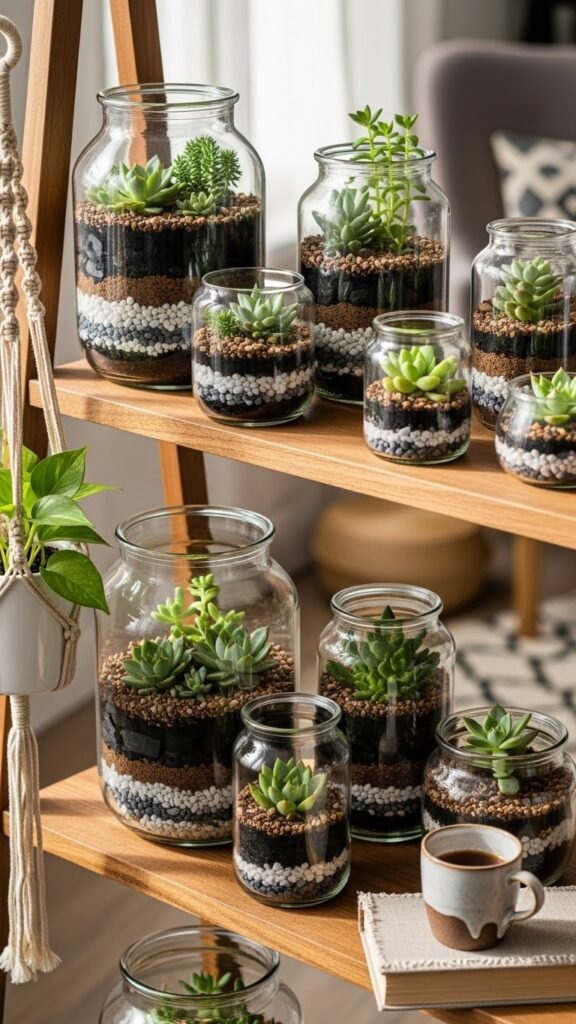
After enjoying a vertical pallet garden, you can bring that same green energy indoors by turning recycled jars into charming glass terrariums.
Choose small succulents, add charcoal, potting mix, and stones for jar drainage, then seal or open lids depending on plant needs. Position jars where terrarium lighting is soft. You’ll create low-maintenance, liberating mini-ecosystems that reflect your style.
Painted Soda Can Mini Planters
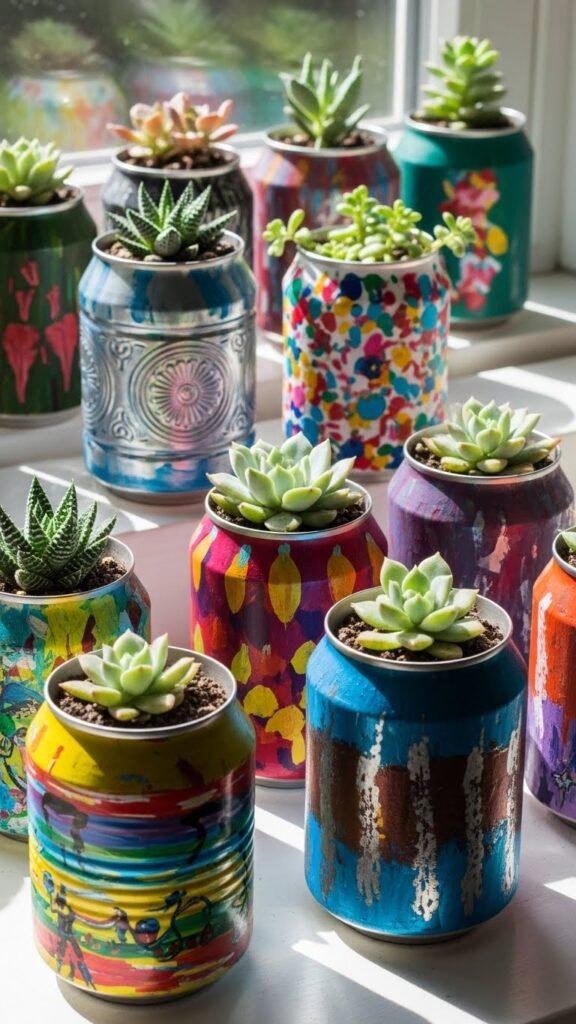
Kickstart this project by cleaning and prepping empty soda cans so you can turn them into colorful, compact planters that brighten any shelf or windowsill. Paint, seal, and try metal embossing for texture, then add drainage and soil. You’ll create tiny, free-spirited accents ideal for succulents or miniature terrariums, letting you customize colors and patterns that reflect your independent style.
Clamshell Produce Seed Trays
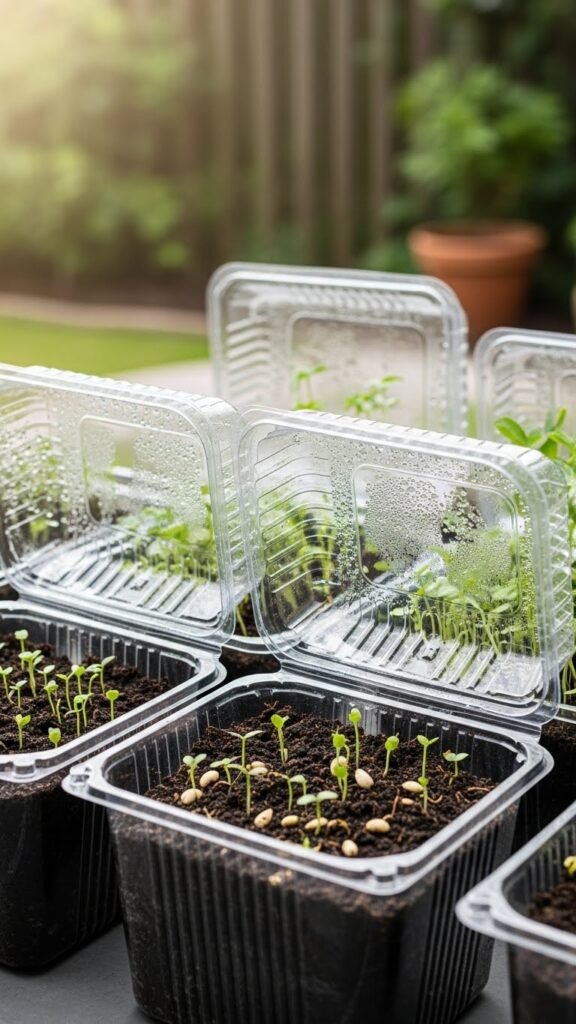
If you enjoyed turning soda cans into tiny planters, you’ll love how clamshell produce containers make tidy seed trays with almost no effort.
You can cut drainage, fill with seed mix, and sow for quick seedling germination. The clear lid offers simple humidity control and light, so you’ll monitor roots and pop trays outside when sturdy—freedom to grow without fuss.
Newspaper Biodegradable Pots
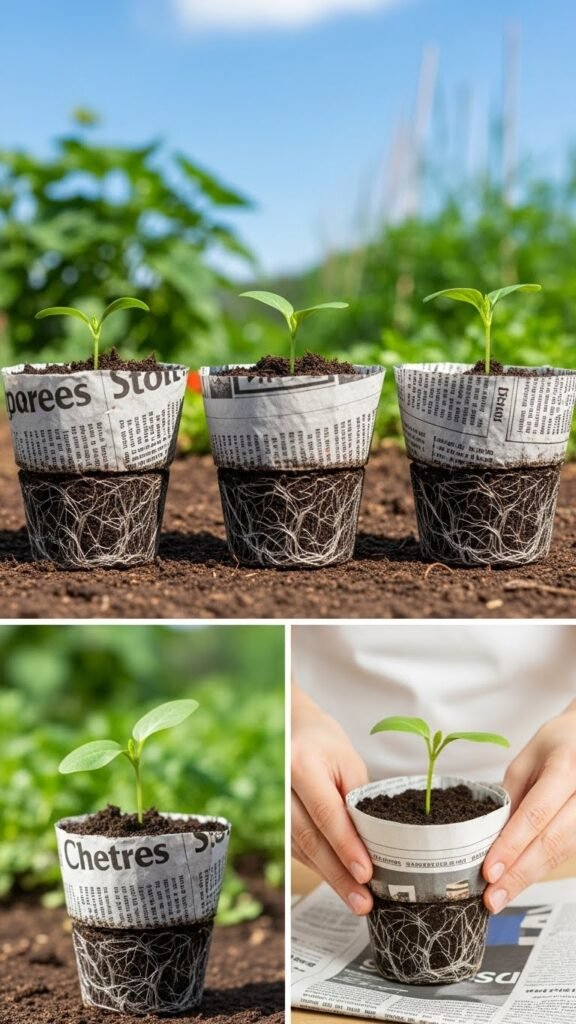
Made from sheets of old news, newspaper pots are a simple, eco-friendly way for you to start seedlings and transplant without plastic waste. You’ll fold seed newspaper into cups, fill with soil, and plant seeds directly.
These biodegradable liners break down in the ground, freeing roots and saving effort. You get low-cost, portable pots that compost away—freedom for your garden and planet.
Recycled Plastic-Melt Flower Pots
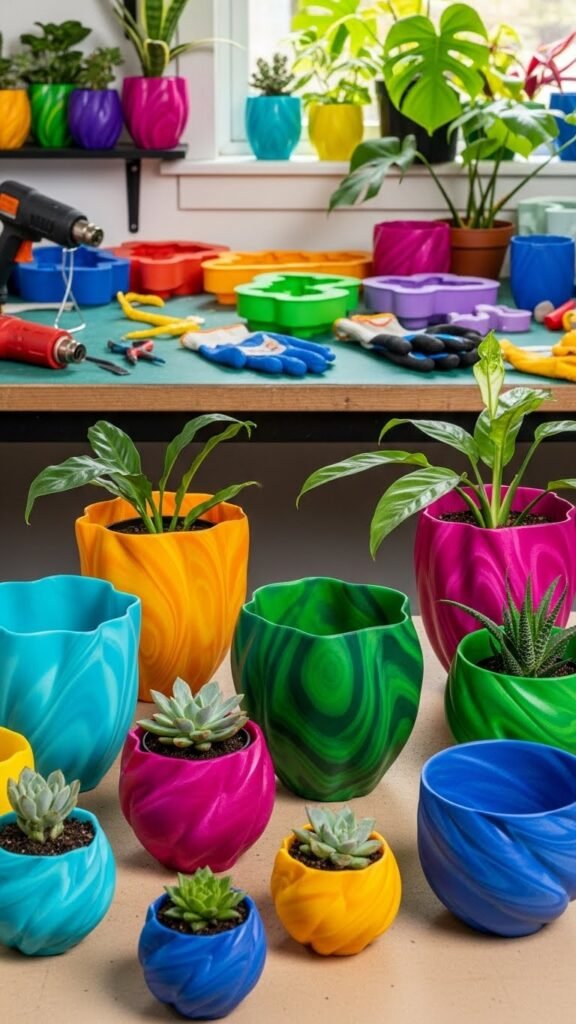
Turn old plastic into sturdy, colorful planters by melting and molding scraps you’d otherwise toss—it’s a practical way to cut waste and make custom pots for your plants.
You’ll experiment with thermal forming and simple molds, mixing bits into upcycled resin for strength.
You’ll free your creativity, control size and color, and build durable, low-cost pots that reflect your independent spirit.
Teacup and Saucer Planters
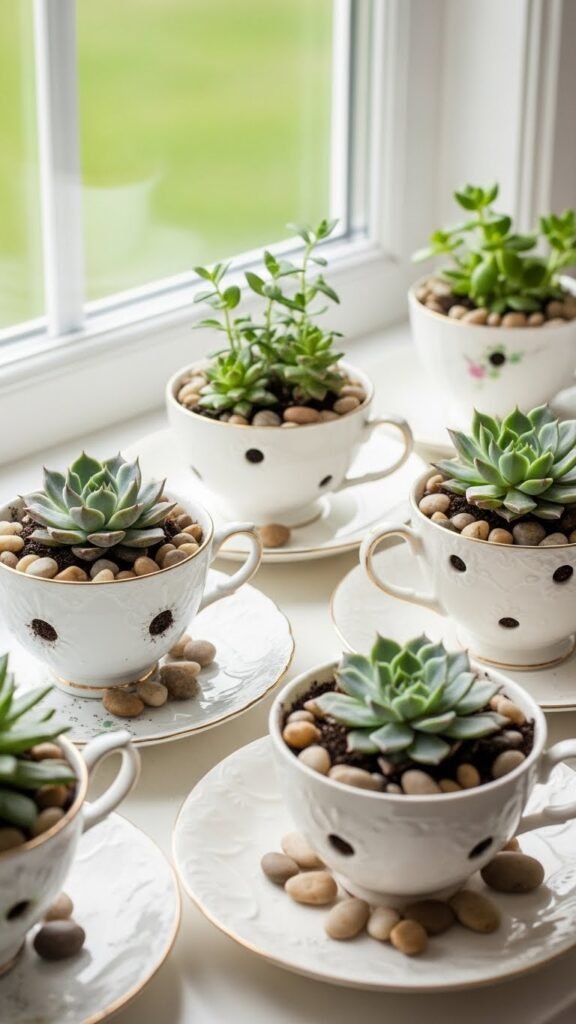
Pick a forgotten teacup and give it new life as a delicate planter that adds charm to any windowsill.
You’ll drill a tiny drainage hole or layer pebbles, fill with soil, and plant succulents or herbs that crave small homes.
Vintage teacups paired with miniature saucers create compact, portable green spots you can move for sunlight and joy.
Metal Tin Hanging Planters With Rope Handles
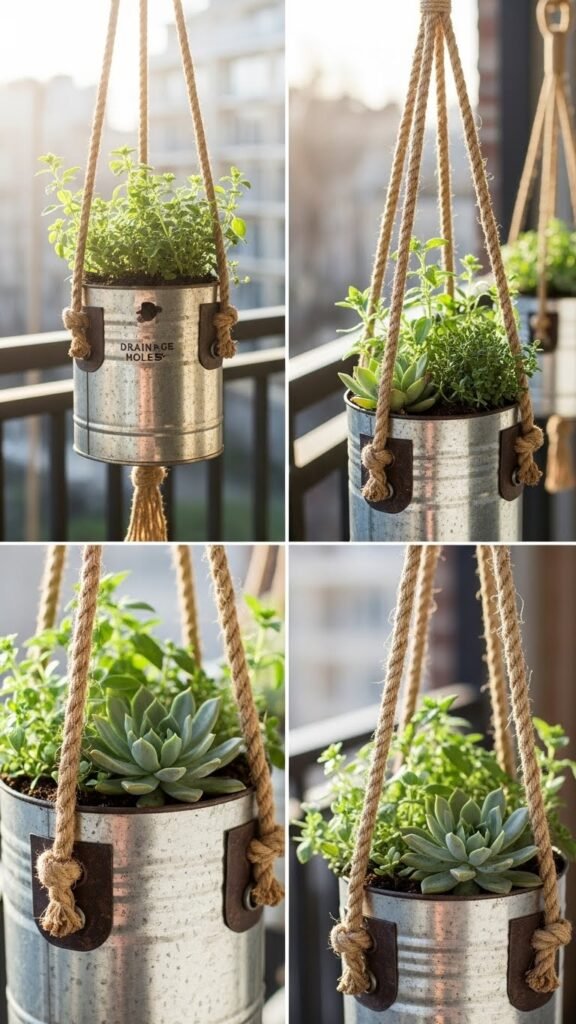
When you repurpose old metal tins into hanging planters with sturdy rope handles, you get a durable, rustic display that’s perfect for balconies, patios, or a sunlit corner indoors.
You’ll drill drainage, attach rustic hardware, and use simple nautical knotting for secure loops.
Hang freely, mix herbs or succulents, and enjoy a compact, mobile garden that reflects your independent, creative spirit.
Ceramic Shard Mosaic Planter
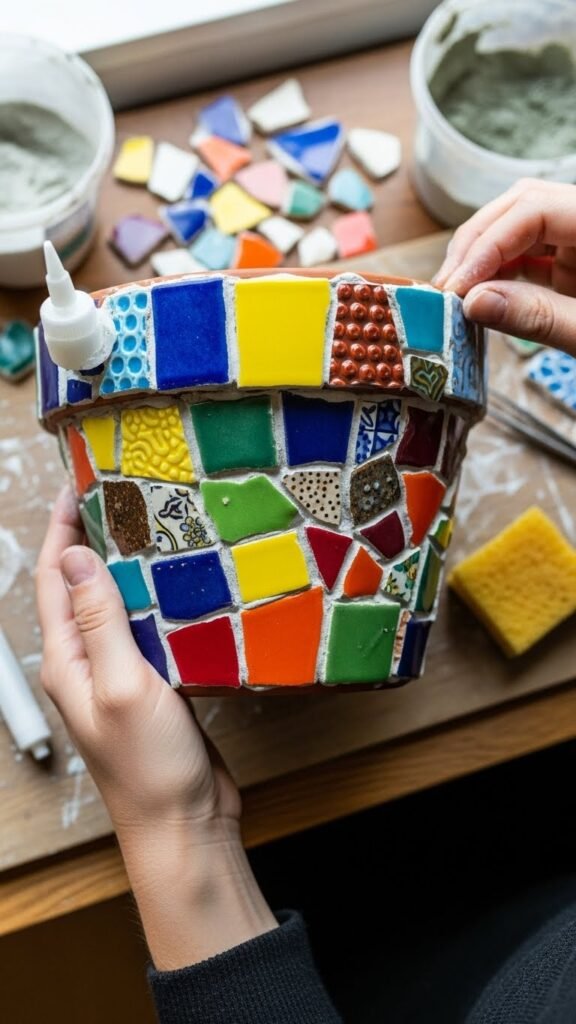
Although it takes a little patience, you’ll love turning broken ceramics into a mosaic planter that adds color, texture, and personality to any space.
You’ll choose shards using color theory to craft mood and contrast, arrange pieces for balance, then secure them with adhesive.
Finish cleanly with thoughtful grout techniques.
The result frees your creativity and gives reclaimed fragments a bold, joyful second life.
Wooden Wine Box Herb Station
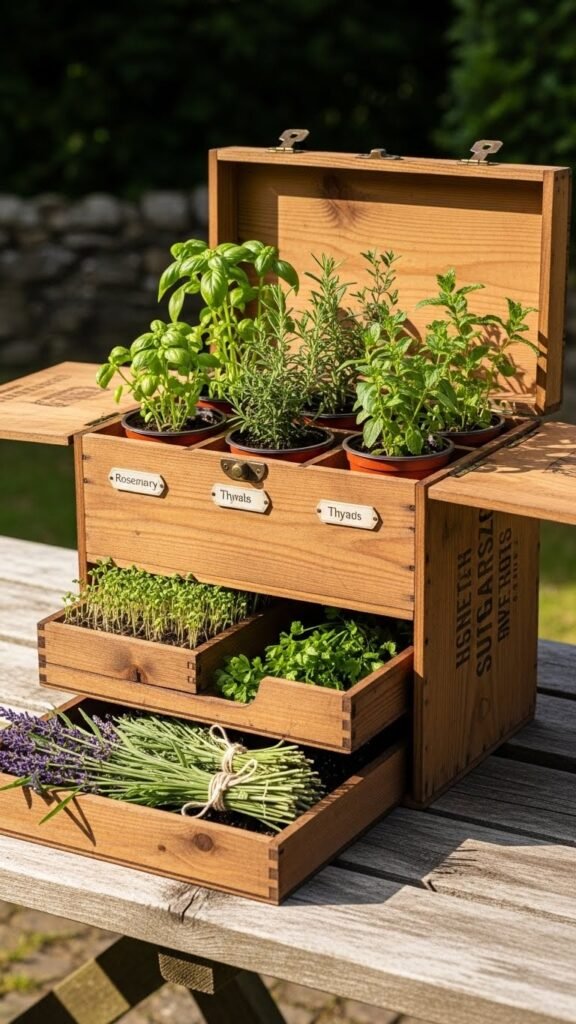
Because old wine crates have sturdy construction and charming character, you can turn them into a compact herb station that’s as functional as it’s decorative.
Flip a crate, add a reclaimed hinge for a folding lid, and line compartments for pots. Use stackable trays to organize seedlings and harvests.
You’ll gain a portable, rustic system that supports freedom, simple maintenance, and joyful harvesting.
Reused Fabric-Lined Basket Planter
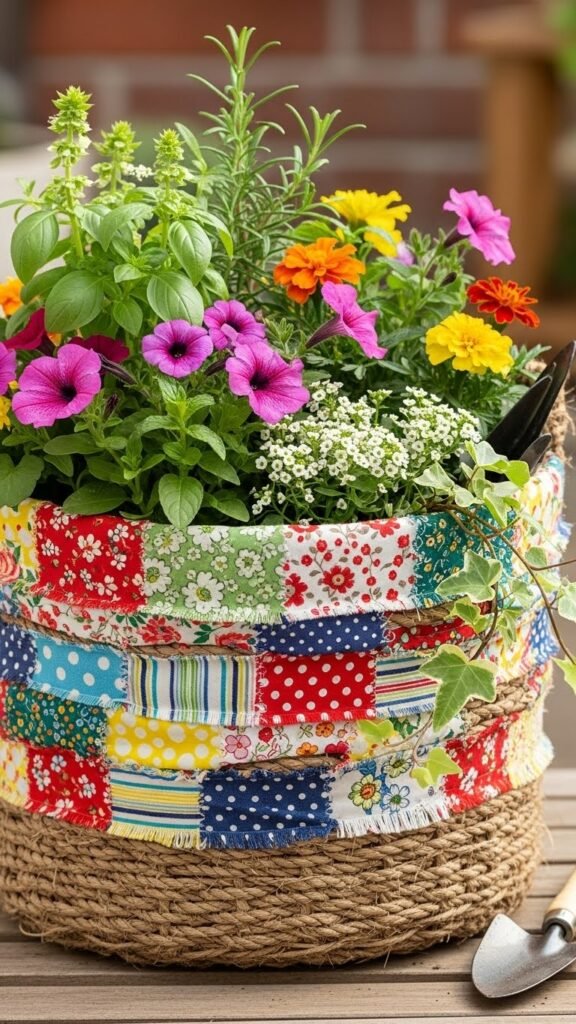
Bring an old basket back to life by lining it with scrap fabric to create a breathable, attractive planter that’s ready for indoor herbs or patio blooms. You’ll cut an upcycled lining to size, secure seams, and add woven reinforcement for durability.
Fill with potting mix and plants, let excess water drain, and enjoy a lightweight, liberated container that reflects your resourceful, free-spirited style.
Concrete Cast Planters From Recycled Molds
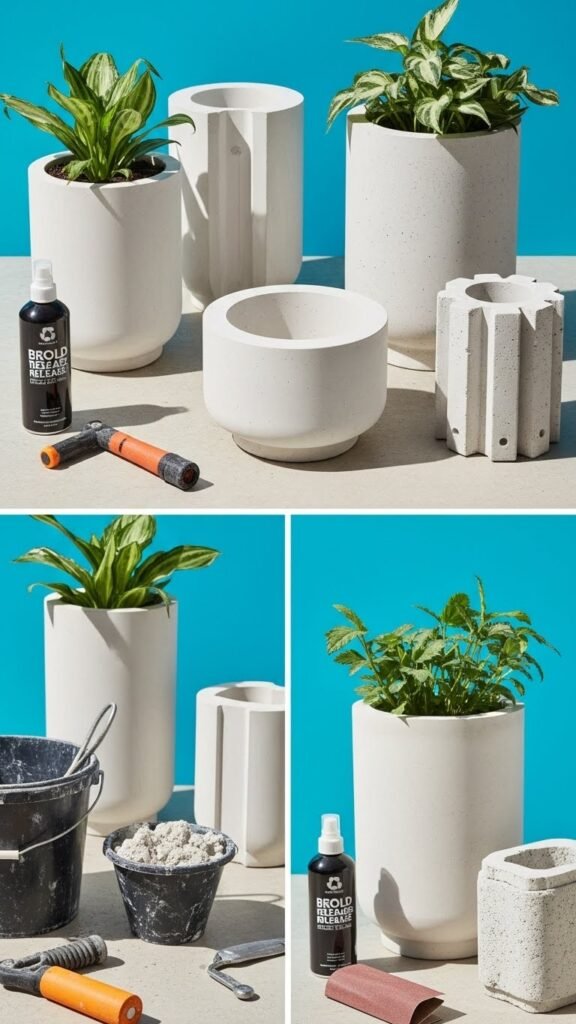
You’ve given that woven basket new life; now try making sturdy, modern planters from recycled molds and leftover concrete for a different kind of upcycle. Coat molds with mold release, mix concrete to a pourable consistency, and tap to remove air bubbles.
Demold after curing, sand edges, and seal. You’ll create minimalist, durable planters that celebrate resourcefulness and creative freedom.