
You can grow a surprising range of fruit in pots, even on a small balcony or patio, if you pick the right varieties and give them focused care. I’ll outline 25 reliable choices, from compact citrus and figs to berries, dwarf stone fruits, and container‑friendly grapes and kiwi, plus practical notes on pot size, soil, drainage, and pruning so you’ll know what matters most—and which ones to try first.
Figs
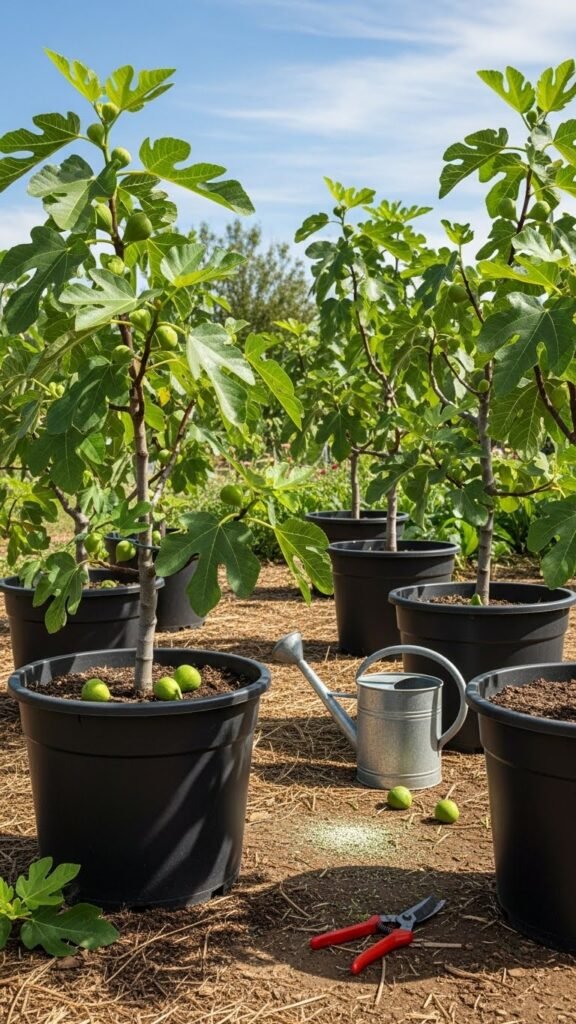
Although figs thrive in warm climates, you can grow them successfully in containers nearly anywhere if you control soil, water, and winter protection.
You’ll value figs’ drought tolerance and autonomy: choose deep pots, practice container pruning, and monitor rootbound management to keep vigor.
Water sparingly, feed lightly, and harvest for late season ripening.
You’ll enjoy reliable fruit with minimal constraints.
Olives

After enjoying figs in pots, olives make a natural next choice for container growing because they share a love of sun, good drainage, and low water once established. You’ll pick compact Mediterranean varieties, use well-draining mix, and train roots to a strong, portable rootball.
Practice disciplined container pruning to control size, improve airflow, and maximize fruiting—letting you garden freely without bulky trees.
Strawberries
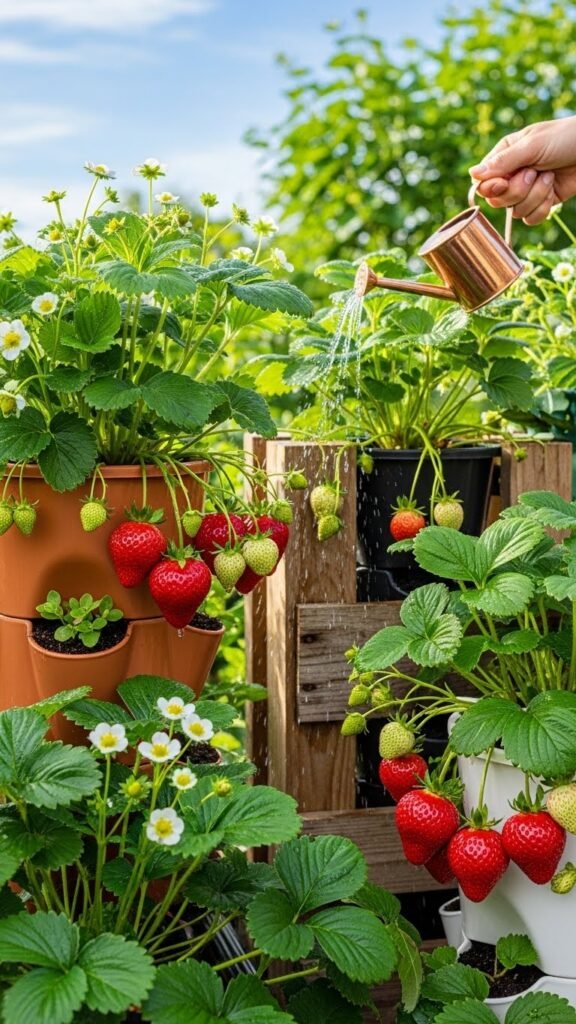
Often overlooked, strawberries are one of the easiest and most rewarding fruits to grow in containers, and they suit patios, balconies, and small yards perfectly.
Choose everbearing varieties for continual harvest, plant in well‑draining mix, and position containers in full sun. Use vertical planters to maximize space and airflow. Water consistently, mulch lightly, and remove runners selectively to focus energy on fruiting.
Citrus (Lemons)
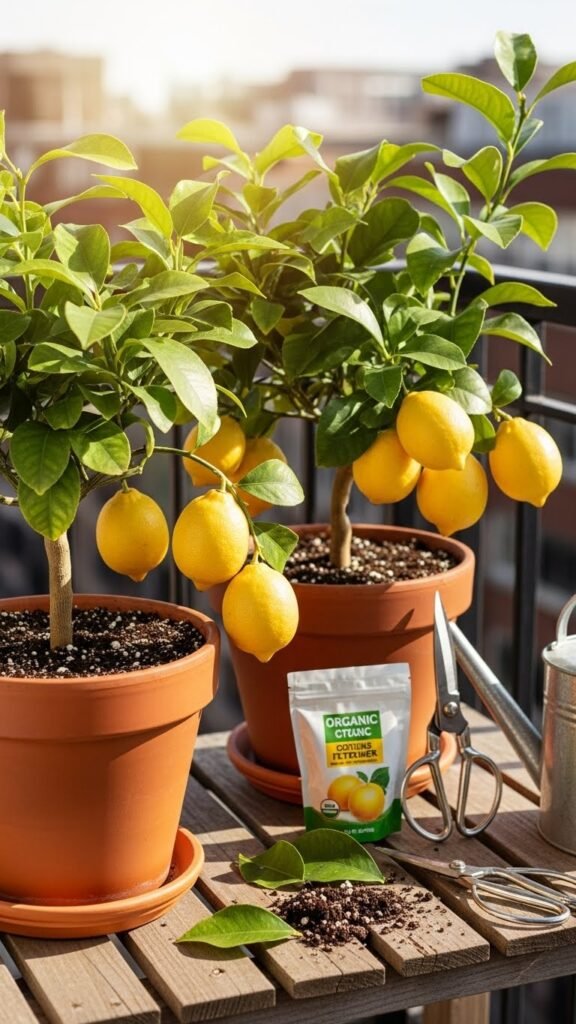
If you loved how strawberries reward small-space gardeners, you’ll find container lemons equally satisfying and more long-lived.
You can grow dwarf lemon varieties in pots, control soil and water, and move trees for sun or shelter.
Follow strict container lemon care: well-draining mix, regular fertilizing, and pruning for shape.
Harvest often to encourage fruiting, and you’ll enjoy fresh lemons with minimal fuss.
Citrus (Limes)
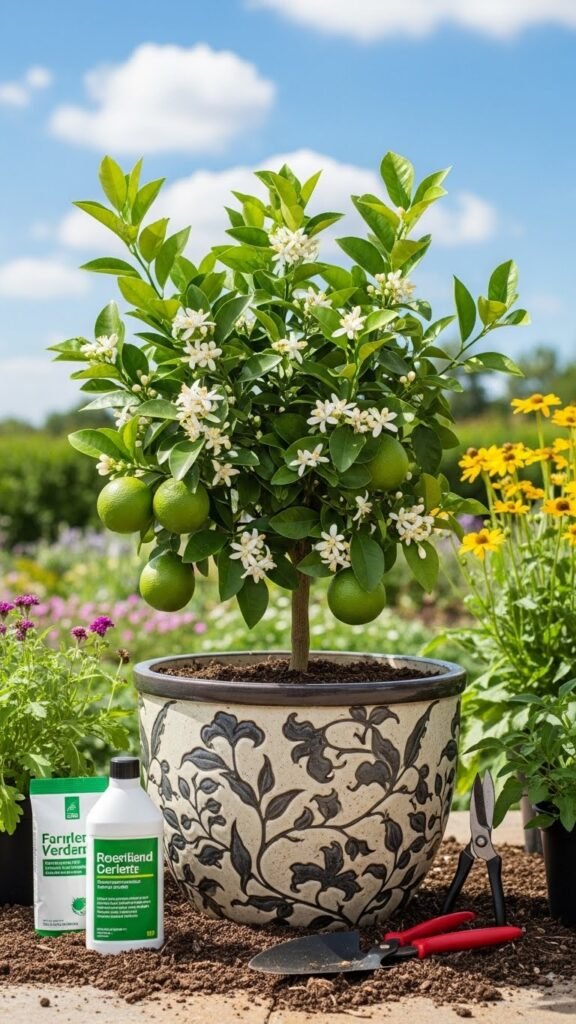
With the right dwarf variety and a sunny spot, you can grow productive lime trees in containers and enjoy year-round fragrant blossoms and tart fruit.
Choose fast-draining mix, feed regularly, water to keep evenly moist, and repot every 2–3 years. Learn potted limecare basics: pruning, frost protection, and fertilizer. Encourage container pollination by placing near pollinator plants or hand-pollinating blossoms for reliable fruit.
Citrus (Oranges)
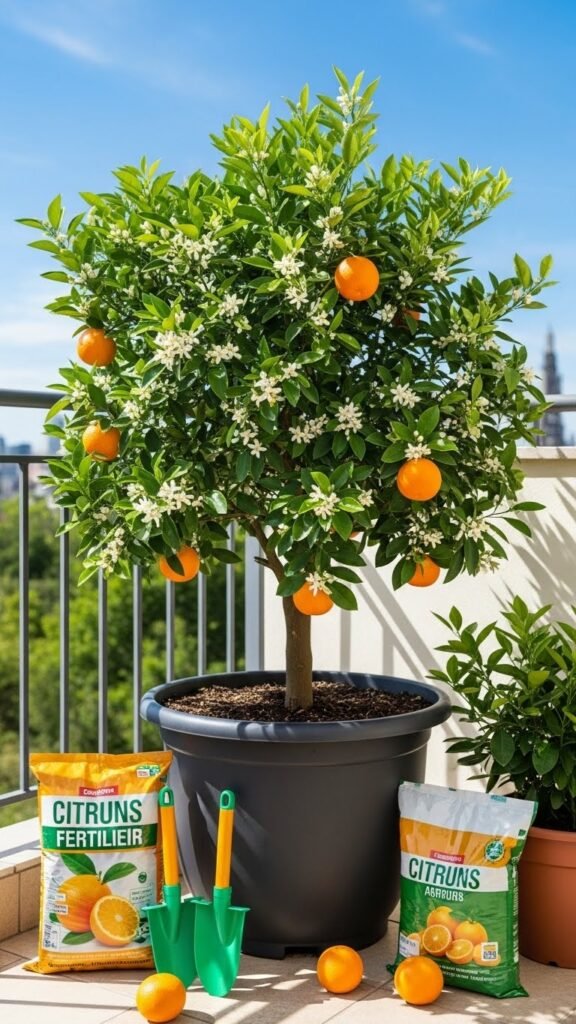
Grow a dwarf orange tree in a large, well‑draining container and you’ll get fragrant blossoms and sweet fruit even on a balcony or patio. Choose a sheltered, sunny spot, feed with citrus fertilizer, and water consistently.
Prune for shape and airflow. You’ll enjoy a compact potted orange and efficient container harvesting when fruits ripen—free, fresh citrus without a yard.
Blueberries
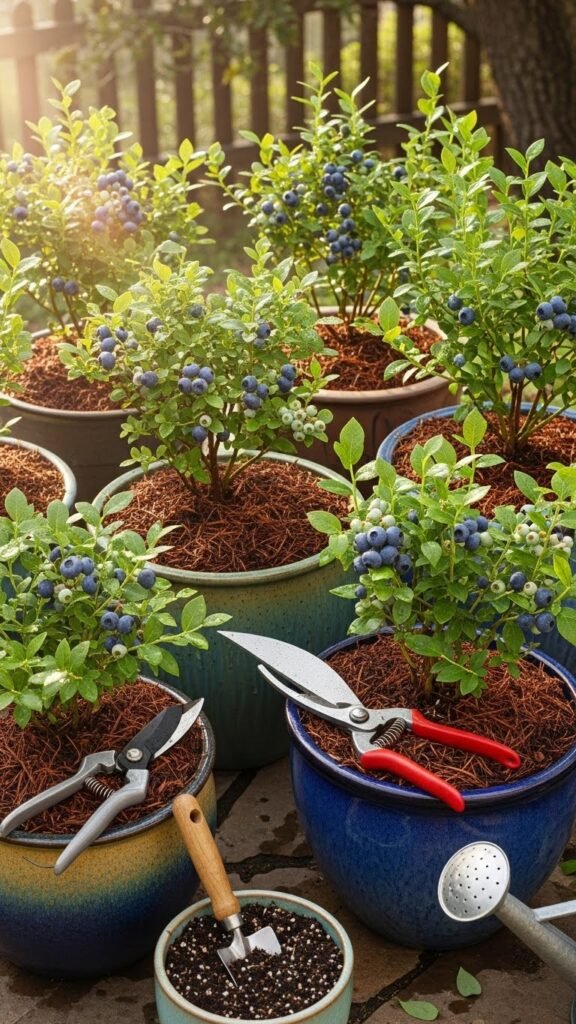
After enjoying the sun‑loving ease of container citrus, turn attention to blueberries for a different set of rewards and needs. You’ll choose acidic potting mix and monitor soil acidity; protect roots with ample peat or pine bark. Pick compact varieties, provide at least two pollination partners for better fruit set, water consistently, and prune lightly each year to keep plants productive and portable.
Apples (Dwarf)

Choose dwarf apple trees when you want full‑sized fruit from a compact, easily managed tree that fits on patios or small yards.
You’ll pick rootstock selection for size control and cold hardiness, use a large container with good drainage, and follow strict pruning timing to maintain shape and fruiting.
Water deeply, fertilize seasonally, and stake for stability so you stay independent and productive.
Apples (Columnar)
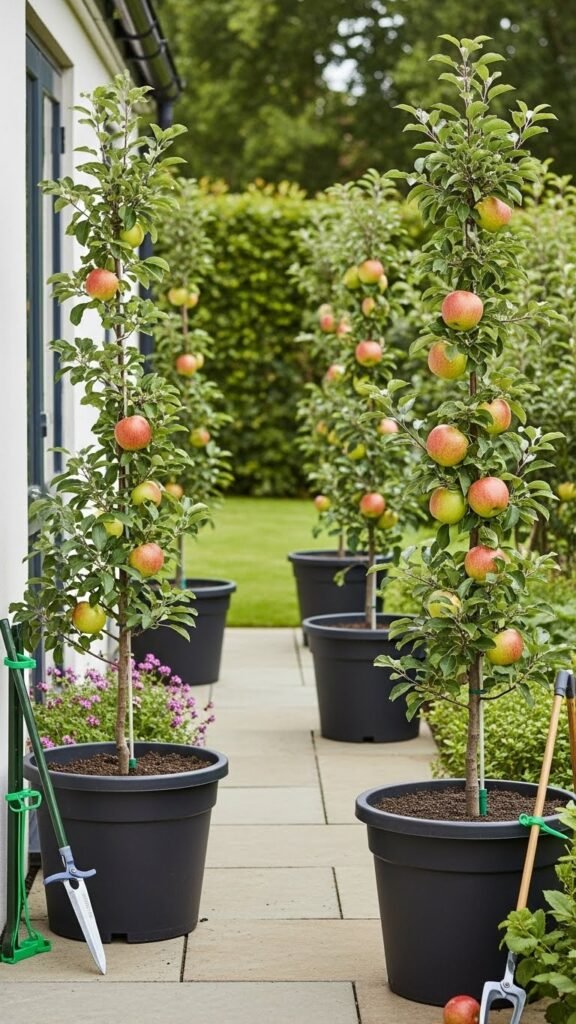
If you liked the compact footprint of dwarf apples but want even less pruning and tighter spacing, columnar apple trees offer a vertical, space-saving habit that’s ideal for containers and narrow patios.
You’ll grow container apples with minimal trimming; choose vigorous cultivars, deep pots, and well-draining soil.
Skip espalier training—columnars demand vertical care, staking, and regular feeding for reliable fruit and freedom.
Raspberries
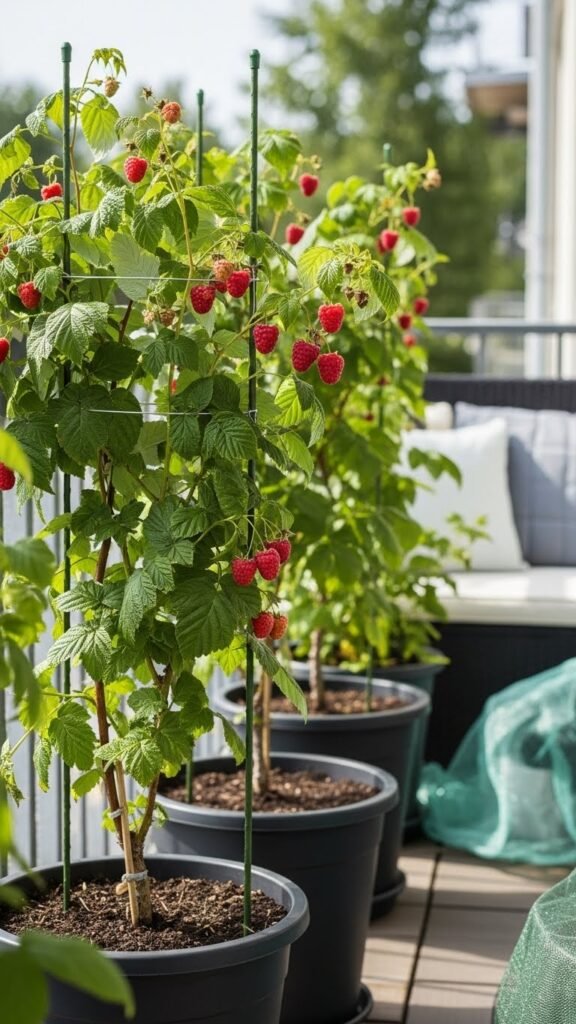
Because raspberries fruit on canes rather than trees, they adapt exceptionally well to containers, letting you grow sweet, productive bushes on patios and balconies where ground space is limited.
Choose deep pots, add well-draining mix and targeted soil amendments, stake canes, and prune yearly. Provide winter protection in cold zones and water consistently so you’ll harvest abundant berries without surrendering your freedom.
Blackberries
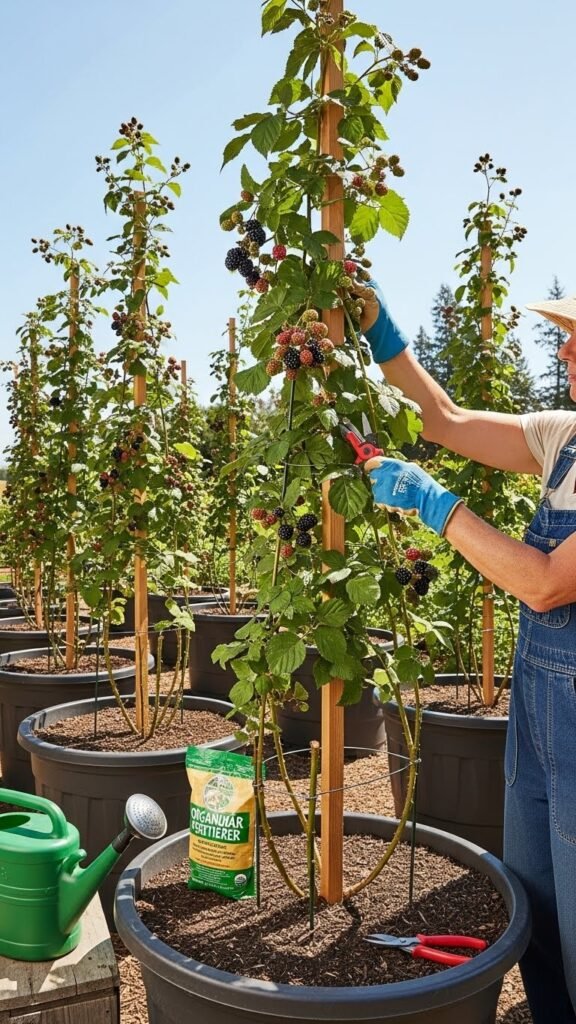
Raspberries teach you how cane fruits thrive in containers, and blackberries follow the same container-friendly logic with a few different habits to watch.
You’ll choose sturdy containers, lean toward thornless varieties, and set clear pruning timing to remove spent primocanes. Install simple trellis options for support, water deeply, feed quarterly, and position plants where they can stretch — freedom to harvest on your schedule.
Grapes
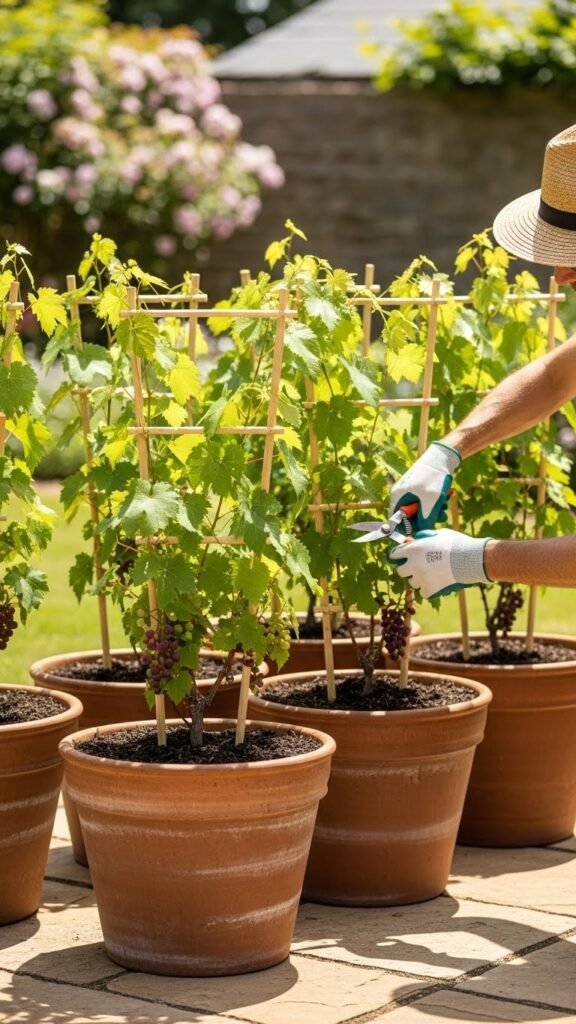
Grapes adapt surprisingly well to containers when you give them deep pots, sturdy support, and regular pruning.
You’ll train vines on a compact container trellis, choose vigorous yet manageable cultivars, and root them in well‑draining soil.
Water deeply but infrequently to build drought tolerance, fertilize sparingly, and prune annually to control size and boost fruiting—perfect for independent gardeners seeking productive, low-footprint vines.
Pomegranates
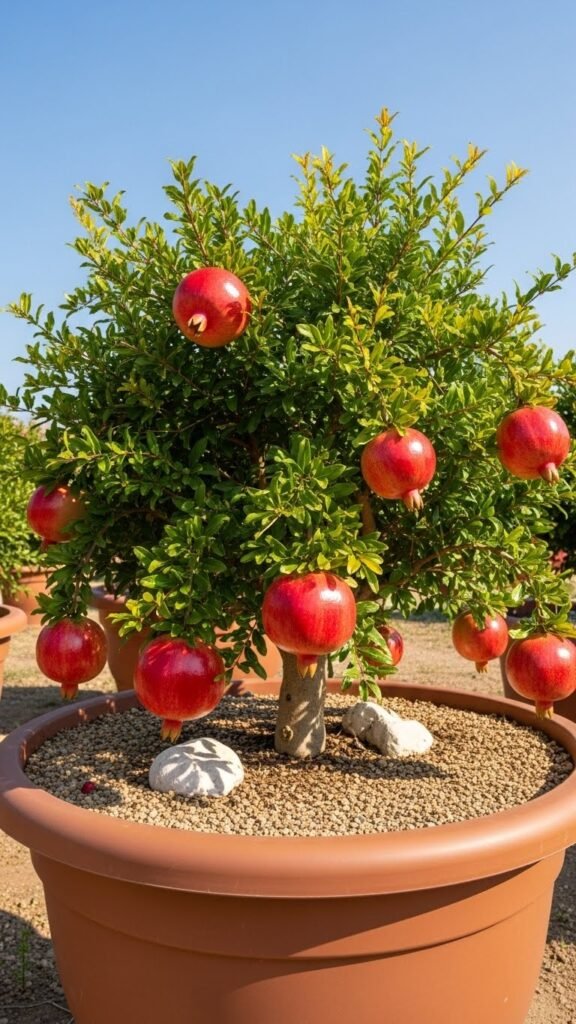
While pomegranates tolerate container life better than many fruit trees, you’ll need a large, wide pot and full sun to get reliable fruiting. Choose a compact cultivar, use fast-draining mix, and monitor soil salinity management to prevent buildup.
Water deeply but infrequently, fertilize lightly, and practice ornamental pruning to shape and remove crossing branches. You’ll enjoy hardy, drought-tolerant fruit with freedom of placement.
Peaches (Dwarf)
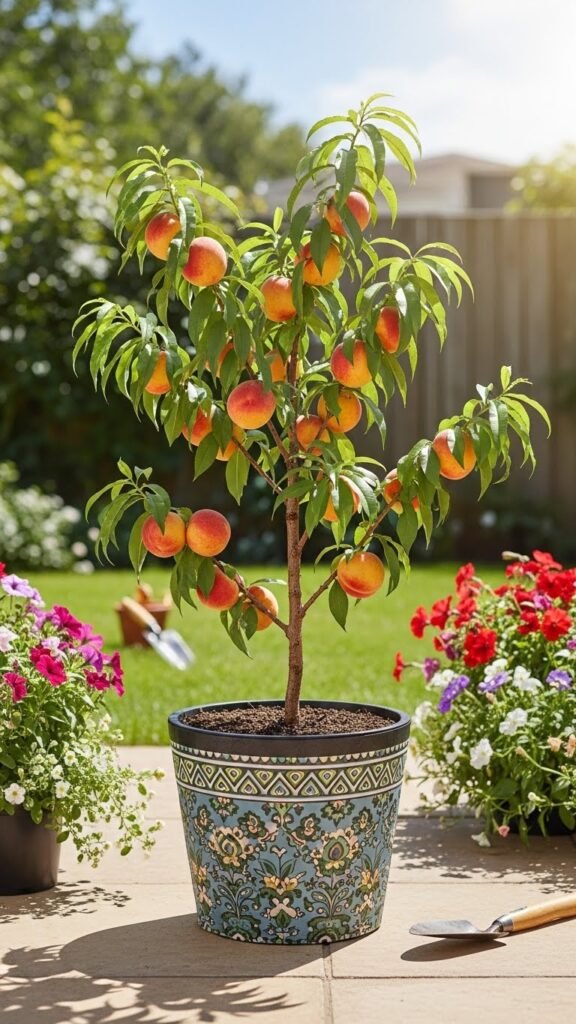
Dwarf peach trees make excellent container fruit for patios and small yards because they give you full-sized flavor without needing a full-sized orchard. You’ll choose well-draining potting soil, monitor pruning timing to control size and fruiting, and consider espalier training for space and sun.
Provide winter protection for roots and trunk; move or insulate pots so you keep freedom to harvest reliably.
Nectarines (Dwarf)

If you loved the compact productivity of a dwarf peach, you’ll find dwarf nectarines just as rewarding and a touch more refined in flavor and skin texture.
You’ll grow a container nectarine easily: choose a large pot, water deliberately, and prevent root binding.
Practice disciplined dwarf pruning and fruit thinning to concentrate energy for fewer, larger, flavorful fruits while keeping the tree manageable.
Apricots (Dwarf)
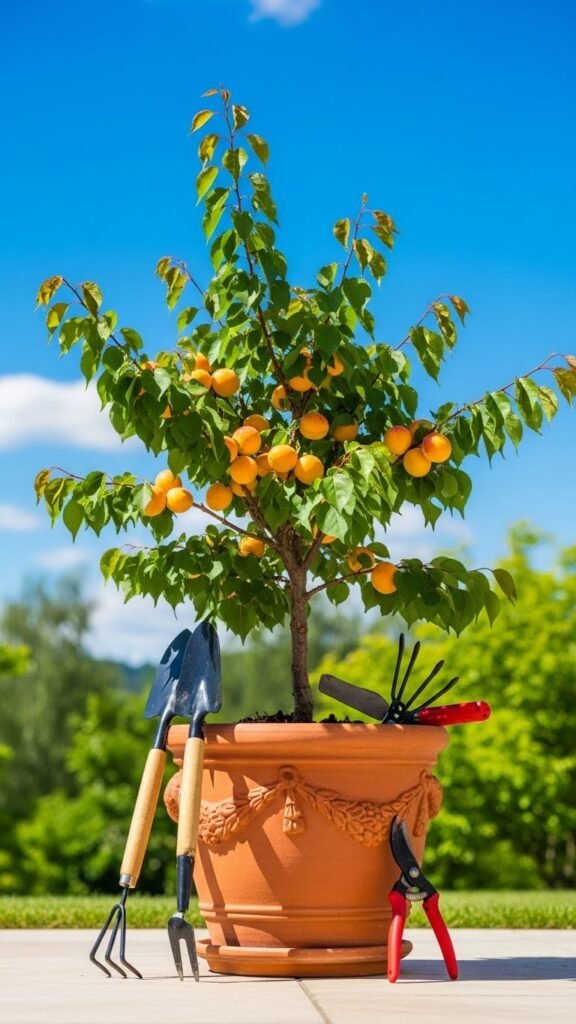
Apricots adapt surprisingly well to containers, giving you sweet, early-season fruit from a compact tree you can manage on a patio. Choose a dwarf apricot on cold-hardy rootstock, use well-draining container soil, and place it in full sun. Prune for shape, learn simple grafting techniques if propagating, and check pollination needs—many varieties are self-fertile, but cross-pollination boosts yield.
Cherries (Dwarf)
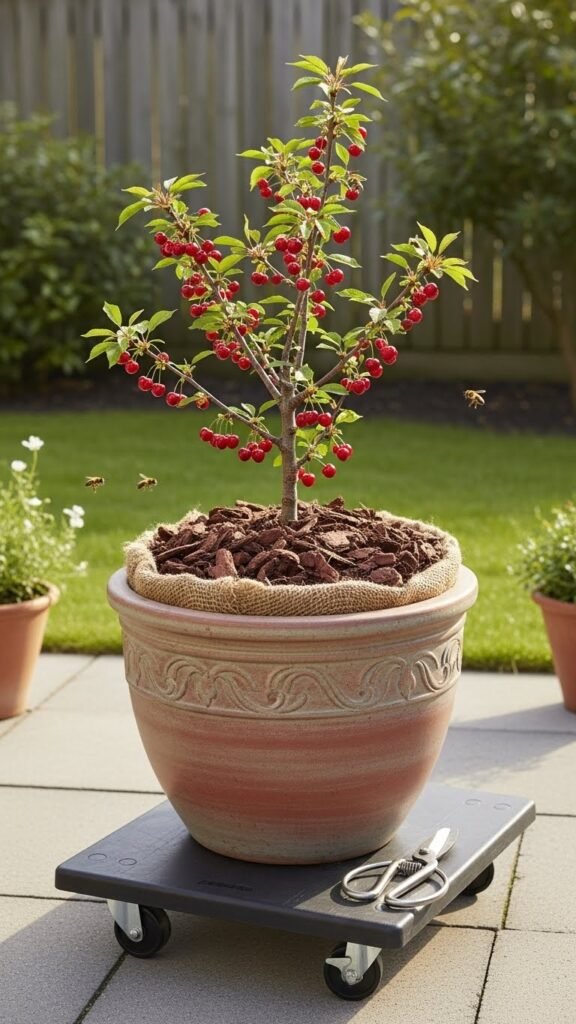
Like their apricot cousins, compact cherry trees perform very well in containers and give you homegrown fruit without a full backyard.
Choose self-fertile or pair compatible varieties to manage Pollination needs; place pots where bees visit.
Use well-draining mix, prune for size, and provide Winter protection with insulation and mulch.
You’ll enjoy fresh cherries while keeping mobility and control over growth.
Mulberries

Grow mulberries in containers to get fast, abundant fruit without a full orchard. Choose a dwarf mulberry in a 15–25 gallon pot, rich free‑draining soil, and full sun.
Water deeply but infrequently, feed balanced fertilizer in spring, and practice container pruning to maintain size and encourage fruiting spurs. You’ll harvest juicy berries while keeping mobility and control over growth.
Pineapples
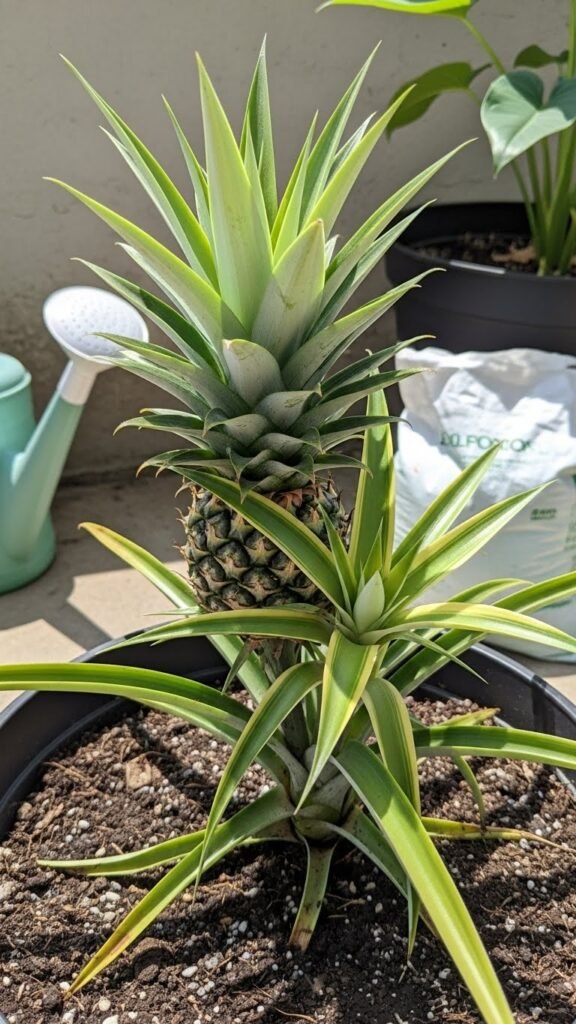
Start a pineapple from a healthy crown or slip in a 5–10 gallon container filled with a well‑draining, slightly acidic mix and place it in bright, indirect to full sun.
You’ll choose variegated cultivars or classic types, grow an attractive edible ornamental, and use air layering propagation or offsets.
Practice companion planting for pests, water sparingly, and fertilize lightly for independence and reward.
Figs (Variegated or Decorative)
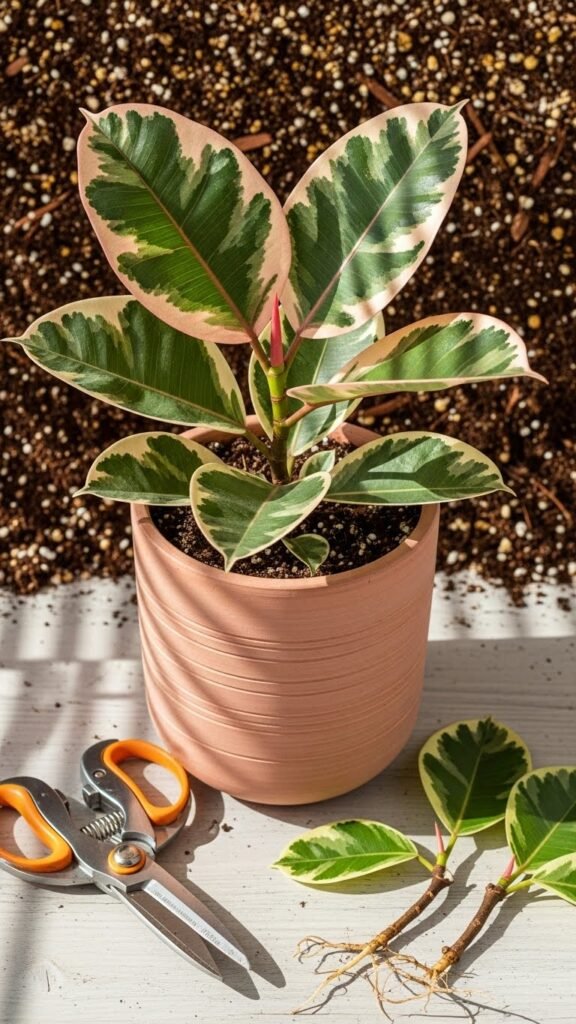
Bring a variegated or decorative fig into a container and you’ll get a striking, low‑maintenance specimen that’s both ornamental and productive.
You’ll choose potting mixes that drain yet hold moisture, respect sunlight requirements of bright, filtered sun, and practice decorative pruning to shape growth.
For variegated propagation, take clean cuttings and root in controlled conditions so you keep leaf pattern and vigor.
Gooseberries
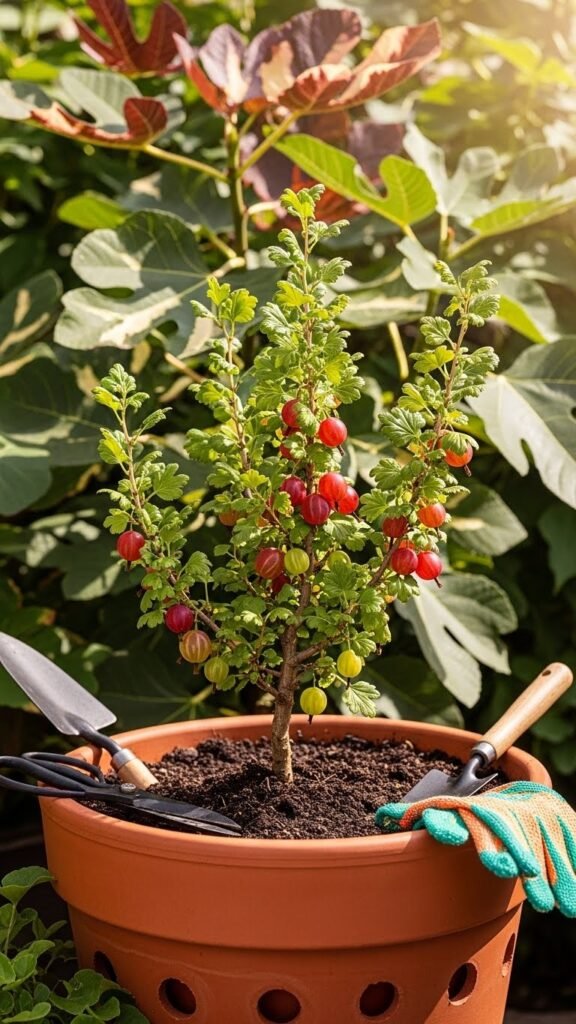
While variegated figs offer bold foliage and easy container culture, you can also get high-value fruit from a compact, well-managed gooseberry bush.
You’ll choose a sturdy container, free-draining mix adjusted for peak soil pH, and position it in sun to part shade.
Pruning timing targets early growth to open the canopy.
You’ll train, fertilize lightly, and harvest confidently.
Currants
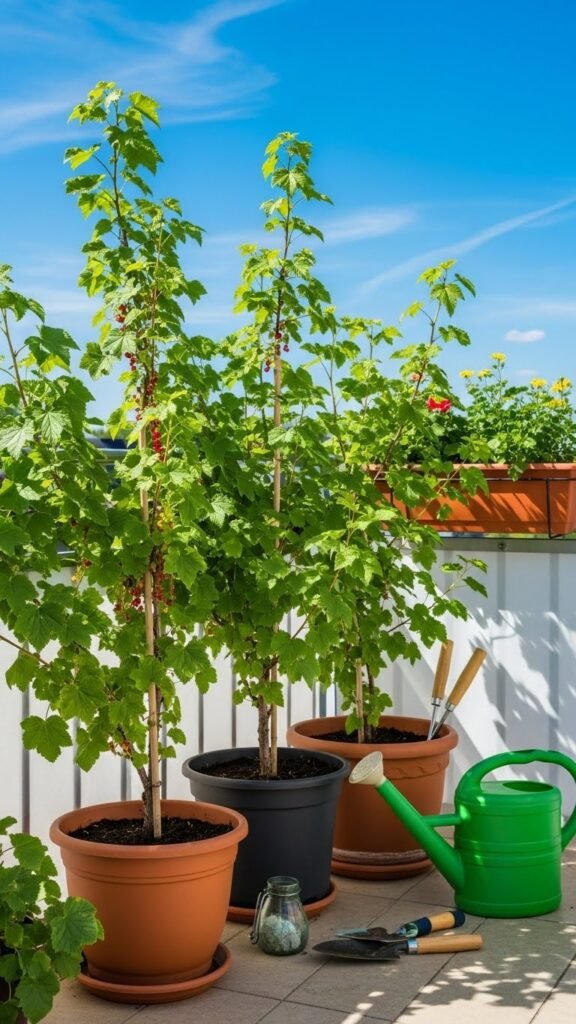
In a sunny spot with some afternoon shade, currants reward container growers with reliable, high-yielding crops and compact, manageable vines.
You’ll choose a well-draining soil mix, a roomy pot, and a cold-hardy variety. Water consistently, feed lightly, and follow strict pruning timing—cut older wood each winter to maintain vigor.
Harvest freely and enjoy tart, versatile berries straight from your balcony.
Kiwi (Hardy)
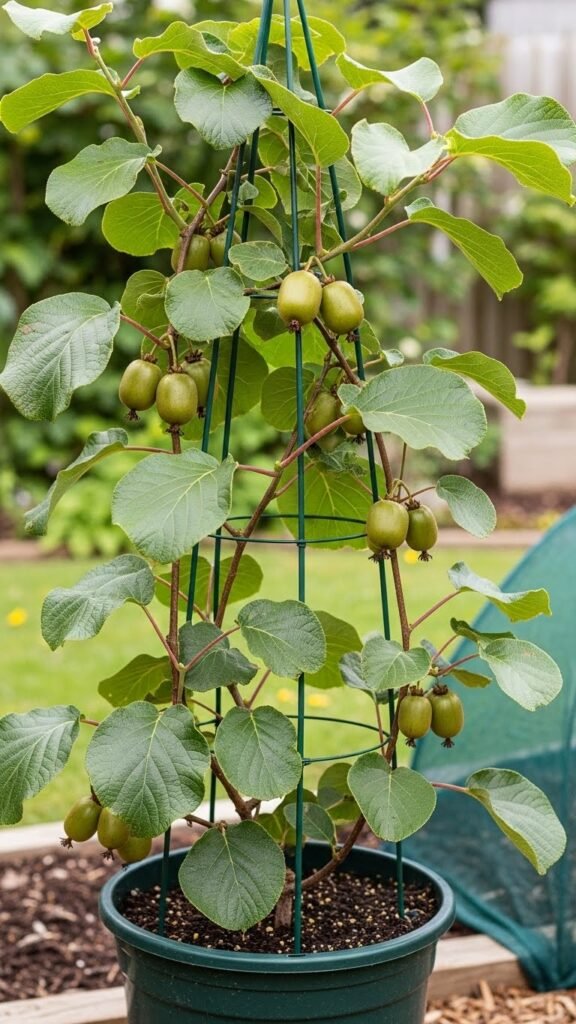
If you enjoyed currants for their compact growth and tart rewards, hardy kiwi offers a different container-friendly fruiting option that still fits small spaces.
You’ll train vines on a sturdy trellis, practice regular trellis pruning to maximize fruiting, and choose a large, well-drained pot.
Provide winter cold protection and full sun; harvest small, smooth-skinned kiwis that reward minimal fuss.
Fig (Compact/Container Cultivar)
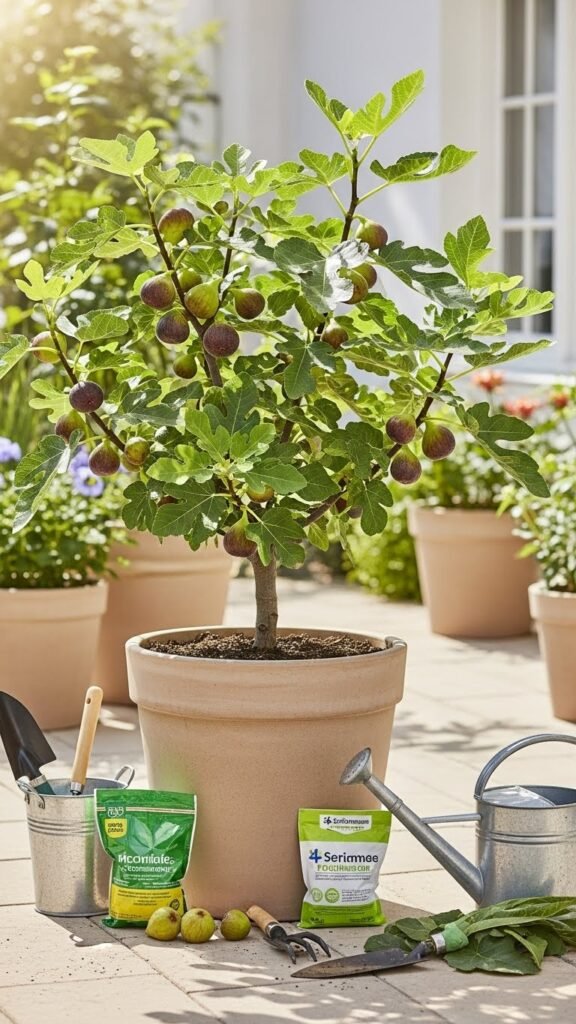
Think small: compact fig varieties let you grow sweet, full-sized fruit in a single large pot without sacrificing flavor or yield. You’ll choose vigorous, container-adapted cultivars, control size with container pruning, and accept intentional root restriction to concentrate energy into fruiting.
Place the pot in full sun, feed regularly, and winter-protect roots; you’ll harvest generous, flavorful figs with minimal space and maximum freedom.