
You can turn a bare wall into a living tapestry fast by picking the right climbers for your site, support and climate. Choose vigorous woody vines like wisteria or trumpet vine for dramatic cover, evergreen clingers such as Boston ivy or creeping fig for year‑round screening, or quick annuals like morning glory for seasonal color. I’ll outline 25 reliable options and the pruning and support tips you’ll need next.
Wisteria (Wisteria Sinensis / W. Floribunda)
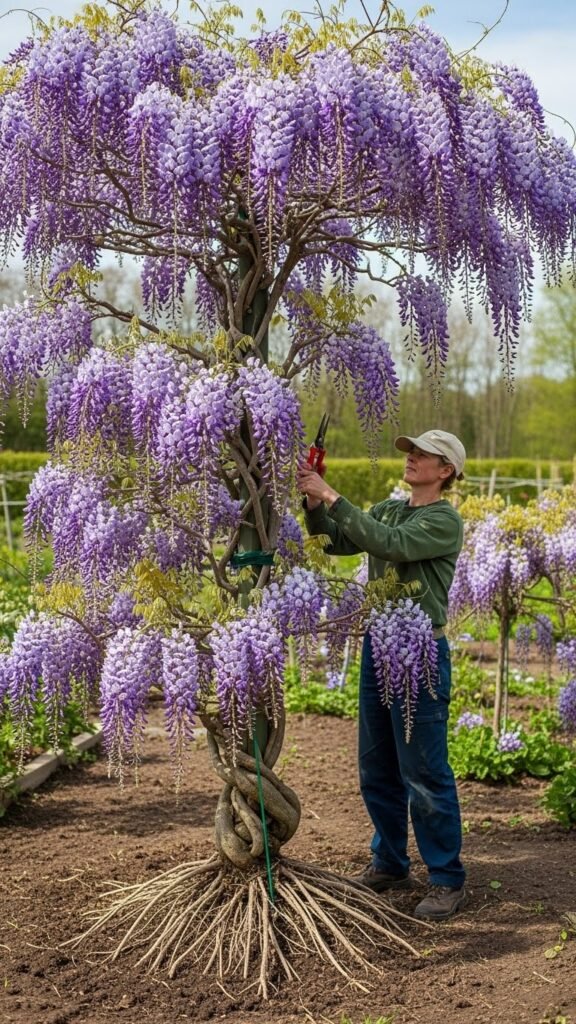
Train wisteria up a sturdy support and you’ll be rewarded with long, fragrant racemes of pea-like flowers in spring.
You’ll prune annually for flowering and control vigor; precise pruning timing after bloom sets next year’s wood.
Plant with a wide root zone to reduce root competition, feed sparingly, and secure strong ties.
Grow it where it can roam without constraining your freedom.
Trumpet Vine (Campsis Radicans)

If you enjoyed the bold blooms of wisteria, consider trumpet vine (Campsis radicans) for a more vigorous, hummingbird‑attracting option. You’ll get fast growth, bright orange trumpets, and strong stems that climb trellises or walls.
Manage spread with regular pruning and root barriers for invasive control. Embrace its wildlife attraction but plan placement so it won’t overrun delicate plantings.
Bougainvillea (Various Cultivars)
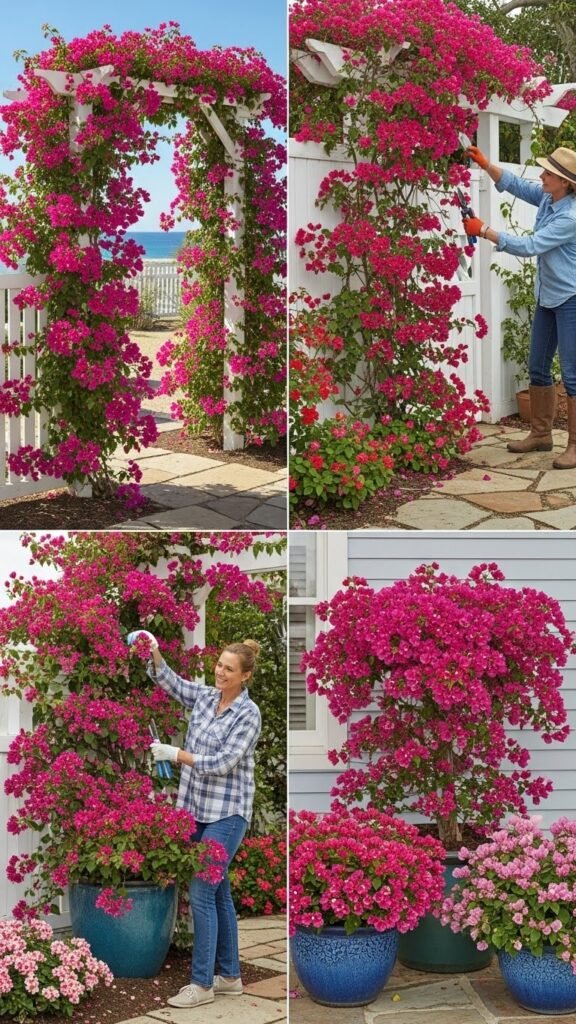
Choose bougainvillea cultivars that match your climate and structural needs: vigorous vine types like ‘Barbara Karst’ or ‘Sundown’ suit fences and arbors, while dwarf or patio varieties such as ‘Rosenka’ work in containers. You’ll train stems on supports, manage pruning timing to shape blooms, and favor well-drained soil. Many cultivars show good salt tolerance, so coastal freedom doesn’t limit choices.
Russian Vine (Fallopia Baldschuanica)
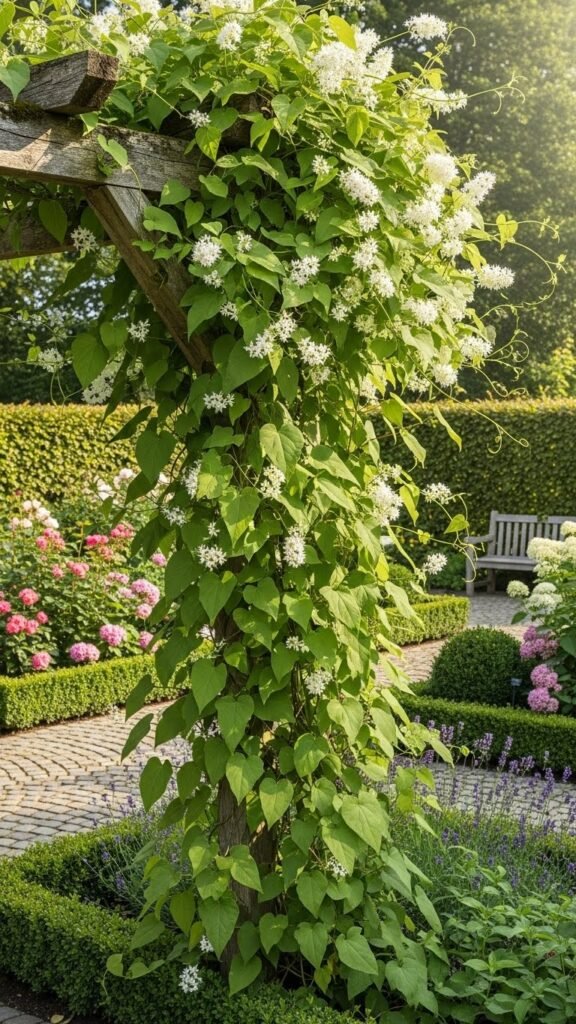
Often overlooked for its rapid growth, Russian vine (Fallopia baldschuanica) gives you a fast, forgiving screen of lacy white flowers and heart-shaped foliage that clambers over fences, trellises, and arbors. You’ll appreciate its low-maintenance vigor, strong pollinator attraction, and tolerance of poor soil, but manage its invasive potential with regular pruning and root barriers to keep freedom without takeover.
Morning Glory (Ipomoea Spp.)
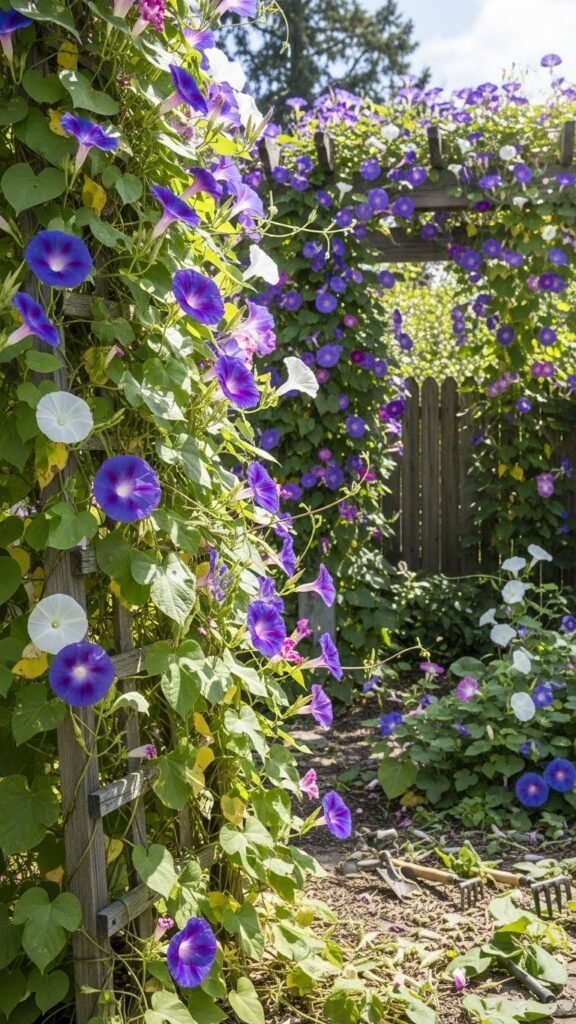
With fast-climbing stems and trumpet-shaped flowers that open with the morning sun, morning glories (Ipomoea spp.) offer an instant, low-cost splash of color on trellises, fences, and pergolas.
You’ll plant in full sun for heat tolerance, train vines on supports, and deadhead to prolong bloom. Collect seeds easily for seed saving, giving you freedom to reproduce favorites each year.
Cobaea Scandens (Cup-and-Saucer Vine)
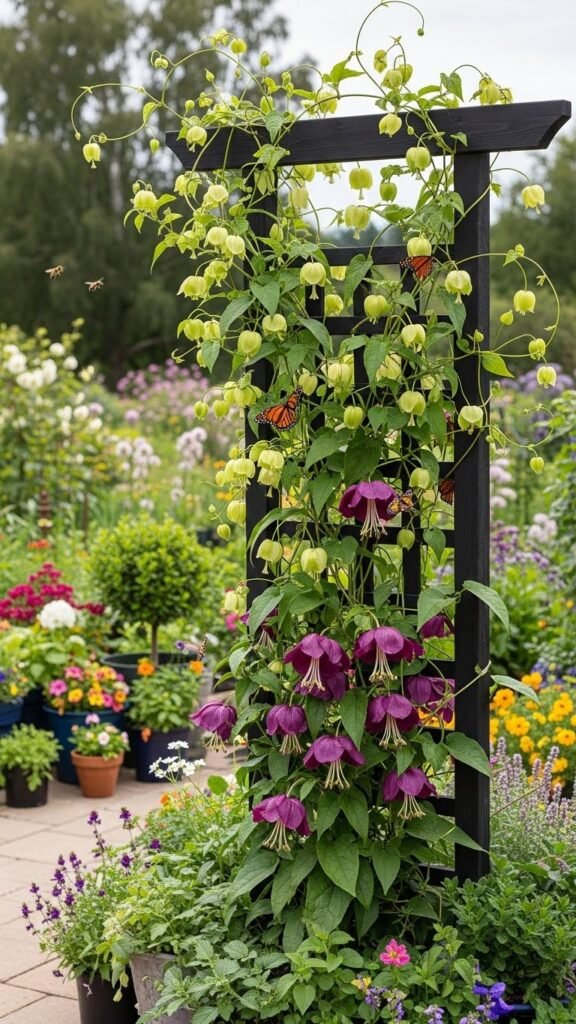
If you like the quick show of morning glories, try cobaea scandens for a taller, more architectural climb: this cup-and-saucer vine shoots long twining stems that can reach 20–30 feet in a single season, producing bell-shaped flowers that open creamy green and mature to purple.
You’ll train it on trellises, enjoy strong pollinator attraction, and use container gardening for portable, liberated walls.
Black-Eyed Susan Vine (Thunbergia Alata)
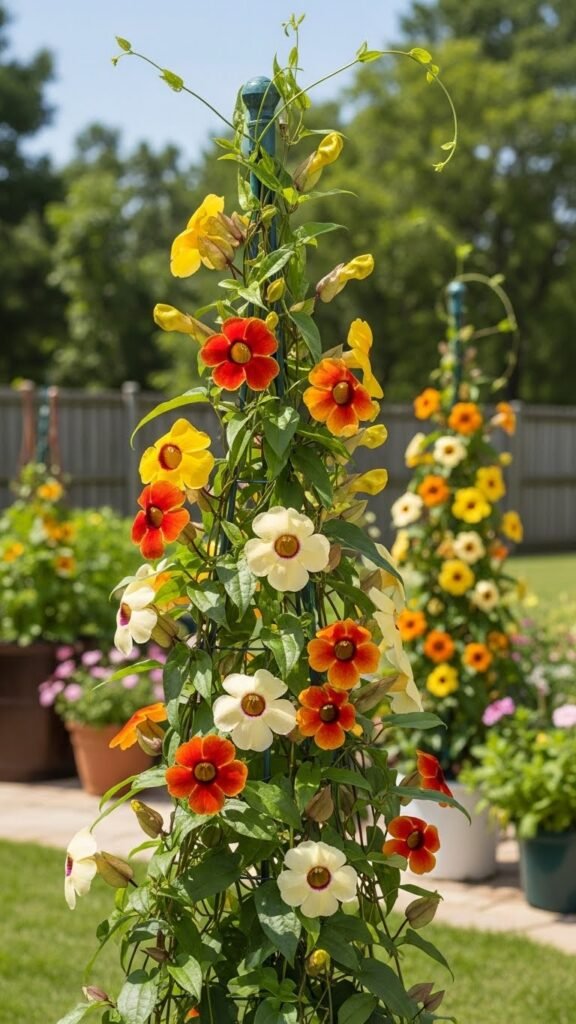
You’ll find Black-Eyed Susan vine (Thunbergia alata) is a fast, reliable climber that scrambles 6–10 feet in a season on trellises, fences, or containers, producing abundant 2–3 inch funnel-shaped flowers with dark centers in shades of orange, yellow, and cream.
You’ll love its ease: train stems, deadhead spent blooms, fertilize modestly.
Suits container cultivation and hybrid varieties for extended color and vigor.
Sweet Pea (Lathyrus Odoratus)
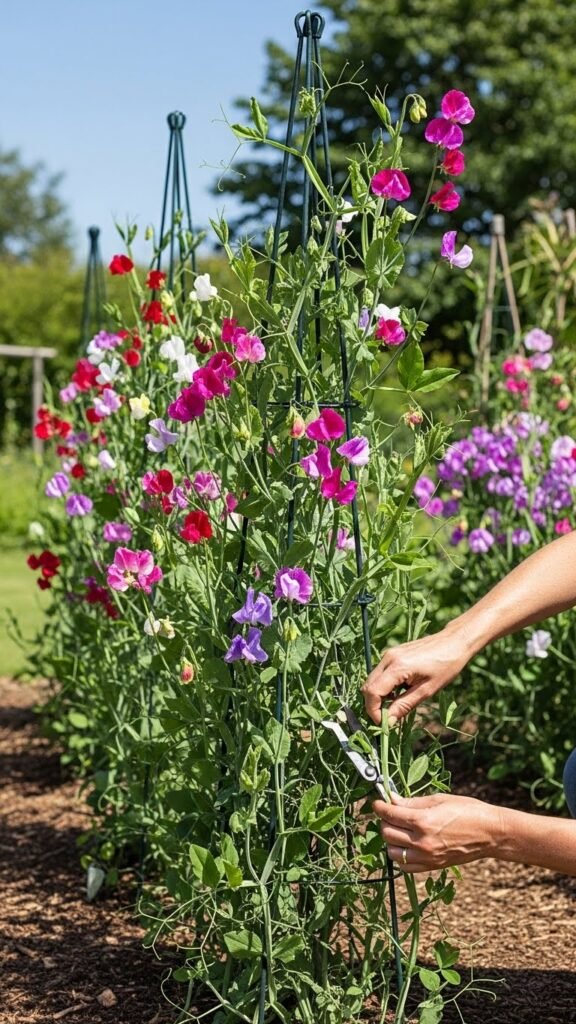
Train sweet peas (Lathyrus odoratus) onto trellises or netting early in the season so their twining tendrils can climb 6–8 feet and display masses of fragrant, pea-shaped blooms.
You’ll choose sites with full sun, rich soil and regular water, select scent breeding lines or heirloom varieties for fragrance, and pinch growing tips to encourage bushier, longer-flowering vines.
Boston Ivy (Parthenocissus Tricuspidata)
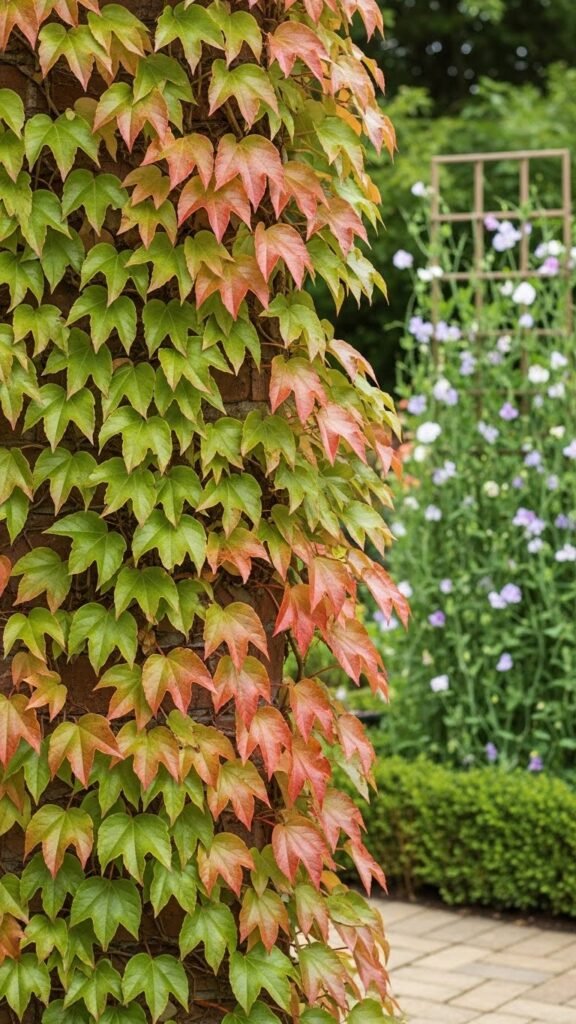
Where sweet peas offer fragrant, delicate color on trellises, Boston ivy gives a different kind of coverage: vigorous, adhesive-clinging foliage that can carpet brick or wood with glossy, three-lobed leaves and dramatic fall color.
You’ll appreciate low-maintenance growth, clear guidance on leaf coloration and timing, and firm advice on structural pruning to control spread, preserve surfaces, and keep the freedom to shape your wall.
Virginia Creeper (Parthenocissus Quinquefolia)
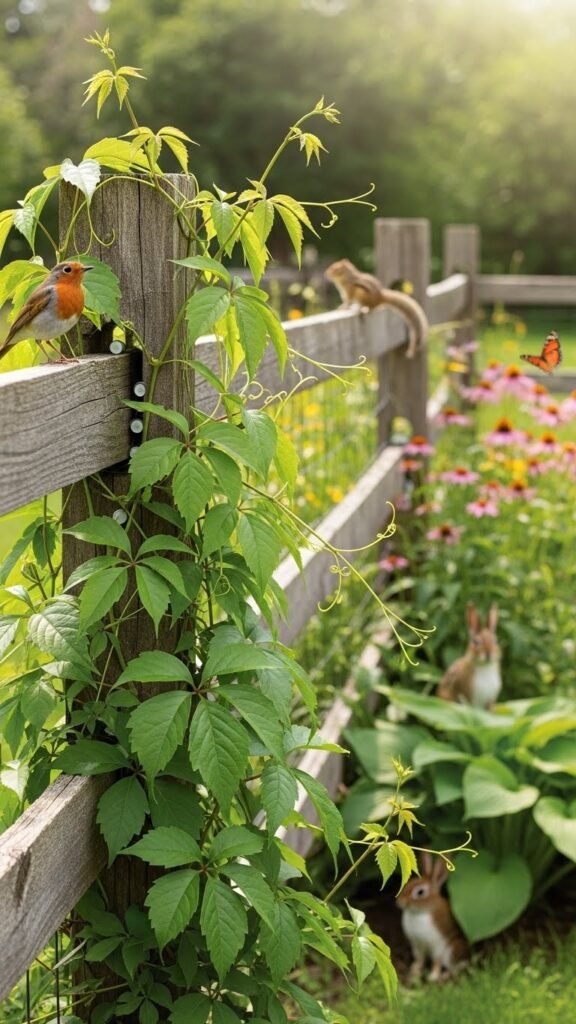
Vigorous and adaptable, Virginia creeper (Parthenocissus quinquefolia) gives you a fast, leafy screen of five-parted leaflets that cling with small adhesive discs—ideal for covering walls, fences, or pergolas.
You’ll appreciate tough growth, shade tolerance, and low maintenance; prune to control invasive potential.
Berries feed native wildlife, so place plants where volunteer seedlings won’t compromise structures or your freedom to manage the site.
Climbing Hydrangea (Hydrangea Anomala Subsp. Petiolaris)

Although it prefers part shade, climbing hydrangea (Hydrangea anomala subsp. petiolaris) will cling and climb sun-warmed brick or shaded wood with its aerial rootlets, producing glossy, heart-shaped leaves and lacy white flower clusters in late spring.
You’ll value its shade tolerance and fragrant flowers; prune lightly after bloom, secure young stems, and let this steady, low-maintenance climber free your wall with layered texture.
Ivy (Hedera Helix and Cultivars)
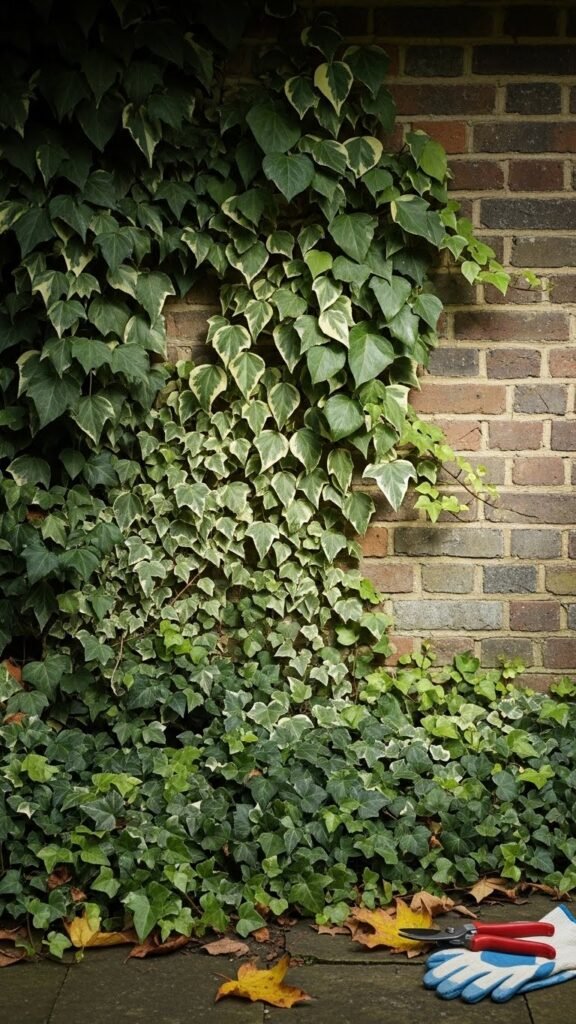
Often chosen for its year-round foliage, ivy (Hedera helix and its cultivars) climbs walls with adhesive rootlets or trails as a groundcover, offering glossy, lobed leaves in a range of greens, variegations, and leaf shapes.
You’ll control spread by selective pruning, root pruning to limit vigorous roots, and choosing cultivars for leaf variegation. It tolerates shade and requires minimal staking.
Creeping Fig (Ficus Pumila)
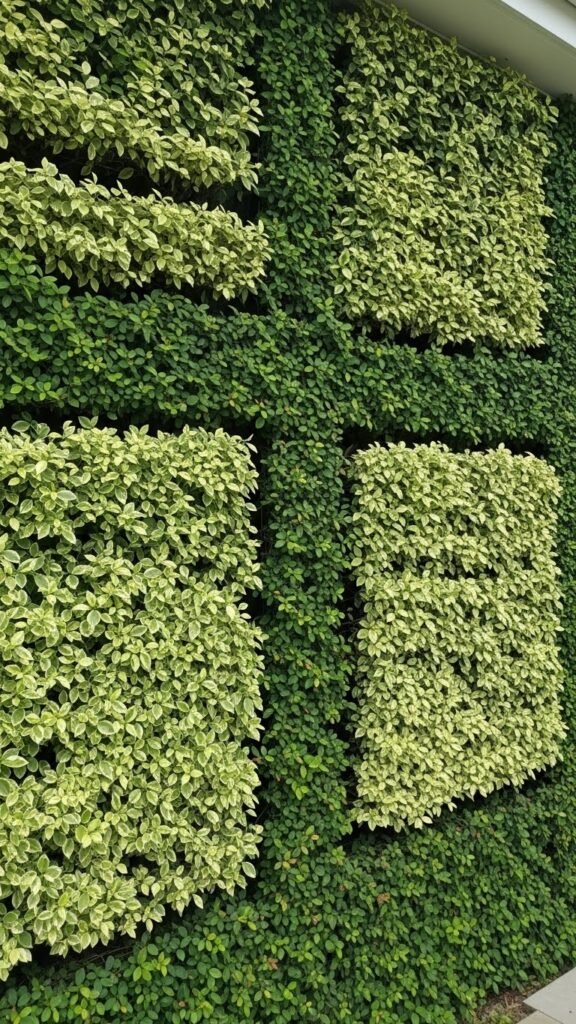
Use creeping fig (Ficus pumila) when you want a fast, low-maintenance wall cover that clings with tiny adhesive roots and forms a dense, evergreen mat of small, ovate leaves.
You’ll train it up walls, control spread with root pruning, and prefer variegated selections for subtle leaf variegation. It tolerates shade, handles pruning cleanly, and lets you reclaim walls without fuss.
Clematis (Vigorous Species and Large-Flowered Types)
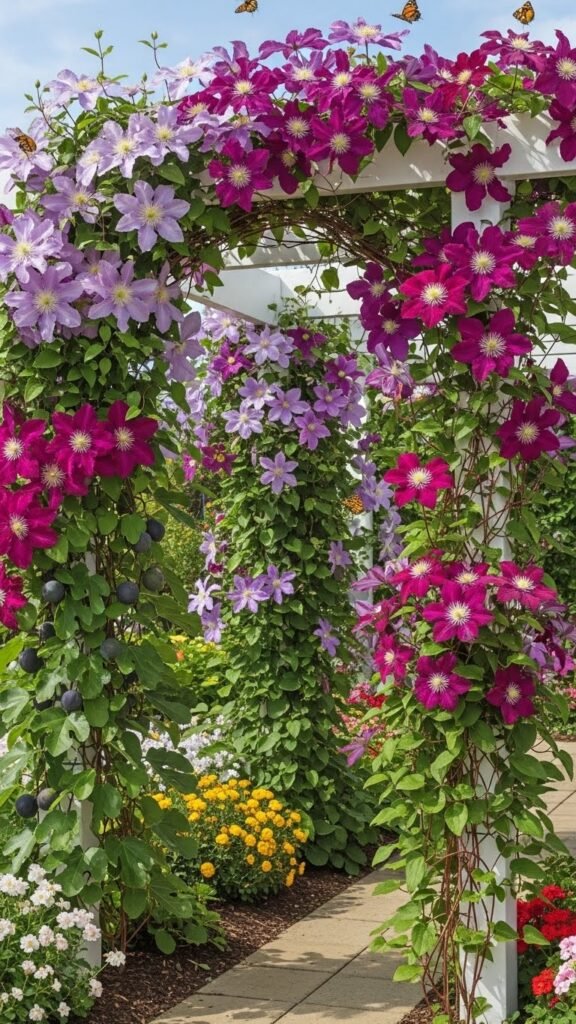
If you liked the low-maintenance cling of creeping fig but want big, showy blooms on a trellis or pergola, choose vigorous clematis species and large-flowered hybrids. You’ll train stems on support, monitor pruning timing by group, and plant roots shaded, crowns sunny.
These clematis offer repeat flowering, strong pollinator attraction, and fast vertical coverage—perfect if you value freedom in garden design.
Passionflower (Passiflora Spp.)

Introduce passionflower for instant drama: Passiflora species climb fast, twine tightly around supports, and produce exotic, intricate blooms that attract bees, butterflies, and hummingbirds. You’ll select sun, rich well-drained soil, mindful of soil preferences and drainage.
Prune to control vigor, train on trellis, and observe pollination ecology—many cultivars need specialized pollinators. Enjoy bold, low-fuss vertical impact.
Honeysuckle (Lonicera Spp.)
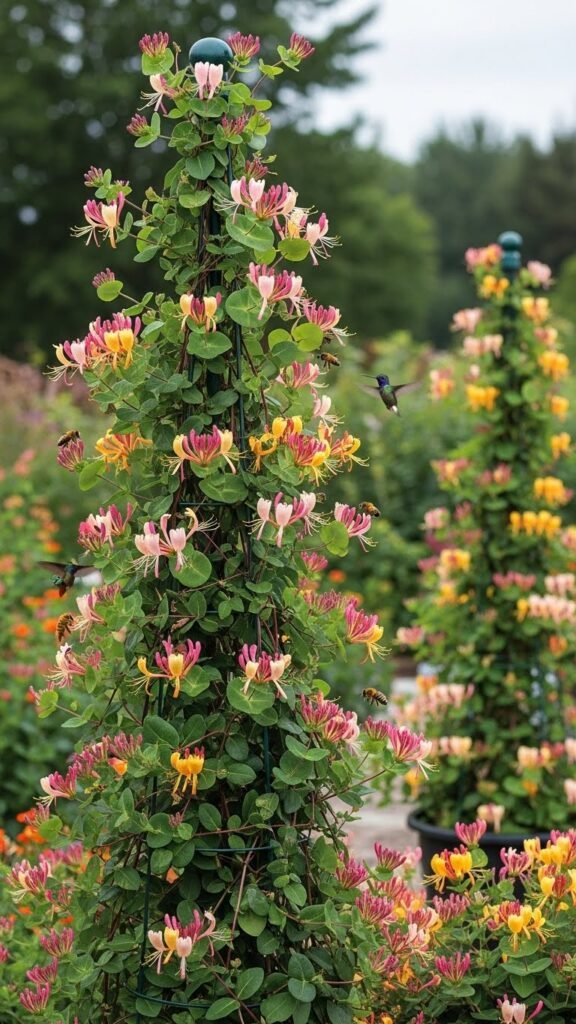
Train honeysuckles (Lonicera spp.) on a sturdy support and you’ll get fast-growing, fragrant vines that quickly fill vertical space with tubular flowers attractive to hummingbirds and bees.
You can prune to control spread, choose noninvasive cultivars, and use container cultivation to restrict roots. Enjoy strong scent attraction for evening gardens, provide full sun to part shade, and tie stems to trellises as needed.
Akebia Quinata (Chocolate Vine)
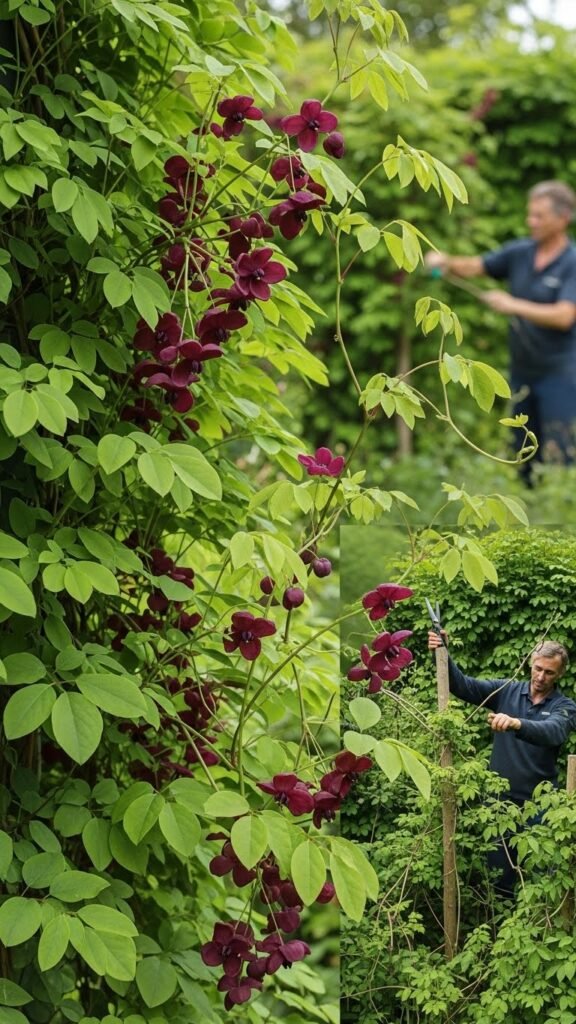
Like honeysuckle, Akebia quinata climbs quickly and fills vertical space, but it brings a very different look and scent to the garden.
You’ll enjoy fragrant foliage and maroon, orchid-like flowers in spring; vines twine without heavy support. Plant where you can monitor spread, because Akebia has invasive potential.
Prune annually, root out seedlings, and use barriers to keep freedom of your landscape intact.
Trumpet Creeper / Campsis (Flower-Focused Vigour)
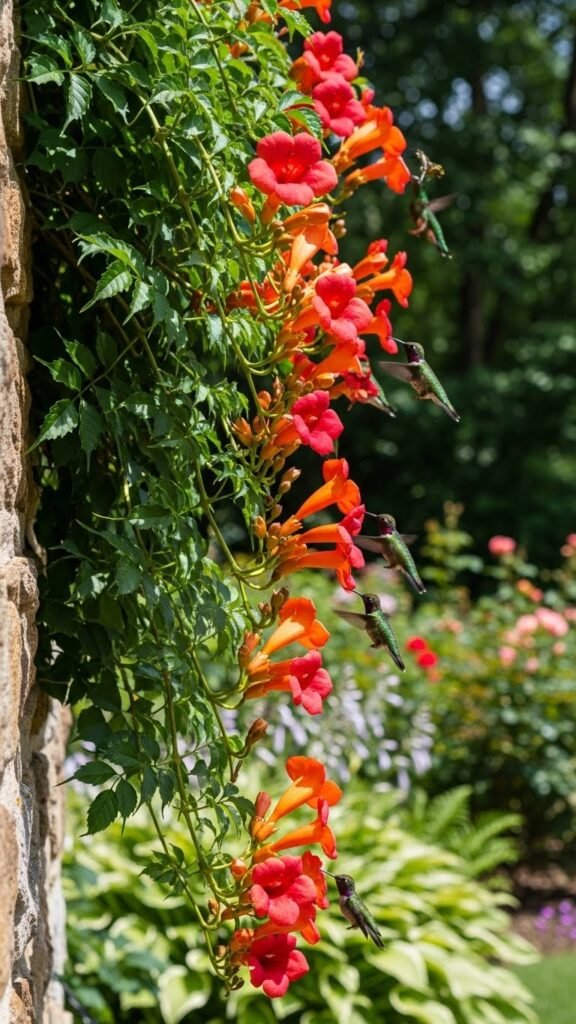
Let vigorous Campsis radicans sweep up a wall when you want bold, trumpet-shaped blooms that attract hummingbirds and dominate summer borders; this fast-growing woody vine grips with aerial roots and rewards a sunny site with months of orange to red flowers.
You’ll manage pruning to control spread, plan flowering timing for peak display, and enjoy reliable pollinator attraction without sacrificing a free, low-maintenance statement.
Star Jasmine (Trachelospermum Jasminoides)

While trumpet creeper thrills with bold, hummingbird‑drawing flowers and vigorous habit, star jasmine offers a gentler option for scented, evergreen coverage. You’ll train Trachelospermum on trellis or pergola, enjoying fragrant foliage and night‑bloom scent.
It tolerates pruning, coastal exposure, and urban containerization, so you can free walls without fuss. Water moderately, feed annually, and secure supports for steady, controlled growth.
Winter Jasmine (Jasminum Polyanthum and Others)
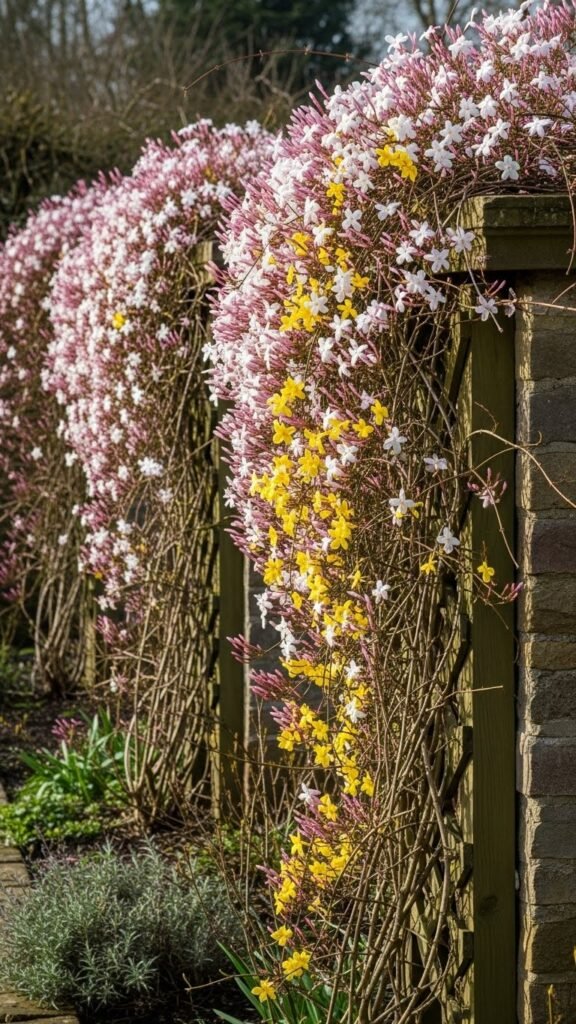
Often blooming in late winter when little else flowers, winter jasmine (Jasminum polyanthum and related species) gives you masses of fragrant, pink-tinged white or bright yellow blossoms on bare or semi-evergreen stems, providing welcome color and scent against cold-season walls.
You’ll train canes on trellises, prune after winter bloom, and enjoy fragrant foliage and fast coverage with minimal fuss.
Escallonia (Trained as a Climber)
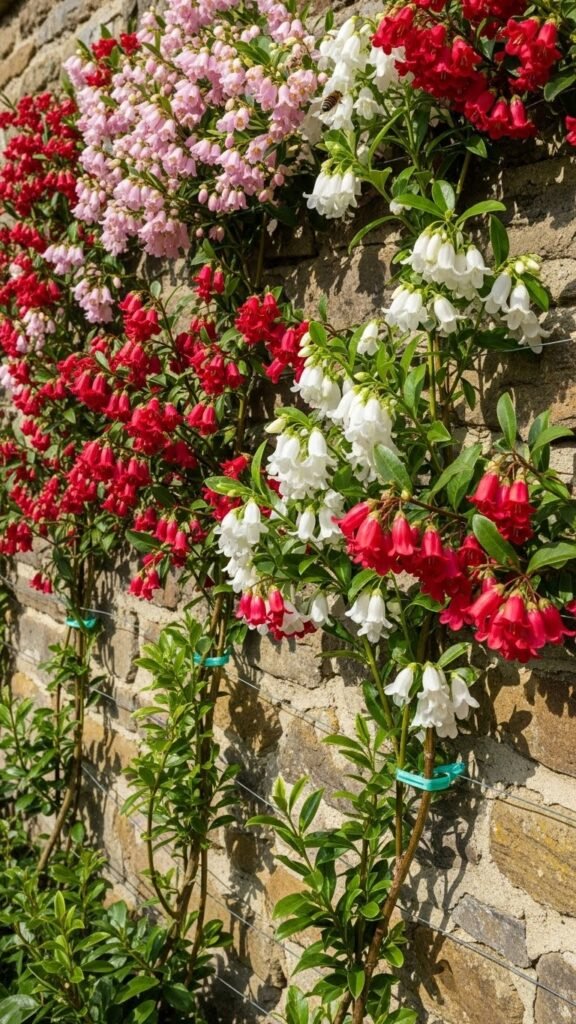
When trained as a climber, escallonia gives you a reliable, flowering screen—its glossy evergreen leaves and clusters of pink, red or white tubular flowers bloom from late spring into autumn and attract pollinators.
You’ll train stems onto support structures, tie lightly, and use selective pruning techniques after flowering to maintain shape, encourage new growth and preserve airflow so the wall stays green, floral and low-maintenance.
Bougainvillea (Evergreen Varieties for Frost-Free Zones)
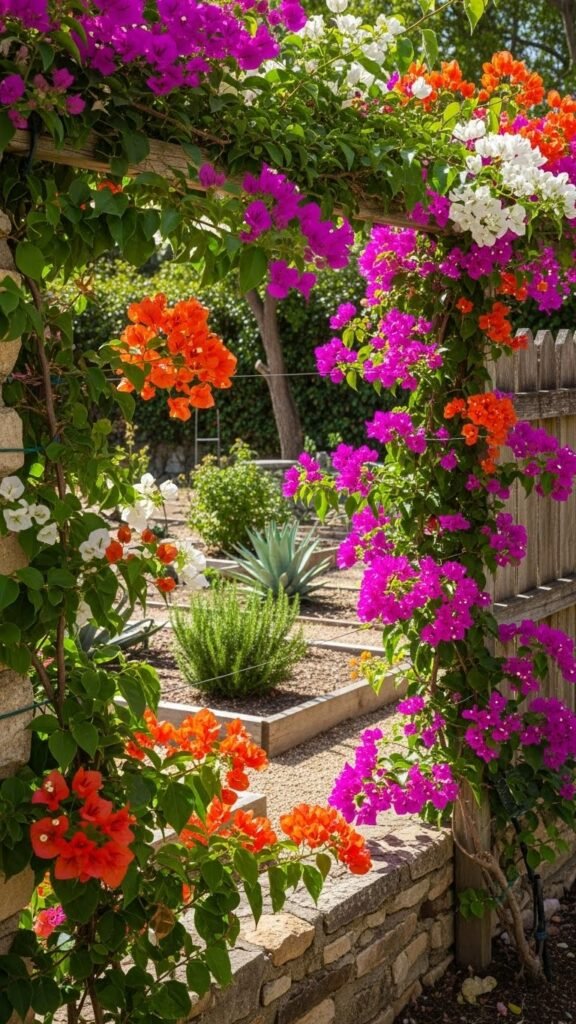
Because bougainvillea thrives in frost-free climates, you can use its evergreen, vigorous vines to create a year-round splash of color on sunny walls and fences. Choose cold tolerant selections only at mild margins, plant in free-draining soil, and train onto wires or trellises.
Maintain shape with decisive pruning techniques, encourage flowering with lean feeding, and let its wild energy liberate your wall.
Fast-Twitch Annual Pea-Family Climbers (Seasonal Instant Cover)
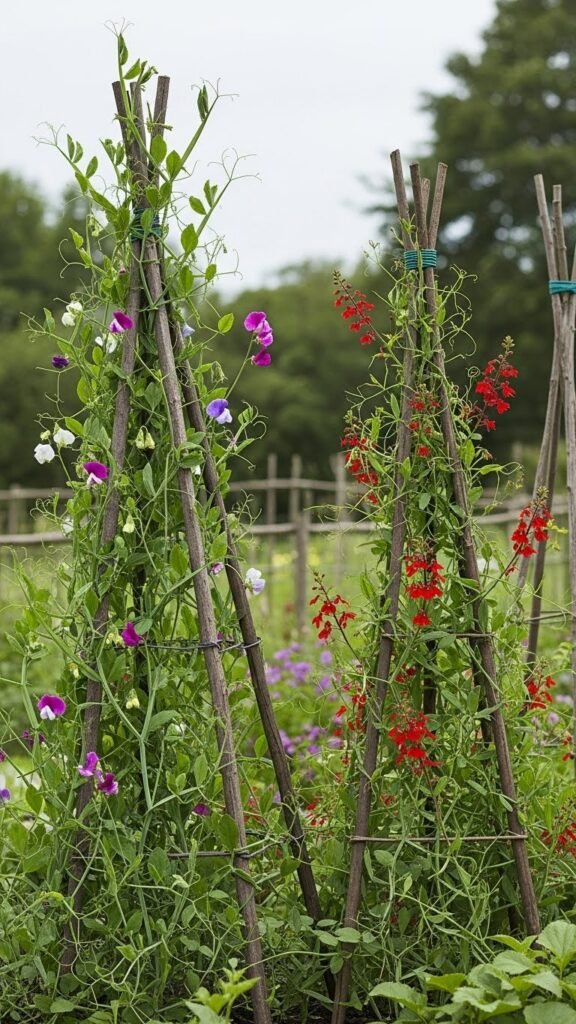
If you want quick seasonal screening, fast-twitch annual growers in the pea family — like sweet peas, cardinal climbers and morning glory-like Lathyrus annuals — will scramble up supports and give instant cover within weeks.
You’ll rely on rapid germination and simple trellis techniques, sowing densely, training tendrils, and pruning for airflow.
They free you with vibrant, temporary wall screening.
Tender Annual Climbers for Pergolas and Arbors
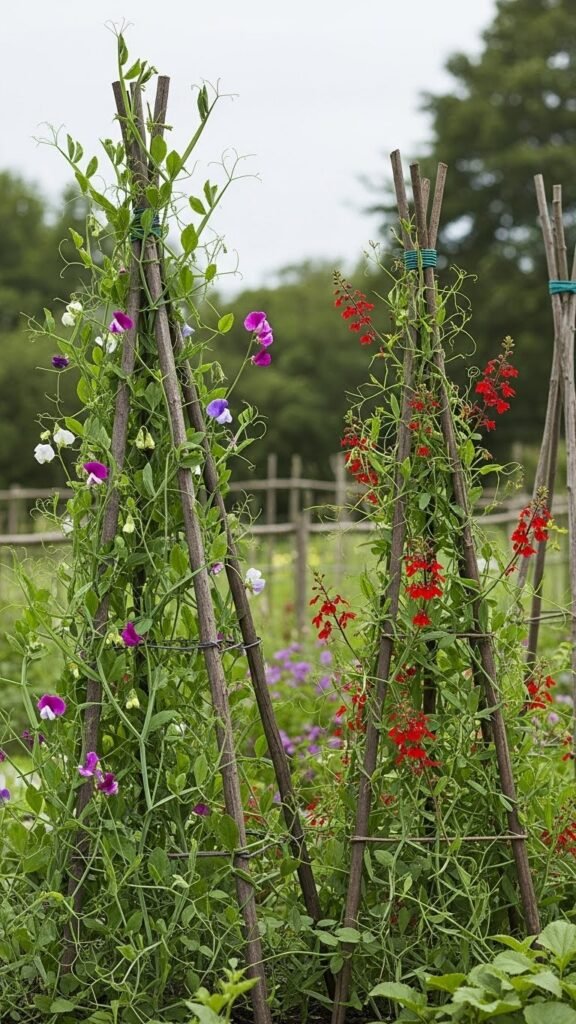
Moving from quick-season pea climbers to tender annuals for pergolas and arbors, you’ll find plants that trade speed for size and spectacle: think runner-type nasturtiums, moonflower, morning glories (grown tender in cooler zones), and climbing zinnias trained up a support. You’ll prep soil preparation for rich, free-draining mix, set consistent trellis spacing, and prune to encourage layered shade and easy harvests.