
If you want a butterfly garden that’s both beautiful and functional, start by choosing sunny, sheltered spots and favor native, single-flower perennials that pump out nectar all season. Cluster host plants like milkweed and violets, add puddling stations and basking stones, leave leaf litter for pupae, and use containers or meadow strips where space’s tight. There’s plenty more on layout, plant lists, and seasonal care to help you build a lasting pollinator refuge.
Choose the Best Sunny Site for Butterflies

Most butterflies prefer sun, so pick a spot that gets at least six hours of direct sunlight a day; morning sun is especially valuable because it warms their wings and encourages early activity.
You’ll seek a sunny microclimate, shelter from harsh winds, and soil that drains.
Use ground reflectance materials like pale stones to amplify light and create an inviting, liberated patch for butterflies.
Plant Masses of Nectar-Rich Perennials
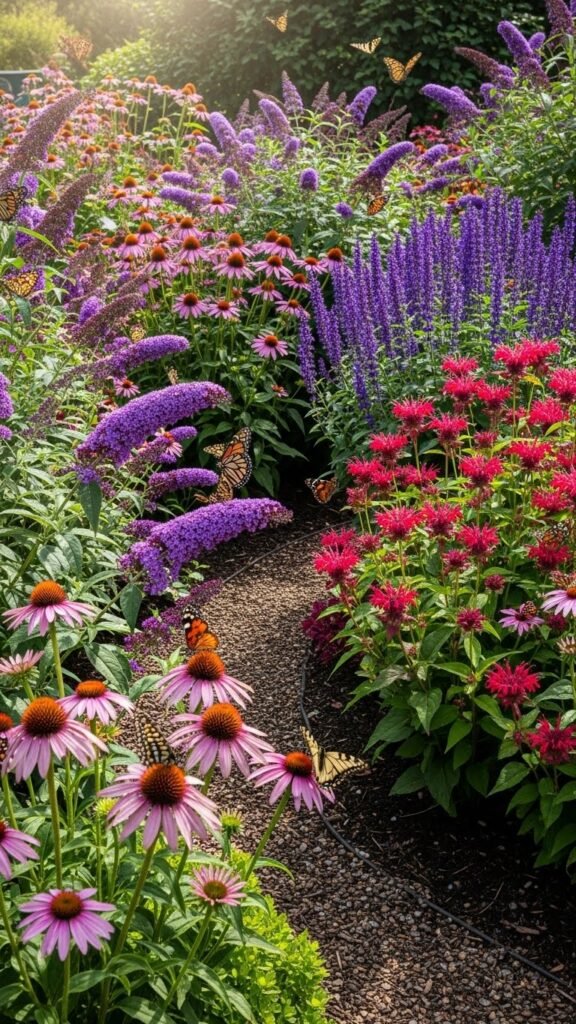
Planting large drifts of nectar-rich perennials will turn a sunny patch into a butterfly magnet: cluster species like Buddleia, Echinacea, Monarda, and Salvia in blocks so butterflies can feed efficiently without having to flutter between scattered plants.
Stagger heights and seasonal bloom for continual color; amend soil with organic soil amendments, plant in swathes you can roam freely around, and prune to renew.
Build a Milkweed Patch for Monarchs
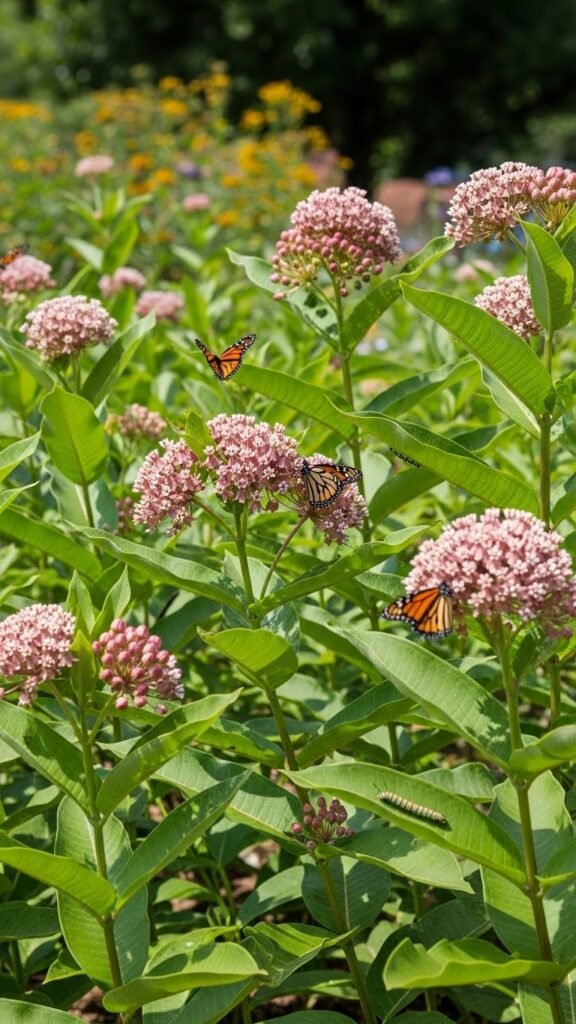
Creating a dedicated milkweed patch gives monarchs the food and shelter their caterpillars need while adding a wild, architectural element to your garden.
Plant several milkweed species, space for airflow, and choose sunny, well-drained soil. Protect natural monarch migration routes by avoiding pesticides. Save costs through seed collection and direct sowing. Maintain patches lightly to let plants self-seed and support free-roaming wildlife.
Include Native Host Plants in Clusters
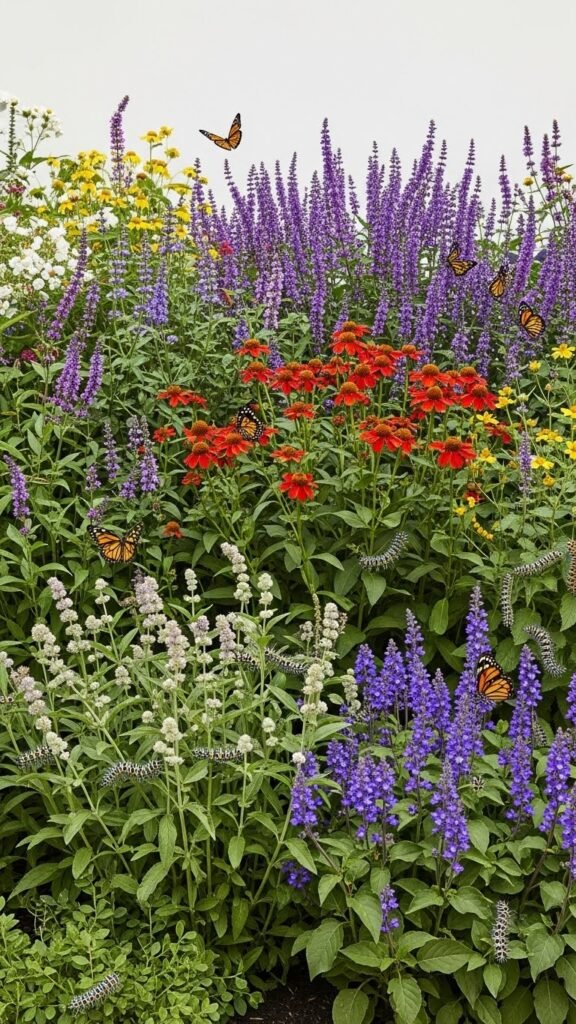
Grouping native host plants in tight clusters makes it easier for caterpillars and egg-laying butterflies to find food and shelter, and it creates bold, architectural masses that read well in the garden.
You’ll use cluster planting to maximize visibility and survival, mixing host diversity—different species and bloom times—so you free your garden to support multiple butterfly generations while keeping a clean, intentional, plant-forward aesthetic.
Install Shallow Puddling Stations
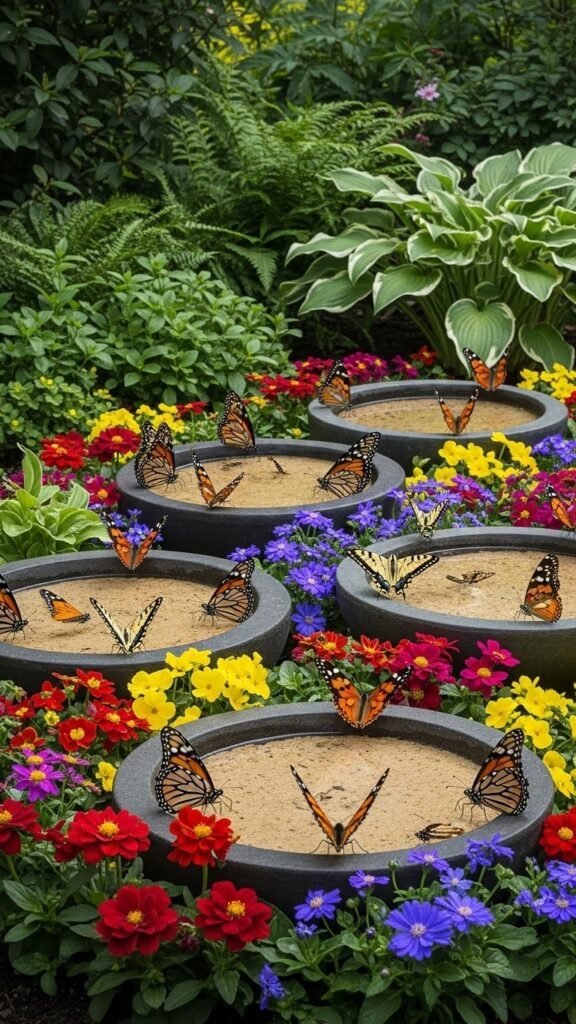
Frequently, butterflies will seek out damp soil and puddles for minerals and hydration, so you should add a few shallow puddling stations around your garden to attract them.
Create low basins with damp sand or loam, sprinkle mineral salts lightly, and allow gentle evaporation.
Position near nectar-rich plantings and privacy nooks so butterflies mud puddling can feed and you can enjoy their liberated beauty.
Provide Flat Stones for Basking
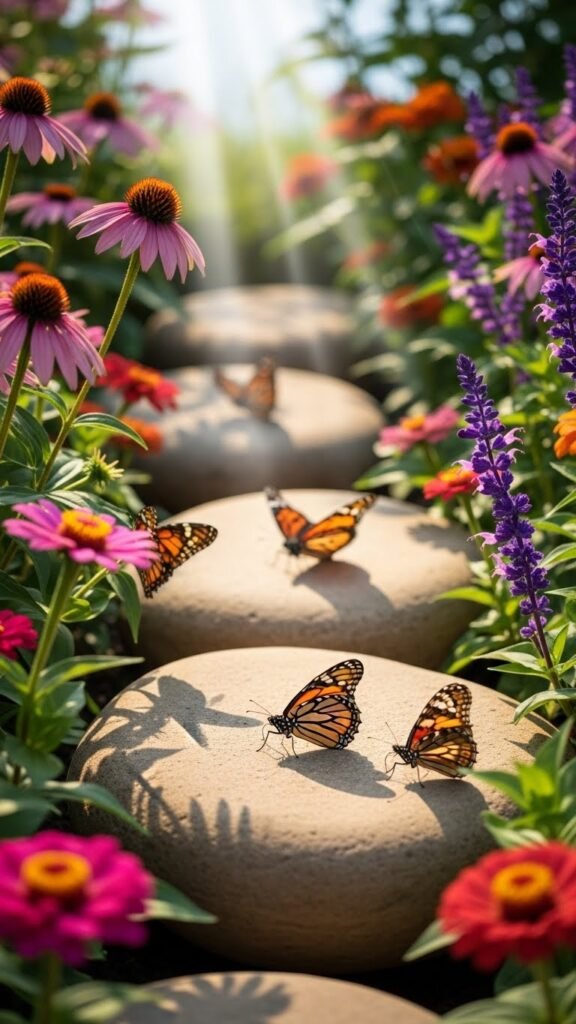
After you’ve set up puddling stations, add a few flat stones nearby so butterflies have warm, stable spots to bask between feedings. Place a sun warmed slab among nectar plants where you can see it, creating a rock sunspot that catches morning light.
Choose smooth, low stones tucked near blooms and paths so butterflies can rest, warm, and quickly return to feeding.
Add Windbreaks and Shrub Shelter
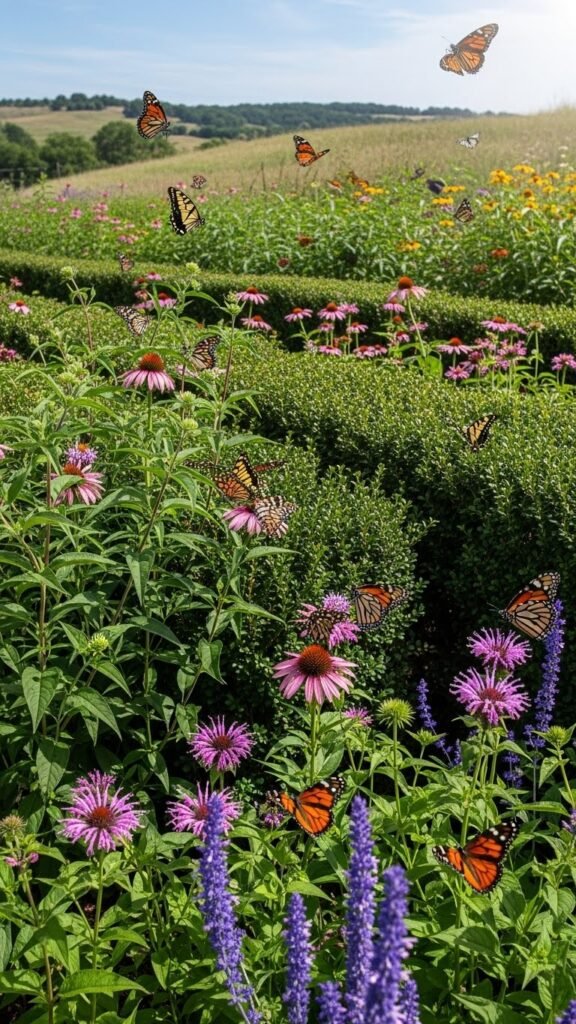
Create sheltered pockets with dense shrubs and low hedges so butterflies have calm places to feed, mate, and roost on breezy days. You’ll plant wind resistant shrubs and dense hedgerows along exposed edges, sculpting layered shelter that still feels open. Choose native, nectar-rich species and prune for airy structure so butterflies enjoy protection without confinement, enhancing habitat and a free, natural aesthetic.
Use Single-Flower Cultivars, Not Doubles
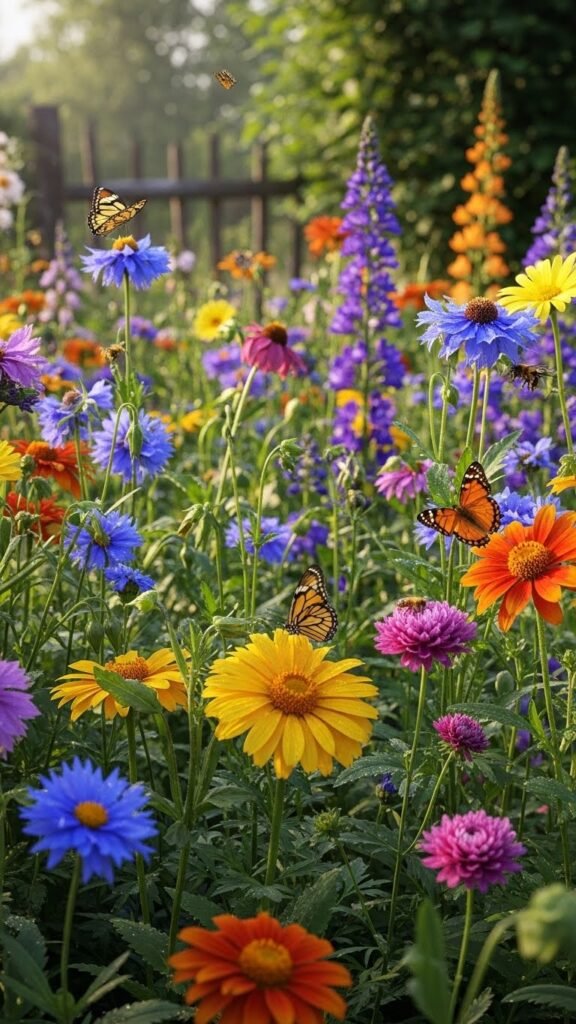
Choose single-flower cultivars whenever possible — butterflies can actually reach nectar and pollen in those open blooms, while double-flowered varieties often hide the food behind extra petals. You’ll favor pollinator friendly choices that bloom freely, pick scent rich, heritage cultivars for character, and arrange them in airy drifts.
This keeps your garden open, wild-looking, and inviting to winged visitors.
Plant Short- and Long-Tubed Flowers
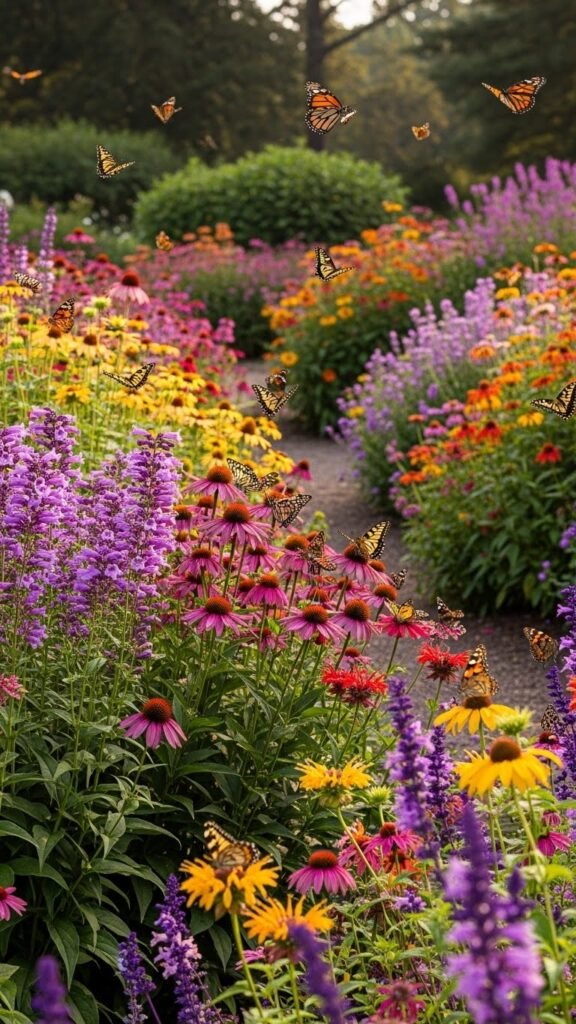
Because different butterflies have differently shaped mouthparts, plant a mix of short- and long-tubed flowers so every species can reach nectar. You’ll arrange clusters for visual impact, balancing tubed diversity with consistent bloom times. Choose native penstemon, coneflower, bee balm and salvia; group them in layered flower arrangement bands.
This keeps butterflies fed and your garden feeling free, effortless and elegant.
Establish a Meadow-Style or Prairie Strip
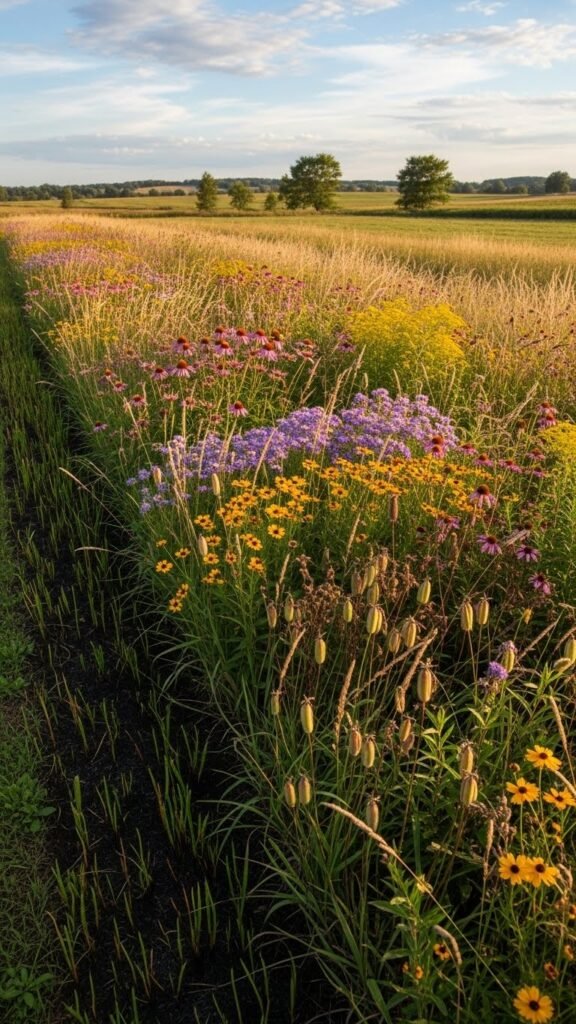
You’ve done well arranging short- and long-tubed flowers in layered clusters; now think bigger by setting aside a swath of lawn for a meadow-style or prairie strip that extends that same plant-focused, layered look across more space. Plant native grasses with nectar-rich forbs, stagger bloom times, allow natural seedheads for winter interest, and consider controlled seasonal burns or mowing to maintain diversity and freedom of movement.
Set Up Container Butterfly Gardens

Often a few well-chosen pots will attract as many butterflies as a whole border, so pick containers that suit your space and plant choices and place them where they’ll get 6–8 hours of sun.
Use recycled containers for nectar mixes, group host and bloomers, add vertical planters to save space, provide shallow water dishes, and stagger bloom times for continuous winged visitors.
Create a Pollinator Corridor Across the Property
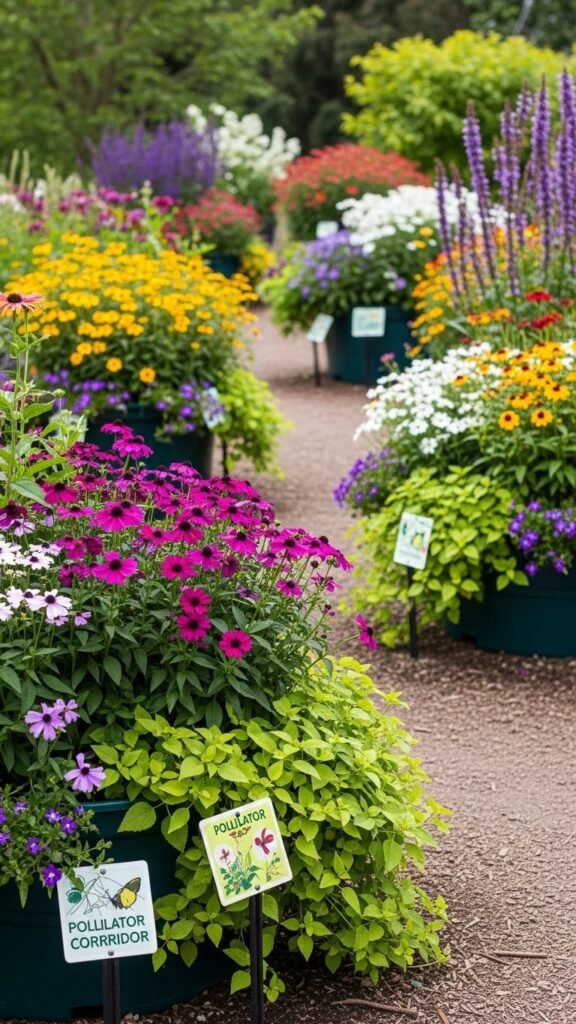
Container clusters make a great starting point, but you can multiply their benefit by linking them into a living corridor that guides pollinators across your property. Plan snug planting bands of nectar-rich perennials, stagger bloom times, and add low corridor lighting for evening navigation. Use simple pollinator signage to educate visitors. Keep paths unfussy so butterflies roam freely and plants shine.
Incorporate Native Trees and Shrubs for Caterpillars
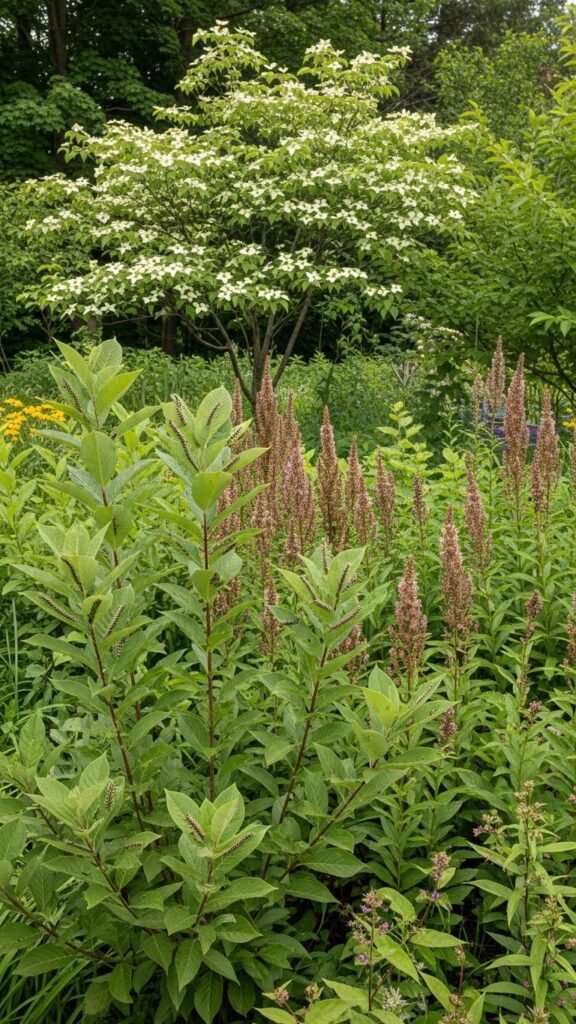
Your garden’s backbone should include native trees and shrubs that caterpillar species rely on for food and shelter.
Plant native dogwoods for fruit and host foliage, and establish alder clusters along moist edges to support diverse larvae.
Choose varied heights and staggered bloom times so you’ll offer continuous cover and resources, creating a liberated, natural tapestry that welcomes growth and movement.
Reserve Small Weedy Patches for Larvae
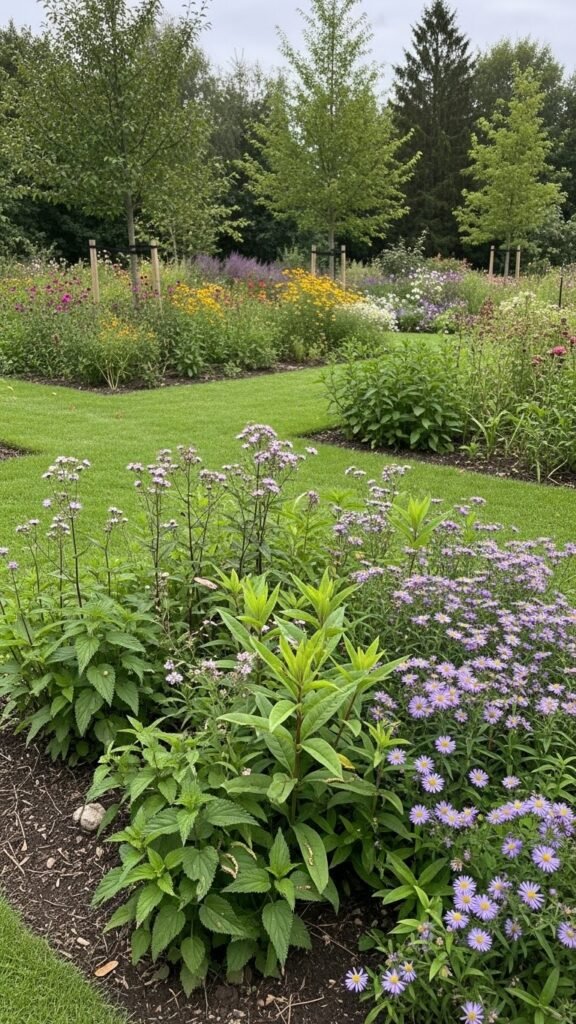
Alongside native trees and shrubs, set aside a few small, intentionally weedy patches where caterpillars can feed and hide; these areas act as nursery beds that complement your structured plantings.
You’ll create discreet larval refuges by tolerating nettles, milkweed, and native asters. Arrange them near nectar sources, trim edges for access, and let these weedy sanctuaries bloom, supporting wild growth without losing aesthetic control.
Provide Deadwood, Leaf Litter, and Pupation Sites
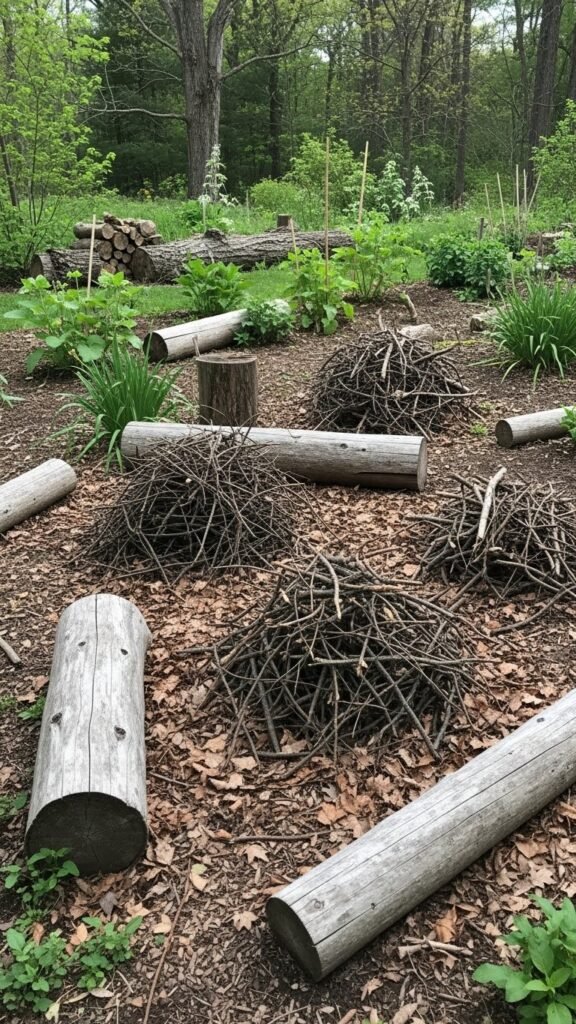
When you leave a few logs, twig piles, and leaf litter in sheltered spots, you create essential microhabitats for pupating butterflies, overwintering pupae, and the insects that support them. Let deadwood habitat age naturally near native host plants; tuck leaf litter around stems. You’ll offer discreet pupation shelters that look wild and intentional, inviting diversity while keeping maintenance minimal and freeing your garden’s flow.
Offer Fresh Water and Shallow Dishes With Moist Sand
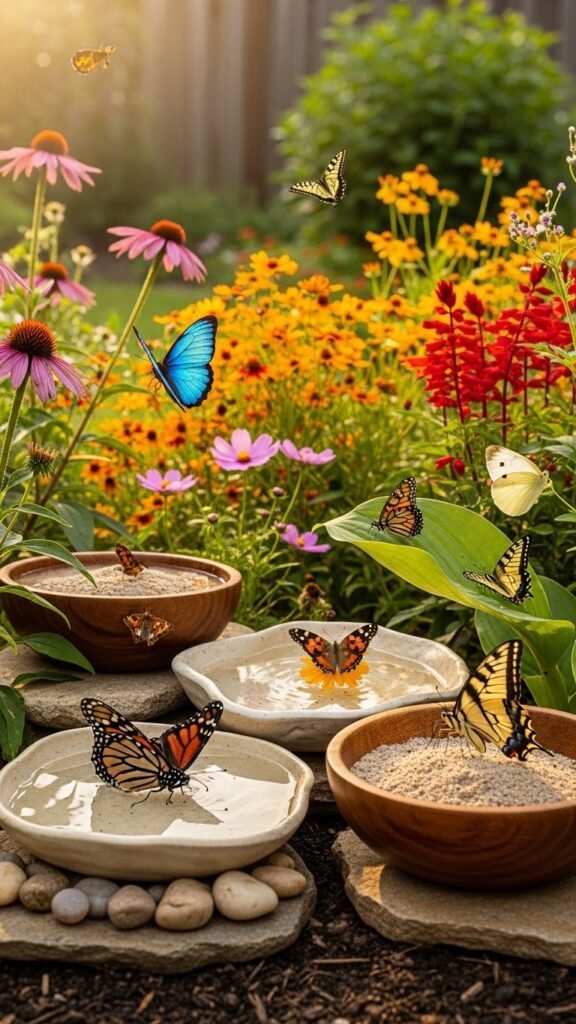
Having left quiet corners of deadwood and leaf litter for pupae, you can next add shallow water sources and dishes of moist sand to meet adult butterflies’ needs.
Place shallow dishes and flat bowls with moist sandwater at sunny edges, near nectar plants. Keep water fresh, change sand often, and arrange dishes artfully among host plants so butterflies sip, puddle, and rest freely.
Stagger Planting Times for Seasonal Nectar
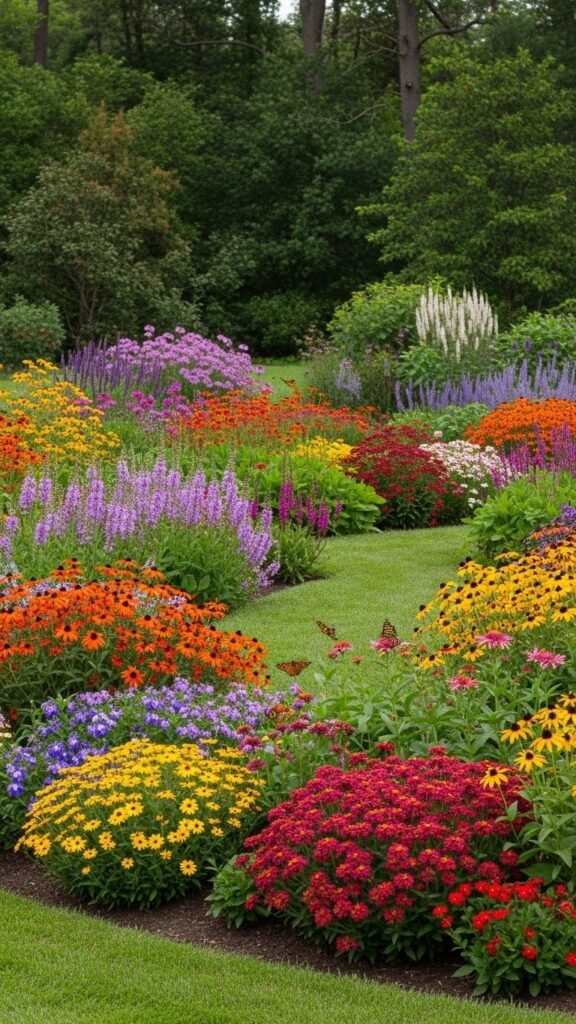
Once you’ve grouped plants by moisture and soil, plan planting times so nectar sources bloom continuously through spring, summer, and fall. You’ll use succession planting and staggered seeding to sequence blooms: sow early perennials, plant mid-season annuals, and add late-flowering natives. Space beds for overlapping color and scent, giving butterflies steady forage while you enjoy a free, flowing garden aesthetic.
Minimize Pesticide Use and Use IPM Practices
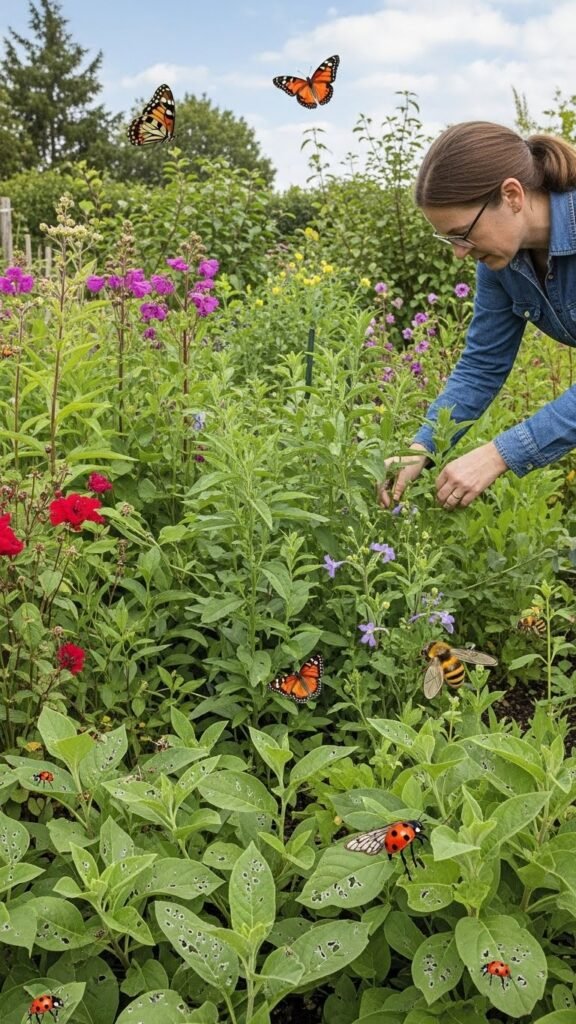
Because butterflies and their caterpillars are especially vulnerable, reduce chemical pesticide use and rely on integrated pest management (IPM) to protect pollinators while keeping plants healthy.
You’ll scout regularly, encourage beneficial insects, and spot-treat only severe problems. Use companion planting to deter pests and boost biodiversity. Choose resilient native species, embrace small imperfections, and enjoy a natural, low-toxicity garden that sets wildlife free.
Compost Selectively and Leave Winter Shelter

As you tidy beds in late fall, compost selectively and deliberately leave patches of shelter so butterflies have places to overwinter; keep seedheads, hollow stems, and leaf litter in sheltered corners while removing diseased or invasive material.
You’ll practice partial composting: turn healthy trimmings into mulch but preserve standing stems and brush piles as overwintering shelters, creating a wild, controlled sanctuary you’ll enjoy.
Create Themed Plantings for Target Species
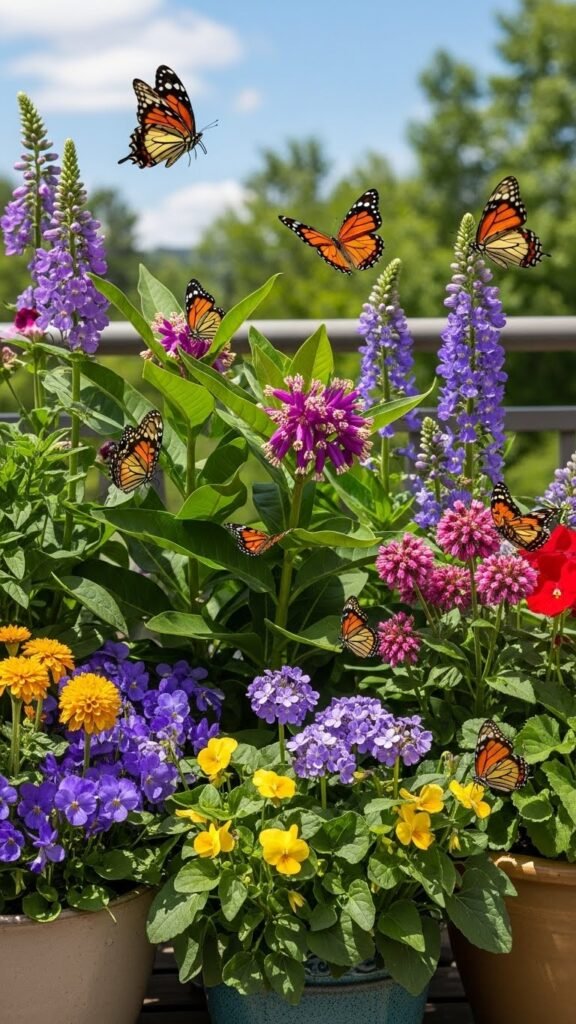
Leaving those winter shelters in place sets you up to shape plantings that attract specific butterfly species next spring. Choose host and nectar plants in palettes—milkweed for monarchs, violets for fritillaries—and arrange them for sun, movement, and perfume.
You can adapt themes to urban balconies or an indoor display, keeping containers, soil, and bloom timing tight so butterflies find refuge and food.