
You’ll find practical layouts that make the most of a narrow balcony, from vertical herb walls to tiered crate towers and compact trellises for tomatoes and beans. Each design focuses on airflow, drainage, and easy access so plants stay healthy and you spend less time troubleshooting. Think efficient soil mixes, drip lines, and windproof anchors — and a few smart swaps that stretch space and yield. Keep going to see which setup fits your light and lifestyle.
Vertical Pallet Herb Wall
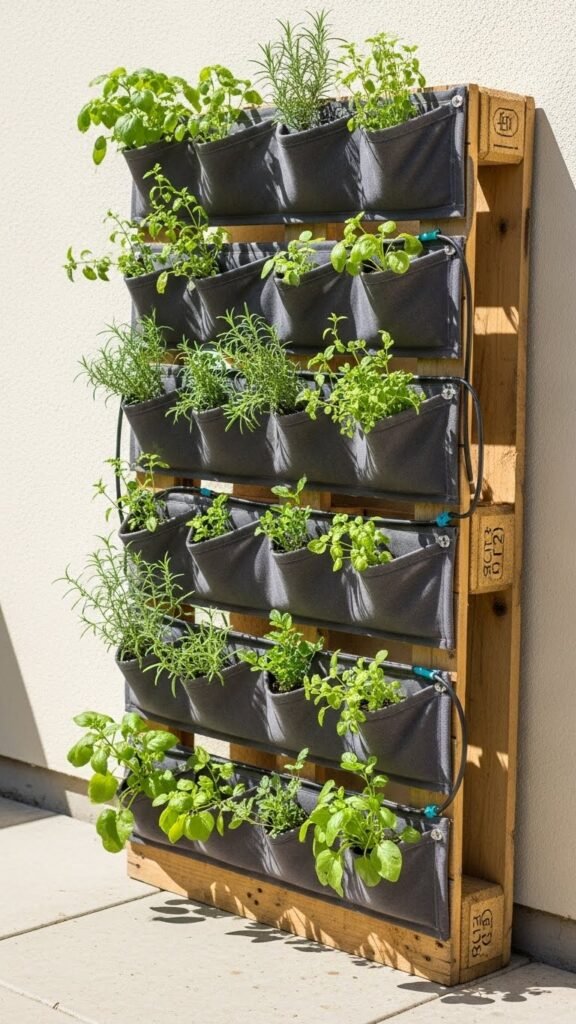
Stand up a recycled pallet against a sunny wall and you’ve instantly gained a compact, vertical herb garden that saves floor space and keeps plants within easy reach.
You’ll add pallet reinforcement, line pockets, and install simple herb irrigation to water evenly.
Choose resilient herbs, prune for airflow, and mount the pallet securely.
It’s practical, tidy, and gives you freedom to garden anywhere.
Trellis Row for Pole Beans and Tomatoes
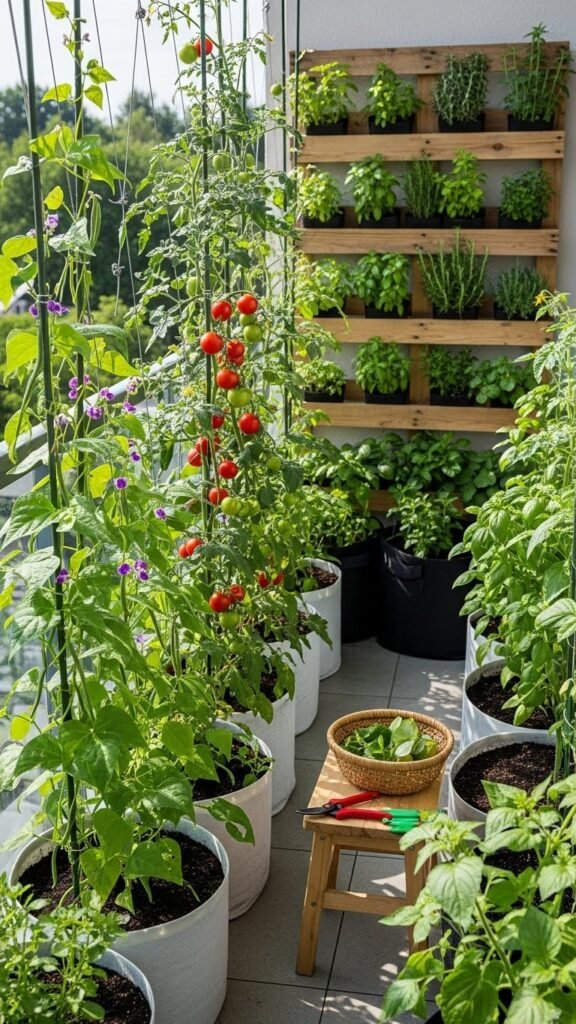
If your pallet herb wall freed up ground space, use that room to run a trellis row for pole beans and indeterminate tomatoes—both climbers that give big yields on a narrow footprint.
You’ll pick lightweight soil mixes, plant deep, and space centers for airflow. Train vines early, stay consistent with pruning timing, and harvest often so your balcony stays productive and unfettered.
Double-Sided A-Frame Trellis With Underplanting
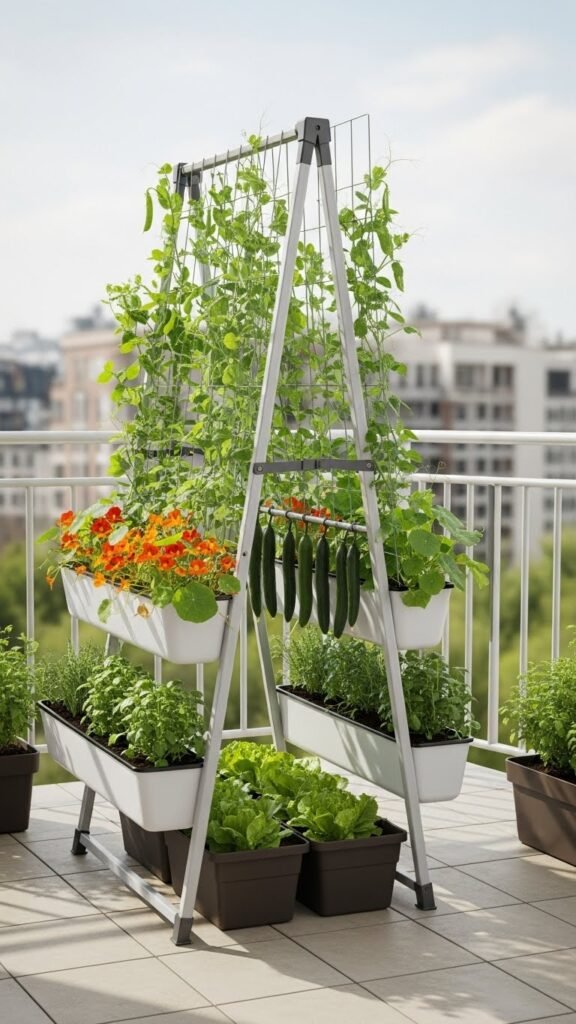
When you set up a double-sided A-frame trellis on your balcony, you get two vertical growing faces while keeping a slim footprint—perfect for vining crops like peas, nasturtiums, and cucumbers.
You’ll hang lightweight planters on both sides, underplant herbs or lettuces, use microclimate mapping to place sun‑lovers, and practice soil blending for consistent nutrition.
It’s efficient, mobile, and freeing.
Multi-Tiered Container Stack
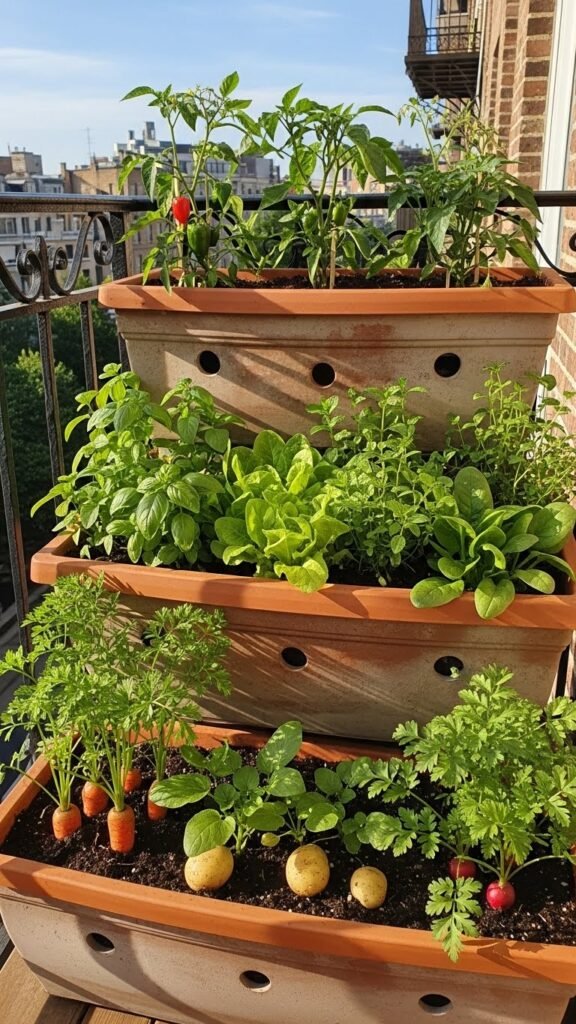
Stack lightweight containers vertically to multiply planting area without crowding your balcony floor: tiered systems let you fit deep-rooted crops at the base, shallow herbs and salad greens in middle trays, and sun-loving compact tomatoes or peppers on top.
You’ll maximize sun exposure, practice succession planting for steady harvests, and manage moisture with thoughtful drainage management and removable trays to keep roots healthy.
Straw-Bale Vertical Stack Garden

Build up a straw-bale vertical stack to create a lightweight, porous planting column that’s perfect for small balconies and temporary beds. You’ll secure bales, core planting pockets, and add quality soil for roots to breathe.
With vertical stacking you maximize square footage, grow herbs, greens, and trailing tomatoes, and move setups easily. It’s practical, free-spirited, and focused on plant performance.
Rectangular Planter Box Tomato Rack
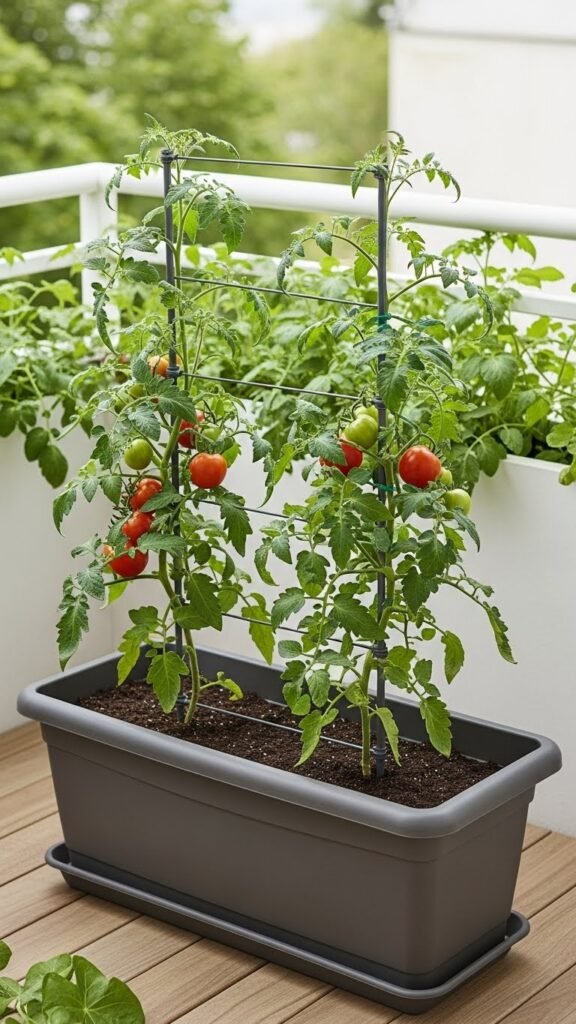
Arrange a sturdy rectangular planter box on your balcony and fit a slim, vertical tomato rack into its center to get maximum fruit production from minimal floor space.
You’ll secure stems to the rack for reliable tomato support, keep soil aerated, and guarantee planter drainage. Water deliberately, prune for airflow, and enjoy a compact, liberated growing setup that prioritizes yield and movement.
Shallow Window Box Salad Strip
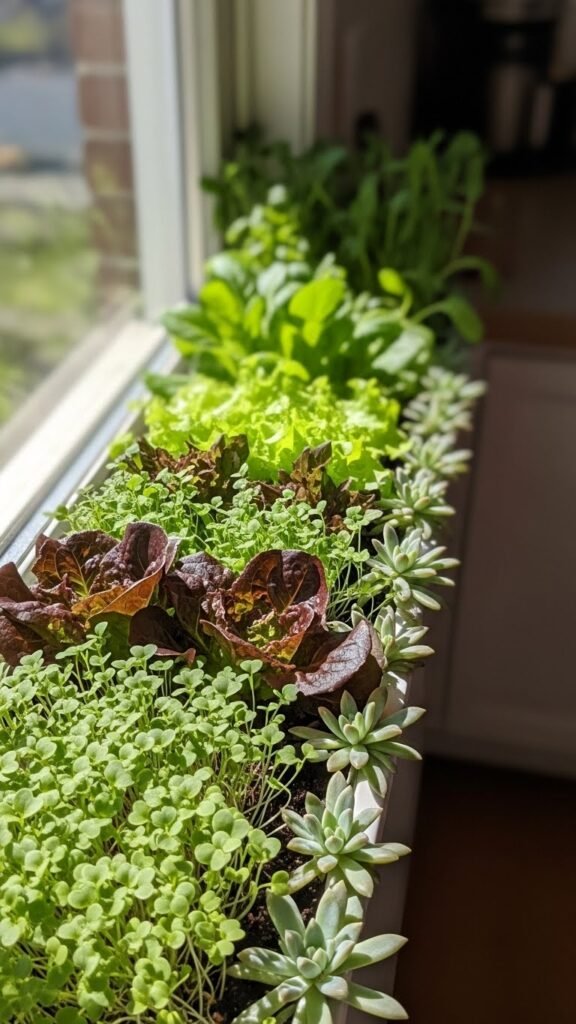
Often you’ll find a shallow window box is all you need to grow a steady strip of salad greens and herbs right outside your kitchen, so pick a planter 6–8 inches deep with good drainage and place it where it gets 3–6 hours of sun.
You’ll sow a microgreens mix at the front, stagger lettuces and herbs behind, and edge with a shallow succulent edge for texture and low maintenance.
Elevated Raised Bed With Companion Rows
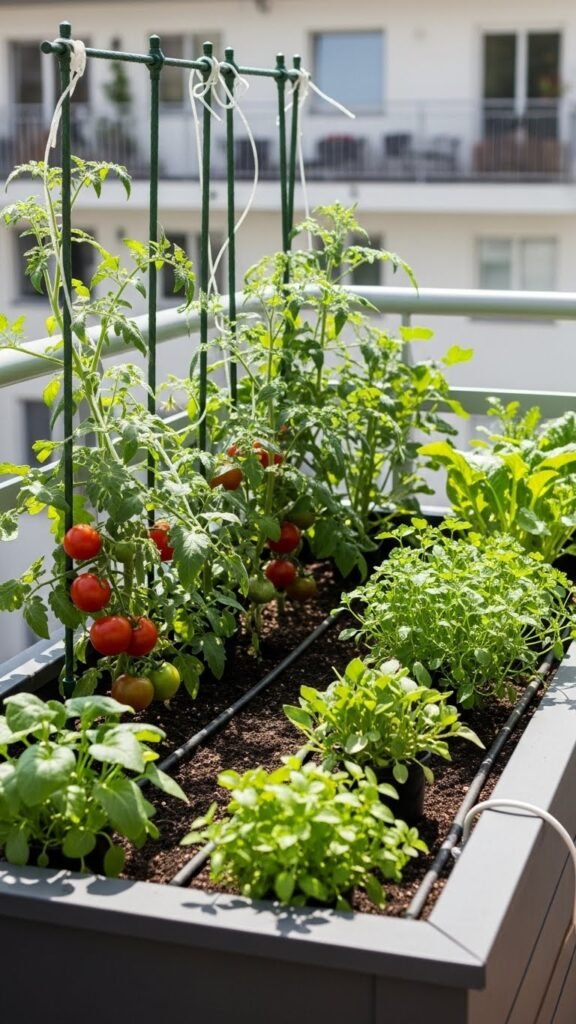
If you want easier access and better drainage, an elevated raised bed with companion rows gives you a compact, productive layout that’s friendly to knees and schedules. You’ll plant tall and low companions, monitor soil pH, and tuck herbs beside tomatoes to deter pests. Use drip irrigation for steady moisture, prune for airflow, and enjoy a tidy, freeing balcony harvest you can manage in minutes.
Vegtrug Back-Deep Front-Shallow Layout
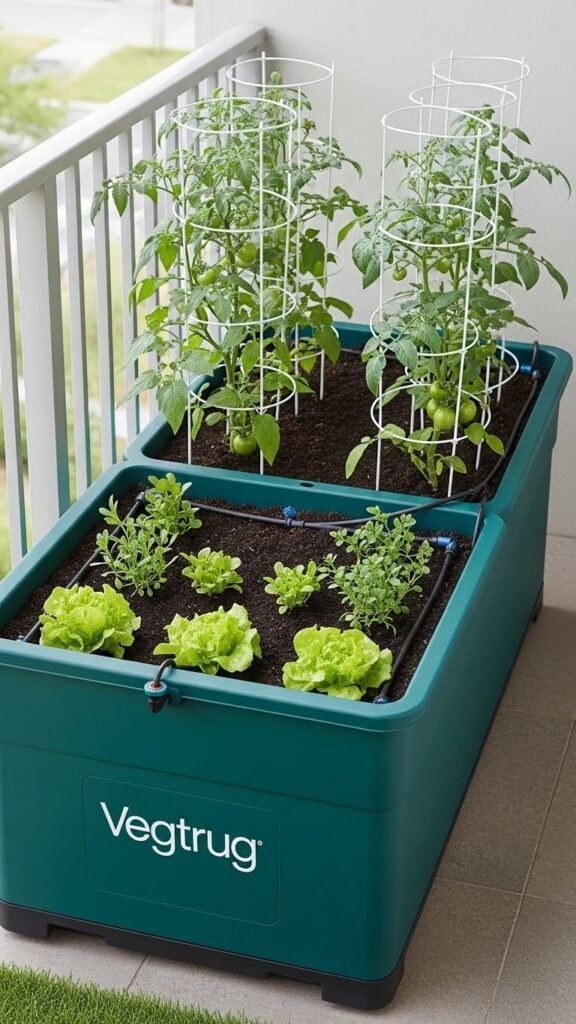
When you place the deeper soil at the back and the shallower bed at the front, a Vegtrug lets you grow root-heavy crops and taller plants without shading the shorter ones.
You’ll position lettuce and herbs forward, carrots and potatoes deeper back, install drip irrigation to save time, and guarantee root aeration with loose mix.
It’s tidy, efficient, and frees your balcony.
Balcony Corner L-Shape Veg Plot
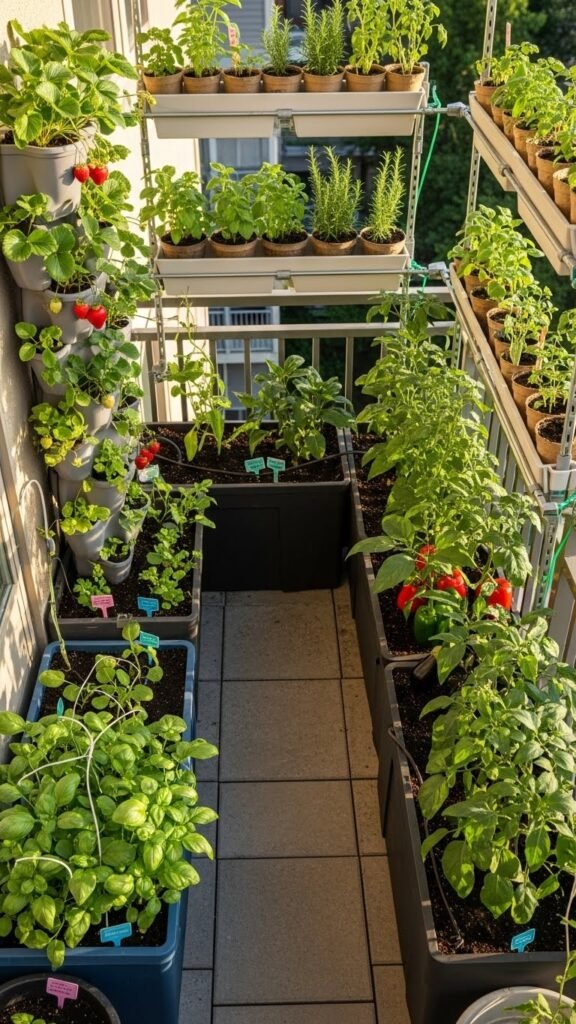
Because corners give you two walls of microclimate to work with, an L-shaped veg plot on your balcony lets you stack crops vertically and make the most of limited floor space.
You’ll do a quick microclimate assessment, place deep-rooted beds in warmer zones, and add rail mounted shelving for herbs and seedlings.
Keep paths clear, rotate crops, and enjoy effortless productivity.
Hanging Basket and Rail Planter Mix
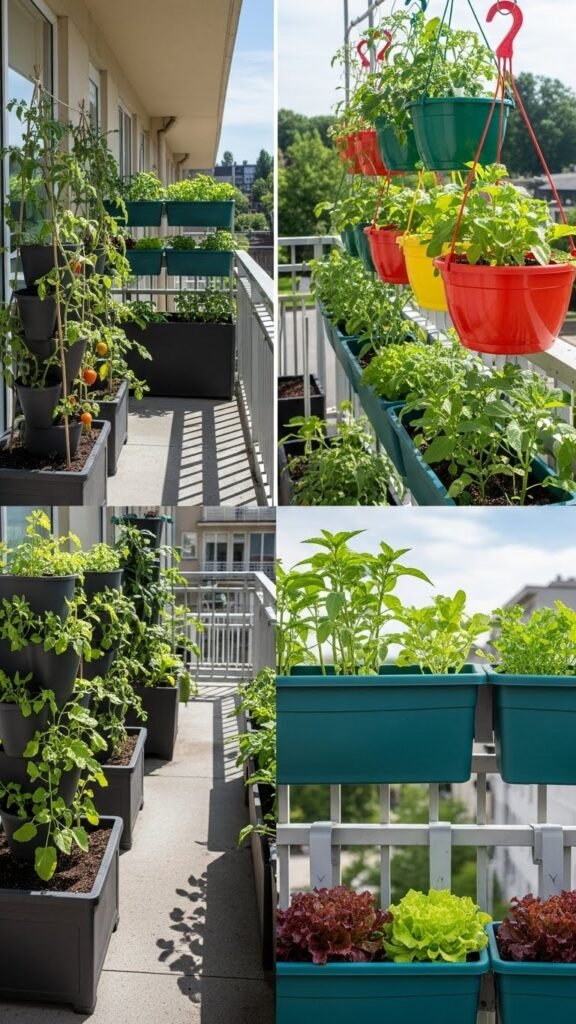
Shifting from your L-shaped beds to vertical edges, hanging baskets and rail planters let you extend planting space upward and outward without crowding the floor. You’ll combine sun loving combos—tomatoes, chiles, trailing basil—with compact lettuces in shade pockets. Mount securely, plan for watering access, and keep a simple maintenance schedule.
This setup frees you to grow boldly and move plants as needed.
Cedar Slot Table Raised Herb Station
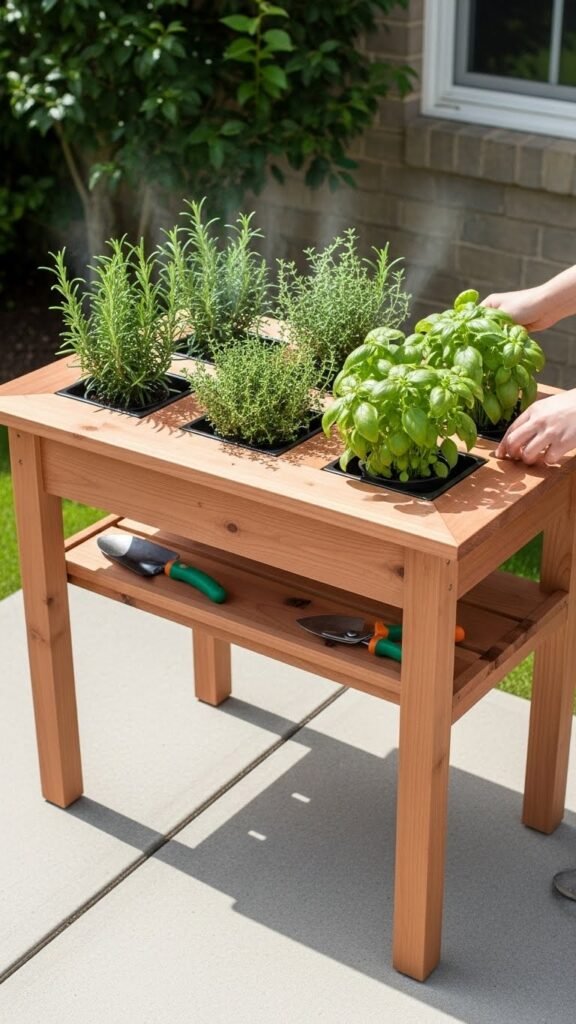
Build a cedar slot table to lift your herbs to waist height for easier access and better drainage. You’ll arrange rosemary, thyme and basil for scent pairing and easy harvesting. Slots improve airflow and runoff, extending plant health. Add discreet tool storage beneath for trowel and pruners. The design keeps lines clean, maximizes light, and frees you to garden without strain or clutter.
Compact Square-Foot Raised Box
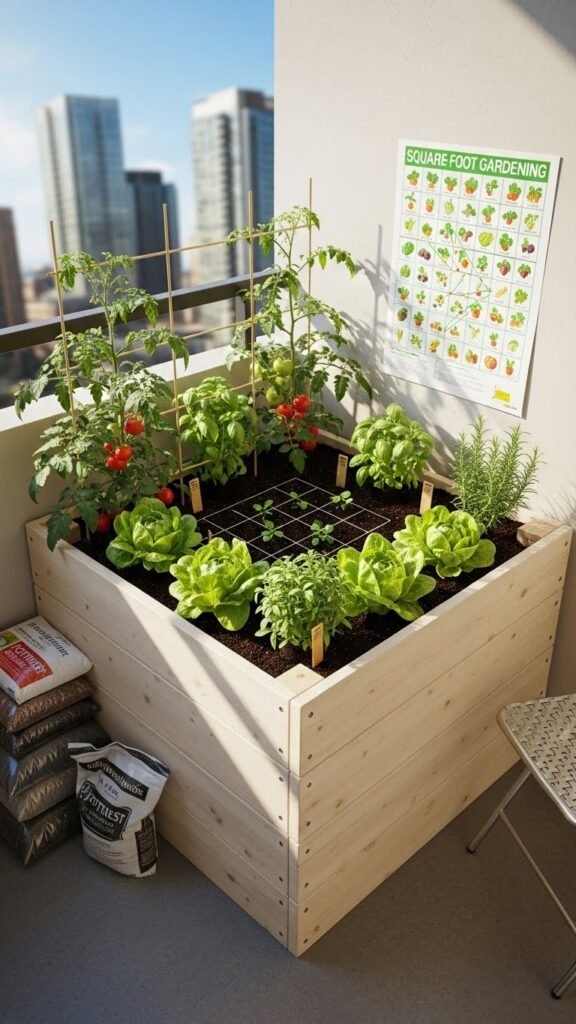
Start small and grow smart with a compact square-foot raised box that puts a full-season, high-yield bed into even the tiniest balcony.
You’ll plan with soil mixes tailored for drainage and fertility, use spacing charts to maximize every square, and choose compact varieties.
It’s tidy, efficient, and gives you the freedom to harvest fresh food without fuss or wasted space.
Crate Shelf Vertical Vegetable Tower
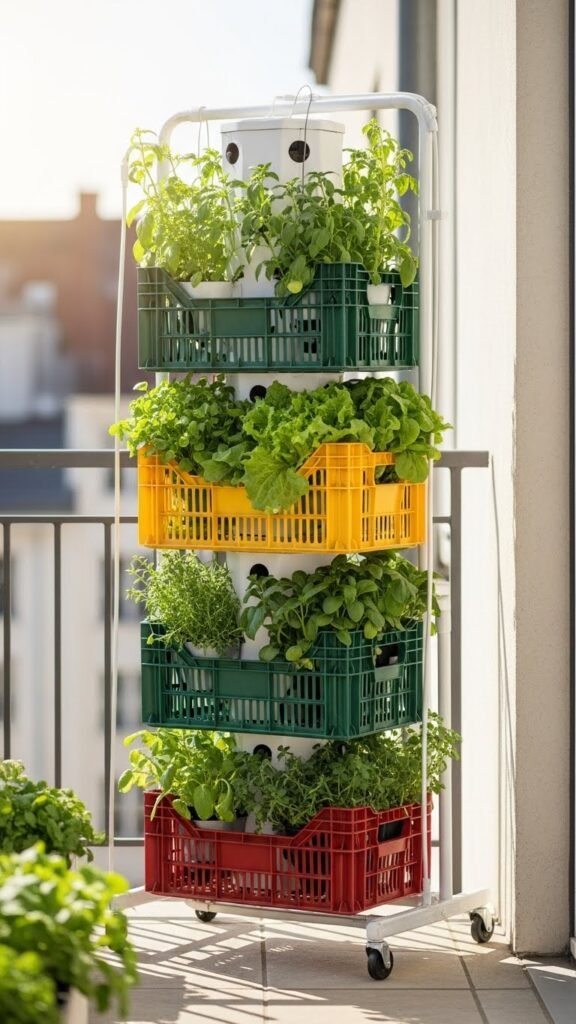
A crate-shelf vertical tower lets you stack productive layers of vegetables in a narrow footprint, so you can grow upward instead of outward on a tiny balcony.
You assemble recycled crates on a simple frame, add potting mix, and arrange herbs, lettuces, and compact tomatoes.
Use vertical irrigation for even moisture and practice crate rotation to balance light and harvests, keeping maintenance quick and freeing.
Shade-Layered A-Frame for Cucumbers and Greens
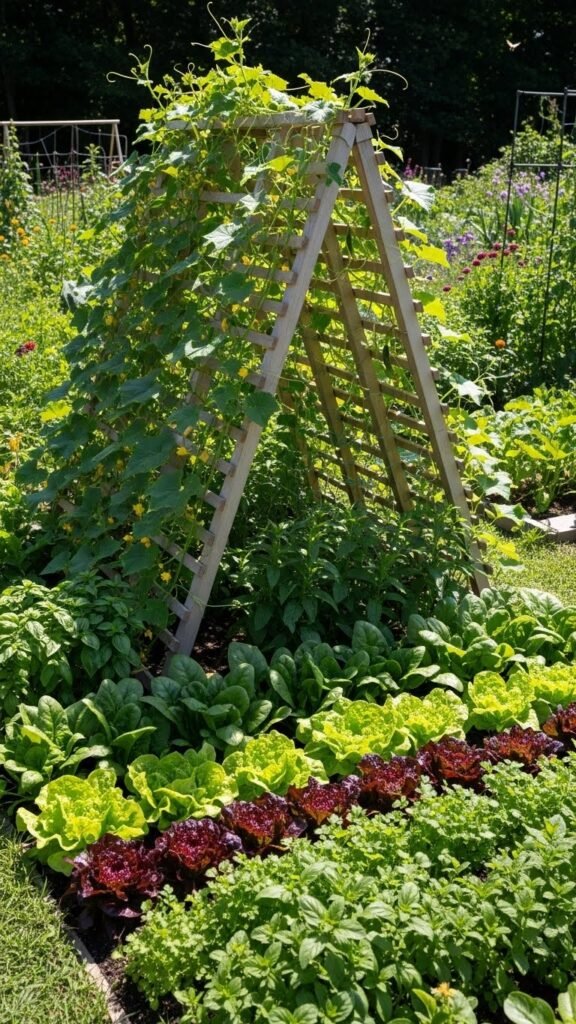
When you build an A-frame that staggers shade, you’ll give cucumbers room to climb while letting shade-tolerant greens thrive beneath; place the frame so its taller side faces the strongest sun, and orient slats or netting at angles that cast dappled shade rather than full shadow.
You’ll create layered microclimates: train shade tolerant cucumbers on upper rungs and grow lettuces, spinach, and herbs below for effortless, freeing productivity.
Row of Deep Pots for Peppers and Eggplants
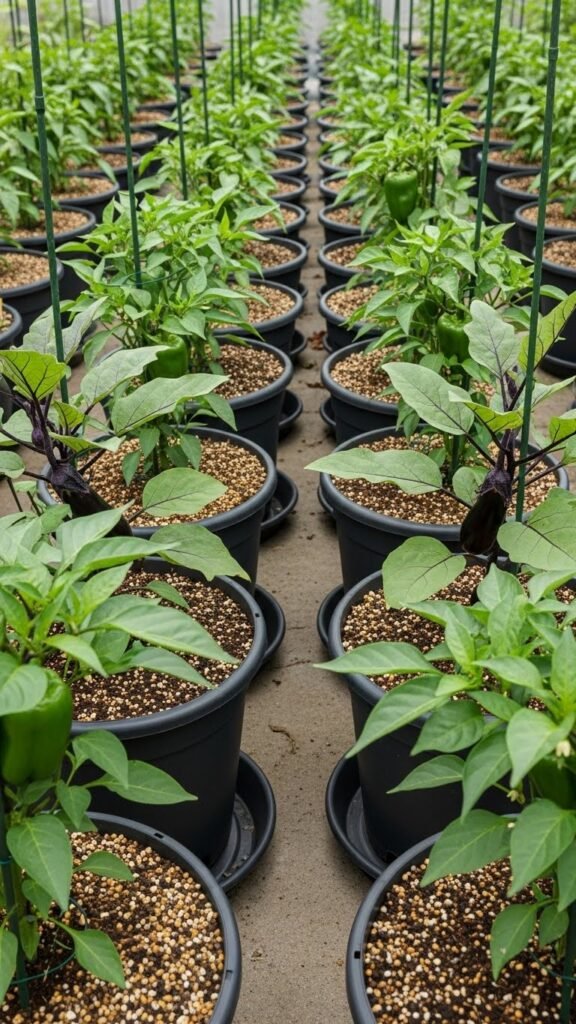
Set a straight row of deep pots to give peppers and eggplants the room their roots need to grow robustly; each container should be at least 12–16 inches deep and spaced to allow air and light between plants.
Choose heat tolerant varieties, add rich potting mix, and prioritize drainage improvement with coarse grit and roomy saucers.
Water, feed, and stake regularly so you stay free to harvest.
Narrow Balcony Linear Succession Plan
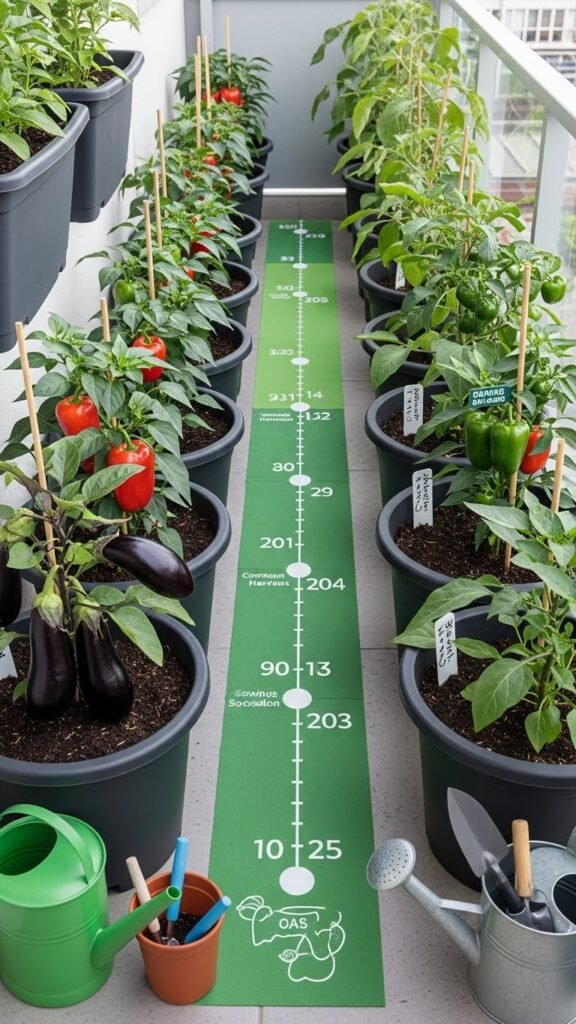
If your peppers and eggplants are flourishing in a straight row of deep pots, you can use that same linear logic to run a narrow balcony succession plan that keeps fresh produce coming all season.
You’ll stagger sowing and harvest dates, rotate space-efficient varieties, and prioritize compact roots.
This narrow succession approach frees you to harvest continuously while keeping maintenance minimal and focused.
Staggered Step Planter Staircase
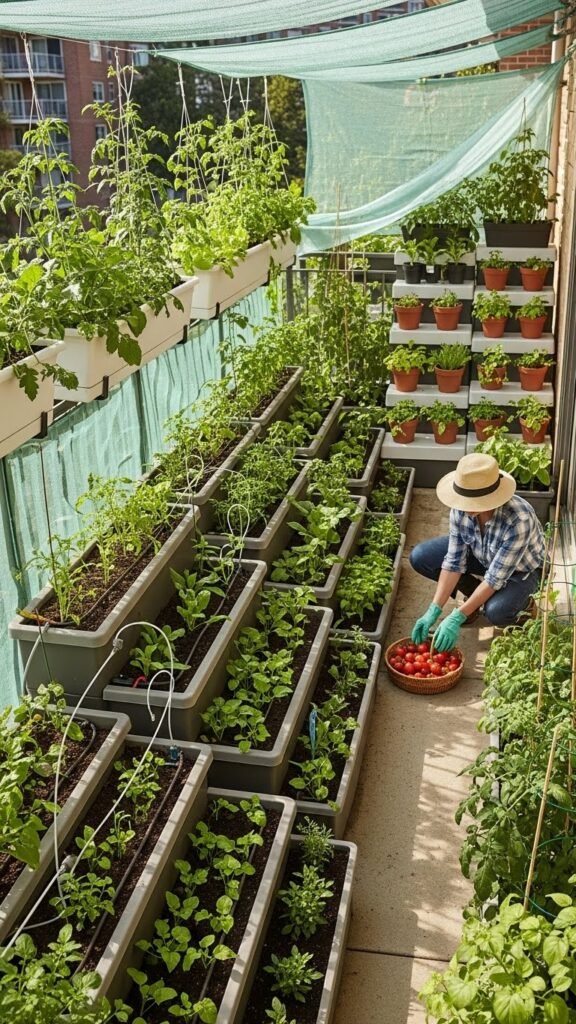
Arrange a staggered step planter staircase to maximize light and access on a tight balcony while creating layered planting zones for continuous harvests.
You’ll fit rail mounted boxes and freestanding steps, use shade cloth where needed, and plan succession planting with rotating crops to avoid pests and soil fatigue.
Maintain clear pathways, water efficiently, and harvest often for liberated, productive growing.
Potted Companion Planting Belt
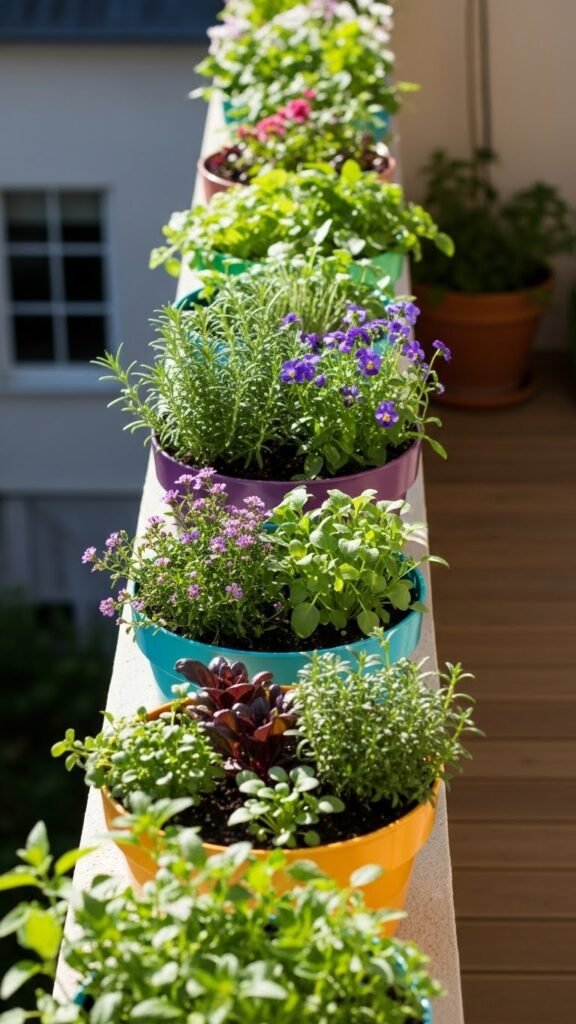
Moving from a staggered step planter to a potted companion planting belt lets you carry layered productivity along a narrow railing or ledge.
You arrange herbs, edible flowers and compact vegetables in rhythm, using companion guilding to boost yield and deter pests.
Pots create microclimate buffering, sheltering roots and concentrating warmth.
You’ll enjoy a tidy, mobile strip that maximizes sun, scent and freedom.
Portable Straw-Bale Mobile Beds
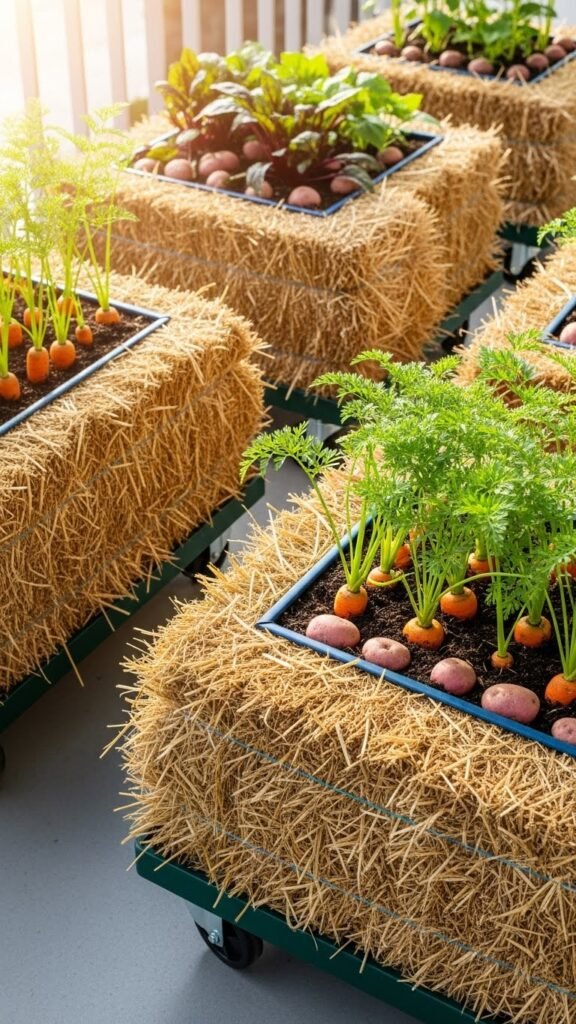
Think of portable straw-bale beds as lightweight raised beds you can wheel, flip, or replace season by season to grow deep-rooted veggies where space is tight.
You’ll set mobile balebeds on a balcony cart or platform, use wheeled strawpads for quick repositioning, and plant carrots, beets, or potatoes.
They’re tidy, breathable, and give you freedom to rearrange your garden instantly.
Drip-Irrigated Balcony Bed Network
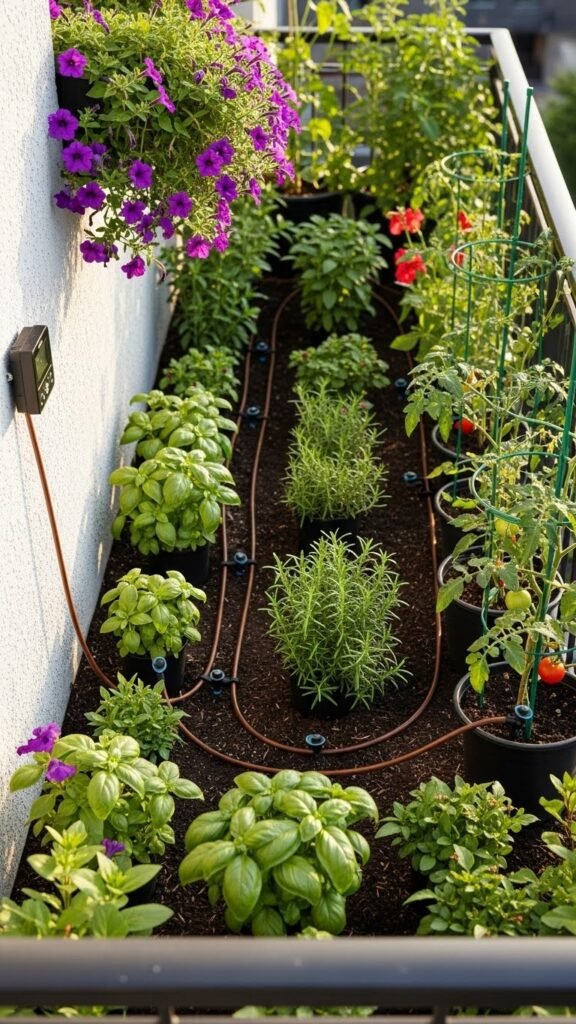
Connect your balcony beds with a simple drip-irrigation network to deliver steady, precise water where roots need it most.
You’ll run main tubing, add drip emitters at each plant, and tailor flow to crop needs.
Plan bed spacing for access and root spread, mount a timer for freedom, and keep lines tidy.
This system saves water, time, and worry.