
You can turn a narrow balcony into a gallery of color with compact, well-chosen plants and smart containers. Focus on light, airflow, and drainage as you mix bold contrasts, trailing accents, and layered heights. I’ll show practical combos that suit different exposures and maintenance levels, plus tips for spacing and care — keep going to find the setups that fit your balcony and schedule.
Cobalt Blue and Orange Contrast Planter
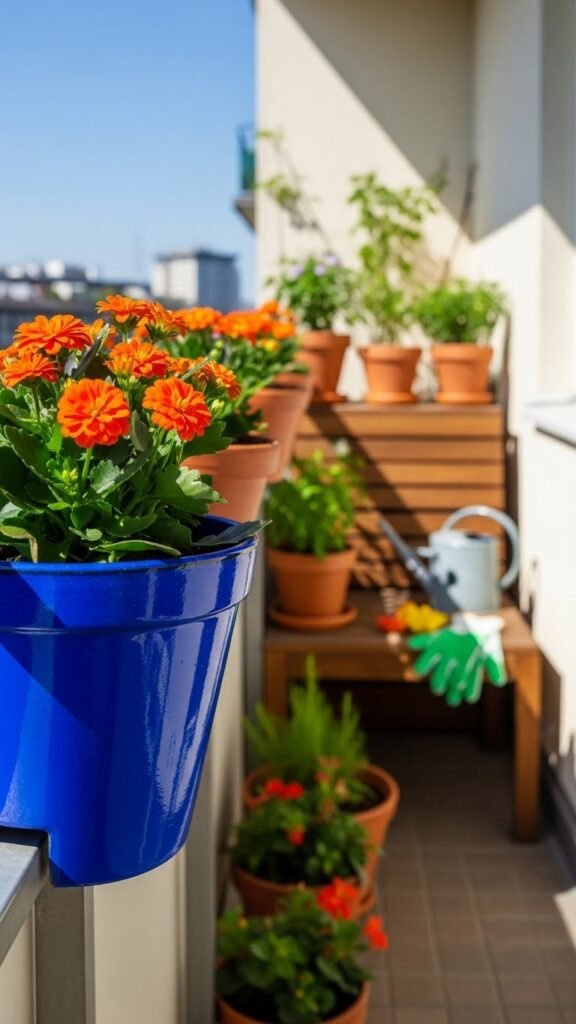
When you place a cobalt blue planter against your balcony railing, the deep glaze makes orange blooms pop and defines a compact focal point; position it where it gets at least six hours of sun so the contrast stays vivid and the flowers keep blooming.
You’ll favor cobalt contrast and orange accents—choose sturdy soil, tidy drainage, and compact varieties so you maximize space, light, and effortless color.
Pink and Green Cheerful Combo
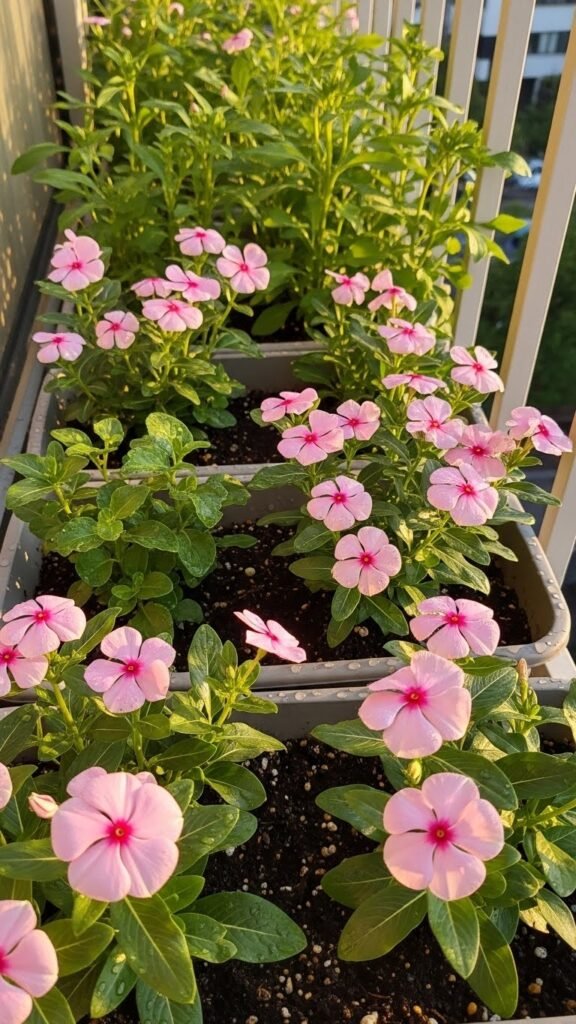
If you want a cheerful balcony display, pair soft pink blooms with lush green foliage to create an airy, uplifting focal point; set the planter where morning sun reaches it for four to six hours so the pinks stay vivid without scorching. Use compact planters to maximize space, choose pet safe blooms, arrange taller greens at the back, and keep soil evenly moist for carefree, freeing enjoyment.
Purple and Yellow Balloon Flower Mix
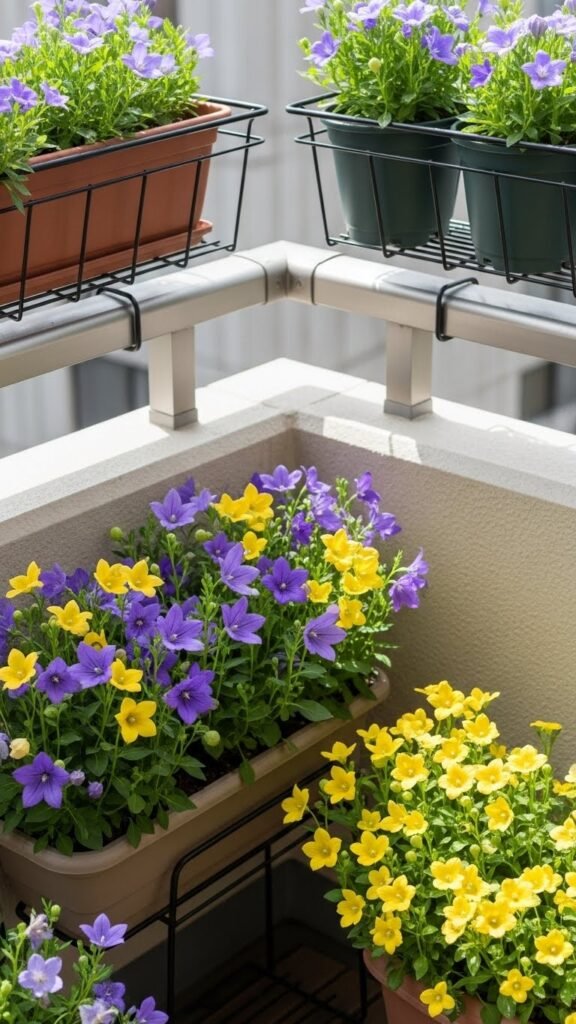
Brighten a sunny corner with a compact mix of purple and yellow balloon flowers that pop against small balcony railings and container groupings. You’ll place a balloon bouquet in a shallow trough to maximize bloom visibility, balancing space and airflow. Use color psychology: purple soothes, yellow energizes. Prune spent blooms, rotate pots for even light, and enjoy a low-fuss, freeing display.
Warm Red, Orange, and Yellow Trio
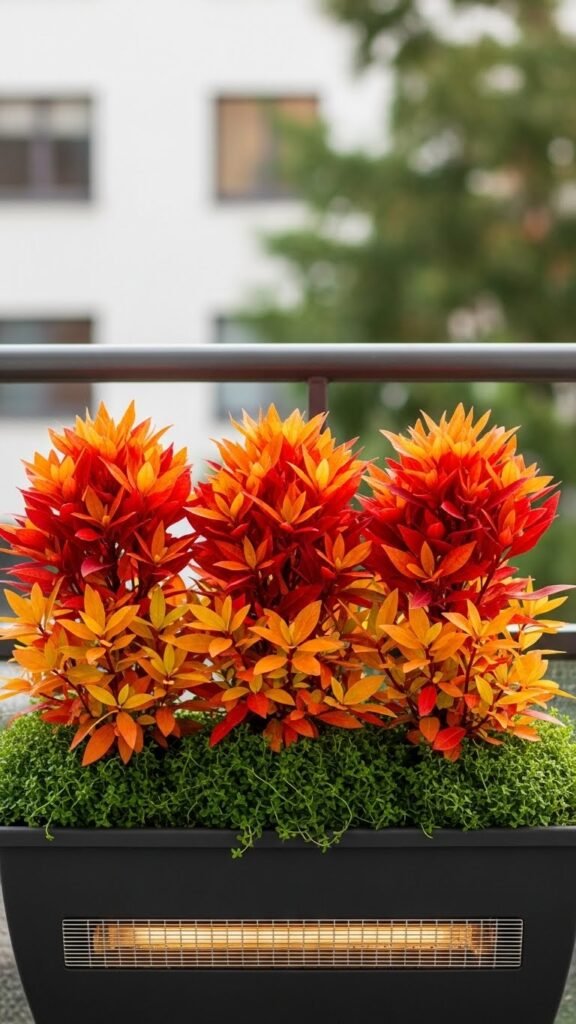
Bring a compact trio of warm reds, oranges, and yellows onto your balcony to create a focused, high-impact corner that reads clearly from both inside and outside. You’ll choose compact varieties with sunset foliage to keep scale controlled, group them in a heated container for extended bloom, and arrange for seasonal contrast with textured greens. Planting this way frees movement and sightlines.
Cool Blue and Lavender Balcony Bed
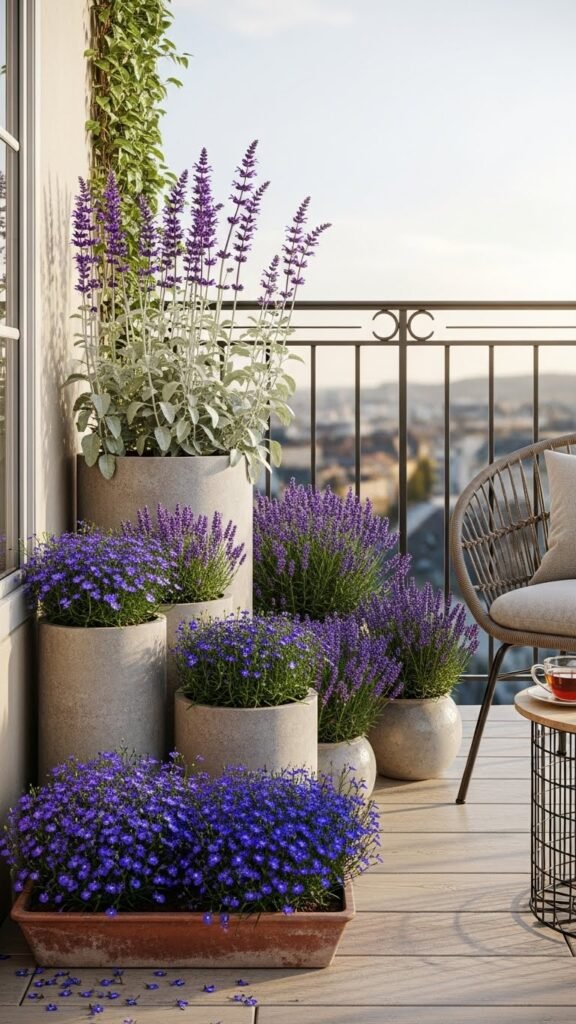
For a calm, cohesive look that reads well from both inside and out, pick compact blues and lavenders with varied textures and staggered heights so sightlines stay open and movement isn’t blocked.
You’ll mix cerulean drifts of lobelia with silvery-leafed salvias and lavender whispers from compact lavenders.
Arrange in shallow troughs and staggered pots so you can prune, rearrange, and breathe easy on your balcony.
Coastal Blues With White Accents
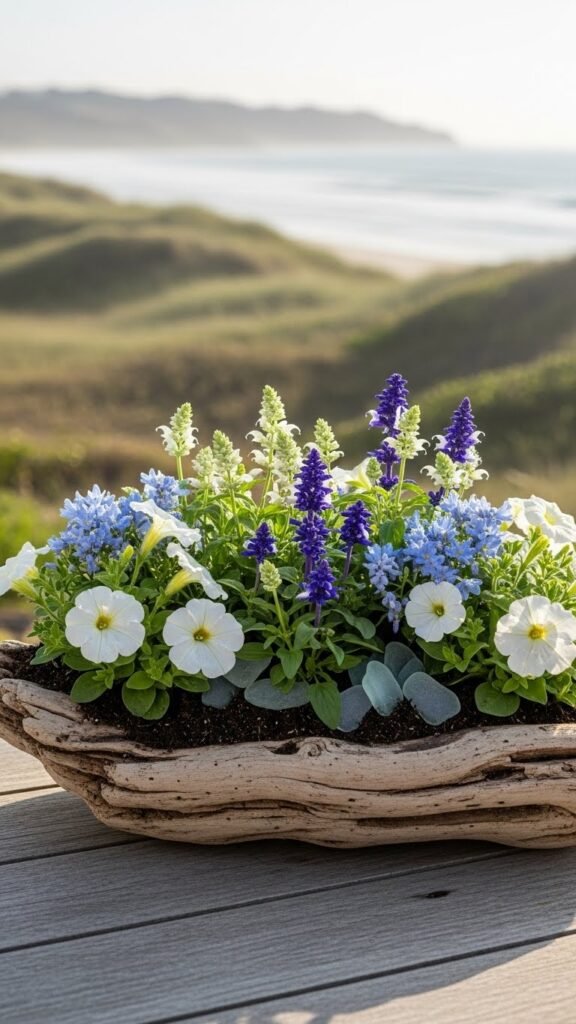
When you aim for a breezy, coastal look, pair cool blues with crisp whites and keep planting low and layered so sightlines stay open and wind can move through.
You’ll choose ocean inspired blooms, white trimmed petunias and compact salvias.
Arrange in a driftwood planter, tuck sea glass among soil, and leave space for airflow so plants sway freely and maintenance stays simple.
Jewel Tone Orchid and Iris Display
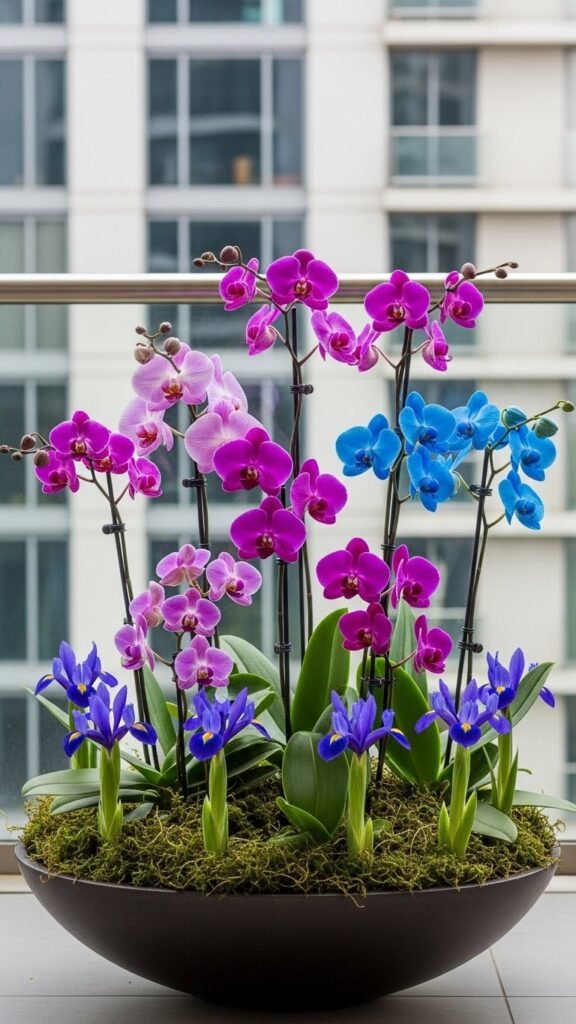
If you want a dramatic balcony centerpiece, anchor a low, wide trough with jewel-toned orchids and compact irises so their contrasting forms read clearly from several angles.
You’ll position orchids for partial shade, follow orchid caretips for watering and drainage, and set irises in slightly raised pockets for quick drainage. Iris companioning with low foliage keeps sightlines open and maintenance minimal.
Geranium-Focused Sunny Window Box
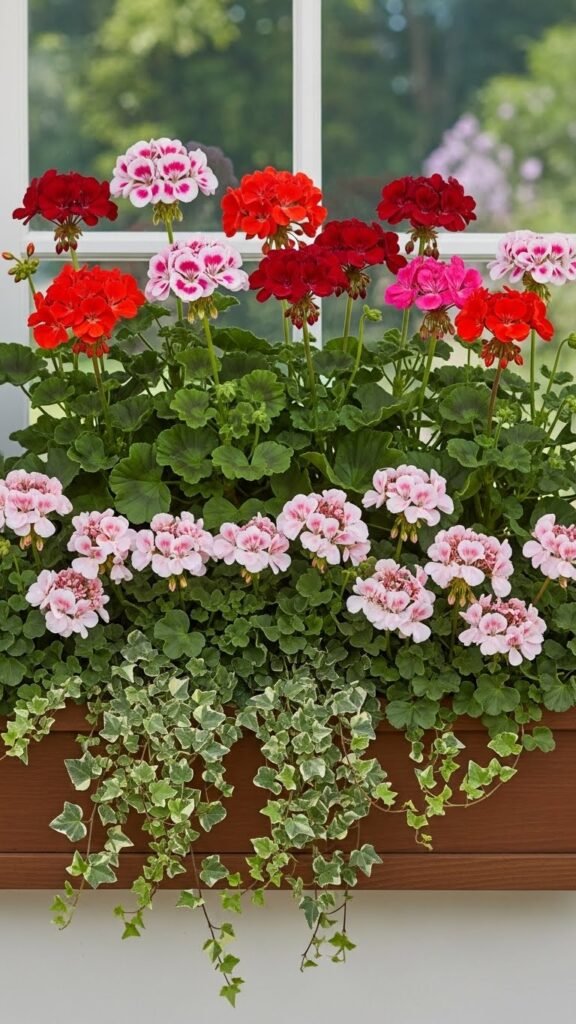
Because geraniums thrive in full sun and deliver bold, long-lasting color, you’ll center your sunny window box on a mix of zonal and ivy geraniums chosen for complementary heights and bloom colors.
You’ll arrange taller zonals toward the back, trailing ivies at the front, minding window boxsizing for root depth, drainage, and airflow so sunny geraniums stay vigorous and free to flourish.
Petunia and Marigold Hanging Harmony
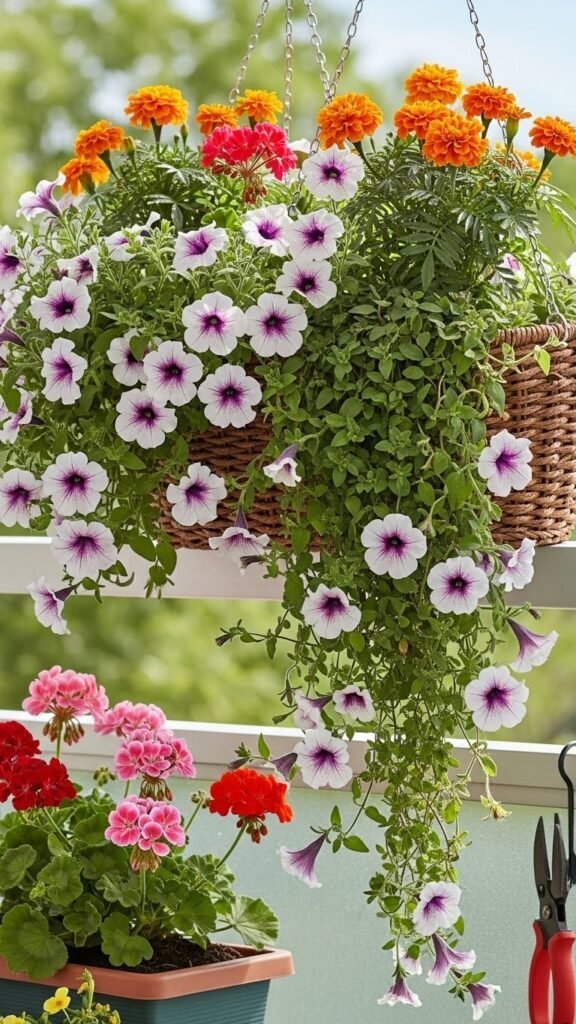
You’ve planned a sun-dominant window box with geraniums; now apply the same attention to spacing, drainage, and light when you switch to hanging displays of petunias and marigolds. Choose sturdy baskets, position petunias for trailing growth and marigolds for upright pops. Aim for hanging contrast: mix colors, control water, deadhead regularly, and enjoy the fragrant spill that frees your balcony into a bold, living room.
Mandevilla Centerpiece With Trailing Accents
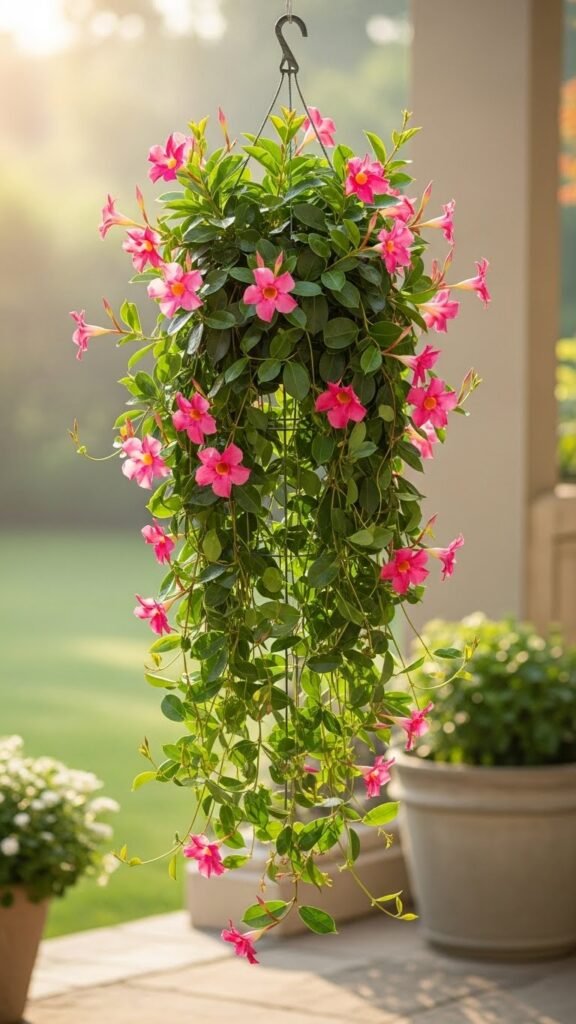
Think of a mandevilla as the bold focal point that anchors a hanging centerpiece while trailing accents soften its base and draw the eye downward.
You’ll train vines upward on a compact trellis, balance bright blooms with trailing foliage for movement, and choose containers sized for patio scale. Prune lightly, feed regularly, and position for morning sun so the display feels free and effortless.
SunPatiens and Dark Foliage Contrast Pot
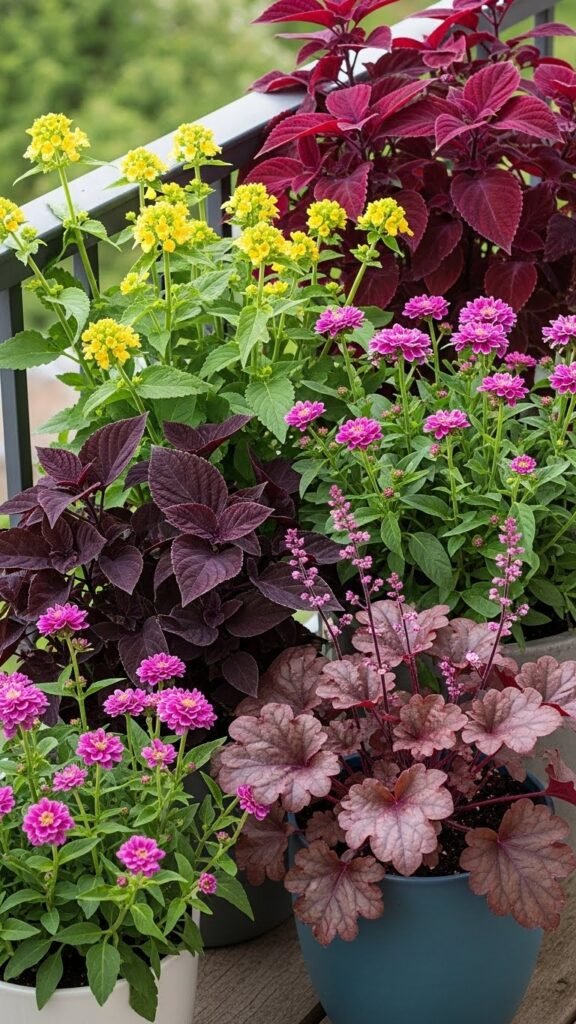
Contrast changes a balcony’s mood, and SunPatiens paired with deep-hued foliage give you instant drama without fuss.
You’ll place plants with shade tolerance against black-leaved coleus or Heuchera for glossy texture contrast. Mind container spacing so each root has room, and group pots with similar moisture needs. This setup frees you to move pieces and tweak sightlines for bold, low-maintenance impact.
Lavender and Lamb’s Ear Soothing Arrangement
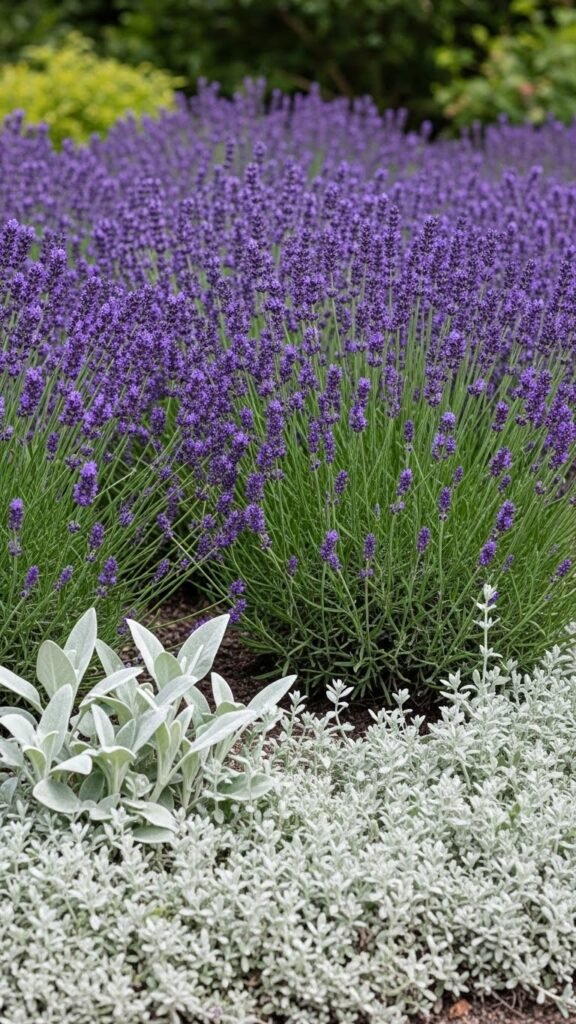
After the bold drama of SunPatiens and dark foliage, shift toward a calmer palette by pairing fragrant lavender with the silvery softness of lamb’s ear.
You’ll place lavender toward the back for height and scent therapy, situating lamb’s ear at edges to cascade its silver texture. Choose well-draining soil, allow full sun, and space plants so air circulates freely for resilient, low-maintenance serenity.
Coral Bells and Dwarf Lupine Shade Pot
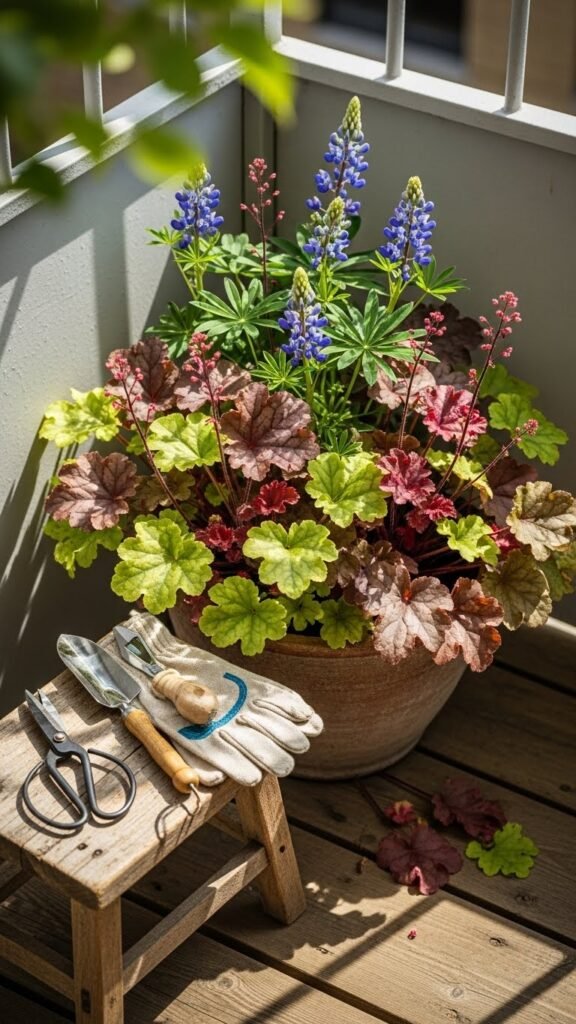
For a cool, dappled corner of your balcony, pair shade-loving coral bells (Heuchera) with compact dwarf lupines to get layered foliage and pinpointed spring color. You’ll position a shallow pot where light filters, plan for a shade palette of burgundy, lime, and soft blue, and choose compact maintenance varieties so you can prune, deadhead, and rotate pots without feeling tethered.
Bold Vermilion and Teal Succulent Combo
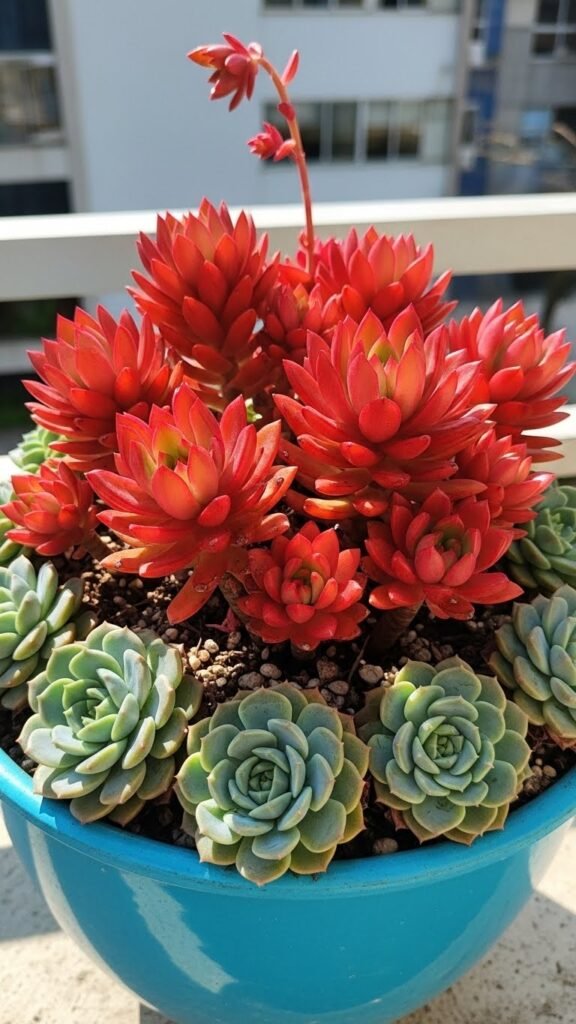
Bring bold vermilion succulents together with teal-toned rosettes to create a high-impact focal pot that reads well from across your balcony. You’ll arrange compact groups for succulent colorblocking, leaving breathing room so each hue reads.
Choose fast-draining mix, plan vermilion watering at edges to avoid rot, and position the pot where sun and breeze let these sculptural forms claim your outdoor corner.
Pastel Wildflower and Mossy Green Mix

When you tuck soft pastel wildflowers into a mossy-green carpet, you create a serene, layered pot that reads beautifully from both close up and across the balcony.
You’ll sow a seed packet mix aimed at meadow or woodland edge conditions, spacing seedlings for airy drifts. Keep shallow soil, steady moisture, and lighter feeding so blooms stay delicate while moss anchors the scene.
Bougainvillea and Calibrachoa Cascade
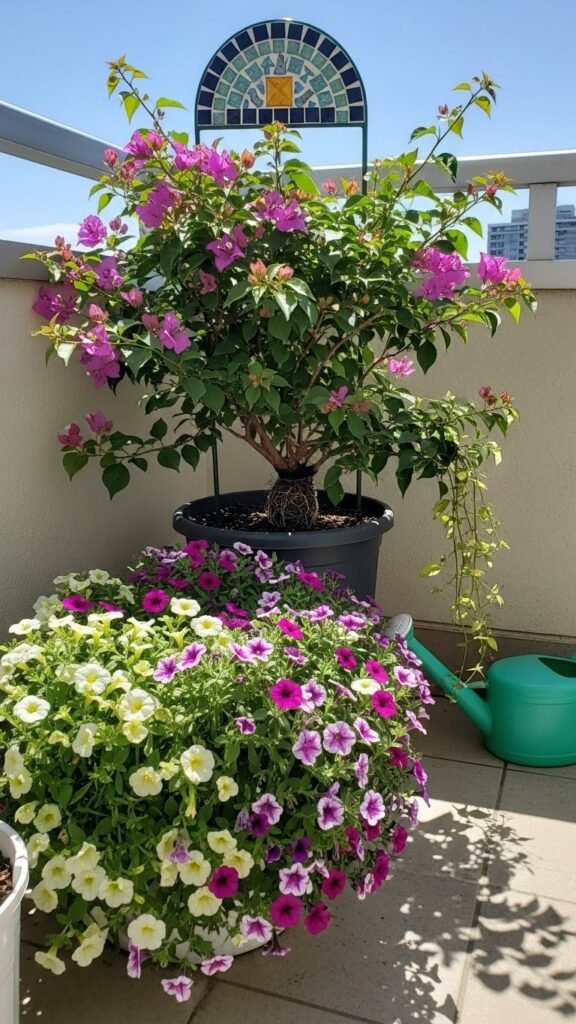
Lanai White’ Verbena With Bright Calibrachoa
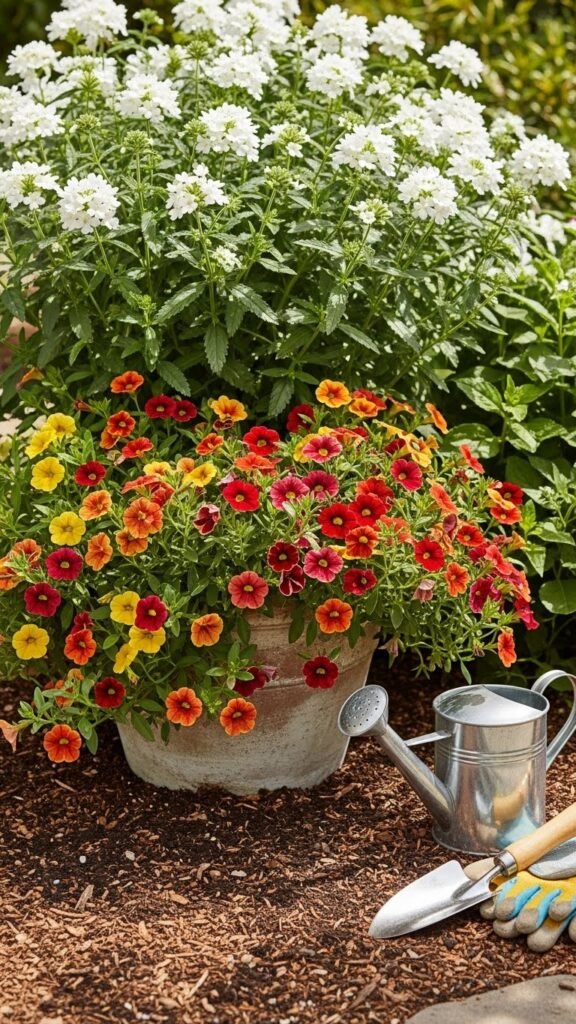
If you liked the bold color contrast of bougainvillea and calibrachoa, try pairing Lanai White verbena with bright calibrachoa for a clean, high-impact look. Place Lanai for background sway and calibrachoa at the edge for spill.
Follow lanai verbena care: full sun, moderate watering, deadhead sparingly. Use calibrachoa pairing tips: compact mixes, well-draining soil, and regular feeding for freedom to rearrange.
Chrysanthemum Fall-Extend Container
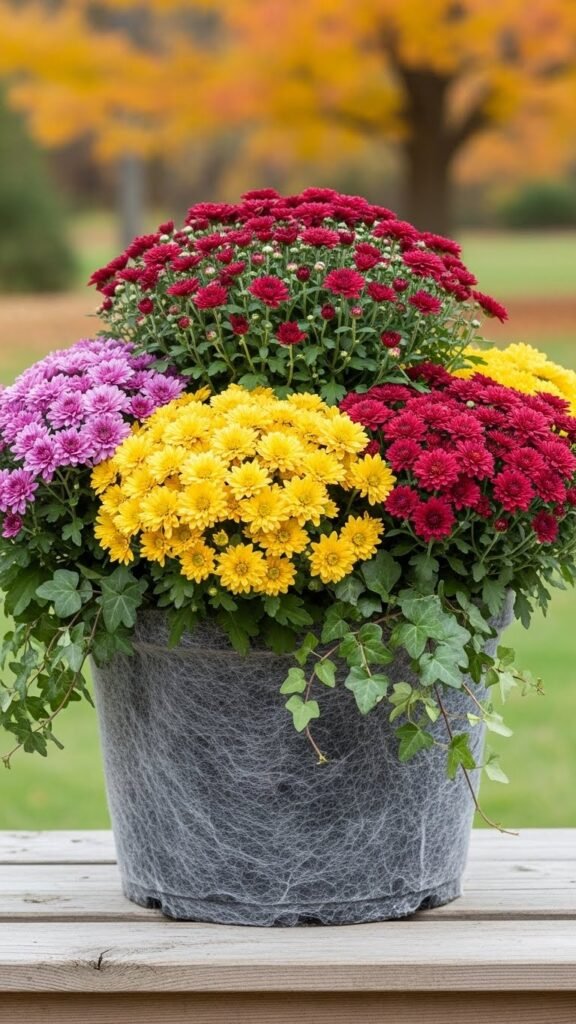
Bring chrysanthemums forward in your containers to keep fall color going strong; choose mound-forming or spray varieties that fit the pot’s scale and leave room for airflow.
You’ll prune spent blooms, position stems for balance, and monitor soil moisture as part of chrysanthemum care. Add light container insulation for root protection on chilly nights, arranging plants so you can move or layer pots freely.
Johnny-Jump-Ups Long-Flowering Mix
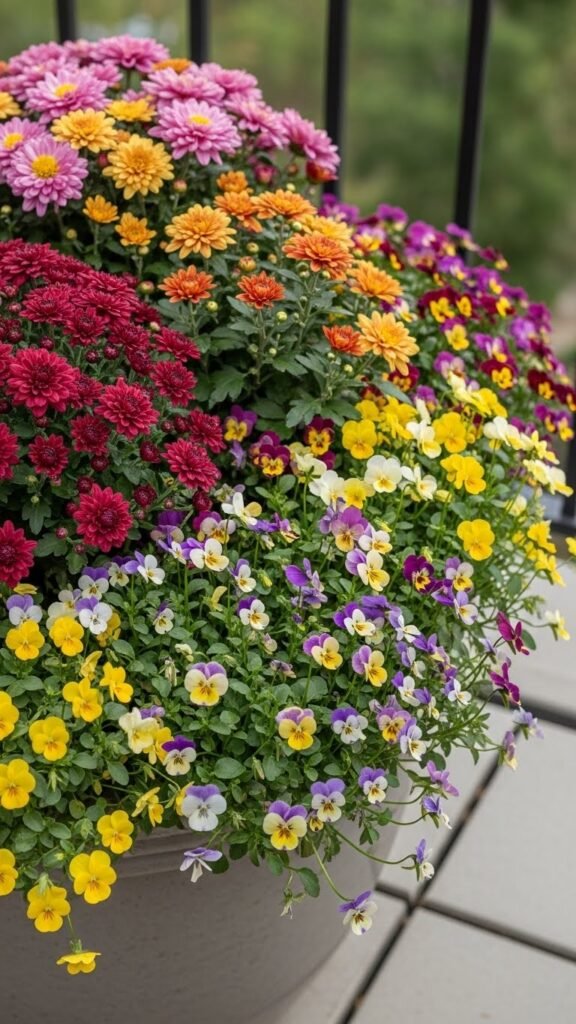
After you’ve tucked chrysanthemums toward the front of a fall container for strong color and airflow, set aside a spot for Johnny-jump-ups long-flowering mix to keep a continuous bloom layer at the edge.
You’ll plant these as compact colorways along the rim, letting their low habit act as fragrant groundcover. Space them for spillover; trim deadheads to prolong flowering and keep the balcony feeling free.
Pinks and Spicy-Scented Dianthus Pairing
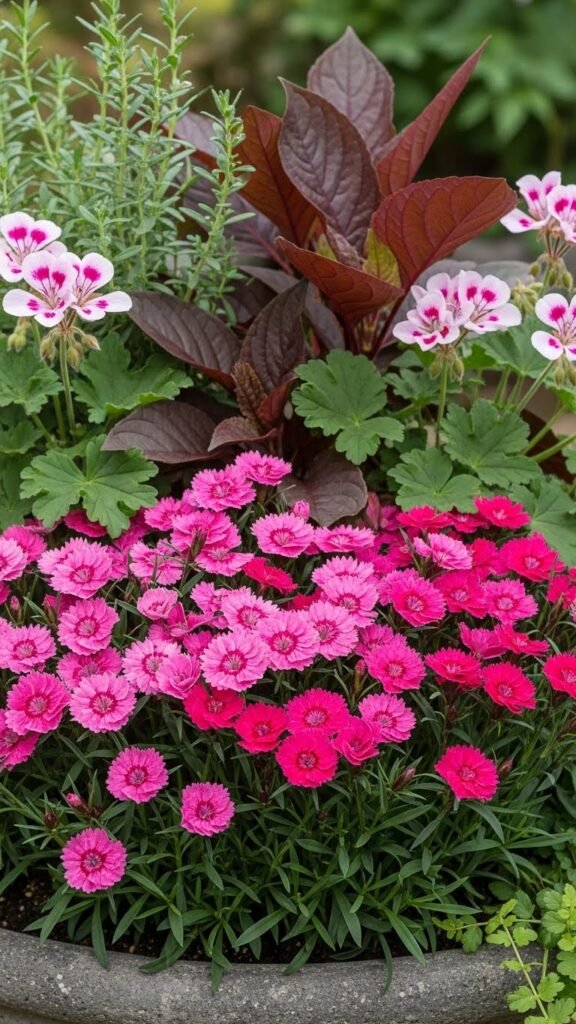
Plant spicy-scented Dianthus (pinks) toward the middle-to-front of your container where their low, mounded habit and fragrant blooms can be easily reached for sniffing and deadheading.
You’ll balance bold foliage behind them, use scent layering with herbs or scented geraniums, and contrast petal texture against smoother blooms. Position for sun, easy access, and carefree maintenance.
Moss Rose Drought-Tolerant Sunny Pot
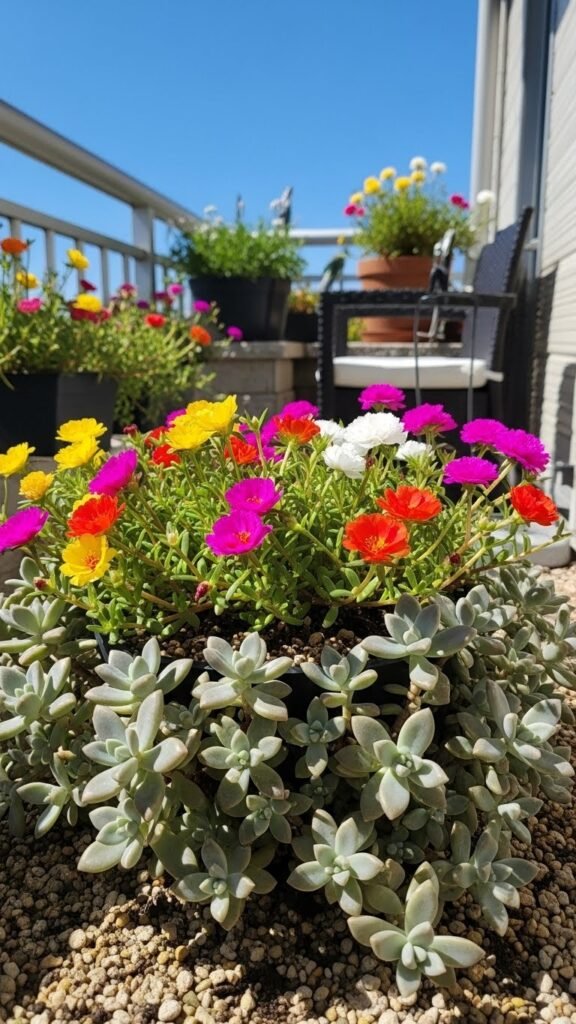
When your balcony bakes in full sun, choose moss rose (Portulaca) for a low, sprawling pot that tolerates heat and long dry spells while giving you nonstop blooms.
You’ll plant a drought tolerant palette: mixed colors, silver-leaved succulents, and gravelly soil. Space plants to trail over the edge, enjoy sun loving textures, minimal watering, and effortless, liberated summer color.