
You’ll find practical, space-smart plans to turn even a small yard into a steady source of fresh produce. I’ll show compact raised beds, square-foot grids, trellised walks, container stacks, and strategies for soil, irrigation, and continuous harvests. Expect clear layouts you can build and manage, plus tips to cut pests and work time—keep going to pick the plan that fits your space and season.
Compact Raised Bed Duo for Small Backyards
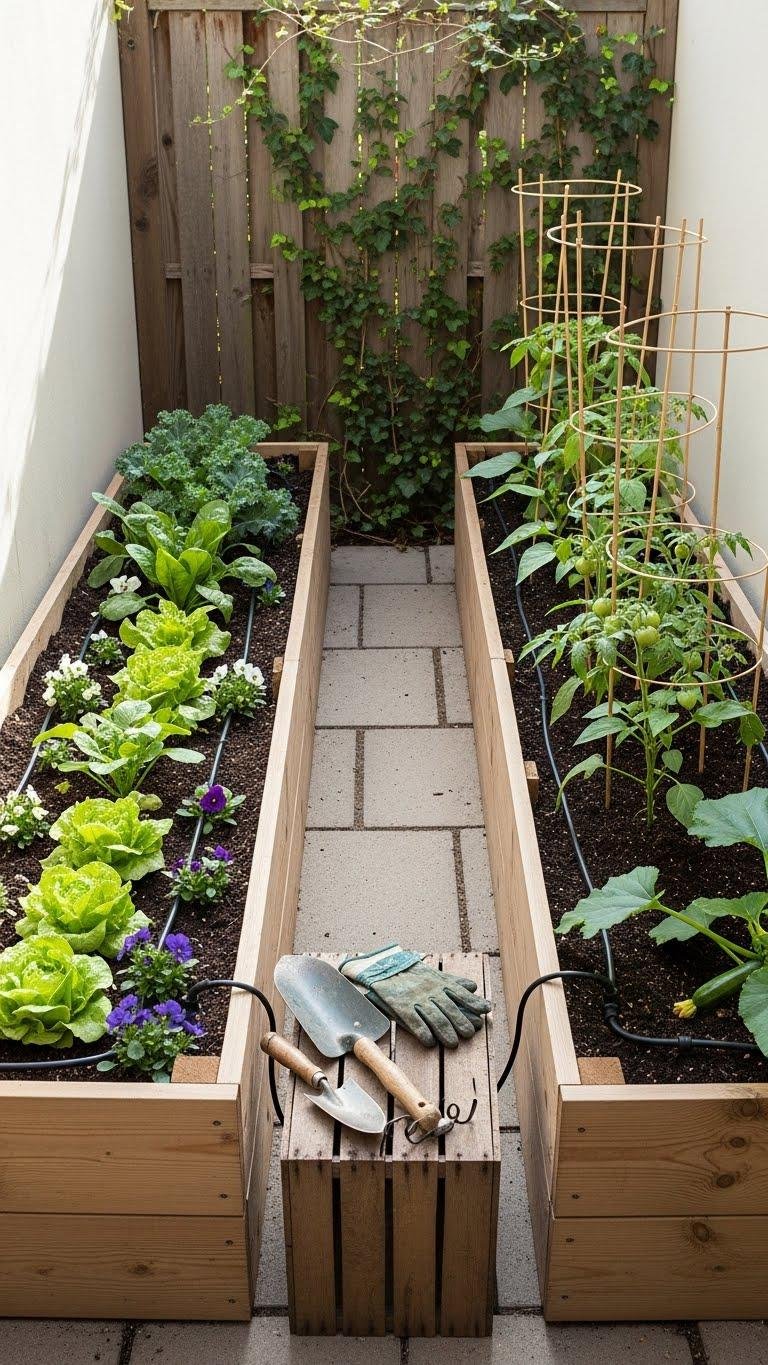
If you’ve only got a narrow patio or a tiny backyard, a compact raised bed duo gives you maximum growing space with minimal footprint: two narrow, long beds let you separate cool-season and warm-season crops, rotate plant families year to year, and reach every row without stepping on the soil.
You’ll focus on soil prep, simple season planning, irrigation efficiency, and accessible trellises to maximize yield.
Four-Square Family Vegetable Patch
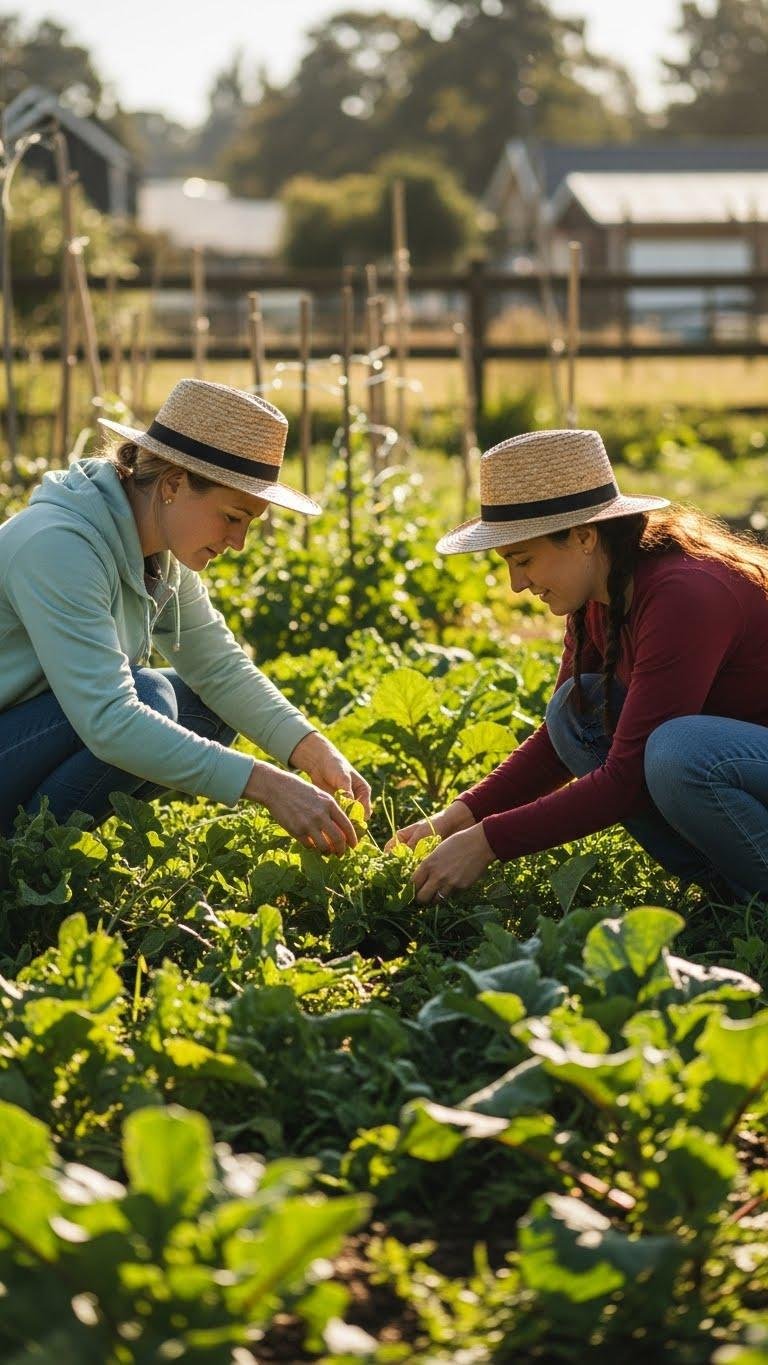
Divide your plot into four equal beds and plant with purpose: a Four-Square Family Vegetable Patch gives you clear rotation, easy access for kids and helpers, and concentrated beds that boost productivity without sprawling into lawn space.
You’ll use companion planting to deter pests and maximize yields, stagger crops for season extension, and keep paths simple so your family can harvest, learn, and enjoy freedom in a tidy, productive layout.
Square-Foot Intensive Kitchen Garden
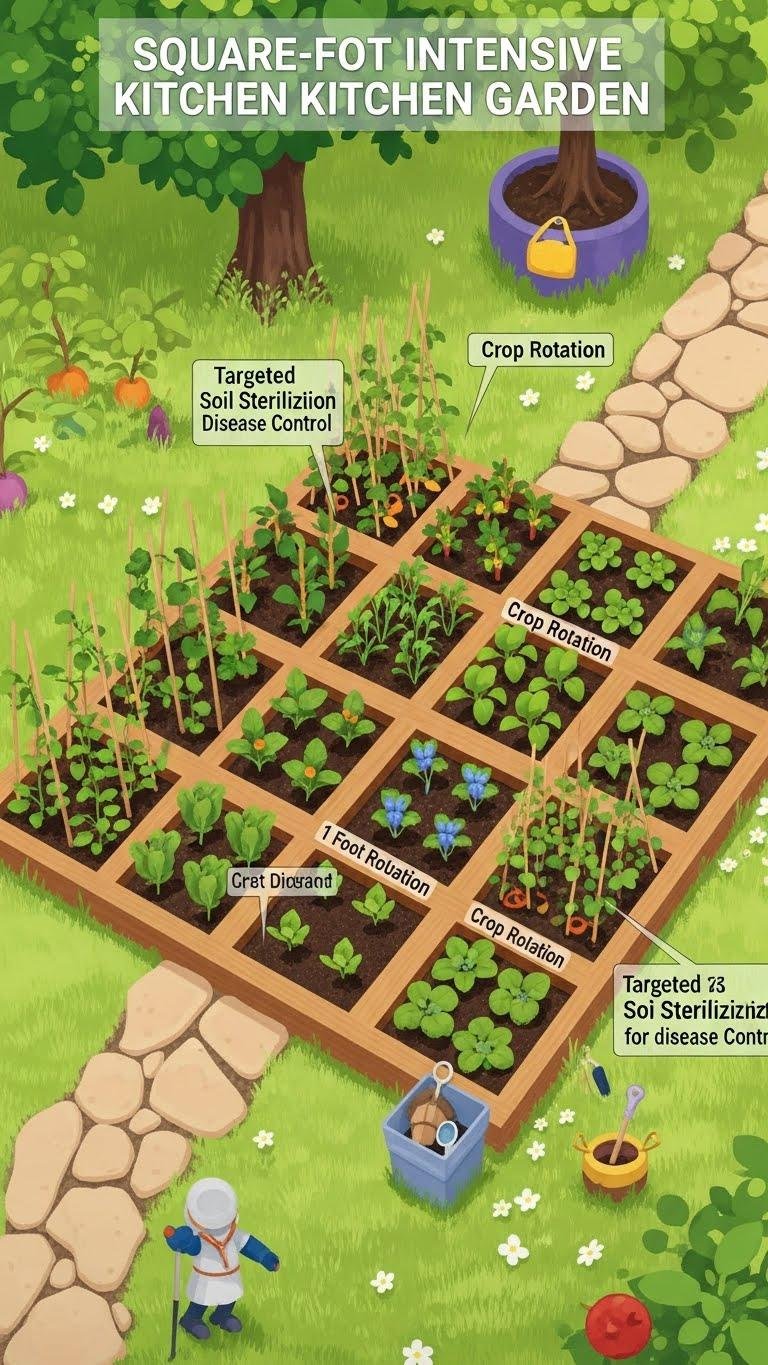
Often the most productive kitchen gardens fit into a single raised bed, and the square-foot intensive method lets you grow more with less work by dividing that bed into a grid of one-foot squares and planting each square to suit crop size and spacing.
You’ll plan crops, use companion planting, rotate squares, limit paths, monitor fertility, and practice targeted soil sterilization for disease control while keeping gardening liberating.
Twin Parallel Beds With Central Pathway
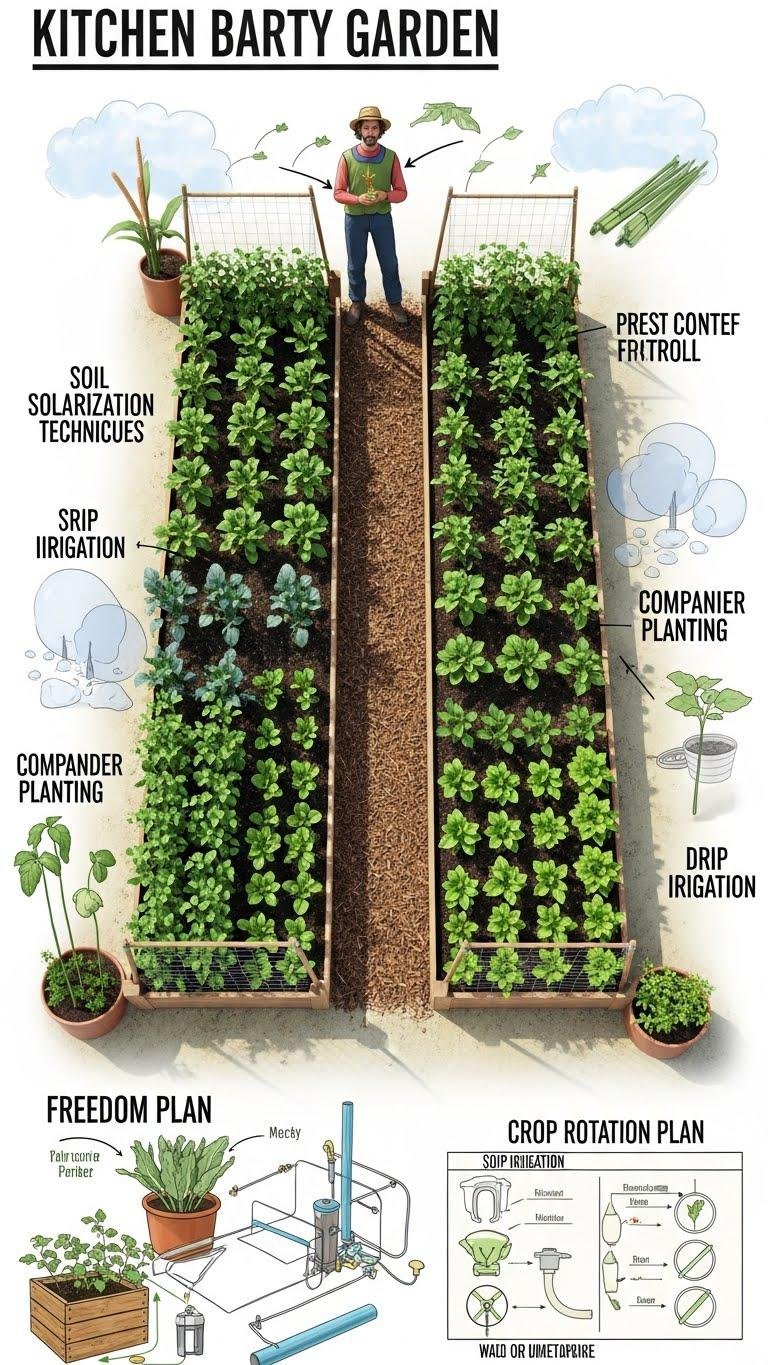
Framing your kitchen garden with twin parallel beds separated by a central pathway gives you efficient access, tidy organization, and clear rotation lanes for crops; you’ll work from the path, reaching into both beds without stepping on soil, which preserves structure and boosts yields.
Plan companion planting for pest control, use soil solarization before planting, mulch paths, install drip irrigation, and rotate crops yearly to keep freedom and fertility.
Block Layout for Succession Planting
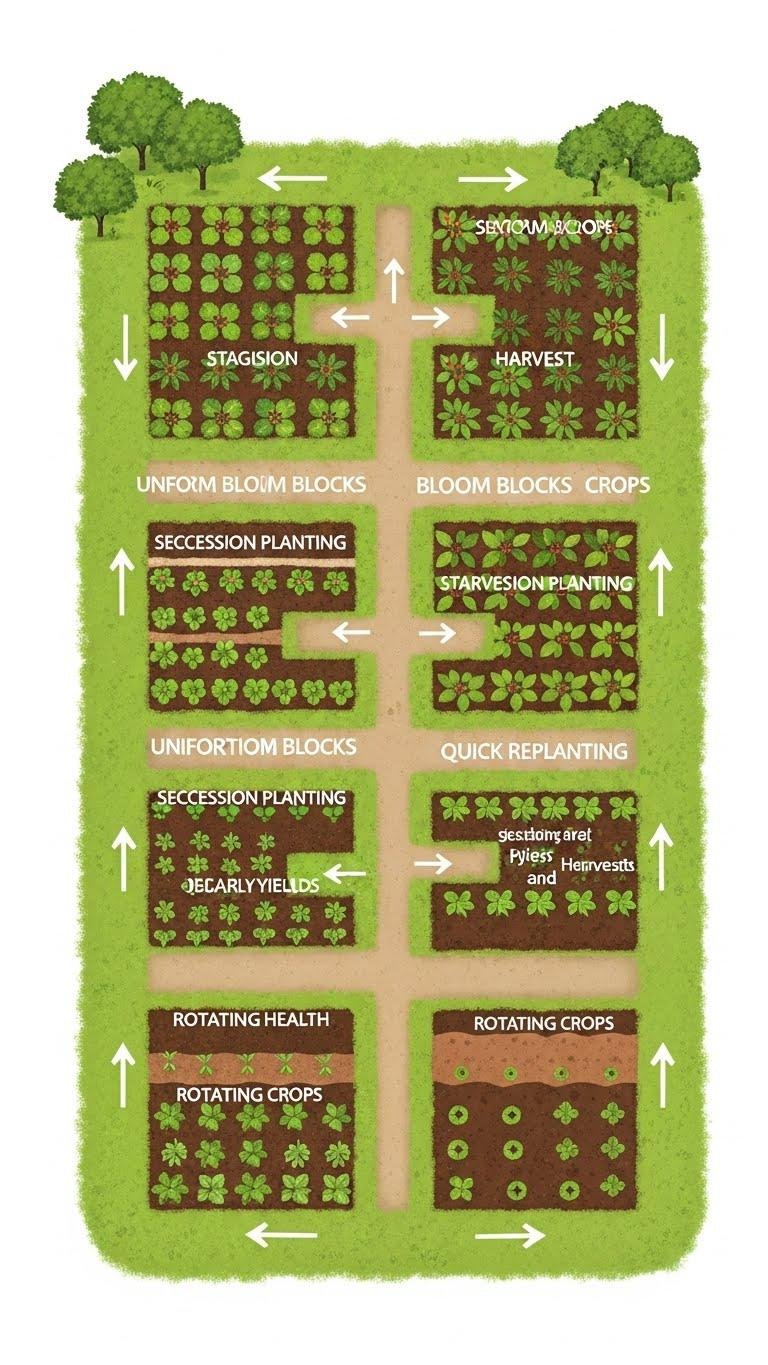
Think in blocks you can plant, harvest, and replant in quick succession so you keep steady production without overworking beds. Lay out uniform blocks for easy succession timing and rotate crops to maintain soil vigor. Use bed staggering to avoid simultaneous harvests, so you’re always harvesting, not overwhelmed. Plan short cycles, keep paths simple, and reclaim space fast for freedom and steady yields.
L-Shaped Potager for Formal Edible Beds
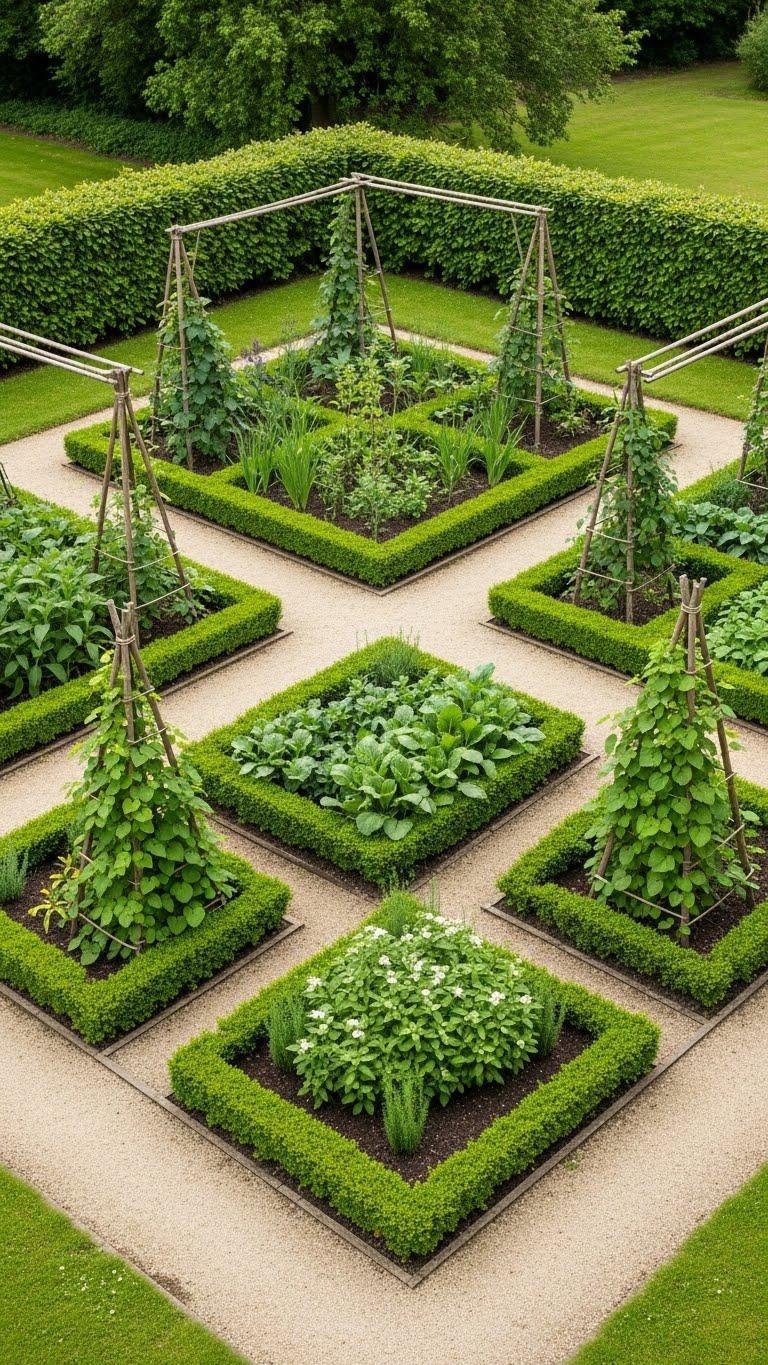
When you lay out an L-shaped potager, you’re creating a compact, formal framework that maximizes edge planting and keeps paths efficient for frequent harvesting and maintenance.
You’ll define beds with formal symmetry, use low hedging for structure, and choose heritage varieties for flavor and resilience.
Position herbs, greens, and trellises for easy access so you can harvest, rotate, and adapt with freedom.
Salsa Garden Mix for Fresh Condiments
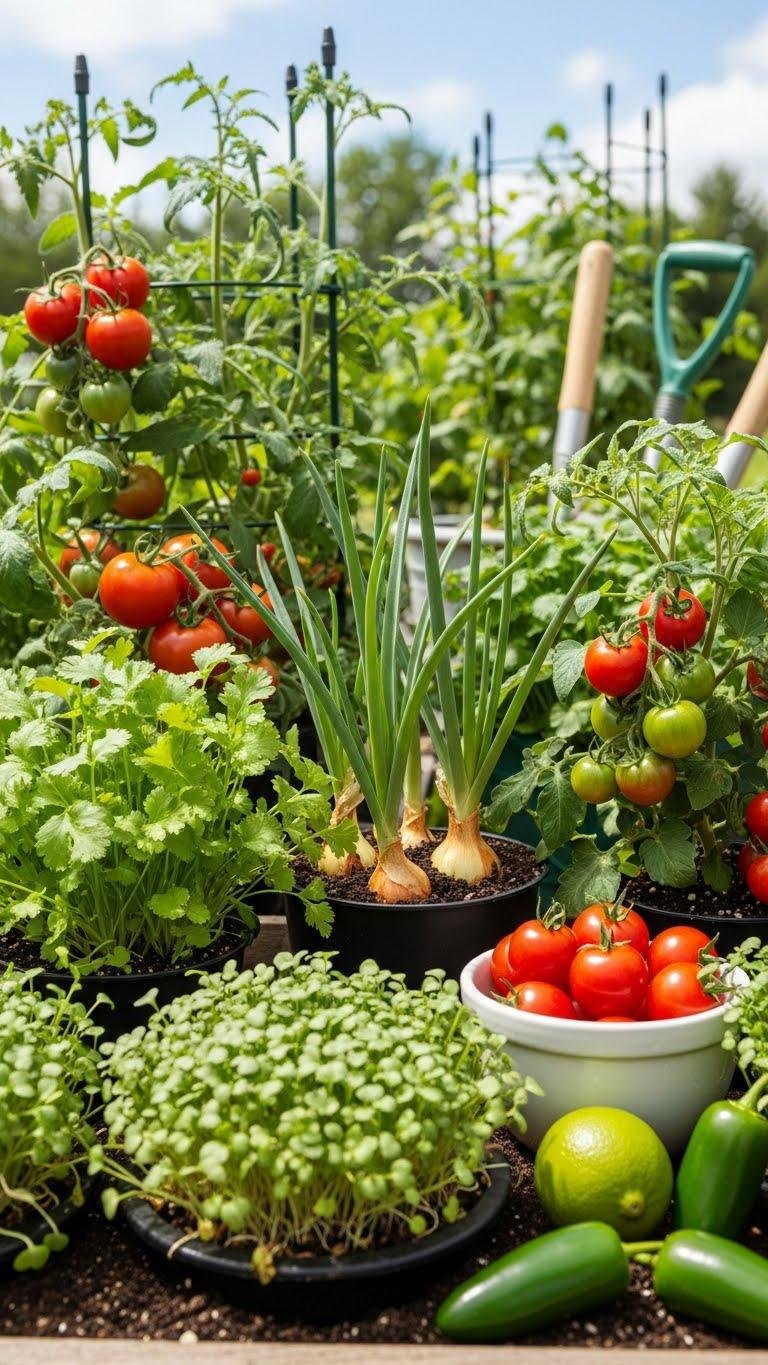
A compact salsa garden gives you a steady supply of the core ingredients—tomatoes, chiles, onions, cilantro, and lime-friendly herbs—planted close together for easy harvesting and everyday use.
You’ll mix container cilantro with compact tomato varieties, grow fast microgreens salsa toppers, and tuck jalapeños at accessible heights.
Plan sun, soil, and succession planting so you can harvest freely and make fresh condiments daily.
Pyramid Trellis Centered Bean Bed
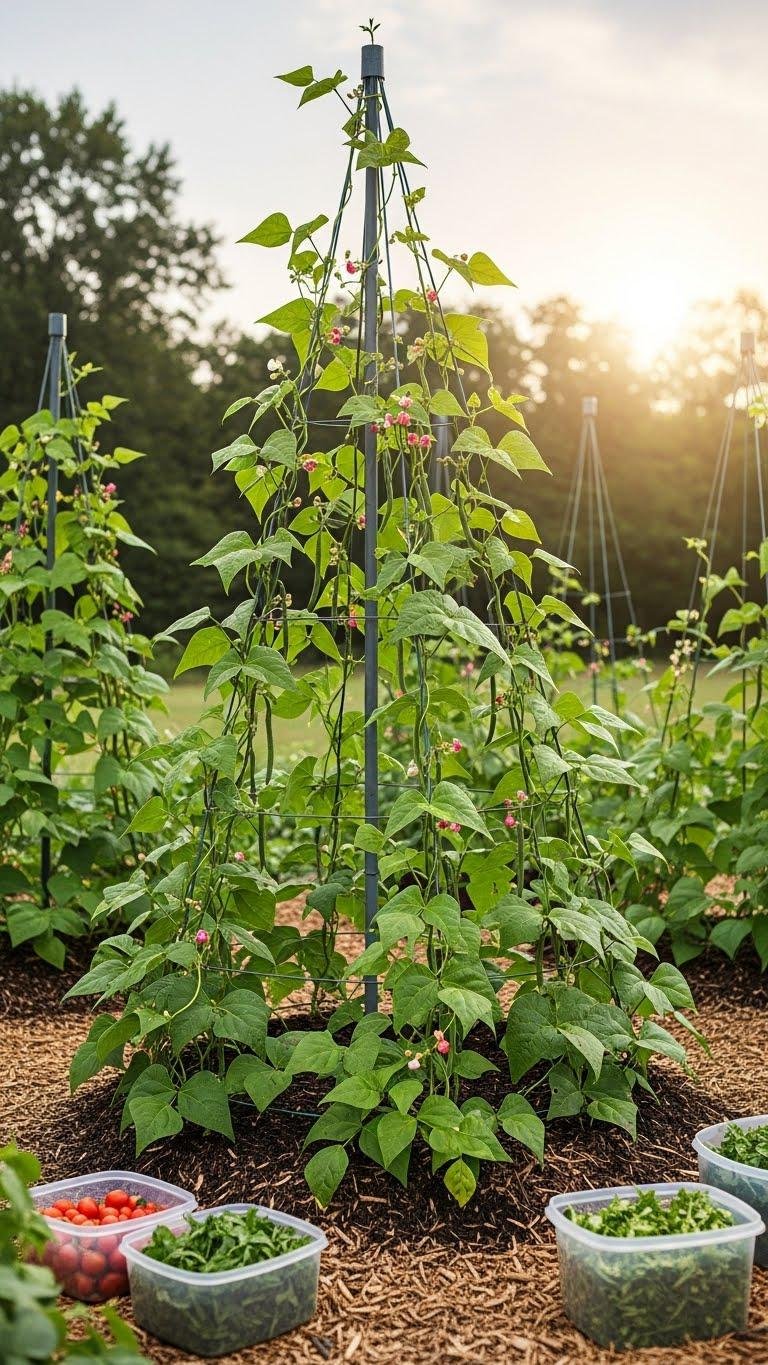
After you’ve got your salsa ingredients thriving in containers, set aside a sunny patch for a pyramid trellis centered bean bed to maximize vertical yield in a small space.
You’ll plant staggered vertical beans around a sturdy central pole, train vines upward, and mulch to retain moisture.
This design boosts harvests, creates pollinator habitat with blossoms, and keeps maintenance simple so you stay free to roam.
Arched Cucumber and Squash Walkway
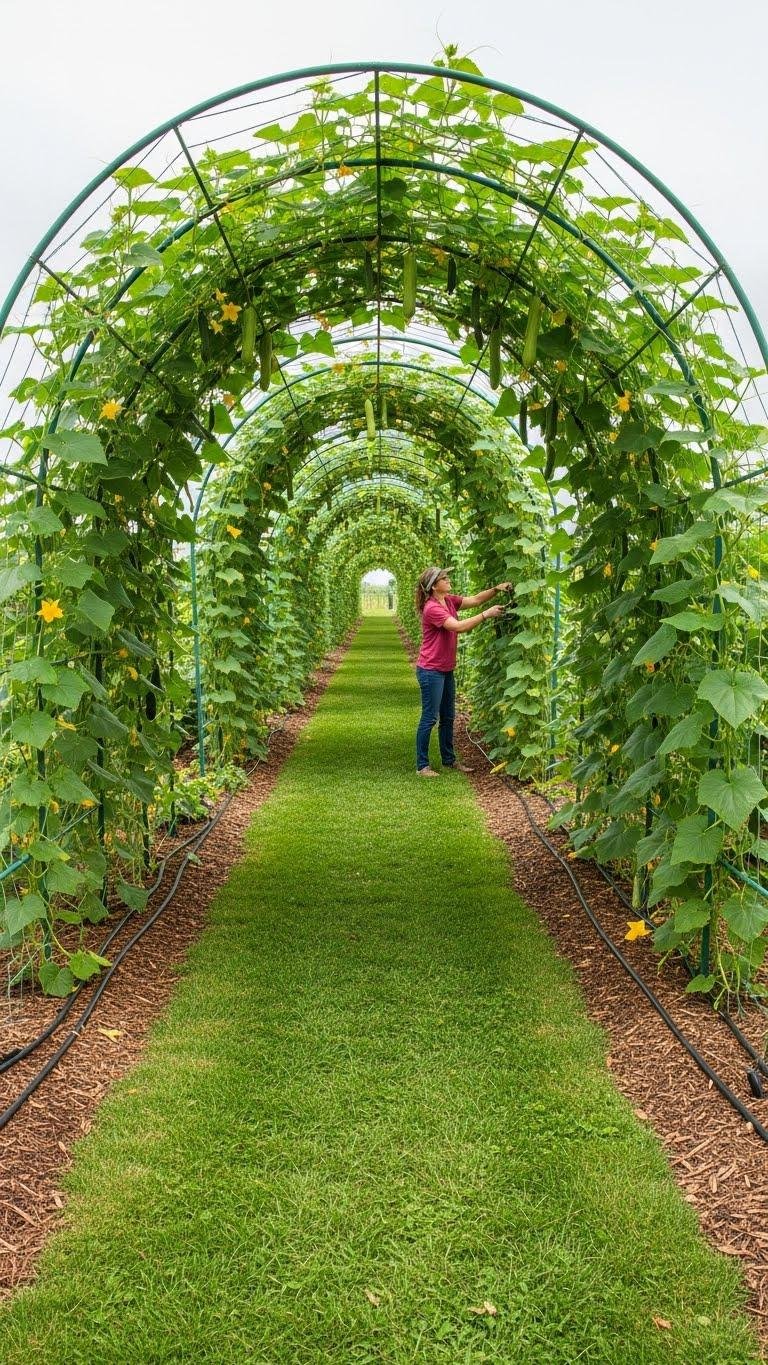
Set up a sturdy arched frame and you’ll turn a narrow path into a productive, shady tunnel where cucumbers and vining squash climb overhead.
You’ll train vines along the arch for easy harvesting, plan arbor planting to balance weight, and use shade management to protect tender crops.
Mulch, drip irrigation, and periodic pruning keep airflow and freedom to move through this edible walkway.
Vertical A-Frame Cucumber Garden With Underplantings
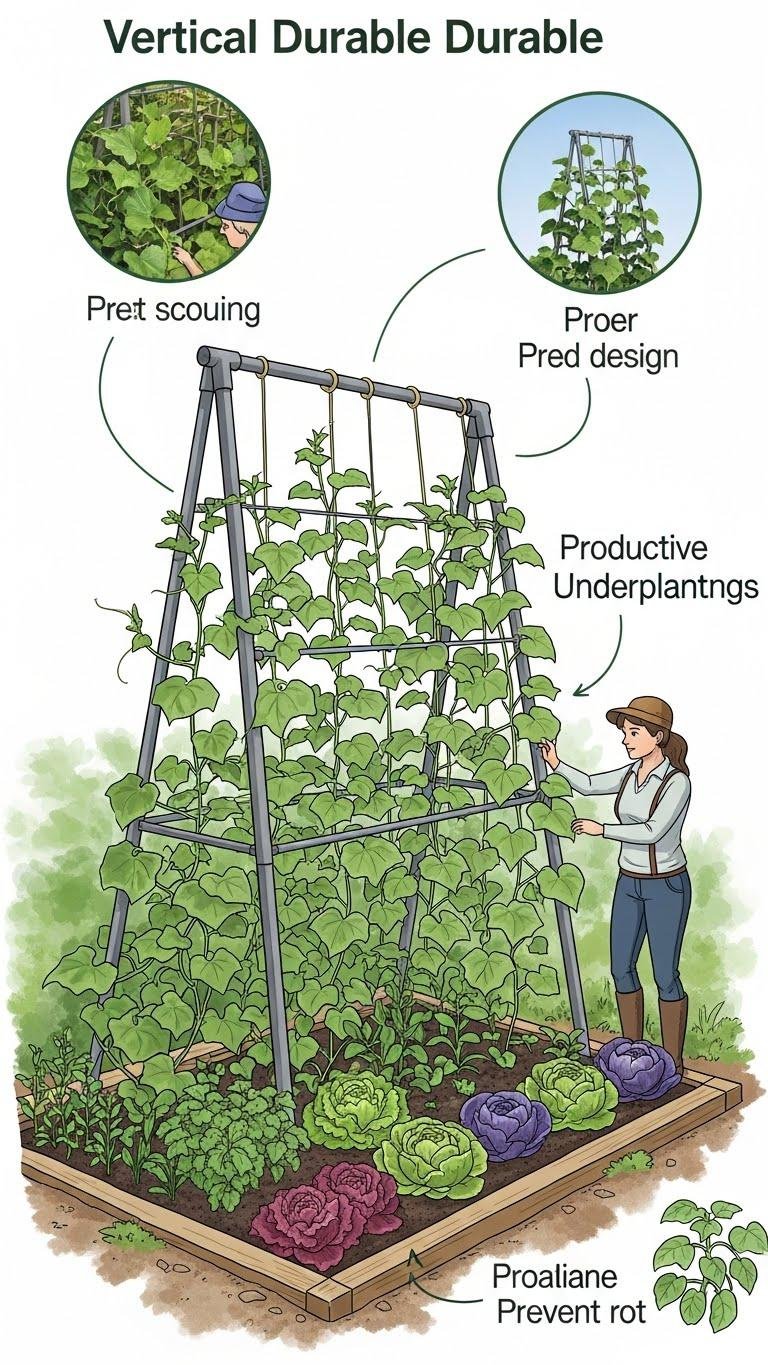
Building an A-frame trellis gives you a compact, high-yield structure that lets cucumbers climb vertically while leaving the ground below free for productive underplantings.
You’ll set durable supports, check trellis drainage to prevent rot, and use vertical scouting to spot pests early. Plant shade-tolerant lettuces, herbs and low brassicas beneath; harvest more, manage less, and enjoy gardening on your terms.
Multi-Level Patio Container Arrangement
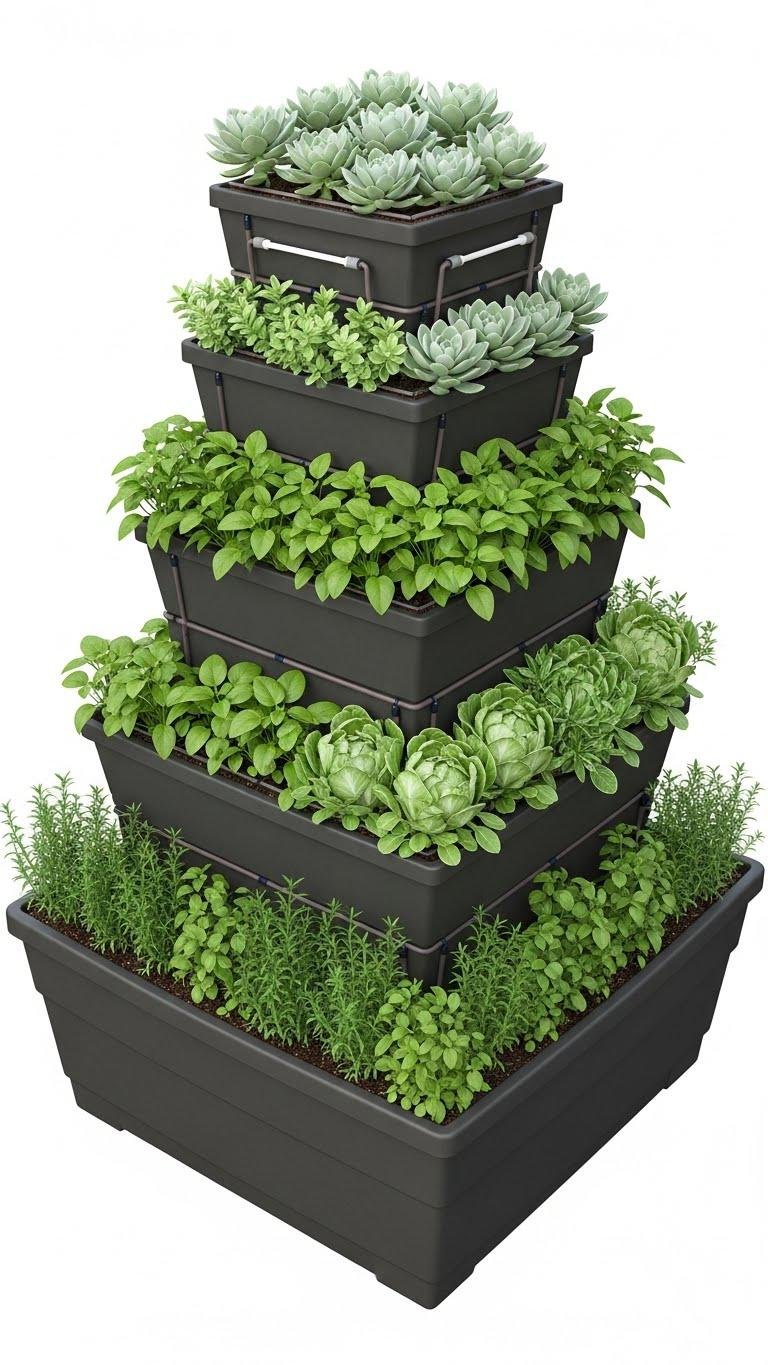
Create layered height and easy access with a multi-level patio container arrangement that maximizes limited space and visual impact. You’ll use stacked planters and mix vegetables with tiered succulents to conserve room, simplify watering, and create movement. Place heavy herbs below, lighter greens above, secure containers, and plan irrigation. This gives you freedom to rearrange, harvest easily, and expand without a plot.
Deep-Rooted Solanaceae Bed (Tomatoes & Peppers)
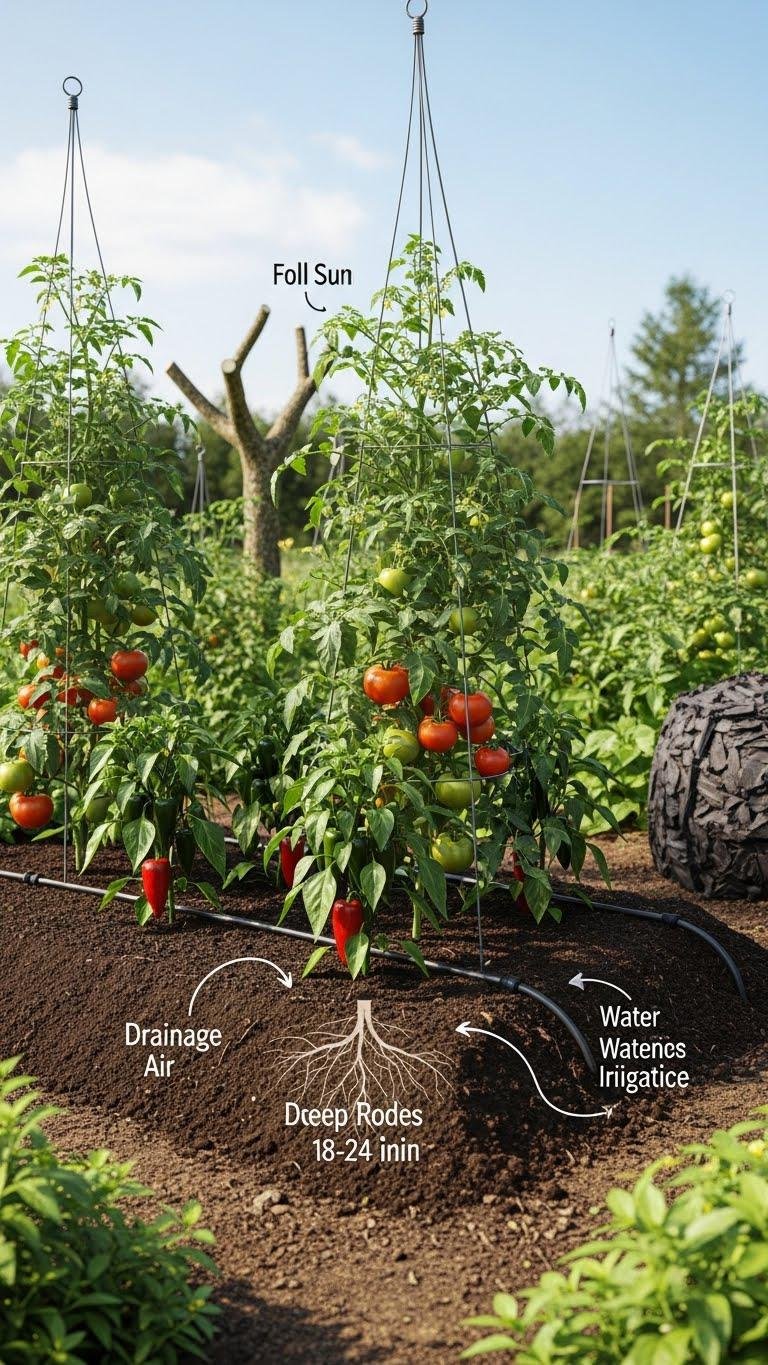
When you dedicate a bed to deep-rooted Solanaceae like tomatoes and peppers, plan for full sun, rich loose soil, and at least 18–24 inches of rooting depth so plants can develop strong crowns and steady fruiting.
You’ll set supports, improve drainage, and feed with balanced compost. Monitor root depth, water deeply, prune for airflow, and encourage consistent blossom set to maximize harvest freedom.
Compact Pepper and Herb Border
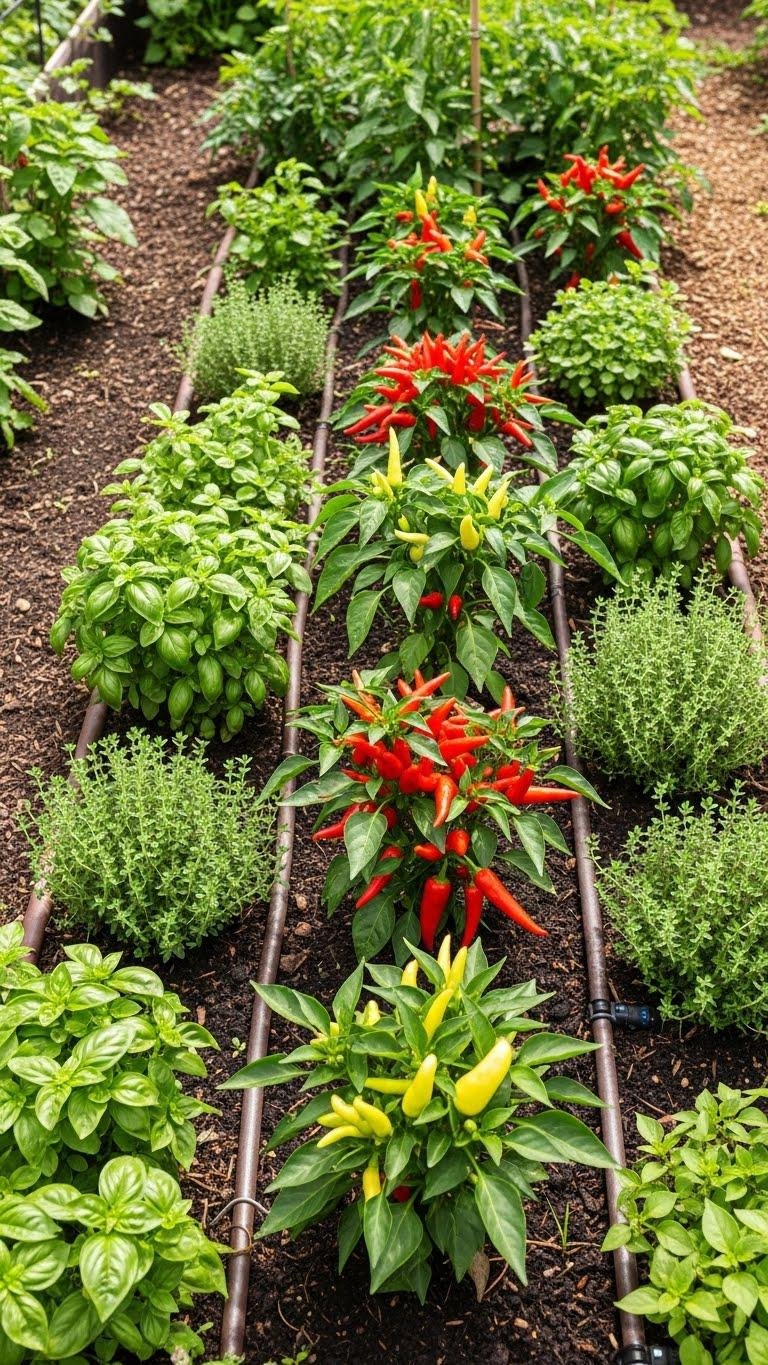
After giving deep-rooted tomatoes and peppers room to spread, you can reserve a sunnier, narrower edge of the garden for a compact pepper and herb border that saves space while boosting flavor at harvest.
Use microclimate mapping to place heat-loving chilies, maintain soil health with compost, pair aromatic companions like basil and thyme, and install drip irrigation for efficient, low-maintenance watering.
Raised Bed With Built-In Wheelbarrow Access
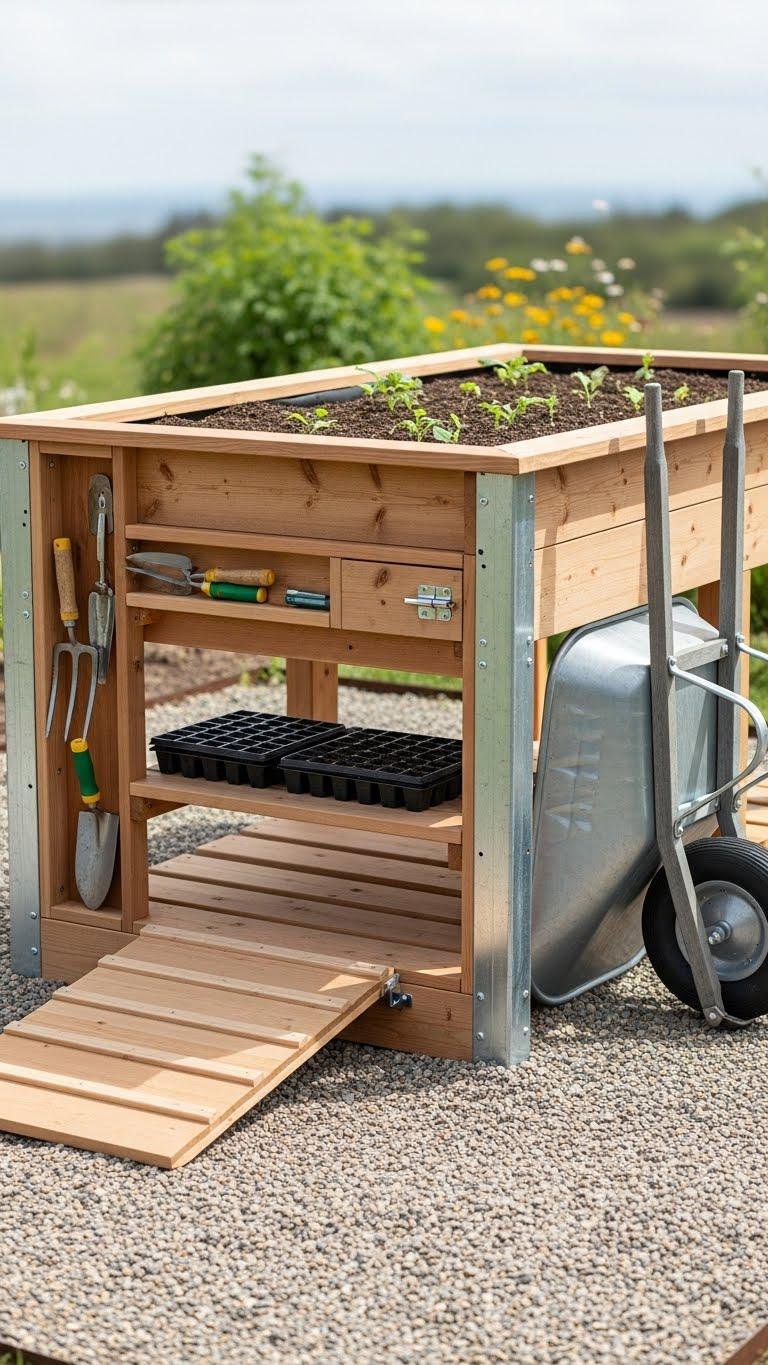
Slide a wheelbarrow right under the bed and you’ve got a tidy, ergonomic setup that saves trips and protects your soil.
Design the opening to match your wheelbarrow width, so loading and unloading’s effortless.
Build sturdy rails and a ramp, add integrated storage for tools and seed trays, and you’ll enjoy efficient, liberated gardening that keeps paths clear and work flowing.
Perennial Berry and Herb Perimeter Block
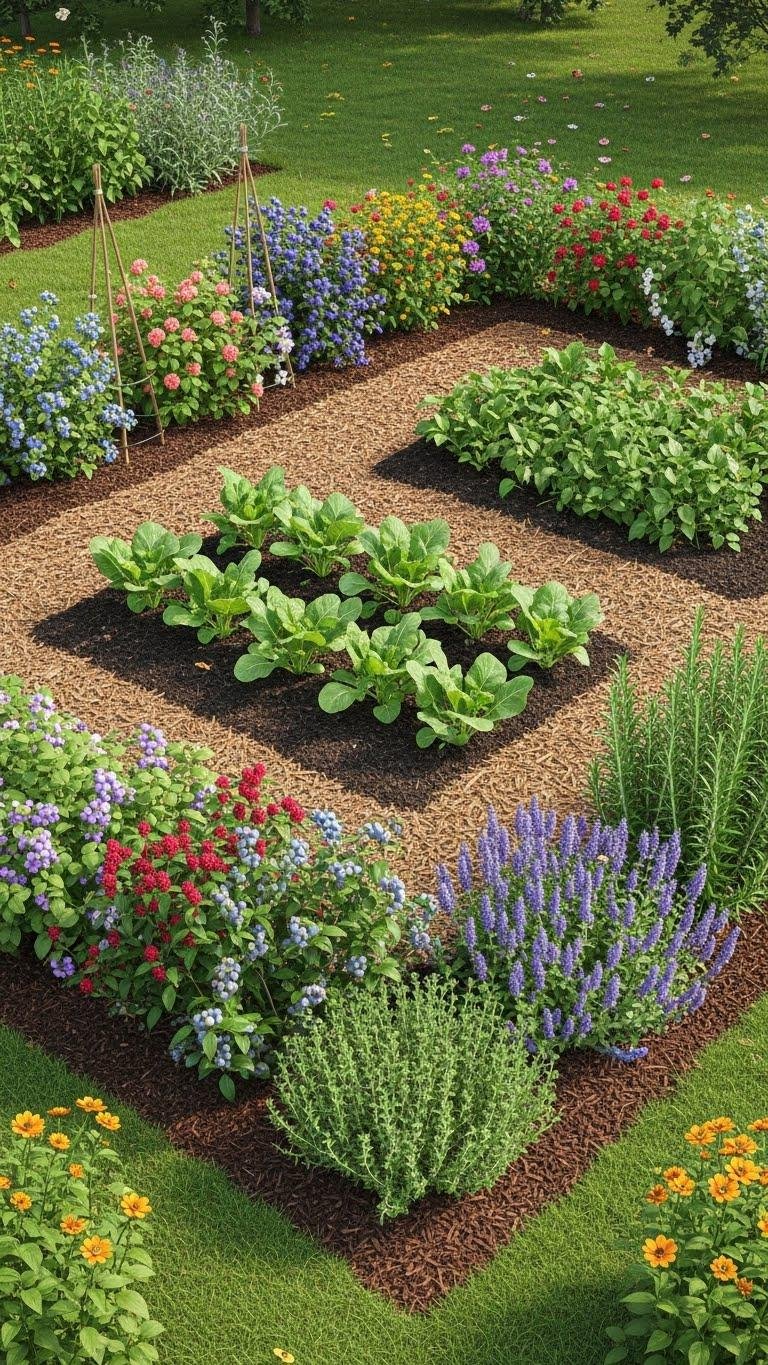
If you frame the vegetable beds with a perimeter block of perennial berries and herbs, you’ll create a productive, low-maintenance edge that boosts yield, attracts pollinators, and deters pests.
Plant mulched fruiting shrubs like blueberries, raspberries, and aromatic living herbs such as rosemary and thyme.
Space for harvest access, mulch heavily, prune annually, and let that resilient border supply flavor, habitat, and freedom from constant replanting.
Shade-Friendly Greens Under Vines
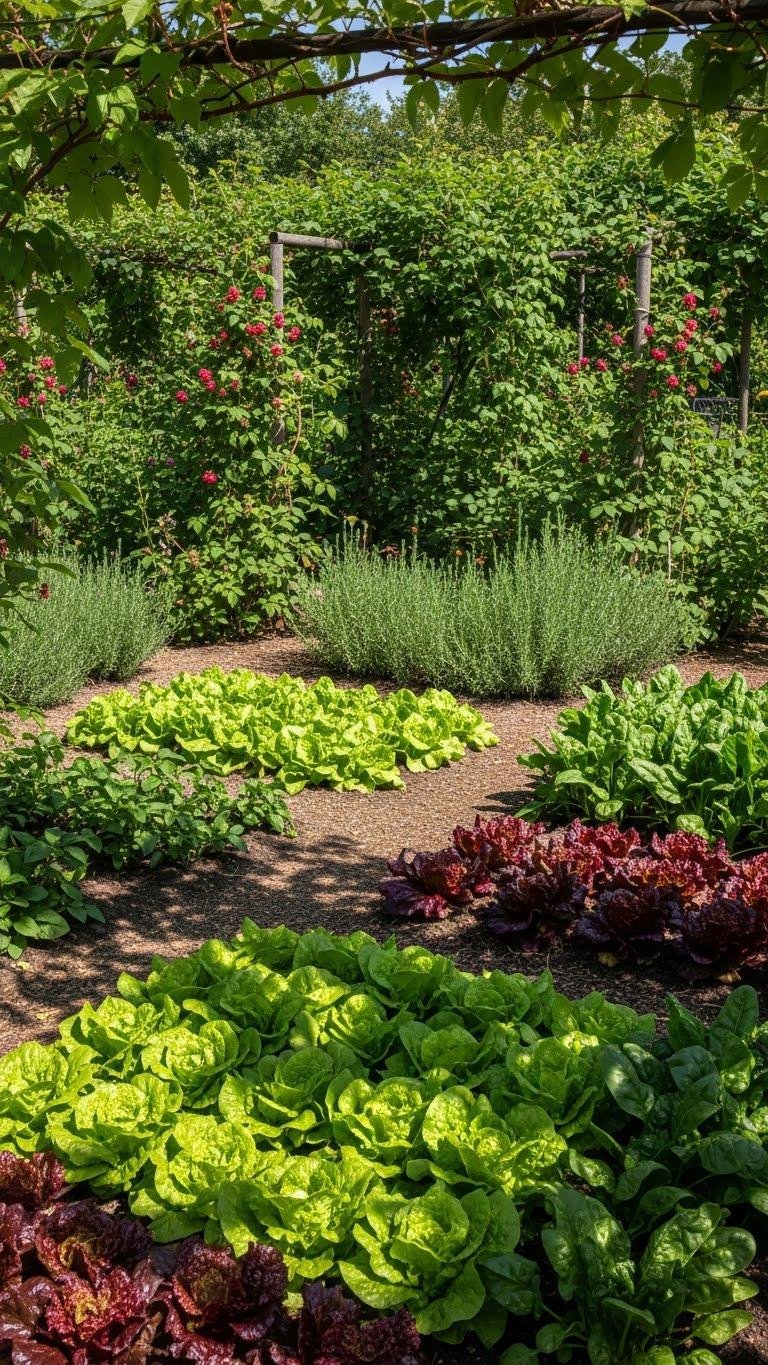
Those perennial berries and herbs create a living frame that naturally casts cool, dappled shade along the bed edges — a perfect microclimate for shade-tolerant greens.
You’ll plant dappled lettuce combos and hardy spinach where vine shadow microgreens thrive, sowing succession crops and using shallow beds.
Harvest often, thin for airflow, and rely on that gentle shade to extend crisp, flavorful yields without heavy maintenance.
Crop Rotation Rotation Plot for Disease Prevention
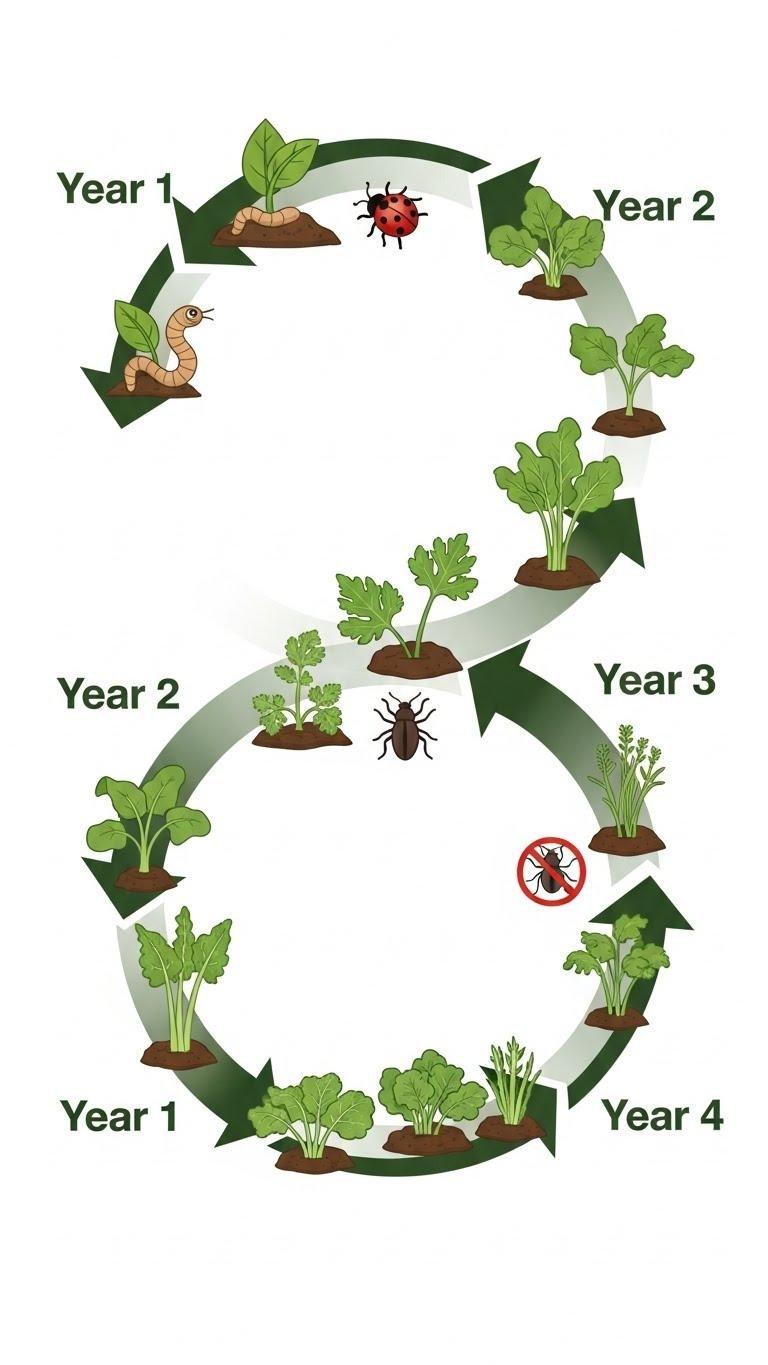
Regularly rotating where you plant each family of crops is one of the simplest, most effective ways to reduce soil-borne diseases and break pest cycles.
You’ll plan beds so legumes, brassicas, solanums and roots move yearly, disrupting any soil pathogen buildup.
Map a clear planting sequence, keep records, and avoid reusing the same spot for similar families to preserve plant health and garden independence.
High-Yield Carrot and Radish Interplanting Bed
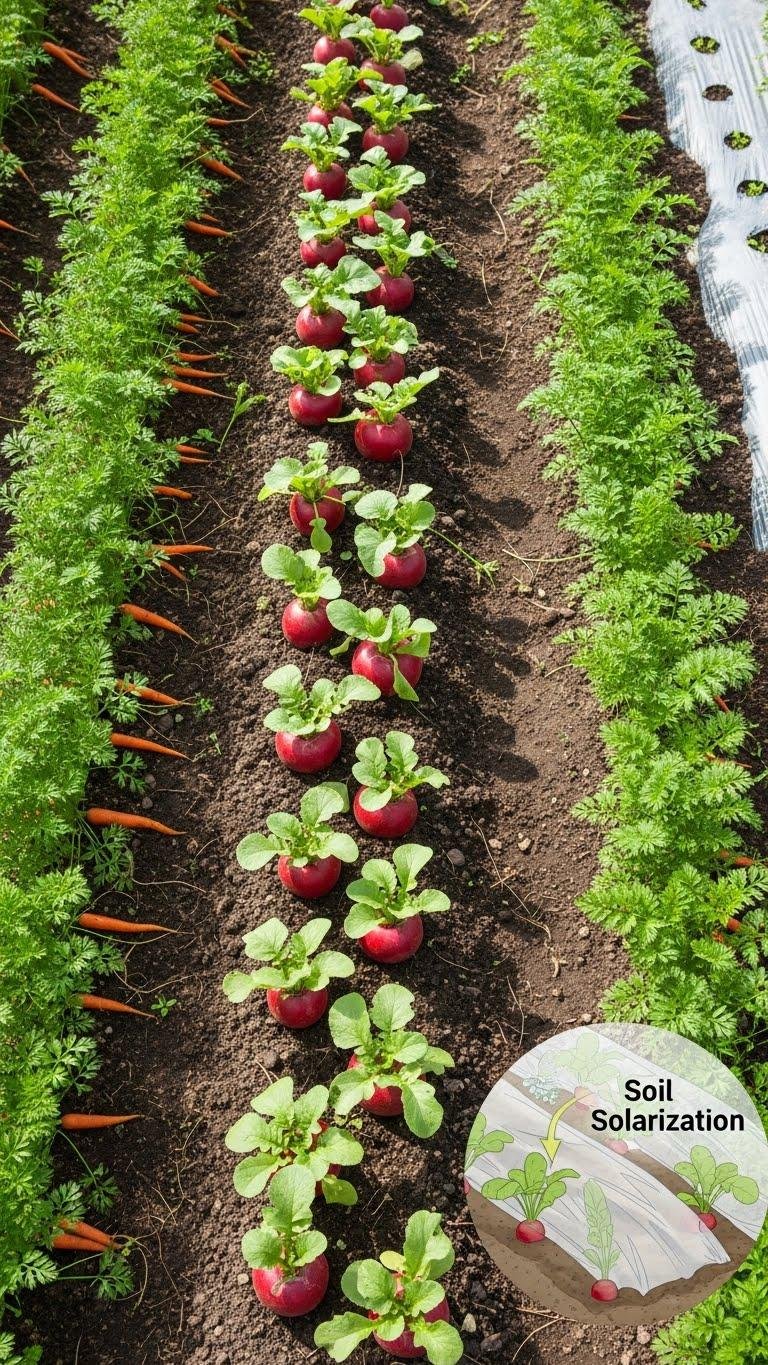
Kick off your high-yield carrot and radish interplanting bed by laying out narrow rows or staggered blocks so quick-maturing radishes finish before carrots need the space, letting you harvest early while carrots keep developing.
Sow radishes in succession sowing intervals, thin seedlings, and keep soil loose.
Use soil solarization before planting to reduce pests and save you time, giving you more garden freedom.
Trellised Pea and Spinach Spring Plot
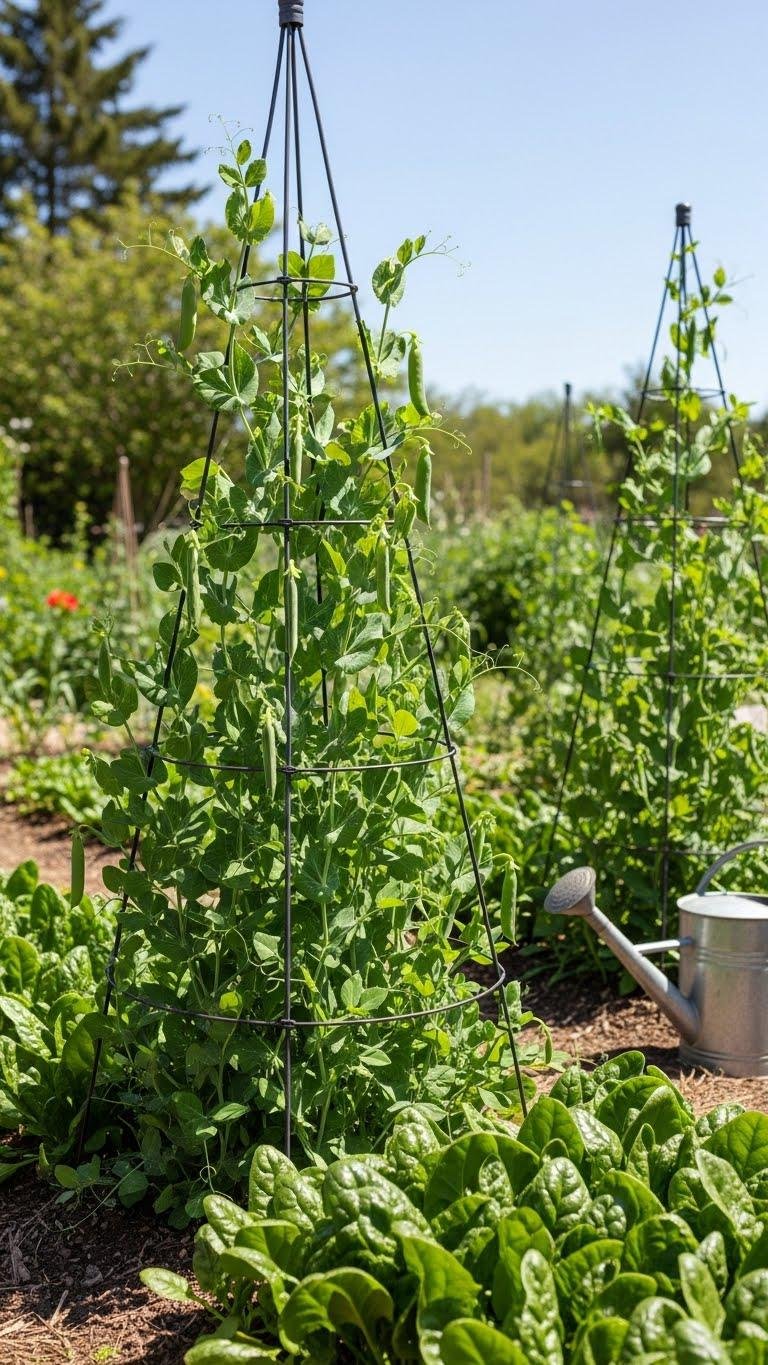
Set up 1–2 sturdy trellises along the sunny edge of your spring plot so peas can climb while leaving cool, shady patches beneath for spinach; this maximizes vertical space and lets you harvest two crops from the same square footage.
Plant peas for early sowing and install vertical support before germination.
Sow spinach in the shade strip, water consistently, and thin for airflow.
Long Narrow Row Bed for Tomato Cages
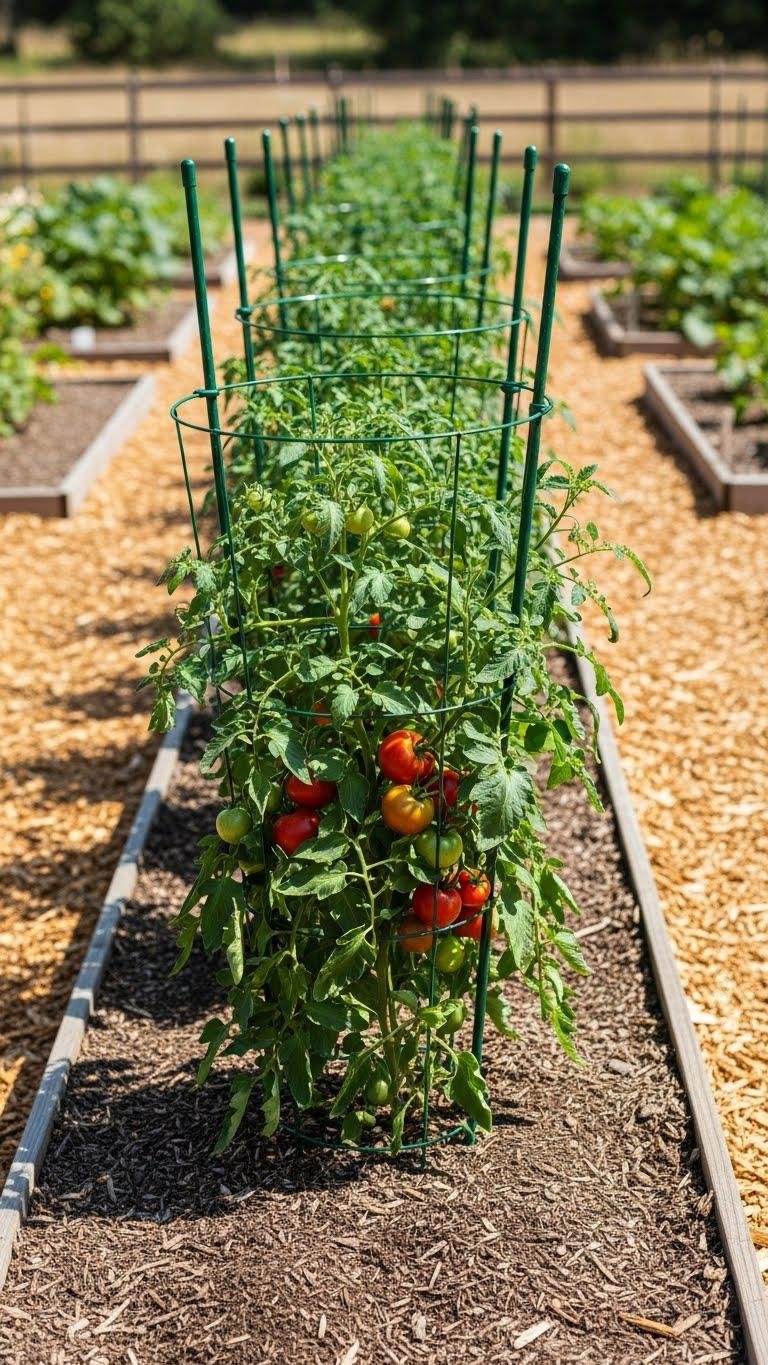
Often a long, narrow row bed is the most efficient way to grow tomatoes if space is limited; you’ll run a line of cages down the center to keep plants upright, improve air circulation, and simplify maintenance.
Lay a sturdy tomato trellis or cages, space plants for access, amend soil for good soil drainage, and leave narrow walkways so you can prune, harvest, and free yourself from clutter.
Four-Bed Rotation System With Pathways
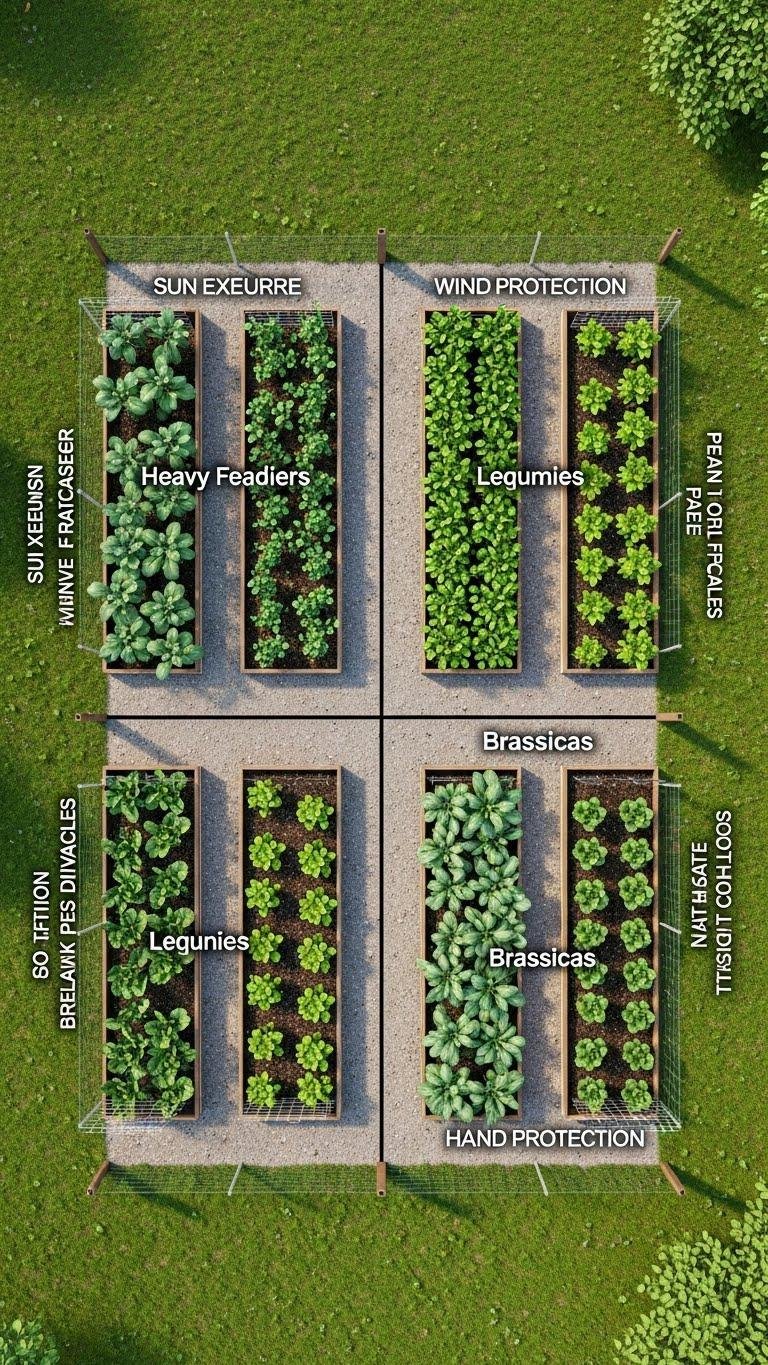
When you divide your plot into four equal beds and rotate plant families each season, you’ll break pest and disease cycles, balance soil nutrients, and make planning simpler. Lay clear pathways for access and pathway drainage, keeping beds slightly raised. Choose bed orientation for sun exposure and wind protection. Rotate heavy feeders, legumes, and brassicas yearly so you stay productive and free from recurring problems.
Edible Fence With Raspberries and Blackberries
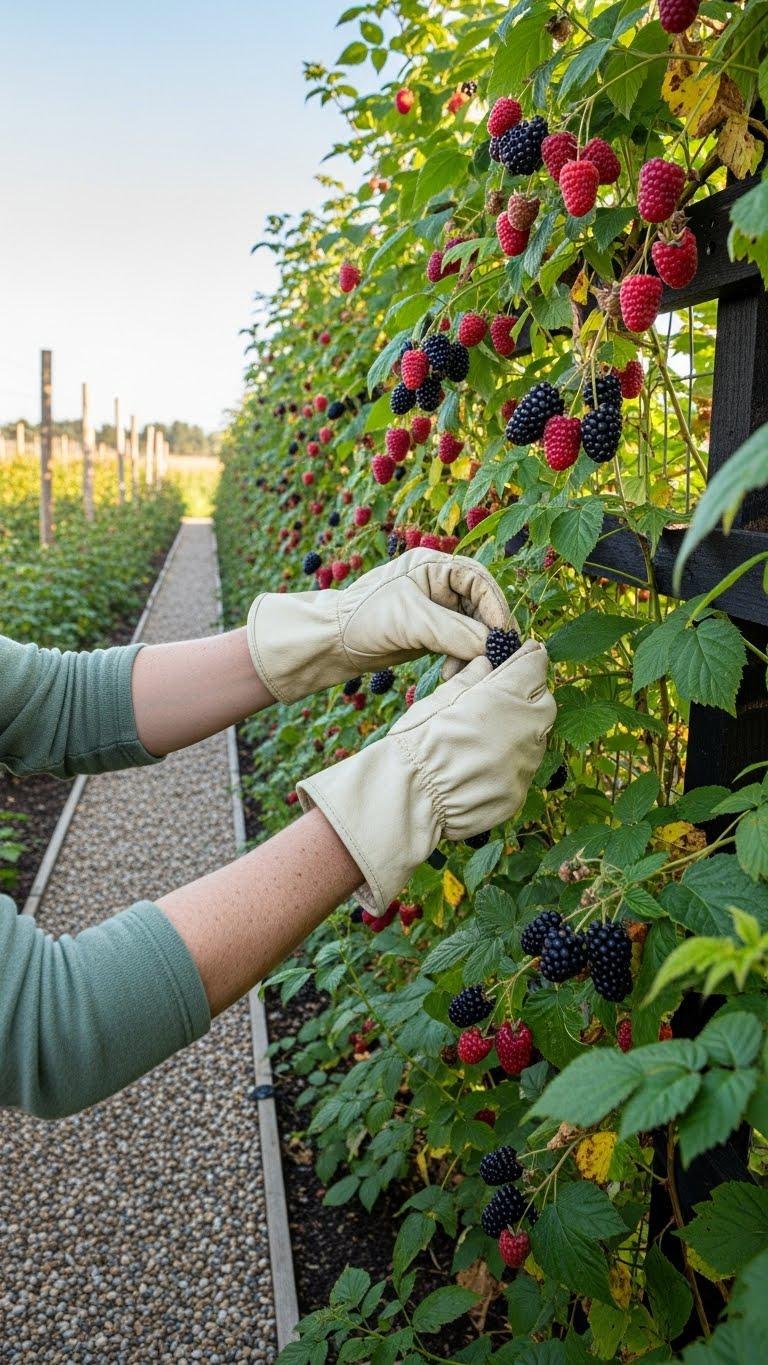
You can extend productivity beyond beds by turning a boundary into an edible fence planted with raspberries and blackberries.
You’ll gain fruit privacy, a living screen that feeds you. Choose hardy varieties, train canes on sturdy trellis, and prune annually.
Plan thorn management where needed: protective gloves, clear paths, and selective thornless cultivars to keep harvests easy and maintenance minimal.
Small-Space Zucchini and Summer Squash Island
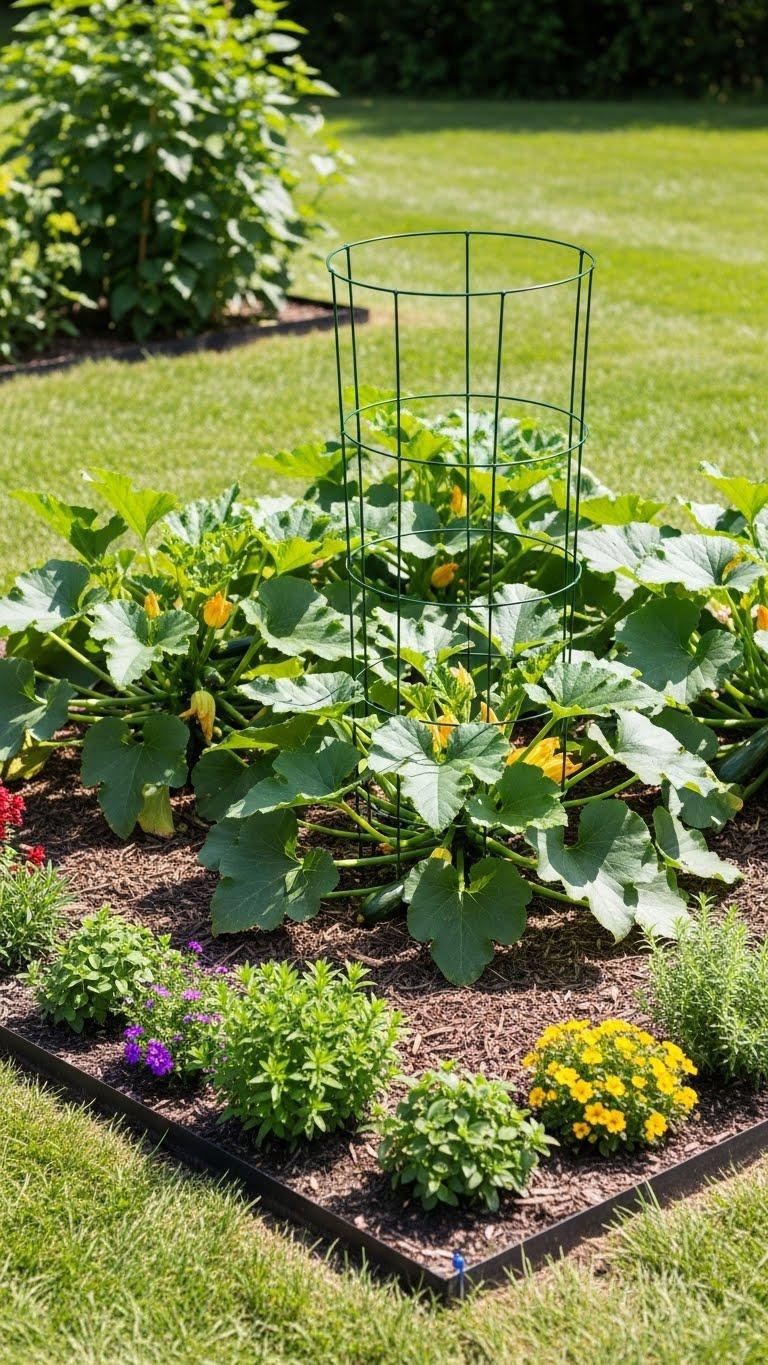
Maximize a tiny plot by dedicating a sunny island to compact zucchini and summer squash varieties that give big yields without sprawling across the yard. Plant tight hills, train vines on a compact trellis, and mulch to retain moisture.
Leave a mini pollinator strip of herbs and flowers at the edge. You’ll harvest prolific fruit, save space, and keep mobility around the bed.
Intensive Leafy Greens Production Bed
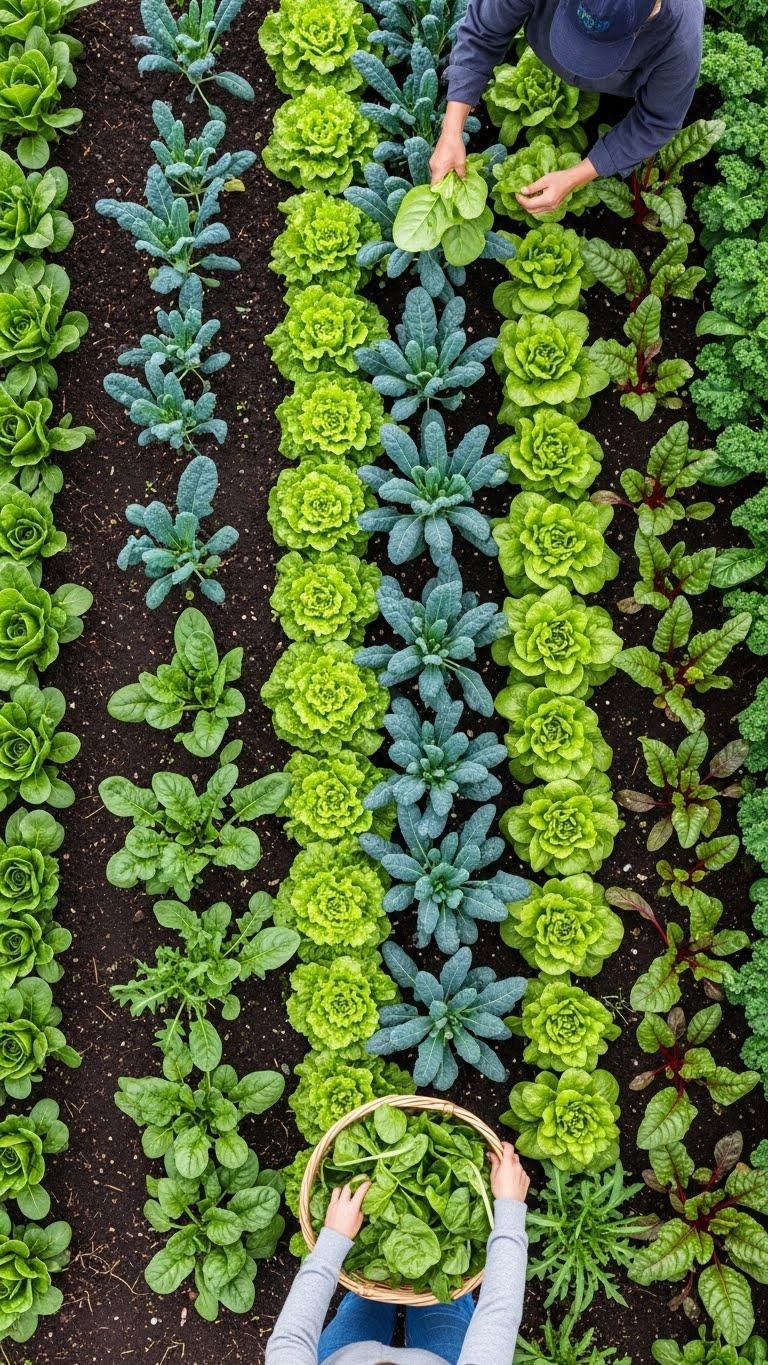
Think small and harvest big: an intensive leafy greens bed packs lettuce, spinach, kale, arugula and chard into a tight, highly productive layout that keeps you harvesting throughout the season.
You’ll prep rich raised soil, space rows for quick access, and use succession sowing every two weeks.
Harvest outer leaves continuously for a dense harvest, stay flexible, and enjoy steady, freeing abundance.
Containerized Jalapeño and Companion Herbs
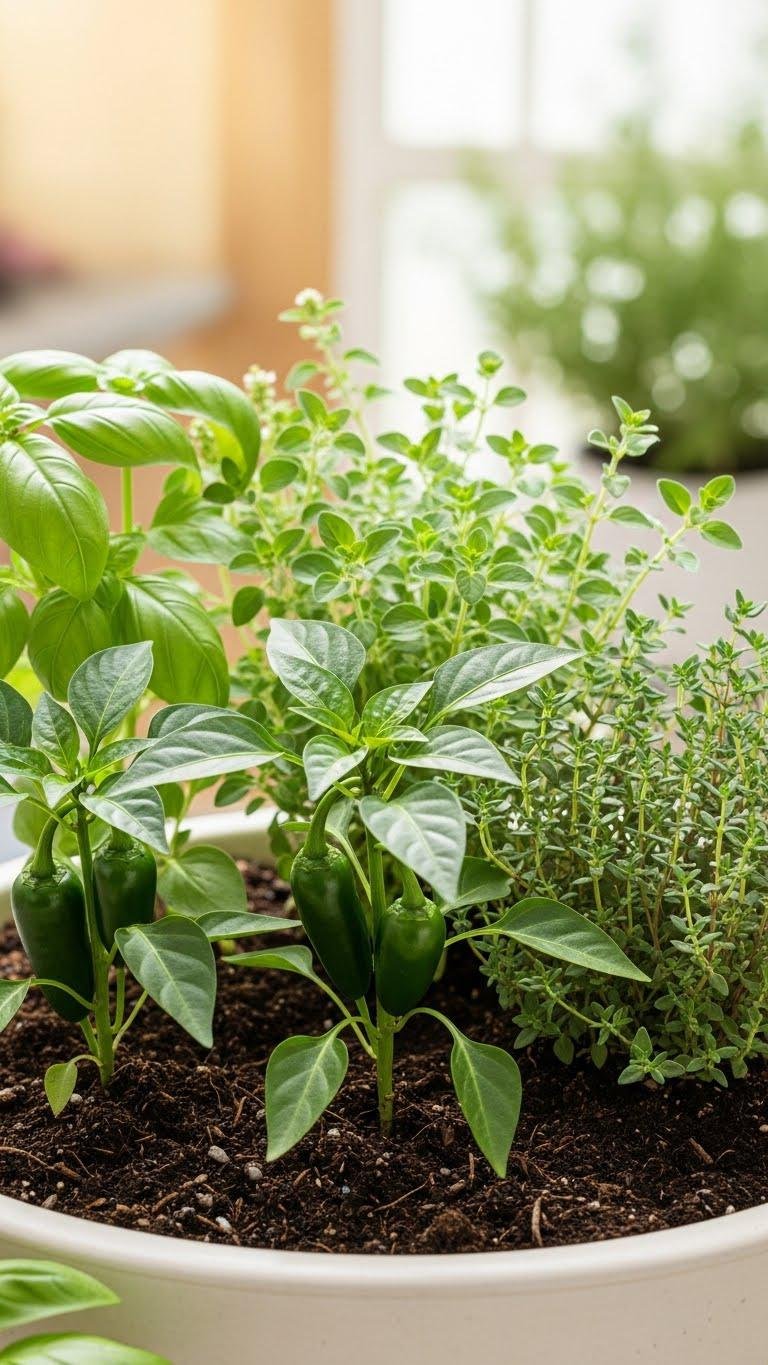
Because jalapeños are compact and heat-loving, they thrive in containers that bring soil warmth and control—you’ll get big yields from small spaces when you pair them with the right herbs.
Choose a compact chili variety and a roomy pot with rich, well-drained mix. Plant basil, oregano, and thyme as pot herbings to deter pests, save space, and make harvests effortless.
Cold-Frame Starter Bed for Early Crops
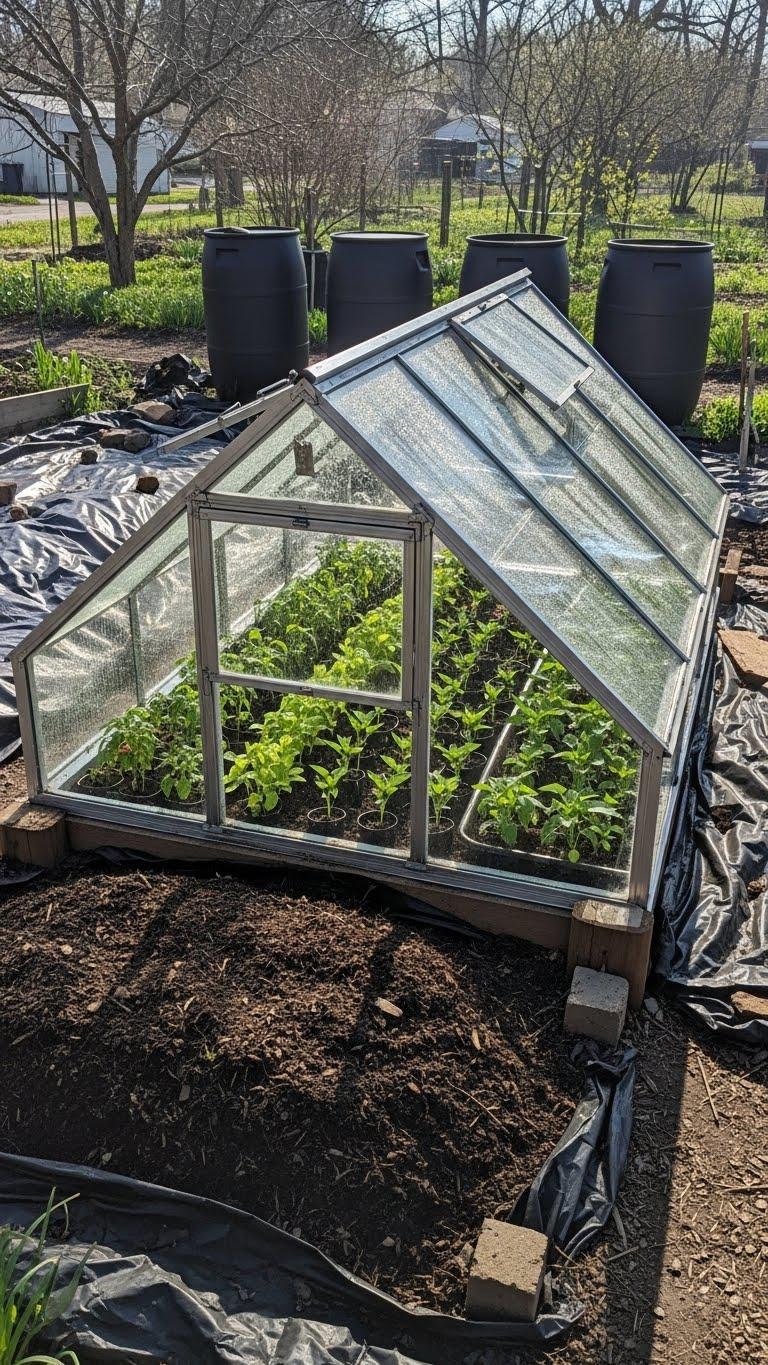
After you’ve enjoyed the quick wins of container jalapeños and companion herbs, you can get a jump on the season with a cold-frame starter bed that shelters seedlings and heat-loving transplants until outdoor conditions steady.
You’ll practice cold starting seedlings by building a low, glazed frame, orienting it south, and adding insulated soil warming—compost, black plastic, or water barrels—to extend growth and control microclimate.
Community-Style Block Garden for Shared Harvests
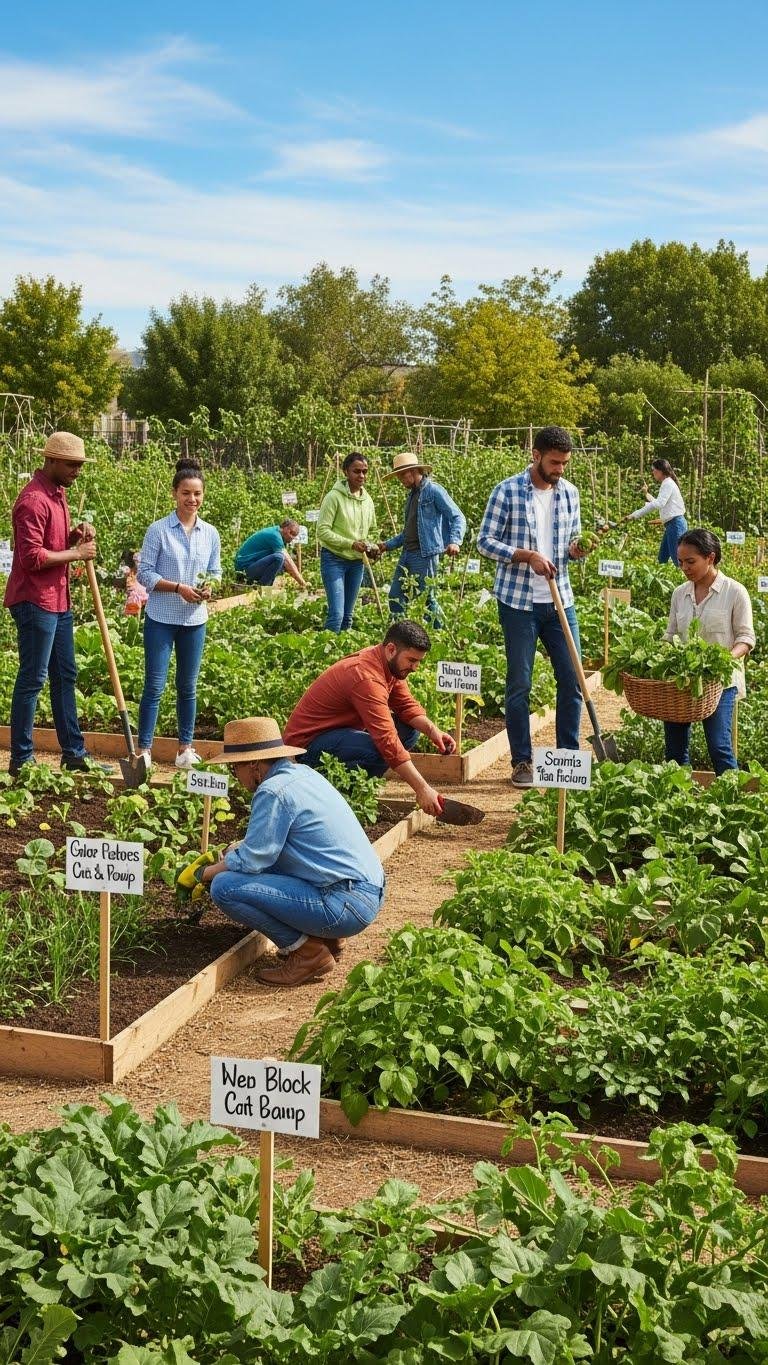
As a shared patch of productive ground, a community-style block garden lets neighbors pool space, resources, and skills to grow more than any one plot could yield alone.
You’ll coordinate plots, plant choices, and schedules for reliable neighborhood harvests.
Set clear rules for shared maintenance, tool sharing, pest control, and distribution.
You keep freedom to contribute, learn, and claim honest, abundant produce.